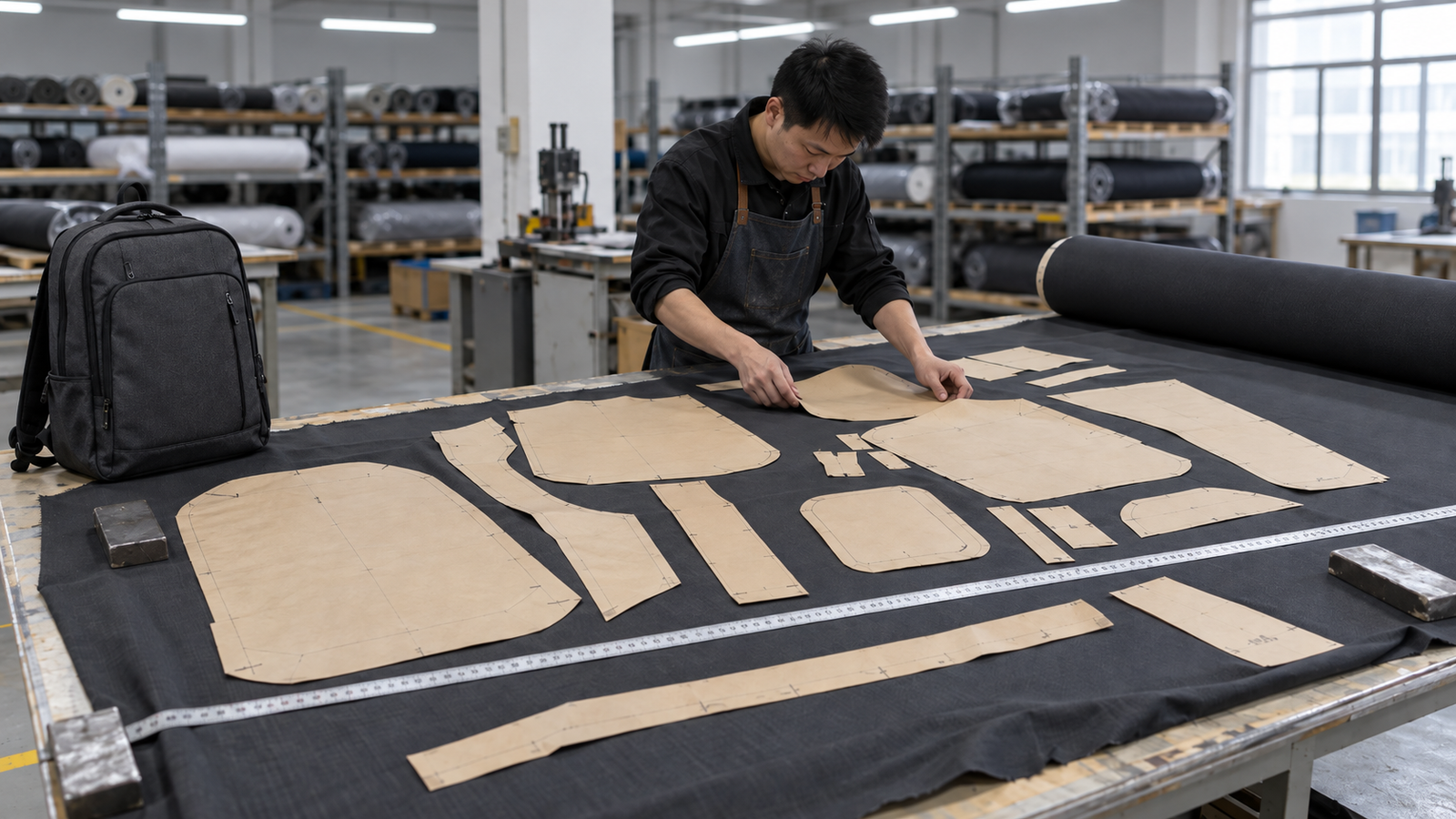
Every sourcing season, I watch brand managers and parents pull their hair out over a single letter: "D". They treat 900D like a magic bullet for indestructible bags and dismiss 600D as cheap fast-fashion trash. They are completely wrong on both counts.
For school backpacks, 600D polyester is the industry standard offering the best balance of weight, cost, and durability for daily use. However, for high-stress areas like the base or for heavy-duty college bags, 900D provides superior abrasion resistance and tear strength at a 15-20% higher material cost.
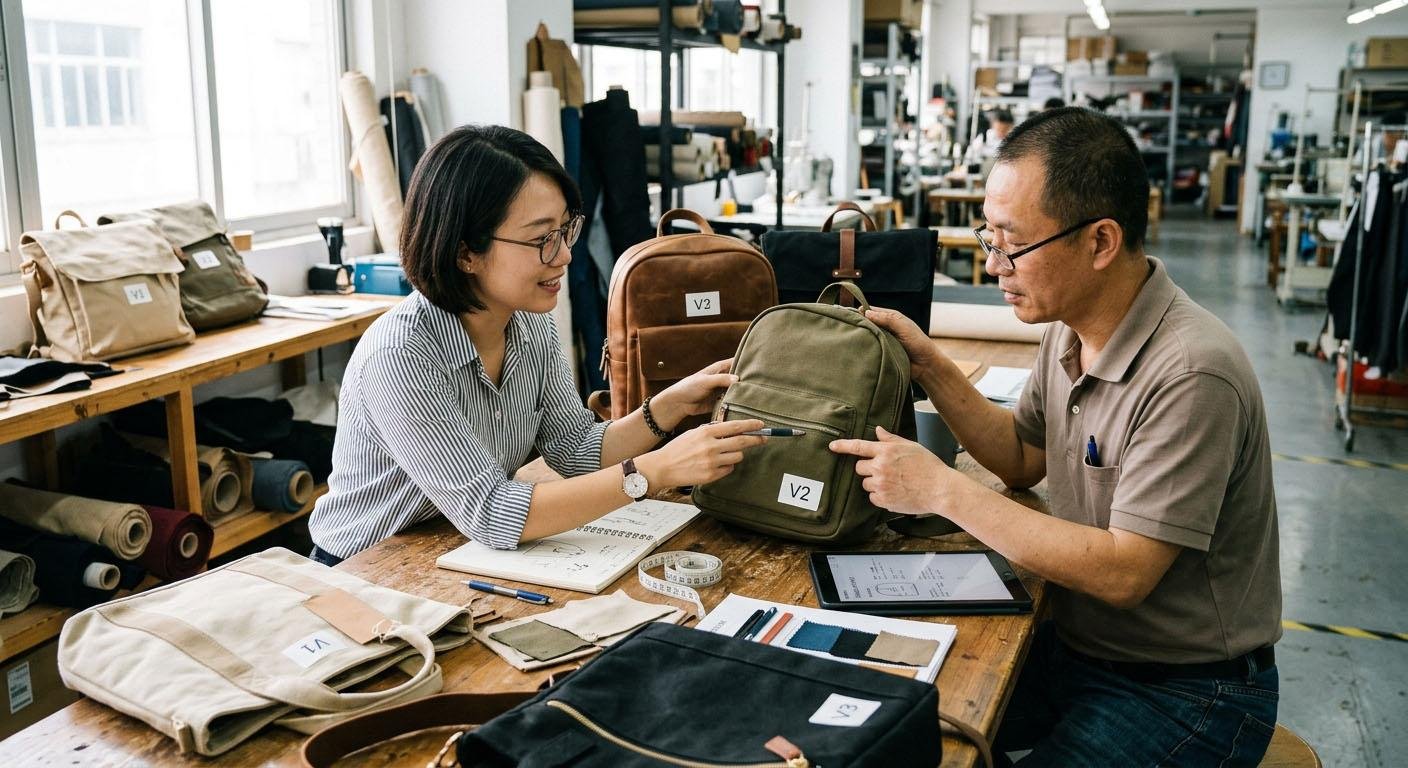
I’m Zoey, and I handle business and product development here at Osgoodway. I spend my days on the factory floor, fighting with tech packs, checking seam tolerances, and running fabric abrasion tests. Today, I am skipping the marketing fluff to show you exactly how these two materials behave on a real sewing line and in the real world.
600D vs 900D Polyester: Which Fabric Actually Performs Better?

At Osgoodway, I watch buyers ruin their backpack designs by guessing fabric specs. Here is our real factory data, not Wikipedia theories.
900D polyester performs significantly better in abrasion resistance and heavy load-bearing, making it ideal for high school bags. However, 600D performs better for elementary school backpacks because it is much lighter, highly cost-effective, and prevents strain on growing children’s spines.
Durability and Abrasion Resistance Data
| Feature | 600D Polyester (High-Density) | 900D Polyester (Standard) |
|---|---|---|
| Martindale Rubs (Failure) | ~20,000 | ~40,000 |
| Yarn Thickness & Weight | ~220g – 250g per yard | ~300g – 350g per yard |
| Tear Strength | Moderate (Sufficient for <15 lbs) | High (Sufficient for >25 lbs) |
How Does Empty Weight Impact Ergonomics?
Empty bag weight ruins retail sales. 600D is the clear winner for elementary kids because parents will reject a backpack that feels heavy before a single book is packed.
If you build a bag with 900D for a 7-year-old, you are adding dead weight. 600D keeps the final product well under pediatric ergonomic safety limits while still easily surviving a two-year school cycle.
How Does the Denier Affect Water Resistance?
Neither fabric is naturally waterproof, but 600D is actually easier to waterproof flexibly. 900D requires a much thicker, heavier PVC backing to seal the gaps between its coarse yarns.
At our factory, we usually apply a double PU (Polyurethane) coating to 600D. It keeps the fabric soft and fold-friendly. When clients demand 900D with high waterproofing, we have to use heavy PVC, making the bag stiff and prone to cracking in freezing weather.
What is the True Impact on Your FOB Price?
Upgrading to 900D increases raw material costs by 20% to 30% per yard, which adds roughly $0.40 to $0.80 to your final FOB price and severely eats into budget retail margins.
| Production Cost Factor | 600D Polyester | 900D Polyester |
|---|---|---|
| Raw Material Cost | Baseline | +20% to 30% per yard |
| FOB Price Impact | Keeps unit cost low | +$0.40 to $0.80 per bag |
| Sewing & Production | Standard speed | Slower, requires heavy-duty setup |
| Ideal Retail Strategy | High volume, budget margins | Lower volume, premium markups |
Factory Secret: Never let a supplier use standard size 16 needles on 900D. At Osgoodway, we enforce size 21 needles for 900D to prevent needle breakage and skipped stitches. If your current factory doesn’t do this, your seams will blow out.
Is 900D Polyester Overkill for a Standard School Bag?

Yes, using 900D polyester for an entire elementary or middle school backpack is unnecessary and adds excess weight and cost. 600D is perfectly sufficient for carrying 10-15 lbs of textbooks and laptops without compromising structural integrity.
I constantly tell my B2B clients: stop wasting money upgrading the whole bag. The smartest brands use a hybrid construction.
Where Should You Actually Place 900D on a Backpack?
- The Base Panel: The only part scraping against concrete bus stops.
- Laptop Compartment Bottom: To prevent the laptop corners from punching through over time.
- Shoulder Strap Anchors: The high-tension points.
Use 600D for the main body to keep it light and cheap, and reinforce the bottom with 900D. You get 90% of the durability at a fraction of the weight and cost penalty.
Which Fabric Offers Better Printing Quality for Custom School Patterns?
School bags rely heavily on vibrant sublimation or silk-screen prints to attract younger demographics. If you choose the wrong denier, your artwork will look like a printing error.
600D polyester is vastly superior for detailed sublimation printing. Its smoother, finer surface allows ink to transfer cleanly, resulting in sharp logos and vibrant patterns. 900D’s coarse texture causes pixelation and uneven ink absorption on complex designs.
Why Does 900D Fail at Intricate Sublimation?
The thick ribs in 900D fabric create microscopic gaps during heat transfer, causing ink pooling. This makes small text or detailed school mascots appear blurry.
- 600D: Best for full-panel sublimation, geometric patterns, and fine text.
- 900D: Better suited for simple, bold silk-screen logos or stitched rubber patches.
What Are the Cost Implications for Printing?
While 900D base material costs more, its high defect rate for complex printing also increases factory waste, driving up your final FOB unit price significantly.
| Printing Method | 600D Performance | 900D Performance | Factory Defect Rate |
|---|---|---|---|
| Sublimation | Excellent (Sharp details) | Poor (Blurry edges) | 600D: <2% / 900D: >8% |
| Silk-Screen | Good | Excellent (Adheres well) | Standard for both |
How Brands Should Match Fabric to the End-User Demographic

At Osgoodway, I tell clients that no single fabric is perfect. You must match the material to the user’s daily load.
Choose 600D polyester for elementary school bags or budget retail lines to ensure lightweight comfort and high cost-efficiency. Select 900D polyester for high school students or premium tech backpacks to guarantee superior abrasion resistance against extremely heavy daily loads.
- Elementary School (Ages 5-11): 600D is highly cost-effective and light. Kids want a new cartoon pattern yearly anyway, so paying a premium for extreme longevity isn’t necessary.
- High School & College (Ages 12+): 900D withstands the severe high-tension pulling at the shoulder strap seams caused by heavy tech gear and rough concrete floors.
Which Material Should Brands Choose for Production?
Use 600D to maximize profit margins on budget promotional bags, but invest in 900D to justify higher retail markups on premium tech commuter backpacks.
| Target Market Segment | Recommended Fabric | Factory Sourcing Benefit |
|---|---|---|
| Promo / Budget Bags | 600D Polyester | Unbeatable FOB price; takes heat transfer printing beautifully at a massive scale. |
| Premium / Tech Bags | 900D Polyester | Elevates perceived value instantly; provides the necessary structure for heavy daily commuter use. |

Are There Hidden Factory Secrets to Backpack Durability Beyond Fabric Denier?
Fabric denier alone does not guarantee a durable backpack. The true secret to longevity lies in the thread count (T) density and the sewing construction. A high-density 600D fabric combined with reinforced bartack stitching will outlast a poorly constructed 900D bag every time.
At our factory, our tensile strength tests prove this daily. A tightly woven 600D 78T fabric has a much higher tear resistance than a loose, cheap 900D 58T, even though the 900D yarn is technically thicker. If your tech pack only specifies the "D" without the "T" (Thread Count), you are blind sourcing.
Why Does Sewing Craftsmanship Matter More Than Fabric Denier?
- The Bartack Rule: The strongest 900D fabric is useless if the shoulder straps lack bartack reinforcement. Without this dense zigzag stitching, seams will blow out under heavy textbook loads within weeks.
- Thread Quality: Using cheap bonded nylon thread on premium 900D fabric creates a fatal weak point. The thread will snap long before the fabric ever tears.
Factory Secret: Always check the inside seams of the shoulder straps on your pre-production samples. If you do not see a dense zigzag bartack stitch anchoring the strap to the bag body, reject the sample immediately.
Deep FAQ: What Buyers Always Get Wrong About Backpack Fabrics
1. Does a higher denier mean the backpack is waterproof?
No. This is the biggest rookie mistake. Denier only measures the thickness of the yarn. Waterproofing comes entirely from the PU or TPE coating sprayed on the back of the fabric. An uncoated 1680D bag will soak through faster than a PU-coated 300D bag.
2. Can I wash 900D school backpacks in a washing machine?
Never. As a factory standard, we tell brands to advise against machine washing. The agitation and hot water will delaminate the PU coating on both 600D and 900D, ruining the bag’s structure and water resistance. Spot clean with mild soap only.
3. Why do some 600D backpacks feel cheap and plasticky?
It’s not the 600D yarn; it’s the backing. Cheap factories will use a stiff, low-grade PVC backing to save $0.20 per yard. It feels like cardboard, smells toxic, and cracks in the winter. Always spec soft PU backing.
4. Is 1680D ballistic nylon better than both 600D and 900D for school bags?
It is total overkill. 1680D is incredibly heavy. A 10-year-old kid shouldn’t carry an empty bag that already weighs 3 lbs. Save 1680D for tactical gear, heavy-duty tool bags, or premium luggage.
5. How can I visually tell the difference between 600D and 900D?
Look at the weave texture. 900D looks like a rugged, pronounced basket weave with visible ridges. 600D has a much smoother, tighter surface appearance. If you scratch them with your nail, 900D feels significantly rougher.
The Final Verdict
Stop over-engineering your school bags. 600D is your workhorse for 90% of the bag, offering the perfect canvas for prints and keeping costs lean. Strategically use 900D only on the base panels to prevent blowouts.
Ready to prototype a bag that balances durability with margin? Send me your Tech Pack at Osgoodway, and let’s engineer it right the first time.