Updated October 2026 | Reviewed from a backpack manufacturing perspective
Choosing the right backpack size is not simply about picking the largest capacity or the highest number of liters. The best backpack size depends on what you carry, how you use the bag, and how comfortable it feels when fully loaded.
Backpack capacity is usually measured in liters (L). A small 10L–15L backpack is designed for lightweight essentials, while a 20L backpack is commonly used for daily carry, laptops, and school. A 30L backpack provides more flexibility for work, gym, and short trips, while a 40L–50L backpack is better suited for travel, outdoor activities, and heavier loads.
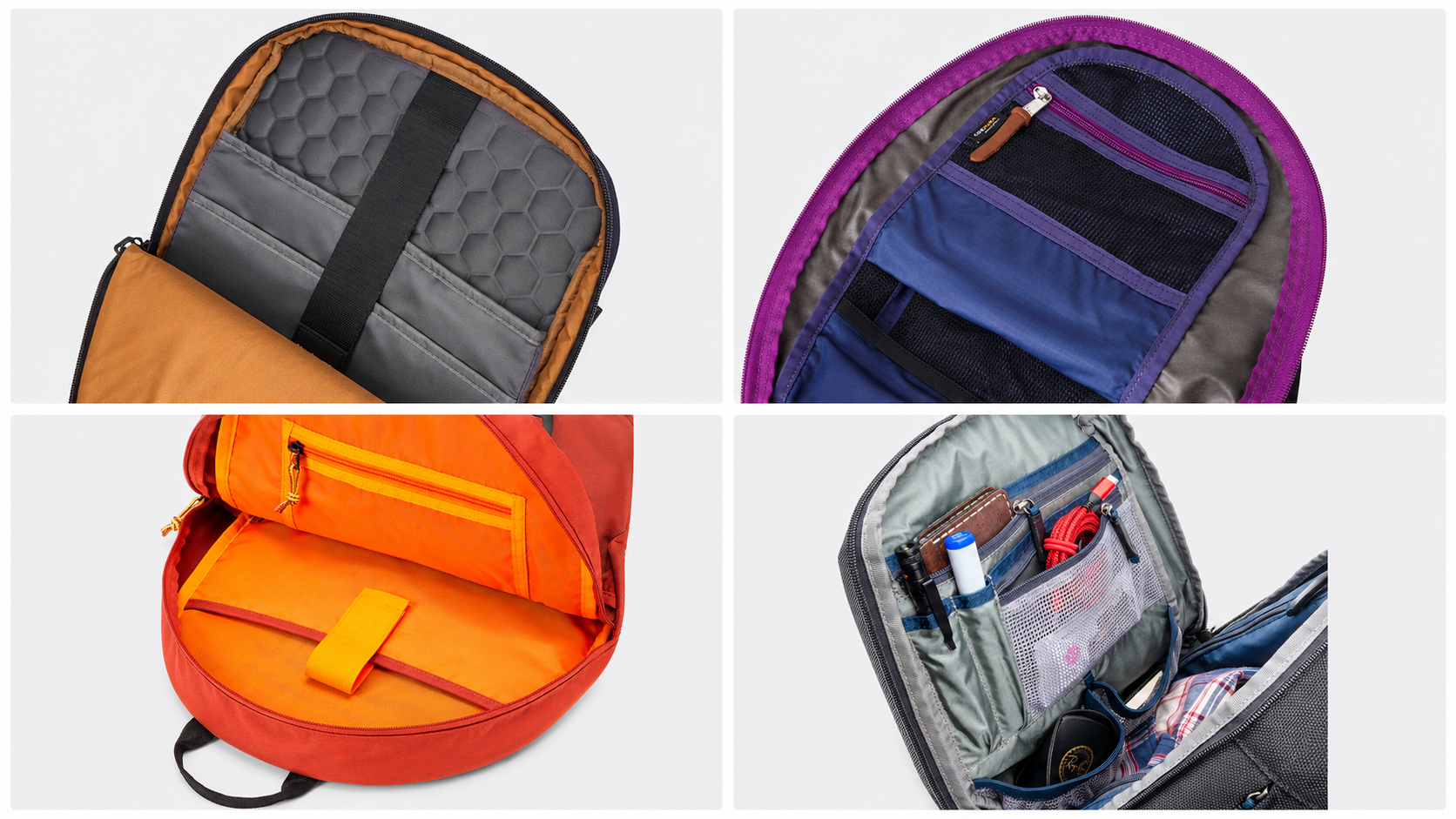
However, liters alone do not define a good backpack. Two backpacks with the same capacity can feel completely different because of compartment design, materials, padding, and weight distribution.
In this guide, we will explain backpack sizes from 10L to 50L, compare popular capacities such as 20L, 30L, and 40L, and help you choose the right backpack size based on your real usage needs.
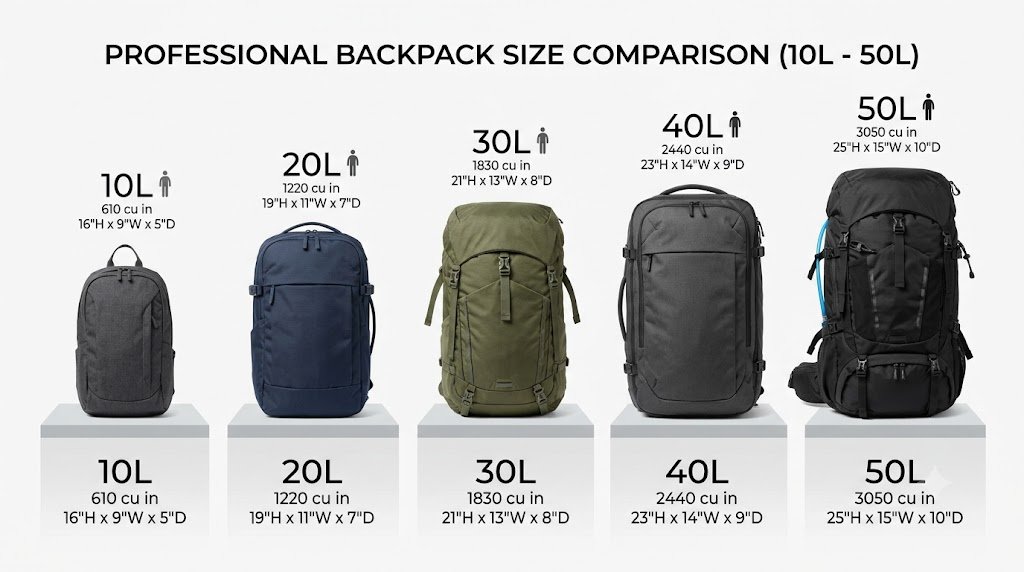
Backpack Size Chart: 10L to 50L Capacity Guide
Backpack capacity is usually measured in liters (L), which represents the approximate internal volume of the bag. However, the best backpack size depends on more than capacity alone. The way a backpack is designed, organized, and carried can significantly affect how useful the space feels.
Use the chart below as a general guide to understand common backpack sizes and their typical applications.
| Backpack Capacity | Best For | Common Uses |
|---|---|---|
| 10L–15L | Lightweight carry | Essentials, short trips, cycling, minimal daily carry |
| 16L–20L | Everyday backpack | Laptop, commuting, school, personal items |
| 21L–30L | Versatile backpack | Work, college, gym, short travel, daily use |
| 31L–40L | Large backpack | Travel, outdoor activities, extra gear |
| 41L–50L | Heavy-duty capacity | Multi-day trips, hiking, specialized equipment |
Quick Backpack Size Guide
- 10L–15L: Best when you only need essential items and want a lightweight, compact bag.
- 20L: A practical everyday size for laptops, commuting, and school.
- 30L: A flexible choice for users who need extra space without carrying a large backpack.
- 40L: Better for travel, outdoor activities, and heavier loads.
- 50L+: Designed for extended trips or specialized equipment.
The right backpack size is not always the largest one. A well-designed 20L backpack may be more practical than a poorly organized 30L backpack because usable space and carrying comfort matter as much as capacity.
For more specific situations, you can explore our guides on daily backpack size, student backpack size, laptop backpack size, and travel backpack size.
What Does Backpack Liter Size Really Mean?
Backpack capacity is usually measured in liters (L), which refers to the approximate internal volume of the backpack. A higher liter rating generally means more available space, but it does not always mean the backpack will feel larger or work better for every user.
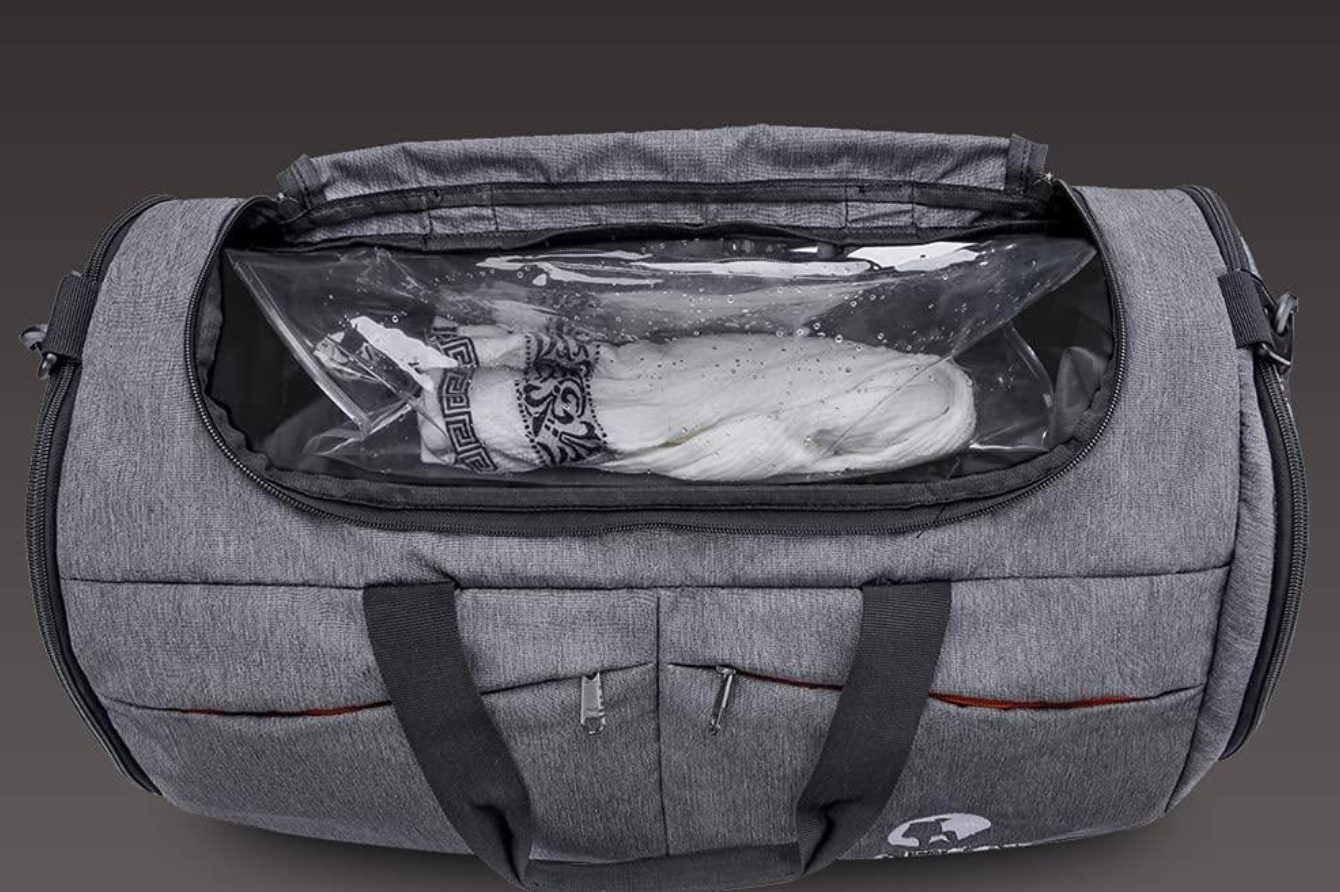
For example, two backpacks with the same 30L capacity can have very different user experiences. A travel backpack with one large main compartment may hold more clothing, while a laptop backpack with multiple padded compartments may provide better organization but less open storage.
The actual usability of a backpack depends on several design factors:
| Design Factor | How It Affects Usable Space |
|---|---|
| Main compartment shape | A wider, box-shaped compartment usually packs more efficiently |
| Laptop sleeve and padding | Protects devices but reduces available storage |
| Pocket organization | Improves access but uses internal space |
| Opening style | A clamshell opening is easier for packing than a narrow top opening |
| Compression system | Helps control bulk and improve carrying comfort |
This is why choosing a backpack should not be based only on liters. Capacity is only one part of the decision. The best backpack size also depends on the user’s purpose, packing habits, and carrying comfort.
A well-designed 20L backpack can be more practical than a poorly designed 30L backpack. The right balance between capacity, structure, and function creates a better user experience.
Backpack Size Dimensions Explained: Liters vs Physical Size

When choosing a backpack, capacity is only part of the decision. The liter rating tells you how much space a backpack can hold, while physical dimensions show how large the backpack actually is when worn and carried.
Backpack dimensions are usually measured by:
- Height: The vertical length of the backpack
- Width: The side-to-side measurement across the front
- Depth: The thickness of the backpack from front to back
A backpack with the same capacity can have different dimensions depending on its purpose. For example, a 30L hiking backpack is often taller and narrower for better weight distribution, while a 30L travel backpack may be wider to make packing easier.
Typical backpack dimensions by capacity:
| Backpack Capacity | Approximate Dimensions (H × W × D) | Common Use |
|---|---|---|
| 10L–15L | 35–45 × 20–30 × 10–15 cm | Small daypack and lightweight carry |
| 20L | 40–48 × 28–33 × 15–20 cm | Daily backpack, laptop, school |
| 30L | 45–55 × 30–38 × 18–25 cm | Work, travel, gym, versatile use |
| 40L | 50–60 × 32–40 × 22–30 cm | Travel, hiking, heavier loads |
| 50L | 55–70 × 35–45 × 25–35 cm | Extended trips and outdoor equipment |
Note: Actual backpack dimensions vary depending on the design, materials, padding, frame structure, and intended use.
The best backpack size is not determined by liters or dimensions alone. A comfortable backpack should match the user’s body, carrying needs, and daily activities.
Understanding both capacity and physical size helps you choose a backpack that is practical, comfortable, and suitable for real-world use.
How Big Is a 10L–15L Backpack, and Is It Enough?
A 10L–15L backpack is a compact daypack designed for lightweight carry. There is no single standard dimension because two backpacks with the same liter capacity can have different shapes.
As a general reference, 10L–15L backpacks often fall around 35–45 × 20–30 × 10–15 cm, with a 10L model usually sitting toward the smaller end of that range.
10L vs 15L Backpack: What’s the Difference?
A 10L backpack is better for minimal everyday carry such as a bottle, small tablet, wallet and light layer. A 15L backpack gives slightly more flexibility for clothing, larger personal items or a more organized compartment layout.
For users who regularly carry a laptop, books or gym clothing, moving up to around 20L is usually more practical.
A 10L–15L backpack is commonly used for
- Short city trips
- Cycling and walking
- Lightweight outdoor activities
- Carrying personal essentials
- Minimalist travel
Typical items that fit in a small backpack include:
| Item | Fits? |
|---|---|
| Phone, wallet, keys | Yes |
| Water bottle | Yes |
| Small notebook | Yes |
| Tablet | Usually |
| Light jacket | Sometimes |
| Laptop | Usually no |
| Extra clothing | Limited |
The main advantage of a small backpack is comfort. Because the load is lighter, the bag stays compact and easy to carry throughout the day.
However, a 10L–15L backpack may not provide enough space for users who carry laptops, books, gym clothes, or travel items. In those situations, a larger backpack size such as 20L usually provides a better balance between storage and comfort.
Is a 20L Backpack Enough for Daily Use?
A 20L backpack is one of the most popular everyday backpack sizes because it offers a practical balance between storage space and portability. It is large enough for essential daily items while remaining compact and comfortable to carry.
How Big Is a 20L Backpack?
A typical 20L backpack is approximately 40–48 × 28–33 × 15–20 cm, although actual dimensions vary with the bag shape, padding and compartment layout.
Twenty liters is generally considered a compact-to-medium everyday capacity, suitable for a laptop, documents, charger, water bottle and light personal items.
A typical 20L backpack can usually hold
| Item | Fits? |
|---|---|
| 13–16 inch laptop | Yes |
| Tablet | Yes |
| Notebook and documents | Yes |
| Charger and accessories | Yes |
| Water bottle | Yes |
| Light jacket | Yes |
| Gym clothes | Limited |
| Overnight travel items | Usually no |
A 20L backpack is often suitable for users who carry:
- A laptop and daily accessories
- School or work essentials
- Personal items for commuting
- Lightweight travel gear
The actual usability of a 20L backpack depends on the design. A laptop backpack with thick padding, multiple compartments, and protective features may provide less open storage than a simple daypack with the same capacity.
A 20L backpack is usually the right choice when you want a compact, organized bag for everyday needs. However, if you regularly carry extra clothing, sports equipment, larger books, or travel items, moving up to a 25L–30L backpack may provide more flexibility.
For more detailed guidance on choosing a backpack specifically for commuting, office use, and everyday carry, see our daily backpack size guide.
When Should I Choose a 30L Backpack?
A 30L backpack is often considered the most versatile backpack size because it provides extra space without becoming too large for everyday use. It is a popular choice for users who need one backpack that can handle work, school, gym, short trips, and light travel.
What Are Typical 30L Backpack Dimensions?
A typical 30L backpack is approximately 45–55 × 30–38 × 18–25 cm, although the actual dimensions depend on its intended use.
A 30L hiking backpack is often taller and narrower for load distribution, while a 30L travel backpack may be wider and more box-shaped for easier packing.
A 30L backpack is commonly suitable for
- College and university use
- Business commuting
- Gym and work combination
- Weekend travel
- Light hiking and outdoor activities
What Can Fit in a 30L Backpack?
A well-designed 30L backpack can usually carry:
| Item | Fits? |
|---|---|
| 15–16 inch laptop | Yes |
| Tablet and documents | Yes |
| Books or notebooks | Yes |
| Water bottle | Yes |
| Headphones and accessories | Yes |
| Extra clothing | Yes |
| Shoes | Usually |
| 2–3 day travel items | Sometimes |
The advantage of a 30L backpack is flexibility. Compared with a 20L backpack, it provides more room for additional clothing, personal gear, or work equipment. Compared with a 40L backpack, it remains easier to carry in daily situations.
Is a 30L Backpack Good for Travel?
A 30L backpack can work well for short trips, especially when the design uses space efficiently. Features such as a large opening, organized compartments, and a dedicated laptop section can make packing easier.
However, a 30L backpack may not be ideal for longer travel if you need bulky clothing, multiple pairs of shoes, or outdoor equipment. In those cases, a larger 40L backpack may provide better comfort and capacity.
Why 30L Is a Popular Backpack Size
For backpack brands, 30L is often a strong product category because it offers a wide market range. With the right structure, the same capacity can support different product directions, including commuter backpacks, travel backpacks, gym backpacks, and outdoor crossover bags.
The key is not adding more pockets or features, but creating a clear purpose for the backpack. A well-designed 30L backpack should balance capacity, organization, comfort, and overall size.
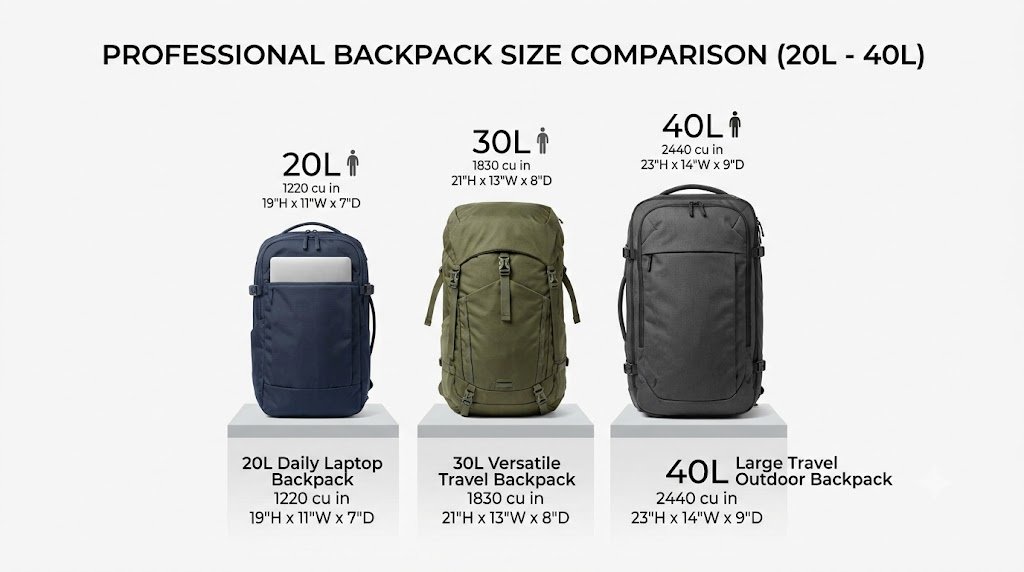
Is a 40L Backpack Too Big or Just Right?
A 40L backpack is considered a large everyday backpack size and is usually designed for travel, outdoor activities, and heavier loads. It provides significantly more storage than a 20L or 30L backpack, but the right design can still make it comfortable to carry.
A 40L backpack is commonly suitable for:
- Weekend and short-term travel
- Hiking and outdoor activities
- Carrying extra clothing and gear
- Photography or equipment storage
- Longer trips that require additional space
What Can Fit in a 40L Backpack?
A well-designed 40L backpack can usually carry:
| Item | Fits? |
|---|---|
| 15–16 inch laptop | Yes |
| Multiple clothing layers | Yes |
| Shoes | Yes |
| Toiletry bag | Yes |
| Camera or equipment | Yes |
| Travel accessories | Yes |
| Multi-day outdoor gear | Depends on design |
The main advantage of a 40L backpack is flexibility. It provides enough space for users who need more than daily essentials but do not want to carry a very large expedition-style backpack.
Is a 40L Backpack Good for Travel?
A 40L travel backpack can be an excellent choice for short trips because it offers enough room for clothing, electronics, and personal items while remaining smaller than traditional large luggage.
For travel use, features such as a clamshell opening, compression straps, organized compartments, and easy-access pockets can make packing much more efficient.
If you are choosing a backpack specifically for travel, see our detailed guide:
What Size Backpack Is Best for Travelling?
However, a 40L travel backpack and a 40L hiking backpack should not be designed the same way.
A travel backpack usually focuses on:
- Easy packing
- Laptop protection
- Organization
- Carrying convenience
A hiking backpack usually requires:
- Better weight distribution
- Stronger shoulder straps
- Improved back support
- Compression systems
What Makes a 40L Backpack Comfortable?
At 40L capacity, carrying comfort becomes more important because users may load the backpack with significantly more weight.
Important design factors include:
| Feature | Why It Matters |
|---|---|
| Shoulder straps | Reduce pressure during heavier carry |
| Back panel | Improves support and airflow |
| Sternum strap | Helps stabilize the load |
| Compression straps | Control movement and bulk |
| Strong stitching and materials | Support long-term durability |
A 40L backpack is not automatically better than a smaller backpack. The best choice depends on the user’s purpose. For daily commuting, it may feel unnecessary. For travel, hiking, or carrying extra equipment, it may provide the ideal balance between space and mobility.
For backpack brands, 40L models should have a clear market position. A travel backpack, hiking backpack, and outdoor gear backpack may share the same capacity, but the structure and features should match the intended user.
Backpack Size by Laptop Size: What Capacity Do You Need?
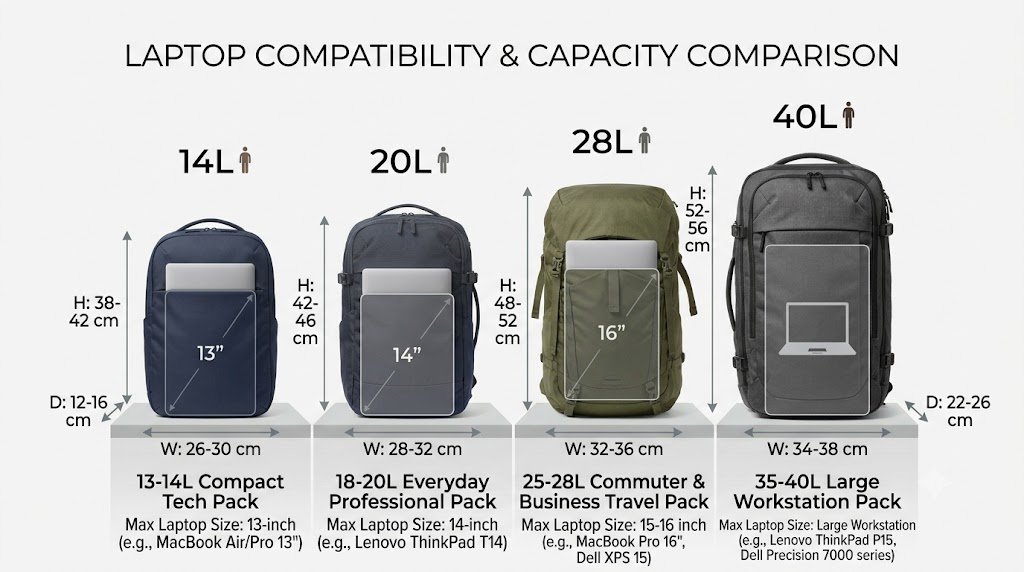
When choosing a laptop backpack, capacity is only one part of the decision. The backpack must also have the right laptop compartment size, protection, and overall structure.
A backpack that fits a laptop physically may still feel too small if the user also needs to carry chargers, notebooks, documents, a water bottle, or personal items.
As a general guide:
| Laptop Size | Recommended Backpack Capacity | Typical Use |
|---|---|---|
| 11–13 inch laptop | 15L–20L | Light commuting, students, minimalist carry |
| 14 inch laptop | 18L–25L | Office, school, daily business use |
| 15–16 inch laptop | 20L–30L | Professional work, college, everyday carry |
| Large workstation laptop | 30L+ | Designers, engineers, creators, heavy equipment |
What Makes a Good Laptop Backpack?
A suitable laptop backpack should consider more than just the laptop compartment size.
Important features include:
| Feature | Why It Matters |
|---|---|
| Padded laptop sleeve | Protects the device from impact |
| Raised laptop compartment | Prevents direct contact with the ground |
| Separate accessory storage | Keeps chargers and cables organized |
| Balanced weight distribution | Improves carrying comfort |
| Water-resistant materials | Helps protect electronics |
A 20L backpack may be enough for someone carrying only a laptop and daily essentials. However, users who carry a larger laptop, documents, headphones, chargers, and personal items may find a 25L–30L backpack more comfortable.
For students and professionals, the best backpack size is usually the one that balances device protection, available space, and comfortable daily carrying.
For a more detailed comparison of laptop sizes, backpack capacity, and recommended dimensions, read our complete guide: How to Choose the Perfect Laptop Backpack Size? Easy Guide
What Backpack Size Is Best for Students?
Students usually need a backpack that balances storage, comfort, and weight. The right size depends on the student’s age, daily items, laptop size, and how much they carry between classes.
As a general guide:
| Student Type | Recommended Backpack Size | Common Carry Items |
|---|---|---|
| Elementary school | 15L–20L | Small books, lunch, water bottle, personal items |
| Middle school | 18L–25L | Books, folders, daily supplies |
| High school | 20L–30L | Textbooks, laptop, sports items, personal gear |
| College students | 20L–30L+ | Laptop, books, documents, chargers, daily essentials |
A 20L backpack is often enough for students who mainly carry a laptop, notebooks, and personal items. A 25L–30L backpack may be more suitable for students who need extra space for textbooks, gym clothes, or longer days on campus.
However, student backpack selection is not only about capacity. Comfort, shoulder straps, back support, laptop protection, and weight distribution are equally important.
For a more detailed comparison of school, high school, and college backpack sizes, see our complete guide:
[Best Backpack Size for Students: School, College & Laptop Guide]()
How Should B2B Buyers Choose Backpack Capacity for a Product Line?
For backpack brands, importers, and bulk buyers, choosing backpack capacity is not only a size decision. It is also a product positioning decision.
A successful backpack collection usually needs clear capacity differences between models. A 20L daily backpack, a 30L versatile backpack, and a 40L travel backpack may have similar markets, but they should serve different user needs.
When selecting backpack capacity for a product line, buyers should consider:
| Question | Why It Matters |
|---|---|
| Who is the target user? | Students, commuters, travelers, and outdoor users need different capacities |
| What is the main product purpose? | Daily carry, travel, gym, and hiking require different structures |
| What items will users carry? | Capacity should match real usage scenarios |
| What price level is targeted? | Larger bags and stronger structures increase cost |
| How will the product be marketed? | Clear positioning helps customers understand the product |
A Simple Backpack Product Line Structure
Many brands can build a clear backpack range by using different capacity levels:
| Capacity | Product Positioning | Typical User |
|---|---|---|
| 15L–20L | Compact daily backpack | Students, commuters, urban users |
| 25L–30L | Multi-purpose backpack | Professionals, travelers, active users |
| 35L–40L | Travel and outdoor backpack | Travelers, hikers, equipment users |
| 45L+ | Large-capacity outdoor backpack | Extended trips and specialized use |
A common mistake in backpack development is adding too many features without a clear user purpose. More pockets, larger capacity, and extra accessories do not always create a better product. They can also increase weight, production cost, and user confusion.
A successful backpack line usually has clear differences between models. A 20L daily backpack should not compete directly with a 30L travel backpack. A 40L outdoor backpack should provide stronger support rather than simply more storage.
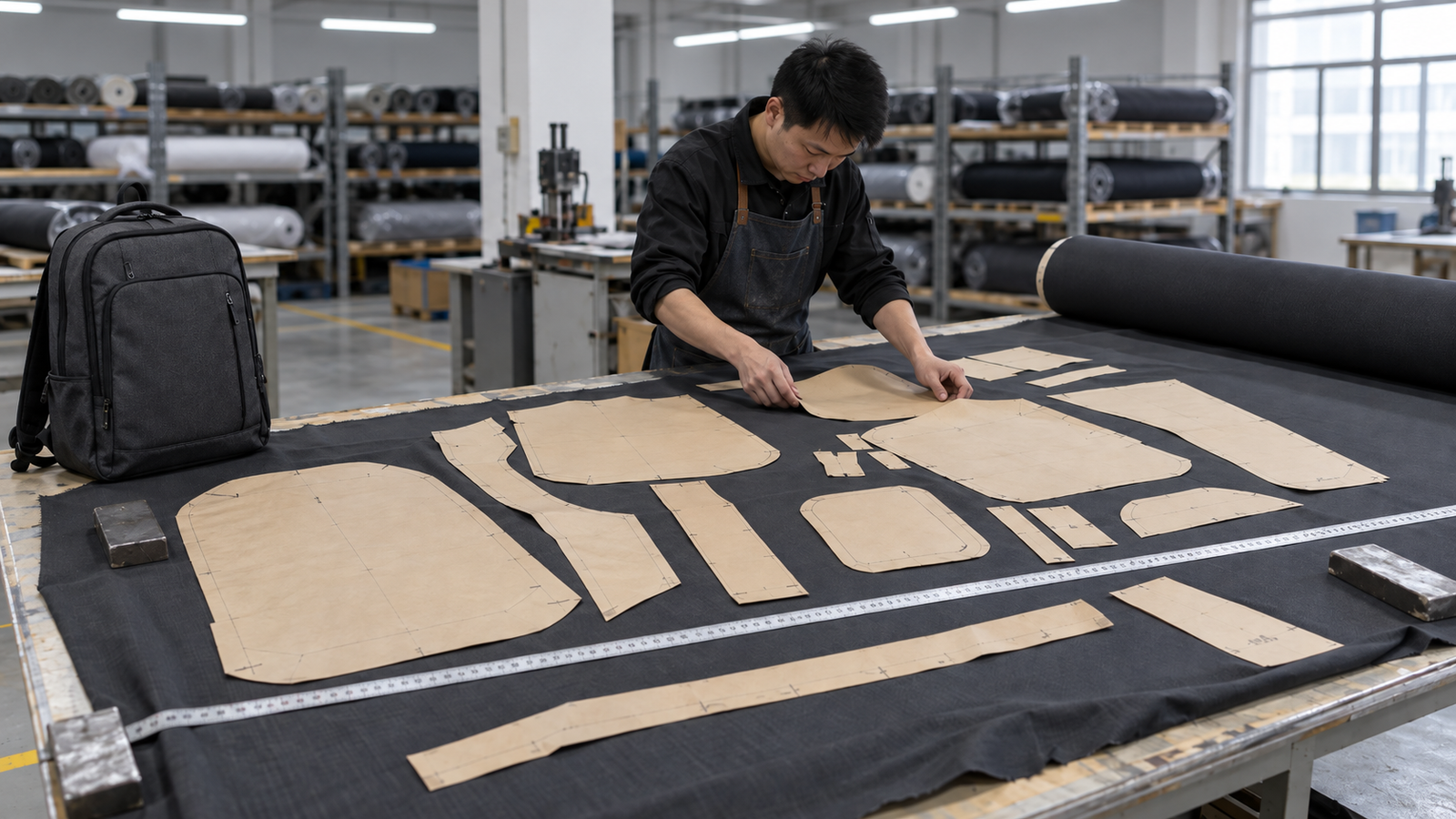
From a manufacturing perspective, the best capacity choice balances:
- User needs
- Product positioning
- Material and production cost
- Carrying comfort
- Market expectations
The right backpack size is not the biggest capacity possible. It is the capacity that best matches the product’s purpose.
Conclusion: Choosing the Right Backpack Size
Choosing the right backpack size is not simply about selecting more liters. Capacity should match the backpack’s intended use, dimensions, compartment layout and carrying system.
As a practical reference:
- 10L–15L works well for lightweight essentials and short activities.
- 20L is a common choice for everyday commuting, school and laptop carry.
- 30L offers more flexibility for work, gym and short trips.
- 40L–50L is better suited to travel, outdoor use and heavier loads.
However, two backpacks with the same stated capacity can perform very differently. Shape, pocket construction, padding, internal dividers and usable main-compartment space all affect how much the bag can actually carry.
For brands and importers, backpack capacity should therefore be confirmed together with the target user, product positioning and final construction, rather than selecting a liter number in isolation.
Developing a Custom Backpack?
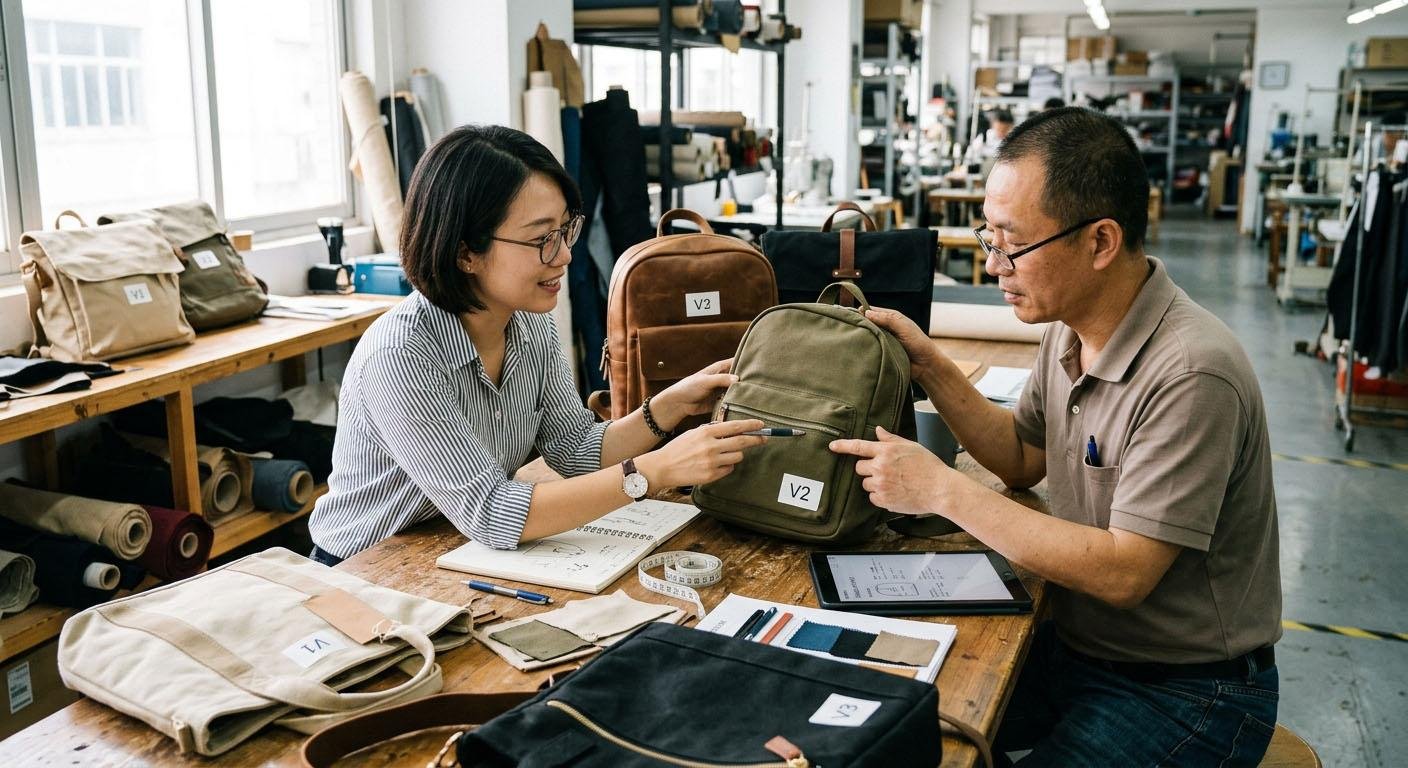
If you are developing a new backpack, we can help review the target capacity, dimensions, compartment layout, materials and construction before sampling.
Send us your:
- target use and customer group
- preferred backpack size or capacity
- reference images or drawings
- required compartments and features
- estimated order quantity
We can then recommend a practical size and construction for sample development and mass production.
Contact us to discuss your custom backpack project.
Frequently Asked Questions About Backpack Sizes
Is a 20L backpack big enough?
A 20L backpack is usually large enough for daily commuting, school, and laptop carry. It can typically hold a laptop, notebook, charger, water bottle, and personal items. However, it may feel too small if you need to carry extra clothing, gym equipment, or travel items.
Is a 30L backpack good for travel?
A 30L backpack can be a good choice for short trips, weekend travel, and travelers who prefer a lightweight setup. It provides more space than a daily backpack while remaining easier to carry than larger travel packs.
Is a 40L backpack too big for everyday use?
A 40L backpack is usually larger than most daily backpacks. It can work for users who regularly carry extra gear, but it may feel bulky for simple commuting. It is generally better suited for travel, hiking, and heavier loads.
Can a 40L backpack be used as a carry-on?
A 40L backpack may work as a carry-on depending on the backpack dimensions and airline requirements. Capacity alone does not determine whether a bag qualifies. Always check the airline’s size restrictions before traveling.
How many liters is a normal backpack?
A normal everyday backpack is commonly between 15L and 30L. Small backpacks are often around 10L–15L, daily laptop backpacks are usually 18L–25L, and larger travel or outdoor backpacks may range from 30L to 50L or more.
What size backpack is best for a college student?
Most college students find 20L–30L backpacks suitable because they can carry laptops, books, chargers, water bottles, and personal items. Students who carry more textbooks, gym clothes, or larger devices may prefer a larger capacity.
Does a higher liter backpack always mean better?
No. A larger backpack provides more storage, but it may also become heavier and less comfortable. The best backpack size depends on the user’s needs, carrying habits, and how efficiently the space is designed.
Is a 16-Inch Backpack Big Enough?
A backpack that is 16 inches tall can be suitable for everyday use, but height alone does not determine capacity. Width, depth, compartment layout and padding also affect how much the backpack can hold.
If “16 inch” refers to laptop size rather than backpack height, check the actual laptop-compartment dimensions instead of relying only on the backpack’s overall size.