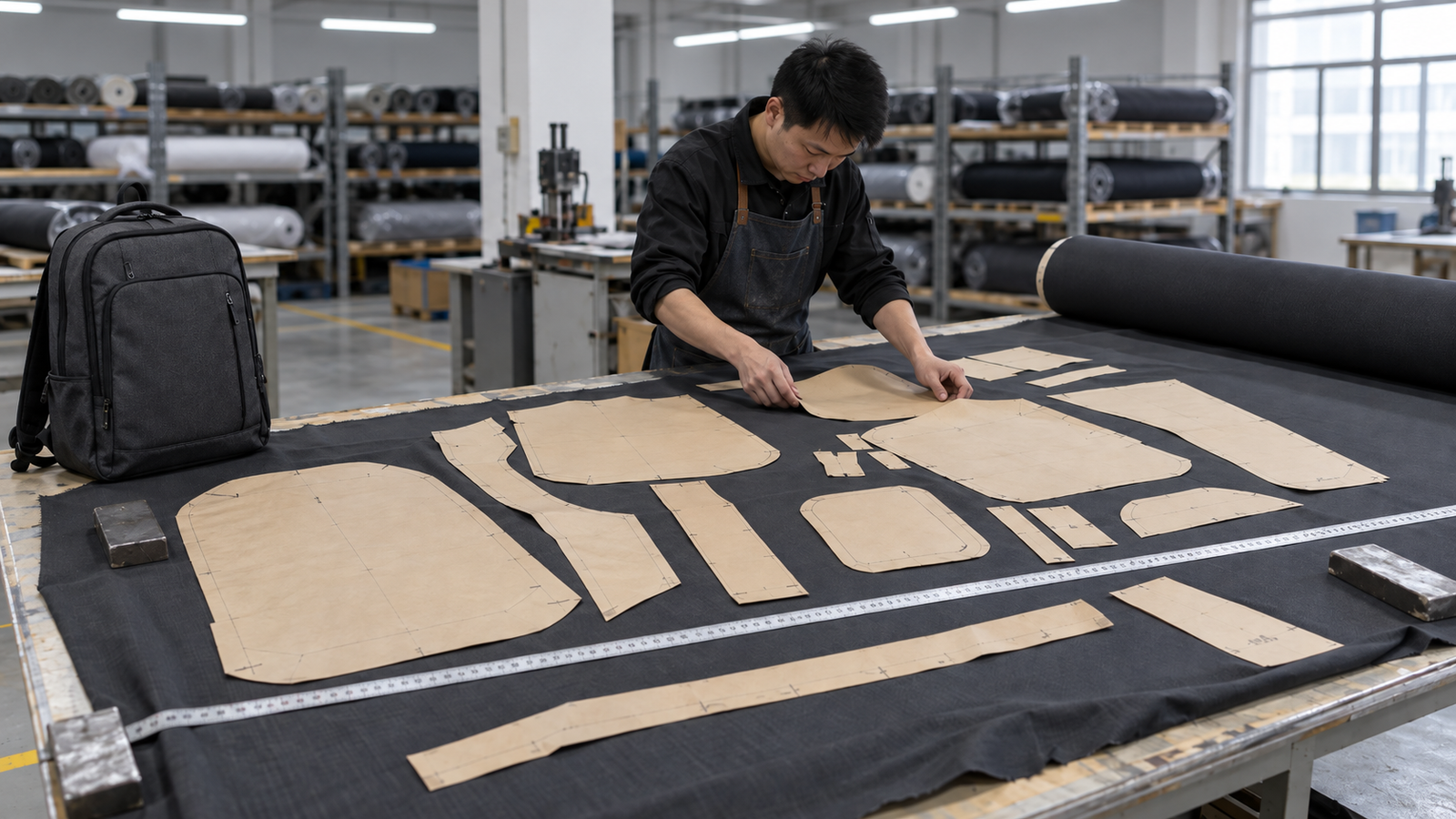
You’re rushing to catch a train, your backpack slips off your shoulder, and it hits the concrete platform with a heavy "thud." If you’re carrying a $2,000 MacBook or a sensitive work laptop, that sound is terrifying. Your first thought is inevitably: Did my screen just crack?
Yes. A false bottom —officially called a suspended laptop sleeve is the most effective structural design to prevent drop damage. Unlike standard foam padding that simply compresses upon impact, a false bottom suspends your laptop 1 to 2 inches above the actual base of the bag. When the backpack hits the ground, the built-in clearance absorbs the shock, ensuring the edge of your device never actually strikes the floor.
While standard padding might survive a gentle set-down on a carpet, a suspended design is non-negotiable for hard drops and daily commuting.
As a professional bag manufacturer with years of experience designing and producing custom laptop backpacks for global brands, Osgoodway has drop-tested countless protection methods on the factory floor. In this guide, we’ll take you behind the seams. We’ll explain the physics of a true false bottom, show you how to test your current backpack in three seconds, and share what B2B brands must know when designing their next flagship tech bag.
What Exactly is a "False Bottom" in a Backpack?
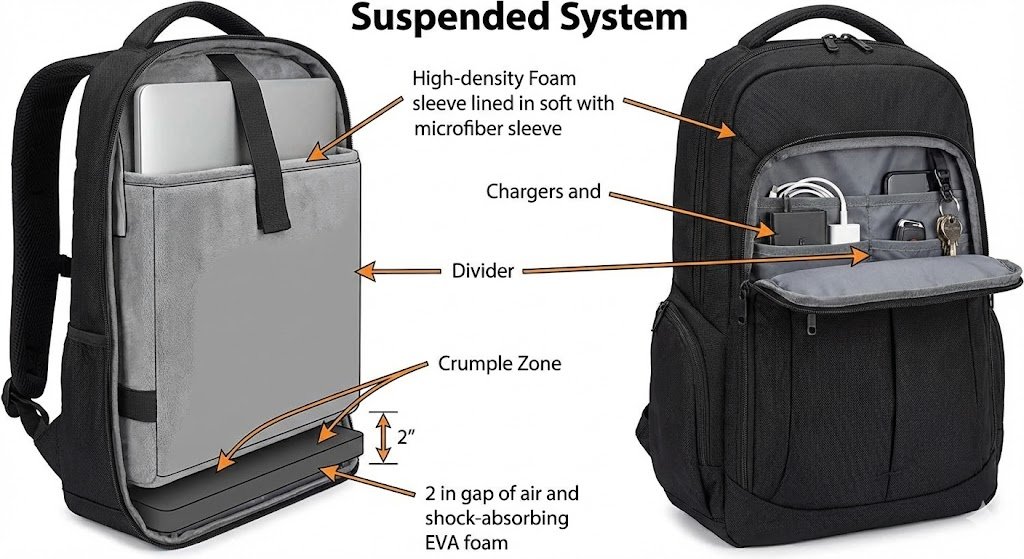
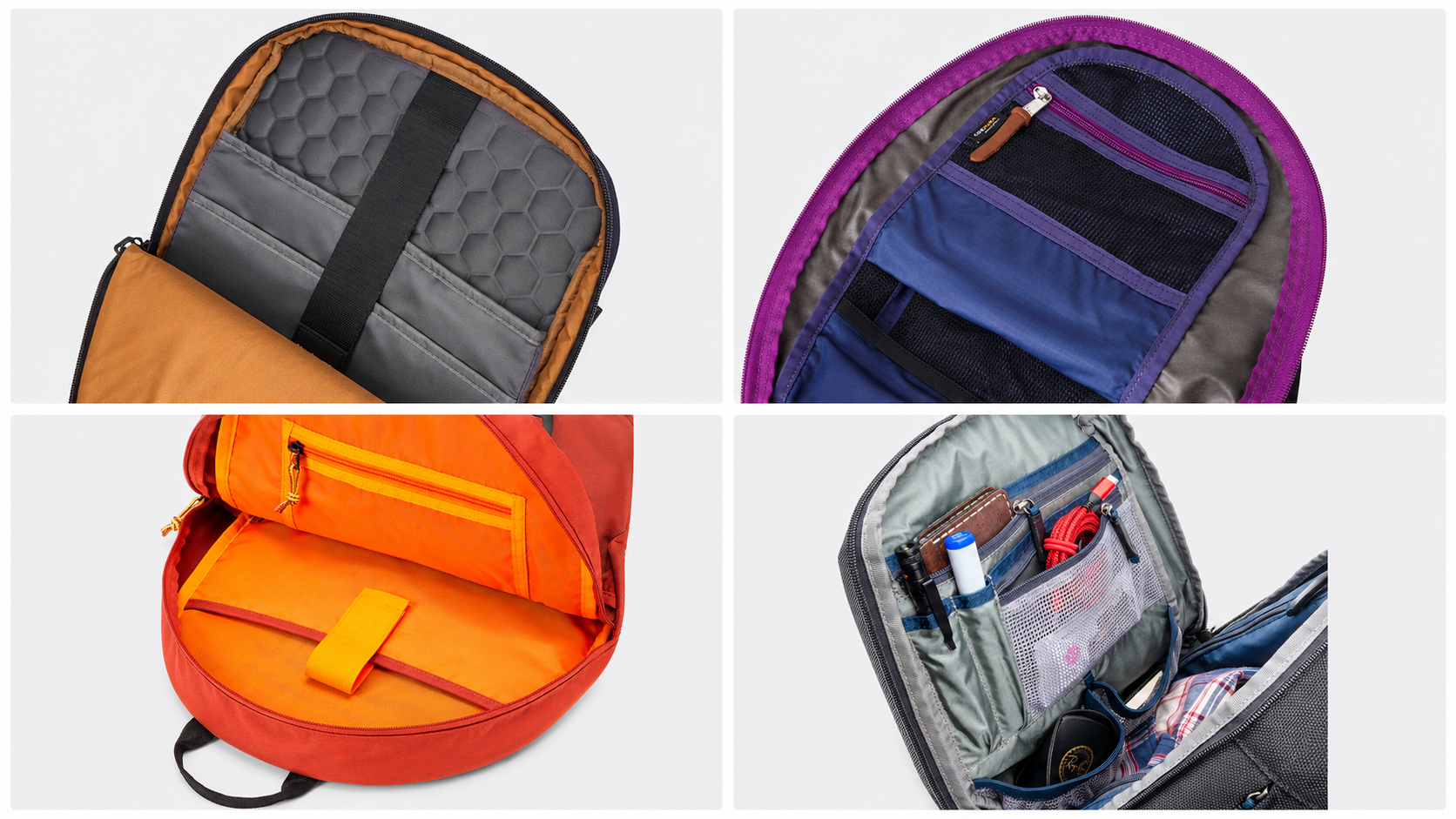
A "false bottom" in a backpack is a suspended internal laptop sleeve designed so its lower seam sits 1 to 2 inches above the bag’s exterior base. This built-in physical gap prevents your device from directly striking the hard ground, acting as an ultimate shock-absorbing buffer.
This isn’t just an empty void; it is a meticulously engineered structural suspension. In our factory drop tests from a 3-foot height, standard padded bags transfer up to 85% of the impact force directly to the laptop’s edge, whereas a 1.5-inch false bottom dissipates that kinetic energy, reducing direct hardware impact to nearly zero.
Why Choose a Suspended Sleeve Over Standard Padding?
| Feature | Standard Padded Bottom | Suspended "False Bottom" |
|---|---|---|
| Impact Force | Transferred directly to device edge | Absorbed by the surrounding fabric gap |
| Protection Level | Basic (scratches and light bumps) | Maximum (concrete drops and heavy use) |
| Manufacturing | Simple foam layer on the base | Reinforced sleeve anchored to the back panel |
Factory Secret: Many cheap bags use thick but soft foam to mimic a false bottom. True suspension requires a physical gap you can feel with your hand!
False Bottom vs. Standard Padding: What’s the Real Difference?
Understanding drop physics is crucial for commuters and product developers assessing genuine tech protection.
A standard padded bottom relies on a layer of foam at the base, which often compresses over time. A "False Bottom" or Suspended Sleeve is an engineering choice where the laptop compartment is anchored higher up, leaving the laptop "floating" above the bag’s floor so it never hits the ground.
How Does Standard Padding Fail Under Pressure?
When dropped, ordinary foam instantly flattens under a laptop’s gravity. The kinetic force easily breaches the foam barrier, causing critical screen cracks.
- Sponge-like materials lack the necessary structural resistance for heavy devices.
- Impact points become dangerously concentrated on the laptop’s fragile corners.
- Over time, standard EVA foam can compress and permanently lose its cushioning.
Why Does Suspension Effectively Neutralize Impact Force?
A suspended sleeve leverages gravity and empty space. The bag exterior hits the floor, but the laptop safely decelerates mid-air within the internal pocket.
| Metric | Standard Foam Padding | Suspended False Bottom |
|---|---|---|
| Hardware Deceleration | Abrupt (High G-force transfer) | Gradual (Low G-force transfer) |
| Kinetic Energy Transfer | High (Directly to laptop edge) | Low (Dispersed into bag seams) |
Should You Pay More for This Feature?

If you’re carrying a $300 Chromebook, maybe you don’t care. But if you’re a MacBook Pro or Razer user, you’re playing a dangerous game without a suspended sleeve.
A suspended sleeve is a "must-have" for daily commuters, students, and travelers who frequently set their bags down on hard surfaces like subways or library floors. It is optional only if you already use a ruggedized hardshell laptop case inside your bag.
How to test your bag in 5 seconds?
- The Finger Test: Reach into the laptop compartment.
- Push Down: Try to touch the very bottom of the bag from the inside of the sleeve.
- The Gap: If your finger stops and there’s still 1-2 inches of "empty" bag below it, you’ve got a real false bottom. If you can feel the floor immediately? Your laptop is at risk.
Who can skip it?
| User Type | Protection Priority | Recommendation |
|---|---|---|
| Bike Commuter | High | 100% Necessary |
| Digital Nomad | High | 100% Necessary |
| Indoor/Office Only | Medium | Padded bottom is fine |
| Using a 13" in a 16" Bag | Critical | Needs suspension + strap |

Behind the Seams: How Do We Manufacture Bulletproof Laptop Protection?
True protection goes beyond adding a gap; it requires meticulous material selection and heavy-duty craftsmanship.
Building a durable false bottom requires high-density EVA foam and reinforced bartack stitching. This prevents sleeve sagging, maintaining the vital protective clearance.
What Critical Materials Power a Suspension System?
Premium EVA foam prevents internal friction, while rugged nylon base panels maintain exterior rigidity, ensuring the structural gap remains completely intact.
- High-Density EVA Foam (placed at the bottom of the sleeve for secondary dispersal).
- Industrial-grade nylon threads (used for tensile strength at anchor points).
- Heavy-duty coated canvas or polyester (used on the exterior base to resist abrasion).
How Do Rigorous Drop Tests Ensure Quality Control?
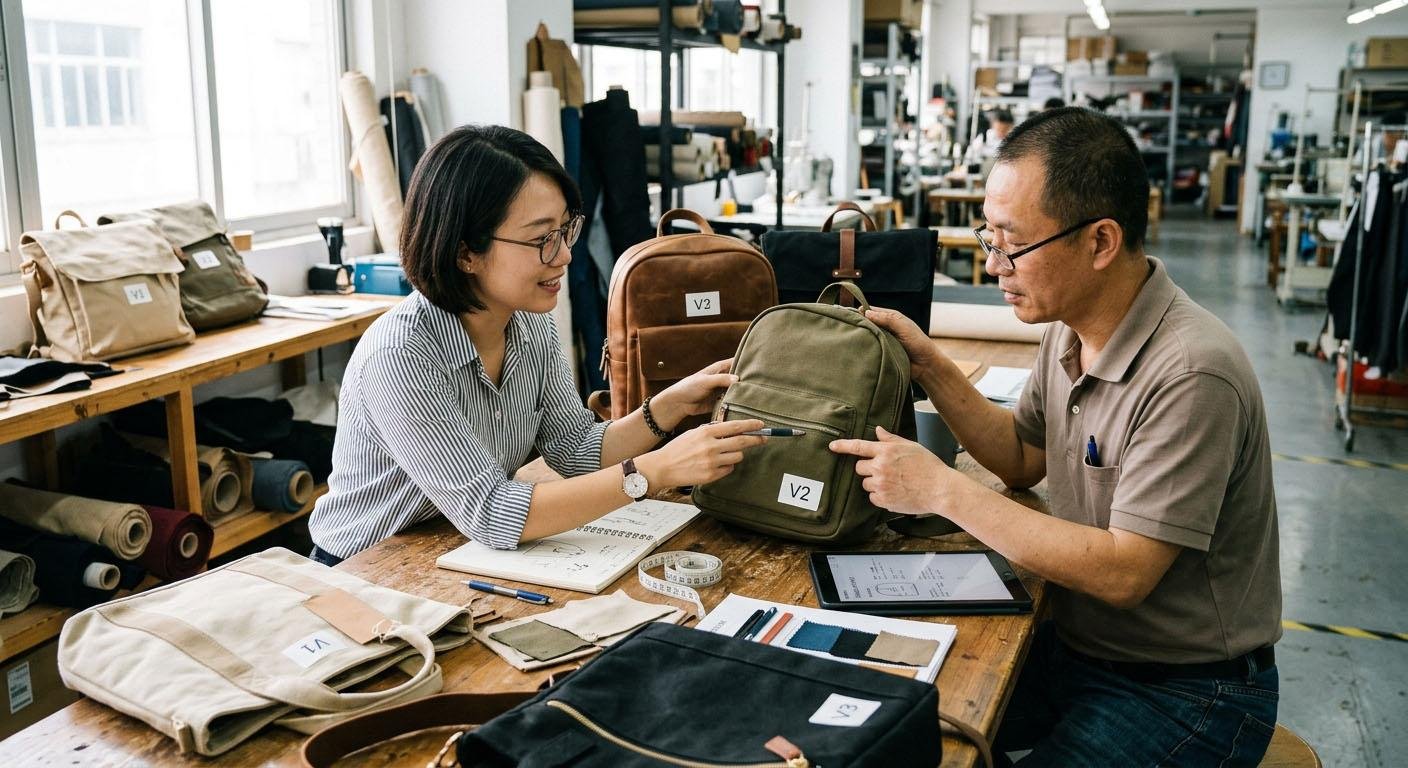
Before any B2B bulk shipment, our product development team subjects sample bags to weighted, multi-angle drop tests to verify the suspension’s durability.
- Vertical concrete drop testing from heights exceeding 3 feet.
- Seam tension testing specifically targeting the upper bartack stitches.
- Long-term weight suspension simulation using 5-pound dummy devices.
Designing Your Custom Laptop Backpack: What Should Brands Know?
For B2B founders and procurement managers, integrating premium protection directly elevates brand positioning.
Brands must prioritize structural integrity over cheap aesthetics. Partnering with an experienced OEM/ODM factory ensures complex features like false bottoms are manufactured flawlessly, offering competitive pricing without sacrificing the intricate stitching required for true device safety.
What Upgrades Complement a False Bottom Design?
Beyond laptop suspension, premium tech backpacks must incorporate waterproof YKK zippers, ergonomic back panels, and sustainable fabrics like eco-friendly rPET.
- Waterproof YKK zippers to protect expensive tech from sudden downpours.
- Ergonomic, breathable mesh back panels for enhanced daily commuter comfort.
- Sustainable materials like recycled polyester (rPET) to attract eco-conscious buyers.
Why Partner With Our Expert Manufacturing Team?
As a factory source, Osgoodway balance complex craftsmanship with cost-effective optimization, delivering high-margin flagship products directly to your brand.
| OEM/ODM Service | Our Factory Advantage | Common Competitor Drawbacks |
|---|---|---|
| Prototyping | Precise structural suspension modeling | Guesswork and weak internal stitching |
| Material Sourcing | Direct access to premium EVA and fabrics | Limited, low-durability material options |
| Cost Optimization | Factory-direct pricing models | High middleman trading company markups |
Also read:
What Are The Must-Have Features of a High-Quality Laptop Backpack?
Which Materials Are Best for Durable Laptop Backpacks?
How to Pick the Perfect Laptop Backpack for Travel and Office Use?
Final Verdict & Expert Advice
If you’re building a brand or buying a bag in 2026, the "False Bottom" is the gold standard. A bag that lets your laptop hit the floor is just a fancy sack.
- For Consumers: Stop buying bags based on the logo. Look for the suspension. If it doesn’t have a 1-inch gap, it’s not a tech bag.
- For B2B Brands: Don’t let your factory talk you out of this to save $1. The cost of one bad review about a cracked screen far outweighs the cost of the extra bartacks and fabric.
Looking to manufacture a custom backpack with premium laptop protection? Contact our product development team today for a free consultation on materials, structural design, and expert OEM/ODM services to bring your tech bag vision to life.