Sourcing sustainable backpacks feels risky. You worry about greenwashing1 and damaging your brand’s credibility. GRS Transaction Certificates offer the concrete proof you need to build trust with your customers.
To verify a sustainable backpack supplier, you must request a GRS Transaction Certificate2 (TC) for your specific shipment. This document proves the recycled materials are legitimate and traceable from source to final product, protecting your brand from false claims.
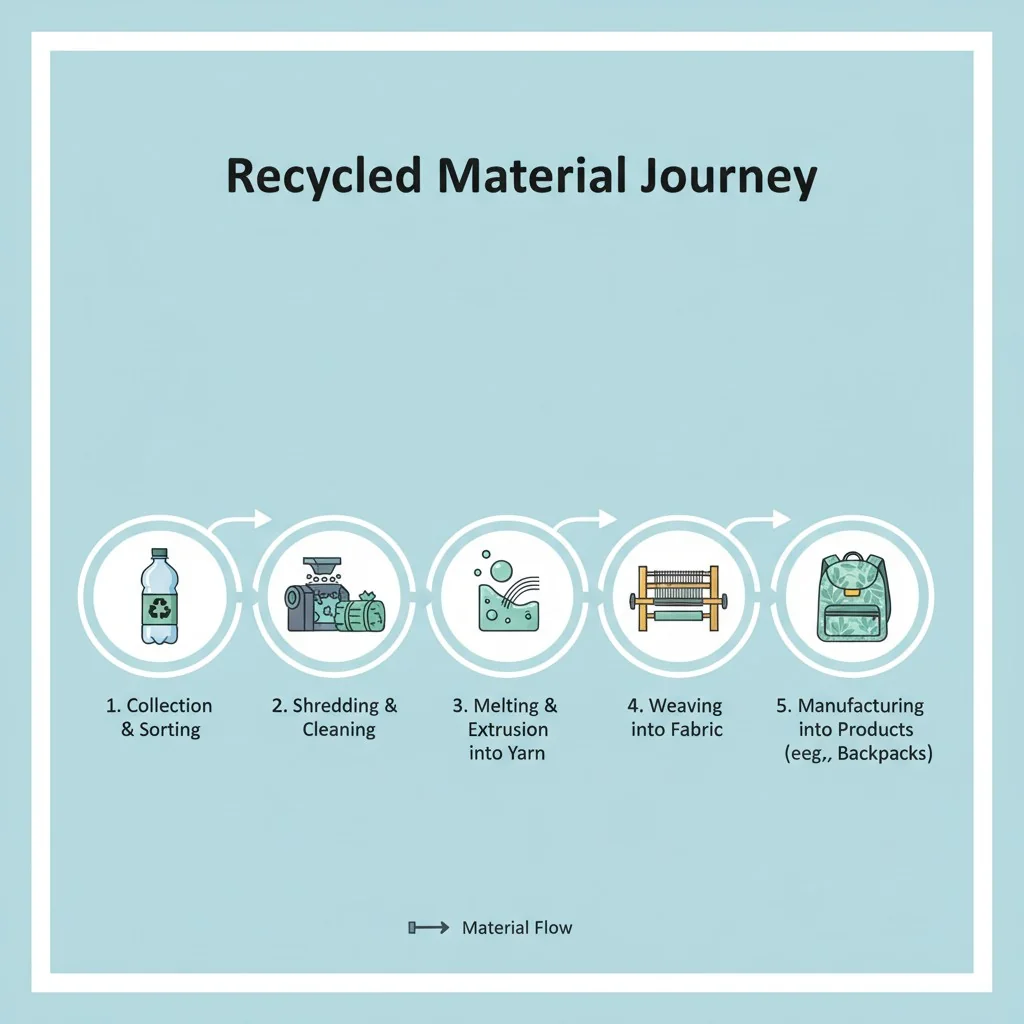
I remember the first time a client, just like you, asked me about verifying Recycled materials. She was so passionate about her brand’s eco-friendly mission but felt lost in a sea of certifications. It’s a common feeling. You want to do the right thing, but how do you cut through the noise and get real answers? It all starts with understanding the system behind the label. Let’s break down what GRS is and why it’s the gold standard for recycled materials in the bag industry.
[claim claim=”Any product with a green leaf logo is GRS certified.” istrue=”false” explanation=”GRS certification is a specific standard with its own logo. Generic green symbols do not guarantee GRS compliance.”]
[claim claim=”The GRS requires products to contain at least 20% recycled material to be certified.” istrue=”true” explanation=”This is the minimum threshold, though the GRS logo can only be used on final products containing at least 50% recycled content.”]
What is the Global Recycled Standard (GRS) and Why Does It Matter for Backpacks?
Seeing "GRS-certified" on a supplier’s site can be confusing. Without knowing what it means, you risk choosing materials that don’t align with your brand’s sustainable mission.
The Global Recycled Standard3 (GRS) is a global, third-party certification for products with at least 20% recycled content. For backpacks, it ensures the recycled fabric is authentic and that the manufacturing process meets strict environmental and social criteria, adding true value to your brand.
The GRS is so much more than just a label. I’ve seen firsthand how it separates the truly committed suppliers from the rest. It’s managed by Textile Exchange4, a non-profit, and it’s designed to be a holistic standard.
More Than Just Recycled Content
The standard verifies the presence and amount of recycled material in a final product. It tracks the flow of the raw material from the recycler to the final product. This is called the chain of custody5. It ensures that the RPET fabric in your backpack actually came from recycled plastic bottles.
Social and Environmental Pillars
GRS also audits other critical areas. It has strict rules on chemical use, banning many harmful substances. It also includes social requirements based on the International Labour Organization (ILO) conventions, covering things like worker safety and fair wages.
Why It’s Crucial for Backpacks
For a product like a backpack, which uses a lot of fabric and goes through many production steps, GRS provides a complete picture of its sustainable journey.
| Feature | Generic "Recycled" Claim | GRS Certification |
|---|---|---|
| Recycled Content | Unverified percentage | Verified (min. 20%) |
| Traceability | None | Full Chain of Custody |
| Chemicals | Unrestricted | Restricted Harmful Substances |
| Social Compliance | Not included | Required (based on ILO) |
| Environmental Mgt. | Not included | Required (e.g., water/energy use) |
[claim claim=”GRS only cares about the amount of recycled material in a product.” istrue=”false” explanation=”GRS is a holistic standard that also covers social responsibility, environmental management, and chemical restrictions in the production process.”]
[claim claim=”GRS certification is managed by the non-profit organization Textile Exchange.” istrue=”true” explanation=”Textile Exchange owns and manages the GRS, ensuring its integrity and continuous improvement as a leading standard for recycled materials.”]
What Exactly is a GRS Transaction Certificate (TC)?
Your supplier shows you a GRS certificate for their factory. But this doesn’t prove the fabric in your backpacks is certified, leaving your claim weak and unverified.
A GRS Transaction Certificate (TC) is a shipment-specific document issued by a Certification Body6. It acts like a passport, confirming that the exact quantity of recycled goods you purchased is GRS-compliant and has been correctly transferred from a certified supplier to you.

Think of a Transaction Certificate as the official receipt for your sustainable purchase. I always tell my clients, like Emily, that a supplier’s main GRS certificate (called a Scope Certificate) is like a driver’s license—it proves they are qualified to operate. But the TC is the proof of a specific trip. It proves your order was made correctly.
The Role of the TC
The TC is the critical link in the GRS chain of custody. It’s issued by an independent third-party, known as a Certification Body (CB), not by the supplier themselves. This ensures its authenticity. Each time GRS-certified material moves from one company to another, a TC must be generated to document the transaction.
What Information is on a TC?
A TC is packed with specific details:
- The certified seller’s name and certificate number
- The buyer’s name (that’s you!)
- A unique TC number
- Product details: description, quantity, weight, and GRS-certified recycled content percentage
- Shipment information
This level of detail makes it nearly impossible to fake if you know how to check it.
[claim claim=”Suppliers can issue their own GRS Transaction Certificates.” istrue=”false” explanation=”TCs can only be issued by accredited, third-party Certification Bodies (like Control Union or Intertek) to ensure impartiality and authenticity.”]
[claim claim=”A TC is specific to a single shipment or transaction.” istrue=”true” explanation=”Unlike a Scope Certificate which is valid for a year, a TC is created for each individual sale of GRS goods to maintain a strict chain of custody.”]
How Can I Verify That a Supplier’s GRS TC is Legit?
You’ve received a GRS Transaction Certificate from your supplier. But in a world of easy-to-edit documents, how do you know it’s real and not a clever fake?
To verify a GRS TC, first check the supplier’s certification number (e.g., CU123456) on the Textile Exchange’s "Find Certified Company" online database. Then, contact the issuing Certification Body directly with the TC number to confirm the document’s authenticity and details.

I’ve had to do this verification process many times. It might seem like a bit of detective work, but it’s straightforward and gives you complete peace of mind. Don’t just take the supplier’s word for it—always verify.
Step 1: Check the Scope Certificate
Before you even get to the TC, look at the supplier’s main GRS certificate, the Scope Certificate (SC). It will list a certification number, often starting with letters like "CU" for Control Union or "ITS" for Intertek. This number is your starting point.
Step 2: Use the Public Database
Go to the Textile Exchange’s website. They have a public search tool called "Find Certified Companies." Enter the certification number from the SC. The database should show you:
- The company’s name and location.
- The certificate’s status (is it valid?).
- The scope of their certification (what products are they certified to make?).
This confirms the supplier is genuinely certified.
Step 3: Contact the Certification Body
This is the most important step. The TC document itself will name the Certification Body (CB) that issued it. Find the contact information for that CB and email them. Provide the TC number and ask them to confirm it’s a valid document issued by them and that the details (buyer, seller, product) match their records. This final check is your ultimate proof.
[claim claim=”A supplier’s GRS certificate is valid forever once issued.” istrue=”false” explanation=”GRS Scope Certificates are typically valid for only one year and must be renewed through an annual audit.”]
[claim claim=”You can verify a supplier’s GRS status on the Textile Exchange’s public database.” istrue=”true” explanation=”Textile Exchange maintains a searchable database of all companies certified to its standards, allowing for quick and easy verification.”]
Which Parts of the Supply Chain Need to Be GRS-Certified?
So, your backpack manufacturer is GRS-certified. That’s great, but it’s not the full story. If their fabric supplier isn’t certified, your sustainability claim falls apart completely.
For a backpack to be GRS-certified, every stage of production that takes ownership of the material must be certified. This includes the yarn spinner, fabric weaver/knitter, dyer, and the final bag manufacturer. The chain must be unbroken from the recycler to the finished product.
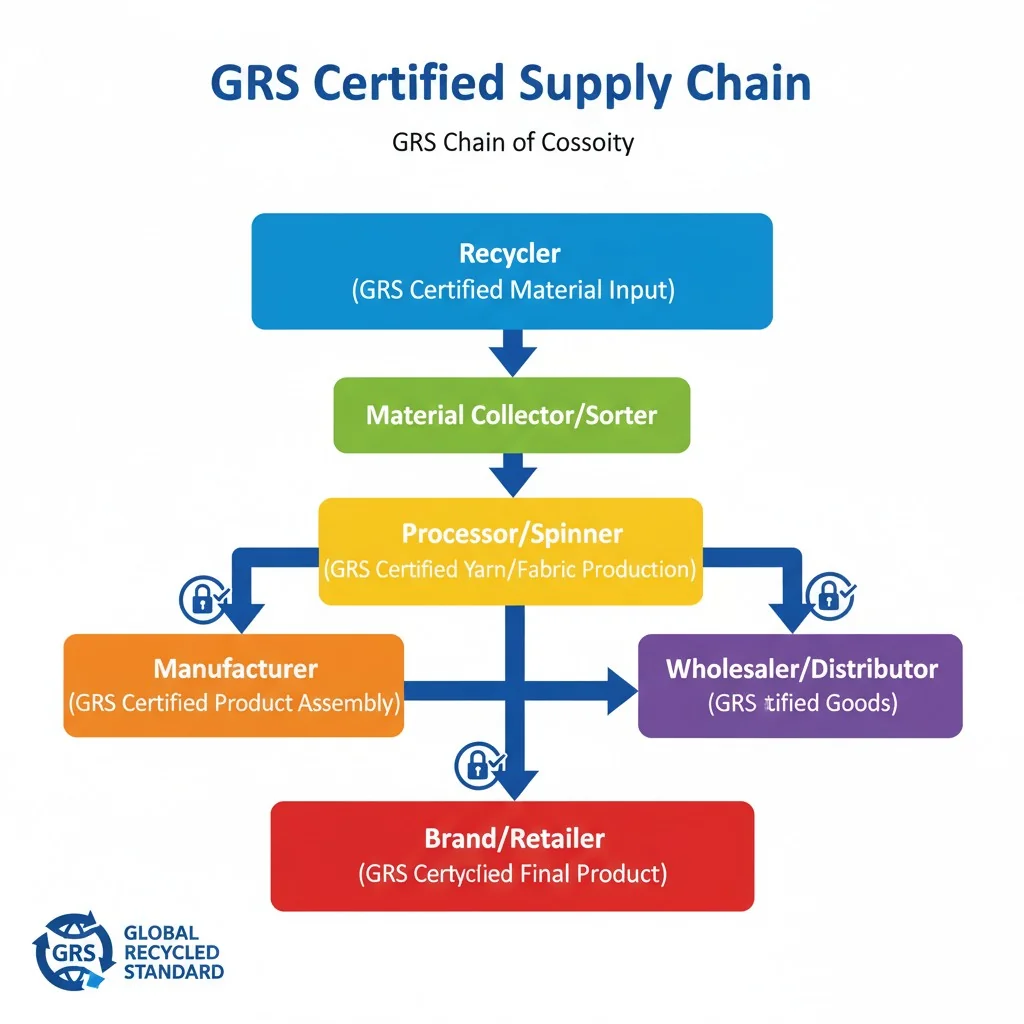
The GRS works on a principle called "chain of custody." I like to explain it as a relay race. The recycled material is the baton, and each runner (or supplier) in the race must be a certified GRS athlete. If one runner isn’t certified, the baton is dropped, and the race is lost.
The Unbroken Chain
The goal is to ensure the recycled material you end up with is the same material that started the journey. Certification at each step prevents non-certified material from being mixed in, either by accident or on purpose.
Who Needs to Be Certified?
Here’s a typical supply chain for a recycled polyester backpack. Every one of these stages must be GRS certified:
- Recycler: Processes post-consumer waste (e.g., bottles) into flakes or pellets. (Note: Recyclers are often covered by other standards, but their output is the GRS starting point).
- Yarn Spinner: Turns the recycled flakes/pellets into yarn.
- Fabric Mill: Weaves or knits the yarn into fabric.
- Dyer/Finisher: Dyes and treats the fabric.
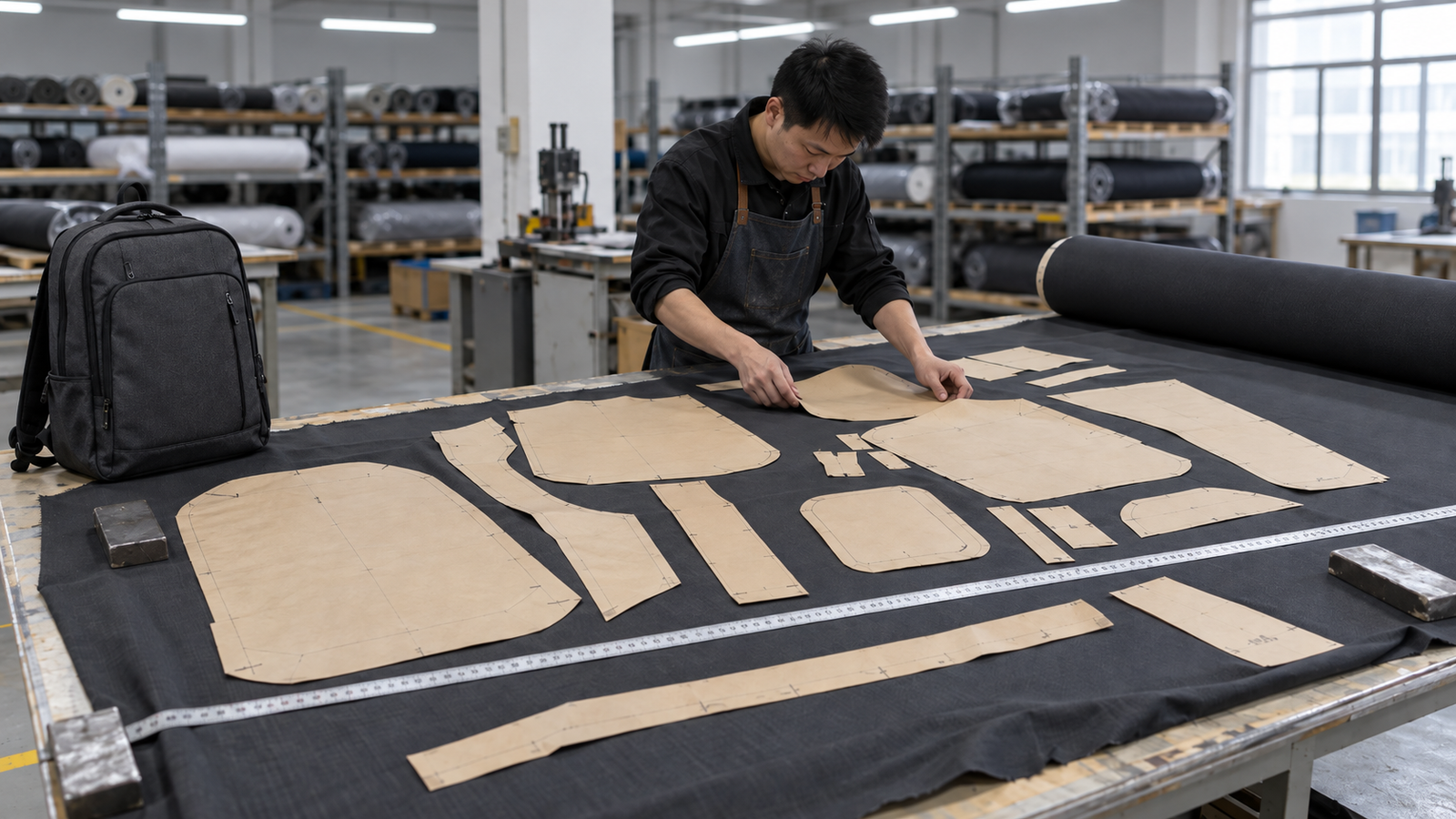
- Bag Manufacturer: Cuts and sews the fabric into the final backpack.
If any link in this chain is missing GRS certification, the final bag cannot be sold as GRS-certified.
[claim claim=”Only the final product manufacturer needs to be GRS-certified.” istrue=”false” explanation=”GRS requires an unbroken ‘chain of custody,’ meaning every company in the supply chain that processes the material, from yarn spinner to fabric mill to the final assembler, must be certified.”]
[claim claim=”Brands and retailers who do not alter the product do not need to be GRS certified to sell GRS products.” istrue=”true” explanation=”Brands that simply buy and sell finished, labeled GRS products are the final link and are not required to be certified themselves, though they can opt-in for labeling purposes.”]
What Red Flags Suggest a GRS Claim May Be Greenwashing?
A supplier offers you GRS-certified backpacks at the same price as conventional ones. This feels off, and you’re right to be suspicious. It could be a sign of greenwashing.
Red flags for GRS greenwashing include prices that are too low, an unwillingness to provide a Transaction Certificate for your specific order, vague answers, or showing you an expired or irrelevant Scope Certificate. Always demand specific, verifiable proof for your own production run.

I once worked with a new brand owner who was so excited to find a supplier offering RPET bags for an incredibly low price. I had to gently advise her to dig deeper. If it seems too good to be true, it usually is. Here are the red flags I told her to watch for:
The Price is Too Good to Be True
GRS-certified material and production cost more. There are audit fees, stricter processes, and often higher raw material costs. If the price for a GRS backpack is the same as or cheaper than a regular polyester one, be very skeptical.
Certificate Evasiveness
This is the biggest red flag.
- They only show you a general factory certificate but refuse to issue a TC for your order.
- They say, "Don’t worry, we are certified," but won’t provide the certificate number for you to check.
- The certificate they show you is expired, or it’s for a different company (like a sister factory).
- They hesitate or make excuses when you ask to contact the Certification Body.
Vague Language
Instead of confirming "GRS-certified," they use fuzzy terms like "eco-friendly," "made with recycled materials," or "sustainable fabric" without providing the GRS paperwork to back it up.
[claim claim=”GRS-certified materials should cost the same as conventional materials.” istrue=”false” explanation=”GRS certification involves audit costs, stricter process controls, and sometimes higher raw material costs, which typically results in a price premium over non-certified conventional materials.”]
[claim claim=”A supplier’s refusal to provide a Transaction Certificate is a major red flag.” istrue=”true” explanation=”A legitimate GRS-certified supplier should be able and willing to provide a TC for a compliant order, as it’s a standard part of the GRS process. Refusal suggests the claim is not genuine.”]
How to Structure Supplier Audits and Contracts Around GRS-Certified Backpacks?
You’ve found a supplier you trust. But how do you ensure every future order of your GRS backpacks meets the standard? A handshake isn’t enough to protect your brand.
In your supplier contract, explicitly state that all products must be GRS-certified and that a valid Transaction Certificate (TC) must be provided for each shipment. Make the final payment conditional upon receiving and verifying this TC. This makes compliance a contractual obligation.

This is where you move from sourcing to smart partnership management. Your legal agreements are your safety net. I always advise clients like Emily to be crystal clear in their purchase orders and manufacturing agreements. Don’t leave anything open to interpretation.
Key Contract Clauses
Your contract or PO should include specific language. For example:
- "Product must be manufactured in compliance with the Global Recycled Standard (GRS version X.X)."
- "Supplier must provide a valid GRS Transaction Certificate (TC) issued by an accredited Certification Body for each shipment under this Purchase Order."
- "The TC must list [Your Brand Name] as the buyer and accurately reflect the products and quantities shipped."
Linking Payment to Compliance
This is your best leverage. Structure your payment terms so that the final payment (for example, the final 30-50%) is only released after you have received the TC and successfully verified its authenticity with the issuing Certification Body. This financially motivates the supplier to follow through on their promise.
Audits and On-Site Visits
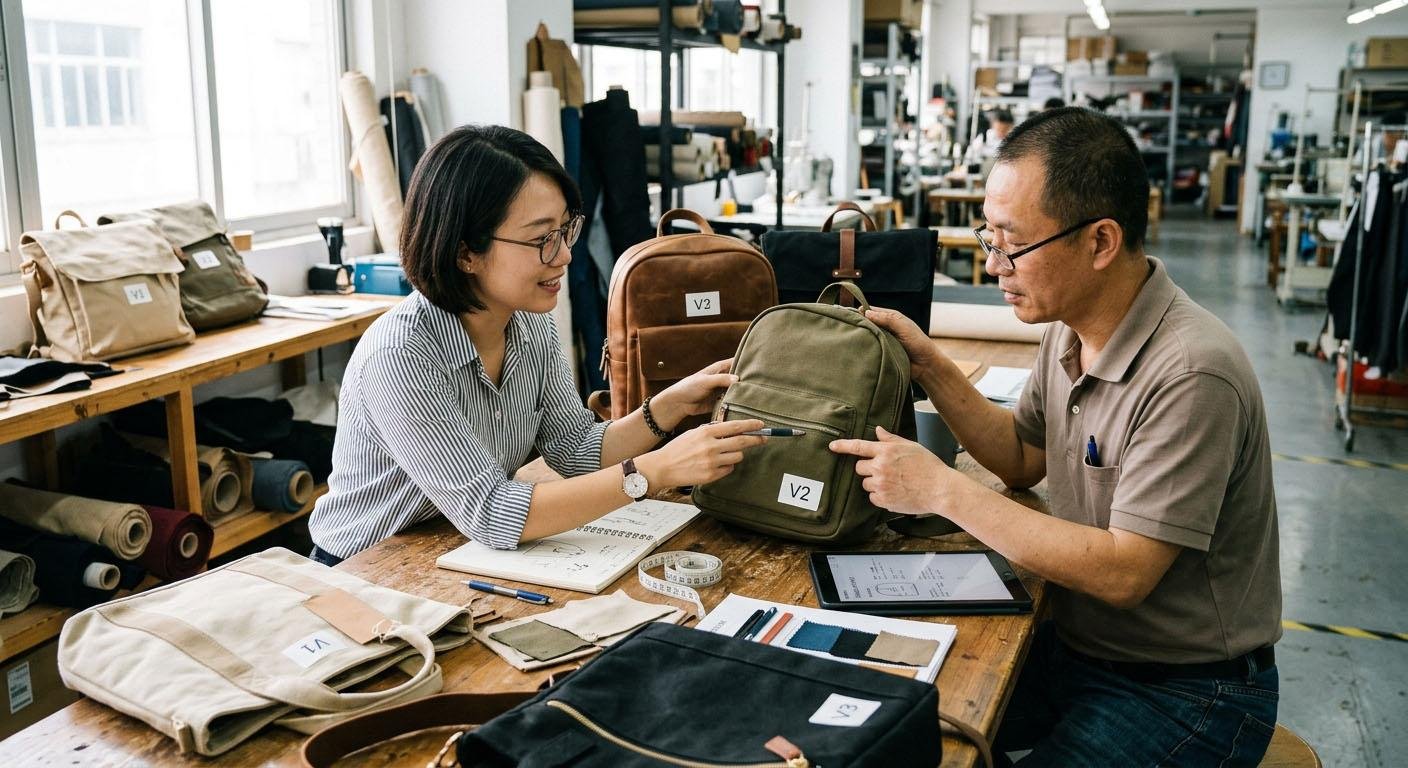
If you’re placing large orders, consider an on-site visit. During the visit, ask to see their GRS-certified material inventory and their system for segregating it from conventional materials. This shows you they have the right operational controls in place.
[claim claim=”A verbal agreement is sufficient for ordering GRS-certified products.” istrue=”false” explanation=”For legal protection and clarity, GRS requirements, including the mandatory provision of a Transaction Certificate, should be explicitly written into your supplier contracts and purchase orders.”]
[claim claim=”Tying final payment to the receipt of a valid TC is an effective way to ensure supplier compliance.” istrue=”true” explanation=”This creates a strong financial incentive for the supplier to complete the GRS process correctly and deliver the required documentation, protecting your brand’s investment and integrity.”]
Conclusion
Verifying GRS claims protects your brand’s integrity. By using Transaction Certificates and clear contracts, you can confidently offer truly sustainable products and build lasting customer trust.
References
-
Identifying greenwashing is essential for brands to maintain credibility and ensure they are sourcing genuinely sustainable products. ↩
-
Understanding GRS Transaction Certificates is crucial for verifying the authenticity of recycled materials in your products. ↩
-
The Global Recycled Standard ensures that products meet strict sustainability criteria, making it essential for eco-conscious brands. ↩
-
Textile Exchange manages the GRS certification, ensuring that standards for recycled materials are upheld globally. ↩
-
The chain of custody guarantees that recycled materials are tracked and verified throughout the supply chain, ensuring authenticity. ↩
-
Certification Bodies are vital for maintaining the integrity of GRS certifications, ensuring that suppliers meet required standards. ↩