Struggling to pick the right hydration pack? The different sizes can be confusing, and the wrong choice means carrying extra weight or running dry on the trail.
Hydration packs1 have 1L, 2L, and 3L bladders to match different activities. A short run needs less water than a long hike. This sizing lets you carry just enough water without extra weight, as water is heavy (about 2.2 lbs/liter), impacting comfort and performance.

The Bladder size2 is central to that conversation. There is no single "best" size, only the best size for a particular adventure. Let’s explore how to help your customers find their perfect match.
What Are the Basics of Hydration Pack Bladder Sizing?
Confused by liters and ounces? It’s easy to get lost in the numbers and not know what they mean for your activity or your product line.
Bladder sizes, mainly 1L, 2L, and 3L, correspond to Water capacity3. One liter (L) of water weighs about 2.2 pounds (1 kg). The size you choose directly impacts your pack’s total weight, balance, and your comfort on the trail.
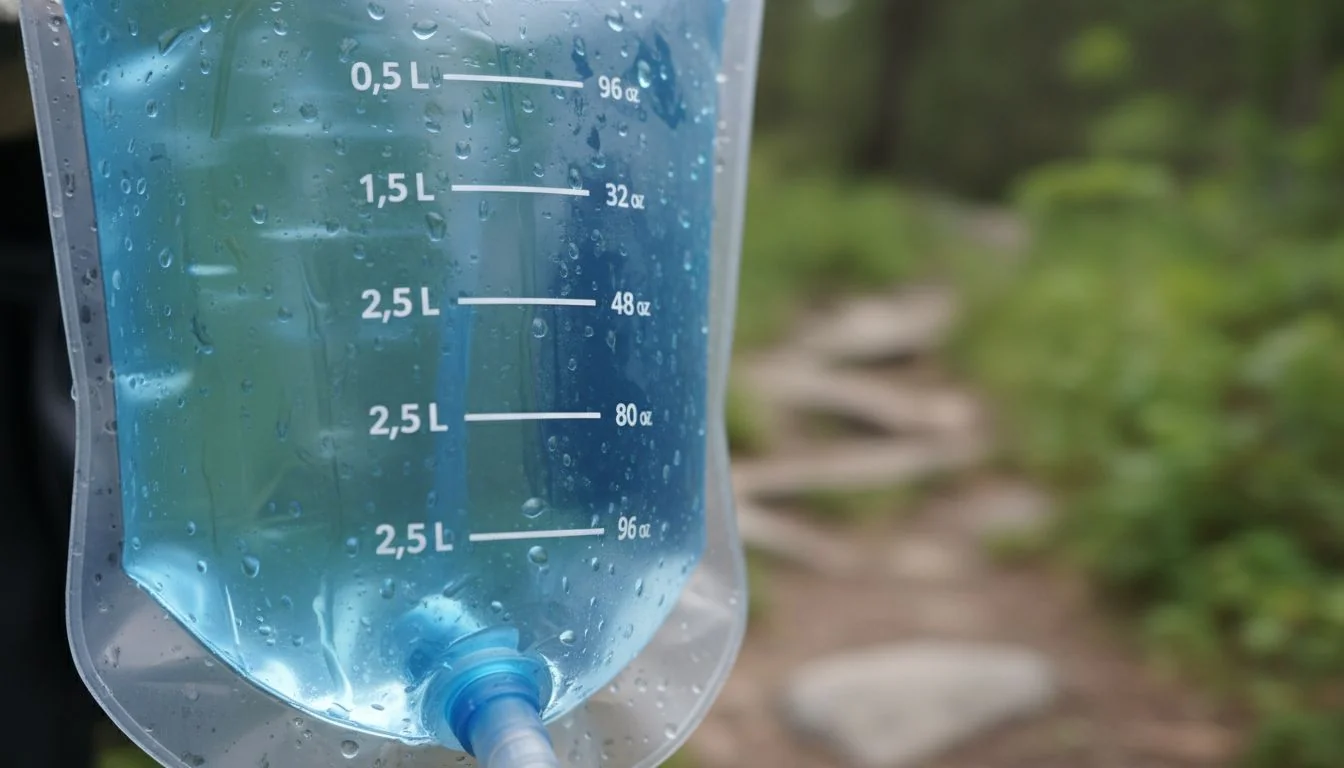
Understanding Hydration Pack Bladder Sizing: The Basics
Here’s a simple breakdown I often share with clients to help them visualize the options for their customers:
| Bladder Size | Weight (Full) | Best For… | Key Consideration |
|---|---|---|---|
| 1L – 1.5L | 1-1.5 kg (2.2-3.3 lbs) | Trail Running, Short Rides, Kid’s Packs | Minimalist: Weight and agility are the top priority. |
| 2L – 2.5L | 2-2.5 kg (4.4-5.5 lbs) | Day Hiking, Mountain Biking, Skiing | The All-Rounder: The industry standard, balancing capacity and weight. |
| 3L+ | 3+ kg (6.6+ lbs) | Long Hikes, Backpacking, Hot Weather | Max Capacity: Necessary when refills are unavailable. Check your pack’s sleeve dimensions first! |
How Does Activity Duration Determine Your Bladder Size Choice?
Worried about running out of water mid-hike? Or are you tired of carrying a heavy, sloshing pack on a short run? This is a common problem for end-users.
Match bladder size to your activity’s length. A general rule is 0.5 to 1 liter of water per hour. For short trips (1-2 hours), 1-1.5L is fine. For longer adventures (2-4 hours), 2-2.5L is better. For anything over 4 hours, you’ll want 3L or larger.
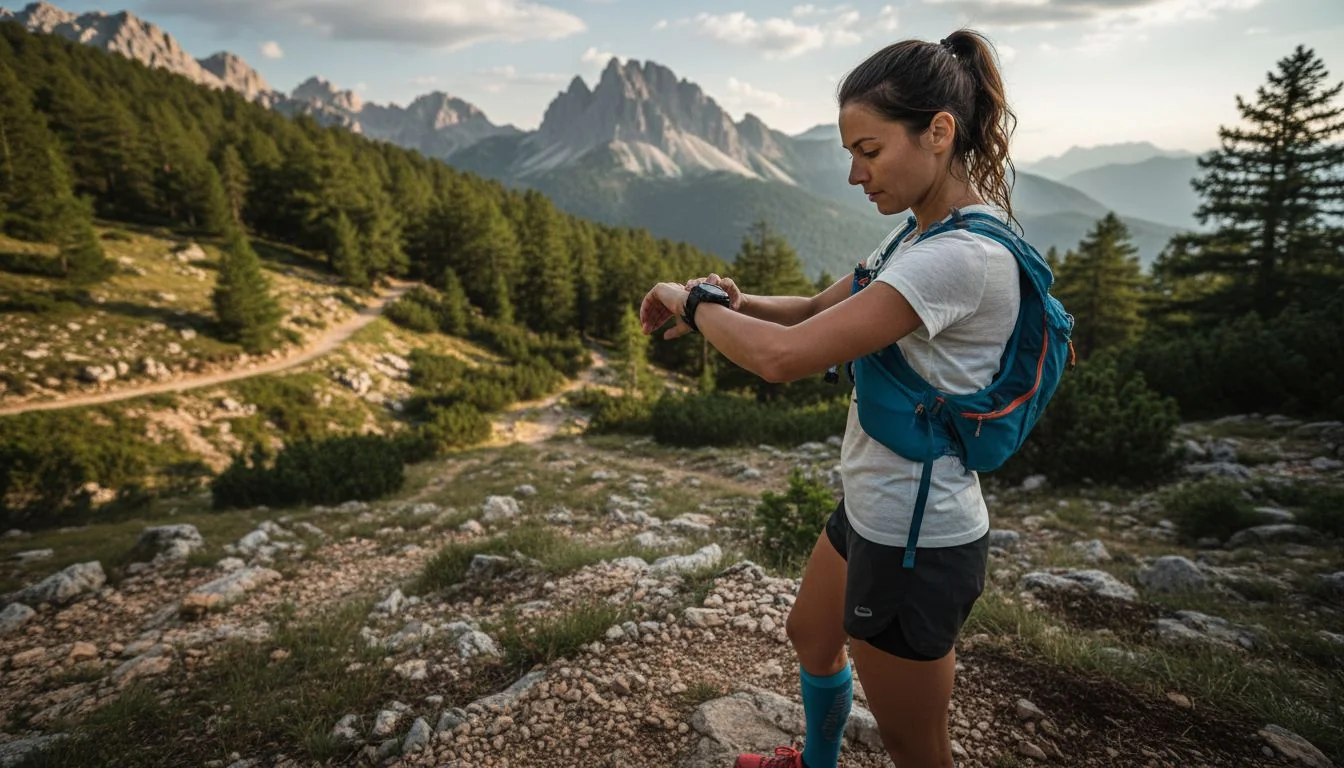
The primary factor in choosing bladder size is how long you’ll be active before having access to water refill points. General hydration guidelines recommend drinking about 0.5 liters of water per hour for moderate-intensity activity in moderate temperatures, and up to 1 liter per hour during intense activity or in hot conditions.
A Guideline for Duration
Here is a more detailed guide that I use to advise brands on which sizes to focus on for their target markets. Remember, these are just starting points. Intensity matters too—a high-intensity run will require more water per hour than a slow-paced walk.
| Activity duration4 | Recommended Bladder Size | Example Activities |
|---|---|---|
| 1–2 Hours | 1L – 1.5L | Short neighborhood walks, quick runs, light hiking. |
| 2–4 Hours | 2L – 2.5L | Day hikes with moderate elevation gain, bike commuting, trail runs. |
| 4-6 Hours | 3L | All-day hikes, challenging terrain, hot weather conditions |
| 6+ Hours | 3L+ or multiple containers | Multi-day backpacking, extended expeditions, water-scarce terrain |
A 3-liter hydration system should provide approximately six hours of water for day hikers. However, you don’t always need to fill the bladder to capacity. With a 3L bladder, you can fill it halfway for a quick 2-hour hike or all the way for longer adventures in hot climates
How Do Climate and Weather Impact Your Bladder Size Choice?
If you only consider your hike’s duration, you’re missing the most important part of the equation. Climate and weather are the critical multipliers that can double your water needs or introduce new problems, like freezing.
The expert rule of thumb—0.5 to 1 liter of water per hour—is a baseline for moderate activity in mild weather.
Always choose your bladder size based on climate. Hot, humid, dry, or high-altitude conditions require a 3L bladder due to extreme fluid loss and suppressed thirst. For cold weather, an insulated 2L or 3L bladder is recommended to prevent freezing and combat respiratory water loss.
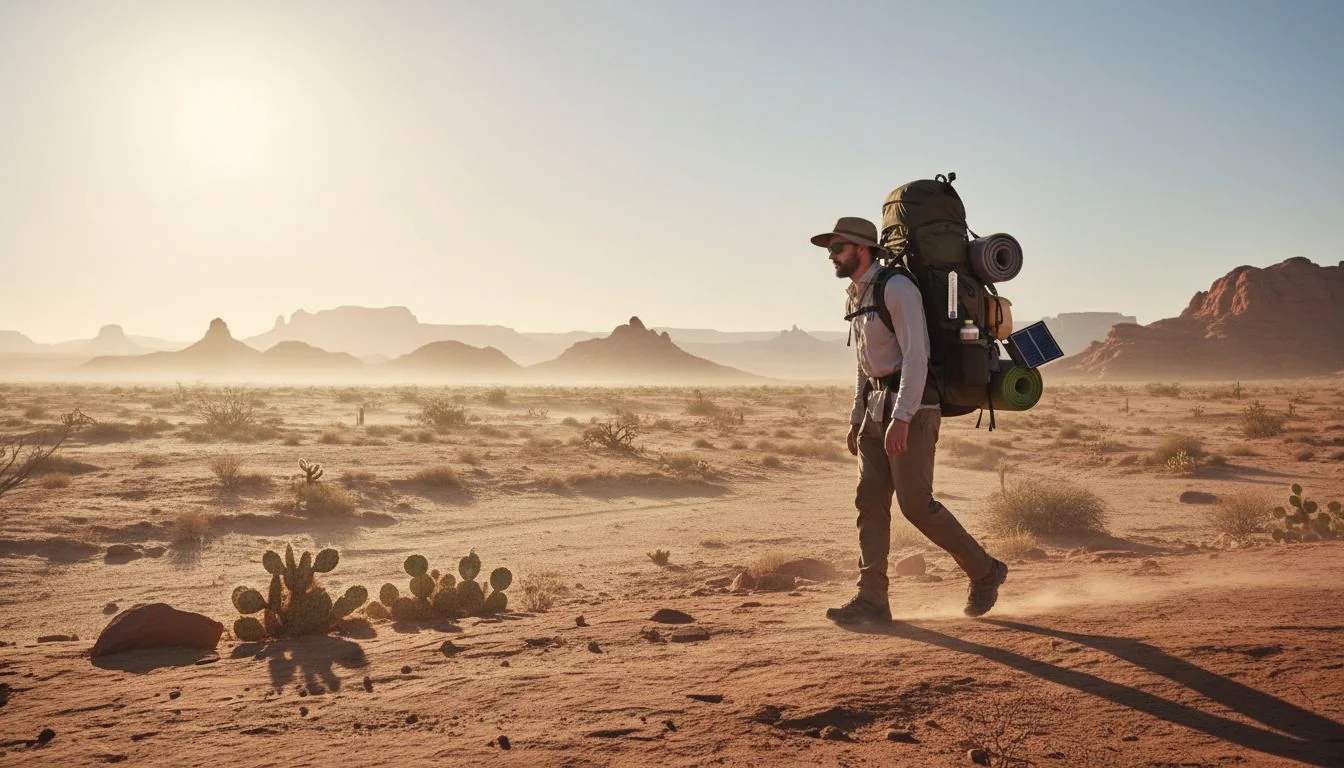
Here’s how to adjust your choice for the weather in details.
-
Hot & Humid: Your sweat doesn’t evaporate, so your body sweats even more (often 1L+/hr) trying to cool down. A 2L bladder can be empty in two hours.
- Choice: 3L is the safer standard.
-
Hot & Dry (Desert): "Invisible" sweat evaporates instantly. You can become severely dehydrated before you even feel it, and refill sources are rare.
- Choice: 3L (Minimum). Most experts also carry a 1L backup bottle.
-
High Altitude (Above 8,000 ft): You lose water twice as fast from breathing in dry, thin air, and your thirst mechanism is suppressed.
- Choice: 3L to "force" hydration and help prevent altitude sickness.
-
Cold & Dry (Winter): You lose significant water by breathing, but your thirst response is blunted by up to 40%. The main risk is your water freezing.
- Choice: 2L or 3L (with insulation). A larger, full bladder has more thermal mass and resists freezing longer than a small one.
Quick Guide: Bladder Size by Climate
| Climate / Condition | Primary Risk | Water Loss Rate | Recommended Bladder Size |
|---|---|---|---|
| Hot & Humid | Inefficient Sweating | Very High | 3L |
| Hot & Dry | Invisible Evaporation | Extreme | 3L (Minimum) + Backup |
| High Altitude | Blunted Thirst, Respiration | High | 3L |
| Cold & Dry | Blunted Thirst, Freezing | Moderate to High | 2L or 3L (with insulation) |
How Do You Balance Bladder Size and Pack Weight?
Is your pack uncomfortably heavy? A full hydration bladder might be the culprit, throwing off your balance and causing fatigue on the trail. This is a key design challenge.
Balance pack weight and water by choosing a 2L bladder (adds ~4 lbs), which experts call the optimal size. A full 3L bladder adds ~6 lbs, which can be floppy, unbalance your pack, and lead to injuries. For more capacity, add a lightweight 1L bottle for better balance.
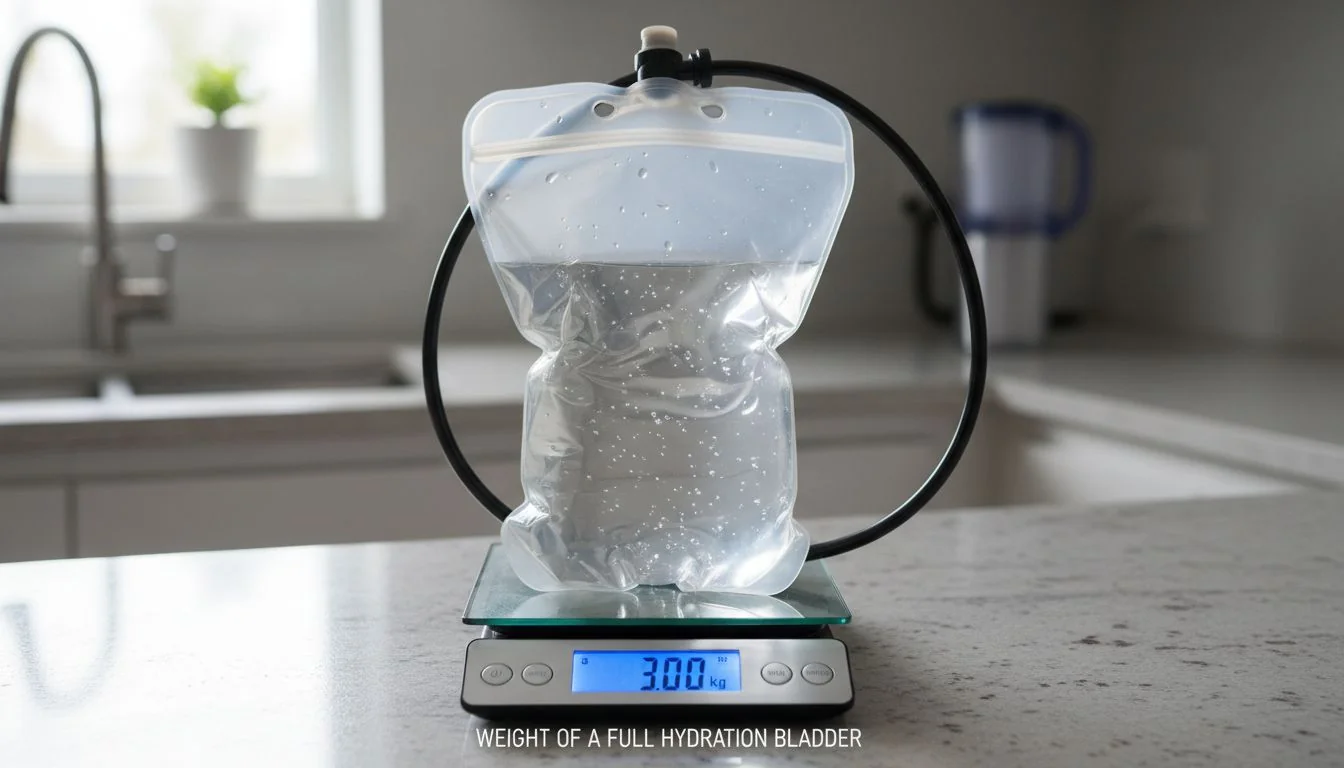
The "Water Weight" Penalty: By the Numbers
Water is, by far, one of the heaviest things you will ever carry. Let’s look at the hard data:
- Water Weight: ~2 pounds (1 kg) per liter.
- 2L Bladder: Adds roughly 4 pounds (1.8 kg) to your pack.
- 3L Bladder: Adds roughly 6 pounds (2.7 kg) to your pack.
This isn’t just weight; it’s a "live load" that sloshes. Research shows this extra 6+ lbs of unstable weight increases fatigue and contributes directly to ankle sprains and knee pain.
Why Experts Prefer 2L (or Bottles)
Many experts recommend 2L as the optimal bladder capacity.
A full 3L bladder is often too long and floppy, which unbalances your pack and causes the strain mentioned above. For this reason, many ultralight hikers prefer lightweight 1L bottles (~0.5 oz empty) over a 3L bladder (~5 oz empty) to save weight and improve load balance.
If you need 4L of water, carrying two 2L bladders is far more stable and provides redundancy (if one leaks) than one giant 4L bladder.
Our Recommendation: The Best of Both Worlds
- For Most People: A 2L bladder is the "sweet spot" that balances convenience and manageable weight (4 lbs).
- If You Need More Water: Don’t buy a massive 3L or 4L bladder. Instead, adopt the hybrid strategy: use your 2L bladder for on-the-go sipping and supplement with one or two 1L lightweight bottles. This gives you a balanced load, a backup supply, and the best of both systems.
When Does a 1L-1.5L Hydration Pack Make Sense?
Do you hate carrying a bulky pack for a short run or ride? A large pack can feel like overkill when you only need a little water. This is where Minimalist design5 shines.
The 1L-1.5L bladder is perfect for minimalists and short activities under two hours. It’s ideal for trail runners, bike commuters, and kids. It provides essential hydration without the weight and bulk of larger packs, keeping you light and fast.

I’ve worked on several projects for brands targeting the "light and fast" crowd. These users—trail runners, racers, and short-distance commuters—prioritize speed and efficiency above all else.
For them, every ounce matters. A 1L or 1.5L bladder is the perfect solution. It provides just enough water for a 60-90 minute effort without adding unnecessary weight or bulk. These smaller bladders are designed to fit into compact running vests or minimalist packs that hug the body, preventing bouncing and allowing for a full range of motion.
Key Users for Small Bladders
When advising a brand like the one Olivia works for, I’d highlight these key markets for smaller-capacity hydration systems:
- Trail Runners: For runs up to 10-15k where they can move quickly.
- Bike Commuters: For a simple way to hydrate on the way to work without a full backpack.
- Hikers on Short, Familiar Trails: For a quick hike on a local trail where they know the duration and effort required.
- Children: A 1L bladder is often the perfect size and weight for a child’s small frame on a family hike.
Why Is the 2L Hydration Pack the Most Popular Choice?
Overwhelmed by choices and just want the one that works for most situations? Picking the wrong "specialty" size can limit a pack’s usefulness for the average customer.
The 2L bladder is the "Goldilocks" size—it’s just right for most activities. It offers enough water for 2-4 hour adventures like day hikes and mountain biking without being too heavy. This versatility makes it the most popular choice.

In my experience, the 2L (or 2.5L) bladder is the bestseller for a reason. It hits the perfect middle ground. It’s not as limited as a 1L bladder, but it’s not as heavy and bulky as a 3L one. This makes it incredibly versatile.
A user can take it on a morning hike, an afternoon mountain bike ride, or even a full day of resort skiing. For a product manager like Olivia, offering a high-quality 2L hydration pack is often the safest and most profitable bet, as it appeals to the widest range of customers.
Why 2L is so popular?
When I look at sales data and online forums, the 2L capacity consistently comes out on top. It’s the workhorse of the hydration world.
- 1. Weight efficiency:
A 2L bladder weighs approximately 4–5 pounds when full—a manageable burden that doesn’t significantly impact hiking performance or encourage overloading. - 2. Versatility: :
2L provides enough hydration for most 4-hour hikes in moderate conditions while remaining flexible. You can fill it partially for shorter trips. - 3. Pack fit:
Most mid-sized backpacks (12–25L capacity) are designed with hydration sleeves optimized for 2L bladders. Fitting a 2L bladder into standard packs is seamless and balanced. - 4. Refill frequency:
With 2L capacity, you typically refill only once on standard day hikes, balancing convenience with portability.
This is why most general-purpose daypacks are designed to accommodate a 2L bladder perfectly.
When Do You Need a 3L Hydration Pack for Maximum Capacity?
While the 2L bladder is the ‘sweet spot’ for most, there are specific situations where a 3L bladder is non-negotiable for safety.
A 3L hydration pack is necessary for all-day adventures (6+ hours), hiking in hot/dry desert climates, or at high altitude. It’s also essential for any route, regardless of length, that has no reliable water refill sources, as it provides a critical safety buffer.
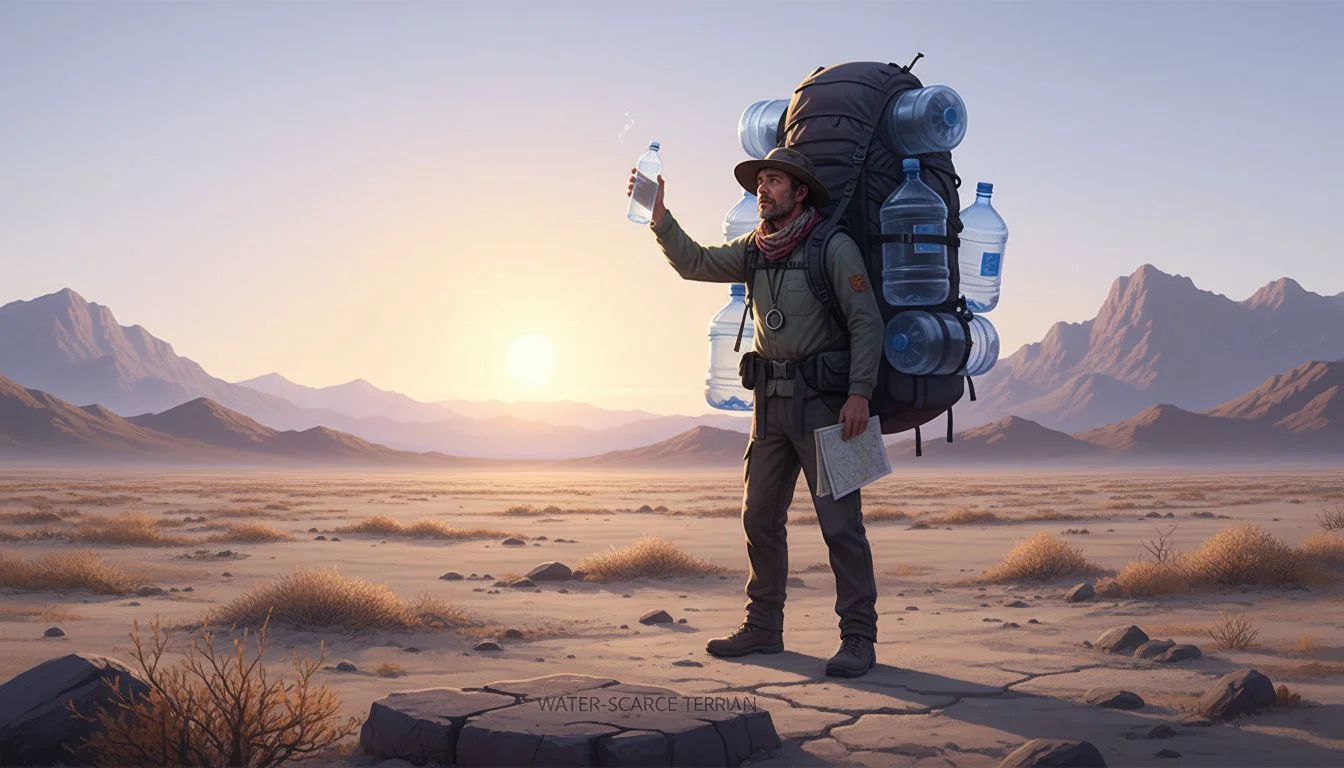
3L Bladder: Pros vs. Cons
Advantages:
-
Extended Range: Provides 6+ hours of hydration, ideal for long runs, hikes, or backcountry trips without frequent refills.
-
Essential for Dry Climates: Critical for desert or arid environments where water sources can be 10+ miles apart.
-
Strategic Carrying: Allows you to carry enough water through long, water-scarce sections like ridges or dry camps.
Disadvantages:
-
Significant Weight: Adds a ~6.6 lb (3 kg) weight penalty, which increases fatigue and strain.
-
Awkward Fit: The tall, bulky shape fits poorly in standard pack sleeves and can be difficult to pack.
-
Poor Balance: A full 3L bladder can be floppy, shift your center of gravity, and crowd other essential gear.
Scenarios Demanding 3 Liters
A 3L bladder, despite its 6.6 lb (3 kg) weight penalty, is a necessary safety tool in four key scenarios:
-
1. All-Day Adventures (6+ Hours): A 2L bladder will likely run dry in 2-4 hours. A 3L bladder is the only size that reliably lasts for a full-day excursion.
-
Extreme Climates: Hot/dry (desert), hot/humid, or high-altitude conditions are exceptionally dehydrating. Your water needs will exceed the 1L/hour baseline, making 3L the minimum for safety.
-
No Refill Sources: If your route is on an exposed ridge or in an area with no reliable streams to filter, your 3L bladder is your lifeline.
-
Carrying for a Group: If you are carrying water for children, pets, or others, the 3L capacity is essential to keep everyone hydrated.
Expert Tip: When you do carry a full 3L bladder, make sure your backpack is designed for it. A pack with a dedicated 3L-sized sleeve and a supportive frame is crucial to manage the 6.6 lb load comfortably. Shoving a full 3L bladder into a small 2L pack sleeve will make it bulge and feel lumpy and unstable against your back.

How Do Pack Size and Compatibility Affect Your Bladder Choice?
Found the perfect bladder, but it won’t fit in your favorite pack? Mismatched gear can be frustrating for a customer and lead to an uncomfortable, poorly functioning setup.
Your pack’s hydration sleeve is sized for a specific bladder. Forcing a 3L bladder into a 2L sleeve will cause it to bunch up, creating an uncomfortable lump against your back and kinking the hose. Always match your bladder’s size to the pack’s sleeve dimensions, not its total gear volume (e.g., a 20L pack).

Here’s what you need to look for, from a manufacturer’s perspective.
1. The Hydration Sleeve is Not "One-Size-Fits-All"
This is the most critical fact. The internal pocket or "sleeve" for your bladder is cut to precise dimensions.
Expert Manufacturing Insight:
When we design a backpack, the hydration sleeve is patterned for a specific bladder shape. A 3L bladder is often significantly taller and narrower than a 2L bladder, which might be shorter and wider. We build the pack’s frame and padding around that intended shape.
2. The Mismatch Problem: What Happens When It’s Wrong?
This is where users run into trouble.
-
When Your Bladder is Too Big (e.g., 3L bladder in a 2L pack):
- Uncomfortable "Bunching": The bladder has nowhere to go, so it will fold, buckle, or "bunch up" inside the sleeve. This creates a hard, lumpy pressure point that jabs you in the back.
- Kinking and Flow Issues: The fold often happens at the bottom of the bladder, which can crimp the hose right at the exit port, cutting off your water flow.
- Inaccurate Volume: You won’t even be able to fill the 3L bladder to its full capacity, defeating the purpose of buying it.
-
When Your Bladder is Too Small (e.g., 1L bladder in a 3L sleeve):
- The "Slosh Factor": The small bladder isn’t held securely. It will slosh back and forth, which is annoying and can throw off your balance on technical trails.
- Sagging and Kinking: The bladder can sag to the bottom of the large sleeve, pulling on the hose and causing it to disconnect from its shoulder-strap clip.
3. Pack Volume (Liters) vs. Bladder Volume (Liters)
This is the single biggest point of confusion for customers.
A 20L daypack refers to its total gear capacity, not its bladder capacity. A 20L pack (like a small daypack) is almost always designed for a 2L or 3L bladder. A 12L pack (like a running vest) is likely designed for a 1L or 1.5L bladder.
Use this as a general guide:
| Pack Type | Typical Gear Capacity (L) | Recommended Bladder Size (L) |
|---|---|---|
| Running Vest | 5 – 12 L | 1L – 1.5L |
| Small Daypack | 15 – 20 L | 2L |
| Standard Daypack | 20 – 35 L | 2L or 3L |
| Backpacking Pack | 40L + | 3L (Almost always) |
4. The Brand Compatibility Myth
Question: "Do I need to buy an Osprey bladder for my Osprey pack?"
Short Answer: No. Most high-quality brands (like HydraPak, CamelBak, Osprey, Gregory, etc.) are interchangeable as long as the dimensions match.
However, brands design proprietary features for their systems. If you mix and match, you might lose functionality. Examples include:
- Magnetic Clips: An Osprey pack has a magnetic sternum strap clip that is designed to work with the magnet on an Osprey bladder’s bite valve.
- Hanging Systems: Gregory’s "3D Hydro" bladder is designed to "click" into their proprietary hanger.
- Shape: Some pack sleeves are molded to a specific bladder’s 3D shape.
The Golden Rule: Before you buy, check the dimensions. If you’re buying online, read the pack’s specifications—it will almost always tell you the maximum bladder size it’s designed to hold.
Conclusion
Choosing the right bladder size—1L, 2L, or 3L—is about matching your gear to your adventure. Consider duration, climate, and weight to stay perfectly hydrated on the trail.
Common Questions People Ask About Hydration Pack Bladder Sizes
Is a 1L hydration pack enough for hiking?
It depends on activity duration and terrain. For short hikes under 2 hours with frequent water sources, 1L is adequate. However, for most day hikes lasting 3+ hours or in dry climates, 1L proves insufficient. Hikers regularly report running out of water well before reaching their destination. As a general rule: 1L works only in water-rich environments with multiple refill points or for non-hiking activities like running.
How do I know which size to choose if I’m between durations?
Choose the larger size. It’s better to carry slightly more water than necessary than to run out while thirsty and unable to refill. You can always partially fill a larger bladder for shorter activities, but an undersized bladder creates no flexibility. For example, if your typical hikes range from 2–4 hours, a 2L bladder covers the lower end comfortably while providing buffer capacity for unexpected situations.
Can I use multiple smaller bladders instead of one large one?
Yes, and many experienced backpackers prefer this approach. Two 2L bladders (totaling 1–2 oz more weight than a single 4L) provide better balance, redundancy (if one leaks, you still have water), and easier packing flexibility than a single oversized bladder. This strategy is particularly popular among ultralight backpackers and multi-day expeditions.
Do I need to refill mid-hike with a 2L bladder?
For most 4-hour day hikes in moderate conditions, 2L provides sufficient water without mid-hike refilling. However, in hot weather, high elevation, or intense activity, refilling may become necessary. Always scout your route beforehand to identify reliable water sources.
How much does water weight actually impact hiking?
Significantly. Each liter of water adds 2 pounds (32 oz) to your pack load. Carrying a full 3L bladder versus a 1.5L bladder means an additional 3 pounds—roughly equivalent to carrying an extra can of food and a water bottle. Over several miles, this accumulates to substantially increased fatigue, knee strain, and energy expenditure.
What’s the best size for backpacking trips?
For multi-day backpacking, 2L remains optimal for daily hiking between camps. However, you’ll also carry supplementary water storage (bottles or collapsible containers) for camp use and dry-camp stretches where you need to carry water beyond your day’s destination. Many backpackers use a 2L bladder for trail drinking plus bottles for camp cooking water.
References
-
Explore the advantages of hydration packs for outdoor activities and how they enhance performance. ↩
-
Learn how to select the appropriate bladder size based on your activity and hydration needs. ↩
-
Understand how water capacity affects your hydration strategy during outdoor adventures. ↩
-
Find out how the length of your activity determines the amount of water you should carry. ↩
-
Discover why minimalist hydration packs are ideal for short activities and light travel. ↩