Every runner knows the frustration: a heavy phone bouncing violently against your hip, a hydration tube smacking your chest, or the painful chafing from poorly stitched seams at mile 15. Bad gear ruins good runs.
Your carrying equipment shouldn’t be a distraction; it should act as a seamless extension of your body. But with endless options flooding the market, how do you know what you actually need?
Choosing between a running belt, vest, or hydration pack comes down to your distance and carrying needs. A running belt is ideal for short 5K-10K city runs to securely hold a phone and keys. A running vest offers a bounce-free, ergonomic fit with front-flask hydration for half to full marathons. A hydration pack provides maximum water and gear capacity for ultramarathons and remote trail running.
I don’t just run in these products; I build them.
At Osgoodway, we manufacture premium bags and athletic gear for global brands. This guide breaks down running belts, vests, and packs from the factory floor to the finish line so you can make the right choice—whether you’re a runner buying one for your next race, or a brand sourcing a thousand for your next product line.
10-Second Quick Decision Guide: Which Gear Do You Need?
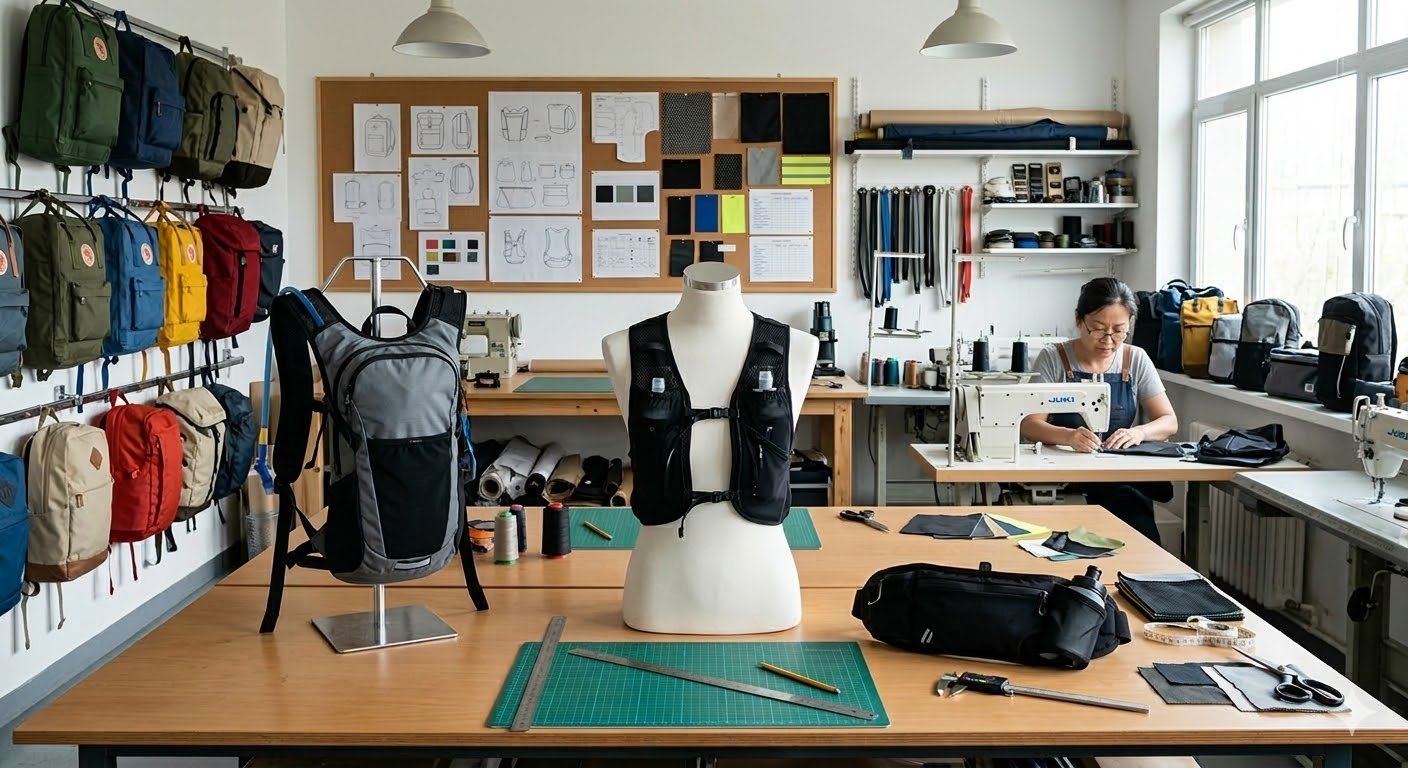
If you are evaluating gear for your next race or planning your brand’s 2026 product lineup, start here. This matrix breaks down the exact use cases, advantages, and engineering flaws of each carrying system.
| Gear Type | Best Distance & Terrain | Core Advantage | Biggest Drawback | Key Materials |
|---|---|---|---|---|
| Running Belt | 5K – Half Marathon / City Roads | Ultra-light, zero back sweat, stealth profile. | Limited water capacity; cheap elastics will dig into the stomach. | Spandex, Stretch Mesh |
| Running Vest | Half – Full Marathon / Short Trails | Second-skin fit (zero bounce), instant front-access to hydration. | Higher manufacturing cost (higher retail price); retains some back heat in summer. | 3D Air Mesh, Lightweight Nylon |
| Hydration Pack | 50K+ Ultra-Trails / Fastpacking | Massive capacity for mandatory trail gear and multi-source hydration. | Heaviest option; poor structural design leads to a shifting center of gravity. | Ripstop Nylon, Durable Polyester |
Are Running Belts the Best Choice for Minimalist Storage?

Yes, running belts are the ultimate minimalist solution for carrying essentials. Designed primarily for secure storage rather than high-capacity hydration, these low-profile bands keep large smartphones, keys, and gels tightly against your body to eliminate bouncing during short runs.
The anti-bounce performance relies heavily on the fabric’s elasticity and pattern design. In stretch-recovery tests, premium spandex blends maintain 98% of their original shape after 10,000 cycles, ensuring the belt firmly grips the waist and won’t ride up your torso.
Tubular Seamless vs. Buckled Running Belts
| Feature | Tubular Seamless Belts | Buckled Belts |
|---|---|---|
| Design | One continuous loop of stretchy fabric | Adjustable strap with a plastic clip |
| Fit | Steps into like pants; hugs the body | Easily adjustable on the go |
| Bounce Prevention | Superior (if sized correctly) | Good, but clips can loosen |
| Best For | Holding large phones securely | Layering over bulky jackets |
How to Stop Phone Bounce(The Factory Secret)
To eliminate bouncing, wear the belt low on your pelvic bone. Ensure the zipper, preferably a YKK invisible zip, sits flat to avoid skin friction.
- Position heavy items at the small of your back.
- Never overstuff; limit contents to a phone, keys, and two gels.
- Wash on cold to preserve the spandex memory.
Factory Secret: If a belt rides up, the pattern is wrong. Don’t blame your body; blame the brand for using a cheap, straight-tube manufacturing cut instead of an ergonomic contour.
Why Are Running Vests the "Second Skin" of Competitive Runners?

For mid-to-long distance races, runners need accessible hydration without compromising their biomechanics and natural form.
Running vests act as a wearable second skin, distributing weight evenly across the torso to maintain proper posture. They prioritize front-flask accessibility, allowing athletes to hydrate instantly without stopping or removing a bulky pack.
We build these like high-performance apparel, not standard backpacks. Our 2026 factory prototypes utilizing upgraded 3D Air Mesh demonstrate a 25% increase in heat dissipation compared to older polyester knits. We are replacing traditional heavy edge-binding with seamless heat-bonding to completely eliminate chafing around the neck and armholes.
How to Choose the Perfect Running Vest Fit?
The golden rule for running vests is a snug fit over a loose one to prevent chafing, combined with front soft flask pockets for immediate water access.
- Size Down: It must fit like a tight sports bra. Loose fabric causes bleeding nipples. (If you’re already experiencing skin irritation, check out our guide on Is Your Running Hydration Vest Chafing You? Here’s Why | The Brutal Factory Truth)
- Front-Load Water: Keep flasks on the chest for instant access and to counterbalance back cargo.
- Purge the Air: Always suck the air out of soft flasks before running to stop the sloshing sound.
Advanced Manufacturing Trends for Running Vests
Advanced factories are upgrading to 3D Air Mesh fabrics and utilizing seamless thermobonding technology to radically reduce skin friction at the seams.
| Manufacturing Focus | 2026 Factory Upgrade | Direct Benefit for the Runner |
|---|---|---|
| Breathability | 3D Honeycomb Air Mesh | Maximizes ventilation and moisture-wicking on the back |
| Seam Construction | Seamless Thermobonding | Replaces bulky stitches to eliminate chafing points |
| Edge Finishing | Soft-Touch Edge Binding | Prevents skin irritation around the neck and armholes |
When Should You Upgrade to a Full Hydration Pack?
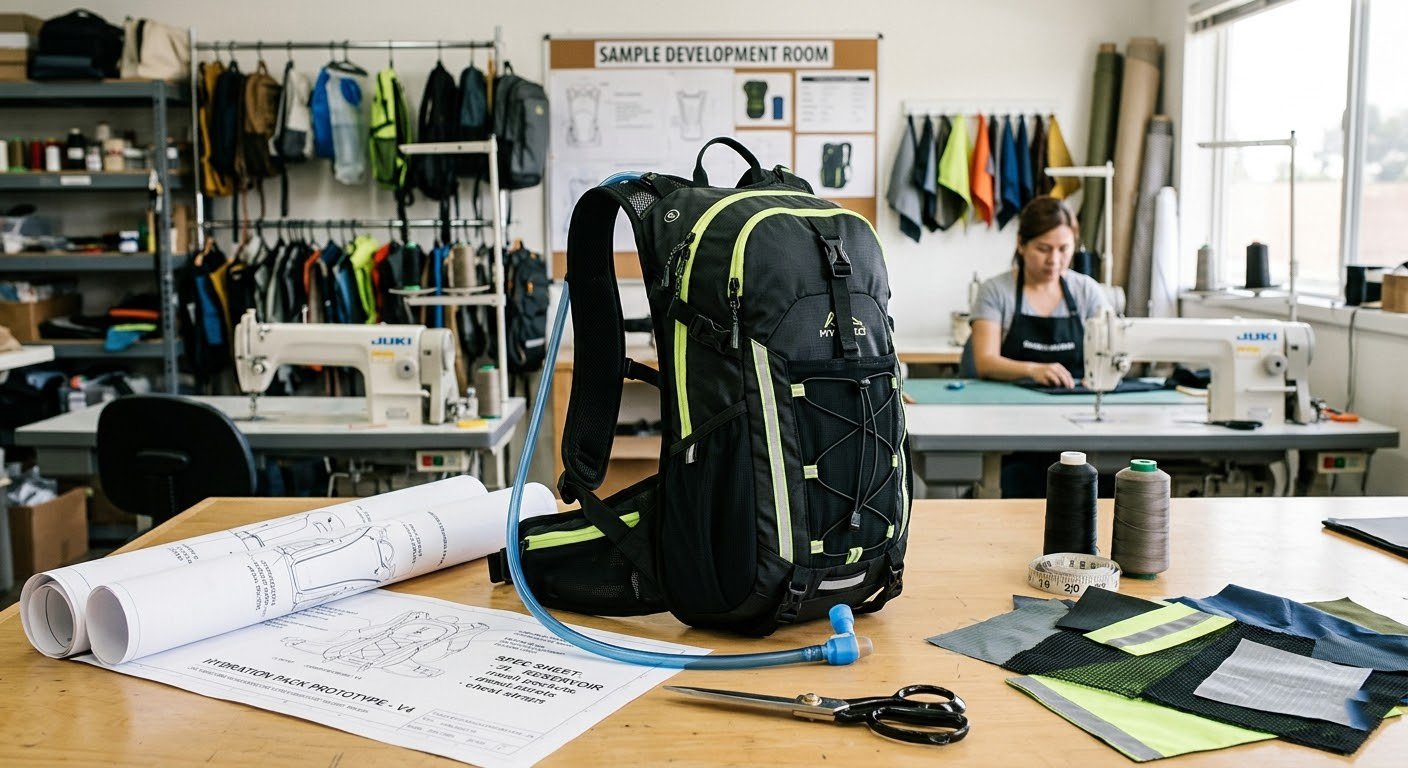
Running ultramarathons or extreme trails requires more than a standard vest. You need a survival fortress on your back.
Upgrade to a full hydration pack when your runs exceed 3 hours, requiring a rear bladder system, drinking tubes, and dedicated compartments for mandatory survival gear.
What Features Make a Hydration Pack Essential?
A premium hydration pack shifts the water weight to your back using a bladder and tube system, freeing up front space for quick-access nutrition and layers.
- Rear Bladder System: Engineered to house high-capacity water bladders with dedicated routing for hands-free drinking tubes.
- Mandatory Gear Storage: Features distinct compartmental logic designed specifically for trail race requirements (e.g., waterproof jackets, first aid kits, headlamps).
- Load Stability: Advanced harness designs prevent heavy water loads from sloshing or shifting during aggressive descents.
How Do Factories Ensure Extreme Durability?
Extreme trail environments demand rugged construction. Bag factories utilize advanced fabrics and reinforced stitching to prevent critical mid-race failures.
| Manufacturing Focus | Technical Application | Why It Matters for Product Development |
|---|---|---|
| Base Material | Ripstop Nylon | Features interwoven reinforcement threads that prevent small punctures from tearing further under tension. |
| Stress Point Reinforcement | Bartack Stitching | High-density zig-zag stitching at the shoulder strap joints is the ultimate deciding factor in the backpack’s lifespan. |
Running Vest vs. Full Hydration Pack
| Feature | Running Vest (Front Flasks) | Full Hydration Pack (Rear Bladder) |
|---|---|---|
| Ideal Duration | 1 to 3 hours | 3+ hours to multi-day |
| Water Capacity | 500ml – 1L | 1.5L – 3L |
| Primary Storage Focus | Energy gels, phone, soft flasks | Mandatory gear, extra clothing layers |
| Core Design Philosophy | Minimalist "second skin" fit | Structured survival and weight distribution |
How to Choose Your Perfect Match?
Selecting the right hydration gear isn’t just about personal preference; it’s a calculated decision based on distance, climate, and body mechanics. Use this matrix to find your exact match.
Decision by Distance and Weather
- Summer Short Runs (Under 10K): Opt for a breathable running belt paired with a single 250ml soft flask. The goal here is heat dissipation and minimal skin contact.
- Autumn Road Marathons (42K): Choose an ultra-lightweight running vest. Look for specialized, segmented front pockets that allow you to organize energy gels by consumption time without fumbling.
- 100km Ultra-Trail Runs (UTMB Standard): You need a 12L high-capacity hydration pack. This provides the necessary volume for a 2L rear bladder, mandatory waterproof layers, a headlamp, and emergency nutrition.
Body Type & Ergonomic Considerations
For Female Runners: Anatomy-specific design is crucial to prevent severe chafing over long distances. Look for vests and packs engineered with a "women’s specific fit." These models feature repositioned sternum straps that don’t compress the chest, curved shoulder harnesses that contour around the bust, and ultra-soft edge binding to protect sensitive skin from friction during repetitive arm swings.

Gear Maintenance: The Secret to Extending Your Equipment’s Lifespan
Even the highest-quality factory stitching and premium fabrics will fail prematurely if neglected. Proper maintenance[^5] is the ultimate secret to maximizing the ROI of your hydration gear.
How to Banish Mold from Bladders and Tubes
Hydration bladders are breeding grounds for bacteria and black mold if not dried completely.
- The Deep Clean: Skip harsh chemical soaps. Instead, fill the bladder with warm water and add two tablespoons of baking soda or drop in a specialized hydration cleaning tablet. Let it soak for 20 minutes.
- The Tube Scrub: The drinking tube is where mold hides. Invest in a flexible tube brush to physically scrub the interior walls.
- The Freeze Trick: After rinsing, prop the bladder open with paper towels or a drying insert and store it in the freezer. Bacteria cannot grow in sub-zero temperatures.
Why Machine Washing Destroys Running Vests
Never throw your running vest in the washing machine or dryer. From a manufacturing standpoint, high heat and aggressive agitation will rapidly break down the pack’s technical components.
- Delamination of Seams: Advanced vests use seamless thermobonding. The heat from a dryer melts these glues, causing the pockets to literally fall apart.
- Loss of Elasticity: Spandex and elastane fibers snap and lose their recovery memory when exposed to high heat, leading to a saggy, bouncing vest.
- Mesh Degradation: The delicate 3D honeycomb air mesh that provides breathability can snag on other garments or zippers in a washing machine, tearing the structure.
- The Fix: Always hand wash in cold water with a mild sports detergent and hang it to dry in the shade.
Deep FAQ: What the Pros Know (That the Textbooks Won’t Tell You)
1. Should I buy a hydration pack one size larger to fit winter layers?
Never. A loose pack bounces, causing severe chafing and shoulder fatigue. Always buy your exact size. High-quality packs utilize 4-way stretch mesh that is mathematically engineered to expand over a jacket while maintaining its baseline tension. If it fits loose empty, it will destroy your skin when full.
2. Do I really need a 100% waterproof running vest?
Absolutely not. 100% waterproof fabrics (like TPU-coated nylon) have zero breathability. You will sweat so heavily that your gear will get soaked from the inside. Instead, look for highly breathable mesh vests with one dedicated DWR-coated (Durable Water Repellent) dry-pocket for your phone.
3. Are soft flasks always better than hard water bottles?
Only if the manufacturing is flawless. Cheap soft flasks leak at the welded seams under the pressure of a tight vest. In premium manufacturing, we test RF (Radio Frequency) welded seams at 50kg of pressure. If the factory cuts corners on the welding process, that flask will burst mid-race.
4. How long should a premium hydration pack actually last?
Lifespan isn’t dictated by time; it’s dictated by Bartack stitching and zipper hardware. A pack with unreinforced stress points at the shoulder straps will tear in one season of heavy trail running. If it doesn’t feature heavy-duty nylon thread and YKK zippers, don’t expect it to survive ultra-conditions.
Final Verdict & Your Next Steps
The right hydration gear bridges the gap between a miserable slog and a personal best. But behind every flawless trail run is precision engineering. Great gear isn’t just designed; it’s meticulously built, stress-tested, and optimized at the factory level.
Ready to build the next generation of high-performance running gear? From seamless anti-bounce belts to ultra-durable 12L hydration packs, material science and precision stitching make all the difference. Reach out to the manufacturing team at Osgoodway to turn your technical blueprints into retail-ready reality.
[Contact Osgoodway Today !]https://osgwbag.com/contact/))