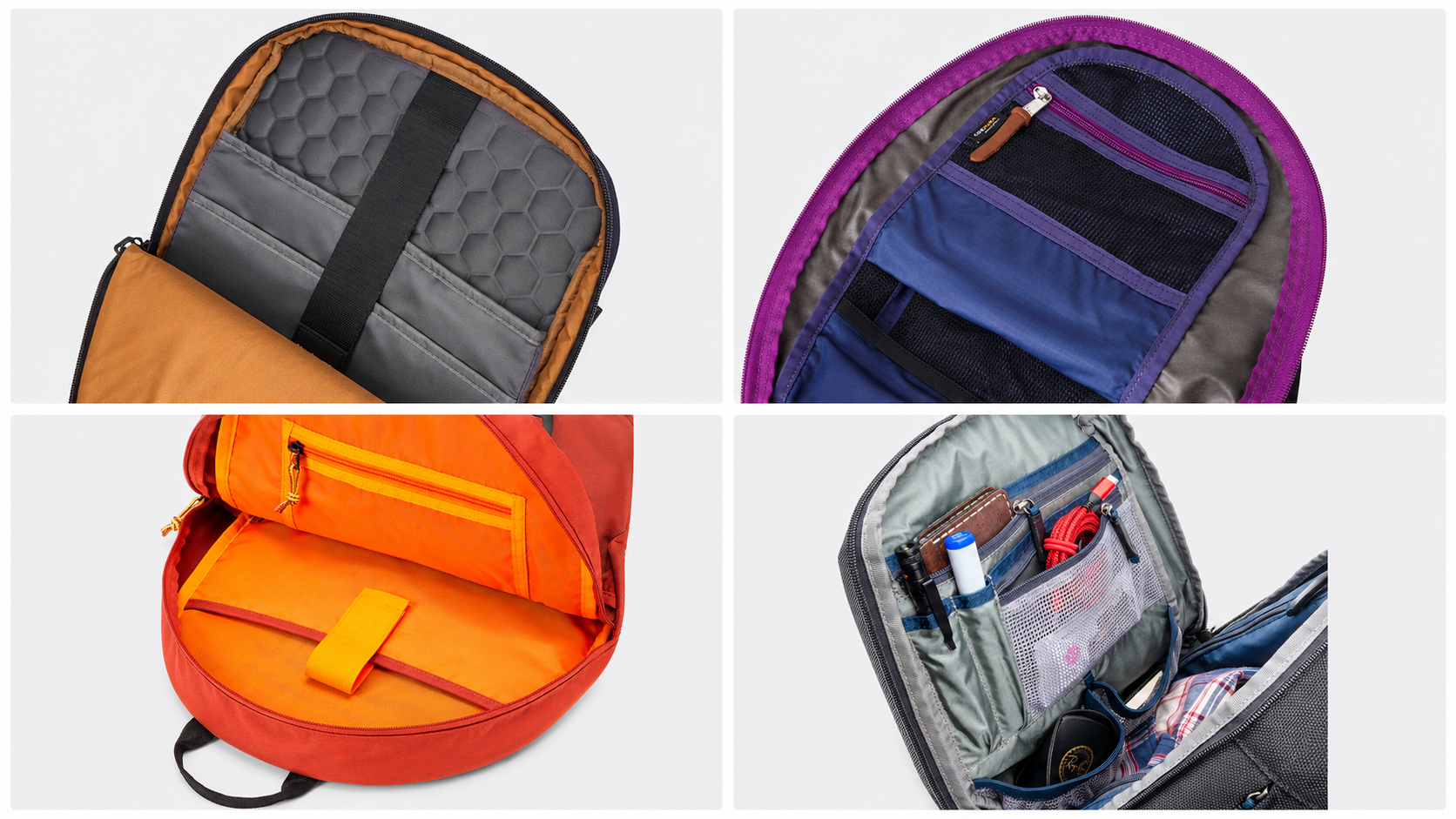
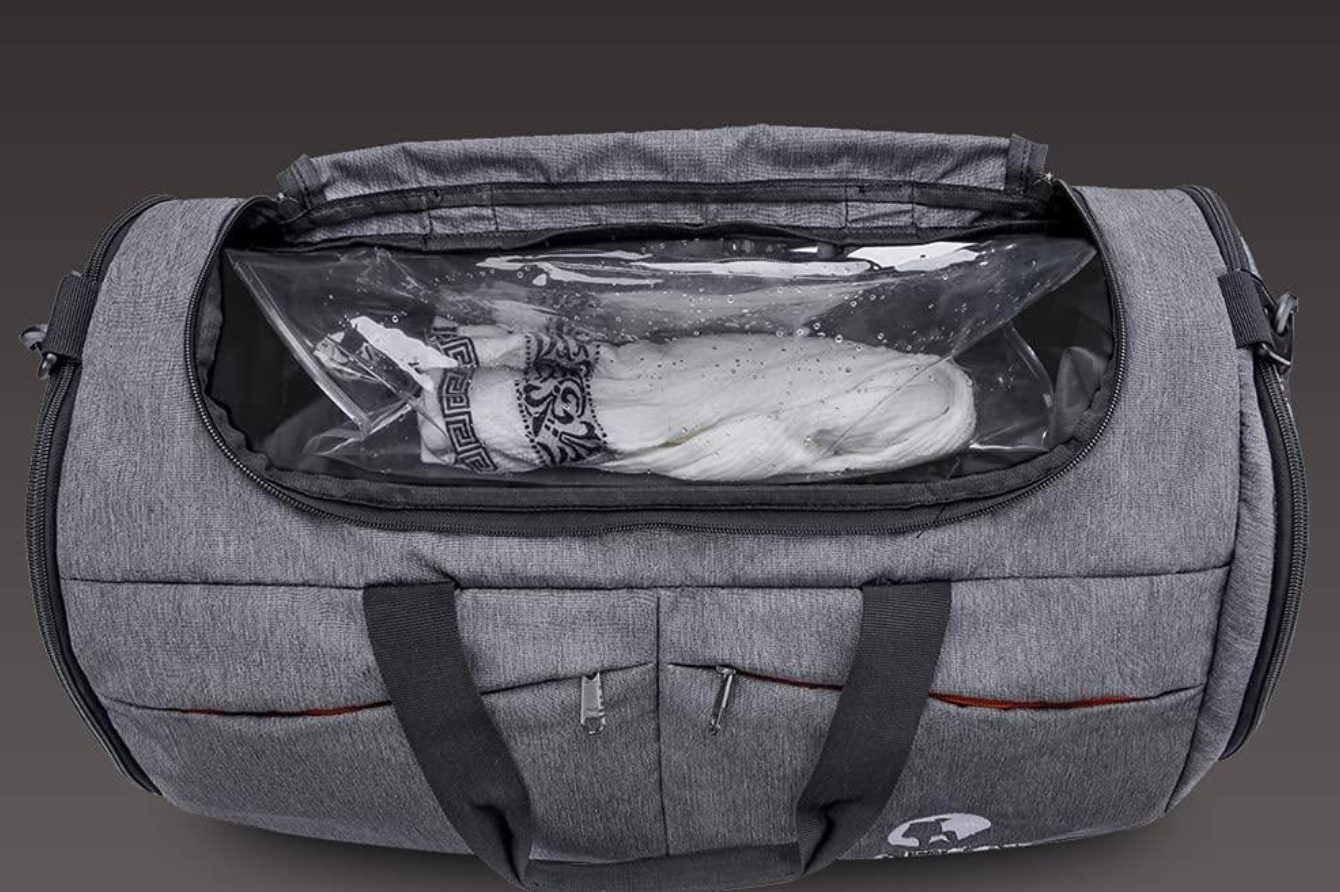
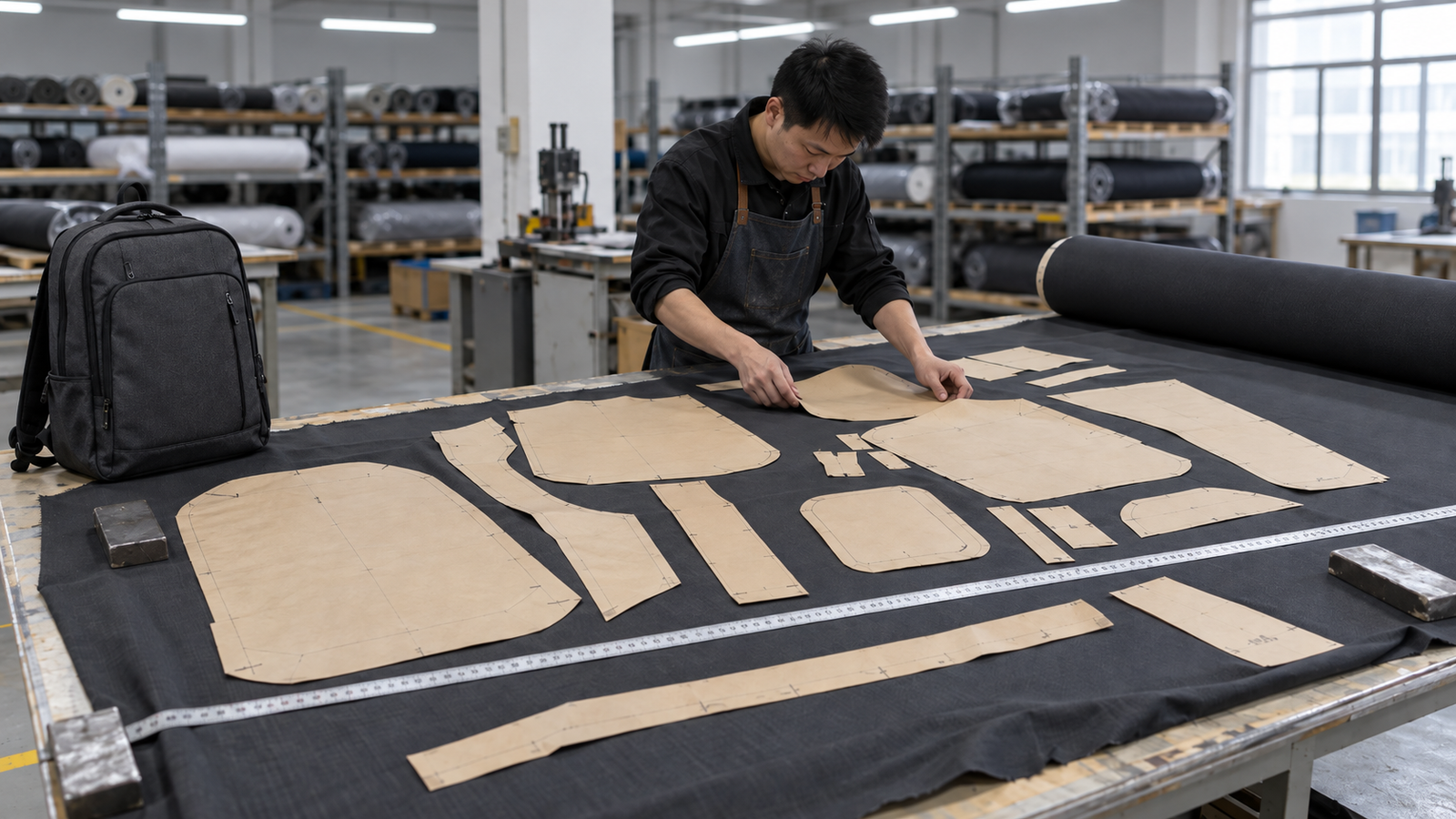
Many buyers ask me for "all types," then feel stuck. The problem is rarely variety — it’s choosing the wrong type for the channel, and not finding out until the sample arrives.
I’ve spent 12 years on the export side of a China bag factory, and the pattern repeats every season: a buyer picks the biggest, most photogenic organizer, then discovers it doesn’t fit the freight budget or the use case. This guide breaks down the five real types I quote every week, so you can pick the right one before tooling starts.
What Are the Different Types of Car Trunk Organizers?
The five main types are foldable organizers, lidded box-style organizers, hanging or seat-back organizers, insulated cooler organizers, and heavy-duty tool organizers — each built around a different load structure, so the right pick depends on your retail price and sales channel.
I don’t classify by shape or color. I classify by what the end user puts inside and how the buyer plans to sell it — those two questions predict cost and defect risk far better than dimensions do.
| Type | Best For | Structure | Typical FOB Price Tier | Sourcing Risk to Watch |
|---|---|---|---|---|
| Foldable organizer | Daily storage, groceries, mass retail/online | Soft fabric, 2–3 compartments, folds flat | $ Low–Mid | Buckle and seam strength under daily folding |
| Lidded / box-style | Premium retail, gifting, neat-look brands | Rigid side board, foldable or zip lid | $$ Mid–High | Lid sag and corner collapse at sample stage |
| Hanging / seat-back | Vertical storage, kids’ items, road trips | Wall-mounted panel, pockets, straps | $ Low–Mid | Strap/buckle quality and fit by car model |
| Insulated cooler | Groceries, picnics, delivery, outdoor | Foam/foil-lined compartment + zip closure | $$ Mid–High | Seam leaks and folded bulk from insulation |
| Heavy-duty tool | Auto tools, fleet, professional users | Reinforced fabric, stronger base/handles | $$$ High | Handle-to-sidewall stitching under load |
Browse our full car trunk organizer catalog to see current stock designs across all five types.
Factory Secret: Most buyers send one photo and ask five suppliers for a quote. Ask each supplier to name the type first — foldable, lidded, hanging, cooler, or heavy-duty — because the same photo can hide four different cost structures depending on which type the factory assumes you mean.
How Should B2B Buyers Classify Car Trunk Organizers Before Sourcing?
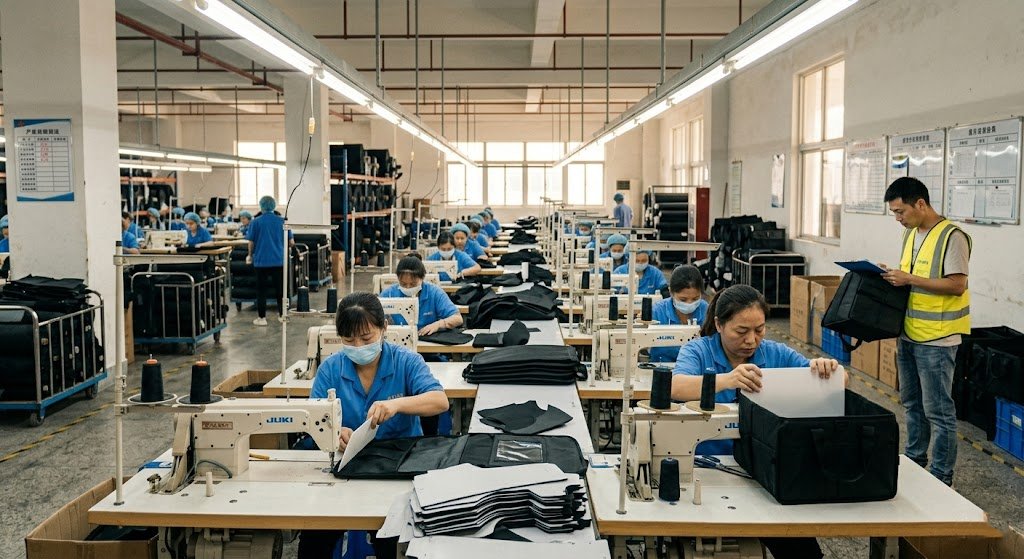
I classify car trunk organizers by end use, load structure, material level, support system, and packing efficiency — not by size or color. This method matches the product to the buyer’s sales channel, target retail price, and customization plan before any tooling or sampling begins.
A large organizer can still fail if the structure doesn’t fit the use case. So in supplier communication, I separate the product into two questions before talking dimensions at all.
The Two Questions I Ask Before Any Quote
- "What will the end user put inside?" — groceries, tools, sports gear, travel items, or cold storage each demand a different structure.
- "How will the buyer sell and ship it?" — a supermarket channel needs a simple, shelf-priced design; an online seller cares more about carton volume and product photos.
What I Actually Check
- Use scenario (groceries, tools, sports gear, travel, cold storage)
- Main structure (soft foldable, reinforced box, hanging, cooler, heavy-duty)
- Material level (600D, 1680D, non-woven, Oxford, PEVA, EPE foam)
- Support system (PP board, MDF board, cardboard, foam, removable dividers)
- Packing volume (flat pack, folded pack, assembled pack)
- Customization scope (logo, size, color, pocket, label, insert card)
I’ve seen buyers choose a bigger item simply because it photographed better. The carton ballooned, freight cost spiked, and the margin disappeared before the product ever reached a shelf. Capacity is one variable — never the only one.
What Are Foldable Car Trunk Organizers Used For?

Foldable organizers are used for daily storage, grocery loading, sports gear, and general car tidiness. They fold flat or into a compact block, which makes them the most popular choice for mass retail and online sellers who need broad appeal at a low landed cost.
This is usually the first type importers and wholesalers ask for, because demand is broad and the design is forgiving. Most versions have two or three compartments, sometimes with mesh pockets, bottle holders, or removable dividers.
| Design Option | Lower-Cost Choice | Higher-Cost Choice | My Sourcing Note |
|---|---|---|---|
| Outer fabric | Non-woven or light polyester | 600D or 1680D Oxford | Oxford gives a better hand feel and look |
| Side support | Thin cardboard or none | PP board or thicker board | Board helps the organizer stand upright |
| Divider | Fixed fabric divider | Removable padded divider | Removable parts improve use but add labor |
| Handle | Basic webbing | Reinforced webbing with bartack | Matters once users carry real weight |
| Base | Plain fabric | Anti-slip dots or rubberized base | Anti-slip base improves real-world car use |
Factory Secret: Never approve a foldable sample empty. I load it with the buyer’s real target items — groceries, a six-pack, a tool kit — then fold and unfold it ten times. If a buckle stresses or a seam puckers by fold five, it will fail in the customer’s trunk by week three.
When Should Buyers Choose Lidded or Reinforced Box-Style Organizers?
Choose a lidded or reinforced box-style organizer when the brand needs better shape retention, a cleaner enclosed look, or giftable packaging. The rigid side boards and closable lid create a higher perceived value than a soft bag, which justifies a higher retail price point.
This type sits closer to a storage box than a soft bag — stronger side boards, a foldable or zippered lid, sometimes a hard insert board in the bottom so it stands flat for product photography.
| Feature | Benefit | Cost or Sourcing Risk |
|---|---|---|
| Full lid | Keeps items covered, neat look | Adds fabric, zipper, sewing time, packing thickness |
| Reinforced side board | Shape stays upright | Adds material cost and weight |
| Bottom board | Improves base stability | Can increase folded thickness |
| Inner lining | Cleaner-looking interior | Better lining raises price |
| Logo patch | Adds brand value | Needs clear size, color, placement approval |
A reinforced box isn’t always the right answer — if the end user only needs grocery storage, the lid adds cost without adding value. If the buyer sells into a premium car-accessory channel, that same lid is what justifies the price tag.
Where Lidded Designs Actually Fail
At sample stage, I pull the handle hard and watch the side wall. If the wall bows out of shape or the corners cave in, that’s not a "minor fix" — it’s a structural redesign, and it’s far cheaper to catch at the sample stage than after a 1,000-unit production run.
How Do Hanging and Seat-Back Trunk Organizers Differ From Floor Organizers?
A floor organizer uses trunk space; a hanging or seat-back organizer uses vertical space instead. It attaches to the rear seat, headrest, or trunk wall, giving easy in-transit access to small items like tools, snacks, or kids’ items rather than bulk storage capacity.
This type isn’t about capacity — it’s about access. Some versions hang from the back seat, some attach to headrest rods, and SUV-specific versions use a wide panel across the rear seat back.
Common Layouts I Quote
- Seat-back organizer — bottles, tissues, tablets, small tools; strap length and buckle quality matter most
- Trunk wall hanging organizer — emergency kits, cleaning supplies; back-panel stiffness affects shape
- Wide SUV panel — larger trunk-wall storage; size and attachment design need on-vehicle confirmation
- Mesh pocket panel — lightweight daily items; mesh quality drives both looks and durability
If your design includes pockets sized for kids’ items — snacks, small toys, tablets — and you’re selling into the US, it’s worth checking whether any pocket contents fall under the CPSIA’s children’s product requirements, since "children’s product" testing obligations are triggered by intended use, not just product category.
I avoid promising "universal fit" as a technical guarantee. Seat and headrest designs vary too much by market for that claim to hold up without a real test plan against the buyer’s target vehicle list.
When Do Insulated Cooler Trunk Organizers Make Sense?
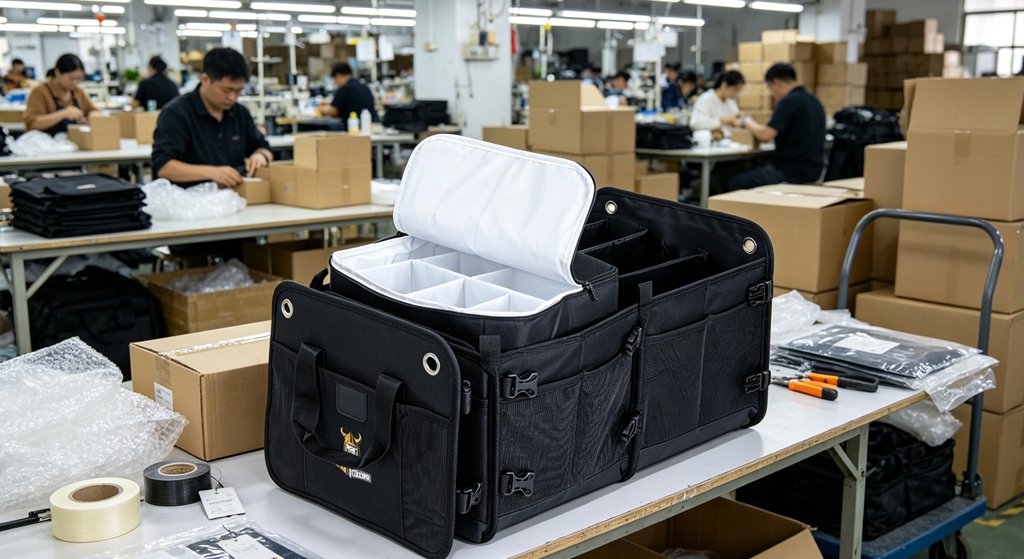
Insulated cooler organizers make sense when end users carry groceries, picnic food, drinks, or delivery items that need temperature retention. They function as a hybrid between a storage organizer and a cooler bag, using foam or foil lining inside one or more compartments.
I treat this as a practical car-storage product with temperature-retention support — not as a certified cold-chain product unless there’s verified testing behind that specific claim.
| Component | Common Option | Buyer Decision |
|---|---|---|
| Inner lining | PEVA or aluminum foil | PEVA looks cleaner; foil looks more "cooler-like" |
| Insulation layer | EPE foam, varying thickness | Thicker foam feels premium but adds bulk |
| Outer fabric | Polyester, Oxford, or non-woven | Affects both cost and brand image |
| Closure | Zipper, hook-and-loop, lid flap | Zipper closes better but costs more |
| Structure | Single cooler box or mixed organizer | Mixed design serves more daily uses |
Cooler materials add thickness, which can hurt online sellers on shipping cost and storage space, and may need a clearer hangtag or insert card for retail buyers to explain the cooler function.
Factory Secret: Before confirming a cooler order, I run a simple ice-water seam test on the sample — fill it, seal it, leave it tilted for two hours, then check the seam line and zipper track for any dampness. This catches leak risk that a dry inspection will never show you.
What Makes a Heavy-Duty Tool Trunk Organizer Different?
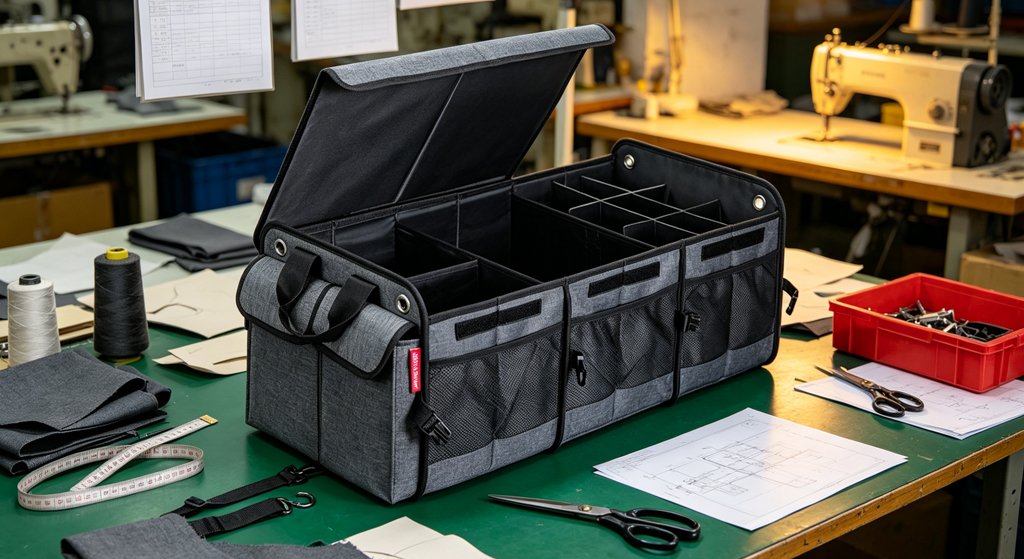
A heavy-duty tool organizer is built around the load path rather than compartment count — stronger fabric, reinforced handle stitching, and a bottom that resists sagging under metal tools and cables. It’s the right choice for automotive tools, fleet use, and professional buyers.
I don’t just count compartments on this type. I trace the load path — the sequence below is the order I actually check it in, not a random feature list.
Tracing the Load Path
- Handle attachment — takes direct force when lifted, so it needs wider webbing with bartack stitching, not just "reinforced webbing" as a description
- Bottom panel — heavy items make the base sag, so thicker PP board or a reinforced bottom is non-negotiable for tool use
- Fabric — tools rub against the surface, so higher-denier Oxford or a coated fabric outlasts standard 600D
- Pocket design — tools need fixed positions, so elastic loops and deeper zipper pockets beat generic flat pockets
- Hardware — buckles and hooks take real stress, so plastic vs. metal hardware becomes a budget decision, not a cosmetic one
Which Heavy-Duty Features Matter for Each Use Case?
I always ask one question before locking the spec: how often does this thing actually leave the trunk? The answer changes which feature gets the budget.
| Use Pattern | Priority Feature | Why |
|---|---|---|
| Carried in and out often | Handle strength and grip comfort | Direct lifting force, repeated daily |
| Left in the trunk | Base stability and anti-slip bottom | Braking and cornering shift the load, not lifting |
| Fleet or shared vehicle | Simple colors, clear labeling | Multiple users, low tolerance for fragile parts |
| Professional / mobile mechanic | Reinforced everything, metal hardware | Heaviest tools, most repeated load cycles |
If users will carry the loaded organizer, handle strength matters most. If it stays in the trunk, base stability and an anti-slip bottom matter more — I always ask which use case applies before I lock the spec.
How Do Material Choices Change the Type and Cost of a Trunk Organizer?
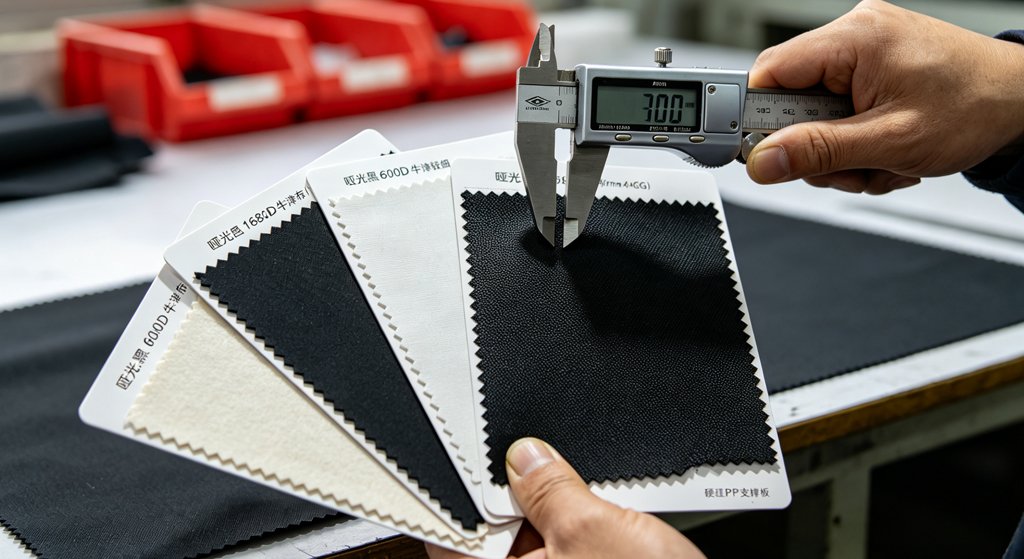
Material choices change the cost, durability, folding thickness, and user feel of a trunk organizer more than the overall size does. Two near-identical photos can hide very different fabric, lining, and board specs — which is the most common reason quotes vary between suppliers.
A buyer sends one photo to five suppliers and gets five very different prices back. The product name is the same. The product is not the same — one supplier quoted non-woven fabric with thin cardboard, another quoted 600D Oxford with PP board and anti-slip bottom.
| Material Item | Budget Direction | Premium Direction | What I Clarify With Buyers |
|---|---|---|---|
| Outer fabric | Non-woven, light polyester | 600D, 1680D, coated Oxford | Target price and product image |
| Inner lining | Basic non-woven | Polyester lining, PEVA, foil | Cleaning needs and visual effect |
| Support board | Cardboard or thin board | PP board, thicker board | Shape and folding thickness |
| Webbing | Narrow basic webbing | Wider, thicker webbing | Carrying comfort and strength |
| Base | Same fabric as body | Anti-slip dots or coated base | Stability inside the trunk |
For buyers shipping into the EU, fabric dyes and coatings also need to clear REACH restricted-substance limits — this is a registration and compliance obligation that sits with the importer, not just the factory, so it’s worth confirming test reports before, not after, the bulk order ships. For deeper background, our Oxford Cloth vs 600D Polyester vs PP Non-Woven fabric guide breaks down weight, abrasion resistance, and cost in more detail.
Buyers increasingly ask for recycled-content fabric for sustainability positioning — if that claim will appear on packaging or a listing, it needs to trace back to an actual GRS (Global Recycled Standard) certification rather than a generic "eco-friendly" label, since GRS sets the verification chain that backs the claim.
The One-Material-Sheet Rule
I quote with a written material sheet even for a simple foldable organizer — fabric, lining, board, webbing, zipper, base — line by line. This single document prevents 90% of the disputes I see between buyers and suppliers later in the relationship.

Why Is Capacity Not the Only Thing to Consider?
Capacity is only one factor in trunk organizer sourcing — carton size, folding method, structural stability, and material cost matter just as much. A bigger organizer can look stronger in photos while quietly increasing freight cost and cutting into your margin.
A buyer once asked us to widen a foldable organizer by roughly 20% across the whole order, purely because it "looked more valuable" in the listing photo next to a competitor’s. We built the sample at the new width with the same board thickness as before.
The side walls sagged the moment we loaded it with real groceries — the wider span needed thicker board to hold its shape, and thicker board meant a folded carton nearly 30% larger. By the time we ran the freight math against the new carton dimensions, the buyer’s per-unit margin had dropped below their target before a single unit reached the warehouse.
| Capacity Decision | Possible Benefit | Possible Risk |
|---|---|---|
| Larger length | More storage space | Larger carton, higher freight cost |
| Taller side wall | Better for big items | May collapse without stronger support |
| More compartments | Stronger "organized" story | More sewing time, higher defect risk |
| Thicker support | Better shape retention | Heavier product, thicker packing |
Freight cost is rarely flat across Incoterms, either — if you’re quoting FOB but your forwarder is calculating landed cost on a CIF or DDP basis, a small carton-size change can move the final number more than the ICC Incoterms rules buyer might expect from the FOB quote alone.
My checklist before approving a size increase:
- Does the new size require thicker board, and if so, by how much?
- What does that do to the folded carton dimensions?
- Has the buyer re-run freight cost against the new carton size — not the old one?
- Does the target retail price still support the new landed cost?
For more on how size, cooler sections, and structure trade off against each other by channel, see our Trunk Organizer Pros and Cons guide.
What Customization Details Should Buyers Confirm Before Production?
Before production, confirm size, fabric, lining, board, divider type, handle, pocket layout, logo method, packaging, and sample approval in writing. Locking these details in a tech pack — rather than relying on a single reference photo — is what prevents costly surprises in the bulk run.
A good sample can still become a poor bulk order if these details stay unclear. Customization is normal — a logo here, a color change there, a cooler lining added later — but each change needs to be recorded, not assumed.
What I Confirm Before Tooling
- Size — open size and folded size, since both affect carton volume
- Logo — printing, embroidery, rubber patch, or woven label, each with a different MOQ and cost
- Color — fabric color and trim color, matched to a clear standard (not "close enough")
- Pocket layout — size and position, confirmed against the items the end user will actually carry
- Divider — fixed or removable, since this changes both sewing time and packing
- Packaging — polybag, insert card, color box, or carton, which all affect retail image and freight
- Sample approval — photos, video, and a physical sample, signed off before bulk cutting starts
This level of documentation is also the foundation of a workable quality management system — the same logic behind ISO 9001’s quality management requirements for consistent, repeatable production output.
The best buyers don’t only ask for the lowest quote — they ask which detail is driving the price difference, and which details are worth keeping versus simplifying. For a full walk-through of how a tech pack moves from sample to bulk production, see our Complete Factory-Floor Guide to Car Trunk Organizer Manufacturing.
Conclusion
I choose car trunk organizer types by use, structure, material, packing, and price target — not by size or photo appeal — because the right product has to work for the end user’s car and the buyer’s margin at the same time. Five types, five different cost structures: get the type right first, and the rest of the sourcing conversation gets a lot easier.
Get a Factory Quote on Your Car Trunk Organizer
Tell us which type fits your channel — foldable, lidded box-style, hanging/seat-back, insulated cooler, or heavy-duty — along with your target retail price and order quantity, and we’ll quote material options, MOQ, and lead time directly from the factory floor. Browse our car trunk organizer catalog or send us your specs for a quote.

Further reading: