Walk down the street, and you’ll see it: people constantly hiking up their backpack straps. It’s incredibly annoying for users, but if you are a bag brand, this tiny defect is a silent killer of repeat business and positive reviews.
Backpack straps slip because the webbing thickness and the ladder lock buckle gap are mismatched, or the strap is threaded incorrectly.If the webbing is too thin or the surface is too smooth (like high-sheen seatbelt nylon), the buckle’s "teeth" can’t bite down, causing the strap to creep under load.
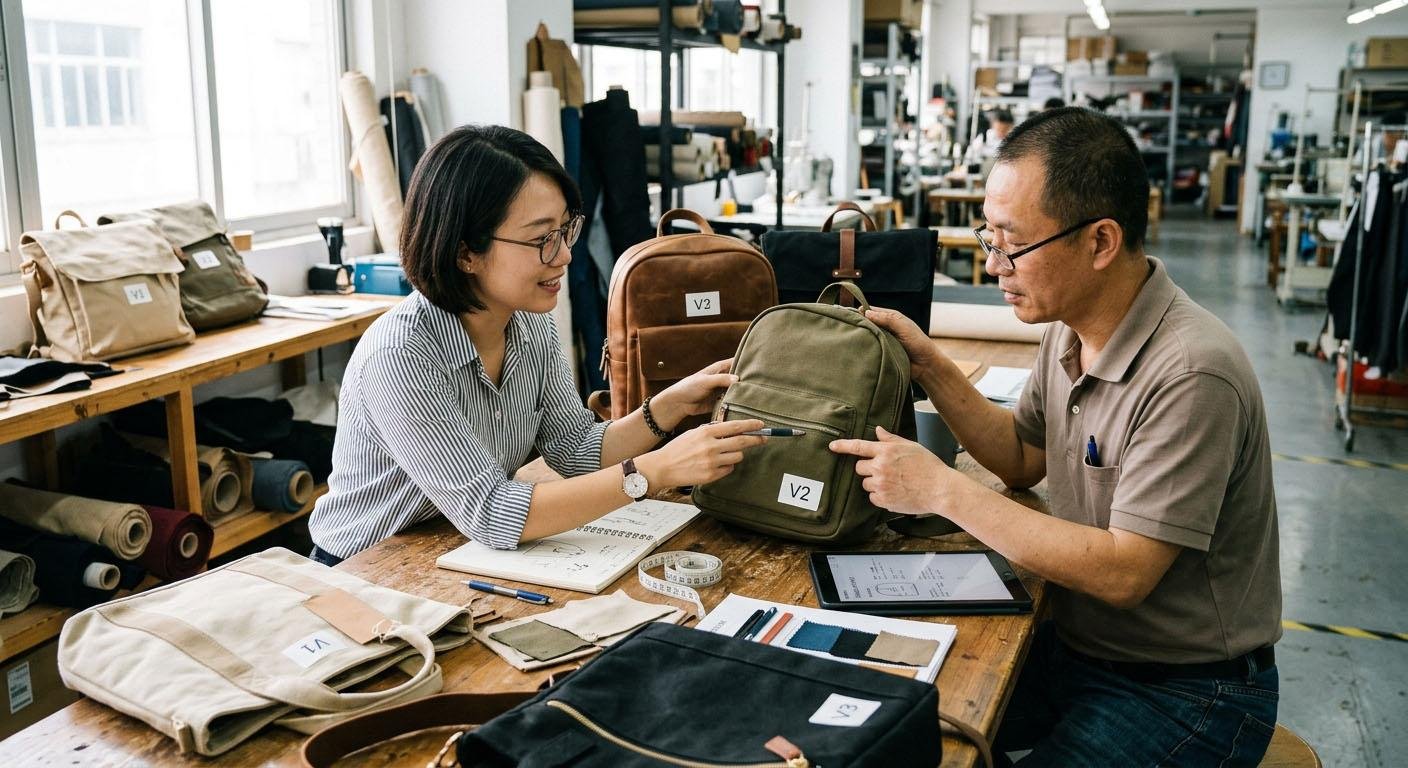
As a senior product & sales manager at Osgoodway with years of custom backpack manufacturing experience, We’ve tested thousands of webbing and hardware combinations. Today, we are fixing this flaw permanently from both the user’s and the factory’s perspective.
What Are The Real Reasons Your Backpack Straps Keep Slipping?
When diagnosing strap failure, you must look past the brand logo and inspect the physical components closely.
Is Incorrect Threading Causing The Slipping?
Incorrect threading prevents the ladder lock buckle from engaging. The webbing must route over the center friction bar to lock securely under tension.
- Route the webbing up through the bottom slot.
- Pull it tightly over the center friction bar.
- Feed it down through the top slot to lock it.
How Do Mismatched Materials Cause Hardware Failure?
Pairing ultra-smooth, low-friction webbing with cheap plastic buckles lacking sufficient biting teeth removes mechanical grip, causing immediate slippage.
| Webbing Type | Friction Level | Slippage Risk | Factory Action |
|---|---|---|---|
| Glossy Polyester | Low | High | Avoid for heavy loads |
| Herringbone Nylon | High | Zero | Standard B2B choice |
| Imitation Nylon | Low | Medium | Requires grooved buckle |
What Are the Quick Hacks to Stop Slipping Straps at Home?

Before blaming and returning a bag, try these real-world, no-sew visual fixes to lock down loose webbing.
You can stop backpack straps from slipping by tying a half knot below the buckle, feeding the tail backward into the bottom slot, or clipping a small carabiner under the hardware to create an immovable physical block.
How Do The Half Knot and Loop-Back Methods Work?

Tying a simple half knot against the buckle’s base, or routing the tail backward through the bottom slot, thickens the webbing to physically jam the hardware.
- The Half Knot: Pull the strap to your desired length, then tie a tight overhand knot in the webbing directly flush against the bottom of the ladder lock buckle.
- The Loop-Back: Take the loose tail and push it upward into the bottom opening of the buckle, doubling the fabric layer inside the gap to restrict movement.
Why Is The Carabiner Block The Most Secure Fix?

Clipping a metal carabiner right through the folded webbing loop directly beneath the plastic buckle creates an unbreakable wedge that stops any upward slippage.
| DIY Hack | Execution Method | Extra Gear | Reliability |
|---|---|---|---|
| Half Knot | Tie overhand knot below buckle | None | Good for quick trips |
| Loop-Back | Push tail into bottom slot | None | Clean aesthetic |
| Carabiner | Clip through bottom loop | Small Carabiner | Most secure DIY lock |
How Do Factory Designers Prevent Strap Slipping Before Production?
We eliminate backpack strap slippage by mandating strict BOM matching, enforcing hardware-to-webbing gap tolerances down to the millimeter, prioritizing high-friction textured materials, and integrating heavy bar tacking at all structural endpoints.
In my time managing production and product development at Osgoodway, I’ve seen brands lose thousands to returns over a $0.10 generic buckle. Quality hardware features precision-engineered center bars designed to bite. We validate every material combination on our factory floor with dynamic 15kg drop tests before mass production ever begins.
Strict Hardware and Webbing Pairing
Pairing webbing and hardware is entirely about tolerance. If a brand specs a 1.2mm thick polyester strap, we must source a ladder lock buckle with exactly a 1.5mm internal gap so it adjusts smoothly but bites aggressively.
- Premium brands like YKK or Duraflex calculate the exact angle and thickness of their center friction bars.
- A cheap buckle with a 2.0mm gap paired with 1.2mm webbing equals guaranteed slippage under load.
- Our QC team measures every incoming hardware batch with digital calipers upon warehouse arrival.
Material Selection: Friction Coefficient Matters

Ultra-smooth materials like dense imitation nylon look premium but lack the surface friction required for the buckle to grip. Substituting a glossy weave with a textured herringbone or pit-patterned webbing drastically increases mechanical bite.
| Webbing Material | Friction Coefficient | Slippage Risk | Factory Recommendation |
|---|---|---|---|
| Glossy Imitation Nylon | Low | High | Avoid for heavy load-bearing straps |
| Herringbone Nylon | High | Zero | Standard choice for premium B2B |
| Standard Polyester | Medium | Medium | Use strictly with grooved bar buckles |
Also read: What Are the Best Webbing Straps for Bags? Polyester, Nylon, Cotton, and Polypropylene
Structural Reinforcements
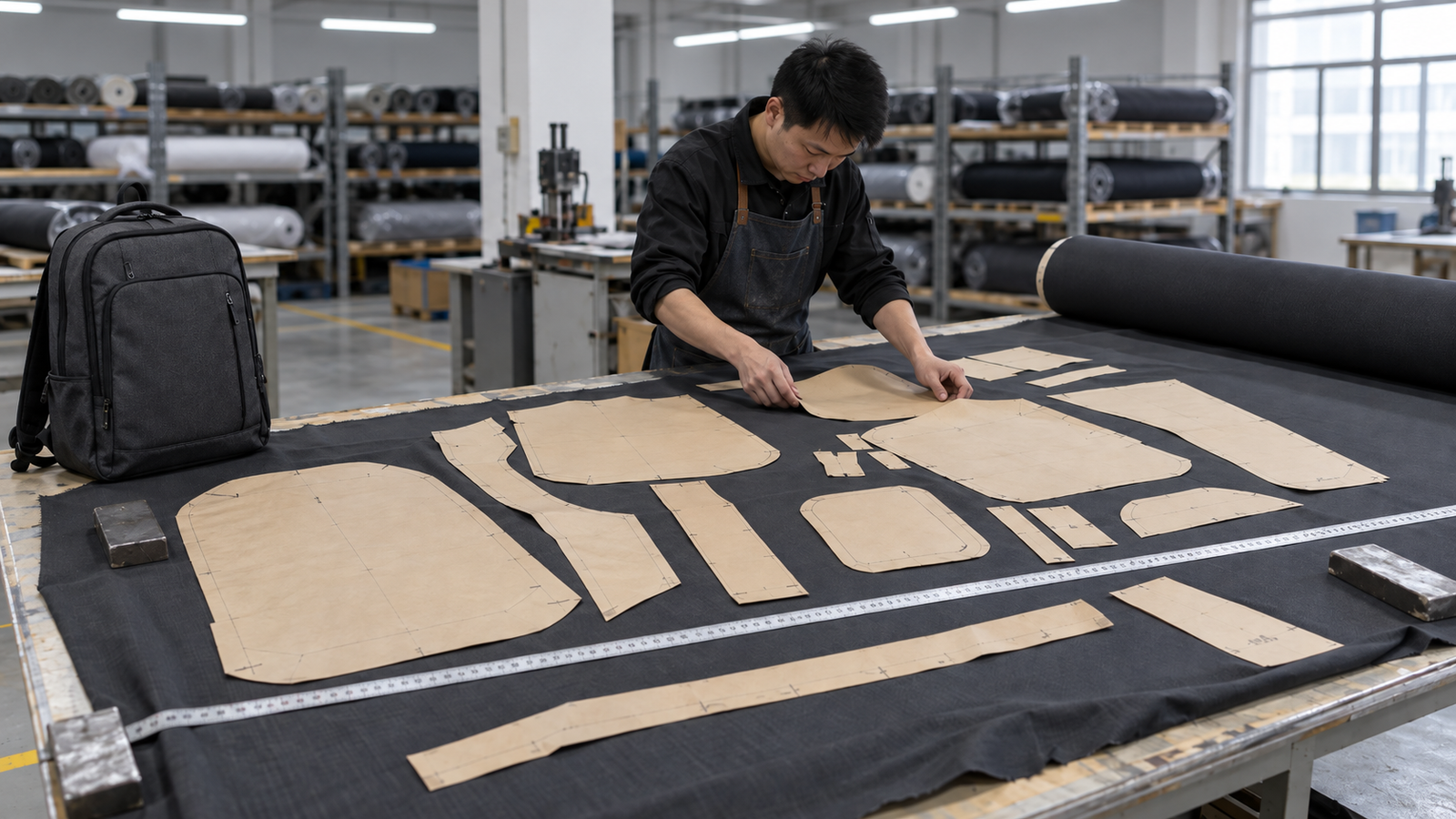
To prevent catastrophic strap failure, factories apply a heavy bar tack—a densely stitched zigzag pattern—at the absolute tail end of the webbing. This creates a hard physical block, making it impossible for the strap to pull completely through.
- We fold the webbing end back on itself to double the thickness.
- We apply a dense, high-tension bar tack using industrial sewing machines.
- Even if minor slippage occurs due to user wear, the bag remains safely secured to the user’s back.
Factory Secret: Never let a supplier swap your YKK buckles for generic alternatives mid-production to save $0.05. Always demand a BOM verification report.

How Should Brand Owners Source a Better Backpack?
Brand buyers must demand factory-certified load-bearing slip test reports before bulk production. You must verify the specific hardware brand, request heavily textured webbing samples, and ensure all strap ends feature a structural bar tack to prevent total failure.
We require every Tech Pack to explicitly state friction coefficient expectations. In my 18 years on the factory floor, I’ve found that 90% of field failures happen because buyers approved a slick material without testing the mechanical bite under a 10kg load.
What Must You Include in Your Factory Communication Checklist?
- Demand physical webbing swatches to verify the friction coefficient (always choose herringbone or ribbed over glossy).
- Specify the exact hardware brand (e.g., YKK, Duraflex) and explicitly refuse generic mid-production substitutions.
- Require a timestamped video of a 15kg dynamic load-bearing slip test on the final approved prototype.
- Confirm that the strap ends feature a doubled-over, high-density bar tack.
Factory Secret: Never approve a sample purely on aesthetics. Always load it with 15kg and wear it for an hour to verify the hardware’s mechanical bite.
Final Verdict : Quality isn’t just a look—it’s a balance of friction
A great backpack shouldn’t require constant adjustment. For the B2C shopper, my advice is simple: feel the webbing. If it’s too smooth and "slippery" to the touch, and the buckle click sounds hollow or weak, walk away.
If you are currently getting "slipping" complaints or 1-star reviews about your hardware, your Tech Pack is likely mismatched. Stop guessing which webbing works with which buckle.
Would you like me to analyze your current material specs or send you a sample of our "Zero-Slip" ribbed webbing for your next prototype? Contact Osgoodway Today !)