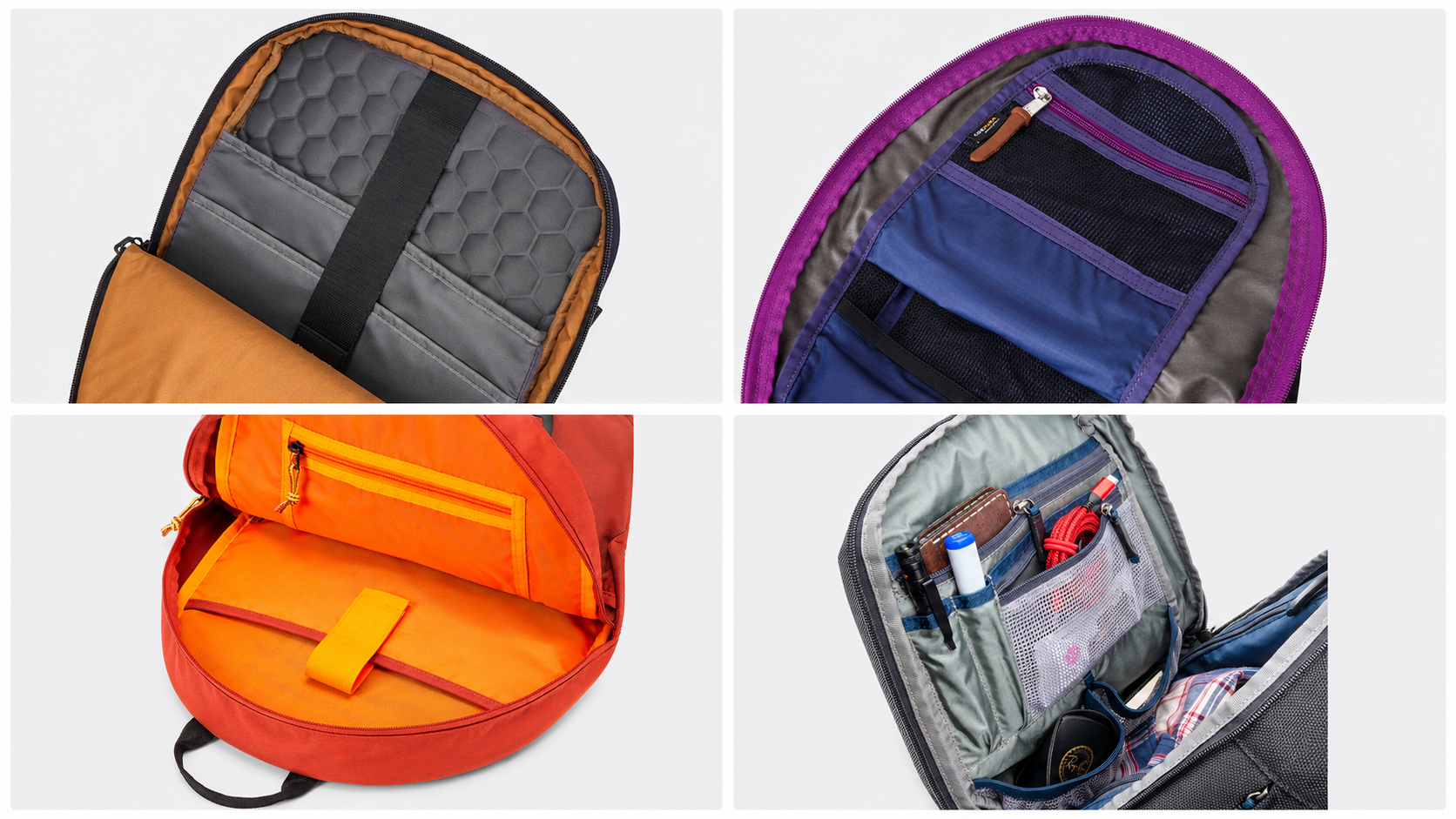
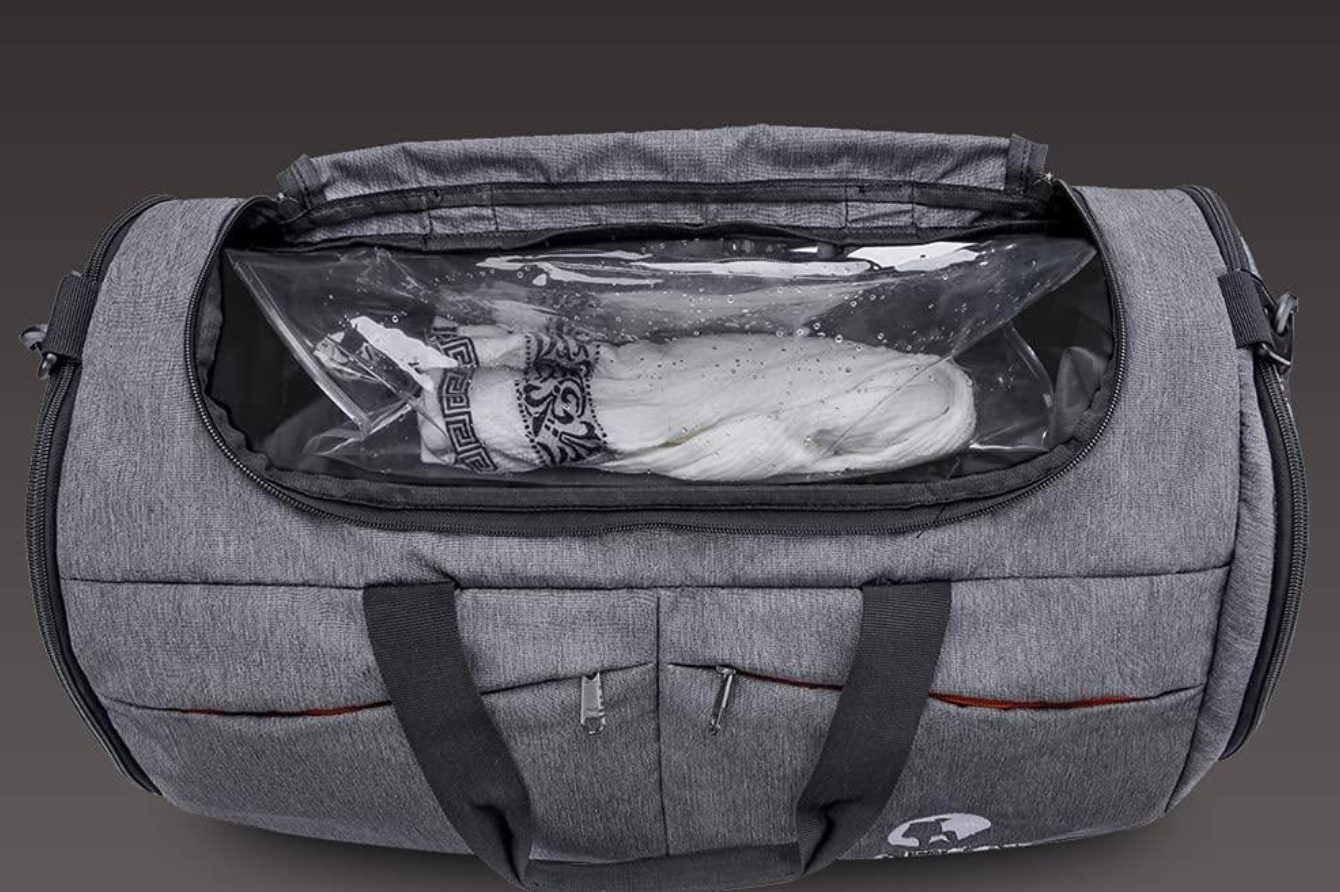
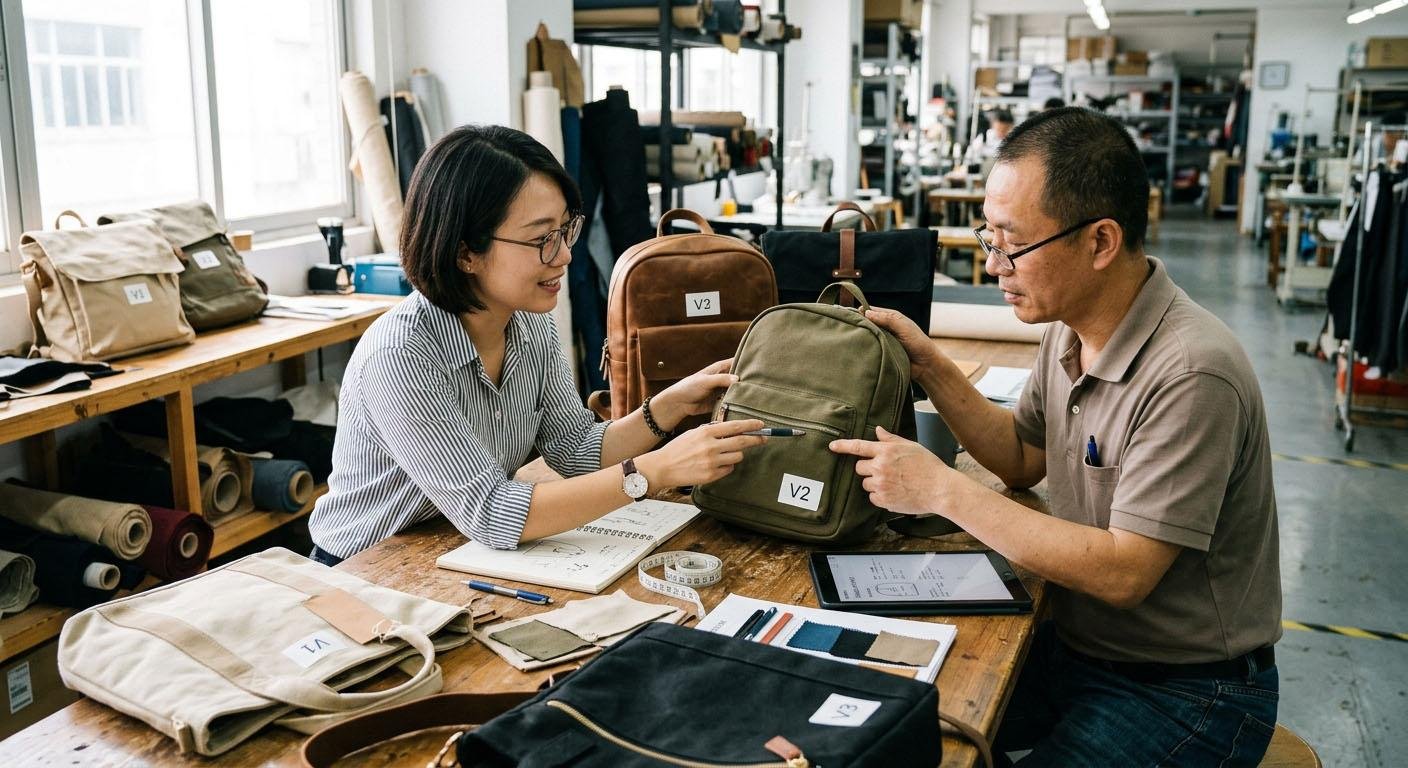
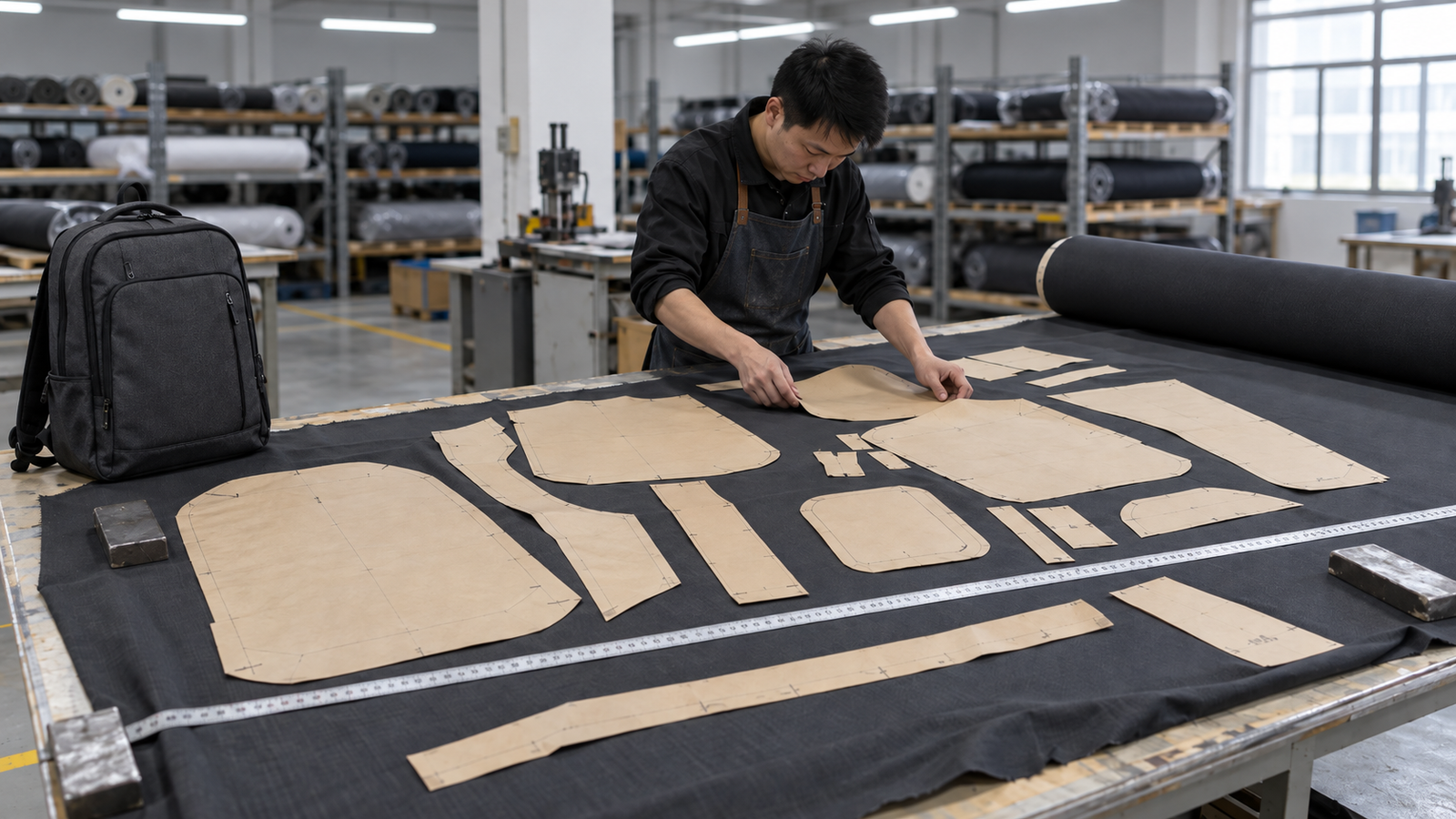
Approving a bag sample does not automatically mean it is ready for bulk production. Before releasing an order, buyers and factories need to confirm the final dimensions, construction, materials, components, branding, packaging and applicable testing requirements.
Sample approval should close production decisions, not just confirm that the bag looks good.
A sample may look right while its foam specification remains unconfirmed, the latest logo artwork has not been released, or the BOM still lists a material from an earlier revision. If these details are not resolved before production, the factory may purchase the wrong materials or manufacture the order to an outdated specification.
The goal is to ensure that the approved sample, technical documents and commercial requirements all describe the same final product.
What Does "Sample Approved" Actually Mean?

In bag development, "sample approved" can refer to several different decisions. A buyer may approve the overall appearance without having confirmed every material or hidden construction detail.
Before treating an approval as authorization to start bulk production, clarify what has actually been approved.
| Approval Stage | What It Covers |
|---|---|
| Visual approval | Overall shape, color, appearance and logo placement |
| Construction approval | Dimensions, stitching, reinforcement, pockets and functional details |
| Material approval | Shell fabric, lining, foam, webbing, zippers and hardware |
| Production approval | The final sample, specifications, documents and outstanding requirements are aligned |
These stages do not necessarily happen at the same time. For example, a buyer may approve the sample’s shape while waiting for the final bulk fabric or a revised zipper puller.
Approval status also needs to be explicit:
- Approved: The items under review have been accepted.
- Approved with conditions: Specific changes or corrective actions remain outstanding.
- Not approved: Further revision and approval are required.
If a buyer writes, "Approved, but please improve the inner-wall stitching," the factory should not treat the message as unconditional approval. The required improvement needs to be documented, implemented and verified before the order is released.
The first question is not simply whether the sample is approved, but whether every production-critical decision is closed.
What Can a Physical Sample Tell You—and What Can It Hide?
A physical sample is an important reference for appearance, dimensions, fit and construction. However, it cannot reveal every specification needed to reproduce the bag consistently.
For example, two samples may look similar while using different foam densities, fabric coatings or reinforcement materials. Those differences may not be obvious from photographs or casual inspection.
| What to Approve | What Else Needs Confirmation |
|---|---|
| Shell fabric | Construction, coating, backing, finish and required material documentation |
| Foam padding | Type, thickness, density or agreed firmness reference, and coverage |
| Internal reinforcement | Material, dimensions, position and attachment method |
| Color | Pantone reference, approved swatch or another defined color standard |
| Logo and artwork | Final file version, dimensions, placement and application method |
| Hardware | Model, material, finish and functional operation |
A development sample may also use readily available materials while the factory sources custom bulk materials. In that situation, the sample can establish the shape and construction without serving as the final reference for every component.
Photos and videos can be useful for reviewing visible changes, such as logo placement or panel shape. However, they cannot fully replace physical approval when fabric hand feel, foam firmness, fit or hardware operation is critical.
For a more complete manufacturing reference, a bag tech pack should communicate the dimensions, BOM, construction details and other requirements that cannot be reliably inferred from the sample alone.
The sample shows what the product should look and feel like; the production specification defines what must be reproduced.
Even with a clear approval process, differences can still occur between a sample and bulk production. See our guide to Why Can a Bag Sample and Bulk Production Feel Different? What Buyers Should Check for the common causes and how to investigate them.
Which Dimensions, Construction Details and Fit Requirements Must Be Locked?

Are the Important Dimensions and Tolerances Defined?
Approving the overall bag dimensions is not enough. The measurements that affect fit, access, carrying comfort and packing also need to be checked.
| Measurement | Why It Matters |
|---|---|
| Overall length, width and depth | Finished size and product proportions |
| Laptop compartment dimensions | Fit for the intended device |
| Pocket and compartment openings | Ease of access and fit for intended contents |
| Shoulder strap length and adjustment range | Fit for the intended user |
| Handle drop and zipper opening | Carrying comfort and access |
| Bottle pocket opening | Compatibility with the intended bottle |
| Folded or packed dimensions | Packaging requirements and shipping volume |
A production specification needs an acceptable range, not only a target number.
For each critical measurement, agree on the target dimension, production tolerance and measuring method before bulk production. Do not assume that a variation of 1–2 cm is acceptable for every bag. The appropriate tolerance depends on the product’s size, construction, intended use and contractual requirements.
For some soft-sided bags, the buyer and factory may agree on a tolerance of around 1–2 cm, depending on the measuring method and the dimension being checked. This is not a universal allowance. A laptop sleeve designed for a specific device may require much tighter control than a flexible main compartment.
If the purchase order specifies a maximum dimension, the factory should understand whether that limit applies to the finished bag, the folded product or the individually packed item.
Agree on the acceptable tolerance before production rather than deciding after the goods have been measured.
Have Construction and Reinforcement Been Approved?
A bag may look correct from the outside while using a different internal construction from the approved sample.
Before production, check the details that affect strength, shape and function, including:
- Shoulder strap attachment and reinforcement
- Top handle construction
- Seam and stitching methods at load-bearing points
- Pocket construction and zipper placement
- Laptop compartment structure, where applicable
- Internal dividers and binding
- Bottom reinforcement and structural inserts, where applicable
For critical areas, a general instruction such as "reinforced" may not be specific enough. The material, dimensions, position and attachment method should be defined in the tech pack or another controlled production reference.
Appearance approval does not automatically approve hidden construction.
For related examples, see our guide to common quality issues in backpack production.
Has the Bag Been Checked for Its Intended Use?
An empty bag can look fine on the sample table but behave differently when loaded.
Before approval, check that the intended contents fit, the zippers open fully, the straps adjust properly and the pockets remain accessible. If load affects the shape or carrying performance, assess the sample with representative contents.
For a laptop bag, for example, confirm the intended laptop fit and the construction of the protective compartment rather than relying only on the external dimensions.
The purpose is to approve a bag that works as intended, not just one that looks correct in photographs.
Which Materials and Components Need Specific Approval?

One of the most important steps before bulk production is confirming the actual materials and components rather than relying on broad material names.
A specification such as "600D polyester" or "10 mm EVA" may leave important details unresolved. The factory needs to know which material construction, finish or performance characteristics the approved product requires.
| Component | What Should Be Confirmed Before Bulk |
|---|---|
| Shell fabric | Fabric construction, denier where relevant, coating or backing, color and approved hand-feel reference |
| Lining | Material, construction, color and any special lining used in laptop or wet pockets |
| Foam padding | Foam type, thickness, density or agreed firmness reference, and coverage area |
| Webbing | Width, material, thickness, color and compatibility with adjusters |
| Zippers | Type, size, tape color, slider and puller; brand or series if specified |
| Buckles and hardware | Model, material, finish, color and functional operation |
| Reinforcement | Material, dimensions, position and attachment method |
The required level of detail depends on the product. A standard promotional bag may not need the same component specifications as a technical backpack carrying heavy loads.
For a broader comparison of common bag fabrics and their manufacturing considerations, see our guide to the top 11 fabrics for bag manufacturing.
Why Are Material Names Alone Not Enough?
Two fabrics with the same nominal denier can have different coatings, finishes and hand feel. Similarly, two foam pieces with the same thickness can compress differently if their density or firmness differs.
For padded bags, buyers should confirm the agreed foam specification and, where relevant, a physical reference. For shell fabric, the approval should identify the required construction and finish rather than simply naming the fiber or denier.
The same principle applies to zippers and buckles. A zipper size alone does not identify the full zipper specification, and two visually similar buckles may operate differently.
What If a Material Becomes Unavailable?
If the approved material cannot be sourced, the factory should inform the buyer and propose an alternative before using it in bulk production.
The proposed replacement should be reviewed against the original requirements, including color, construction, feel, function and applicable compliance requirements.
A supplier change can matter even when the written material name stays the same. An alternative should not be treated as approved simply because it has a similar name or appearance.
Where a complete revised sample is unnecessary, an approved bulk-material swatch or component sample may be sufficient to close a specific decision. The level of verification should match the risk of the change.
Are Color, Branding and Labels Fully Approved?
Color and branding should be treated as production specifications, not informal visual preferences.
Color Approval
A photograph on a screen is not always a reliable color reference. Lighting, screen settings and differences between materials can make the same color appear different.
Before bulk production, identify the reference being used, such as:
- A specified Pantone reference, where appropriate
- An approved physical fabric swatch
- A confirmed lab dip or color standard
- An approved component sample for trims and hardware
Also consider the difference between materials. Black polyester fabric, zipper tape, webbing and plastic buckles may not appear identical because their surfaces and material properties differ.
If a consistent tonal appearance matters, define the acceptable variation during development rather than assuming that every component labeled "black" will match perfectly.
Logo and Artwork Approval
Confirm the final artwork file, logo size, position, orientation, color and application method.
For embroidery, printing, heat transfer, rubber patches or embossed logos, the production requirement should identify the approved method and relevant dimensions. A logo’s position may be correct while the application method or artwork file is still outdated.
Use a clear revision number or date for important artwork files. "Approved artwork" should identify a specific version, not just a filename that could be replaced later.
Labels and Identification Details
Before bulk production, confirm the content, language, size and position of applicable main labels, care labels, origin labels, warning labels, barcodes and hangtags.
The required labels depend on the product and destination market. Where mandatory labeling or buyer-specific requirements apply, resolve them before the relevant sewing or packing stages make changes difficult.
Have Packaging, Testing and Compliance Requirements Been Confirmed?
Packaging Is Part of Product Approval
Packaging can affect the product’s condition as well as shipping costs.
Before bulk production, confirm:
- Folding method and orientation
- Individual polybag or other packaging
- Tissue, inserts or protective materials, if required
- Hangtag and barcode placement
- Units per carton
- Carton dimensions and shipping marks
A padded bag may arrive flatter or more creased if bulk packing compresses it differently from the approved sample. The packing method should therefore be reviewed alongside the product, particularly when the bag has structured panels or substantial padding.
Why Should Testing Requirements Be Agreed Early?
Do not leave testing requirements until the finished bags are waiting for shipment.
Before purchasing materials, clarify which tests or documents are required and whether they apply to the raw materials, components or finished product.
Depending on the product and buyer’s requirements, this may include:
- Material or chemical compliance testing
- Colorfastness or abrasion testing
- Zipper or seam performance testing
- Handle or strap strength testing
- Applicable product safety testing
Where a test is required, confirm the relevant method, acceptance criteria, sample requirements and supporting documentation as appropriate. A request for a "zipper test" or "chemical compliance" without identifying the applicable requirements may still leave room for disagreement.
Requirements also depend on the destination market and intended product use. For products subject to relevant EU chemical requirements, consult the official text of the REACH Regulation. For US children’s products subject to applicable safety rules, the U.S. Consumer Product Safety Commission’s third-party testing guidance explains the relevant testing and certification framework.
These references do not mean every bag is subject to the same testing requirements. Confirm the rules applicable to the particular product, materials and destination market.
The key approval question is whether the applicable requirements have been identified and assigned before bulk production begins.
Do the Approved Sample and Production Documents Match?

The approved sample, BOM, tech pack, artwork, quotation and purchase order must all describe the same final version of the bag.
Each reference serves a different purpose. The physical sample provides a visual and tactile standard. The BOM identifies the materials and components. The tech pack communicates dimensions and construction. The quotation and purchase order record the commercial agreement and relevant product requirements.
Before releasing the order, cross-check the key documents.
| Reference | What to Verify |
|---|---|
| Approved sample | Final appearance, construction and approved components |
| BOM | Material specifications, colors and component details |
| Tech pack | Dimensions, tolerances, construction and pocket positions |
| Artwork and color references | Final file versions, logo placement, colors and dimensions |
| Final quotation | Materials and construction included in the agreed price |
| Purchase order | Product specifications, quantity, packaging and testing requirements |
A common risk is that one part of the development process gets updated while another remains unchanged.
For example, the buyer may approve a fleece-lined laptop compartment in the revised sample, but the quotation or BOM may still specify 210D polyester lining. If nobody catches the mismatch, purchasing or production may follow the outdated specification.
The same problem can occur with revised dimensions, logo files or material substitutions. An agreement in an email does not automatically mean every production reference has been updated.
The final cross-check should confirm that the correct sample version, BOM, tech pack, artwork, quotation and PO are aligned. The physical reference sample should also be clearly identified by its approval status and revision or date.
What If Something Changes After Sample Approval?
Sample approval does not mean that every subsequent change can be made without further confirmation.
If a material becomes unavailable, a supplier changes, the buyer requests a cost adjustment or artwork is revised, the factory should assess the impact before proceeding.
The level of re-approval should match the risk of the change.
| Type of Change | Typical Follow-up |
|---|---|
| Minor artwork or label correction | Updated file and written approval |
| Color or trim change | Revised reference or component approval |
| Main fabric, foam or reinforcement change | Material review and potentially a revised sample |
| Pattern, fit or structural change | Revised sample or additional functional verification |
| Change affecting applicable compliance requirements | Review of the testing and documentation implications |
These are practical guidelines rather than universal rules. The appropriate process depends on the product, the agreed specification and the impact of the proposed change.
Conditional approvals also need to be closed out. If a sample is approved subject to removing stains, improving stitching or maintaining a particular dimension, that condition should become an explicit production action and be included in the relevant QC checks.
Development language must be converted into production instructions before the order is released.
Final Bag Sample Approval Checklist
Use this checklist to confirm whether the project is ready for bulk production.
Product and materials
- The final approved sample and its version are clearly identified.
- Critical dimensions, tolerances and measuring methods are confirmed.
- Construction, reinforcement and functional requirements are approved.
- Shell fabric, lining, foam, webbing, zippers and hardware are specified.
- Any material substitutions have been reviewed and approved.
Appearance, packaging and compliance
- Color references and acceptable variation are clear.
- Final logos, artwork and labels are approved.
- Folding method, individual packaging and carton requirements are agreed.
- Applicable testing, compliance documents and acceptance criteria are confirmed.
Documents and outstanding changes
- The BOM, tech pack, quotation and PO match the final approved specification.
- Conditional approvals and outstanding sample comments have been resolved.
- The production and QC teams have the correct final references.
- Any post-approval changes have been reviewed and documented.
Not every project requires a new full sample for every change. A minor artwork correction may only need an updated file, while a change to the main fabric, foam construction, pattern or load-bearing components may require a revised sample or additional verification.
What the buyer approves should become what QC inspects.
Frequently Asked Questions
Should the Factory Make a Pre-Production (PP) Sample Using Bulk Materials?
A PP sample is particularly useful when the development sample used substitute materials or when the order involves significant material or construction risks. Making it with the confirmed bulk materials allows both sides to check the actual fabric, foam, components, branding and construction before full production begins.
Whether a separate PP sample is necessary depends on the project, the remaining uncertainties and the buyer’s approval requirements.
Who Should Keep the Final Approved Reference Sample?
Where practical, both the buyer and factory should retain a clearly identified reference sample, or agree on which party will hold the controlling sample. Mark the sample with its version, approval date and any relevant notes so it cannot be confused with an earlier prototype.
The factory should also make sure the production and QC teams can identify the correct reference throughout the order.
Is a Signed or Sealed Sample Enough to Control Bulk Production?
A signed or sealed sample provides a clear physical reference, but it cannot replace the written specification. Details such as foam density, material composition, coating requirements and testing criteria may not be verifiable from the finished sample alone.
The sample and controlled production documents should be used together so the factory and QC team have both a physical reference and clear requirements to follow.
Final Thoughts
A smooth bulk production process starts with clear decisions during sample development. When the approved sample, material specifications, technical documents and commercial requirements are aligned, both the buyer and factory have a consistent standard to follow.
The goal is not to create paperwork for every minor detail. It is to close the decisions that could affect cost, quality, function, compliance or delivery before those decisions become expensive to change.
If you’re planning a custom bag project, contact Osgoodway to discuss your requirements. Sharing your tech pack, reference sample, target quantity and key material or performance requirements helps us identify what needs to be confirmed before bulk production begins.
The earlier the critical details are confirmed, the less room there is for costly misunderstandings later.