Last Updated: Oct 08, 2026
Backpacks can fail because of unsuitable components, weak seams, poorly supported attachment points or construction that does not match the intended load. Repeated wear, overloading and exposure can also contribute.
To prevent recurring problems, identify what failed first rather than replacing a component without checking the surrounding construction.
Six common quality issues to check in backpack production are:
- Zipper malfunction or separation
- Stitching breakdown at stress points
- Color inconsistency between panels and components
- Interior lining tears along seams and corners
- Hardware loosening or strap slippage
- Water protection that does not meet the agreed requirement
Not all of these make a backpack unusable: color inconsistency is usually an appearance issue. For brands and importers, however, both functional defects and visible deviations can make a bulk order unacceptable.
Material selection and pre-production approval help prevent these problems, but cutting, sewing, assembly and final inspection all have a role. The checks below connect each defect with the production decisions worth reviewing.
Defect #1: Why Do Backpack Zippers Fail—and What Should You Check?
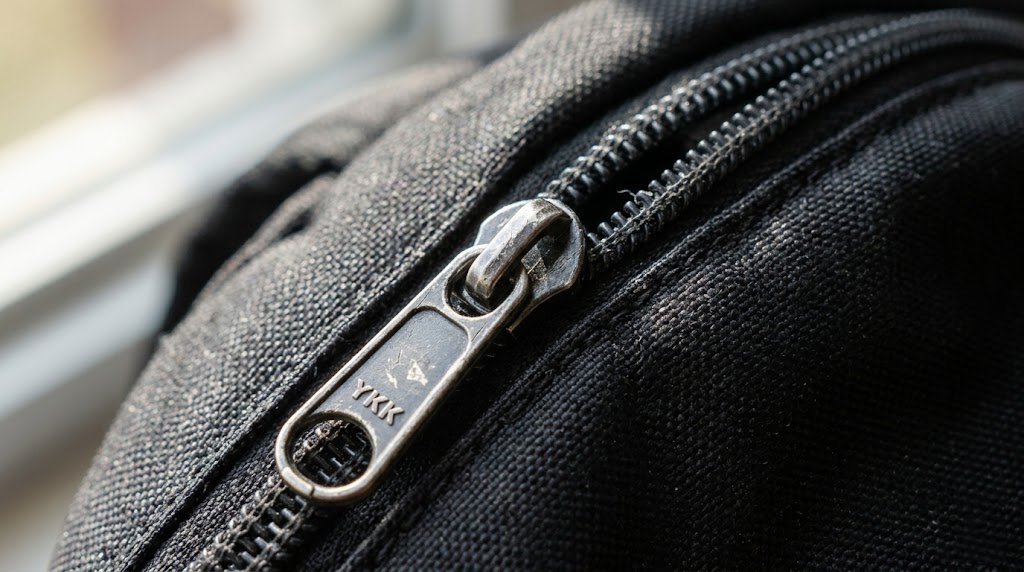
A zipper complaint does not always mean the zipper itself is defective. Trapped lining, uneven tape feeding, tight corners or excessive tension across the opening can make an otherwise suitable zipper difficult to operate.
Start with the symptom:
| What happens | What to investigate |
|---|---|
| The slider catches fabric | Lining clearance, seam position and loose fabric near the chain |
| Movement becomes difficult around corners | Opening shape, tape alignment and tension introduced during sewing |
| The chain separates after closing | Slider condition and compatibility, element damage and crosswise loading |
| The zipper end pulls away from the bag | End reinforcement, seam construction and the surrounding fabric |
Specifying “YKK zipper” is a starting point, not a complete specification. Confirm the chain type and size, compatible slider, length, opening arrangement and any required locking function. Chain and slider compatibility must be checked; different sizes are not interchangeable simply by changing the slider.
YKK’s application guidance explains that attachment methods depend on the end use. There is no single sewing arrangement that suits every backpack opening.
What to confirm before production:
- The complete zipper specification and approved component reference
- Clearance between the slider, lining and binding
- Operation along the full opening on an empty and representatively loaded sample
- Any required cycling or strength test, including conditions and acceptance criteria
- Written approval before substituting a zipper or slider
For the effect of zipper size on the surrounding construction, see our #5 vs #10 zipper comparison for bags and backpacks.
Defect #2: Stitching Failures — Is the Problem Really the Sewing?

No. In 12 years, I’ve almost never seen a stitch failure caused by a bad sewer. It’s always a thread spec change, a missing bar-tack, or a stitch density reduction to hit hourly output targets. The seam looks fine. It fails at 7kg when your spec required 18kg.
I’ll give you our real case. We had an order for 12,000 hiking daypacks. Shoulder strap pull test spec: 18kg minimum. Everything approved. Mid-production, our procurement team substituted thread from Tex 60 to Tex 40 to clear a thread inventory backlog. Same color. Same appearance. $0.003/meter cheaper. Nobody flagged it.
Eight weeks after delivery, the warranty claims started. Strap attachment stitching was failing at 7–9kg. We traced 3,400 units, recalled and repaired them at our cost. Total remediation: approximately €47,000 plus freight.
The thread was not tested. It was assumed equivalent. It wasn’t.
The stress points that matter most:
| Attachment Point | Minimum Pull Spec | Recommended Stitch |
|---|---|---|
| Shoulder strap base | ≥ 20kg | Box-X stitch + bar-tack |
| Top carry handle | ≥ 15kg | Box-X stitch |
| D-ring webbing loop | ≥ 15kg | Bar-tack, 42+ stitches |
| Main compartment corners | — | Double-needle, 8mm+ seam allowance |
Non-negotiable buyer controls:
- Specify thread by Tex weight (Tex 60 minimum for load-bearing applications), not just "polyester thread"
- Require bar-tack locations listed in the BOM — they cost 8 seconds per unit, so factories skip them without a written requirement
- Pull-test shoulder straps on every pre-production sample before approving bulk cut
How to Check Backpack Strap Quality
A durable backpack shoulder strap depends on more than thick padding. Buyers should evaluate the strap attachment, reinforcement, stitching and hardware as a complete system.
During sample approval and bulk production inspection, focus on four key points:
-
Attachment and reinforcement: Check seam allowance, backing materials and reinforcement at the strap base. Bar-tack or Box-X stitching should be used where the design requires it.
-
Thread and stitching: Inspect stitch consistency, thread strength, skipped stitches and loose thread ends, especially at high-stress areas.
-
Load resistance: Test the assembled shoulder straps under the intended carrying load to identify seam movement, tearing or attachment failure.
-
Adjustment and symmetry: Check whether the webbing slips through the adjusters and whether both straps are positioned and attached evenly.
Thicker foam may improve comfort, but it cannot compensate for weak stitching or poorly reinforced attachment points.
For a closer look at strap materials and construction, see our guide on What Are Backpack Straps Made Of? Foam, Fabric & Webbing.
Defect #3: Color Inconsistency — Why Does the Bag Look Different from the Sample?

Cross-lot color drift is the most overlooked defect in backpack sourcing. It happens when panels are cut from different dye lots, or when accessories (handles, webbing, trim) are sourced from a supplier with a different color calibration.The sample is perfect. The bulk production isn’t. And your buyer’s eye catches it immediately under store lighting.
We buy fabric in rolls. A single order of 5,000 units might require fabric from 3–4 dye lots. If the cutting supervisor doesn’t enforce strict dye lot segregation — assigning lot A fabric to one panel set and lot B to another — panels from different lots get mixed into the same bag.
The human eye detects color differences down to approximately ΔE 1.0. Anything above ΔE 2.0 is visible to most consumers. Most factories don’t own a spectrophotometer to measure it objectively.
The fix is upstream, not at inspection:
- Provide a physical Pantone swatch — never a digital hex code or CMYK value
- Ask the factory to confirm dye lot segregation protocol before cutting begins
- In your PPS review, check body fabric against handles, webbing, and trim under D65 standard lighting — not the factory’s fluorescent
- For orders over 1,000 units, request a lab dip approval report referencing dye lot numbers used
Factory note: "Color-match approved" means nothing if the approval was done under different lighting than your retail environment. Always specify the light source.
Defect #4: Interior Lining Tears — Why Do They Show Up 60 Days After Delivery?
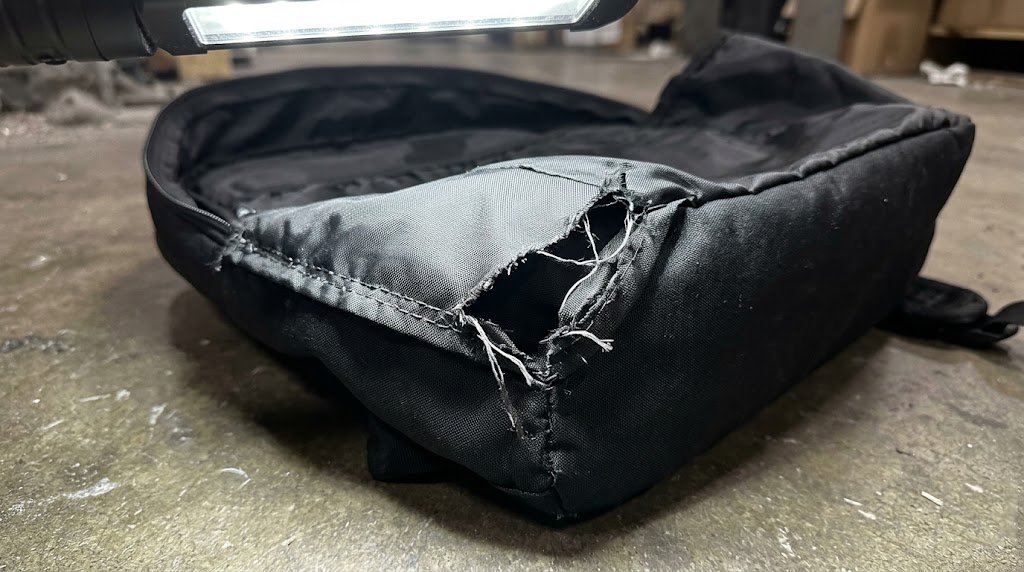
Lining failures are the defect that generates the most expensive warranty claims — because they’re invisible at delivery. A bag passes every inspection, ships clean, and then the lining tears at the bottom corner after two months of normal use. The buyer assumes it’s the factory’s fault. It is — but not for the reason they think.
Upgrading from 210D to 420D lining often doesn’t fix the problem. A 420D lining with incorrect seam construction fails faster than a 210D lining with proper load path management. The tear starts at the seam line where stress concentrates.
Our data shows over 70% of lining failures originate at the junction between lining and shell at the bottom corners. If the seam allowance there is under 6mm, the lining will fail.
Lining spec: what actually controls durability
| Use Case | Minimum Denier | Seam Allowance | Reinforcement |
|---|---|---|---|
| School/kids backpack | 210D | ≥ 8mm | Corner backing panel |
| Work/laptop bag | 420D | ≥ 10mm | Corner backing + baffle |
| Outdoor/travel | 420D+ | ≥ 10mm | Full internal frame |
- Require a cross-section diagram showing lining attachment method at corners
- Load the pre-production sample to rated capacity and inspect seam stress after 48 hours
- For high-volume orders, request a 200-cycle load simulation test report
Defect #5: Hardware Loosening — Is It the Hardware or the Attachment?
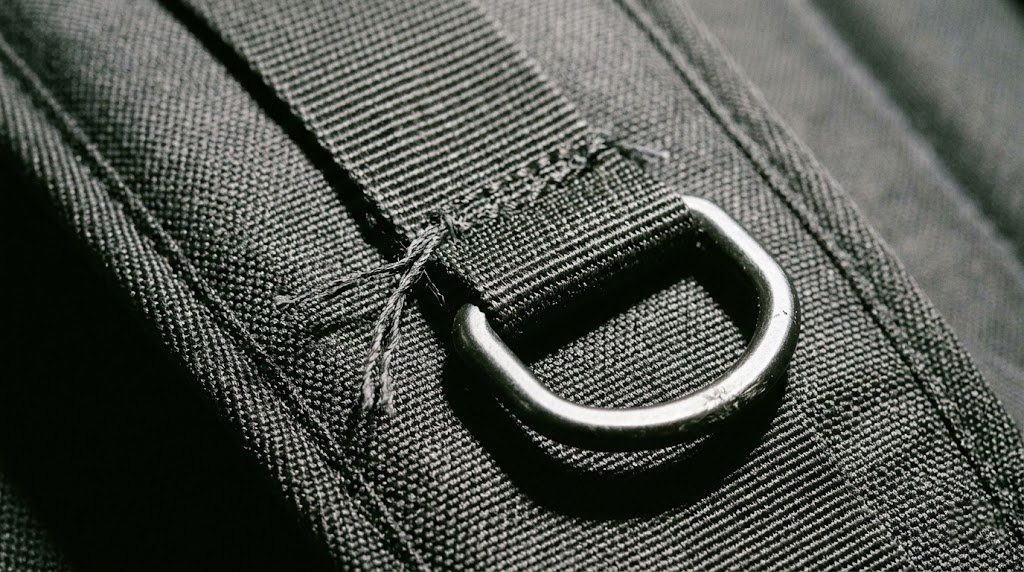
68% of buckle and D-ring failures trace back to the attachment method, not the hardware grade. A zinc alloy die-cast D-ring attached with a single straight stitch will fail faster than an iron stamping attached with a proper box-X stitch.
Most buyers focus on hardware material — zinc vs. iron, chrome vs. painted. That matters, but it’s secondary. The webbing loop that attaches the hardware to the bag is what actually fails.
A single straight stitch on a webbing loop has roughly 40–50% of the holding strength of a box-X stitch pattern. At 1,000 use cycles, that difference becomes visible.
The spec that most buyers never write:
- Hardware material: zinc alloy for premium/outdoor; iron stamping only for light-use or promotional items
- Webbing attachment: box-X stitch pattern mandatory on all load-bearing hardware junctions
- Minimum pull test: ≥15kg, tested with slider in locked position
- Snap hook spring tension test: required after attachment to confirm engagement force
Defect #6: Water Resistance Failure — Why Does "Waterproof" Stop Working?
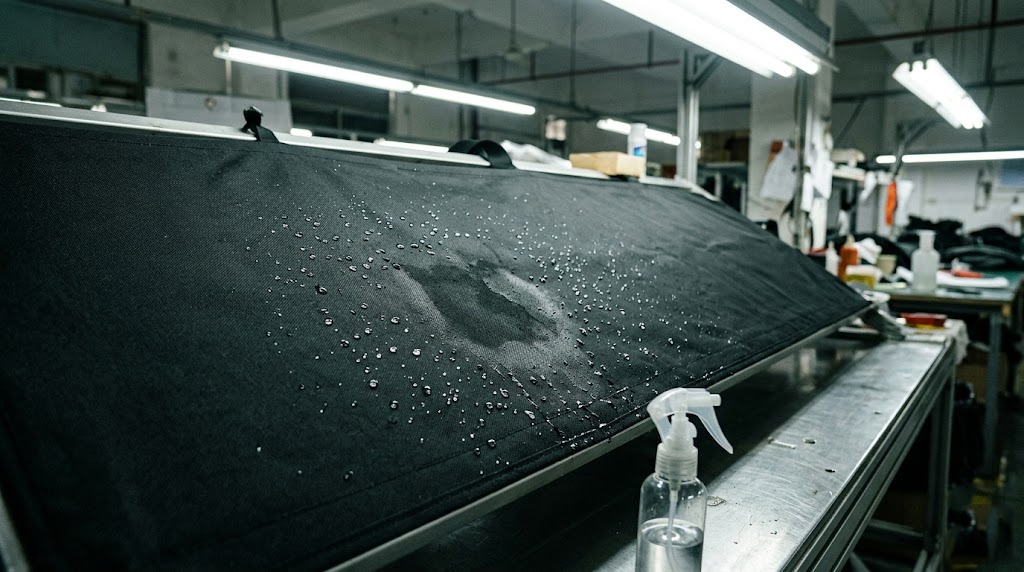
"Waterproof" is a marketing claim. It is not a specification. The most common cause of water-resistance failure isn’t the fabric — it’s wrong DWR curing temperature during application. Approximately 70% of coating failures on our production floor trace back to this one variable.
DWR (Durable Water Repellent) requires a specific curing temperature — typically 150–170°C. If the coating machine is miscalibrated by even 15°C, the bonding is incomplete. The fabric repels water on day one, but fails by day 30.
Seam taping is the second failure point. Tape adhesion requires both correct temperature and consistent pressure. We audit our pressing equipment every 14 days. Most factories don’t have a maintenance schedule at all.
How to verify water-resistance claims:
- Require a hydrostatic head rating in millimeters: 1,500mm = entry-level; 5,000mm+ = outdoor use
- Test standards to accept: AATCC 127, ISO 811, or EN 343
- Request the water column test certificate referencing your specific batch number— not a generic factory certificate
- For seam-taped products: require a 72-hour soak test for seam tape adhesion specifically
Where Is Quality Controlled in Backpack Production?
Pre-production approval is important, but it cannot replace checks during manufacturing. A sound specification can still be implemented incorrectly.
| Stage | Main control | Why it matters |
|---|---|---|
| Material sourcing and receipt | Verify approved materials, components and shade references | Prevents unreviewed changes entering production |
| Pre-production sample review | Confirm fit, construction and relevant performance | Identifies problems before bulk work begins |
| Cutting | Control panel dimensions, orientation and shade grouping | Prevents errors being carried into assembly |
| Sewing and assembly | Check first pieces and vulnerable joints during production | Allows correction before defects are repeated or concealed |
| Finishing and packing | Verify branding, labels, cleanliness and packing method | Addresses presentation and shipment requirements |
| Pre-shipment inspection | Apply the agreed sampling and test scope | Supports a documented shipment decision |
Include dimensions, pocket fit and packing checks. Define measurement points and whether the bag is empty, filled or packed. A structured backpack may need its packing method checked for deformation and recovery.
How Are Backpacks Tested for Quality and Durability?
| Check | What it evaluates |
|---|---|
| Strap pull test | Strength of shoulder-strap and handle attachments |
| Zipper cycling | Slider, chain and opening durability |
| Loaded-bag test | Seam, lining and structural stress |
| Webbing slippage test | Adjuster and webbing compatibility |
| Water-resistance test | Fabric/coating and seam performance |
| Visual/workmanship inspection | Stitching, dimensions, color and assembly |
Test methods, loads, cycle counts and pass/fail criteria should be agreed for the specific backpack and intended use rather than applying one universal specification.
AQL for Backpack Orders: What Do the Numbers Actually Mean?

AQL sampling under ISO 2859-1 is widely used for pre-shipment inspection of consumer goods, including backpacks.
A common buyer setting for consumer goods is zero acceptance for critical defects, AQL 2.5 for major defects, and AQL 4.0 for minor defects. The appropriate limits should still be agreed with the buyer based on product risk and quality requirements.
For example, under a normal single-sampling plan at General Inspection Level II, a 5,000-unit lot corresponds to a sample size of 200 units.
Here’s what the numbers mean in practice:
| Defect Class | Backpack Examples | AQL Setting |
|---|---|---|
| Critical | Sharp edge hazard, restricted substance issue, incorrect mandatory compliance marking | Ac 0 / Re 1 |
| Major | Failed strap attachment, broken zipper, significant construction defect, color outside approved tolerance | AQL 2.5 |
| Minor | Slight surface mark, small stitch irregularity that does not affect function | AQL 4.0 |
One thing most guides won’t tell you: AQL 2.5 does not mean that exactly 2.5% defective units are allowed in the shipment. AQL is used together with a statistical sampling plan, and the acceptance/rejection numbers depend on the lot size, inspection level, sample-size code and inspection scheme.
For example, with a 200-piece sample under a normal single-sampling plan, AQL 2.5 allows up to 10 major defective units in the sample; 11 would result in rejection. At AQL 4.0, up to 14 minor defective units may be accepted; 15 would result in rejection.
AQL is an acceptance-sampling tool, not a guarantee that every unit in the shipment is defect-free. This is why inline QC during production matters: problems should be detected and corrected before they are repeated across the batch.
Learn more about how AQL inspection levels affect sample sizes via QualityInspection.org — one of the most reliable resources on China sourcing QC.
Backpack Quality Inspection Checklist for Buyers
Use this backpack QC checklist during sample approval and before bulk production starts.
Before production starts:
- Zipper slider size number confirmed in tech pack
- Thread spec locked: Tex weight + fiber type (min Tex 60 for load)
- Physical Pantone swatch approved
- Dye lot segregation protocol confirmed in writing
- Lining denier specified based on capacity
- Hardware material specified: zinc alloy vs. iron stamping
- Bar-tack requirements written into BOM
- Water resistance rating: hydrostatic head (mm) quantified
- Material substitution protocol reviewed and in writing
At pre-production sample stage:
- Shoulder strap pull test ≥20kg — documented
- Zipper 500-cycle test — video required
- Loaded bag seam inspection after 48 hours
- Color check: body vs. accessories under D65 light box
- Lining seam allowance measured at corners (>8mm)
- Hardware attachment: box-X stitch confirmed visually
- Water column test certificate received with batch number
- Labeling: compliance marks and origin label verified
- Written PPS sign-off received before bulk cut begins
Ready to Work With a Factory That Catches Problems Before They Ship?
Most quality failures I’ve described in this article didn’t happen because of bad luck. They happened because the buyer and the factory were not aligned on specs before production started — and nobody caught the gap until it was too late.
That’s the exact problem we built our pre-production process to solve.
When you work with us, here’s what’s different:
- Every material substitution gets flagged to you in writing — thread grade, zipper slider, fabric lot. No silent swaps.
- We send you pull-test results and cycle-test videos before we cut bulk — not after.
- Your tech pack becomes a locked production bible — stitch density, bar-tack locations, seam allowance at stress points. All specified. All checked inline.
- We’ve already made the mistakes described in this article. We paid for them. You won’t have to.
We work with outdoor brands, school distributors, and private-label buyers across 40+ countries. MOQ starts at 500 units. Sampling in 7–10 days.
If you’re preparing a backpack order — new design, existing style, or quality troubleshooting on a current supplier — send us your specs. We’ll tell you exactly where the risk is, before you commit to anything.
Ready to get a factory quote? Tell us your specs → Contact Osgoodway Bag
Related Reading
- Our Quality Control Process — How We Inspect Every Order
- OEM vs ODM: What It Means for Your Backpack Order
FAQ
What are the most common quality defects in backpack manufacturing?
The top 6 are zipper failure (~34%), stitching breakdown, color inconsistency, lining tears, hardware loosening, and DWR coating failure. Most trace to upstream decisions.
What AQL standard should I require for a backpack bulk order?
Zero tolerance on critical, AQL 2.5 on major, and AQL 4.0 on minor defects (ISO 2859-1, Level II).
Why do quality problems appear after delivery when the factory passed inspection?
Inspections test static conditions. Failures like zipper fatigue or lining stress show up after 100–500 use cycles. Stress testing the PPS is better than visual end-of-line checks.
Is a higher denier lining always more durable?
No. Seam allowance and load path management are more important. A 420D lining with poor seams fails faster than 210D with proper construction.
What’s the one question I should ask every new backpack factory?
"What is your material substitution protocol?" A factory without a documented notification process will swap specs during shortages without telling you.