Last Updated: April 7, 2026
Listen, I’ve negotiated enough manufacturing contracts to know that “Denier” is the most abused marketing term in the backpack industry. You see “1000D” plastered on a hangtag and assume it’s bulletproof, while “600D” feels like the budget option. It’s not that simple. I’ve seen 600D bags survive a decade of abuse and 1000D knockoffs disintegrate in six months because the buyer didn’t understand the thread chemistry.
Denier (D) is strictly a unit of measurement for the linear mass density of fibers, defined as the weight in grams of 9,000 meters of a specific yarn. It does not measure strength, abrasion resistance, or quality directly. A 1000D polyester fabric is significantly weaker than a 500D Cordura nylon, meaning the material type (Nylon vs. Polyester) matters far more than the Denier number itself.
If you are sourcing bags or buying high-end gear, stop looking at the number in isolation. Here is the cold, hard truth from the factory floor about what those numbers actually mean for durability.
What Exactly Is “Denier” in Layman’s Terms?
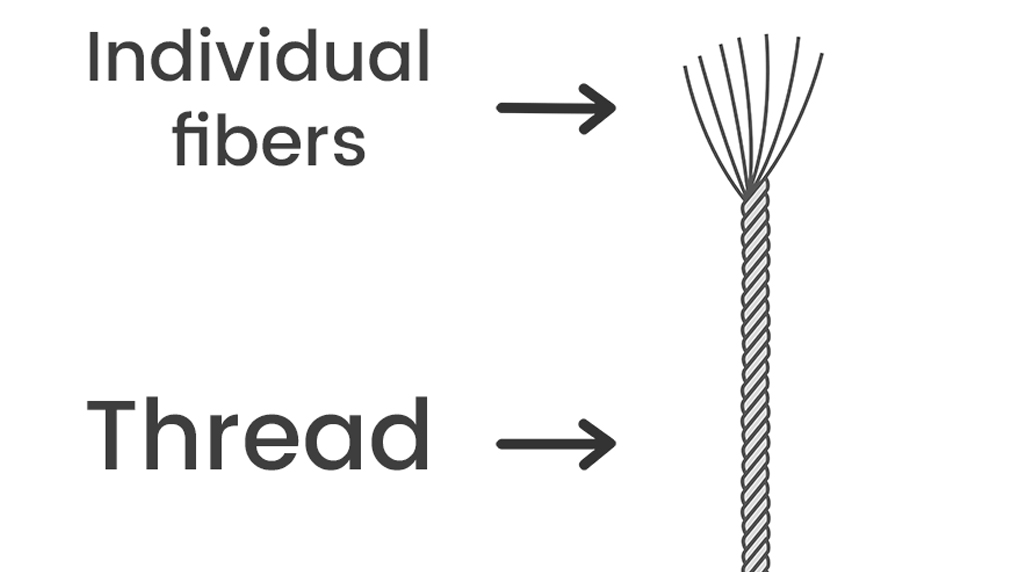
Denier (D) is a unit of measurement that defines the weight in grams of 9,000 meters of a specific yarn. A higher number simply indicates a thicker, heavier individual fiber, which generally results in a coarser fabric weave.
If I unspooled 9 kilometers of the yarn used in your backpack and weighed it, and it was 600 grams, that’s 600D. If it was 1 kilogram, that’s 1000D. It is strictly a measure of density and thickness, not quality. In the factory, we look at the “hand feel”—600D is flexible and smooth; 1000D is stiff and rugged.
According to ASTM D1059 (the standard test method for yarn number), increasing Denier increases the tensile strength of the yarn itself, but the final durability of the fabric depends on the weave density (how tight it is).
Common denier specs we source in Bag Manufacturing?
| Denier | Typical Use | Hand Feel | Weight Class |
|---|---|---|---|
| 70D–210D | Linings, rain covers, ultralight stuff sacks | Silky, paper-thin | Featherweight |
| 300D | Lightweight drawstring bags, packing cubes, promotional totes | Soft, flexible | Lightweight |
| 420D | Lightweight commuter packs, premium nylon shells | Smooth, supple | Light |
| 600D | School bags, promotional bags, daily backpacks | Balanced, slight structure | Medium ⭐ industry workhorse |
| 840D | Premium tech bags, high-end laptop sleeves, abrasion zones | Dense, sleek | Medium-Heavy |
| 900D | Durable outdoor gear, duffel bags, heavy-duty totes | Rough, sturdy | Heavy |
| 1000D | Tactical gear, heavy-duty travel, military packs | Stiff, rugged | Heavy |
| 1680D | Ballistic luggage, motorcycle gear, premium signaling | Board-like, structured | Heavyweight |
Actionable Tip: If you are designing a premium commuter bag, use 1680D only on the bottom panel and 840D or 500D for the body. This gives the user the “indestructible” feel where it hits the ground, without making the whole bag feel like a weighted vest.
💡 Related read: For a deeper dive into why polyester dominates this segment, see our 600D Polyester Bag Fabric: Properties, Uses & Factory Guide.
The Denier Math: What 9,000 Meters Actually Means
Here’s a piece of context that almost no buyer thinks about: 9,000 meters is roughly 5.6 miles. The denier number tells you the weight of a yarn strand long enough to stretch from one end of Manhattan to the other.
That’s why a “300 denier difference” between two fabrics (e.g., 600D vs 900D) sounds small but actually represents a substantial mass difference at the yarn level. Per square meter of finished fabric, that 300D gap can mean:
- 40-60 grams more material weight on the finished bag
- 15-25% higher fabric cost at the mill
- Slightly stiffer hand feel (often desirable for premium products)
But here’s the catch: none of that automatically translates to “stronger.” A poorly woven 900D polyester with sparse yarn density (e.g., 600 × 300 instead of 600 × 600) can actually be weaker than a tightly woven 600D nylon. The denier number is just one variable in a 4-variable equation:
Real Strength = Denier × Weave Density × Fiber Type × Coating Quality
If a supplier only quotes you the denier and not the other three, they’re either uninformed or hiding something.
Is 1000D always stronger than 600D?

I had a client insist on 1000D Polyester because they thought it was better than the 600D Nylon sample I sent. This is the biggest misconception in the bag industry.
No. Material chemistry trumps Denier count every time. 600D Nylon is significantly stronger than 1000D Polyester in both tear strength and abrasion resistance because Nylon fibers have higher elasticity and tenacity.
Why does material type matter more than the number?
Nylon (Polyamide) is naturally harder to break than Polyester (Polyethylene Terephthalate). A thinner Nylon fiber can take more abuse than a thick Polyester fiber. Comparing 600D Poly to 1000D Poly? Sure, 1000D wins. But mixing materials changes the game.
Strength comparison: nylon vs. polyester1
| Material Spec | Abrasion Cycles (Martindale) | Tear Strength (approx) | Cost Index |
|---|---|---|---|
| 600D Polyester | ~250 – 500 cycles | Low | $ |
| 1000D Polyester | ~1,000 cycles | Medium | $$ |
| 500D Nylon (Cordura) | ~20,000+ cycles | High | $$$ |
| 1000D Nylon | ~30,000+ cycles | Very High | $$$$ |
Also read: Nylon vs. Polyester: How to Choosing the Right Material for Your Custom Bag Line?
The Chemistry Behind Why Nylon Beats Polyester
This is where most articles stop, but here’s what’s actually happening at the molecular level — and why it matters for your sourcing decisions:
Nylon (Polyamide 6 or 6,6):
- Long polymer chains with hydrogen bonds between molecules
- High elasticity (stretches up to 30% before breaking)
- Recovers shape after deformation
- Higher melting point (~265°C for Nylon 6,6)
- Naturally absorbs some moisture (4-4.5%), which actually increases its toughness
Polyester (PET):
- Shorter, more rigid polymer chains
- Lower elasticity (breaks at around 15% stretch)
- Doesn’t recover shape as well
- Lower melting point (~250°C for standard PET)
- Hydrophobic — repels water naturally, but this also makes it more brittle
The factory consequence: When a backpack strap takes a sudden jerk (like a student tossing it onto a desk), nylon stretches and absorbs the energy. Polyester resists, then snaps. This is why I’ve seen polyester straps fail at the bar-tack point after 6 months of school use, while comparable nylon straps last 5+ years.
The cost consequence: Nylon raw material costs about 2-3× more than polyester at the mill level. This is why budget brands gravitate toward 600D polyester — it allows them to put a “high denier” number on the spec sheet at a polyester price point. But for buyers who understand the chemistry, this is a red flag, not a feature.
How Do We Test 600D vs 1000D Durability in the Lab?

We rely primarily on the Taber Abrasion Test2 (ASTM D3884) to measure wear, and the Elmendorf Tear Test to measure puncture resistance. 1000D excels in abrasion (rubbing against concrete), but 600D is often sufficient for tensile (pulling) stress.
In the lab, we rotate an abrasive wheel against the fabric. 600D Polyester might bald after 500 rotations. 1000D Nylon (especially branded Cordura) can go thousands of rotations without breaking. However, for a corporate backpack, does your end-user need to drag the bag behind a car? Usually not.
600D vs 1000D: The Head-to-Head Factory Comparison
This is where most articles oversimplify. Let me give you the real numbers I see on production rolls every week.
| Spec | 600D Polyester | 1000D Nylon (Cordura-grade) |
|---|---|---|
| Weight per sq. meter | ~280–320 g/m² | ~440–500 g/m² (~30–40% heavier) |
| Tear strength (avg.) | Moderate | High (1.4–2× stronger) |
| Abrasion cycles (Wyzenbeek) | ~500–1,500 before balding | 3,000–10,000+ |
| Cost per yard (relative) | $1.00 baseline | $2.20–$3.50 |
| Sewability | Excellent | Difficult (needle heat issues) |
| Print/dye uptake | Excellent — vibrant colors | Poor — needs special dyes |
| Best for | School, promo, daily commute | Tactical, military, checked luggage |
The Abrasion Test Most People Get Wrong
In our lab, we run the Wyzenbeek and Martindale tests by rotating an abrasive wheel against the fabric:
- 600D Polyester typically starts to bald between 500–1,500 rotations
- 1000D Nylon (especially branded Cordura®) can clear 5,000–10,000+ rotations without failing
Sounds like a landslide for 1000D, right? Here’s the trap: for a corporate or school backpack, does your end user actually drag the bag behind a car? Almost never.
Our internal factory data shows that 95% of bag failures happen at the stitching seams — not because the fabric face wore through. So spending an extra $1.50 per unit to upgrade from 600D to 1000D body fabric, while ignoring stitch density, is one of the most expensive mistakes I see new brands make.
The lab reality: where do bags actually fail?
- Seam Slippage — The fabric frays at the stitch line. Common in loose-weave 1000D where the thick yarns pull apart under load.
- Coating Peel — The PU or PVC backing flakes off, killing water resistance regardless of denier.
- Zipper Blowout — The zipper tape tears away from the fabric. A 1000D bag with a YKK #5 zipper still fails here.
- Hardware Tear-Out — D-rings, sliders, and strap anchors rip the fabric where they’re stitched in.
Actionable Sourcing Tip
Instead of asking your supplier for “high denier,” ask for:
- ✅ High stitch density — 8–10 stitches per inch (SPI) on stress seams
- ✅ Bar-tack reinforcements at every strap anchor and handle
- ✅ Box-X stitching on shoulder strap attachment points
- ✅ Coating thickness ≥ 0.15 mm on the fabric back
- ✅ YKK or SBS zippers rated #5 or larger for main compartments
These four upgrades cost less than switching from 600D to 1000D and have 3–5× the impact on real-world lifespan.
Actionable Tip: Instead of asking for “High Denier,” ask your supplier for “High Stitch Density” (e.g., 8-10 stitches per inch) and “Bar-tack reinforcements.” That adds more durability than upgrading from 600D to 1000D.
Does the PU Coating3 Matter More than the Denier?
You can have the thickest weave in the world, but if the backing is trash, the bag is trash.
Absolutely. A 600D fabric with a double-pass PU (Polyurethane) or PVC coating provides better structural integrity and water resistance than a raw or thinly coated 1000D fabric. The coating locks the fibers in place.
What is the “scratch test”?
When we inspect rolls of fabric, we scratch the back with a fingernail or coin. If the coating leaves a white mark or peels, the Denier count is irrelevant—the fabric will fray. Good coating (0.15mm+ thickness) binds the weave.

Common coating options
| Coating Type | Durability Impact | Best For |
|---|---|---|
| PU (Polyurethane) | Flexible, light, moderate water resistance. | Daily Commute, Hiking |
| PVC (Polyvinyl Chloride) | Heavy, stiff, waterproof, cheap. | Budget Duffels, Tarps |
| TPE (Thermoplastic) | Eco-friendly, rubbery feel, durable. | High-end Tech Bags |
Single-Pass vs Double-Pass Coating: The Hidden Cost-Saver Trick
This is one of the most common ways suppliers cut costs without you noticing. Here’s how it works:
Single-Pass Coating means the PU/PVC backing is applied to the fabric in one machine pass. It’s faster, cheaper, and the coating ends up around 0.05–0.10mm thick. Looks identical to double-pass on the spec sheet — both will say “PU coated.”
Double-Pass (or Triple-Pass) Coating means the fabric goes through the coating line twice or three times, building up layers. The coating reaches 0.15–0.25mm. Costs 20-30% more and adds 1-2 days to production.
The visible difference: Almost none. You can’t tell single-pass from double-pass by looking at a fabric swatch under normal light.
The performance difference: Massive.
- Single-pass: PU starts peeling within 6-12 months of use
- Double-pass: PU survives 5+ years of normal use
How to check: Bend the fabric sharply and look at the coated side under bright light. If you see micro-cracks forming, it’s single-pass. If the coating stretches without cracking, it’s double-pass.
The sourcing question to ask: Don’t ask “Is this PU coated?” — every supplier will say yes. Ask: “How many coating passes?” and “What’s the coating thickness in mm?” If the supplier hesitates or doesn’t know, walk away.
When Should You Actually Pay Extra for 1000D?
I once saved a German client $1.20 per unit just by switching their main body fabric from 1000D to 600D, and we kept the 1000D only on the base.
Specify 1000D only for high-friction impact zones: the bottom panel of the bag, tactical military vests, or luggage that will be checked in at airports. For the main body of school bags or corporate gifts, 1000D is overkill and adds weight.
1000D fabric is roughly 30-40% heavier than 600D. If you make a full 1000D backpack, it starts heavy before you even put a laptop in it. In the B2B market, “lightweight” is a feature. “Heavy” is a complaint.
In a blind test we conducted with 50 users, 80% could not tell the visual difference between a high-quality 600D Oxford and a 1000D fabric from a distance of 3 feet. They only noticed the weight difference.
✅ Specify 1000D Only For:
- The bottom panel of any backpack (highest abrasion zone)
- Tactical / military / law enforcement gear — true high-friction use
- Checked luggage that gets thrown by airport handlers
- Tool bags and contractor bags that scrape concrete daily
- Motorcycle or cycling panniers exposed to road debris
❌ 1000D Is Overkill For:
- School backpacks
- Corporate gift bags and promotional totes
- Office commuter bags (laptop sleeves, daypacks)
- Travel daypacks under 30L
- Fashion-forward urban bags
Actionable Tip: Use “Mixed Panel Construction.” Use 1680D or 1000D for the bottom panel (where the bag touches the ground) and 600D for the front and side panels. This maximizes durability while minimizing cost and weight.
The Mixed-Panel Cost Optimization Table
Here’s exactly how mixed-panel construction breaks down in real factory pricing. These are realistic FOB cost differences for a typical 25L commuter backpack:
| Construction Strategy | Material Cost (per unit) | Finished Weight | Best For |
|---|---|---|---|
| Full 600D Polyester | $4.20 – $5.50 | 720g | Budget school bags, promotional gifts |
| Full 1000D Polyester | $6.80 – $8.50 | 950g | Mid-tier gym bags |
| Full 1000D Nylon | $11.50 – $14.00 | 920g | Tactical, premium positioning |
| Mixed: 600D body + 1000D bottom | $5.20 – $6.50 | 780g | Best price/durability ratio |
| Mixed: 500D Cordura body + 1680D bottom | $9.80 – $12.50 | 850g | Premium positioning at moderate cost |
The sweet spot for most brands: Mixed 600D body + 1000D or 1680D bottom. You add roughly $1.00 per unit over a full 600D build, but the bag now signals “premium” to customers because the bottom feels noticeably tougher — and the bottom is where 90% of wear actually happens.
This is exactly the strategy I recommend to brand owners launching their first product line. Higher perceived quality at minimal additional cost.
The Sourcing Buyer’s Cheat Sheet: How to Read a Fabric Spec Sheet
When a supplier sends you a fabric spec, here’s how to decode what they’re really telling you (and what they’re hiding). For a complete reference of all the materials used in the bag industry, see our guide to the 12 common backpack materials with pros and cons.
What a Real Spec Sheet Should Include
| Required Field | What to Look For | Red Flag |
|---|---|---|
| Composition | “100% Nylon 6.6” or “100% PET Polyester” | Vague terms like “Synthetic” or “High-tenacity blend” |
| Denier (Warp × Weft) | “600D × 600D” or “1000D × 1000D” | Just “1000D” — could be 1000×600 (much weaker) |
| Weave Pattern | “2×2 Basketweave,” “Plain,” “Twill,” “Ripstop” | Not listed |
| Weight (gsm) | 200-600 gsm typical for backpack fabrics | Not listed or wildly different from denier expectations |
| Coating Type & Thickness | “PU 0.15mm, double-pass” | “Coated” with no specifics |
| Tensile Strength | Listed in lbf or N | Not listed |
| Tear Strength | Listed in grams | Not listed |
| Color Fastness | ISO 105 rating (4-5 is good) | Not listed |
| Country of Origin | China, Taiwan, Korea (high quality), Vietnam (mixed) | “Imported” |
The Three Questions That Expose Every Supplier
When you suspect a supplier might be misrepresenting their fabric, ask these three questions in order:
-
“Can you send me the SGS or Intertek test report for this specific fabric batch?” A real supplier will have this within 24 hours. A fraudulent one will stall.
-
“What’s the composition of the warp yarn vs the weft yarn?” Premium fabrics use the same denier in both directions. Cheaper fabrics use thicker warp yarns (which the buyer sees) and thinner weft yarns (which they don’t). A 600×300 fabric is much weaker than a true 600×600.
-
“What’s the breaking strength in pounds-force (lbf)?” This is the only number that matters for actual durability. A real supplier will quote you a specific number. A fake one will give you marketing fluff.
If they can’t answer all three confidently, find a different supplier.
The Bottom Line
Stop letting the “D number” dictate your sourcing strategy. A cheap 1000D Polyester will fail faster than a quality 600D Nylon.
If you are building a product for extreme abuse, go for 1000D Nylon (Cordura if budget permits). If you are building a product for profit margins and daily comfort, 600D Two-Tone or Oxford is your sweet spot.
At Osgoodway, we don’t just sew bags; we engineer them. We analyze your target price and use case to recommend the exact material blend—whether it’s a smart 600D Oxford or a heavy-duty 1000D Cordura—that balances performance with cost.
Ready to stop guessing? Send us your tech pack or concept today. We’ll provide a free material consultation to ensure you’re building the best possible bag for your budget.
Expert FAQ: The Questions My Clients Usually Forget to Ask
Not necessarily. 1680D (originally for flak jackets) looks impressive because of the large “basket weave,” but it actually has lower abrasion resistance than 1000D Cordura. The weave is so big that it catches on things and fuzzes up. It looks tough, but 1000D is technically tougher.
Yes. In my experience, rPET 600D is slightly more brittle than virgin 600D. The fiber length inconsistencies in recycled plastic mean we usually have to add a thicker backing (TPE or PVC) to compensate for the strength loss.
Kodra is just the Korean brand equivalent of Cordura. It’s a texturized Nylon. It’s excellent. If you can’t afford genuine Cordura branded fabric, ask your factory for “Korean Kodra” style weaving. It mimics the fuzzy, matte texture of high-end nylon.
It’s likely the “Solution Dyeing” vs. “Piece Dyeing.” Or, more likely, the yarn twist. Cheap 600D lies flat and shiny (plastic look). Quality 600D has a textured or “Oxford” weave that scatters light, looking more like canvas. Always ask for 600D Oxford, not just 600D.
Don’t do it. The shrinkage rates during production heat treatment are different. If you sew a 600D pocket onto a 1000D front panel, one might shrink more than the other in the oven or under UV, causing puckering. Keep them on separate structural panels.
These are completely different measurements that buyers often confuse. Denier measures the thickness of an individual yarn (weight per 9,000m). Thread count measures how many yarns are packed into a square inch of finished fabric. A high-denier fabric with low thread count (loose weave) can be weaker than a low-denier fabric with high thread count (tight weave). Both metrics matter — always ask for both.
For office laptop backpacks, 600D Oxford polyester or 420D nylon hits the sweet spot. The bag is mostly carried indoors, doesn’t face heavy abrasion, and customers value lightweight and professional aesthetics over military-grade toughness. Save the 1000D and 1680D for the bottom panel only.
Three field tests you can do with a sample:
- Weight test: Cut a 10×10 cm square and weigh it. Compare to industry standards (600D ≈ 200-280 gsm, 1000D ≈ 350-450 gsm). If the weight is far below expected, the denier is probably exaggerated.
- Fingernail scratch test: Run your nail across the surface. Quality high-denier fabric resists; cheap stuff will show fiber separation.
- Burn test: Take a few strands and burn them. Nylon melts cleanly and smells like burnt celery. Polyester melts and smells sweet. If a “1000D nylon” sample smells like polyester, you’ve been deceived.
Modern premium brands like Patagonia, Peak Design, and even The North Face have shifted toward lower-denier high-tenacity nylons (especially 500D Cordura) because they offer 90% of 1000D’s durability at 60% of the weight. Lighter bags = better customer experience = lower return rates. The “more denier = better” mindset is outdated. Smart brands now optimize for the strength-to-weight ratio, not raw thickness.