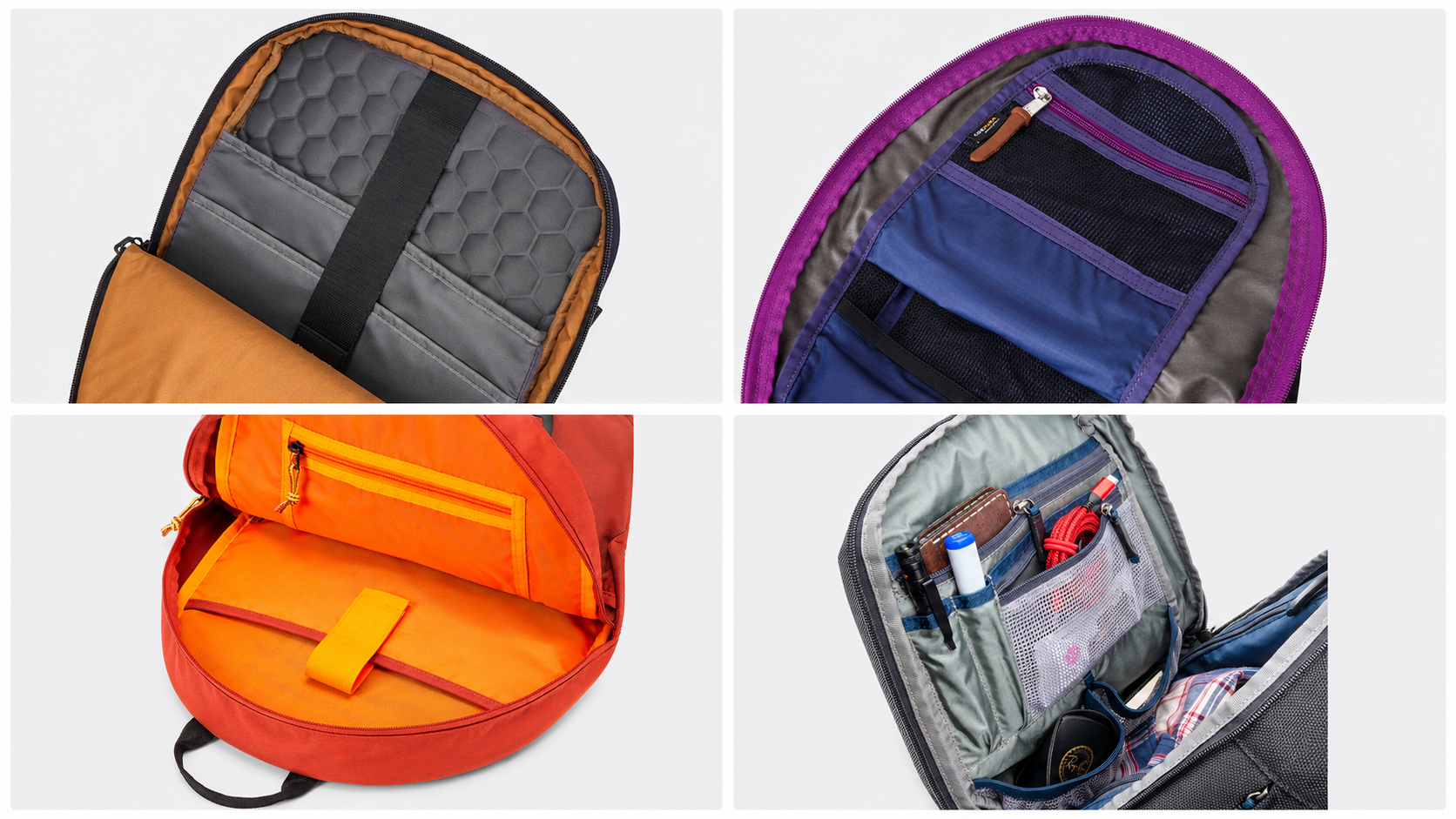
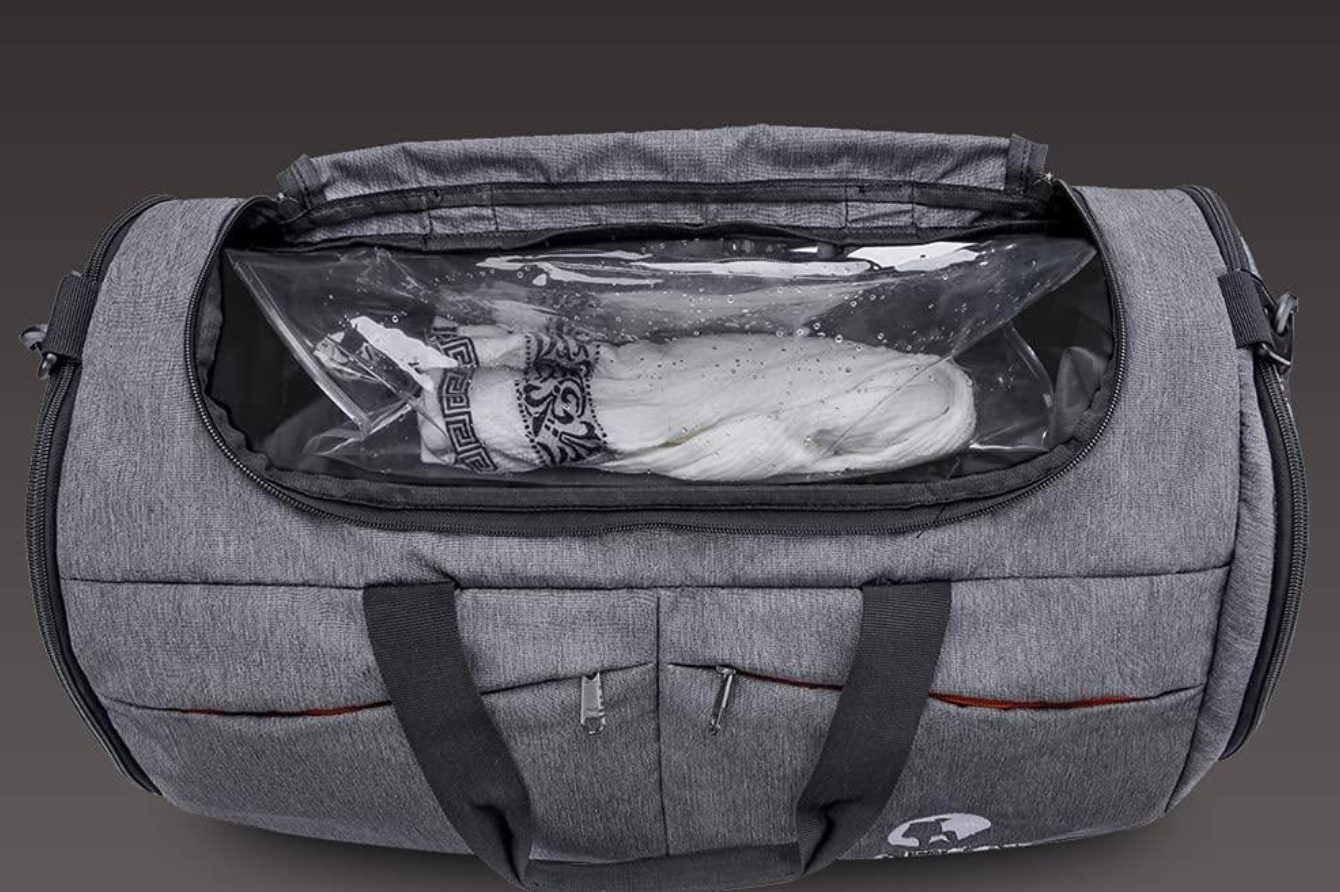
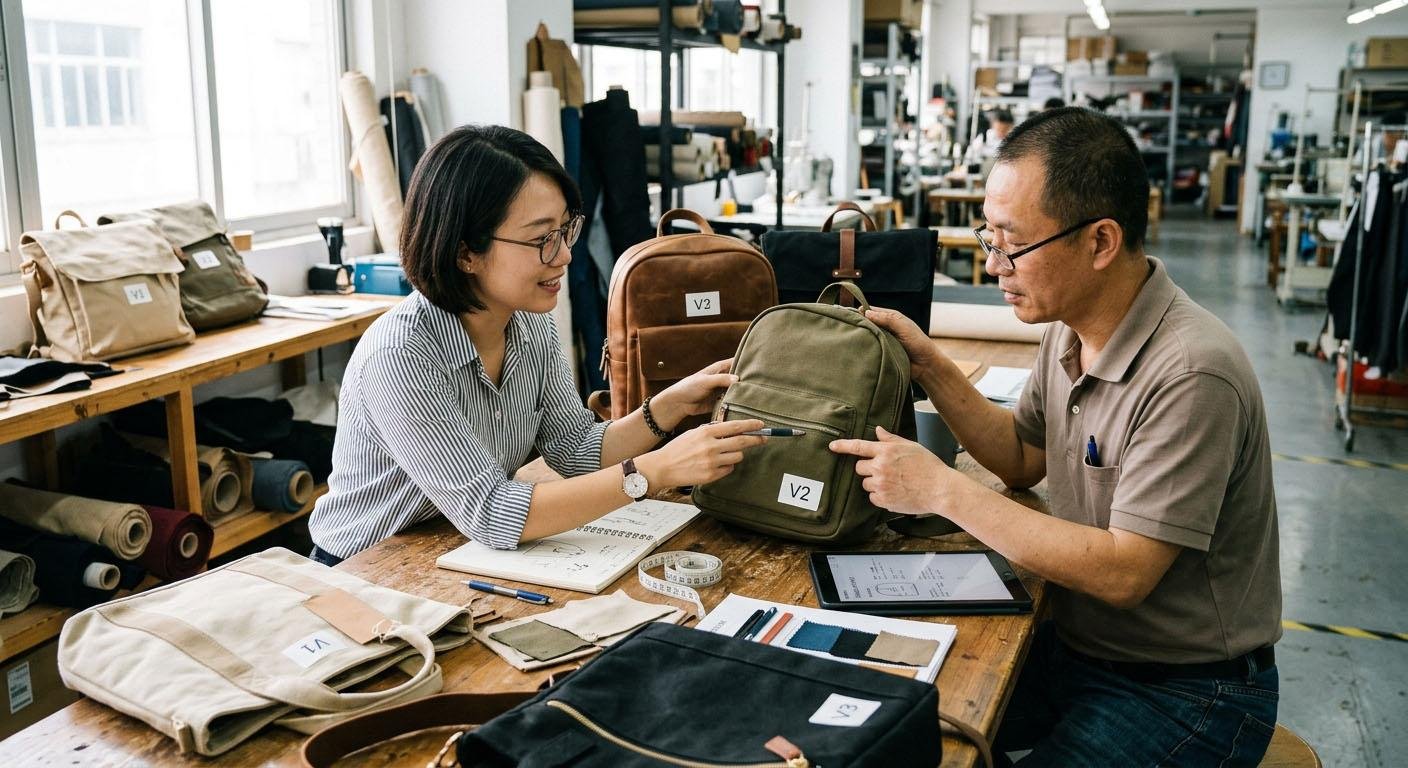
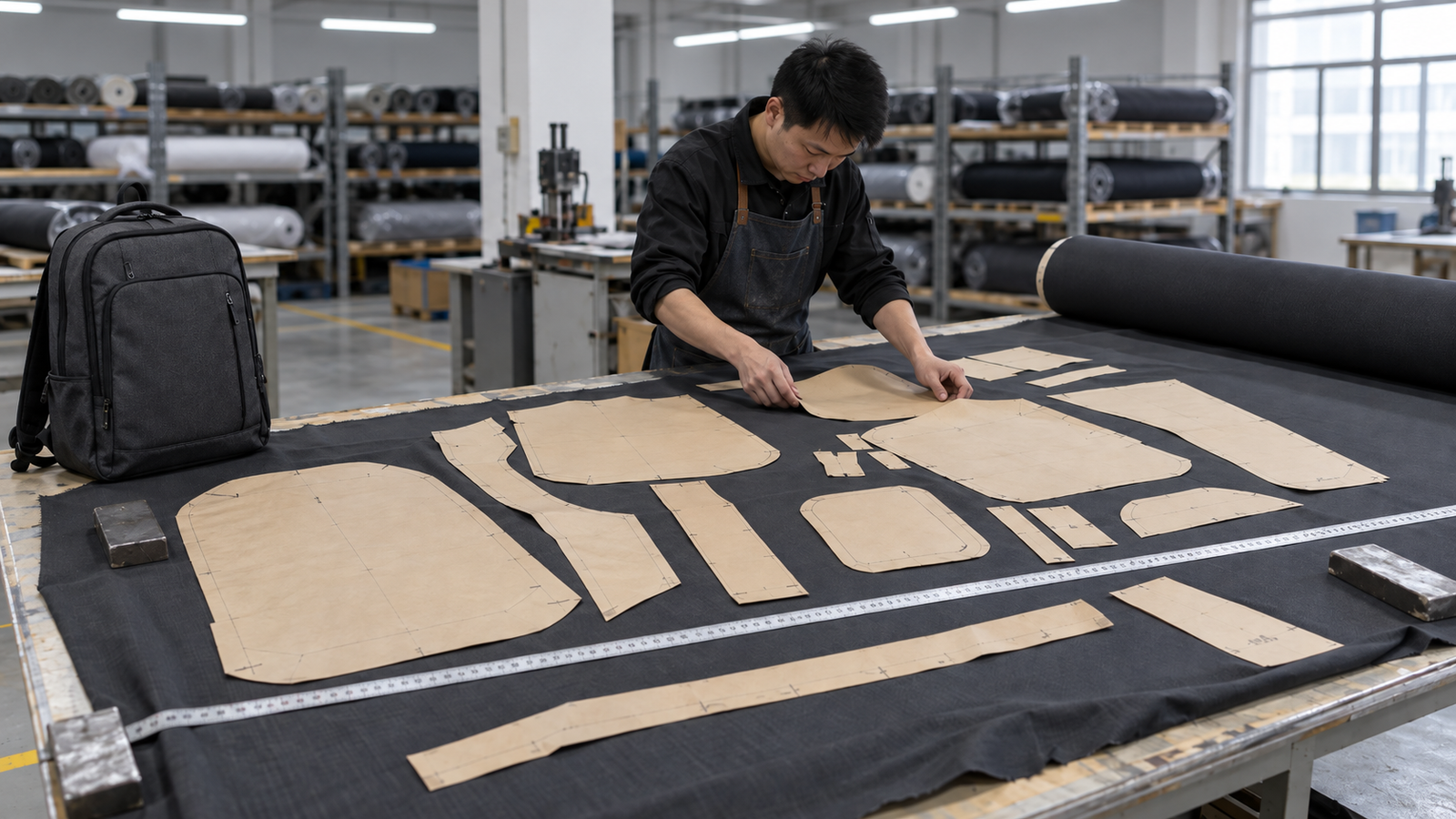
There is no single best wet-pocket material for every gym bag.
TPU is often chosen when flexibility, abrasion resistance and repeated wet use matter. PVC remains practical when cost, availability and mature processing are priorities, while PEVA is commonly used for softer, lightweight and PVC-free constructions.
Start with the moisture scenario, not with TPU, PVC or PEVA.
A pocket for sweaty clothes or a damp towel does not need the same construction as one intended to contain dripping swimwear. The material, thickness and seam construction should be selected around the actual level of moisture isolation required.
A waterproof film does not automatically create a waterproof wet pocket.
What Does the Wet Pocket Actually Need to Contain?
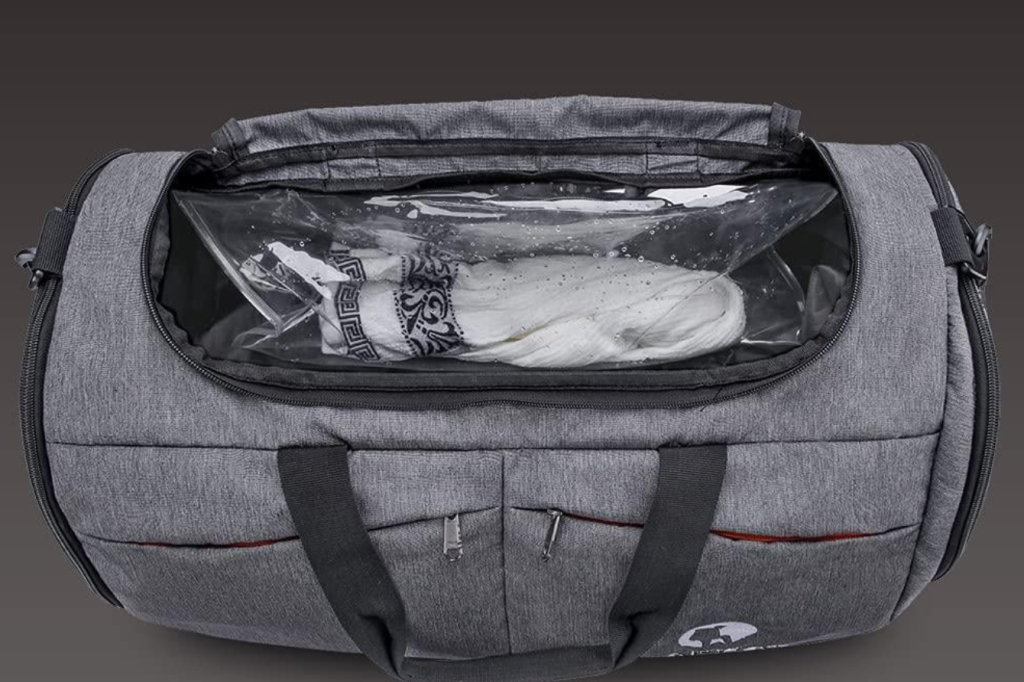
Before choosing TPU, PVC or PEVA, define what the pocket is expected to handle.
“Wet pocket” is not one performance level. A compartment for sweaty gym clothes has a very different requirement from one intended to hold a dripping swimsuit.
Moisture Separation
For many gym bags, the goal is simply to keep damp items away from dry clothing. Wet-pocket design is only one part of the overall gym bag feature layout.
Typical contents include:
- sweaty workout clothes
- a slightly damp towel
- swimwear that has been wrung out
A wet pocket should also be distinguished from a shoe compartment. While wet pockets are primarily designed to limit moisture transfer, shoe compartments focus on separating footwear and may benefit from airflow. Whether a gym bag shoe compartment needs ventilation depends on the footwear condition, storage time and overall bag design.
Wet-Item Containment
The requirement becomes higher when the pocket regularly carries wetter items, such as swimwear straight after use or a heavily damp towel.
Here, the liner, seams and opening all need more attention. Moisture should stay inside the compartment during normal carrying, without easily transferring into the main bag.
This is where material choice becomes more important—but the film alone still does not determine the result.
Free-Liquid Leakage Resistance
If the buyer expects the pocket to contain dripping items or visible free water without leakage, this should be treated as a different design target.
Ordinary sewn seams, zipper openings and corners can all become leakage points even when the liner itself is waterproof.
For this type of requirement, the finished construction may need welded seams and a more carefully controlled opening system.
| Intended Use | Typical Performance Target |
|---|---|
| Sweaty clothes / damp towel | Moisture separation |
| Wet swimwear / soaked towel | Wet-item containment |
| Dripping items / free water | Higher leakage resistance |
Define the containment level first. Then choose the material and construction that can realistically achieve it.
How Do TPU, PVC and PEVA Actually Compare?

TPU, PVC and PEVA can all be used in gym-bag wet pockets, but they solve the problem in different ways.
The right choice depends on the required durability, hand feel, weight, manufacturing process, cost and material policy—not simply on which polymer sounds more premium.
| Factor | TPU | PVC | PEVA |
|---|---|---|---|
| Typical feel | Flexible and elastic | Can range from soft to relatively stiff | Usually soft and flexible |
| Abrasion & puncture potential | Strong, depending on grade | Good, depending on formulation and thickness | More dependent on film grade and thickness |
| Weight potential | Moderate | Often heavier | Often lightweight |
| Welding | Good with compatible grades and processes | Mature and widely used | Heat-sealable grades are available |
| Cost | Often higher | Often economical | Often economical to mid-range |
| Main specification concern | TPU chemistry and grade | Plasticizer and additive formulation | Actual film grade and supplier specification |
| Typical project fit | Premium or technical bags | Mainstream and cost-sensitive bags | Lightweight or PVC-free projects |
When Does TPU Make Sense?
TPU is often selected when the wet pocket needs good flexibility together with stronger abrasion, tear and puncture performance.
This can make it useful for premium or technical gym bags that see repeated wet use, frequent folding or contact with rough contents.
However, “TPU” is still not a complete specification. Different TPU grades can behave differently in moisture, welding and long-term use, so the actual film grade should be confirmed rather than approving the material name alone.
When Is PVC Still a Practical Choice?
PVC remains widely used because it has a mature supply chain, broad thickness availability, established welding processes and relatively predictable cost.
For mainstream or price-sensitive gym bags, it can still be a very practical wet-pocket material.
Its performance depends heavily on formulation, including plasticizers and additives. For this reason, PVC should be approved by actual specification and compliance requirements—not simply by the polymer name.
Where Does PEVA Fit?
PEVA is commonly used when a softer, flexible and relatively lightweight PVC-free liner is preferred.
It can work well for light-duty wet pockets and moisture separation where extreme abrasion or puncture resistance is not the main requirement.
But PEVA quality varies between suppliers. Thickness, hand feel, surface finish and actual film performance should be approved with the physical sample.
Approve the film, not just the label “PEVA.”
Why Can a Waterproof Film Still Produce a Leaking Wet Pocket?
A TPU, PVC or PEVA film may block water by itself, but the finished pocket also includes seams, corners and an opening.
A waterproof material does not automatically create a waterproof wet pocket.
Sewn Seams and Welded Seams Are Different
In bag development, we often see buyers focus first on whether the lining material itself is waterproof. But once that film is sewn, the needle holes become part of the final construction.
For damp clothing or a wrung-out towel, a sewn pocket may still provide enough moisture separation. If the target is stronger liquid containment, welded construction is usually more suitable because it avoids repeated needle perforations along the seam.
| Construction | Typical Use |
|---|---|
| Sewn liner | Moisture separation and damp items |
| Welded liner | Higher liquid-containment requirement |
| Hybrid construction | Welded inner barrier with sewn outer structure |
When we evaluate a welded wet pocket, we also look at the material grade, weld quality and seam design. A film being technically weldable does not mean every welded pocket will perform the same way.
Why the Zipper and Opening Matter
Even with a well-welded liner, we still need to check the opening carefully.
A standard coil zipper is not a waterproof seal. Coated zippers or protective zipper flaps may improve splash resistance, but the final claim should depend on how the complete pocket actually performs.
The opening can become the weakest part of an otherwise waterproof liner.
Corners and Seam Intersections Need Attention
We also pay particular attention to the bottom corners of box-shaped wet pockets, where several seams or weld lines may meet.
These areas can concentrate stress and are often more difficult to process consistently than a straight seam. Simpler geometry and smoother corners can improve both seam reliability and cleanability.
For development, we prefer to test the finished pocket—including seams, corners and zipper ends—not only a flat piece of film.
What Material Specifications Should Buyers Actually Approve?

Writing only “TPU,” “PVC” or “PEVA” in a tech pack leaves too much room for variation.
When we develop a wet pocket, we normally confirm the actual material specification together with the physical sample, because two films with the same material name can behave very differently.
Thickness Is Not a Cross-Material Performance Rating
A 0.2 mm TPU film, 0.2 mm PVC film and 0.2 mm PEVA film will not necessarily have the same stiffness, weight, stretch or tear performance.
Thickness tells us how thick the film is—not how the three materials will perform relative to each other.
For this reason, we prefer to approve thickness together with hand feel, flexibility and the finished-pocket performance rather than selecting a universal thickness by material name.
Film vs Textile-Backed Laminate
A buyer may specify “TPU lining,” but that can refer to very different constructions:
- standalone TPU film
- TPU-coated fabric
- TPU laminated to polyester or another textile
A free film can be lightweight and flexible, while a textile-backed construction may provide more support and behave differently during sewing.
The same distinction can apply to PVC and PEVA constructions.
Grade, Formulation and Surface Finish Matter
We also look beyond the polymer name.
For TPU, the supplier grade and chemistry may affect moisture resistance, welding and long-term performance. For PVC, the formulation and additive system can affect flexibility, odor and compliance. For PEVA, supplier-to-supplier variation can be significant.
Surface finish matters too. Glossy, matte or embossed films can feel different and may not be equally easy to wipe clean.
In sample approval, we usually lock:
- material type and supplier reference
- thickness
- backing or lamination
- surface finish
- approved swatch or finished sample
Approve the actual material system—not just the name printed in the BOM.
Which Construction Makes Sense for Different Gym Bag Projects?
The material is only one part of the decision. The way the wet pocket is built can change both its performance and its production cost.
In development, we usually choose the construction after the moisture requirement is clear—not the other way around.
Sewn Wet Pocket
A sewn wet pocket is the easiest to integrate into a conventional duffel bag production line.
It is often suitable for:
- sweaty clothes
- damp towels
- wrung-out swimwear
- general moisture separation
The main limitation is the needle perforation along the seams. For this reason, we would not automatically describe a standard sewn wet pocket as leakproof.
For many everyday gym bags, however, this construction can be completely adequate if the buyer only needs wet and dry items to stay reasonably separated.
Welded Wet Pocket
A welded liner is more appropriate when the buyer expects stronger liquid containment.
Welding avoids the repeated needle holes created by sewing, but it also adds more process control. Depending on the film and construction, the factory may need specific welding equipment, a separate production step or even an outside welding supplier.
This can affect:
- cost
- MOQ
- lead time
- assembly sequence
We therefore would not recommend a welded construction simply because it sounds more technical. It should solve a real performance requirement.
Hybrid Construction: Welded Liner + Sewn Outer Pocket
For some gym bags, a hybrid structure is a practical middle ground.
The inner liner is welded to provide the moisture barrier, while the outer fabric pocket is sewn into the bag using normal bag-making processes.
This allows the two layers to do different jobs:
- welded liner → moisture containment
- sewn outer fabric → structure, appearance and attachment
We often consider this approach when stronger wet-item isolation is needed but converting the entire compartment to welded construction would make the bag unnecessarily complicated.
The best construction is the simplest one that reliably meets the required moisture-containment level.

How Should Buyers Balance Durability, Weight, Cost and Compliance?
The highest-performing material is not always the most suitable choice for the product.
When we review a gym-bag project, we normally look at the wet-pocket requirement together with the bag’s target price, weight, order quantity and material policy.
| Project Type | Main Priority | Possible Direction |
|---|---|---|
| Light-duty gym bag | Damp-item separation and controlled cost | PEVA or light PVC with sewn construction may be sufficient |
| Mainstream sports duffel | Repeated wet use with balanced cost | PVC, PEVA or TPU depending on construction and target |
| Premium / technical bag | Durability, lower bulk and repeated use | TPU may justify the higher material or processing cost |
| PVC-free project | Brand material policy | TPU or PEVA, subject to actual specification and compliance |
These are development directions rather than fixed material rules.
Durability and Weight
A thicker film is not automatically more durable, and a lighter polymer does not automatically create the lightest finished pocket.
Final weight also depends on:
- film thickness
- textile backing
- pocket area
- reinforcement
- seam or welding construction
For a foldable gym duffel, flexibility can matter as much as static strength. A very stiff or bulky wet-pocket liner may affect how easily the whole bag folds and packs.
Cost and Sourcing
Material price per meter tells only part of the story.
We also consider:
- material MOQ
- stock or custom color
- lamination
- welding cost
- sewing complexity
- production scrap
A specialized TPU grade may perform very well but be difficult to justify for a small order. In some projects, a readily available PVC or PEVA construction can be the more practical sourcing decision.
The cheapest film per meter does not necessarily produce the lowest-cost finished wet pocket.
Compliance and Brand Requirements
Material names alone should not be used as shortcuts for compliance.
A brand may require:
- PVC-free materials
- restrictions on certain plasticizers
- specific chemical limits
- its own RSL requirements
- supporting test reports
For EU-bound products, ECHA’s guidance on phthalates is a useful starting point for checking which REACH restrictions may apply to the material and finished product.
These requirements should be confirmed before material sourcing rather than after the sample is finished.
PVC-free does not mean compliance-free. TPU and PEVA still need to meet the applicable project and buyer requirements.
If the product will be marketed as “PVC-free,” we also need to confirm whether that claim applies only to the wet-pocket liner or to the entire bag.
How Should a Wet Pocket Be Tested Before Bulk Production?
A material swatch can tell us about hand feel, thickness and surface finish, but it cannot prove how the finished wet pocket will perform.
In sample development, we prefer to test the complete pocket in the actual bag.
Test the Finished Pocket, Not Only the Film
For the finished sample, we normally check:
- seam or weld quality
- corners and seam intersections
- zipper ends and opening
- folding and flexing
- wipeability
- leakage or moisture transfer
- how the wet pocket affects the shape of the bag
This is especially important with welded constructions. A straight weld strip may look good, while a corner or zipper end becomes the actual weak point.
Approve the wet-pocket system in the finished sample—not only the film swatch.
Match the Test to the Intended Claim
The test should reflect what the buyer actually wants to claim.
A pocket intended for sweaty clothes may only need to demonstrate reliable moisture separation. A compartment designed for dripping swimwear requires a more demanding leakage check.
We would not use the same test standard for both applications.
The finished pocket should be tested at the performance level the buyer intends to claim.
Check First Production for Seam and Weld Consistency
Sample approval is not the final control point.
For welded pockets, changes in heat, pressure, speed or operator handling can affect bulk consistency. For sewn films, stitch density, needle perforation and feeding can also change the finished seam.
During first production, we therefore pay particular attention to:
- weld continuity
- seam appearance
- corners and intersections
- film damage around stitching
- leakage or moisture-transfer performance
A good sample does not guarantee bulk consistency unless the production process is also controlled.
What Should Buyers Put in the Tech Pack?
Writing only “waterproof lining” or “PEVA wet pocket” is usually not enough for production.
When we receive a new gym-bag project, the information below gives us a much clearer starting point.
| Item | What to Define |
|---|---|
| Intended use | Sweaty clothes, damp towel, wet swimwear or higher liquid containment |
| Material | TPU, PVC or PEVA |
| Material reference | Supplier grade/code or approved swatch where available |
| Construction | Free film, coated fabric or laminated textile |
| Thickness | Approved specification, not a generic assumption |
| Surface finish | Matte, glossy or embossed if relevant |
| Seam construction | Sewn, welded or hybrid |
| Opening | Zipper type and required resistance level |
| Performance target | Moisture separation or higher leakage resistance |
| Compliance | Destination-market requirements and buyer RSL |
| Approval reference | Approved material swatch and finished sample |
For higher-performance projects, TPU chemistry or PVC formulation may also need to be controlled more specifically.
A wet pocket should have a performance requirement, not just a material name.
If the buyer is still deciding between several constructions during quotation, that is fine. We can start with the intended use and refine the final specification during sampling.
Frequently Asked Questions
Is TPU Always Better Than PVC or PEVA?
No. TPU can offer strong flexibility, abrasion and puncture performance, but PVC or PEVA may be more suitable for simpler or more cost-sensitive wet pockets.
Can a Sewn Wet Pocket Be Waterproof?
Not automatically. The film may be waterproof, but needle holes, seams and the zipper can still allow moisture to escape.
Is PEVA Automatically Safer Than PVC?
No. PEVA is often chosen for PVC-free projects, but its actual formulation, additives and compliance still need to be checked.
Does a Wet Pocket Need to Be Fully Welded?
Only if the required containment level justifies it. For damp clothes or towels, a well-designed sewn pocket may already be sufficient.
Should a Wet Pocket Be Ventilated?
Not always. Wet pockets focus on moisture containment, while ventilation increases air exchange, so the two goals need to be balanced carefully.
Final Words
The best wet-pocket material is the one that matches the actual moisture level, durability target and construction method—not simply TPU, PVC or PEVA by name.
If you’re developing a custom gym or sports duffel, contact Osgoodway with your target use and wet-pocket requirements, and we can help evaluate a practical construction for sampling and bulk production.