Updated October 2026 | Reviewed from a backpack manufacturing perspective
Sports bags come in different shapes and constructions depending on the equipment they carry, the way they are transported, and the conditions in which they are used.
The main types of sports bags include sports duffel bags, team bags, gym bags, sports backpacks, shoe-compartment bags, and sport-specific bags for football, basketball, tennis, swimming, cycling, golf and other activities.
A general sports duffel may work well for clothing and training gear, while a tennis bag needs to accommodate racquets and protect them during transport. A swimming bag needs practical wet-and-dry separation, and a team equipment bag may require a reinforced base, identification labels and a larger opening.
For brands and importers developing a sports bag collection, the starting point should be the equipment and the intended user—not simply the external shape of the bag.
This guide compares 18 types of sports bags, explains their common features, and highlights the construction details worth considering before sampling.
If you are looking specifically for bags designed around everyday workouts, see our guide to 11 Types of Gym Bags.
Quick Comparison of 18 Types of Sports Bags
| Sports Bag Type | Best For | Key Design Features |
|---|---|---|
| 1. Sports Duffel Bag | General training and sports equipment | Wide opening, handles and shoulder strap |
| 2. Team Sports Bag | Clubs, schools and teams | Large capacity, branding and identification |
| 3. Gym Training Bag | Personal workouts | Shoe storage, bottle pockets and easy-clean lining |
| 4. Sports Backpack | Hands-free carrying | Shoulder straps, organized compartments and back-panel comfort |
| 5. Shoe-Compartment Sports Bag | Separating footwear from clothing | Dedicated shoe section and cleanable lining |
| 6. Football and Soccer Bag | Boots, uniforms and training gear | Boot storage, durable base and optional ball compartment |
| 7. Basketball Bag | Shoes, balls and uniforms | Ball storage, large opening and balanced loading |
| 8. Tennis Bag | Racquets, balls and accessories | Racquet compartments and protective construction |
| 9. Swimming Gear Bag | Swimwear and wet equipment | Wet-and-dry separation and easy-clean materials |
| 10. Cycling Kit Bag | Helmet, shoes, tools and riding gear | Organized storage and protection for rigid equipment |
| 11. Golf Equipment Bag | Golf clubs and accessories | Club dividers, structured body and reinforced base |
| 12. Wheeled Sports Equipment Bag | Bulky or heavy equipment | Wheels, telescopic handle and reinforced base |
| 13. Yoga Mat Bag | Yoga and studio training | Mat carrier, shoulder strap and accessory pocket |
| 14. Drawstring Training Bag | Light sports gear and PE classes | Lightweight body and cord closure |
| 15. Martial Arts Gear Bag | Gloves, pads and protective equipment | Wide opening, ventilation and durable construction |
| 16. Dance Competition Bag | Costumes, shoes and accessories | Garment storage and organized compartments |
| 17. Baseball and Softball Bag | Bats, helmets, gloves and uniforms | Bat sleeves, equipment pockets and reinforced attachment points |
| 18. Multi-Sport Training Bag | Athletes carrying different equipment | Flexible storage and selected removable or adjustable sections |
These categories can overlap. A football bag may use a duffel shape, and a basketball bag may use a backpack construction. The distinction is the equipment the bag is designed to carry and the problems its construction needs to solve.
1. Sports Duffel Bags
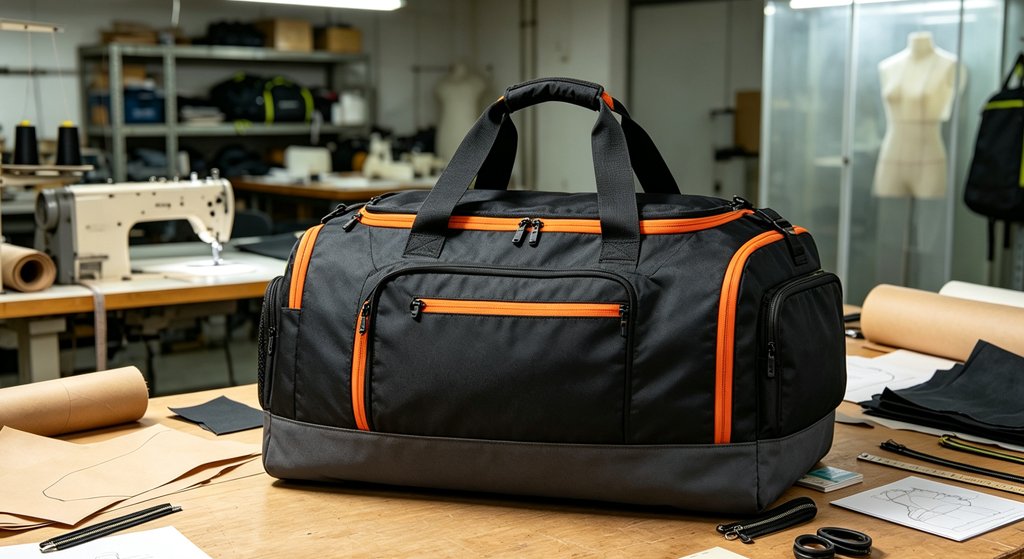
A sports duffel bag is a versatile option for clothing, shoes, towels, training accessories and general sports equipment. Its main advantage is a wide opening that makes bulky items easier to pack and remove.
Common features include:
- A large main compartment
- Carry handles and an adjustable shoulder strap
- Front or side accessory pockets
- An optional shoe compartment
- A reinforced bottom panel
What Matters in Development?
The main opening needs to remain practical when the bag is full. A zipper that looks generous on an empty sample may become difficult to operate once clothing and shoes are packed inside.
Handle attachment and bottom construction also deserve attention. Reinforcement should suit the expected load, while the bottom material should withstand the surfaces on which the bag will normally be placed.
Adding more pockets does not automatically make a better product. Each compartment should solve a clear storage problem without making the bag unnecessarily heavy or complicated to manufacture.
Best for: general sports, gym training, school teams and short sports trips.
For dimensions, capacity and measurement methods, see our Duffle Bag Size Guide.
2. Team Sports Bags
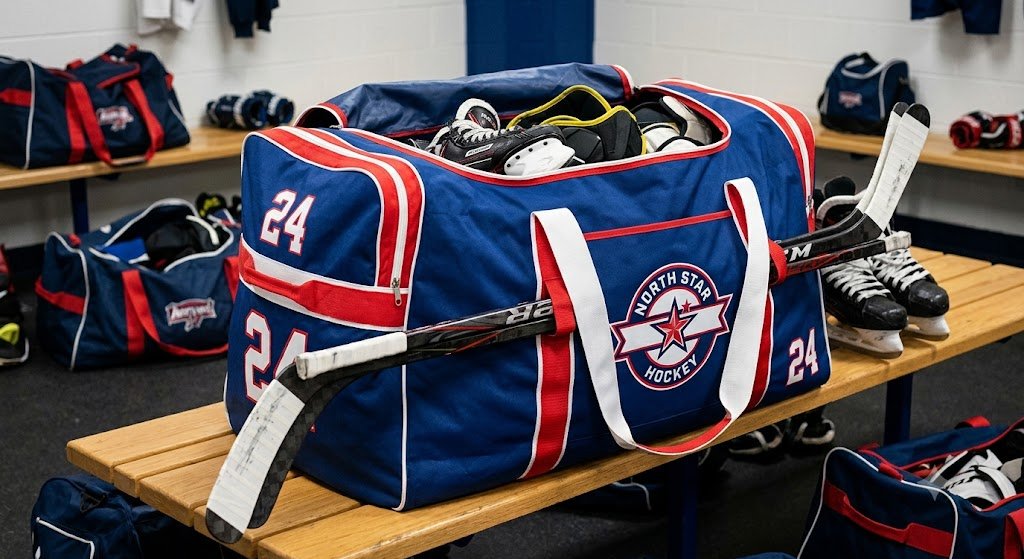
Team sports bags are designed for repeated use by clubs, schools, academies and organized sports teams. They may carry uniforms, footwear, protective equipment, balls and personal items.
Compared with a personal gym bag, a team bag may need greater capacity, more durable carrying points and clearer identification.
| Design Consideration | What to Confirm |
|---|---|
| Capacity | Whether each player carries personal gear or shared equipment |
| Opening | Whether bulky protective equipment can be loaded easily |
| Carrying system | Handles, shoulder straps or wheels, depending on the load |
| Identification | Name panels, numbers, team colors or individual labels |
| Branding | Logo size and placement before pocket and seam positions are finalized |
| Cleaning | Materials and lining suitable for repeated use |
Team orders also require consistent construction across the production batch. The approved sample should establish the pocket layout, material specifications, logo position and other details that must remain consistent in bulk production.
Best for: football clubs, hockey teams, basketball programs, school sports and competition organizers.
3. Gym Training Bags
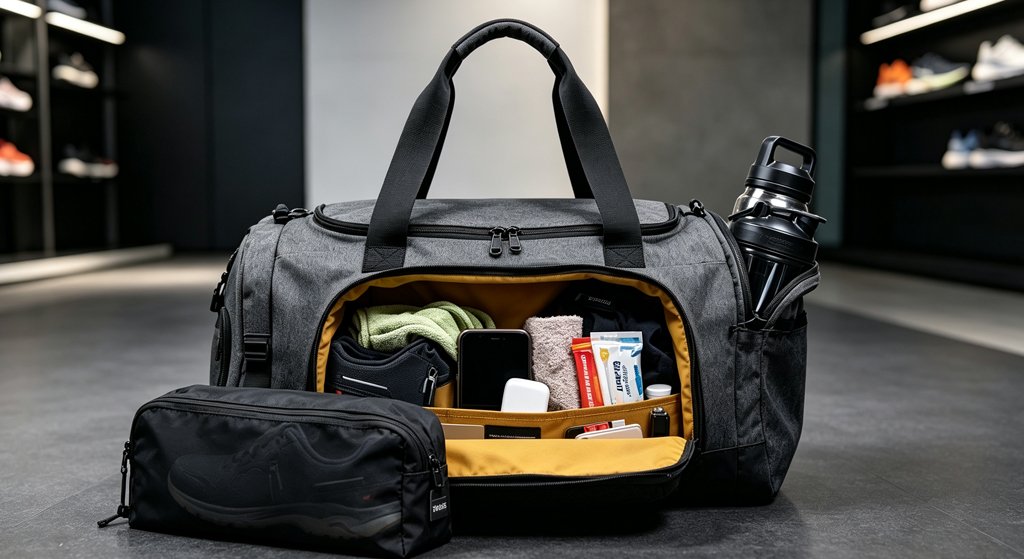
Gym training bags are designed for personal workouts rather than one specific sport. They commonly carry clothing, shoes, towels, bottles and toiletries.
A duffel-style body is common because it provides flexible storage and easy access. Some designs add a shoe compartment, wet pocket or bottle holder, depending on the user’s routine.
The main development challenge is balancing organization with usable space. A deep shoe compartment may be useful, but it can also reduce the volume available for clothing.
For this reason, the sample should be checked with actual shoes and a realistic workout load, not just evaluated while empty.
Best for: fitness centers, personal training, workout classes and everyday gym use.
For a detailed comparison of gym bag formats, see 11 Types of Gym Bags and What Each Is Best For.
4. Sports Backpacks
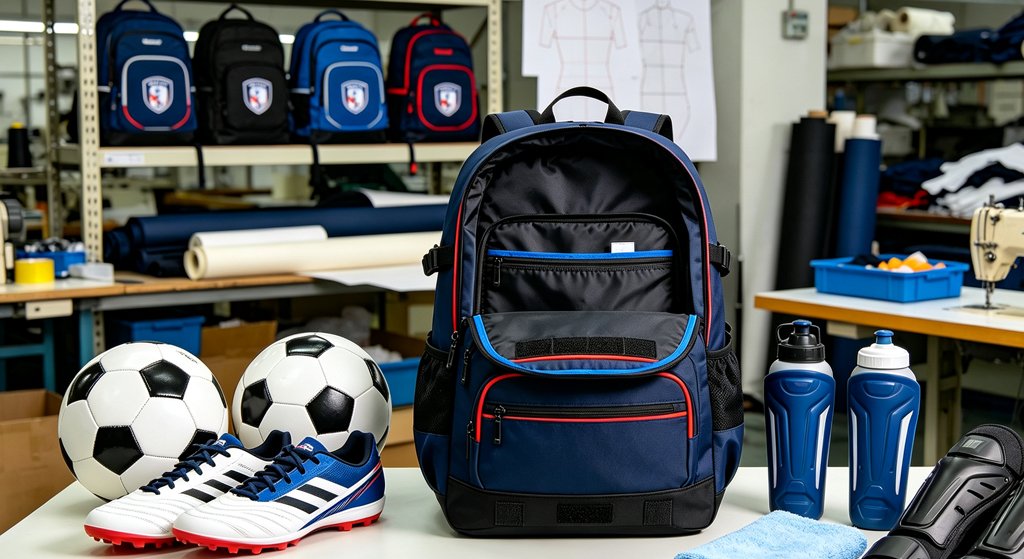
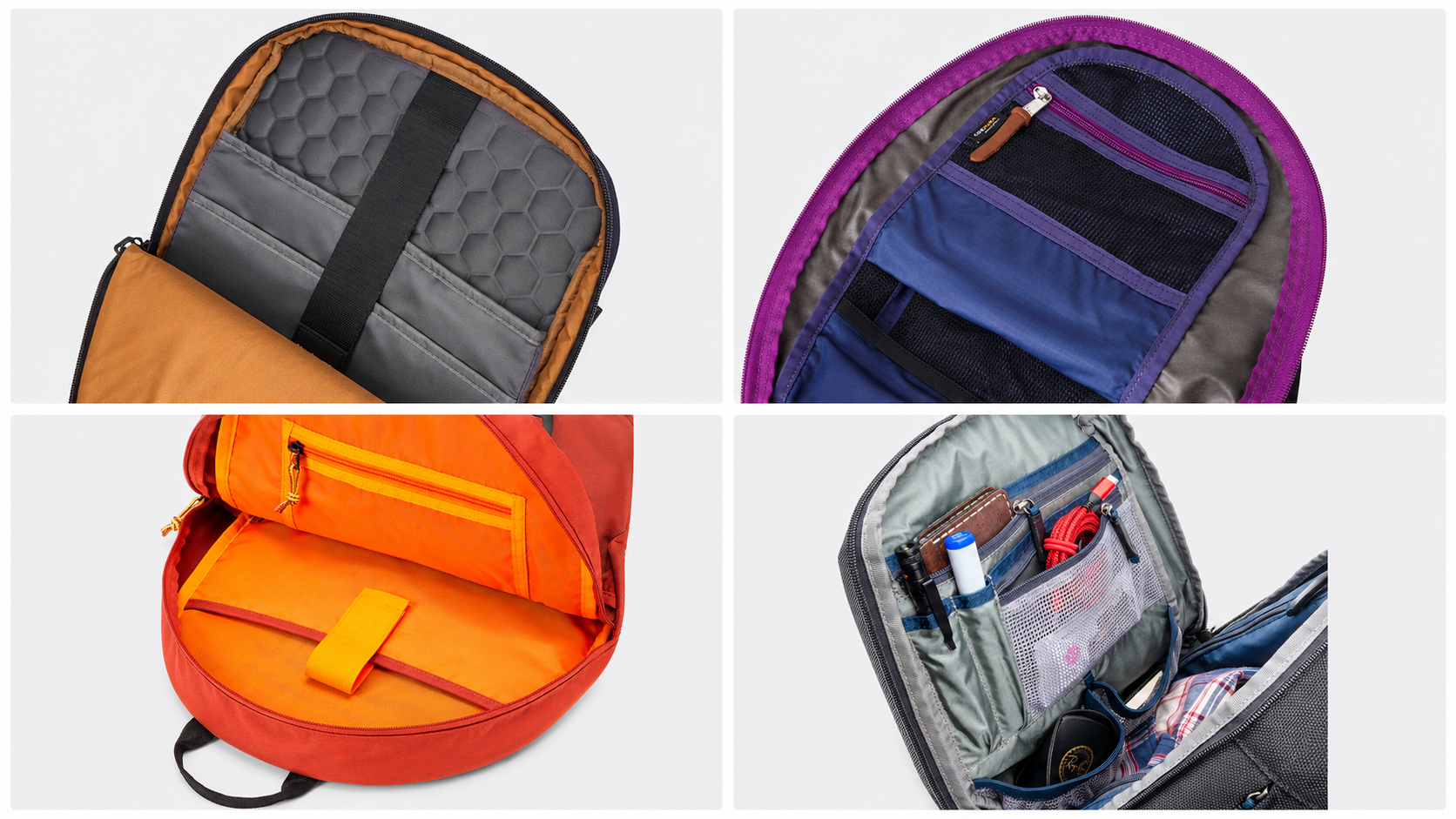
Sports backpacks offer hands-free carrying for athletes who travel between training, school, work and other daily activities.
Their layouts vary according to the equipment being carried. A general training backpack may need only a main compartment and bottle pockets, while a sport-specific design may require storage for shoes, a helmet or protective accessories.
Important design considerations include:
- Shoulder-strap attachment and padding
- Back-panel comfort
- Bottle-pocket construction
- Compartment access
- Bottom reinforcement
- Weight distribution when fully loaded
The bag should be tested with the expected equipment inside. Uneven loading can affect balance and place additional stress on shoulder-strap anchors and side-pocket seams.
Sports backpacks are not the same as hiking backpacks. Hiking packs may prioritize long-distance load transfer and frame systems, while many sports backpacks prioritize equipment organization and quick access.
Best for: student athletes, commuters, cyclists and users who prefer hands-free carrying.
For a broader overview of backpack formats, see our 33 Different Backpack Types guide.
5. Shoe-Compartment Sports Bags
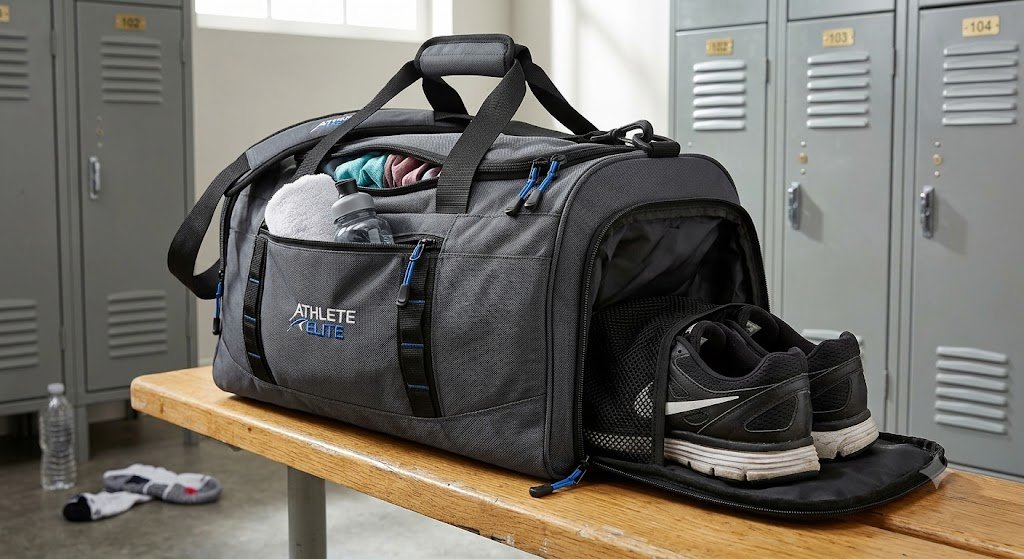
A shoe-compartment sports bag separates footwear from clothing and other equipment. The compartment may sit at the side, underneath the main body or inside the bag as a removable pouch.
| Design | Main Consideration |
|---|---|
| Side-entry compartment | Shoe access without opening the main compartment |
| Bottom compartment | Efficient use of the bag’s base, with adequate reinforcement |
| Removable shoe pouch | Flexibility when footwear storage is not always needed |
| Ventilated compartment | Airflow for footwear that may be damp after use |
The compartment needs to fit the intended footwear without taking too much space away from the main compartment.
During sampling, check the shoe size, zipper opening, compartment depth and how the fully loaded bag balances. A compartment that fits shoes but prevents the main zipper from opening properly is not a successful design.
Best for: gym users, football players, court-sport athletes and commuters who change footwear.
For a closer look at compartment layouts, read our guide to Bottom vs Side Shoe Compartments in Duffel Bags.
6. Football and Soccer Bags
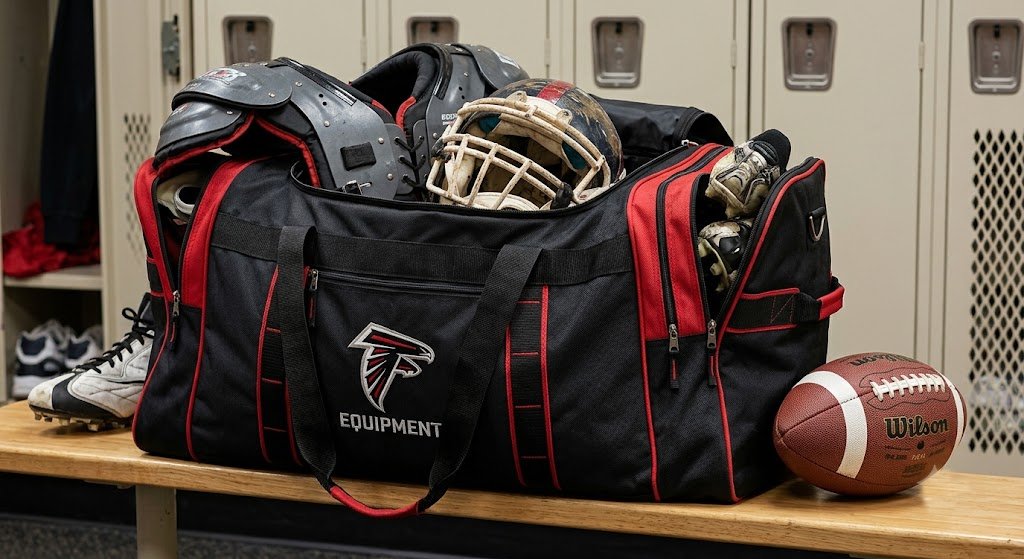
Football and soccer bags need to accommodate boots, uniforms, shin guards, training accessories and, in some designs, a ball.
Compared with a general sports duffel, the design may need more attention to mud, grass, damp clothing and repeated contact with outdoor surfaces.
Typical features include:
- A dedicated boot compartment
- A main compartment for uniforms and clothing
- Optional ball storage
- Accessory pockets
- A durable bottom panel
- Easy-clean lining where needed
What Should Be Checked?
The boot compartment should keep dirty footwear separate without making the main compartment difficult to use. The bottom panel and attachment points should also suit the expected load and carrying method.
For team orders, logo placement, player identification and consistent color matching should be confirmed before bulk production.
Material selection depends on the intended price level and performance requirements. A heavier fabric is not always necessary throughout the bag; targeted reinforcement at the base and other high-stress areas may be more appropriate.
Best for: football clubs, soccer academies, school teams and individual players.
7. Basketball Bags
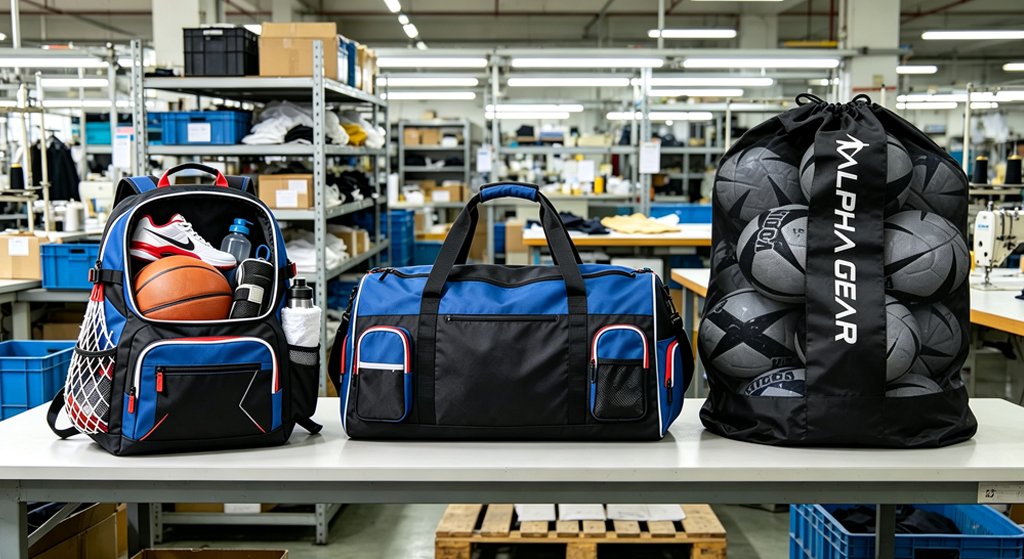
Basketball bags need to accommodate relatively bulky footwear and, depending on the design, a basketball as well as clothing and accessories.
Common formats include:
| Format | Typical Use |
|---|---|
| Basketball backpack | Individual players and students |
| Basketball duffel | Training and general equipment carry |
| Team sports bag | Clubs and tournament groups |
| Ball carrier | Coaches and equipment transport |
The main design challenge is balancing storage volume and carrying comfort. A ball and a pair of large basketball shoes can occupy a substantial amount of space, so the pocket layout needs to be checked with the actual equipment.
A ball pocket should hold the ball securely without blocking access to the main compartment. Likewise, shoe storage should not make the bag unnecessarily deep or unstable.
Best for: basketball players, school programs, clubs and coaches.
8. Tennis Bags
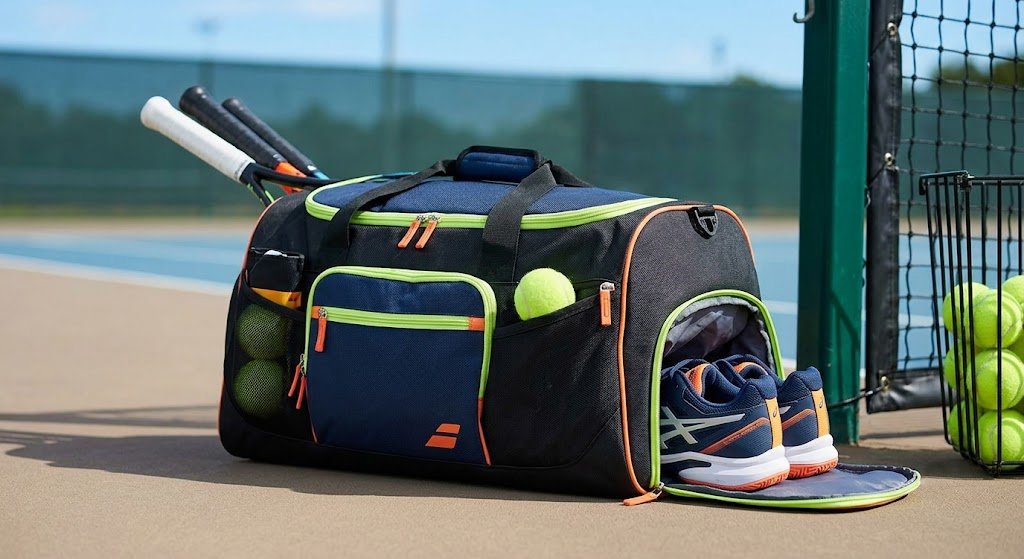
Tennis bags are built around racquet storage. The bag’s length, compartment shape and internal protection need to match the racquets being carried.
Common formats include racquet backpacks, multi-racquet bags and tennis duffels.
Useful features may include:
- Racquet compartments sized for the intended racquets
- Protective panels or padding where needed
- Smooth internal lining
- Ball and accessory pockets
- Optional shoe storage
- An optional insulated compartment
Not every tennis bag needs extensive padding or thermal construction. These features should be selected according to the intended user and product positioning.
Before sampling, confirm the racquet quantity, dimensions, carrying method and required accessories. The sample should be checked with the actual racquets inside to verify fit and access.
Best for: recreational players, competitive players, tennis clubs and coaches.
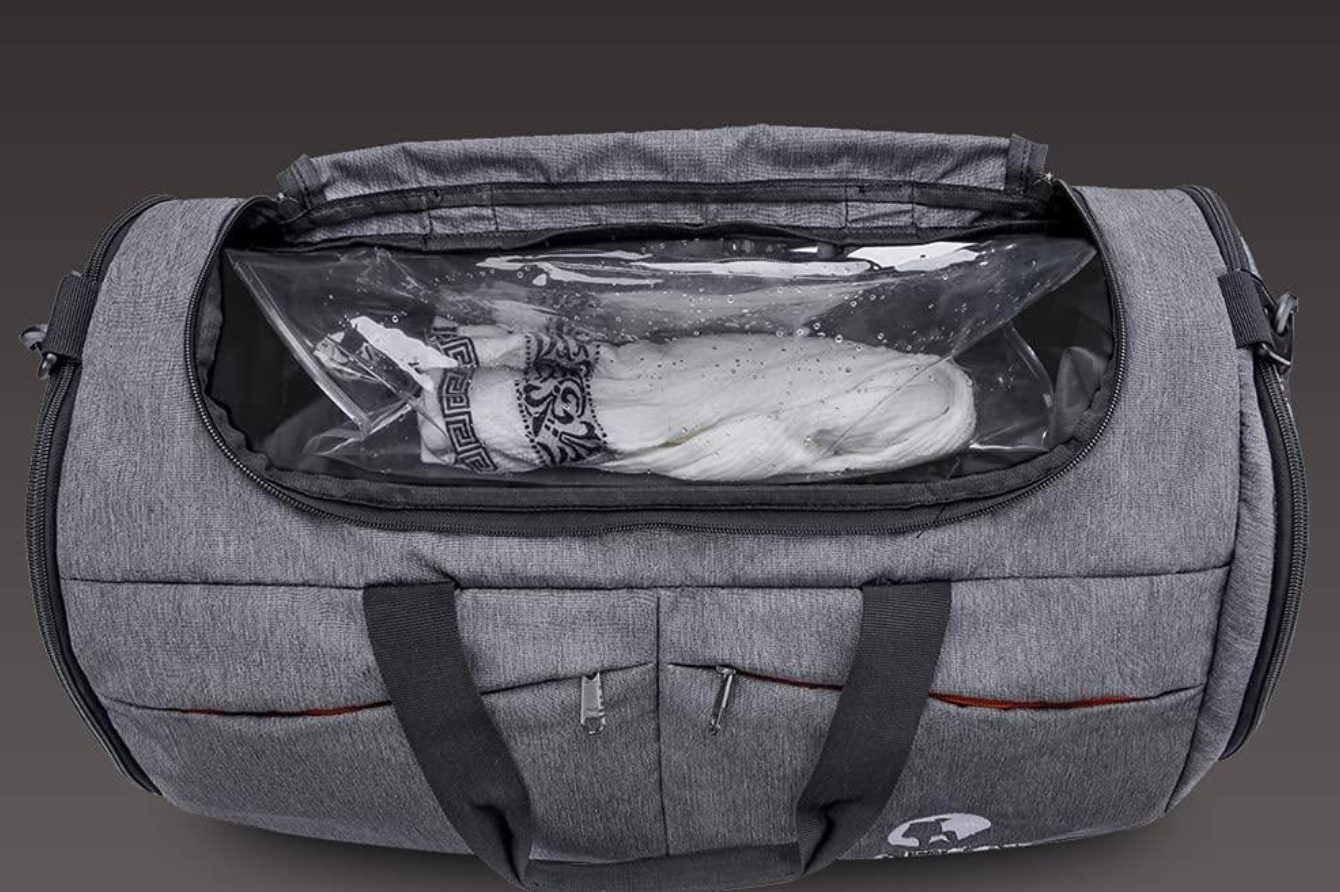
9. Swimming Gear Bags
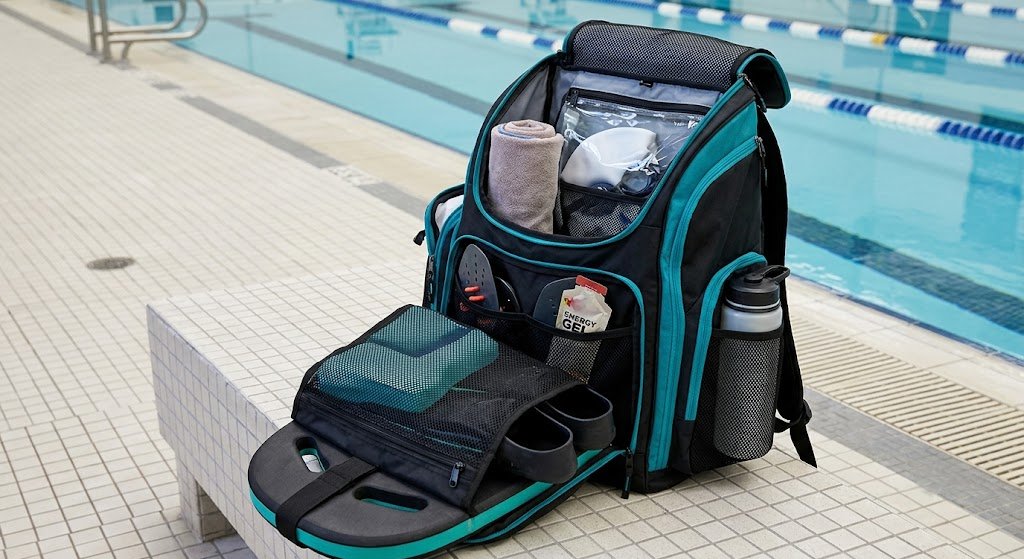
Swimming bags need to accommodate swimwear, towels, goggles, toiletries and other pool equipment. Their main design challenge is separating wet items from dry clothing while allowing the bag to be cleaned and maintained easily.
Common features include:
- A wet-item compartment
- Mesh ventilation panels
- An easy-clean lining
- Separate storage for goggles and small accessories
- Water-resistant construction in selected areas
A wet compartment does not automatically make the entire bag waterproof. The performance depends on the materials, seams, closures and intended use.
For many projects, targeted moisture protection is more practical than making every compartment waterproof. If the buyer requires a waterproof compartment, the acceptance criteria should be defined and the completed construction tested.
Best for: swimmers, pool training, aquatic sports and users carrying damp towels or clothing.
10. Cycling Kit Bags
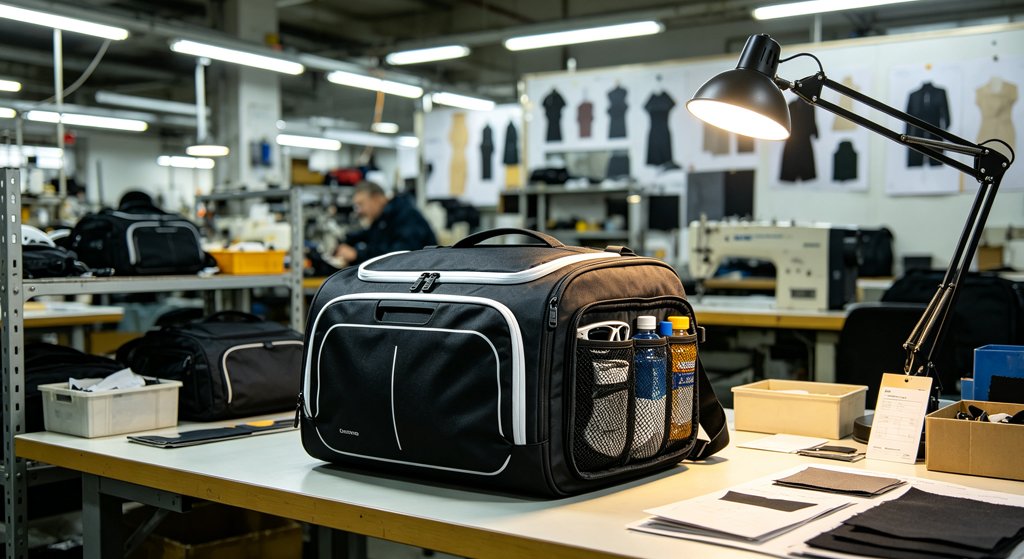
Cycling kit bags may carry helmets, shoes, riding clothing, gloves, tools, eyewear and other accessories. The storage layout should protect bulky equipment while keeping small items easy to find.
The main design considerations are:
- Helmet storage that prevents unnecessary pressure on the helmet
- Separate storage for dirty or damp shoes
- A secure pocket for small tools
- Protected storage for eyewear or electronics
- A carrying method suited to commuting or vehicle transport
A cycling duffel may be convenient for riders traveling by car, while a cycling backpack may be more practical for commuting. The design should match the actual journey and equipment list.
Avoid adding numerous small organizers unless the intended user needs them. Too many pockets and elastic loops can increase cost and complexity without improving the packing experience.
Best for: cycling clubs, commuters, road cyclists and mountain bikers.
11. Golf Equipment Bags
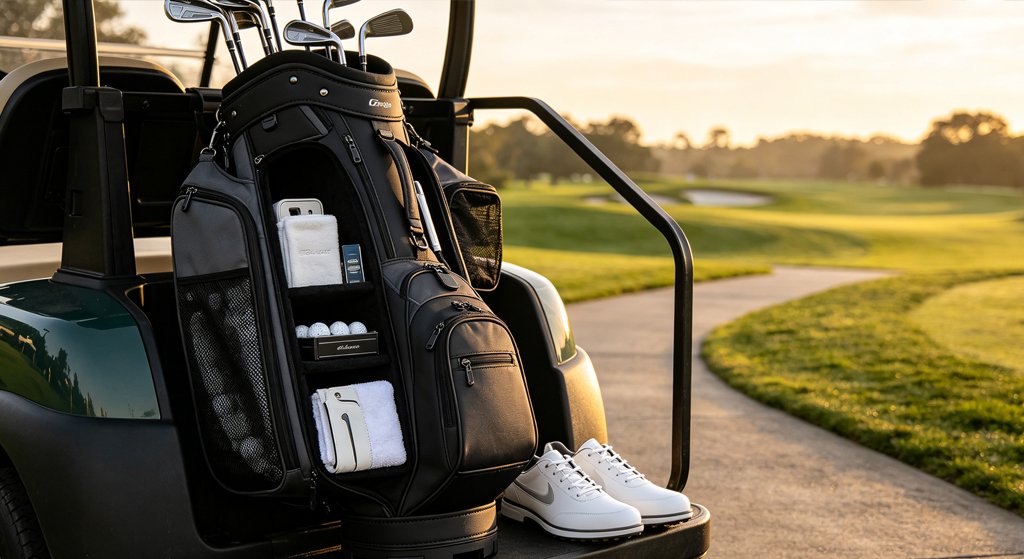
Golf equipment bags need to carry long clubs, protect club heads and keep accessories organized. Their construction depends on the carrying method, divider layout, base structure and expected equipment load.
Common formats include:
- Carry bags designed to reduce weight
- Stand bags with a leg mechanism
- Cart bags organized for use on a golf cart
- Travel covers designed to protect equipment during transport
The divider system should be selected before finalizing the external pocket layout. Different divider arrangements affect how clubs are separated and how much room remains for accessories.
For stand bags and wheeled or travel designs, the hardware and reinforcement become particularly important. The finished sample should be checked with clubs loaded to confirm stability, access and carrying comfort.
Best for: golfers, golf clubs, training programs and golf equipment brands.
12. Wheeled Sports Equipment Bags
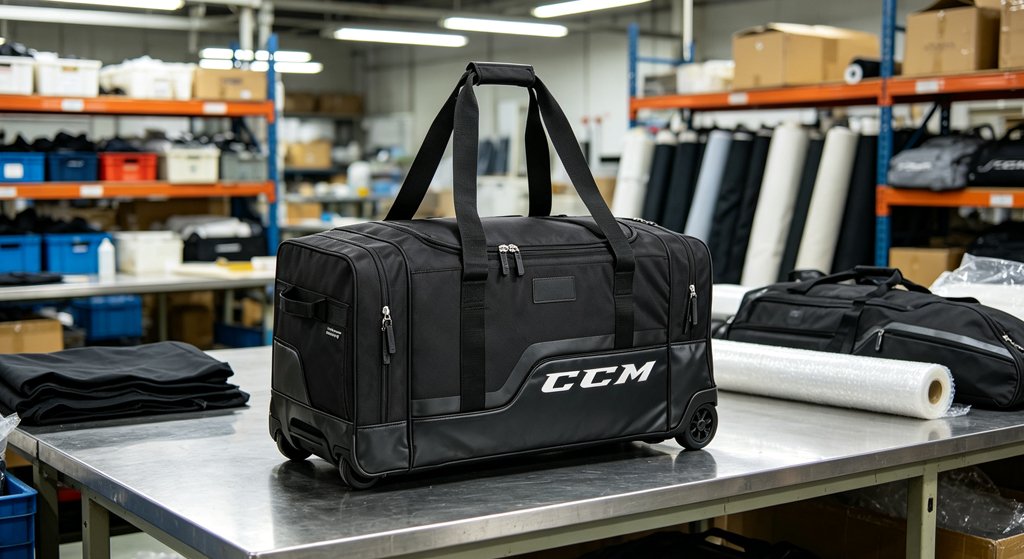
Wheeled sports bags are useful when the equipment is bulky or heavy enough to make hand carrying inconvenient.
They may be used for hockey gear, cricket equipment, baseball equipment, goalkeeper gear and other large protective equipment.
Important construction points include:
- Wheel and axle durability
- Telescopic-handle support
- Reinforcement around the wheel housing
- A base that resists sagging
- Adequate clearance between the bag body and the ground
- Stability when the bag is standing or rolling
Adding wheels to a standard duffel is not simply a matter of attaching a trolley. The handle, base, wheel housing and reinforcement need to work together under the expected load.
The sample should be tested when fully packed. Check that the wheels roll smoothly, the handle remains stable and the bag does not drag against the ground.
Best for: hockey, cricket, baseball and other equipment-heavy sports.
Six Specialized Sports Bag Types
Some sports require storage solutions that do not fit neatly into a general duffel or backpack. These specialized designs are usually developed around the dimensions, shape or condition of particular equipment.
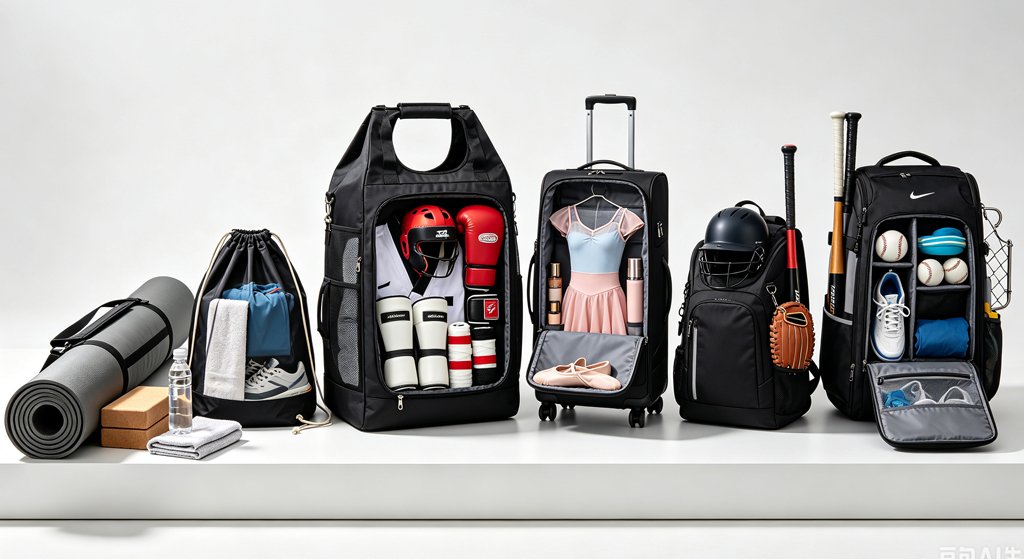
13. Yoga Mat Bags
Yoga mat bags are designed around the length and rolled diameter of a yoga mat. They range from simple sleeves to full-zip carriers and larger totes with room for clothing, towels and accessories.
The mat dimensions should be confirmed before sampling. A bag sized for a thin travel mat may not accommodate a thicker mat.
For a simple mat carrier, a secure strap and one accessory pocket may be sufficient. If the design also needs to carry shoes, bottles and clothing, a larger yoga tote may be more practical.
Best for: yoga, Pilates and studio fitness.
14. Drawstring Training Bags
Drawstring training bags are lightweight carriers for clothing, towels, footwear and small training items. Their simple construction makes them suitable for school programs, team distribution and promotional use.
The lower cord attachment is an important construction point. Repeated pulling can damage a thin fabric corner if the attachment is not adequately reinforced.
The material and cord system should suit the expected load. These bags are appropriate for light equipment, but not necessarily for heavy or rigid sports gear.
Best for: PE classes, junior teams, events and lightweight training kits.
15. Martial Arts Gear Bags
Martial arts gear bags carry items such as gloves, pads, uniforms, wraps and protective equipment.
A wide opening is useful because gloves and pads can be awkward to load through a narrow zipper. Ventilation and easy-clean materials may also be important when equipment is stored after training.
The bag dimensions should be based on the actual protective equipment rather than clothing alone. If mesh panels are used, their placement should account for abrasion from hard equipment.
Best for: boxing, martial arts, MMA and combat-sport training.
16. Dance Competition Bags
Dance competition bags organize costumes, shoes, cosmetics, accessories and personal items. Some designs combine garment storage with rolling luggage, while others focus on clothing organization and separate shoe compartments.
The construction should protect delicate garments from snagging or crushing. Internal fasteners, rough zipper edges and hook-and-loop surfaces should be positioned so they do not damage costumes.
For rolling designs, the base, wheels, handles and garment section should be checked together because they affect both usable space and balance.
Best for: dance schools, competition teams and performers.
17. Baseball and Softball Equipment Bags
Baseball and softball bags need to accommodate bats, helmets, gloves, balls, footwear and uniforms.
Common features include:
- Long bat sleeves
- Helmet storage
- Separate equipment pockets
- Fence hooks
- Backpack straps or wheels, depending on the design
The ends of bat sleeves and the attachment points for fence hooks need appropriate reinforcement because they experience concentrated loads.
A bag for an individual player will have different capacity and carrying requirements from a large equipment bag for a catcher or team.
Best for: baseball and softball players, school teams and clubs.
18. Multi-Sport Training Bags
Multi-sport training bags are intended for users who carry different equipment for gym sessions, field practice, swimming or other activities.
They usually combine flexible main storage with selected features such as shoe separation, wet-item storage and adjustable organization.
The key is to avoid overcomplicating the layout. Removable dividers and extra compartments should be included only when they solve a real storage problem.
A well-designed general bag with a few useful sections may be more practical than a complicated system that adds weight and reduces packing space.
Best for: multi-sport athletes, training programs and users carrying mixed equipment.
How to Choose the Right Sports Bag Type
The right sports bag depends on what it carries, how it is transported and the conditions in which it will be used.
For brands developing a new collection, these five questions are a useful starting point.
| Question | Why It Matters |
|---|---|
| What equipment must fit inside? | Determines the dimensions and compartment layout |
| How will the bag be carried? | Influences handles, shoulder straps, backpack systems or wheels |
| Will the equipment be wet, dirty or abrasive? | Affects lining, ventilation and material selection |
| What level of protection is required? | Determines reinforcement, padding and compartment construction |
| What is the target market and price level? | Helps balance features, materials and manufacturing complexity |
Start With the Equipment, Not the Shape
A familiar duffel or backpack may appear suitable at first, but the actual equipment can reveal problems that are not obvious from a drawing.
Before sampling, confirm the important dimensions of the items the bag needs to carry. These may include footwear, racquets, helmets, balls, clubs or protective equipment.
Where possible, use actual equipment to evaluate the first sample. This helps reveal whether compartments are accessible, whether the load is balanced and whether the bag has enough usable space.
Avoid Adding Features Without a Clear Purpose
A shoe pocket, wet compartment, bottle holder and multiple organizers may all be useful. But every added feature affects the pattern, sewing operations, material consumption and final cost.
The objective is not to maximize the number of features. It is to select the features that matter to the intended user.
What Materials Are Commonly Used for Sports Bags?
Sports bags use different materials depending on the expected wear, weight, appearance, moisture exposure and target price.

| Material | Common Applications | Main Consideration |
|---|---|---|
| Polyester | Gym bags, team bags and promotional products | Cost, color options and intended durability |
| Nylon | Premium sports bags and selected outdoor products | Strength-to-weight performance and abrasion resistance |
| Oxford fabric | Utility, school and team bags | Weave, coating and intended use |
| Mesh | Ventilation panels and selected compartments | Opening size, abrasion and placement |
| TPU-laminated textile | Selected technical and moisture-resistant designs | Lamination, seams and required water resistance |
| PVC-coated fabric | Selected heavy-duty equipment bags | Weight, flexibility and required surface protection |
The fabric should not be evaluated in isolation. The construction, stitching, zipper, reinforcement and compartment layout all influence the performance of the finished bag.
A heavier fabric is not automatically the better choice. Material selection should match the actual application and target price rather than relying on denier alone.
For a more detailed comparison of nylon, polyester, ripstop, Cordura®, recycled polyester and other options, see our guide to 11 fabrics for making bags.
What Should Buyers Prepare Before Developing a Custom Sports Bag?
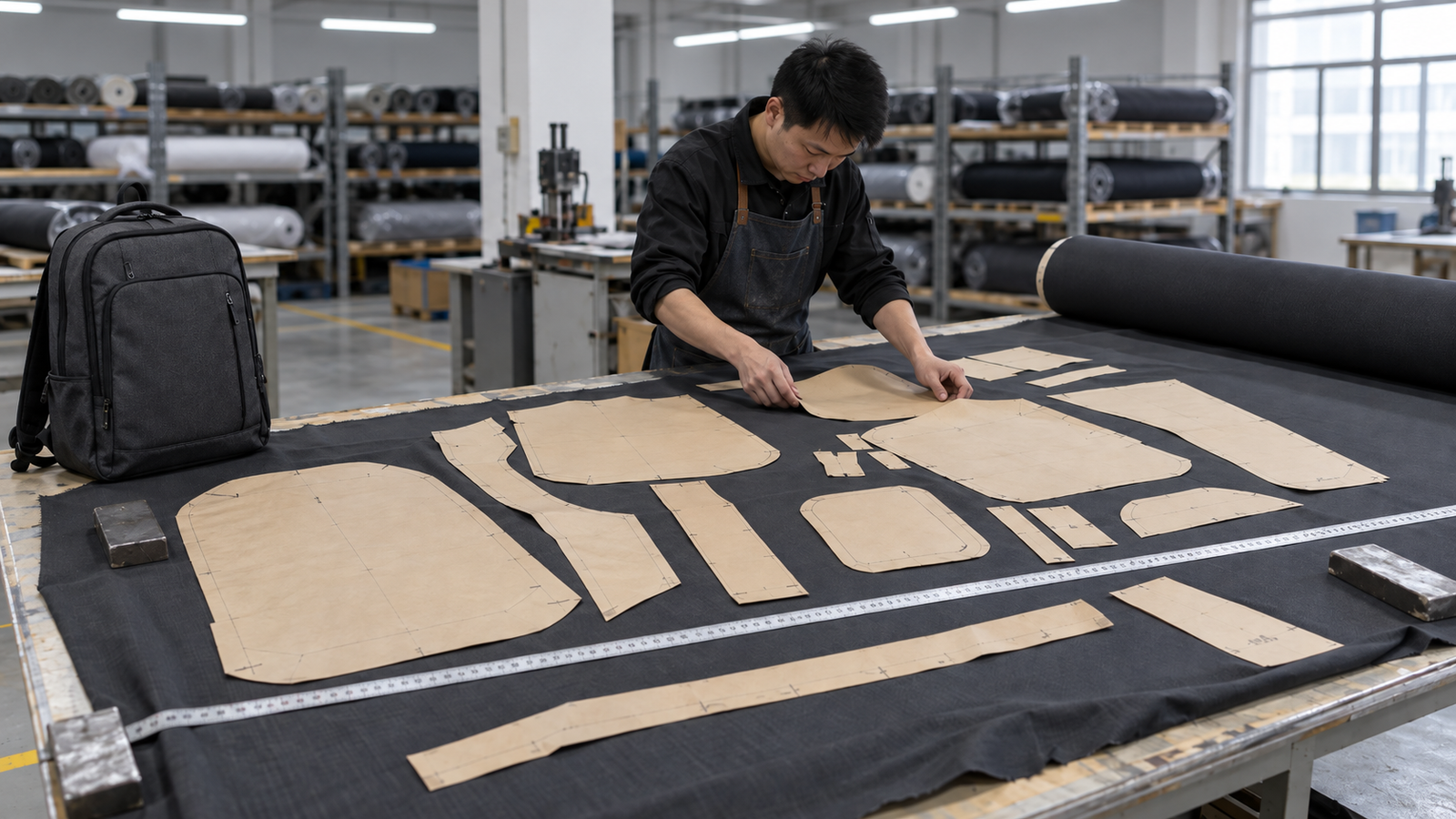
A custom sports bag project is easier to evaluate when the factory understands the intended use before developing the pattern.
Useful information includes:
- Target sport or user group: for example, football players, swimmers, cyclists or multi-sport athletes.
- Equipment list: the items that must fit inside the bag.
- Dimensions or capacity: target length, width, height or volume where known.
- Carrying method: handles, shoulder strap, backpack straps or wheels.
- Material requirements: preferred fabric, coating, lining and performance needs.
- Branding requirements: logo artwork, colors, labels and packaging.
- Estimated order quantity: total quantity and expected color breakdown.
Reference images and a tech pack are useful when available. If the design is still at the concept stage, a clear equipment list and explanation of the intended use can also help establish a practical starting point.
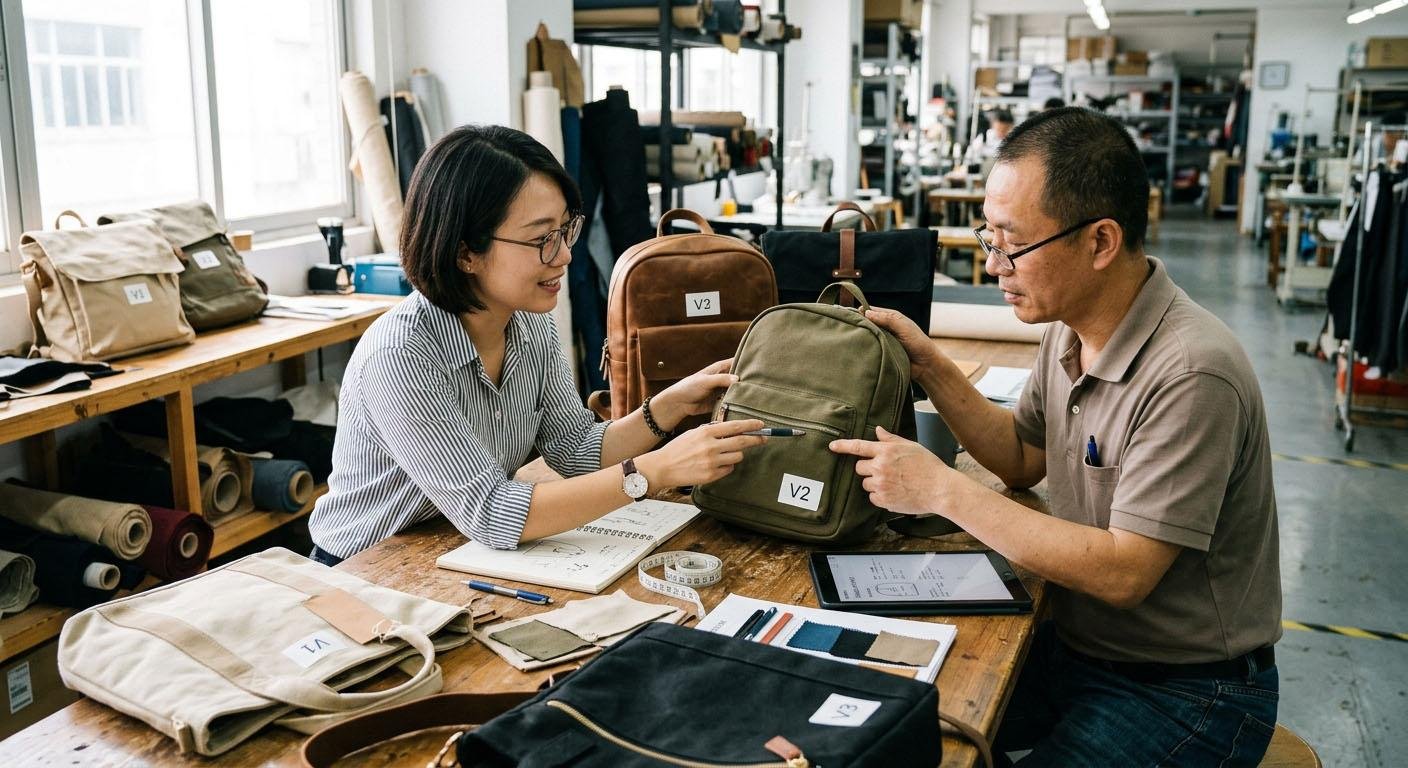
Before bulk production, the approved sample should establish the agreed materials, dimensions, construction, branding and functional details.
Frequently Asked Questions About Sports Bags
What are the main types of sports bags?
Common types include sports duffels, team bags, gym bags, sports backpacks, shoe-compartment bags and specialized designs for football, basketball, tennis, swimming, cycling and golf. The right type depends on the equipment and how it needs to be carried.
What is the difference between a gym bag and a sports bag?
A gym bag usually focuses on personal workout items such as clothing, shoes, towels and bottles. Sports bags cover a broader range of uses, including team equipment and sport-specific storage for items such as racquets, bats, helmets and protective gear.
For more detail on workout-specific formats, see our 11 Types of Gym Bags guide.
Which material is best for a sports bag?
There is no single best material for every sports bag. Polyester is a common starting point for many general-purpose products, while nylon and specialized coated or laminated textiles may be appropriate for other performance requirements. The final choice depends on the use case, construction and target price.
Can sports bags be customized for a brand or team?
Yes. Customization can include the bag structure, materials, colors, compartments, logos, labels, hardware and packaging. The practical options depend on the design, materials, order quantity and production requirements.
What should I send a factory for a sports bag quotation?
Send a reference image or tech pack if available, the intended use, equipment list, target dimensions, material preferences, branding requirements and estimated order quantity. These details help the factory assess the design and identify questions that need to be resolved before sampling.
Developing a Custom Sports Bag Collection?
The right sports bag starts with a clear understanding of the equipment, user and intended application. Once these are defined, the bag structure, material selection, compartments and reinforcement can be developed around the actual requirements.
If you are planning a new sports bag collection, share your reference design, target market, equipment requirements and estimated order quantity.
Our team can help review the proposed structure, materials and sampling requirements before bulk production.
Explore our sports bag manufacturing options or contact Osgoodway to discuss your custom sports bag project.