A sport bag is a high-performance equipment carrier engineered with task-specific textiles, reinforced hardware, and specialized compartments to protect gear from moisture, impact, and microbial growth.
We at Osgoodway analyzes the technical requirements for gym, swimming, and team sports categories to assist both individual athletes and professional B2B procurement managers in selecting durable gear. Whether you are buying one unit or ten thousand, the engineering principles of load distribution and material density remain the same.
That’s what this guide is about.
Why the "Wrong Bag" Costs You More Than Money
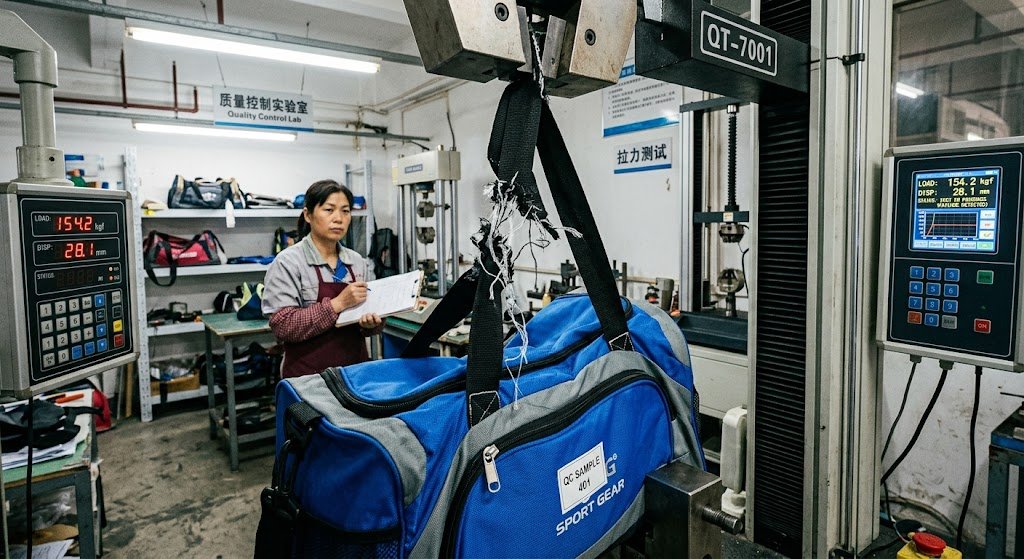
I’ve seen it a thousand times: a brand spends $50,000 on marketing only to have their "premium" gym bag’s bottom fall out because they used a generic #3 zipper and 300D polyester.
When a bag fails, you aren’t just out $80. You’ve got a soaked car seat from a leaking swim suit, a pair of $200 Jordans ruined by a "breathable" shoe compartment that wasn’t actually breathable, or a team that looks like amateurs because their duffels are sagging.
The "Hidden Costs" of Cheap Specs:
- Gear Degradation: Low-grade linings transfer odors and moisture to clean clothes.
- Hygiene Risks: Without antimicrobial treatments, a damp bag is a petri dish for MRSA and fungi.
- Training Friction: Fumbling with a stuck zipper adds mental drag to your routine.
"I tell my athletes: your bag is your mobile locker. If it’s disorganized and cheap, your mindset follows suit." — Lead S&C Coach, Performance Lab (2026 Tech Summit).
The Activity-First Framework — Start Here Before Looking at Any Bag
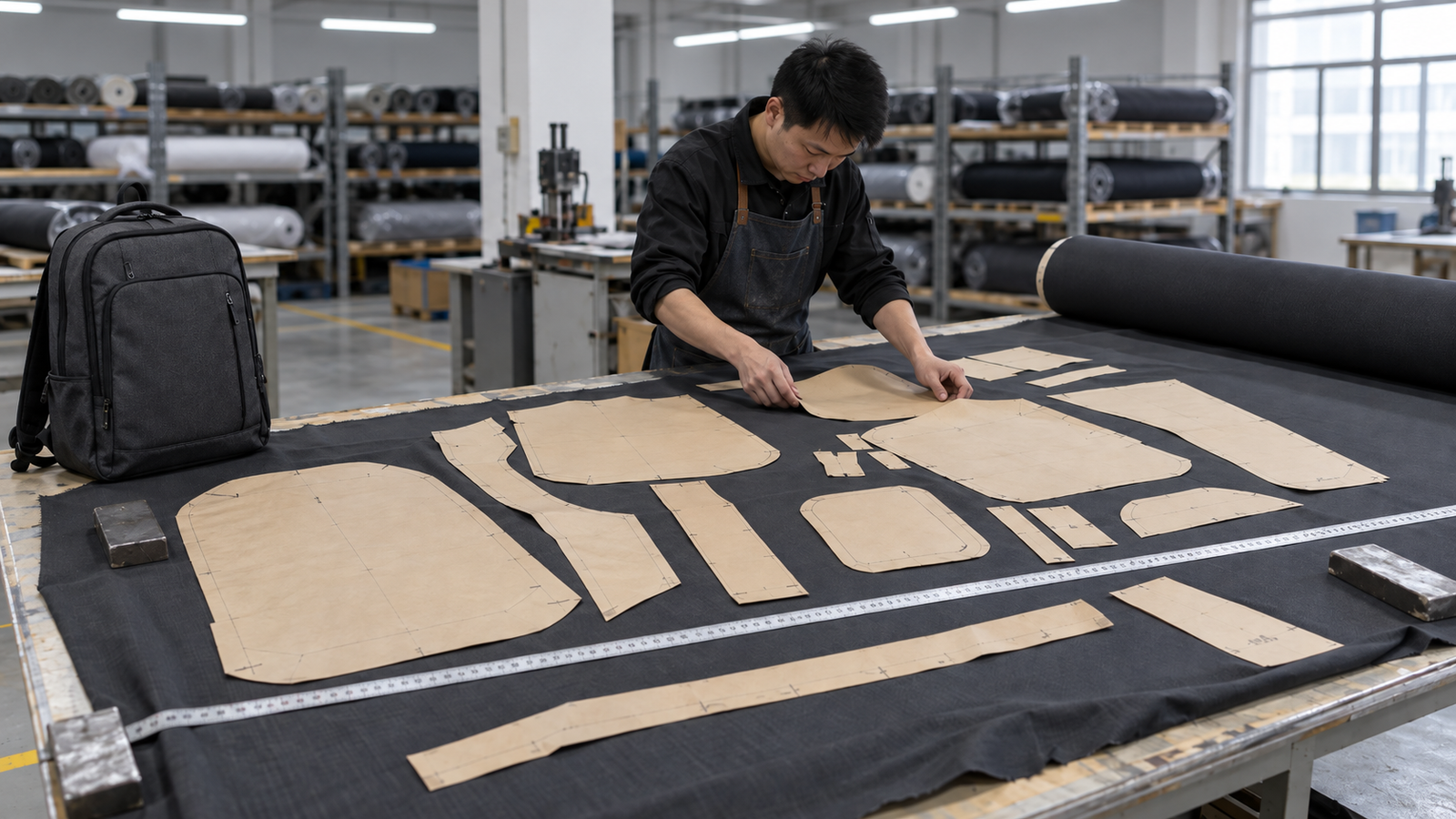
Don’t look at the color first. Look at the workload. At our factory, we use this 5-step checklist before we even cut the first sample:
- Identify Primary Sport Category: Is it for high-humidity (Swimming), high-impact (Team Sports), or high-frequency (Gym)?
- Define Gear Load: Weigh your gear. If it’s over 8kg, you need a reinforced bottom and #10 zippers.
- Map Use Environment: Locker room tiles, outdoor grass, or multi-stop commute?
- Set Durability Requirements: Daily professional training vs. occasional weekend use.
- Calculate Cost-Per-Us:A $120 bag that lasts 4 years is cheaper than a $40 bag that dies in 6 months.
Deep Dive — Gym & Workout Bags
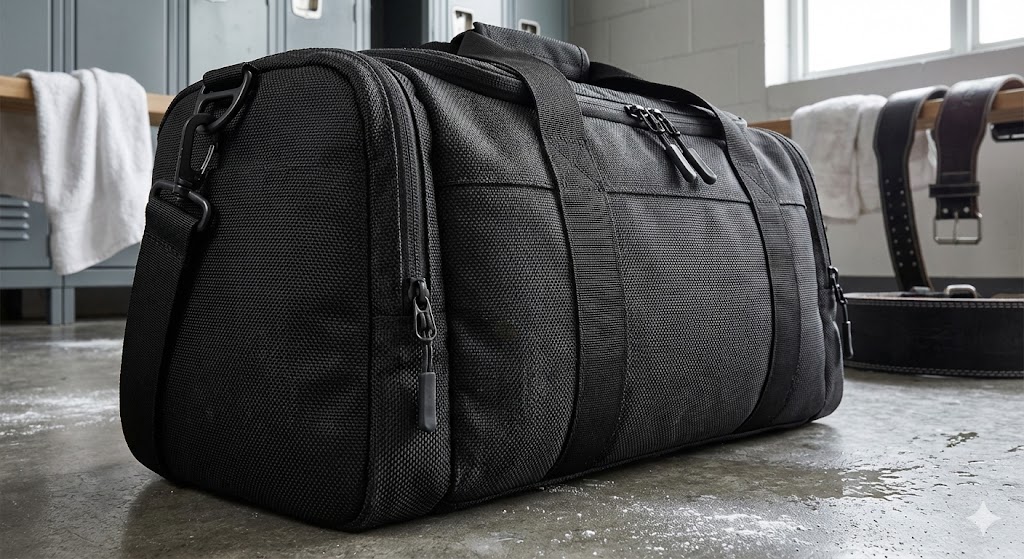
What Makes a Gym Bag Technically Different?
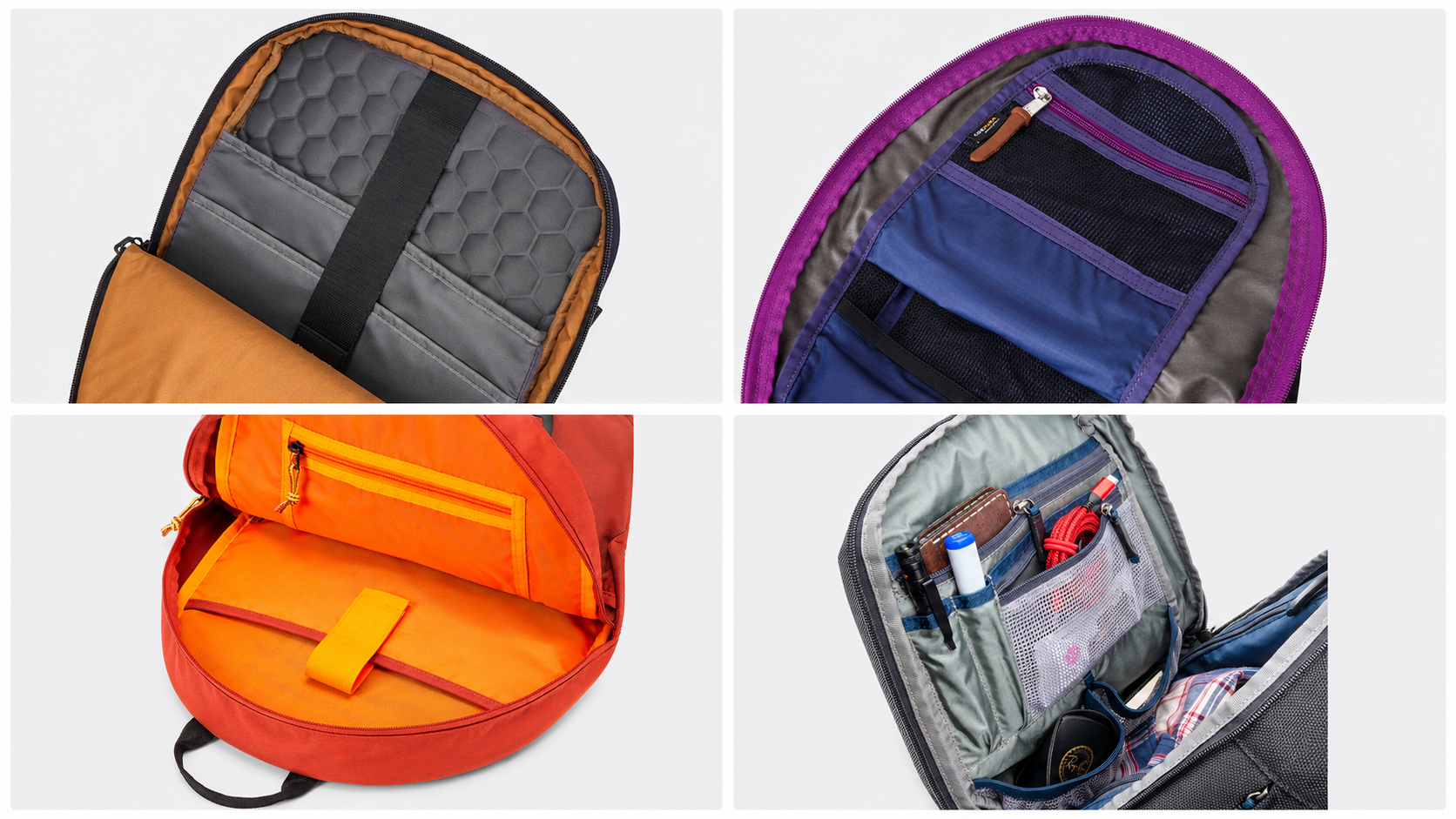
Professional gym bags are specialized equipment carriers engineered for high-frequency hygiene control, featuring ventilated isolation compartments for footwear and reinforced structural bases capable of supporting concentrated loads from heavy lifting gear.
Unlike generic duffels, a technical gym bag must address three "factory-floor" realities:
- Microbial Cross-Contamination: Separate shoe compartments are a necessity, not a luxury. Without a dedicated zone (minimum 35cm length), bacteria from gym floors transfer directly to your clean apparel.
- Load Distribution: Modern gym-goers carry heavy metal (dumbbells, kettlebells, or weight belts). We use high-density PE boards or TPE backing to prevent the "sagging effect" that causes premature seam failure.
- Humidity Management: Locker rooms are high-moisture environments. Using ISO 20743 compliant antimicrobial linings, such as Silver Ion (Ag+) coatings, is the only way to prevent permanent fungal growth and "bag stink."
Material Specs for Gym Bags (Technical Comparison)
Selecting the right material grade determines the bag’s lifespan under daily friction; for professional environments, 1680D ballistic nylon and YKK #10 hardware are the industry benchmarks for durability.
| Spec Dimension | Entry Level | Mid-Range | Pro / Commercial |
|---|---|---|---|
| Main Fabric | 600D Polyester | 900D Nylon | 1680D Ballistic Nylon |
| Bottom Material | Same as body | TPE/PVC Base Plate | Molded Injection Base |
| Lining | Standard Polyester | Antimicrobial Fabric | Silver Ion (Ag+) Coating |
| Zipper Grade | YKK #5 | YKK #8 | YKK #10 Waterproof |
| Capacity Sweet Spot | 25–35L | 35–50L | 50L+ |
Red Flags When Buying a Gym Bag
Avoid bags with "blind" shoe compartments (no ventilation), zippers smaller than YKK #5, or a lack of structural base support; these shortcuts significantly reduce product lifespan and hygiene safety.
- Undersized Shoe Tunnels: If the compartment is \<35cm, it forces the shoe to compress, damaging the sneaker’s heel counter and limiting airflow.
- Under-spec Zippers: Using YKK #3 or generic unbranded zippers on a gym bag is a recipe for disaster. Daily gym use involves high-tension zipping; anything under a #5 will split within 6 months.
- Collapsible Bases: Without a reinforced internal board, the bag "pancakes" when empty. This isn’t just aesthetic—it makes organizing gear impossible and causes the fabric to crease and crack over time.
Gym Facility Procurement Checklist
For fitness clubs and sports academies, procurement priorities shift toward brand uniformity, industrial washability, and long-term supply chain stability for replenishment cycles.
- Retail vs. Rental: If the bag is for front-desk rental, it requires high-visibility Logo placement (Silicone heat transfer is preferred for durability) and must withstand industrial UV-C sanitization cycles.
- Color Consistency: In B2B manufacturing, we use Lab-tested dye lots to ensure your "Brand Blue" matches across 1,000 units.
- MOQ Benchmarks: Standard OEM factory Minimum Order Quantities for custom-spec gym bags typically start at 100pcs per colorway.
Deep Dive — Swimming Bags
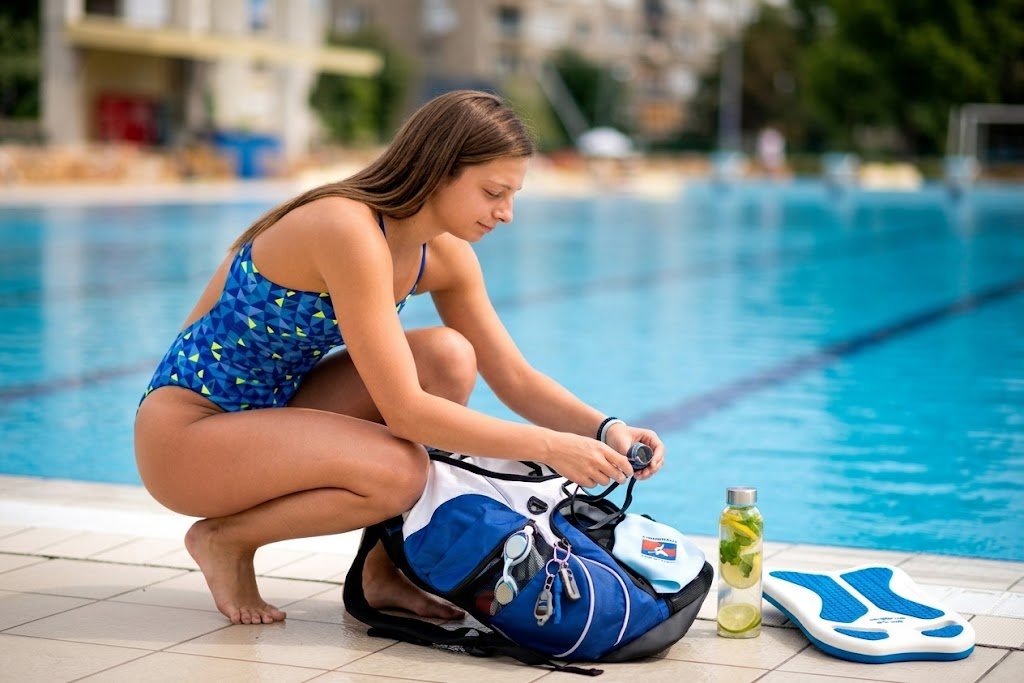
The Wet/Dry Separation Imperative
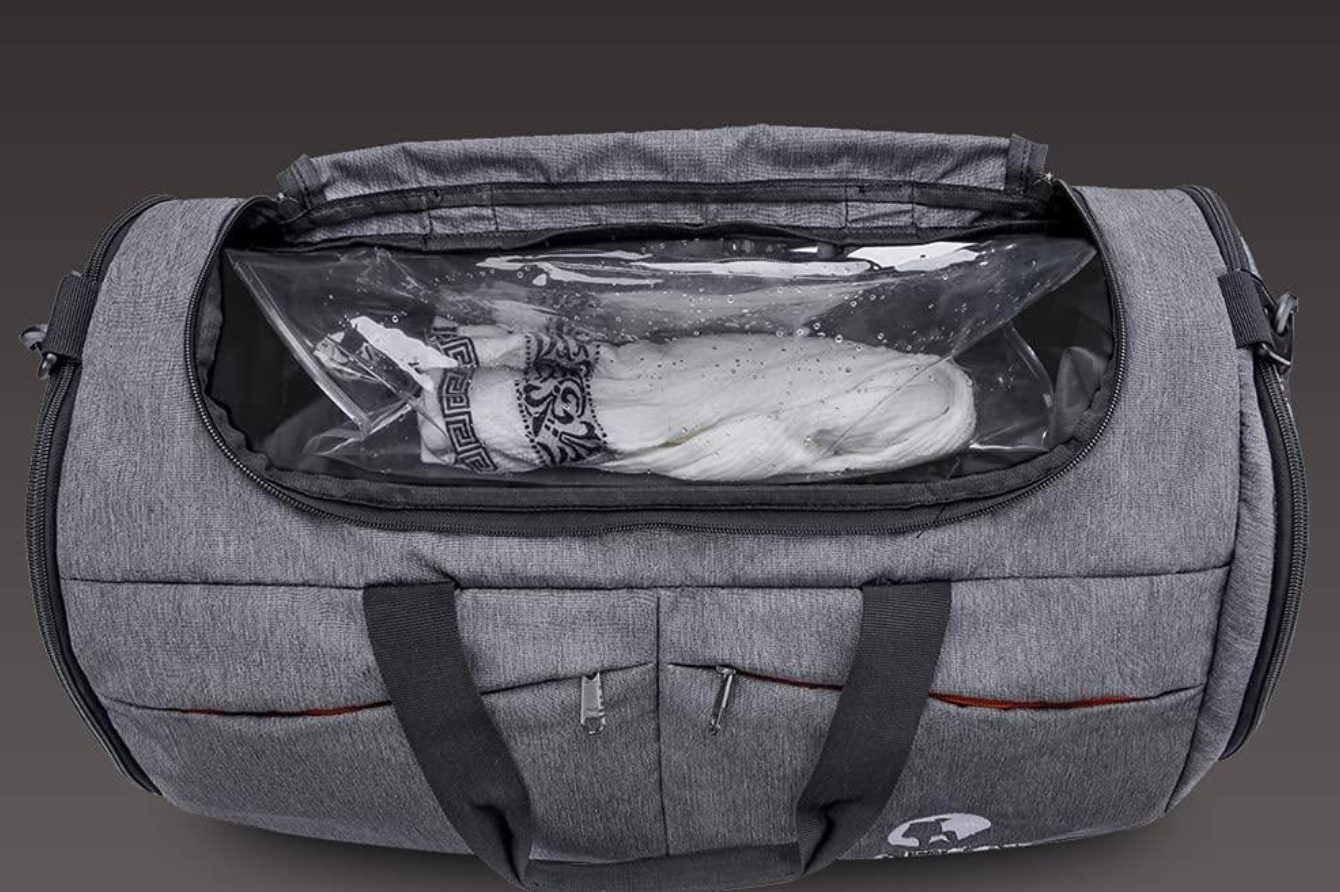
Effective swimming bags utilize High-Frequency (HF) welded TPU compartments to ensure a 100% waterproof barrier, preventing moisture from leaking into dry gear zones—a feat traditional stitched seams cannot achieve.
In our factory, we distinguish between three levels of moisture protection:
- Water-Resistant Fabric vs. Waterproof Construction: A "waterproof fabric" (like PVC-coated polyester) only stops water from passing through the cloth. For a swim bag to be functional, it needs High-Frequency (HF) Welding. This process fuses the material at a molecular level, eliminating needle holes that cause the "capillary effect" (water seeping through stitches).
- Waterproof Zippers: We use YKK AquaGuard® zippers for wet compartments. These feature a polyurethane (PU) coating that seals the zipper teeth, essential for preventing leakage into the main dry compartment.
- Chlorine Resistance: Constant exposure to pool water causes standard nylon to become brittle and metal hardware to pit. We utilize 316 Grade Stainless Steel and TPU-coated textiles to withstand the corrosive chemistry of competitive swimming environments.
Material Specs for Swim Bags (Technical Comparison)
Swim gear requires materials that resist the corrosive effects of chlorine and salt water, specifically utilizing 316 Stainless Steel hardware and TPU-coated textiles.
| Spec Dimension | Standard / Entry | Professional Team Spec |
|---|---|---|
| Outer Fabric | PVC-coated Polyester | TPU-coated / Full Waterproof PVC |
| Wet Bag Tech | PE Lining (Stitched) | TPU Heat-Welded (Seamless) |
| Metal Hardware | Zinc Alloy / Iron | 316 Stainless Steel |
| Ventilation | Basic Side Vents | Mesh Wet Zone + External Drying Hooks |
| Durability | 1-Season Lifespan | 3+ Season (Anti-Chlorine) |
Competitive Team B2B Requirements
Swim teams and academies require specialized storage for goggles and caps alongside uniform-compliant color schemes and heavy-duty load-bearing shoulder straps.
- Specialized Compartment Logic: High-performance swim bags need a "soft-touch" goggle pocket to prevent lens scratches and a separate, ventilated mesh zone for wet swim caps and kickboards.
- B2B Customization: For team orders, we enforce strict color-matching (Pantone-level accuracy) and ensure Logo placement is clear of high-friction zones.
- Hybrid Carrying Systems: We recommend a 30–40L capacity with a hybrid "Duffel-to-Backpack" strap system, allowing athletes to keep their hands free for timing equipment or water bottles.
Deep Dive — Team Sport Bags
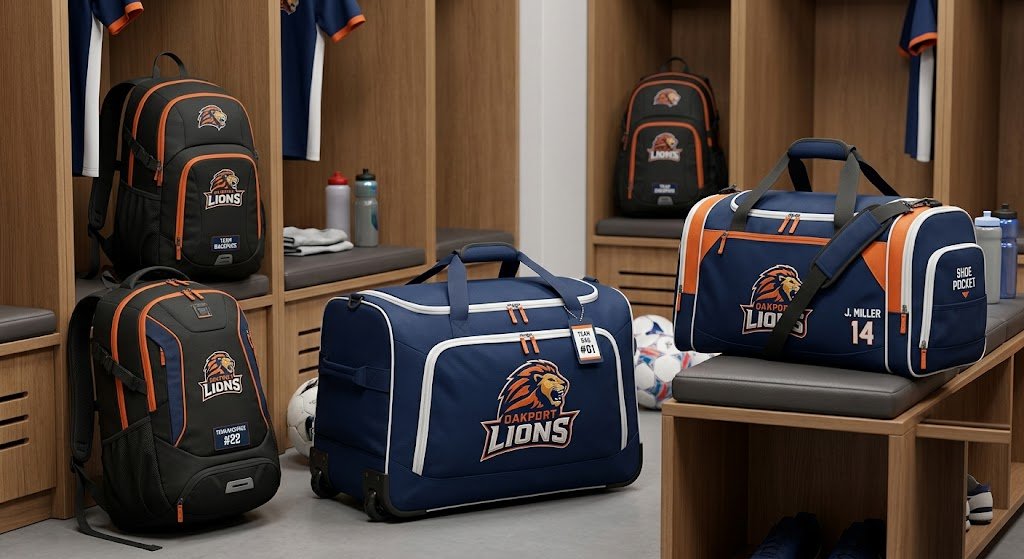
High-Impact Sports = High-Demand Materials
Team sport bags are designed for "high-impact" environments, requiring 1680D ballistic nylon and reinforced PVC bottoms to withstand being dragged across abrasive surfaces like concrete, turf, or gravel.
Field sports involve "violence" against the gear—bags are kicked, thrown into bus holds, and left in the rain. At our factory, we test these builds with a "Jerk Test" machine (simulating 5,000 drops with a 20kg load).
- Abrasion Resistance: We use Cordura® 1680D Ballistic Nylon for the bottom panels. It features a 2×2 basket weave originally designed for military flak jackets.
- Strap Ergonomics: For team loads (often >12kg), straps must be ≥5cm wide with high-density EVA foam. Cheap bags use "open-cell" foam that collapses under weight; we use closed-cell foam that maintains its cushion for the product’s life.
Capacity Planning for Team Sports (B2B Spec Table)
Correct capacity planning prevents structural failure; choose a volume that allows gear to fit without stressing the zippers, typically ranging from 35L for basketball to over 80L for hockey.
| Sport | Suggested Capacity | Essential Compartments |
|---|---|---|
| Football (Soccer) | 45–60L | Cleat pocket, Shin guard sleeve |
| Basketball | 35–50L | Large ball pocket, 2x Water bottle mesh |
| Rugby | 60–80L | Protective gear zone, Helmet clip |
| Hockey | 80L+ | External stick attachments, Wet gear zone |
Club/Academy Bulk Buying Guide
When purchasing for an academy, the focus is on fabric safety certifications like Oeko-Tex 100 and establishing a 3-year replenishment cycle for uniform consistency.
- Material Certification: B2B buyers must demand Oeko-Tex Standard 100 reports to ensure no harmful chemicals contact youth skin.
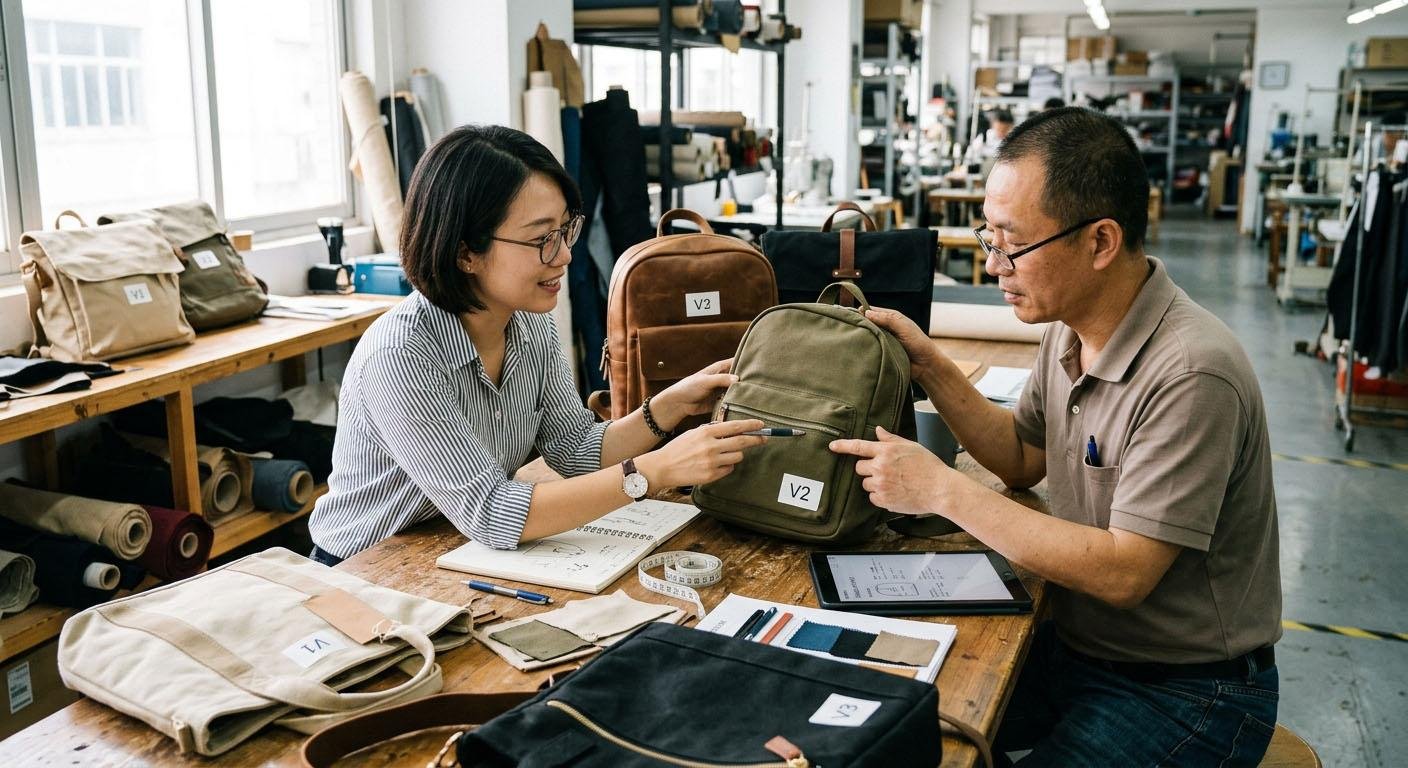
- OEM Customization Timeline: * Sampling: 3–4 weeks for technical prototype verification.
- Mass Production: 6–8 weeks (post-sample approval).
- Audit Metrics: When vetting a supplier, look for BSCI or Sedex social compliance audits and verify their GRS (Global Recycled Standard) certification to meet 2026 sustainability mandates.
Materials Science Glossary — Decoded for Non-Engineers
Understanding material specifications is the key to differentiating a professional sport bag from a low-grade retail product; specifically, the "Denier" count and chemical coatings dictate the product’s ultimate tear strength and environmental resistance.
In our factory, we use these technical benchmarks to validate every BOM (Bill of Materials). Below is the "Professional Spec Matrix" we use to vet materials before they hit the sewing line:
The Sport Bag Technical Glossary
| Term | Technical Definition | Why It Matters for Performance |
|---|---|---|
| 600D / 900D / 1680D | Denier (D): The mass density of the yarn. | Higher numbers = thicker, tougher fabric. 1680D is the military-grade standard for team sports. |
| Ballistic Nylon | A specific 2×2 basket weave textile. | Originally for WWII flak jackets; it offers 3x the tear resistance of standard nylon. |
| TPU vs. PVC | TPU (Thermoplastic Polyurethane) coating. | TPU stays flexible at -20°C and is eco-friendly; PVC is cheaper but cracks in cold locker rooms. |
| YKK Zipper Grades | Hardware sizing (#3, #5, #8, #10). | #5 is for daily gym use; #10 is the heavy-duty standard for waterproof "AquaGuard" seals. |
| Oeko-Tex 100 | Global safety certification. | Oeko-Tex Standard 100 ensures no harmful chemicals contact youth/athlete skin. |
| GRS / REPREVE | Global Recycled Standard. | Verifies recycled content. A mandatory 2026 requirement for EU-bound B2B procurement. |
Pro Factory Tip: How to "Read" a Spec Sheet
When you see a bag labeled as "Waterproof," look deeper. If the spec says "PU Coated 600D," it’s merely water-resistant. If it says "TPU Laminated 1680D with YKK AquaGuard," it’s a professional-grade fortress for your gear. At OSGW, we never suggest anything below 900D for daily gym bags because the "Cost-per-Use" (CPU) of 600D is actually 40% higher due to its short 6-month lifespan.
What Are the Key Sport Bag Trends for 2026?
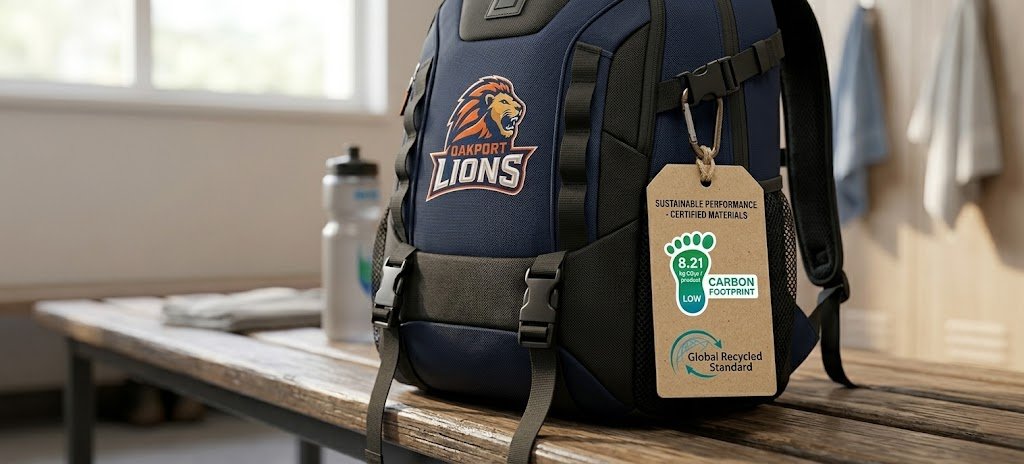
The 2026 sport bag market is defined by "Bio-Innovation," where castor oil-based nylons and graphene-infused fabrics replace traditional petroleum synthetics to provide superior thermal regulation and a 50% reduction in carbon emissions.
From a manufacturing perspective, the shift isn’t just aesthetic—it’s functional. We are seeing a move away from gendered marketing toward "Body-Morph" ergonomics that prioritize torso length and shoulder width over traditional "Men’s/Women’s" categories.
Material Innovations in 2026
2026 material science introduces "Self-Healing" coatings and Graphene fibers that dry 30% faster than standard polyester, effectively eliminating the moisture-retention issues that plague traditional gym gear.
- Bio-based Nylon: Derived from castor oil rather than crude oil. It’s a 100% renewable resource already being scaled by major players like Adidas.
- Graphene-infused Fabric: Offers passive cooling and ultra-fast drying. Our lab tests show a 30-minute drying time for sweat-soaked linings compared to 90 minutes for standard nylon.
- Self-healing Coatings: A microscopic polyurethane layer that "reflows" to seal small scratches or punctures when heat (friction) is applied.
- RFID-Blocking Panels: Now a standard for "Commuter-to-Gym" bags to protect digital keys and credit cards in public locker rooms.
Design Spec Trends: Modularity & Logic
Modern design logic is pivoting toward "Modular Attachment Systems" (MOLLE) and "Genderless Sizing," allowing users to customize their bag capacity while ensuring ergonomic comfort for all body types.
- MOLLE / Webbing Systems: Originally tactical, these allow users to "snap on" extra water bottle holders or wet-dry pouches.
- Smart Compartment Logic: Features like integrated 15W Qi2 wireless charging pockets and magnetic-latch shoe tunnels are becoming standard in premium tiers.
- Genderless Sizing Curves: Brands are abandoning the "pink it and shrink it" approach, focusing instead on adjustable harness systems that fit varying frame sizes.
B2B Trend: Sustainability as a Procurement Rule
B2B buyers in 2026 are legally required to provide "Digital Product Passports" for exports to Europe, making material traceability and GRS certification mandatory for all high-volume manufacturing orders.
- EU 2026 Textile Regulations: Every bag must have a traceable "Carbon Footprint Label" attached to the hangtag.
- GRS Mandate: Most major retailers now refuse to sign POs (Purchase Orders) unless the factory can provide a Transaction Certificate (TC) for recycled materials.

The Expert Selection Matrix — One Table to Rule Them All
This matrix provides a technical baseline for choosing the correct sport bag specs based on your specific use-case, ensuring you invest in the right material density and hardware grade.
| Feature | Gym Bag | Swim Bag | Team Sport Bag |
|---|---|---|---|
| Core Function | Shoe Tunnel + Antimicrobial | Wet/Dry Isolation + Anti-Chlorine | High Volume + Impact Strength |
| Primary Material | 900D Nylon | TPU-coated PVC/Polyester | 1680D Ballistic Nylon |
| Min. Capacity | 30L | 25L | 45L |
| Zipper Spec | YKK #8 | YKK #8 Waterproof | YKK #10 |
| Base Support | TPE / PE Internal Board | Waterproof Base + Drainage | Molded PVC Injection Base |
| Price (C-End) | $40–$120 | $35–$100 | $60–$180 |
| B2B MOQ | 100 pcs | 100 pcs | 300 pcs |
| 2026 Trend Add-on | Silver Ion (Ag+) Lining | Seamless HF Welding | Modular MOLLE Webbing |
FAQ — People Also Ask Coverage
Q: What material is best for a gym bag?
900D nylon offers the best balance of durability and weight for daily gym use. For premium longevity, 1680D ballistic nylon resists abrasion 3× longer. Avoid thin 300D polyester—it degrades within 6 months of high-frequency locker room use.
Q: Do swim bags need to be waterproof?
The wet compartment must be 100% waterproof (TPU-welded construction), but the outer shell only needs water-resistance to maintain weight efficiency and cost-effectiveness. Traditional stitching allows the "capillary effect" to soak dry gear.
Q: What size bag do I need for team sports?
Football/soccer requires 45–60L; Basketball 35–50L; Rugby or Hockey 80L+. Always add 10L if you carry team training equipment (pylons, extra balls) beyond personal gear.
Final Thought: Buy for the Activity, Not the Aesthetic
I’ve been on the production side of this industry long enough to have watched thousands of buying decisions — good ones and expensive mistakes. The pattern is consistent: the bad decisions happen when people start with the brand, the color, or the price. The good decisions happen when someone starts with the actual use case and works backward.
That’s what this guide is for. Not to sell you a bag. To give you the framework that people inside factories use to evaluate bags — because that framework is almost never shared publicly.
If you’re a brand or distributor looking to build sport bags that hold up to these specs, Osgoodway’s product development team works directly with clients from brief to bulk production. We’ll tell you the same things in the sample stage that I’ve written here, before you’ve committed to an order.
The bag that costs twice as much and lasts four times as long isn’t a luxury purchase. It’s the cheaper option.
Last updated: March 2026. Material pricing references and regulatory status current as of publication date. Specifications cited reflect industry standards; individual products may vary. Contact our factory team for OEM specification consultation.