Updated October 2026 | Reviewed from a backpack manufacturing perspective
Gym bags come in different formats depending on how much gear the user carries, how they travel to the gym, and whether shoes, wet clothing, work items or training equipment need separate storage.
The most common types include gym duffels, backpacks, totes, drawstring bags, barrel bags, shoe-compartment bags, wet/dry bags, yoga bags and work-to-gym designs.
There is no single best gym bag for everyone. A wide-opening duffel works well for users carrying shoes, towels and training gear, while a backpack is usually more practical for cycling or public transport. A compact tote may be enough for a studio workout, while a larger training holdall is better for lifting gear or multiple changes of clothing.
This guide compares 11 types of gym bags, what each format is best for, and the design details buyers should consider when developing a gym bag collection.
Factory perspective: We classify gym bags by the user’s actual packing and carrying routine rather than by marketing names alone. Two bags may have a similar exterior shape but need very different internal layouts if one is used for office-to-gym commuting and the other for heavy training equipment.
For bags designed around specific sports such as football, basketball, tennis, swimming or cycling, see our guide to 18 types of sports bags.
11 Types of Gym Bags at a Glance
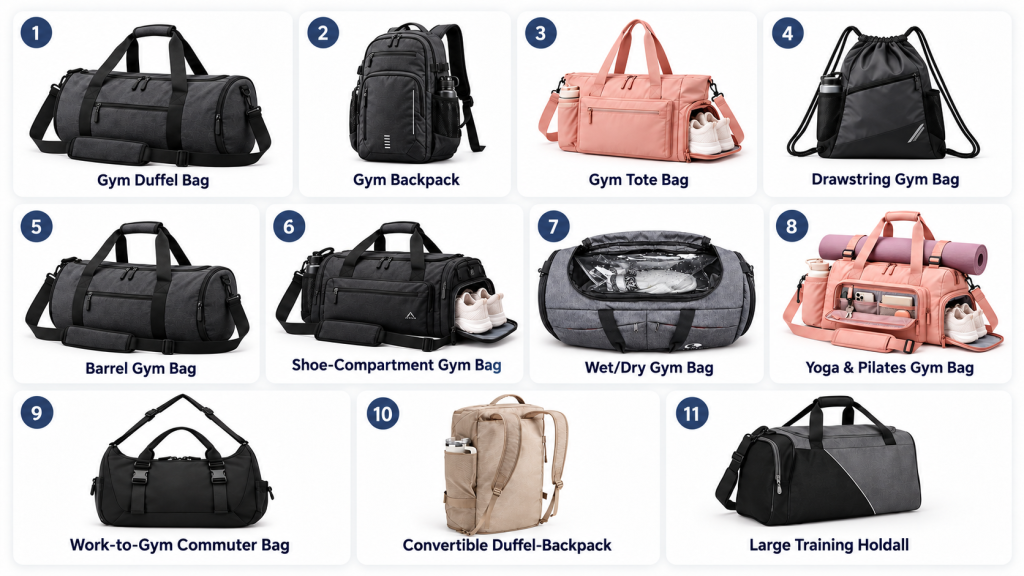
| Gym Bag Type | Best For | Main Design Focus |
|---|---|---|
| 1. Gym Duffel Bag | General workouts and everyday gym use | Wide opening, flexible storage and easy access |
| 2. Gym Backpack | Commuting, cycling and hands-free carry | Shoulder comfort and vertical organization |
| 3. Gym Tote Bag | Studio workouts and light daily carry | Easy access and clean appearance |
| 4. Drawstring Gym Bag | Light workouts and secondary carry | Low weight and simple construction |
| 5. Barrel Gym Bag | Compact training gear | Cylindrical shape and quick packing |
| 6. Shoe-Compartment Gym Bag | Users carrying separate footwear | Shoe fit, ventilation and space efficiency |
| 7. Wet/Dry Gym Bag | Swimming, showers and sweaty clothing | Moisture separation and easy-clean construction |
| 8. Yoga & Pilates Gym Bag | Studio training | Mat storage and lightweight organization |
| 9. Work-to-Gym Commuter Bag | Office-to-gym users | Laptop, clothing and shoe separation |
| 10. Convertible Duffel-Backpack | Multi-mode commuting and travel | Carrying-system conversion |
| 11. Large Training Holdall | Heavy lifters and equipment-heavy users | Capacity, reinforcement and load support |
These categories overlap. A shoe-compartment gym bag may use a duffel body, while a work-to-gym bag may use backpack straps.
The useful distinction is what problem the construction is designed to solve.
1. Gym Duffel Bag
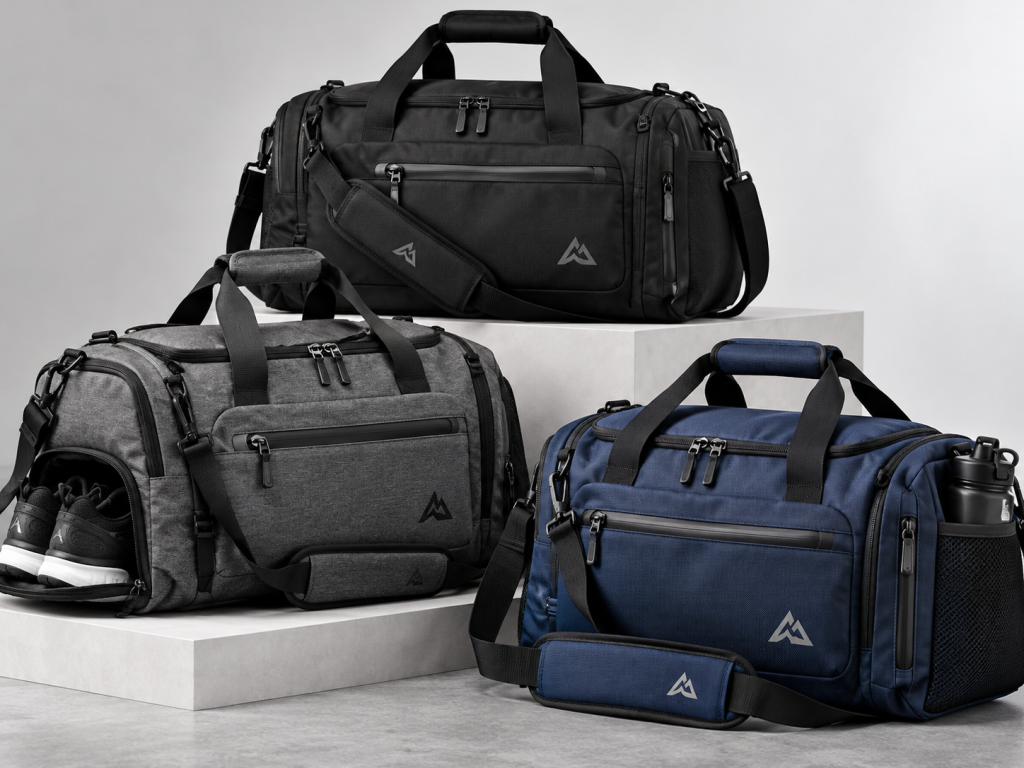
The gym duffel is the most familiar and versatile gym bag format.
Its main advantage is a wide opening and flexible main compartment, making it easy to load clothing, towels, shoes, bottles and training accessories without complicated organization.
A practical gym duffel usually includes:
- a large top opening
- two carry handles
- an adjustable shoulder strap
- one or two quick-access pockets
- a reinforced base
- optional shoe or wet-item storage
The structure can be soft and lightweight or more reinforced depending on the intended load.
What Matters in Development?
The main opening should remain easy to use when the bag is full.
A common mistake is adding too many internal dividers. They may look useful in a drawing but can make bulky clothing and towels harder to pack.
Handle attachment also matters more than handle padding alone. Reinforcement should transfer the carrying load into the bag body rather than ending only at the top seam.
Best for: general fitness, weight training, gym classes and everyday workout gear.
For gym-duffel sizing and measurement methods, see our duffle bag size guide.
2. Gym Backpack
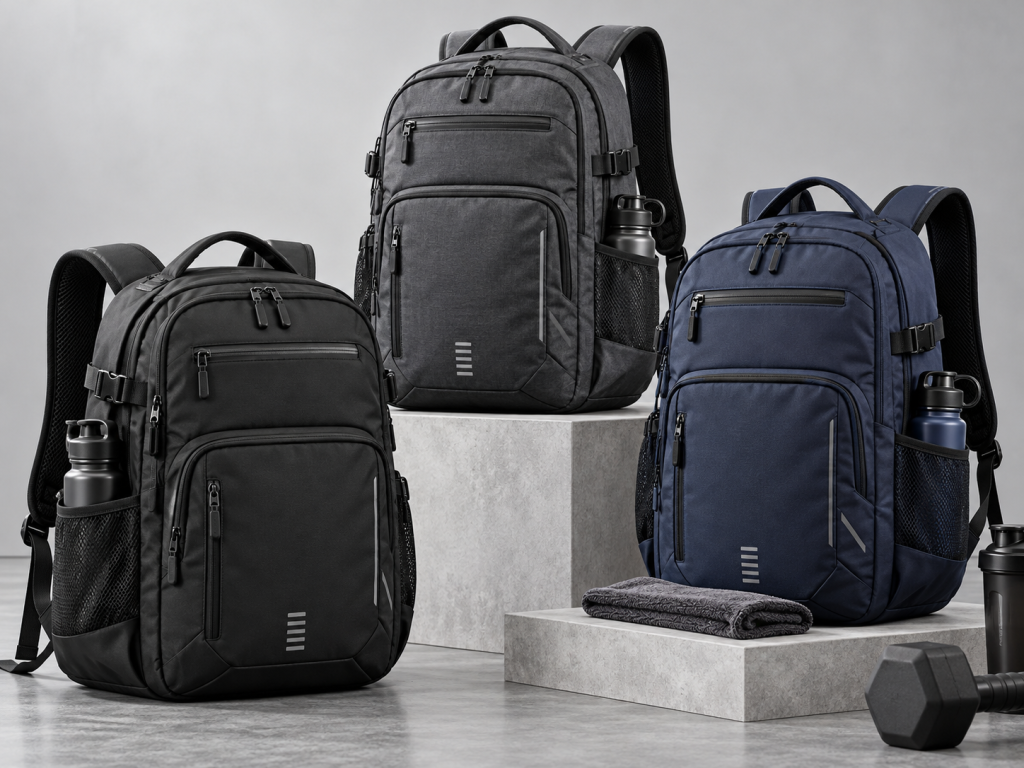
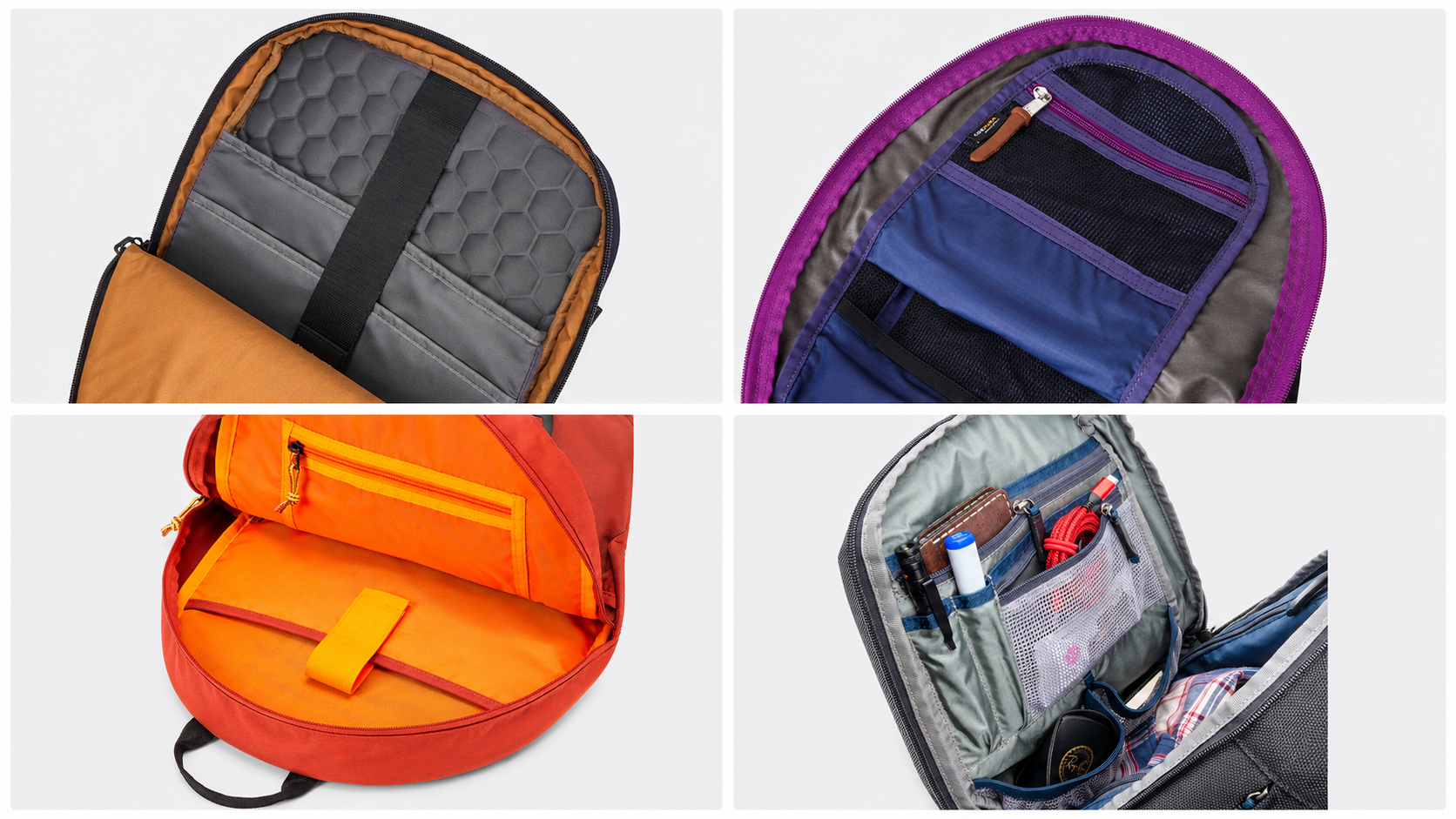
A gym backpack works well for users who want both hands free while commuting by bicycle, motorcycle, public transport or on foot.
Compared with a duffel, the storage is more vertical and usually divided into smaller zones.
Common features include:
- padded shoulder straps
- ventilated back panel
- main clothing compartment
- bottle pockets
- front organizer
- optional laptop sleeve
- shoe or wet-item compartment
The challenge is fitting gym equipment into a backpack-shaped structure without making the bag excessively deep.
Factory Consideration
Shoes are often the most difficult item.
If a shoe tunnel extends too deeply into the main body, it can consume a large part of the usable clothing space. A flexible shoe sleeve or bottom compartment may work better depending on the backpack dimensions.
Best for: urban commuters, cyclists, students and users carrying moderate gym loads.
3. Gym Tote Bag
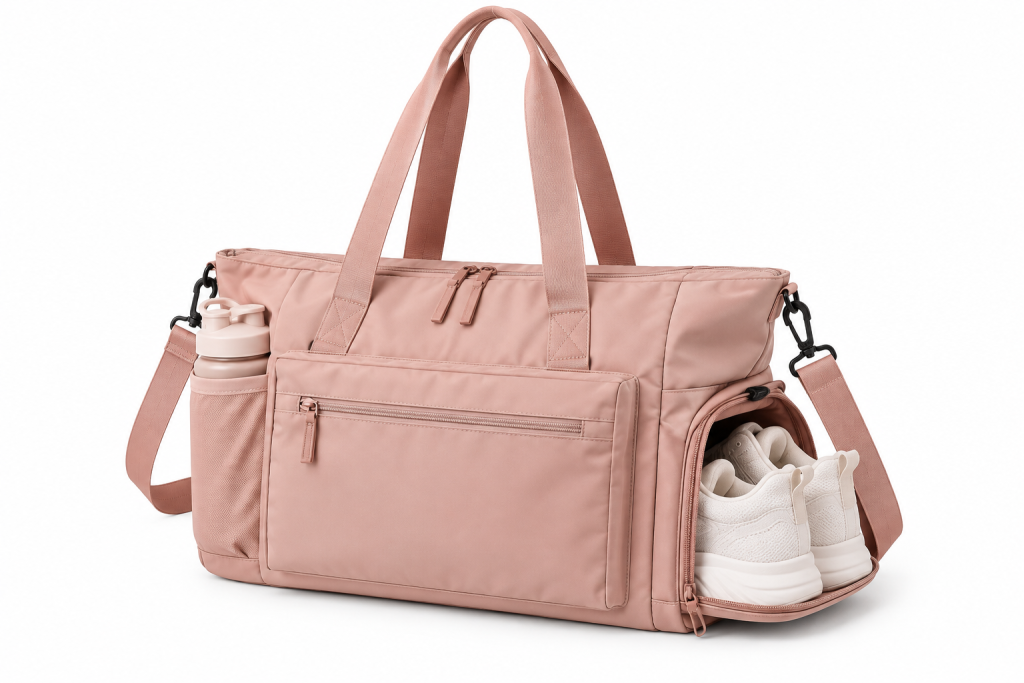
A gym tote is a simpler, more open format suited to lighter workouts and studio-based activities.
It usually has:
- two long carry handles
- a wide top opening
- a medium-sized main compartment
- small internal organization
- optional zipper closure
The tote format is useful when the user mainly carries clothing, a bottle, towel and a few personal items.
It is less suitable for very heavy gear because the weight is usually carried on one shoulder or by hand.
For product development, the handle length should match the intended carrying method. A tote designed to fit over the shoulder needs different handle geometry from one designed mainly for hand carry.
Best for: boutique fitness, Pilates, light gym sessions and lifestyle-focused collections.
4. Drawstring Gym Bag

Drawstring bags are lightweight and simple.
The same cords or webbing used to close the top opening normally act as the shoulder straps.
They work well for:
- light workout clothing
- towels
- small accessories
- PE classes
- promotional fitness programs
- secondary carry
A drawstring bag should not be treated as a replacement for a structured gym bag when the load includes laptops, heavy shoes or large bottles.
What We Check
The critical areas are usually the cord channel and lower attachment points.
Even though the bag looks simple, repeated pulling concentrates force in these areas. Reinforcement should therefore match the expected load.
Best for: light carry, events, fitness promotions and basic training kits.
5. Barrel Gym Bag

A barrel gym bag uses a compact cylindrical or rounded body rather than the more rectangular shape of a conventional duffel.
This shape is useful for:
- clothing
- towel
- small shoes
- bottle
- compact workout accessories
Its curved construction can create a visually distinctive product without requiring many pockets.
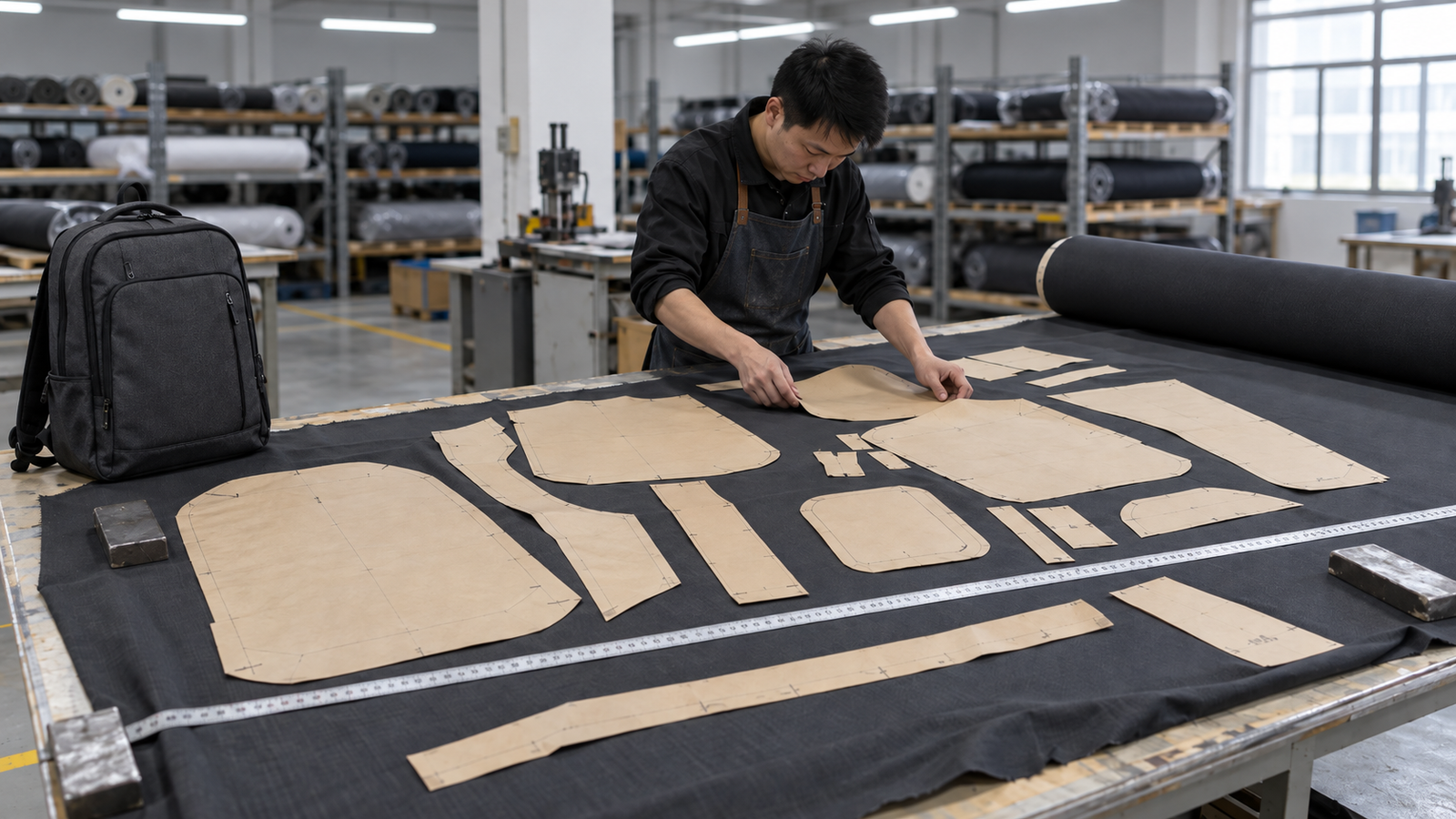
However, rounded end panels and curved zipper openings need more attention during pattern making and sewing than simple rectangular panels.
The main opening should also be large enough for the bag’s diameter. A small zipper opening on a relatively wide barrel body can make the bag frustrating to pack.
Best for: compact gym collections, younger users and style-focused fitness brands.
6. Shoe-Compartment Gym Bag

A shoe-compartment gym bag is designed to keep footwear separated from clean clothing and personal items.
The shoe compartment may be positioned:
- at one end of the bag
- along the side
- underneath the main compartment
- as a flexible internal sleeve
There is no universally best location.
The correct layout depends on the bag dimensions, shoe size and how much main-compartment volume can be sacrificed.
The Main Design Problem
A shoe compartment looks empty when the bag is photographed without shoes.
Once a real pair is inserted, the compartment expands into the usable storage space.
That is why we prefer testing the sample with actual footwear, not only checking the dimensions on a drawing.
Other considerations include:
- zipper opening size
- ventilation
- easy-clean lining
- outsole length
- compartment depth
- separation from clean clothing
For a detailed structural comparison, see bottom vs side shoe compartments in duffel bags.
Best for: users who change footwear at the gym, team training and office-to-gym commuting.
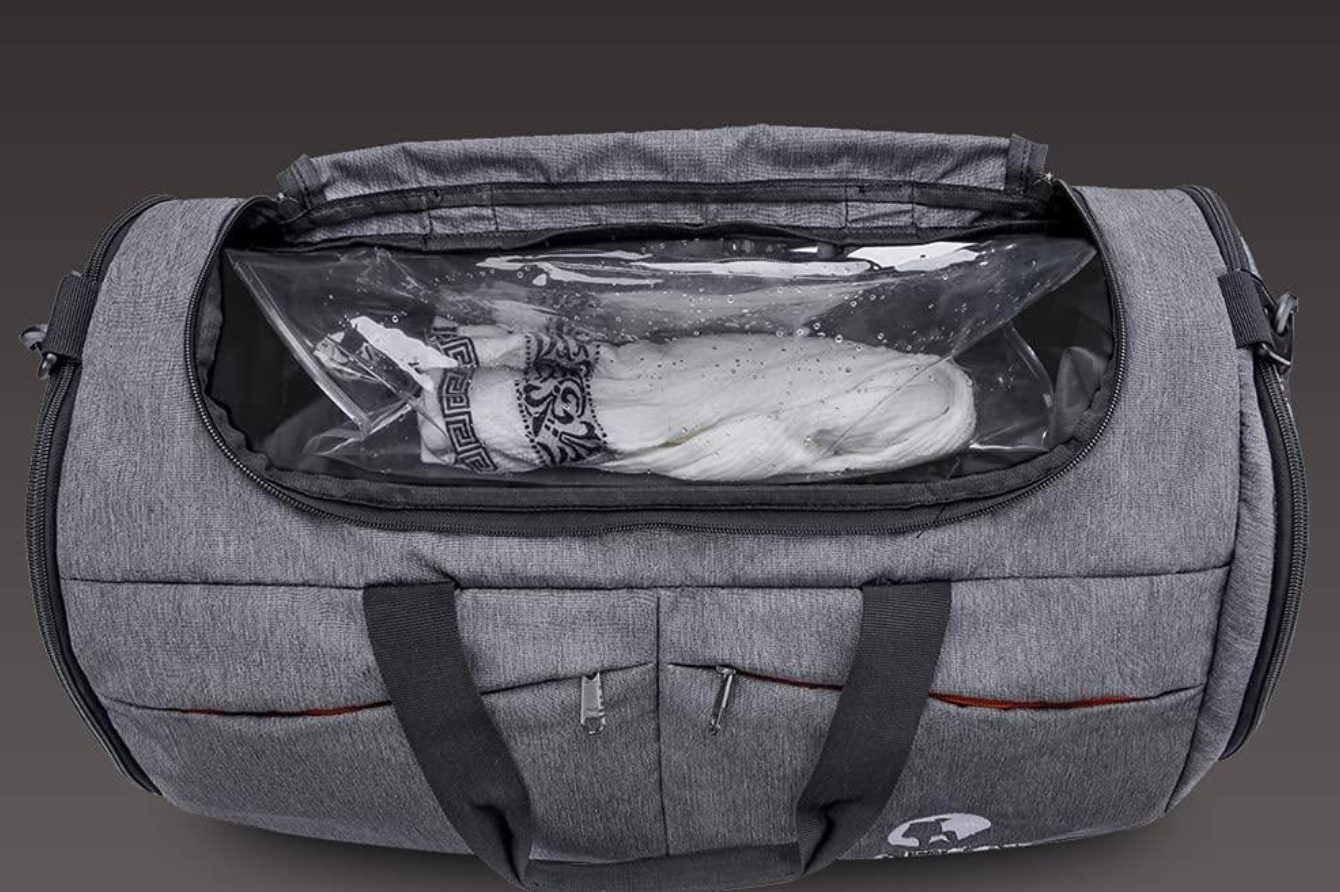
7. Wet/Dry Gym Bag
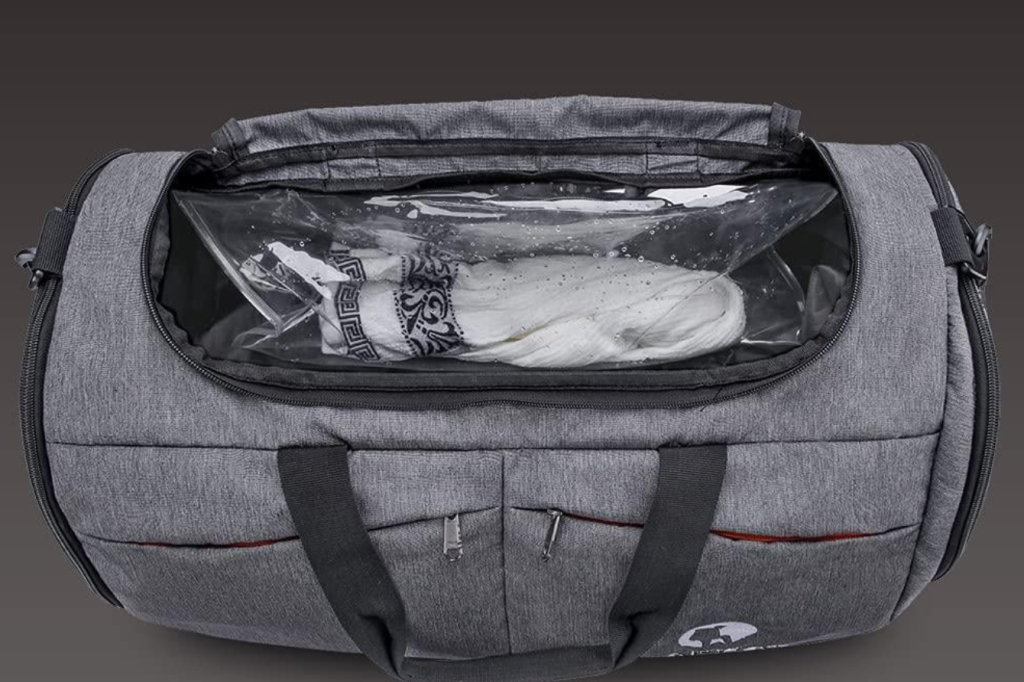
A wet/dry gym bag includes a separate area for items such as:
- sweaty clothing
- damp towels
- swimwear
- shower items
The goal is to reduce moisture transfer into the main compartment.
This does not mean that every wet pocket is completely waterproof.
Performance depends on:
- lining material
- seams
- zipper construction
- pocket orientation
- how much moisture the user places inside
Coated polyester, laminated materials and other wipe-clean constructions may be used depending on the project.
If the buyer needs actual waterproof containment rather than simple wet-item separation, the seam and closure construction must be specified accordingly.
Factory note: A waterproof-looking material alone does not make a pocket waterproof. Needle holes, zipper openings and seam construction can still allow moisture to move between compartments.
Best for: gym users who shower after training, swimmers and people regularly carrying damp clothing.
8. Yoga and Pilates Gym Bag

Yoga and Pilates users usually carry less heavy equipment than traditional gym users, but the bag may need to accommodate a mat.
Common solutions include:
- external mat straps
- a dedicated mat sleeve
- an open top that allows part of the mat to extend outward
- a long duffel-shaped body
The mat dimensions should be confirmed before the bag pattern is finalized.
Simply adding two external straps to an existing gym bag does not always work. Their spacing needs to keep the mat stable without blocking the main zipper or interfering with shoulder carry.
The internal compartment can remain relatively simple because the typical load is clothing, towel, bottle and small studio accessories.
Best for: yoga, Pilates, barre and studio fitness.
9. Work-to-Gym Commuter Bag
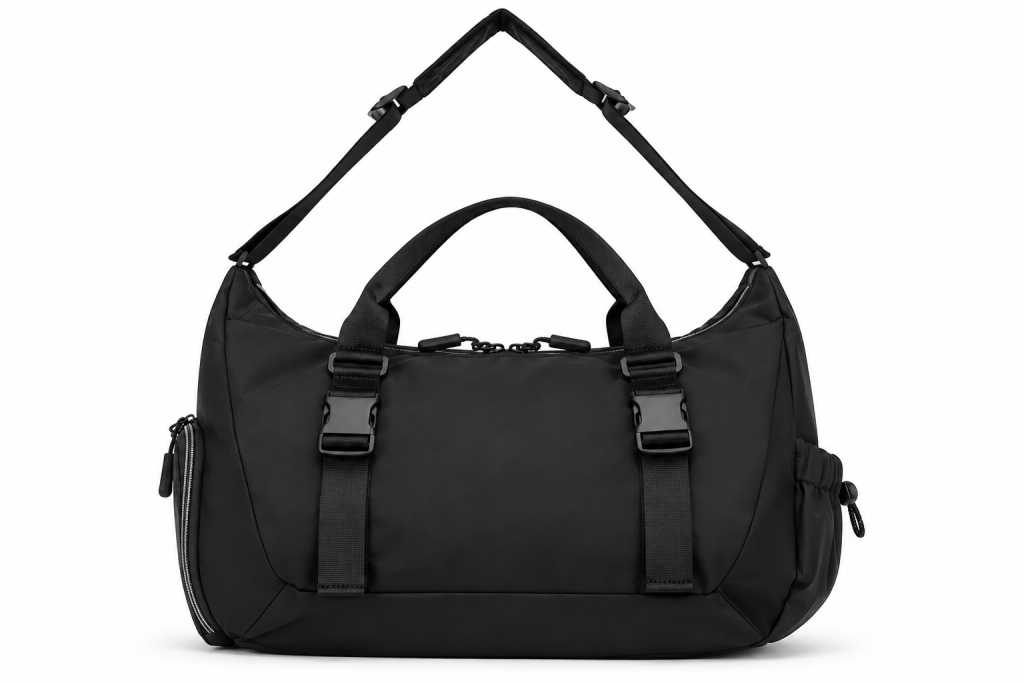
The work-to-gym bag is designed for users who need to carry office and workout items in one product.
Typical contents include:
- laptop
- charger
- documents
- clothing
- shoes
- toiletries
- bottle
- small personal items
The challenge is not simply adding more pockets.
The design needs to separate clean work equipment from gym gear without making the bag oversized.
Useful zones may include:
- padded laptop compartment
- main clothing compartment
- shoe storage
- small valuables pocket
- bottle pocket
- wet-item area
For laptop protection, hard footwear and wet clothing should not be positioned so they press directly into the device compartment when the bag is fully packed.
Best for: professionals who commute directly between home, office and gym.
10. Convertible Duffel-Backpack

Convertible gym bags combine a duffel body with backpack straps.
They are useful when the same bag needs to be:
- carried by hand
- worn over one shoulder
- worn as a backpack
The concept sounds simple, but the strap system adds structural requirements.
Backpack straps need:
- secure anchor points
- enough adjustment
- comfortable positioning
- a place to store or manage them when not in use
The handle and shoulder-strap arrangement should also avoid creating excess webbing around the bag.
Factory note: Convertible bags often fail when too much attention is given to the hidden-strap feature and not enough to the actual carrying geometry. The backpack mode should be tested with the bag loaded, not only demonstrated while empty.
Best for: commuters, travel-gym crossover products and users who change carrying modes during the day.
11. Large Training Holdall

A large training holdall is designed for users carrying significantly more equipment than a normal gym session requires.
This may include:
- lifting belt
- multiple pairs of shoes
- protective gear
- several clothing changes
- large towels
- training accessories
The larger the bag becomes, the more important its structure and load transfer become.
Areas that normally require attention include:
- handle anchoring
- shoulder-strap attachment
- bottom reinforcement
- zipper opening length
- base abrasion
- panel sagging
Simply increasing the dimensions of a standard gym duffel is not always enough. A larger bag may require different reinforcement and material choices because the carrying load rises with capacity.
Best for: heavy lifters, coaches, long training sessions and equipment-heavy users.
Which Gym Bag Type Fits Different Users?
Rather than asking which gym bag is “best,” start with the user’s routine.
| User Profile | Practical Starting Point | Why |
|---|---|---|
| General gym user | Gym duffel | Flexible and easy to pack |
| Cycling or public-transit commuter | Gym backpack | Hands-free carry |
| Studio fitness user | Gym tote or barrel bag | Compact and simple |
| Light workout / secondary carry | Drawstring gym bag | Lightweight construction |
| User carrying separate shoes | Shoe-compartment bag | Keeps footwear isolated |
| Swimmer / shower-after-gym user | Wet/dry gym bag | Separates damp items |
| Yoga or Pilates user | Yoga gym bag | Provides mat-carry options |
| Office-to-gym commuter | Work-to-gym bag | Separates laptop and training gear |
| Mixed commute / travel user | Convertible duffel-backpack | Multiple carrying methods |
| Heavy equipment user | Large training holdall | Higher capacity and reinforcement |
A buyer does not need to offer every gym bag type.
A more useful collection may contain two or three clearly differentiated formats rather than several bags that look different but solve the same problem.
What Features Matter Most in a Gym Bag?
The right features depend on the type of gym bag, but several design decisions repeatedly affect usability.
1. Main Opening
Gym clothing and towels are bulky.
A wide opening is normally easier to use than a small zipper opening on a large main compartment.
Opening geometry also affects zipper selection. Coil, molded plastic and other zipper constructions have different characteristics; buyers can review the major zipper categories in YKK’s official zipper information.
For bag development, zipper size, curve, opening length and surrounding reinforcement should be considered together rather than selecting a zipper only by appearance.
2. Shoe Storage
A shoe compartment only adds value if it fits the intended footwear without consuming too much usable space.
Confirm:
- target shoe size
- outsole length
- opening dimensions
- ventilation
- lining
- impact on the main compartment
Testing with actual shoes is more useful than evaluating an empty sample.
3. Wet-Item Separation
For wet clothing or towels, specify what level of moisture separation is actually required.
A wipe-clean pocket and a genuinely waterproof compartment are different constructions.
4. Carrying System
The carrying method should match the expected load.
A small studio bag may only need handles. A heavy holdall may need both reinforced handles and a padded shoulder strap. A commuter design may benefit from backpack straps.
5. Bottom Construction
Gym bags are often placed on locker-room floors, benches and other hard surfaces.
The bottom panel may therefore need:
- abrasion resistance
- reinforcement
- easy-clean material
- additional structure
The exact solution depends on the bag weight and expected use.
6. Internal Organization
More pockets are not automatically better.
Useful organization normally follows the user’s packing routine:
- shoes
- bottle
- keys
- phone
- toiletries
- laptop
- wet clothing
If a pocket does not solve a specific storage problem, it may only add material, sewing operations and cost.
Gym Bags vs Sports Bags: What’s the Difference?
The terms overlap, but they are useful for different purposes when planning a product range.
A gym bag is mainly defined by a fitness or workout routine. Typical contents include clothing, shoes, towel, bottle, toiletries and personal items.
A sport-specific bag is usually designed around particular equipment.
Examples include:
- football bags with boot storage
- basketball bags sized around shoes and balls
- tennis bags shaped around racquets
- swimming bags with wet-gear separation
- cycling bags with helmet and shoe organization
A gym duffel may therefore also be a sports bag, but a tennis racquet bag is not normally considered a general gym bag.
For sport-specific constructions, see our 18 types of sports bags guide.
What Materials Are Commonly Used for Gym Bags?
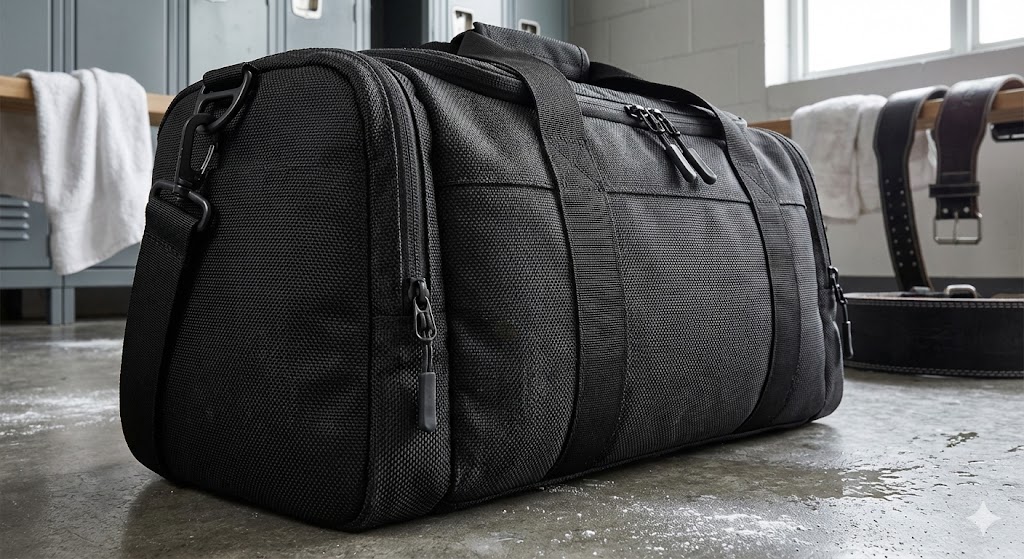
Polyester and nylon are common starting points for many gym bags, while other woven, coated or laminated materials may be selected according to appearance, durability, moisture resistance and price targets.
The material should be considered together with the construction.
For example:
- the shell needs to handle normal wear
- the bottom may need additional abrasion resistance
- a shoe compartment may need easy-clean lining
- a wet pocket may require a coated or laminated material
- a commuter bag may need softer lining around electronics
For a broader material comparison across bag categories, see our guide to fabrics used for making bags.
If recycled content is required, buyers should also define what documentation or certification is expected. Textile Exchange publishes the official requirements for standards such as GRS and RCS.
What Should Buyers Confirm Before Developing a Gym Bag Sample?
Before sampling, define the actual use case rather than starting with a long feature list.
Useful information includes:
- target user
- intended workout or commuting routine
- equipment the bag needs to carry
- target shoe size
- laptop or device size where relevant
- wet/dry separation requirement
- preferred carrying method
- target dimensions or capacity
- material requirements
- branding method
- estimated order quantity
Where possible, provide the factory with the dimensions of the actual items that need to fit.
A phrase such as “large shoe compartment” is open to interpretation. A required shoe size or outsole length gives the sample room something concrete to test.
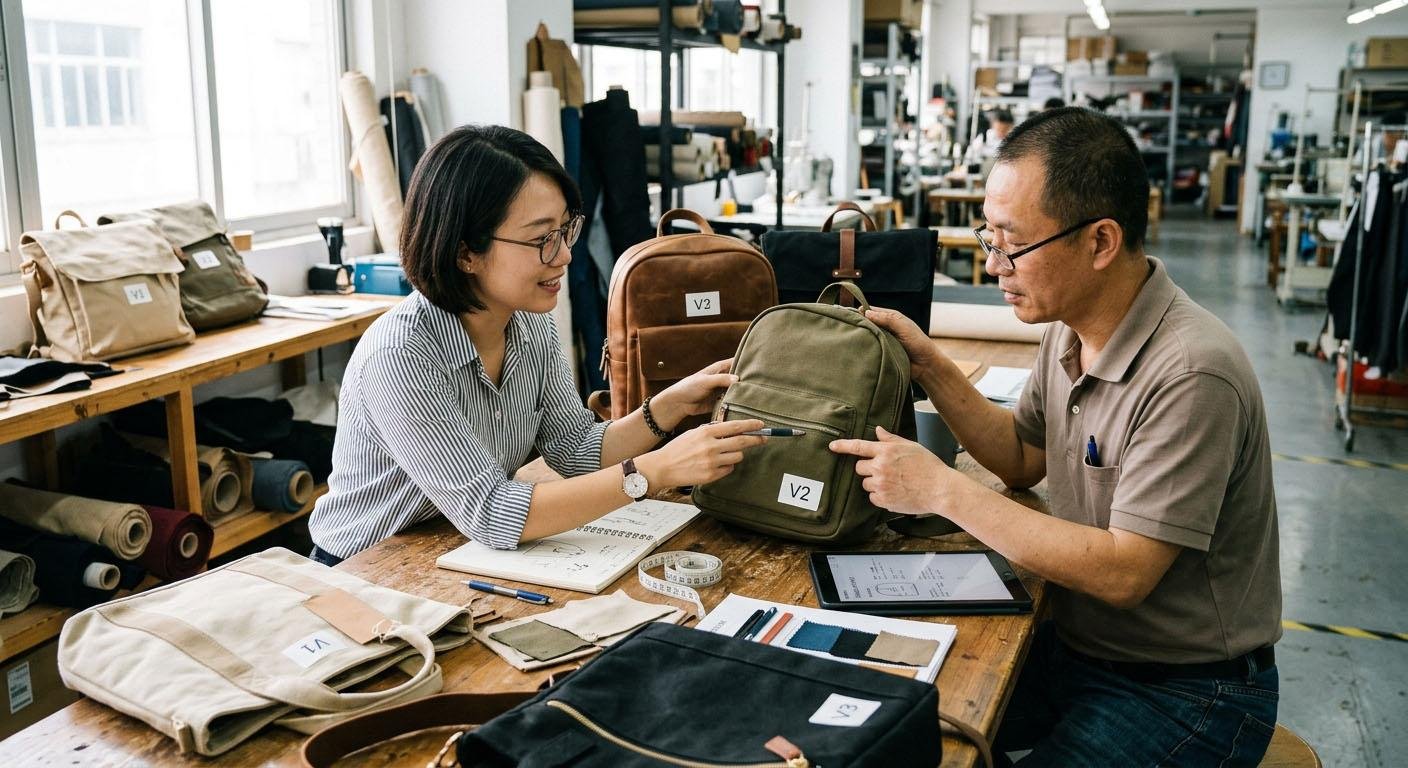
Once a sample is developed, dimensions, materials, construction and branding should be locked before bulk production. Our bag sample approval checklist covers those points in more detail.
FAQ About Gym Bag Types
Is a Duffel Bag the Same as a Gym Bag?
Not exactly.
“Duffel” describes a bag format, while “gym bag” describes how the bag is used.
Many gym bags use a duffel construction, but a duffel can also be designed for travel, teams or general equipment. A gym-specific duffel often adds features such as shoe storage, wet-item separation or bottle organization.
Does Every Gym Bag Need a Shoe Compartment?
No.
A shoe compartment is useful when footwear separation is an important part of the user’s routine, but it also consumes space and adds construction.
For users carrying only clothing, a towel and small accessories, a simpler main compartment may be more practical.
Can a Gym Bag Have Both a Shoe Compartment and a Wet Pocket?
Yes, but the overall layout needs to be checked carefully.
Two large secondary compartments can take substantial volume away from the main storage area. During sampling, load the bag with real shoes, clothing and wet-item equivalents to confirm that all three areas remain usable.
What Size Gym Bag Is Best?
There is no universal size.
A studio user may need only a compact bag, while someone carrying shoes, towels, lifting gear and a complete change of clothing will need substantially more space.
Instead of choosing capacity first, list the actual items the bag needs to carry and build the dimensions around them.
For measurement and capacity guidance, see our duffle bag size guide.
Choosing the Right Gym Bag Type for a Custom Project?
The best gym bag type depends on the user’s equipment, commuting method and storage needs.
A simple duffel works for many everyday gym users. A backpack is better suited to hands-free commuting. Shoe and wet/dry compartments solve specific separation problems, while work-to-gym and convertible designs serve users who need one bag for several parts of the day.
For brands, the starting point should therefore be the user’s actual routine—not the number of features that can be added to the bag.
Developing a Custom Gym Bag?
If you are developing a gym or fitness bag collection, send us:
- reference images, drawings or tech pack
- target user and use case
- items the bag needs to carry
- required shoe or laptop size
- target dimensions or capacity
- material and branding requirements
- estimated order quantity by color
We can review the bag format, compartment layout, materials and sampling requirements before production.
See our custom gym and duffel bag manufacturing options or contact us to discuss your gym bag project.