Last Updated: July 27, 2026
A duffel bag, also spelled duffle bag, is a soft-sided carry bag with one large main compartment. It is usually closed by a zipper and carried with handles or a shoulder strap. Modern duffels may be cylindrical or rectangular and are commonly used for travel, gym, sports and outdoor gear.
From a manufacturing perspective, the main differences between duffel bags are not just shape and size. Fabric weight, zipper grade, strap construction, seam reinforcement and compartment design determine how the bag performs in actual use.
Duffel Bag Meaning: What Does “Duffel” Mean?
Ever wonder where the name “duffel” comes from? The story is simpler than you might think. It reveals the bag’s rugged origins and explains why duffel bags are still associated with durability today.
The word “duffel” comes from Duffel, a town in Belgium known for producing a thick, coarse woolen cloth. This durable fabric was historically used for bags and outerwear, and its name gradually became associated with the cylindrical carry bag now known as a duffel bag.

The original duffel bag was a simple, tough workhorse. Sailors and soldiers were its first users. They needed something that could hold a lot of gear and withstand rough handling. The bag was basically a large cylindrical sack made from that heavy "duffel" wool. It usually had a simple drawstring or cord closure at the top. There were no fancy pockets or compartments. Its only job was to be big and strong.
Today, the term "duffel bag" is much broader. I’ve worked with clients to create duffels from all kinds of materials.
- Modern Materials: We now use durable canvas, lightweight nylon, stylish leather, and innovative recycled fabrics.
- Modern Designs: The shape is no longer just a cylinder. We make rectangular and boxy duffels. Zippers have mostly replaced drawstrings for better security and access.
- Synonyms: You’ll also hear terms like "holdall," "weekender," or "gym bag." These are often used interchangeably with "duffel bag," though "weekender" might suggest a more stylish, travel-focused design.
📜 Quick History Timeline
- 17th century — Duffel, Belgium begins producing the thick wool cloth that gives the bag its name
- WWI & WWII — US military adopts the "sea bag" / "kit bag" for soldiers and sailors; establishes the cylindrical shape we know today
- 1970s–80s — Nylon replaces wool/canvas; duffel enters the gym and sports market
- 1990s–2000s — Rolling duffels and carry-on sizes emerge for air travel
- 2010s–2020s — Waterproof roll-top duffels, convertible backpack duffels, and recycled-material duffels become mainstream
- 2025–2026 — Smart duffels with RFID, wet/dry compartments, and modular systems are the latest trend
📖Duffel Bag Basics
- Definition: A soft-sided cylindrical or rectangular bag with a top zipper/drawstring closure
- Origin: Named after Duffel, Belgium — where the original heavy wool cloth was made
- Also called: Duffle bag, holdall, weekender, kit bag, gym bag, sea bag
- Typical sizes: 20L (overnight) to 120L (expedition)
- Common materials: Polyester, nylon, canvas, waxed canvas, leather, Cordura®
- Price range: $20 (budget gym) to $800+ (premium leather)
- Primary uses: Gym, travel, sports, outdoor adventures, military, storage
What Are the Different Types of Duffel Bags?
Feeling overwhelmed by all the duffel bag options? Choosing the right type is key. It ensures the bag perfectly matches its intended use, which is critical for customer satisfaction.
Duffel bags come in many styles. You have the classic cylindrical duffel, compact carry-on sizes, large rolling luggage duffels, stylish weekenders, and rugged waterproof versions. Some even convert into backpacks. Each type is designed for a specific purpose, from short trips to extreme adventures.
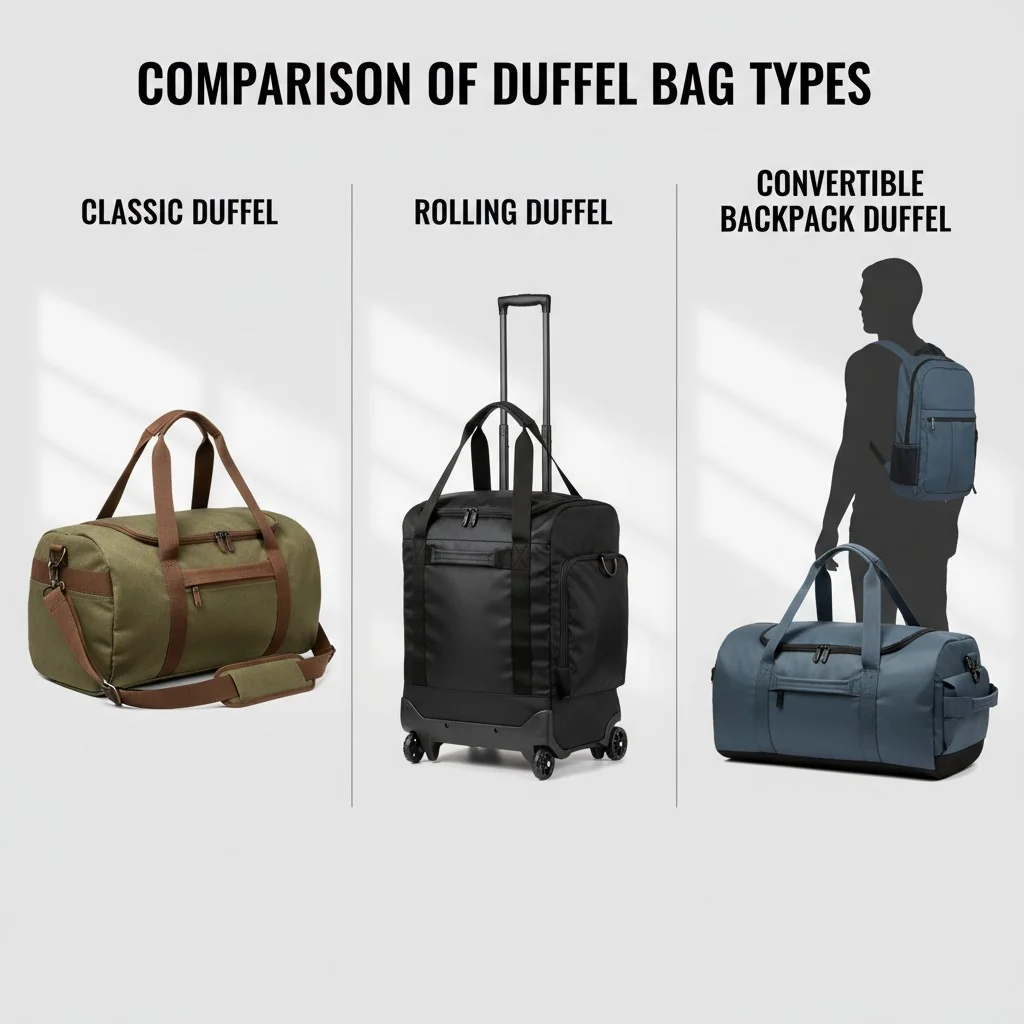
I always advise my clients to think about the end-user’s lifestyle first. Is your customer a frequent flyer, a gym enthusiast, or an outdoor explorer? The answer will point you to the right type of duffel bag. Here’s a breakdown I often share with partners to clarify their options.
| Duffel Type | Ideal Use | Typical Capacity | Pros | Cons |
|---|---|---|---|---|
| Classic/Standard Duffel Bag | Gym, sports, general use | 30-60 Liters | Simple, lightweight, affordable | Lacks structure and organization |
| Carry-On Duffel Bag | Air travel, short trips | 35-45 Liters | Meets airline limits, often has trolley sleeve | Limited capacity, less rugged |
| Travel/Rolling Duffel Bag | Long trips, heavy loads | 70-120+ Liters | Easy to transport heavy gear, structured | Bulky, heavier when empty |
| Weekender Duffel Bag | Stylish weekend getaways | 40-60 Liters | Fashion-forward, good organization | Often less durable, higher price |
| Waterproof Duffel Bag | Boating, camping, watersports | 50-100 Liters | Protects gear from elements | Can be heavy, less breathable |
| Convertible Duffel Bag | Multi-purpose travel, commuting | 40-90 Liters | Versatile carrying options (backpack/duffel) | Straps can be less comfortable than a dedicated backpack |
Beyond the Basics — 5 More Specialized Duffle Types You Should Know
The 6 types above cover most mainstream duffle bags, but if you’re designing for niche markets, these specialty types command premium pricing:
| Specialized Type | Market / Buyer | Key Differentiator | Retail Tier |
|---|---|---|---|
| Tactical / Military Duffel | Military, law enforcement, preppers | MOLLE webbing, Cordura®, concealed compartments | $120–$300 |
| Hockey / Sports-Specific Duffel | Ice hockey, lacrosse, football | Extra-long (36"+) for sticks, ventilated panels | $80–$200 |
| Medical / First Aid Duffel | EMT, outdoor guides, field medics | Color-coded internal organization, red cross accents | $90–$250 |
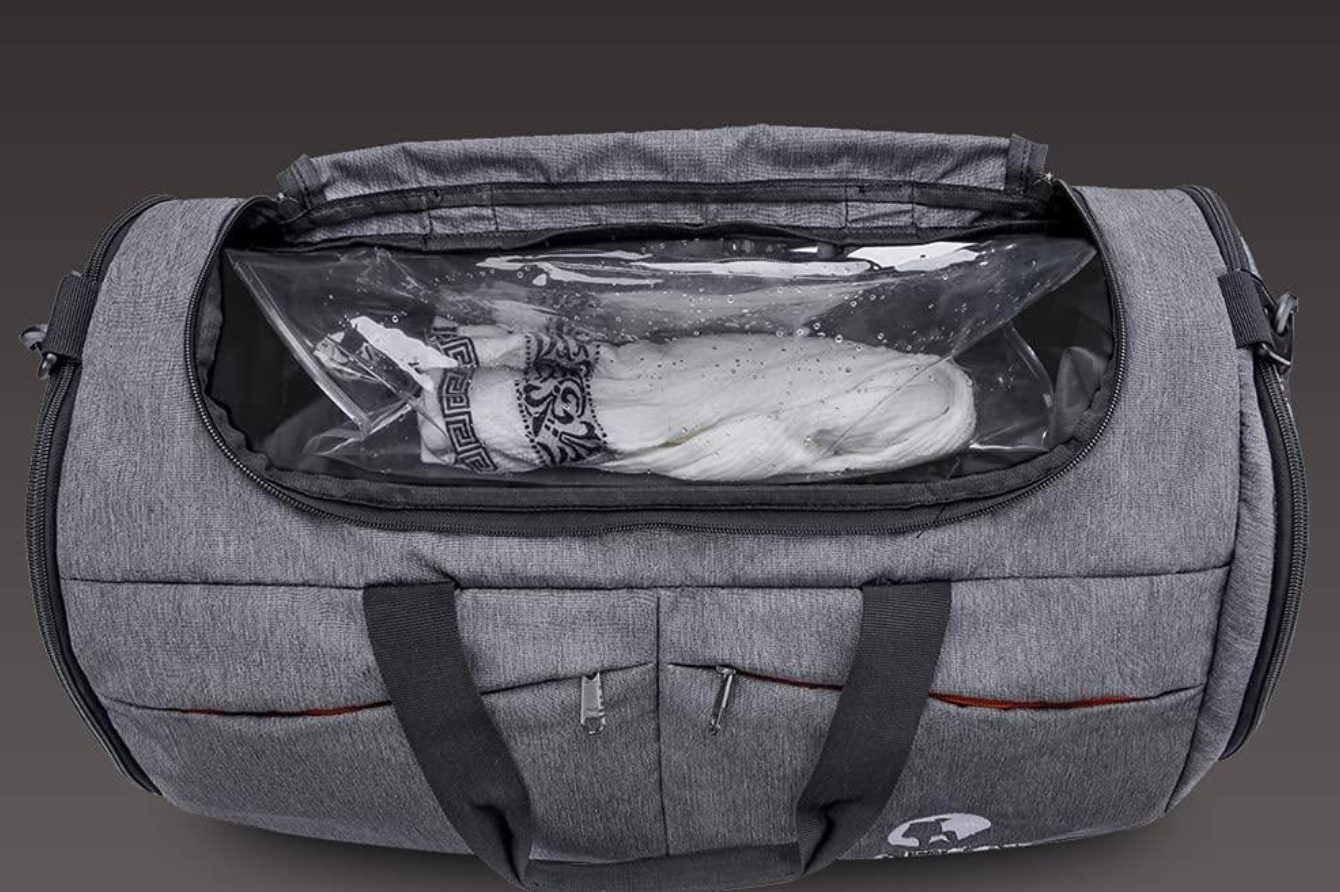
| Wet/Dry Duffel | Swimmers, triathletes, surfers | Sealed wet compartment with dry space | $50–$150 |
| Leather Weekender Duffel | Business travel, luxury gift market | Full-grain leather, brass hardware | $300–$1,200+ |
How to Read a Duffle Bag Spec Sheet
When sourcing, you’ll see specs that look cryptic. Decoded:
- "600D PU-coated polyester" → 600 denier fiber + polyurethane waterproof coating
- "#8 YKK coil zipper" → Size 8 plastic coil zipper from YKK (industry standard)
- "D-rings + bar-tacked stitching" → Metal loops for straps + reinforced stress-point stitching
- "40L / 50cm × 28cm × 28cm" → 40 liters capacity with exact external dimensions
- "DWR C6 finish" → Fluorocarbon-free durable water repellent (EU compliant)
What Is a Duffel Bag Used For? 10 Real Use Cases
A duffel bag’s flexible design makes it the most versatile bag category in the industry. Here are the 10 most common uses — ordered by market volume:
1. 💪 Gym & Fitness Use — The #1 Application
Duffel bags dominate the gym bag market (71.2% share according to Grand View Research). Typical specs: 30-40L, polyester, ventilated shoe compartment, separate wet pocket for sweaty clothes.
2. ✈️ Airline Carry-On & Short Trips
Soft-sided duffels fit overhead bins better than hard shells. Sweet spot: 40-45L with trolley sleeve to stack on a rolling suitcase.
3. 🏕️ Outdoor & Camping Gear Transport
For camping and expeditions, a waterproof roll-top duffel (50-100L) protects gear from rain and dirt. External lash points let you strap on sleeping pads or tents.
4. ⚔️ Military & Tactical Loadout
The original use case — soldiers, law enforcement, and tactical enthusiasts use 1000D Cordura® duffels with MOLLE webbing for modular gear attachment.
5. 🏒 Team Sports Equipment
Hockey, lacrosse, baseball teams need long (36"+) duffels to fit sticks, bats, and pads. Often customized with team logos and player names.
6. 💼 Business & Weekend Travel
Leather or waxed-canvas weekender duffels (40-50L) combine style with enough room for a 2-3 day business trip, including a laptop compartment.
7. 🏨 Hotel & Hospitality Industry
Hotels use branded duffels as guest gifts or for laundry/towel transport. Canvas or recycled polyester at bulk pricing.
8. 🎁 Corporate Gifts & Event Swag
Conferences and corporate events distribute branded duffels. Polyester sublimation printing allows full-color logo placement.
9. 🚨 Emergency "Go-Bag" / Bug-Out Bag
Preppers and emergency responders use medium duffels (40-60L) pre-packed with essentials for quick evacuation.
10. 📦 Home Storage & Seasonal Organization
Foldable duffels store off-season clothing, camping gear, or holiday decorations — and collapse flat when not in use.
Match Your Use Case to Specs (Cheat Sheet)
| Primary Use | Ideal Capacity | Recommended Material | Critical Feature |
|---|---|---|---|
| Gym (daily) | 30-40L | 600D polyester | Shoe compartment, wet pocket |
| Carry-on travel | 40-45L | 1000D nylon or ballistic | Trolley sleeve, lockable zippers |
| Rolling travel | 70-100L | 1680D ballistic | Skate wheels, telescoping handle |
| Outdoor/boat | 50-90L | PVC tarpaulin or TPU | Roll-top closure, welded seams |
| Tactical | 40-60L | 1000D Cordura® | MOLLE webbing, heavy-duty zippers |
| Weekender | 40-50L | Leather or waxed canvas | Laptop sleeve, premium hardware |
| Hockey/sports | 90-120L | 600D polyester | 36"+ length, vented panels |
| Swimming/wet | 30-40L | Nylon + PU lining | Sealed wet/dry divider |
| Corporate gift | 25-35L | RPET polyester | Full-color printability |
| Home storage | 60L+ | Canvas or nonwoven | Foldable, stackable |
Where Does a Duffel Bag Beat Alternatives?
Is a duffel always better than a rigid suitcase? Not always. But knowing its unique strengths helps you design a product that solves a real problem for your customers.
A duffel bag’s soft-sided, flexible design is its biggest advantage. It can be squeezed into tight overhead bins or packed irregularly in a car trunk. It’s also generally lighter than a hard-shell suitcase and can be compressed for easy storage when empty.

I’ve seen the duffel bag succeed in so many different markets. Its adaptability is why it’s a staple product. For example, the global gym bag market was about $1.49 billion in 2023, and duffel bags made up a massive 71.2% of that segment. This shows just how dominant this style is for specific uses.
Here are the areas where a duffel bag truly shines:
- Travel: For weekend trips or as a carry-on, a duffel is perfect. Its soft sides are more forgiving when you overpack or need to meet strict airline size limits. Unlike a rigid suitcase, you can squish it to fit.
- Gym & Sports: This is the duffel’s home turf. A large main compartment is great for bulky gear, clothes, and towels. Many designs I work on include a separate ventilated shoe compartment, which is a huge selling point.
- Outdoor Adventures: For camping or expeditions, a heavy-duty, waterproof duffel is essential. It protects gear from rain and dirt. Lash points on the outside are great for attaching extra equipment.
- Storage & Special Uses: When not in use, a duffel can be folded or rolled up, saving space. I’ve also helped clients design them as emergency "go-bags" or as durable kits for field technicians.
Duffel Bag vs Alternatives — At-a-Glance
| vs. | Duffel Wins When… | Alternative Wins When… |
|---|---|---|
| Hard-shell suitcase | You need flexibility, overpack room, lightweight | You carry fragile items, need rigid protection |
| Backpack | You need high capacity (50L+), single large compartment | You need hands-free carry, long walks, structured load |
| Tote bag | You carry bulky gear, need closure/security | You need quick grab-and-go, lighter loads |
| Garment bag | You mix clothing with other gear | You only carry suits/dresses that can’t fold |
| Rolling suitcase | You navigate uneven terrain, tight spaces | You walk long distances in smooth airports |
Duffel Bag Sizes Explained — Liters vs Inches
Duffel bag sizing is the #1 confusion point for first-time buyers. Let’s decode it.
The Two Ways Duffels Are Measured
- Capacity (liters) — The internal volume. This is what the fabric can hold.
- External dimensions (inches or cm) — The outside measurements. This matters for airline limits.
Important: A 40L duffel and a 45L duffel can have identical external dimensions if one has a different shape or thinner walls. Always check both numbers.
Complete Duffle Bag Size Chart
| Capacity | External Dimensions (approx.) | Best Use | Airline Status |
|---|---|---|---|
| 20L | 16" × 10" × 8" | Overnight, small gym bag | Personal item |
| 30L | 18" × 11" × 10" | Standard gym bag, day trip | Personal item |
| 40L | 20" × 12" × 11" | Carry-on, 2-3 day trip | Carry-on ✅ |
| 45L | 22" × 13" × 11" | Max carry-on, 4-5 day trip | Carry-on (most airlines) |
| 50L | 24" × 13" × 12" | Long weekend, light week | Usually checked |
| 60L | 26" × 14" × 13" | 1 week travel | Checked |
| 70-80L | 28"-30" × 14" × 14" | 2+ week travel, expedition | Checked |
| 90-120L | 32"+ × 16" × 16" | Hockey gear, expedition | Oversized fees may apply |
Airline Carry-On Rules (2026)
Most major airlines accept duffels up to:
- United States: 22" × 14" × 9" (approx. 40-45L)
- Europe (EU): 55 × 40 × 20 cm (approx. 40L)
- Asia (varies): typically 56 × 36 × 23 cm (approx. 45L)
- Budget airlines (Ryanair, Spirit): much stricter — often 40 × 20 × 25 cm (~20L)
Always check the specific airline’s policy — especially for budget carriers, where fees for oversized carry-ons can exceed $50.
What Features Actually Matter When Buying a Duffel Bag?
Don’t get distracted by flashy gimmicks. When you’re developing a product, you need to focus on the features that deliver real value, function, and durability for your customers.
The most important features are durable materials like high-denier nylon or canvas, strong and comfortable straps, and smart organization like shoe pockets or a laptop sleeve. Secure closures, like lockable zippers, and the bag’s own weight are also critical factors that customers notice.
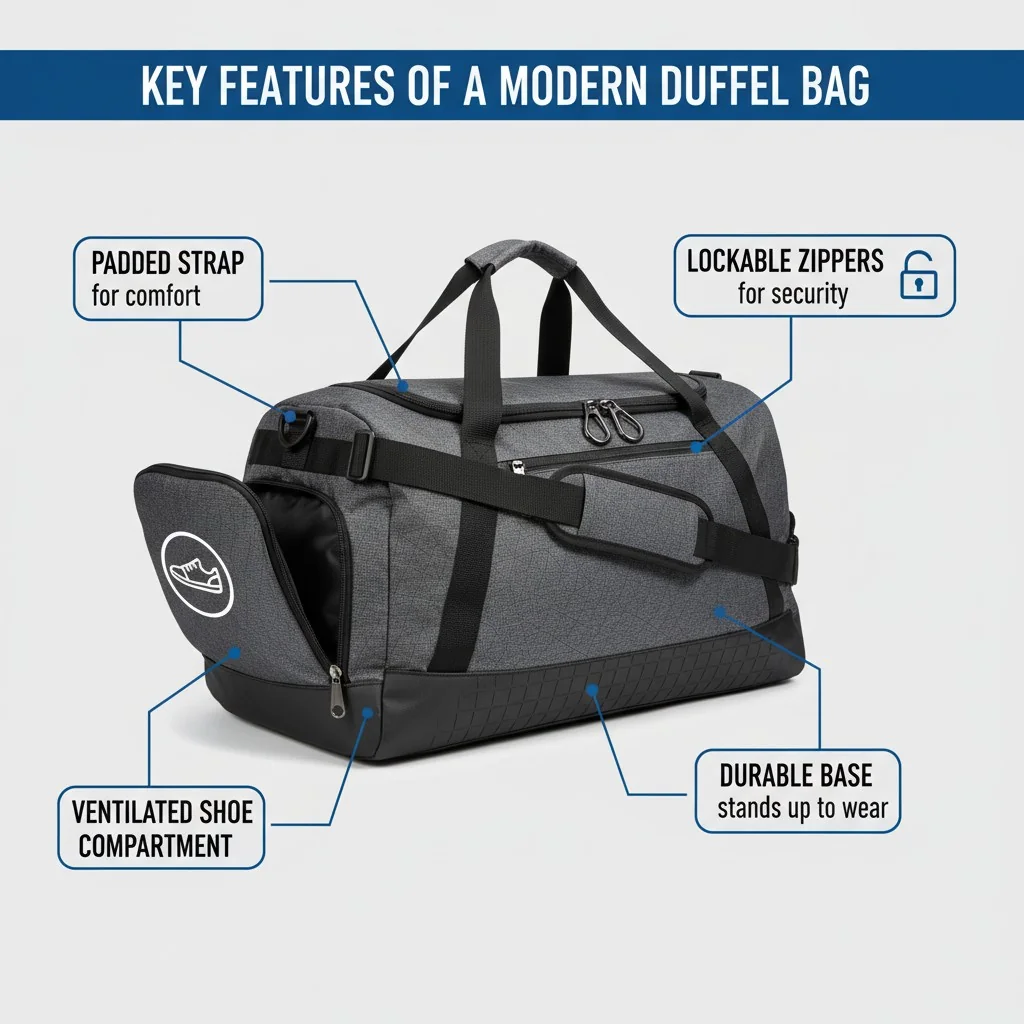
When I consult with brands, we spend a lot of time on this part. Getting the features right is the difference between a best-seller and a flop. A bag might look great, but if the shoulder strap digs in or a zipper breaks, you’ll get bad reviews. It’s about balancing cost with quality. For example, using YKK zippers costs more, but their reliability is a major selling point. Here’s a checklist of features that I believe truly matter.
Key Duffel Bag Features
- Material & Durability: The fabric is the foundation. Nylon (especially Cordura or ballistic) offers great abrasion resistance. Canvas has a classic look but can be heavy. Leather is stylish but requires care. Recycled PET (RPET) is a great sustainable option.
- Straps & Carrying Options: A padded, adjustable, and removable shoulder strap is a must. Grab handles should be comfortable. For larger bags, convertible backpack straps add huge value.
- Capacity & Size: Measured in liters. This tells the customer exactly how much it holds. It’s important to relate this to use-cases, like "45L is perfect for a weekend trip."
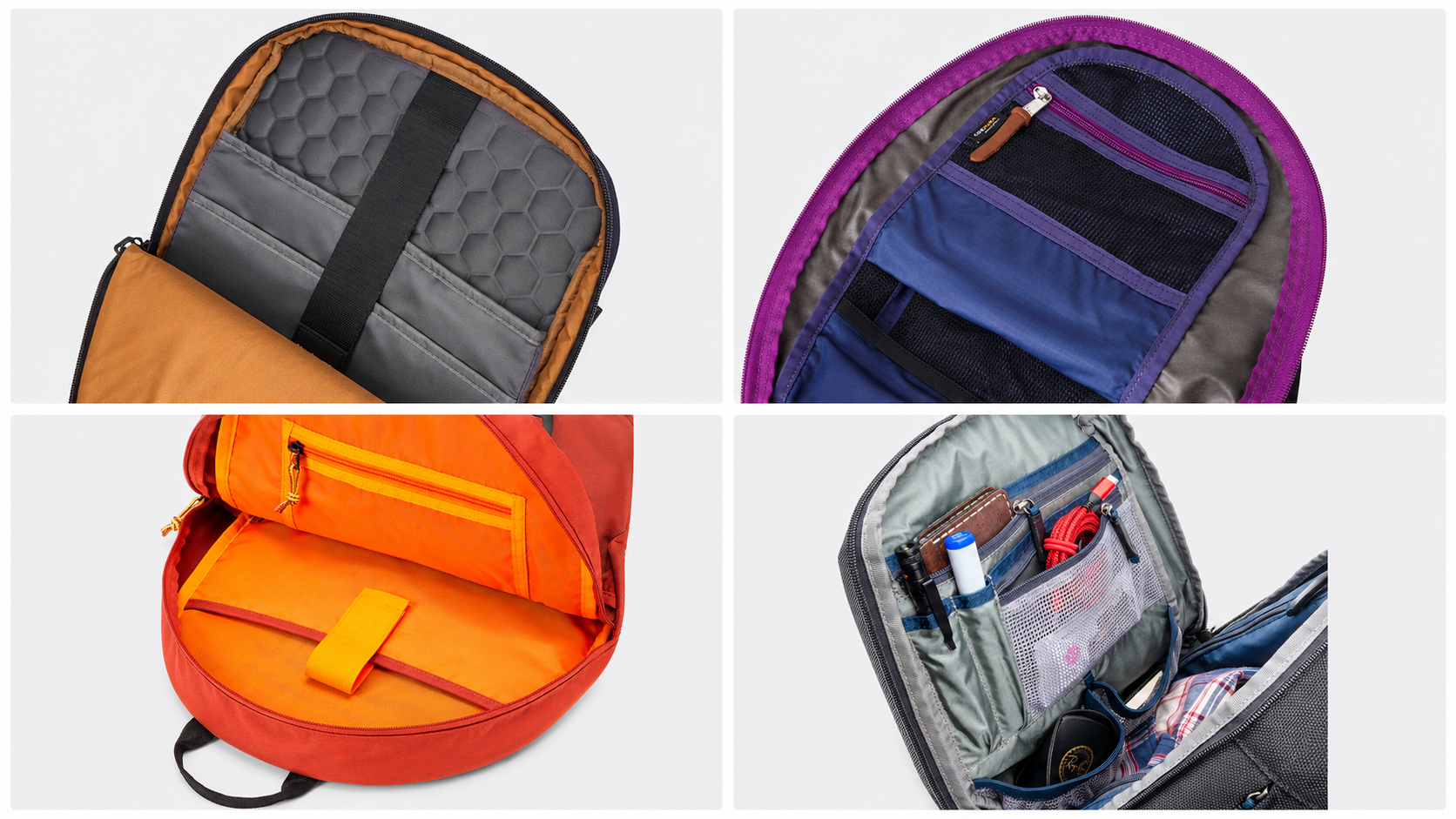
- organizational features: A separate shoe compartment is a top request for gym bags. Internal pockets, a padded laptop sleeve, and external quick-access pockets make the bag much more functional.
- Closures & Security: High-quality zippers are non-negotiable. Look for lockable zippers for travel bags. A roll-top closure is excellent for waterproofing.
Factory Quality Checklist — What Separates a $30 Duffle from a $150 Duffle
When I inspect duffles on our QC line, these 7 details differentiate budget from premium:
| Feature | Budget Duffle | Premium Duffle |
|---|---|---|
| Zipper brand | Generic / SBS | YKK #8 or #10 coil |
| Fabric | 420D polyester | 1000D nylon / Cordura® |
| Strap padding | Thin foam, sewn in | Thick EVA foam, removable |
| Bottom panel | Same as body fabric | Reinforced 1680D or TPU |
| Stress-point stitching | Single-stitched | Bar-tacked (X-box) |
| Interior lining | Single layer | Double-layer with PU coating |
| Hardware | Plastic buckles | Metal D-rings + YKK hardware |
Cost delta at factory: The premium spec costs only $4-7 more per bag to produce — but commands 2-4x retail price. This is the single biggest margin opportunity I see brand owners miss.
How Do You Choose the Right Duffel Bag for Your Needs?
Feeling lost trying to pick the perfect duffel for your brand? Using a simple checklist can help you narrow down the options and make a smart, strategic choice.
First, clearly identify the primary use (e.g., gym, travel, daily carry). Next, determine the right capacity in liters. Finally, prioritize the essential features your target customer needs, like waterproofing or a laptop sleeve, while balancing material quality with your budget.
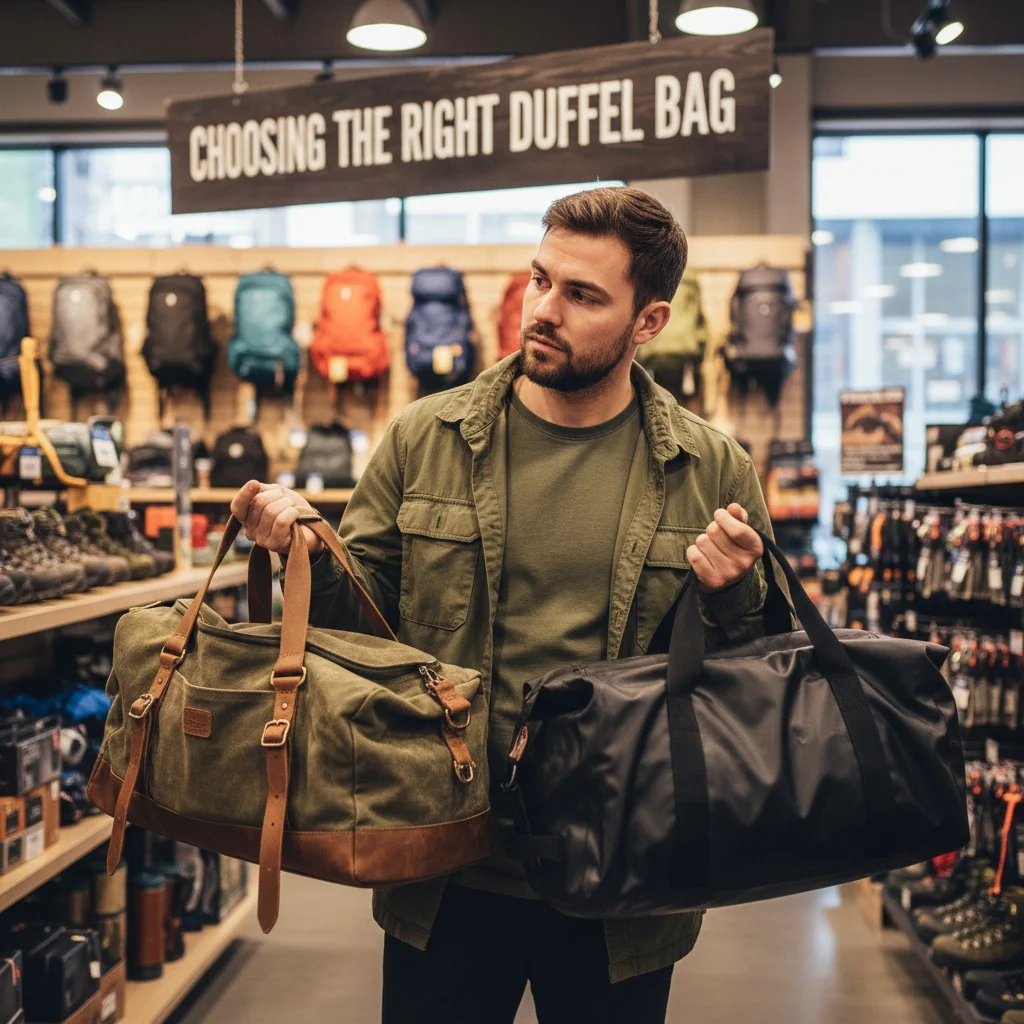
This is the exact process I walk my clients through. We create a profile of their ideal customer and work backward. For a brand targeting digital nomads, a carry-on size convertible duffel with a great laptop sleeve is a winner. For an outdoor brand, we’d focus on a rugged, weatherproof duffel made from recycled, high-tenacity nylon. It’s all about matching the product to the person.
Here is a simple guide to help you make the right choice:
- Identify the Primary Use: Is this for the gym, weekend travel, long expeditions, or daily commuting? This is the most important question. It dictates everything else.
- Determine Capacity: How much stuff does it need to hold?
- 20-35L: Gym or overnight.
- 40-60L: Weekend trip or airline carry-on.
- 70-100L+: Extended travel or heavy gear.
- Prioritize Features: Make a list of "must-haves" vs. "nice-to-haves." Does it need a shoe pocket? A laptop sleeve? Waterproofing? Backpack straps?
- Balance Durability and Budget: A cheap bag might not last. Investing in better materials (like Cordura fabric) and construction (reinforced stitching) often leads to a longer product lifespan and happier customers.
- Consider Sustainability: For many brands today, using recycled or eco-friendly materials is a key part of their identity. This can be a powerful selling point.
Duffel Bag Manufacturing & 2026 Trends (For Brand Owners)
If you’re sourcing or designing duffel bags for your brand, here’s what you need to know about the manufacturing side — and the 5 trends shaping 2026.
The Duffel Bag Manufacturing Process (Simplified)
- Design & tech pack (1-2 weeks) — CAD drawings, material spec sheet, BOM
- Material sourcing (2-4 weeks) — Fabric, zippers, webbing, labels
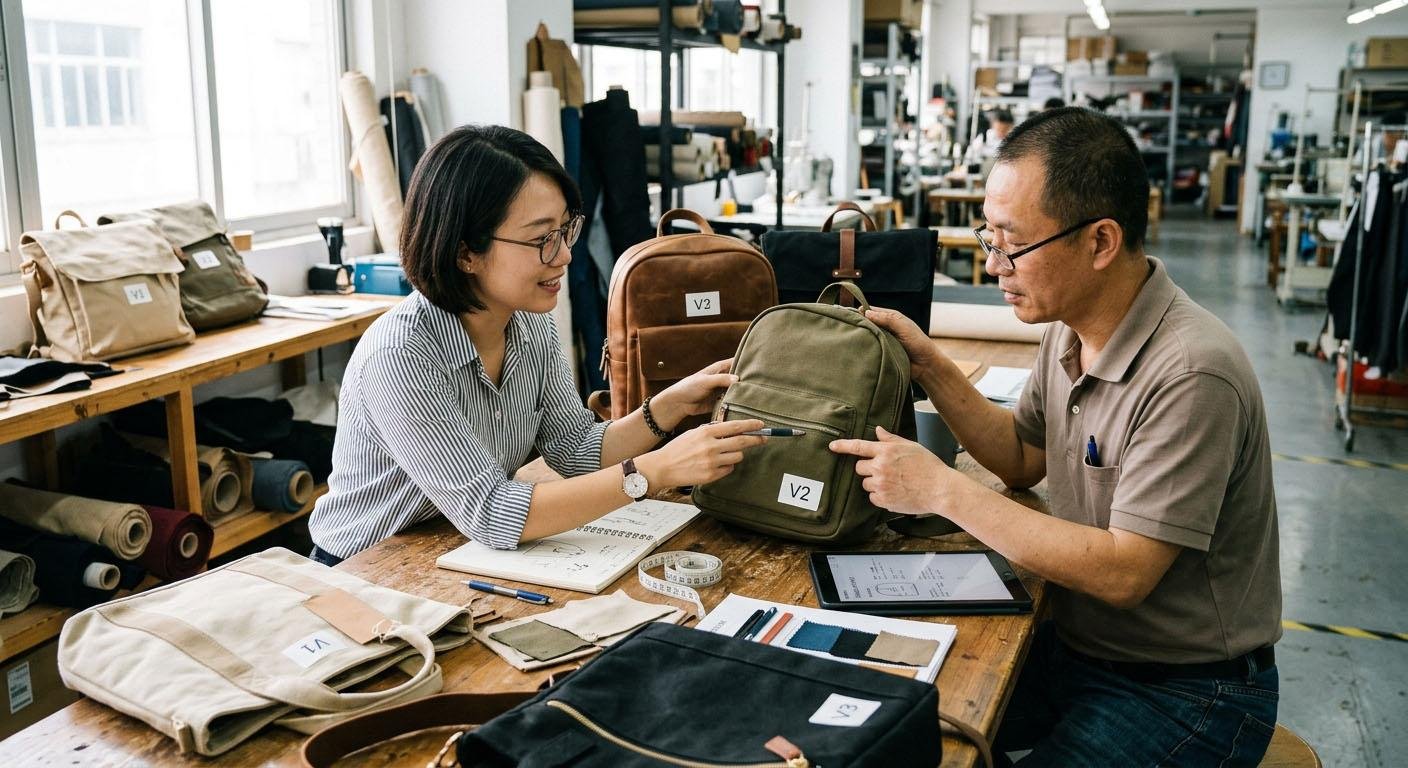
- Sample making (2-3 weeks) — Typically 2-3 rounds of samples before approval
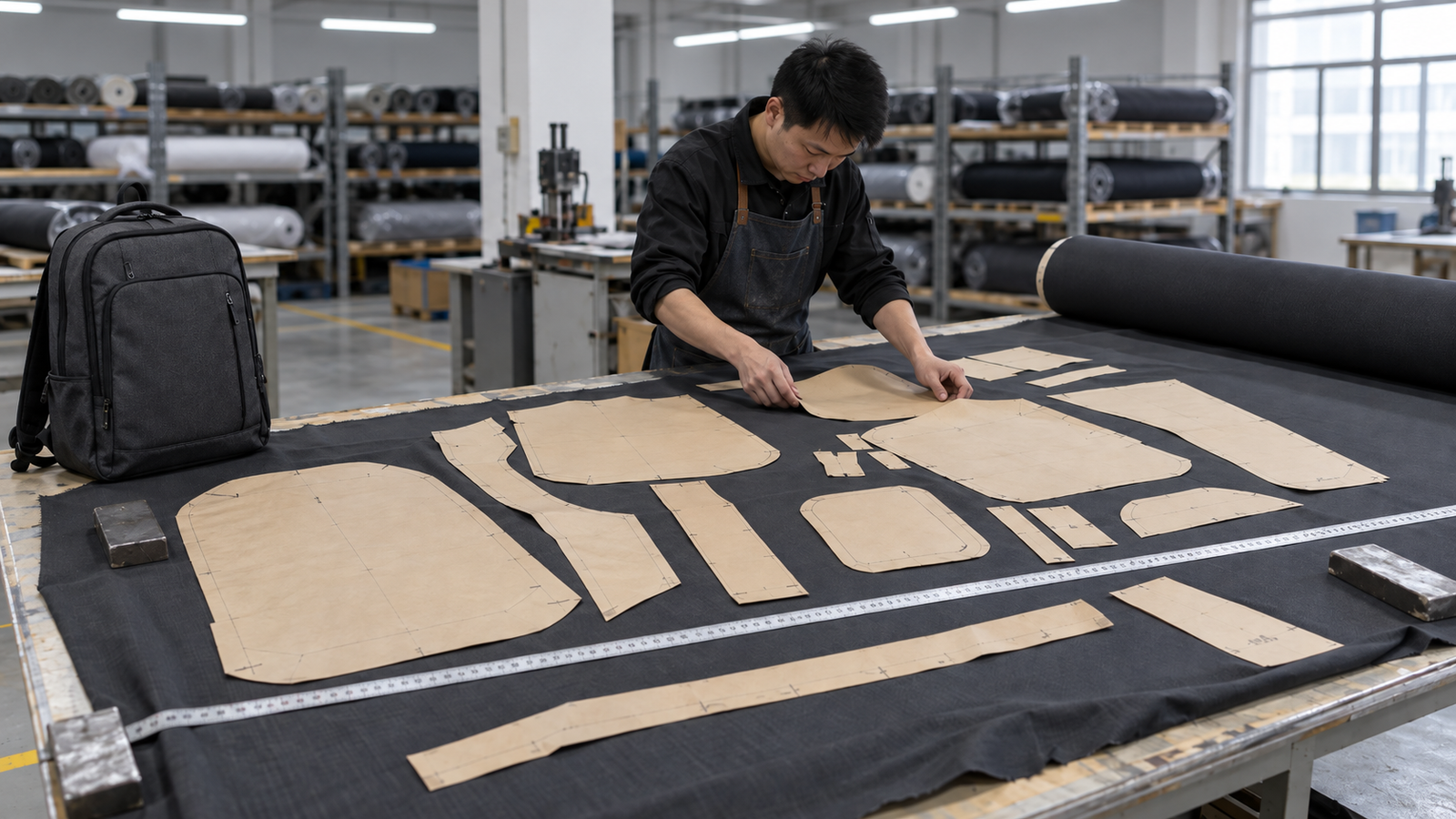
- Mass production (4-8 weeks) — Cutting → sewing → QC → packaging
- Shipping (3-6 weeks by sea, 5-7 days by air)
Realistic total timeline: 90-180 days from design approval to delivered goods.
Typical MOQ & Pricing (China, 2026)
| Bag Type | Typical MOQ | FOB Factory Cost | Typical Retail |
|---|---|---|---|
| Budget gym duffle | 500-1,000 pcs | $4-$7 | $20-$40 |
| Mid-tier travel duffle | 300-500 pcs | $10-$18 | $60-$120 |
| Premium Cordura® duffle | 200-500 pcs | $18-$35 | $120-$280 |
| Tactical/military duffle | 200-300 pcs | $25-$45 | $150-$350 |
| Leather weekender | 100-200 pcs | $60-$150 | $300-$800 |
| Waterproof roll-top | 300-500 pcs | $15-$30 | $90-$200 |
🔥 5 Duffel Bag Trends Shaping 2026
-
RPET / recycled materials mainstream — Not a premium option anymore; customers now expect it at every price point. Certifications (GRS, RCS) are decision factors.
-
Wet/dry separation everywhere — Originally a swim bag feature, now appearing in gym, travel, and outdoor duffles. TPU-lined wet compartments are the new standard.
-
Convertible backpack straps on 60%+ of new duffles — Customers expect flexibility. Hidden backpack straps that tuck away when not used are the winning design.
-
USB charging ports & tech integration — Padded laptop sleeves are standard on travel duffles; USB pass-through ports are on premium models. Add ~$2-3 at factory cost.
-
AI/quiet luxury aesthetic — The "stealth wealth" trend pushes toward minimalist branding, monochrome colorways, and premium materials without loud logos. Leather, waxed canvas, and muted technical fabrics dominate.
What to Include in Your Factory RFQ (Request for Quote)
A good RFQ gets you accurate pricing in 48 hours. Include:
- ✅ Target capacity (liters) and external dimensions
- ✅ Primary fabric (denier + coating + color Pantone)
- ✅ Zipper brand and size (e.g., YKK #8 coil)
- ✅ Hardware: buckles, D-rings, strap webbing width
- ✅ Interior: lining type, number of pockets, laptop sleeve size
- ✅ Logo placement and branding method (embroidery, patch, print)
- ✅ Target MOQ and estimated annual order volume
- ✅ Packaging requirements (polybag, tag, hangtag)
- ✅ Required certifications (OEKO-TEX, GRS, REACH)
Final Verdict
The duffel bag is a timeless, versatile carrier. Understanding its types, features, and ideal uses empowers you to choose or design the perfect bag for any journey or customer need.
👜 Ready to source your custom duffle bags?
With 15+ years of experience and 200+ active B2B clients, Osgoodway manufactures duffle bags across every category discussed in this guide — from $5 gym bags to $150 premium leather weekenders.
👉 Request a free quote and sample swatch pack
Further Reading on Osgoodway
- 8 Types of Duffle Bag Fabrics: How to Choose? — Deep dive on polyester, nylon, canvas, Cordura® for duffles
- Gym Bag Buying Guide: Factory Truth About Zippers, Materials & Wet-Dry Separation
- How to Choose the Right Sport Bag: Materials, Specs & 2026 Trends
- Best Nylon Fabrics for High-Quality Backpacks
- How to Source Quality Fabrics for Backpack Bags
Frequently Asked Questions
- What’s the difference between a duffel bag and a holdall?
Honestly, not much. The terms are largely interchangeable. "Holdall" is more common in the UK, while "duffel bag" is more common in the US. Both refer to a large, soft bag for carrying belongings. - Are rolling duffel bags better than regular ones?
Rolling duffels are great if you frequently travel with heavier load or through airports. They reduce strain of carrying. But wheels add weight, bulk, and potential points of failure. If you mostly carry, hike or go off-road, a non-rolling duffel or convertible (backpack style) may be better. - Are duffel bags good for air travel?
Absolutely. A carry-on sized duffel (around 40-45L) is perfect. Their soft sides make them easier to fit into overhead bins than rigid suitcases. For checked luggage, a larger, more durable travel duffel is a great, lightweight alternative to a heavy suitcase. - How should I pack a duffel bag?
The best method is to roll your clothes. Rolling saves space and reduces wrinkles. Place heavier items like shoes (ideally in a separate compartment) and toiletry bags at the bottom, then pack the rolled clothes around them. - How do I clean and maintain a duffel bag?
Depends on materials: synthetic = wipe down, mild soap; canvas = spot clean, possibly re-waxing; leather = leather cleaner and conditioner. Always follow manufacturer instructions. Air dry completely to prevent mildew. Periodically check zippers and straps. Store dry and uncompressed if possible. - What is the difference between a duffel bag and a gym bag?
A gym bag is often a specific use-case of duffel style: designed mainly to carry workout gear. Duffel bags are more generic, with wider variety in materials, sizes, styles, and uses beyond gym. Gym bags might have shoe compartment, ventilation, or odor control; a generic duffel might not. - Is a duffel bag good for travel as a carry-on?
Yes—many duffels are soft-sided and flexible, making them easier to squeeze into overhead bins. But you must check airline size & carry-on weight limits. Some carry-on-sized duffels are specifically designed with trolley sleeves and airline-friendly dimensions.