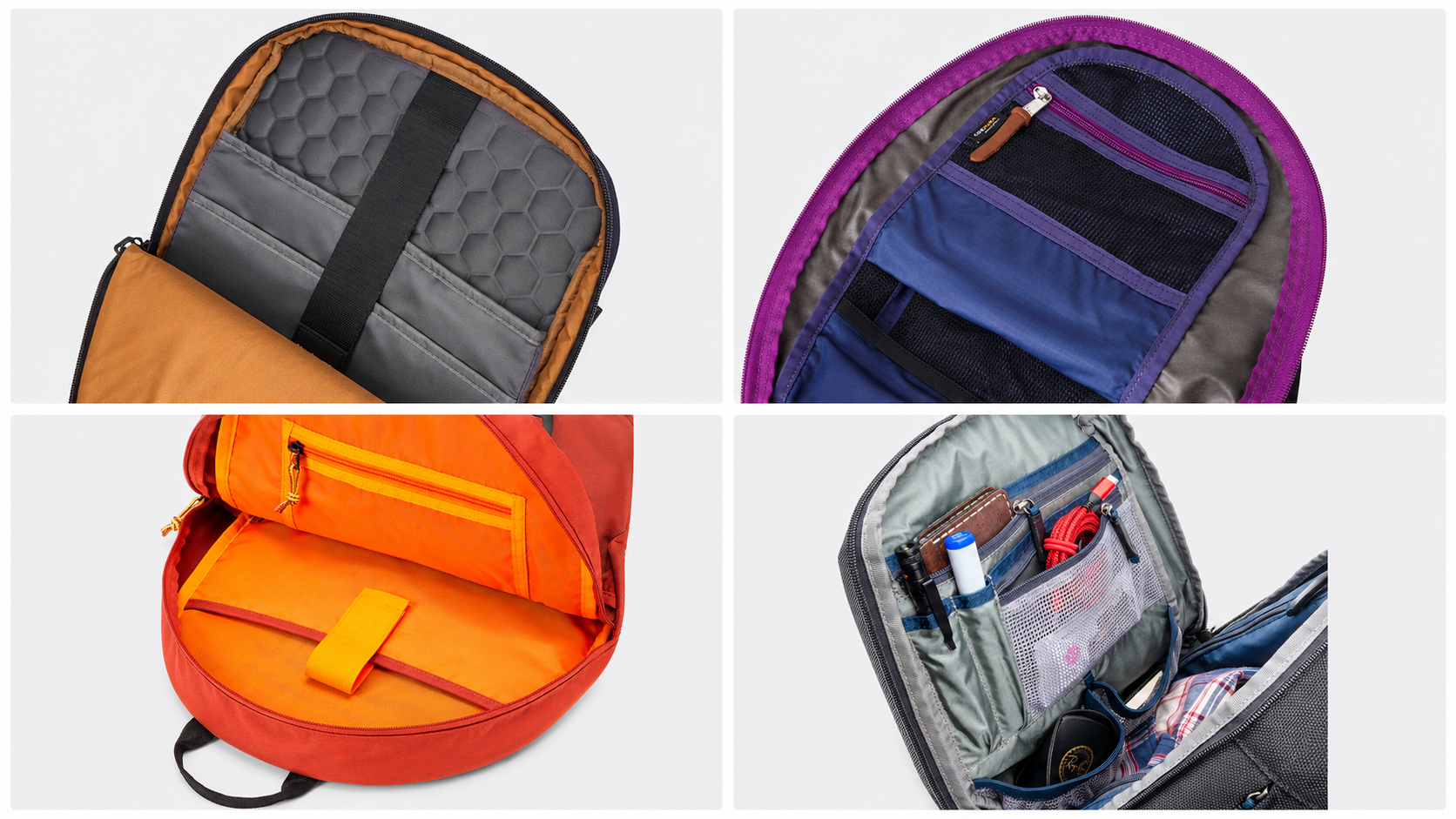
Worried about your gear getting soaked during a hike? A sudden downpour can ruin your trip and your electronics. Let’s find out what really keeps your belongings dry.
Most hiking backpacks are water-resistant1, not fully waterproof. They can handle light rain but will leak in heavy downpours or if submerged. For complete protection, you need specialized waterproof bags or accessories like rain covers. This is a key distinction for any brand owner to understand.

I’ve seen so many brands struggle with this. They market a bag as "waterproof2" when it’s only "water-resistant," which often leads to unhappy customers. It’s a common pitfall in the bag industry, and as a manufacturer, I always advise my clients to be precise. Understanding the nuances is crucial for building a trustworthy brand that delivers on its promises. So, let’s dive deeper into what these terms really mean and how they impact your product design.
[claim claim=”All hiking backpacks are waterproof.” istrue=”false” explanation=”Most are water-resistant. Truly waterproof backpacks are a specific category and often use different construction methods and materials.”]
[claim claim=”A ‘water-resistant’ backpack can handle any amount of rain.” istrue=”false” explanation=”Water-resistant materials can withstand light rain or splashes but will eventually get saturated in a heavy, prolonged downpour.”]
What Is the Difference Between Water-Resistant and Waterproof Backpacks?
The terms "water-resistant" and "waterproof" are often used interchangeably. This confusion can be costly for your brand and lead to bad reviews. Let’s break down the real difference between them.
Water-resistant means the fabric can repel water to a degree, usually due to a tight weave or a coating. Waterproof means the material is impervious to water. The key difference lies in pressure and time; water-resistant bags fail under heavy rain, while waterproof ones do not.
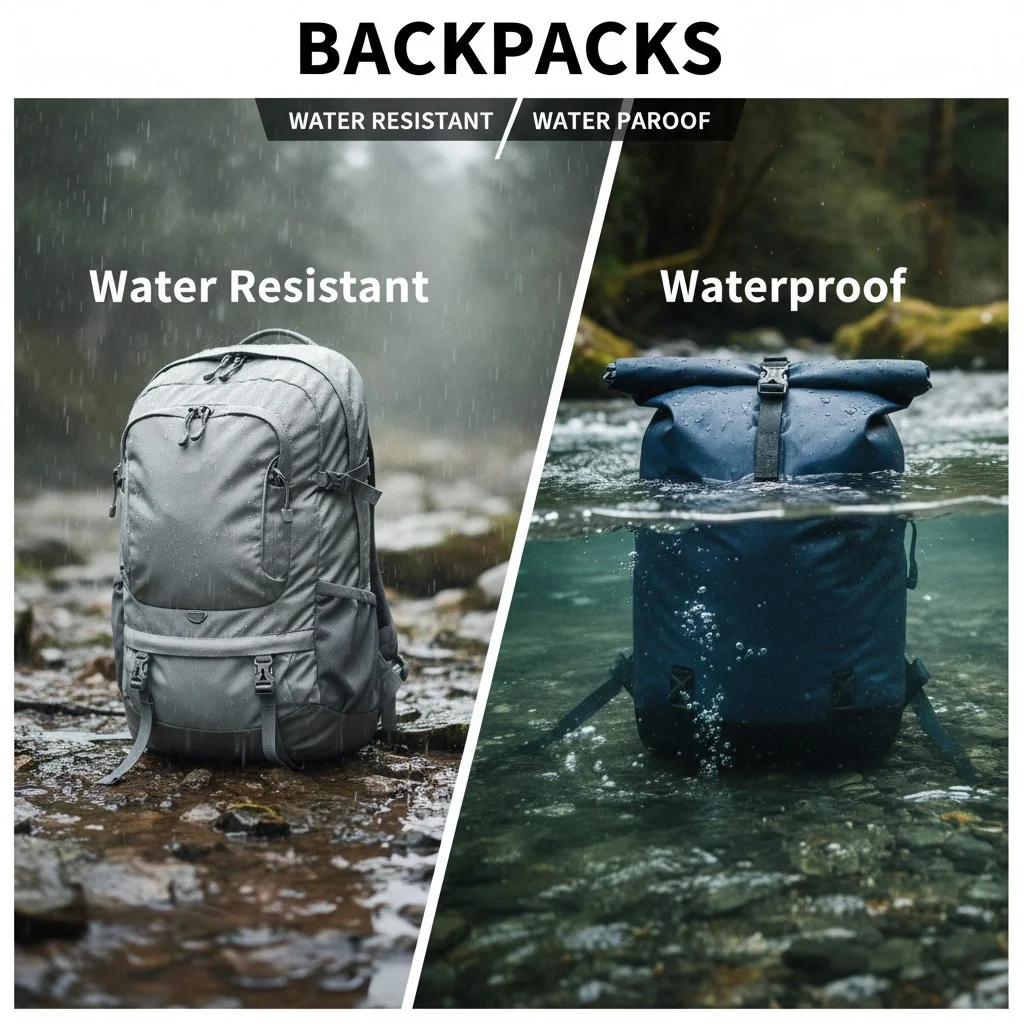
When I work with clients like Madison, an e-commerce seller, I stress how important this distinction is for product descriptions. Getting it right manages customer expectations and builds trust. A water-resistant bag is perfect for a daily commute, but a waterproof one is for the serious adventurer.
Water-Resistant: The First Line of Defense
A water-resistant backpack is designed to handle light exposure to water. Think of it as a shield that works for a little while. The fabric itself, usually nylon or polyester, is tightly woven to stop water from passing through easily. On top of that, we often apply a Durable Water Repellent (DWR) coating. This makes water bead up and roll off the surface. However, this coating wears off over time and will not stand up to a heavy, sustained downpour.
Waterproof: The Ultimate Barrier
A waterproof backpack creates an impenetrable barrier. Water simply cannot get through the material, no matter how long it’s exposed to rain. This is achieved with different materials and construction, which we’ll cover later. These bags are designed for extreme conditions, like kayaking or trekking through a monsoon. They ensure that the contents stay completely dry, even if the bag is briefly submerged.
| Feature | Water-Resistant | Waterproof |
|---|---|---|
| Protection Level | Light rain, splashes, brief exposure | Heavy rain, prolonged exposure, submersion |
| Construction | Tightly woven fabric, DWR coating3 | Coated fabrics (PVC, TPU), membranes, welded seams |
| Breathability | Generally more breathable | Often less breathable |
| Common Use | Daily use, light hiking | Extreme sports, marine activities, serious trekking |
| Cost | Lower | Higher |
For more details, please read this blog: Water Resistant vs Waterproof Backpack: Which One Do You Really Need?
[claim claim=”Waterproof and water-resistant mean the same thing in the bag industry.” istrue=”false” explanation=”They are distinct terms. Waterproof offers a much higher level of protection against water ingress than water-resistant.”]
[claim claim=”A DWR coating makes a backpack fully waterproof.” istrue=”false” explanation=”A Durable Water Repellent (DWR) coating only makes a fabric water-resistant. It causes water to bead up and roll off but can wear off and will not withstand heavy, sustained rain.”]
What Materials Make a Hiking Backpack Water-Resistant or Waterproof?
The material of a backpack is its core. Choosing the wrong one means your product will fail to meet customer needs. Let’s look at the fabrics that define a bag’s water protection.
Water-resistant bags often use nylon or polyester with a DWR coating. For truly waterproof performance4, manufacturers use materials like PVC-coated fabrics, Thermoplastic Polyurethane (TPU), or specialized laminates. The material choice is fundamental to the bag’s function, feel, and price point.
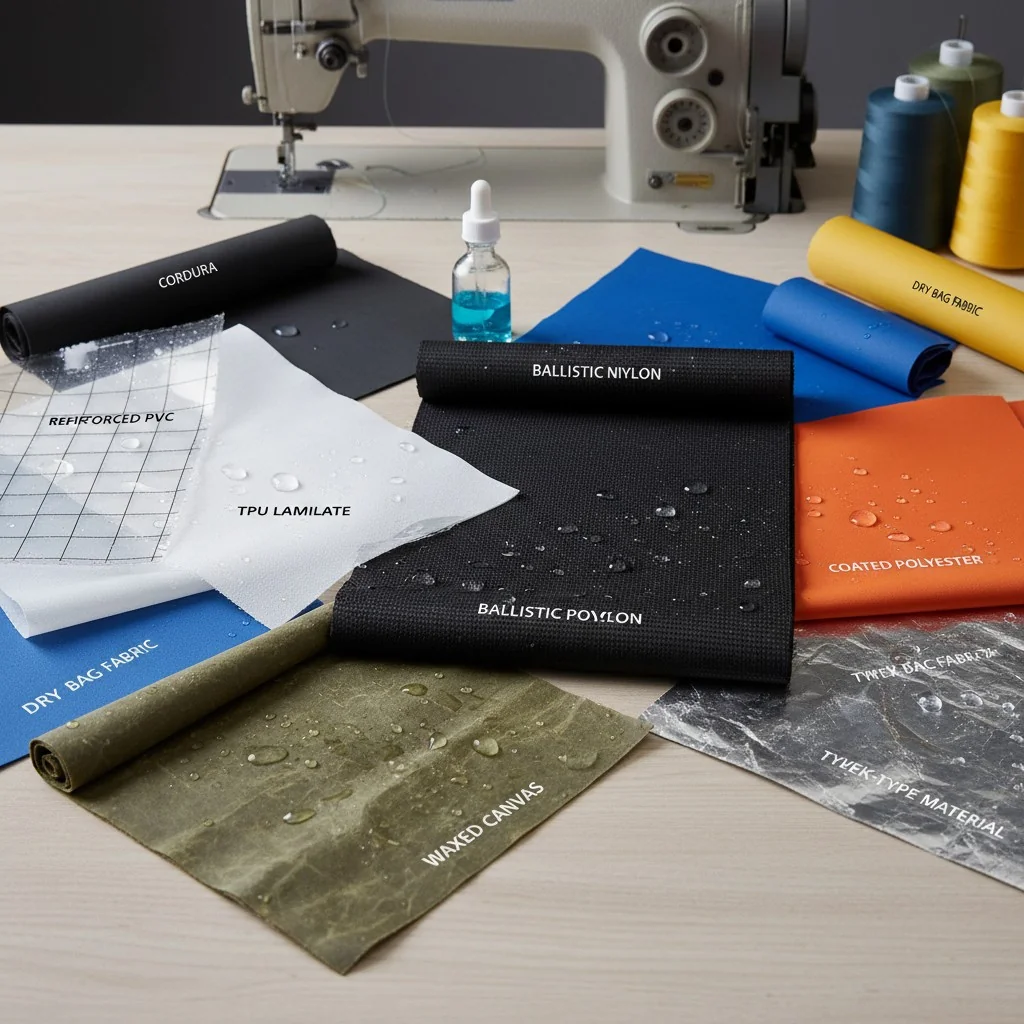
In my years of sourcing materials, I’ve learned that there’s a perfect fabric for every project. It’s a balance of cost, durability, and performance. For a brand focused on sustainability, like Madison’s, options like TPU-coated fabrics or recycled polyester with eco-friendly DWR are excellent choices.
Common Water-Resistant Materials
Most hiking backpacks you see are made from these. Nylon is popular because it’s lightweight and has a great strength-to-weight ratio. You’ll often see it described with a "D" for denier, like 420D, which indicates the fiber thickness. Polyester is another common choice. It’s naturally more hydrophobic than nylon and holds up better against UV light, but it can be less resistant to abrasion. Both are almost always treated with a DWR coating to boost their performance.
Advanced Waterproof Materials
For a truly waterproof bag, you need to step up the material science. PVC-coated and TPU-coated fabrics are a popular choice. Here, a base fabric like nylon is coated with a layer of plastic, making it completely non-porous. TPU is a more modern, flexible, and environmentally friendly alternative to PVC. Another high-end option is laminated fabrics, where a waterproof membrane is bonded between two other layers of fabric. This technology provides waterproofing while sometimes allowing for breathability.
| Material | Type | Key Features |
|---|---|---|
| Coated Nylon/Polyester | Water-Resistant | Lightweight, affordable, DWR finish |
| Ripstop Nylon | Water-Resistant | Durable, tear-resistant, common in high-quality packs |
| PVC-Coated Fabric | Waterproof | Very durable, heavy, less flexible in cold |
| TPU-Coated Fabric | Waterproof | More flexible and eco-friendly than PVC, durable |
| Laminated Fabric | Waterproof | Can be breathable, lightweight, premium price |
[claim claim=”Polyester is naturally more waterproof than nylon.” istrue=”true” explanation=”Polyester fibers absorb less water than nylon fibers, making them inherently more water-resistant even before any coatings are applied.”]
[claim claim=”All nylon fabrics offer the same level of water resistance.” istrue=”false” explanation=”The level of water resistance in nylon depends on the weave, denier (thickness), and any coatings like DWR or PU applied to it.”]
Can Seams and Zippers Affect a Backpack’s Waterproof Performance?
Your bag is made of waterproof fabric, but customers complain it leaks. seams and zippers5 are the usual culprits. Let’s see how to make them watertight.
Absolutely. Seams and zippers are the most common failure points. A standard stitched seam has thousands of tiny holes from the needle. Waterproof bags use taped or welded seams to seal these holes. Likewise, standard zippers are not waterproof; you need special water-resistant or fully waterproof zippers6.
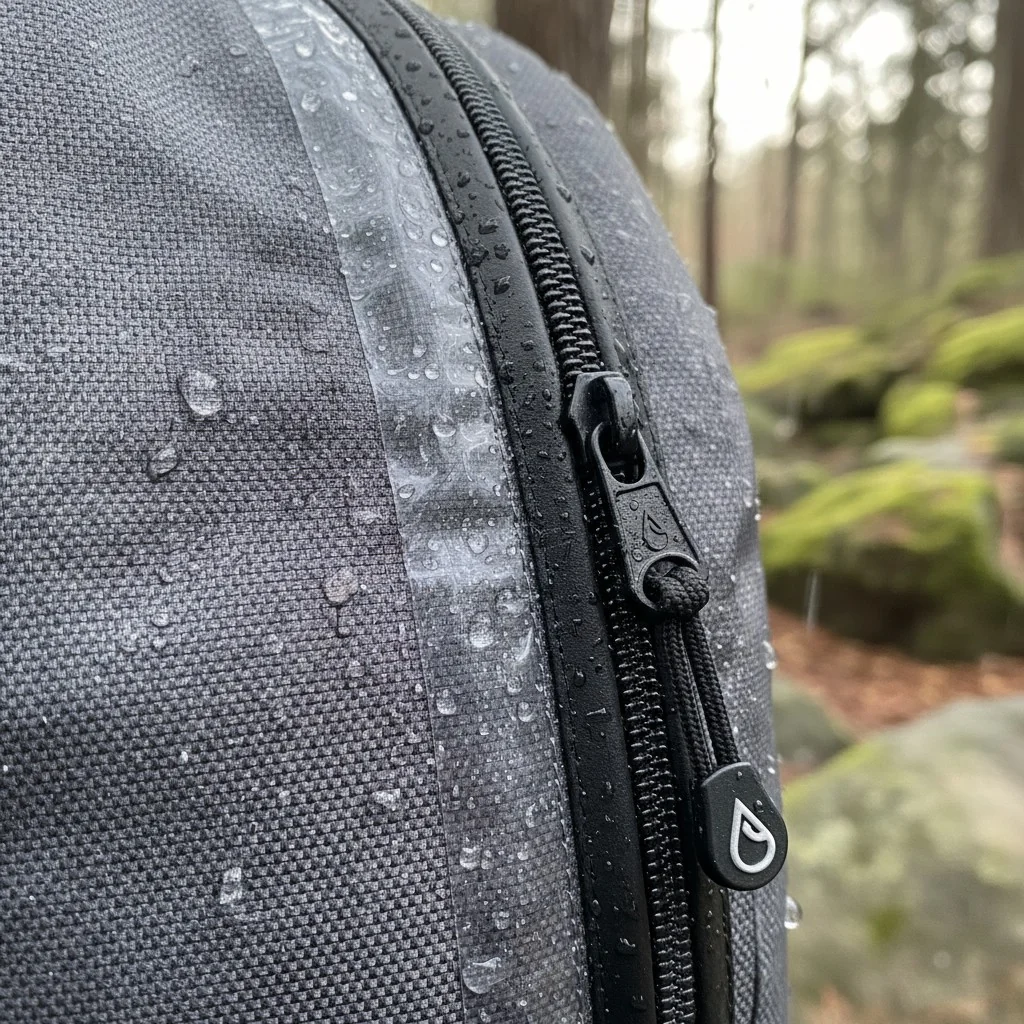
This is where manufacturing expertise really shines. A great design can be ruined by poor construction. When I’m developing a new bag, I pay obsessive attention to these details. A tiny gap in a seam can compromise the entire product.
Solutions for Sealing Seams
A standard stitched seam is the enemy of a waterproof bag. Every stitch is a potential leak. To solve this, we have two main techniques. Seam taping is the most common method. We apply a special waterproof tape over the stitched seams on the inside of the bag using heat and pressure. It effectively plugs all the holes. The gold standard, however, is welded seams. This process uses radio frequency to fuse two thermoplastic fabric panels together without any stitching. It creates a single, continuous piece of material that is completely waterproof and incredibly strong.
Zippers: The Open Door for Water
Zippers are another major weak point. A standard zipper offers almost no water resistance. For better protection, we use water-resistant zippers, like the YKK AquaGuard. These have a polyurethane coating over the zipper tape that helps keep water out. For fully waterproof bags, we use special waterproof zippers that have an interlocking design, creating a true seal that can even withstand submersion.
| Component | Standard Construction | Waterproof Solution |
|---|---|---|
| Seams | Stitched with thread | Taped Seams or Welded Seams |
| Zippers | Standard coil or tooth zipper | PU-coated tape (Water-Resistant) or interlocking design (Waterproof) |
[claim claim=”Welded seams are stronger and more waterproof than taped seams.” istrue=”true” explanation=”Welding fuses the fabric panels into one piece, eliminating stitch holes entirely. This creates a stronger, more durable, and completely waterproof bond compared to taping over stitches.”]
[claim claim=”Any zipper can be made waterproof by adding a storm flap over it.” istrue=”false” explanation=”A storm flap provides extra protection but does not make a standard zipper waterproof. In heavy, wind-driven rain or submersion, water will still get through the zipper teeth.”]
What Backpack Features Help Protect Against Heavy Rain or Submersion?
When facing a serious downpour or a fall into a river, a normal backpack is useless. Your gear needs maximum protection. Here are the features that truly deliver.
For extreme conditions, look for roll-top closures, which create a more secure seal than zippers. Other key features include fully waterproof linings, welded seams, and hydrophobic exterior materials. Some high-end packs even integrate an internal dry bag system for double protection.

I first saw the power of these features when I was working on a line of bags for a water sports brand. We learned that for true waterproof performance, you have to design the bag from the ground up with water in mind. It’s not just about the fabric; it’s about the entire system.
The Power of the Roll-Top Closure
This is one of the simplest and most effective designs for waterproofing. Instead of a zipper, the top of the bag is open. You simply roll it down tightly three or four times and clip the ends together. This creates a physical barrier that water cannot get through, even during brief submersion. It’s a brilliant, low-tech solution that is incredibly reliable.
Linings and Integrated Systems
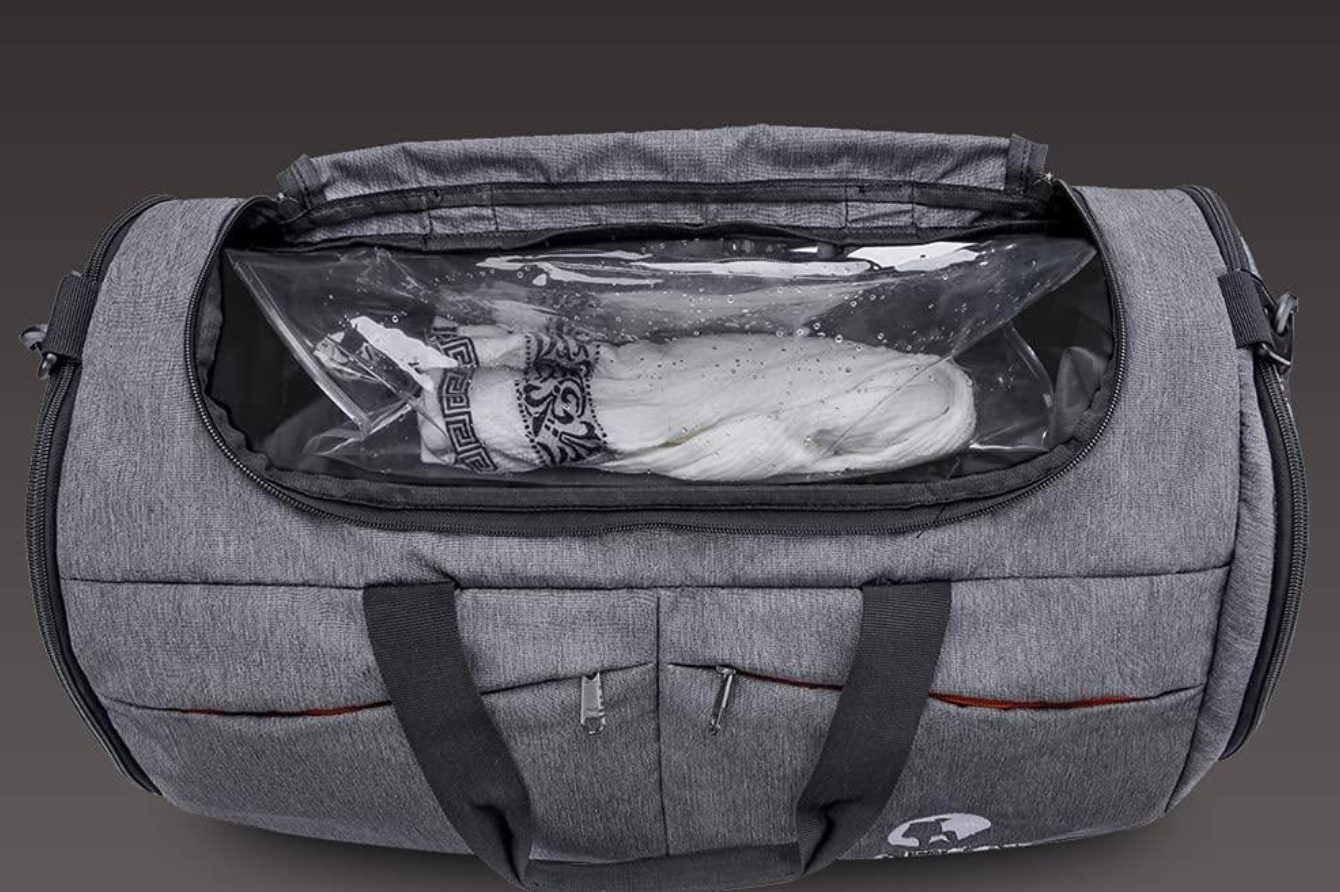
Some bags use a "bag-in-a-bag" approach. They might have a tough, abrasion-resistant exterior but feature a fully waterproof internal lining that is seam-sealed. This adds a layer of redundancy. Another popular feature is an integrated rain cover7. This is a small cover tucked away in its own pocket, ready to be deployed to shield the entire pack from a sudden storm. It’s a great selling point for a water-resistant bag.
| Feature | How It Works | Best For |
|---|---|---|
| roll-top closure8 | Creates a physical water barrier by folding the opening | Submersion, heavy rain, boating |
| Integrated Rain Cover | A deployable cover that shields the entire pack | Quick protection from sudden downpours |
| Waterproof Lining | An internal waterproof layer protects contents | Redundancy, protecting sensitive gear |
| Welded Seams | Fuses fabric panels, eliminating stitch holes | Ultimate waterproofing, durability |
[claim claim=”A roll-top closure is more waterproof than a waterproof zipper.” istrue=”true” explanation=”While waterproof zippers are effective, a properly secured roll-top closure creates a more robust seal against water pressure, especially during submersion, as there are no mechanical parts that can fail.”]
[claim claim=”An integrated rain cover makes the backpack itself waterproof.” istrue=”false” explanation=”A rain cover protects the backpack from rain but doesn’t make the pack itself waterproof. The back panel and shoulder straps are still exposed and can absorb water.”]
How Can You Make Your Hiking Backpack Waterproof?
Your favorite backpack isn’t ready for a storm. You don’t need to replace it. There are simple and effective ways to add serious water protection to any bag.
The easiest method is using a backpack rain cover. For internal protection, use waterproof dry bags9 or stuff sacks to organize and protect your gear. You can also refresh the bag’s DWR coating with a spray-on treatment and use a seam sealer on the inside seams.
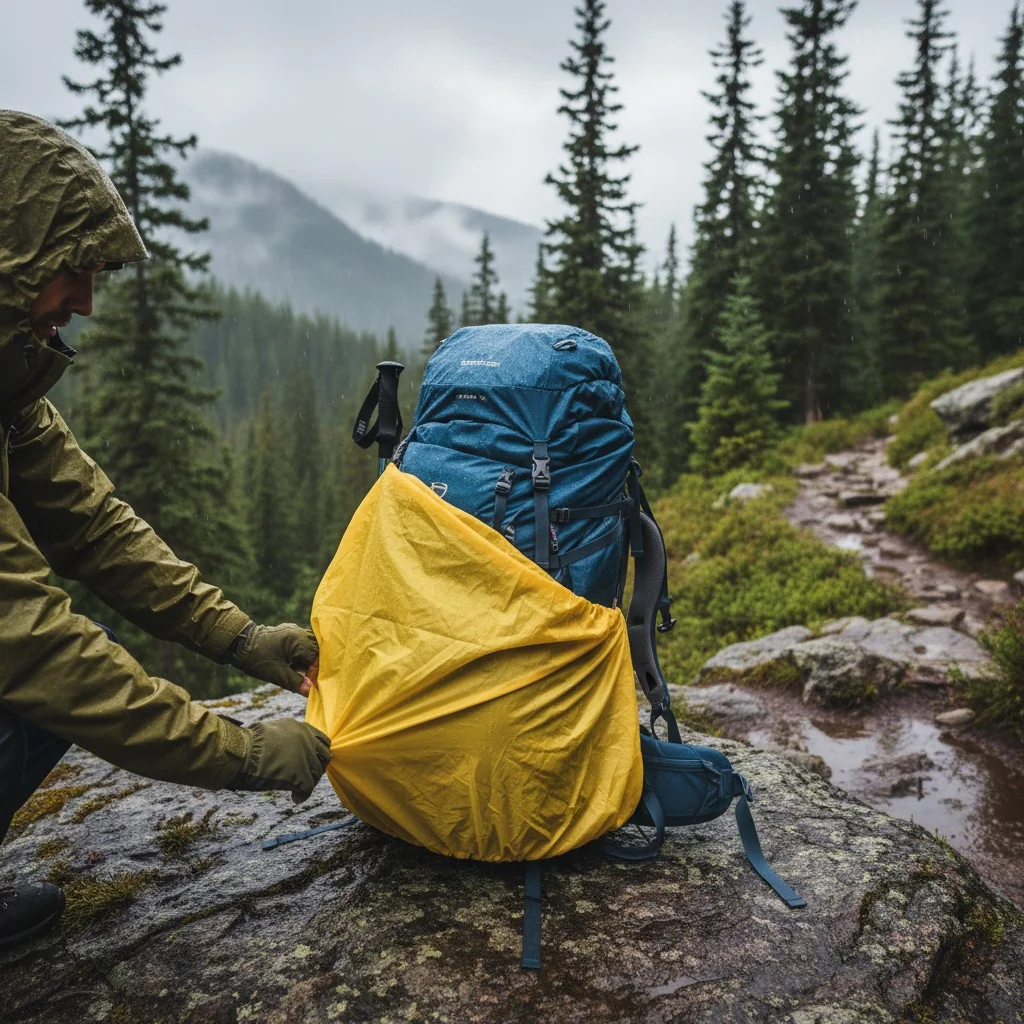
This is a great area for brands to create value. Instead of just selling a backpack, you can offer a complete weather protection system. Madison could easily bundle her backpacks with a matching rain cover or a set of internal dry bags, creating a higher-value package for her customers.
External Solutions: The First Barrier
The simplest fix is a backpack rain cover. It’s a lightweight, elasticated cover that you pull over your entire pack. It’s cheap, effective, and packs down small. Another great tip is to reapply the DWR coating. Over time, the factory finish wears off. You can buy a spray-on treatment that restores the fabric’s ability to repel water.
Internal Solutions: The Last Stand
This is my personal favorite method. I use waterproof dry bags inside my main backpack. I put my clothes in one, my electronics in another, and my sleeping bag in a third. This way, even if my main pack gets completely soaked, my critical gear stays perfectly dry. You can also use a single large pack liner, which is basically a giant, heavy-duty dry bag that lines the entire main compartment.
| Method | Cost | Effort | Effectiveness |
|---|---|---|---|
| Rain Cover | Low | Low | High (for rain) |
| Dry Bags (Internal) | Medium | Low | Very High (submersion-proof) |
| DWR Re-application | Low | Medium | Medium (restores resistance) |
| Seam Sealing | Low | High | High (for seams) |
[claim claim=”Using dry bags inside your backpack is one of the most reliable ways to keep gear dry.” istrue=”true” explanation=”Dry bags provide a completely waterproof, submersible barrier for your gear, acting as a failsafe even if your main backpack gets completely soaked.”]
[claim claim=”A trash bag works just as well as a professional pack liner.” istrue=”false” explanation=”While a trash bag is better than nothing in an emergency, it’s not durable and can easily be punctured by gear inside your pack, rendering it useless. Proper pack liners are made of thick, puncture-resistant material.”]
Conclusion
Not all hiking backpacks are waterproof, but many offer sufficient water-resistance for light rain or wet conditions. If you’re heading into more extreme weather, or if your gear needs to stay completely dry, it’s worth investing in a backpack that is specifically designed for waterproofing, or using waterproof covers and dry bags as additional protection.
Choosing the right hiking backpack depends on your specific needs and the conditions you’ll be facing. If you’re hiking in areas prone to heavy rain or unpredictable weather, a truly waterproof backpack or additional protective gear is a smart choice to ensure your gear stays dry and functional.
References
-
Understanding the difference between water-resistant and waterproof can help you choose the right gear for your adventures. ↩
-
Explore the materials that make backpacks truly waterproof to ensure your gear stays dry in extreme conditions. ↩
-
Learn how DWR coating enhances water resistance and its limitations in heavy rain. ↩
-
Explore the features that enhance a backpack’s waterproof performance for extreme conditions. ↩
-
Discover how seams and zippers can compromise waterproofing and what solutions exist. ↩
-
Discover how waterproof zippers can enhance the waterproofing of your backpack. ↩
-
Learn about integrated rain covers and how they provide additional protection against rain. ↩
-
Find out why roll-top closures are effective for waterproofing and how they compare to zippers. ↩
-
Understand the benefits of using waterproof dry bags to protect your gear from water damage. ↩