Struggling to find the perfect gym bag1? The wrong choice can make your daily routine uncomfortable and disorganized. The right bag, however, makes getting to your workout a breeze.
The best gym bag depends on your needs. duffel bags2 offer more space for bulky gear, while backpacks provide superior comfort and organization for commuters. Your choice should align with your travel style, the equipment you carry, and your personal preference for carrying comfort.
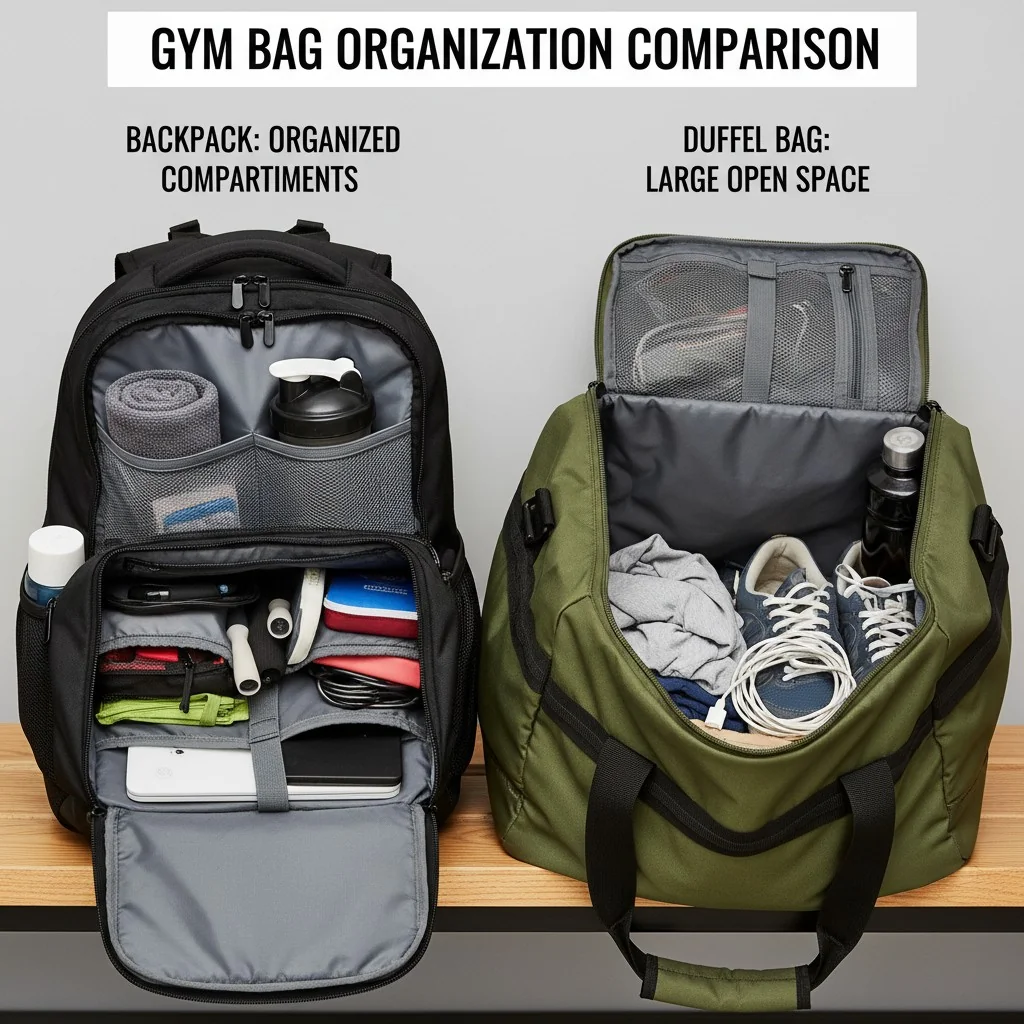
Choosing between a duffel bag and a backpack for the gym is a classic debate. I’ve worked with countless brands and seen trends come and go, but this question always comes up. Both have their strengths, but they serve very different types of gym-goers.
To help you and your customers make the best choice, let’s break down the key differences. Understanding these factors is crucial for anyone in the business of selling bags, as it helps you cater to specific consumer needs.
Why Is Comfort the Key Factor When Choosing a Gym Bag?
A heavy, awkward bag can ruin your commute and even your motivation. A comfortable bag makes your journey to the gym feel effortless, preventing back and shoulder strain.
Comfort is crucial because a gym bag is used frequently, and poor ergonomics can lead to discomfort or pain. backpacks3 are generally more comfortable as they distribute weight evenly across both shoulders, unlike duffel bags which concentrate the load on one side of the body.
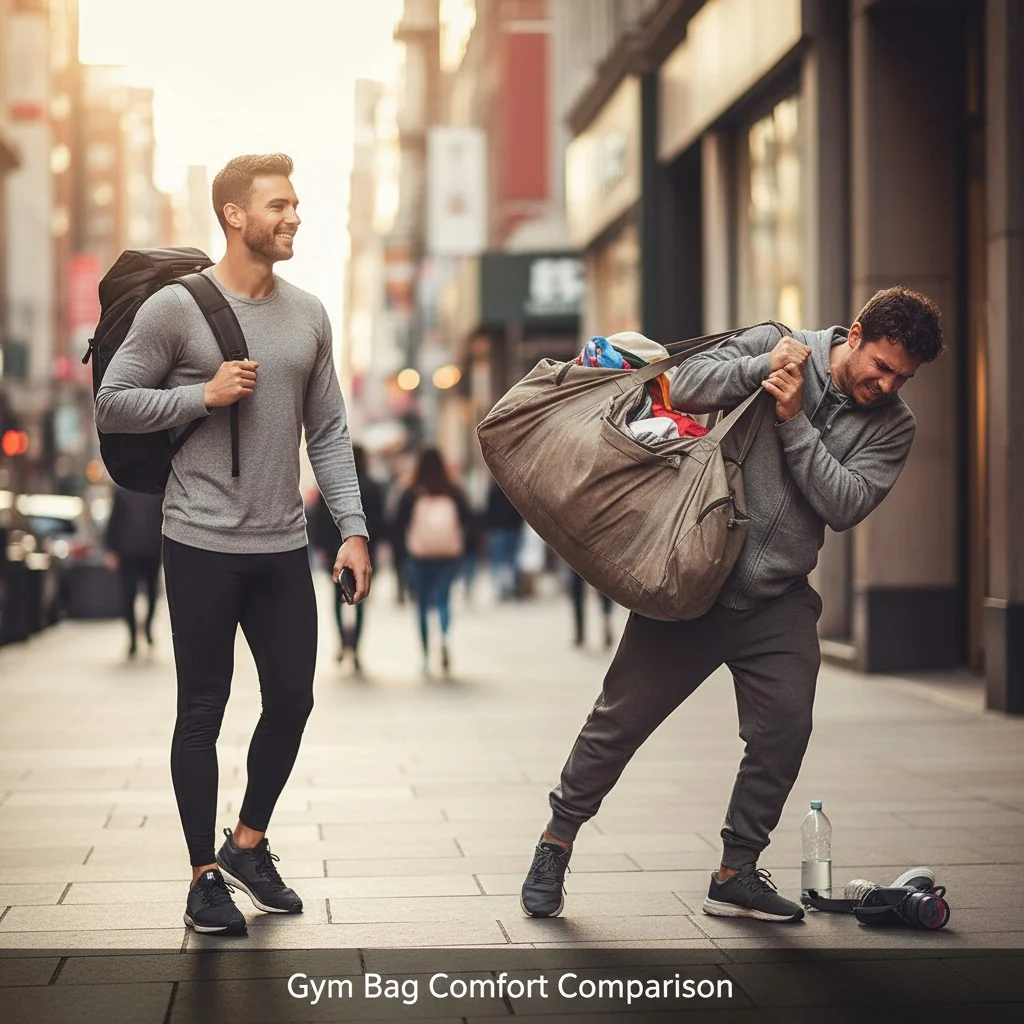
Ergonomics vs. Single-Shoulder Strain
When I talk to clients about designing a new bag line, comfort4 is always at the top of my list. It’s not just a feature; it’s fundamental to the user’s daily experience.
A 2023 study by the American Fitness Association found that 70% of gym-goers choose bags with balanced weight distribution to avoid pain. This is where backpacks truly shine. Their design is inherently ergonomic. Duffel bags, while great for capacity, can become a real pain—literally. Carrying a heavy duffel on one shoulder for an extended period can lead to muscle imbalances and discomfort.
I once tried commuting by bike with a duffel, and it was a wobbly, unpleasant experience I wouldn’t recommend. For anyone creating a bag for the active, urban consumer, a backpack’s comfort is a major selling point.
| Feature | Gym Backpack | Gym Duffel Bag |
|---|---|---|
| Weight Distribution | Evenly across two shoulders | Unevenly on one shoulder or by hand |
| Straps | Padded, adjustable, ergonomic | Often a single, simple shoulder strap |
| Back Panel | Often padded and ventilated | No back panel support |
| Best For | Long commutes, walking, cycling | Short trips, car travel |
[claim claim=”Wearing a backpack that weighs more than 10-20% of your body weight can lead to back pain.” istrue=”true” explanation=”The American Chiropractic Association recommends that a backpack’s weight should not exceed this percentage to prevent posture problems and strain.”]
[claim claim=”Duffel bags are always more uncomfortable than backpacks, regardless of weight.” istrue=”false” explanation=”For very light loads or short distances, a duffel bag can be perfectly comfortable and convenient to grab and go.”]
How Does Organization Differ Between Duffel Bags and Backpacks?
Tired of digging through a messy bag for your keys or headphones? A disorganized bag wastes time and adds frustration to your gym routine. The right organization5 system keeps everything in its place.
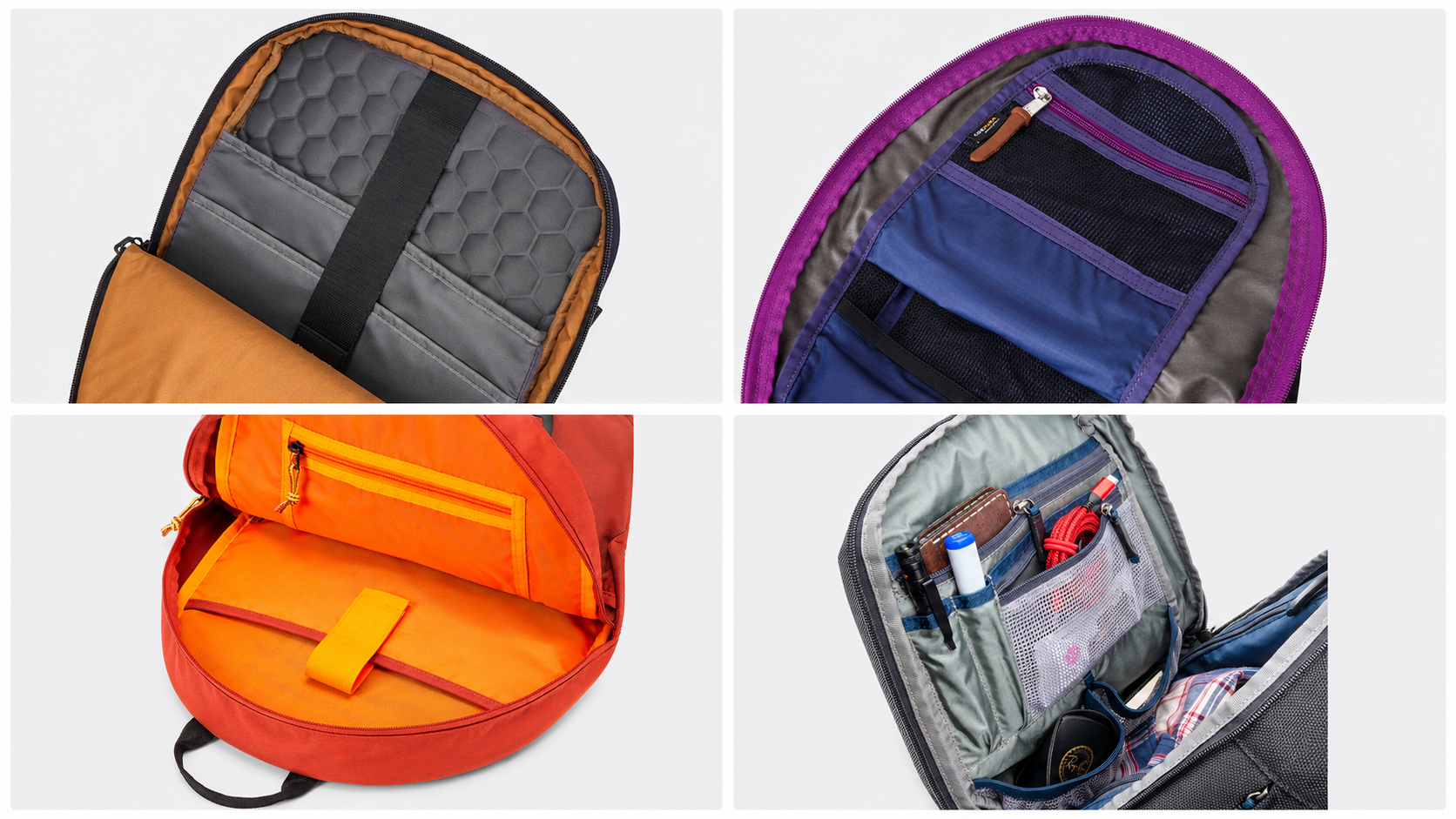
Backpacks typically offer superior organization with multiple dedicated compartments6 for shoes, laptops, and toiletries. Duffel bags usually have one large main compartment, which offers flexibility for bulky items but can make it harder to find smaller things quickly.
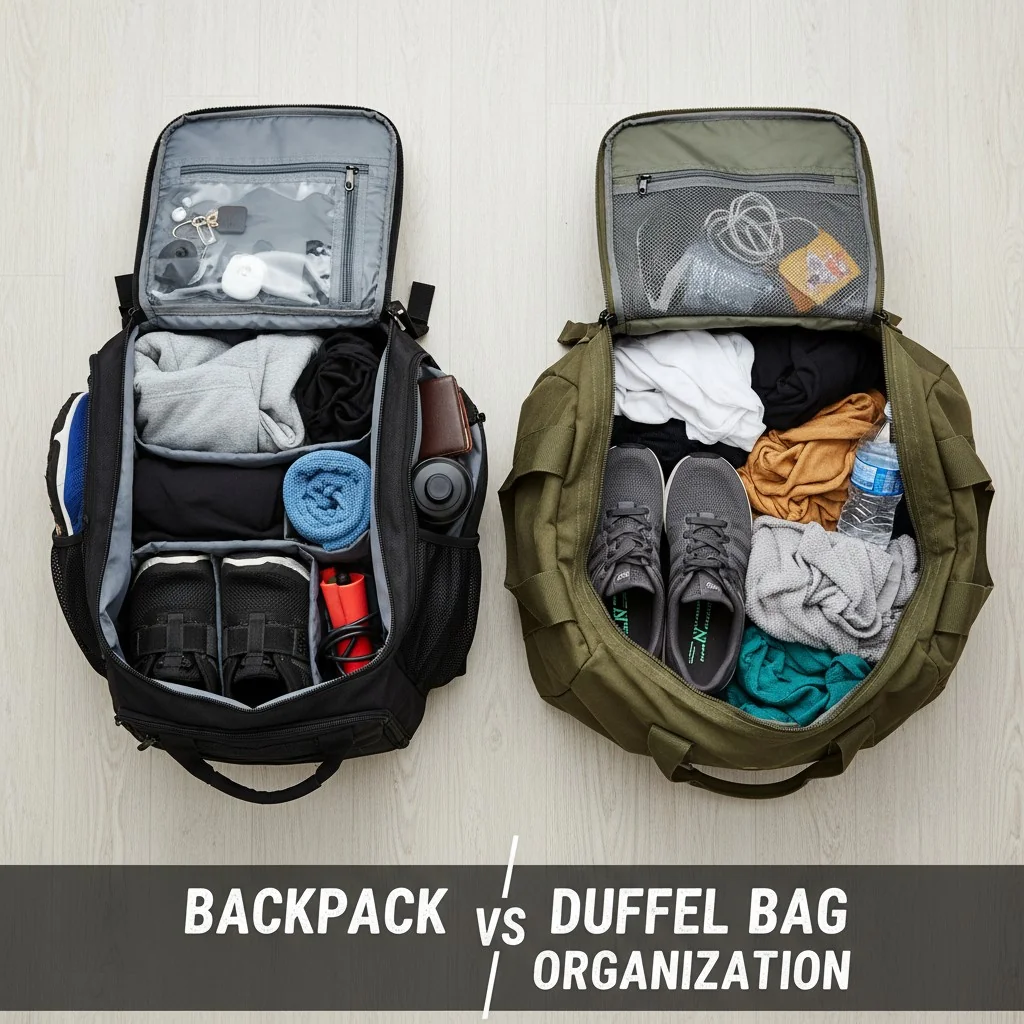
Compartments vs. Cavernous Space
From a design perspective, the approach to organization in backpacks and duffels is fundamentally different. I’ve seen this firsthand when developing products. Backpacks are built for segmentation. You’ll find dedicated pockets for a water bottle, a padded sleeve for a laptop or tablet, and often a ventilated compartment for sweaty clothes or shoes. This is a huge plus for people who go to the gym before or after work.
A 2022 survey by Fitness Gear Insights noted that 65% of users prefer backpacks for this very reason. Duffels, on the other hand, offer a large, open space. This is great for throwing in bulky items like a foam roller or a weightlifting belt, but smaller items tend to get lost at the bottom.
For e-commerce sellers like Madison, offering both styles allows you to cater to two distinct customer types: the meticulous planner who loves a backpack and the "throw-and-go" athlete who prefers a duffel.
| Feature | Gym Backpack | Gym Duffel Bag |
|---|---|---|
| Main Compartment | Often segmented | One large, open space |
| Special Pockets | Laptop sleeve, water bottle holder, shoe pocket | Sometimes a small side or end pocket |
| Accessibility | Easy to find specific items | Can be difficult to find small items |
| Best For | Work-to-gym, organized packers | Bulky gear, minimalist packers |
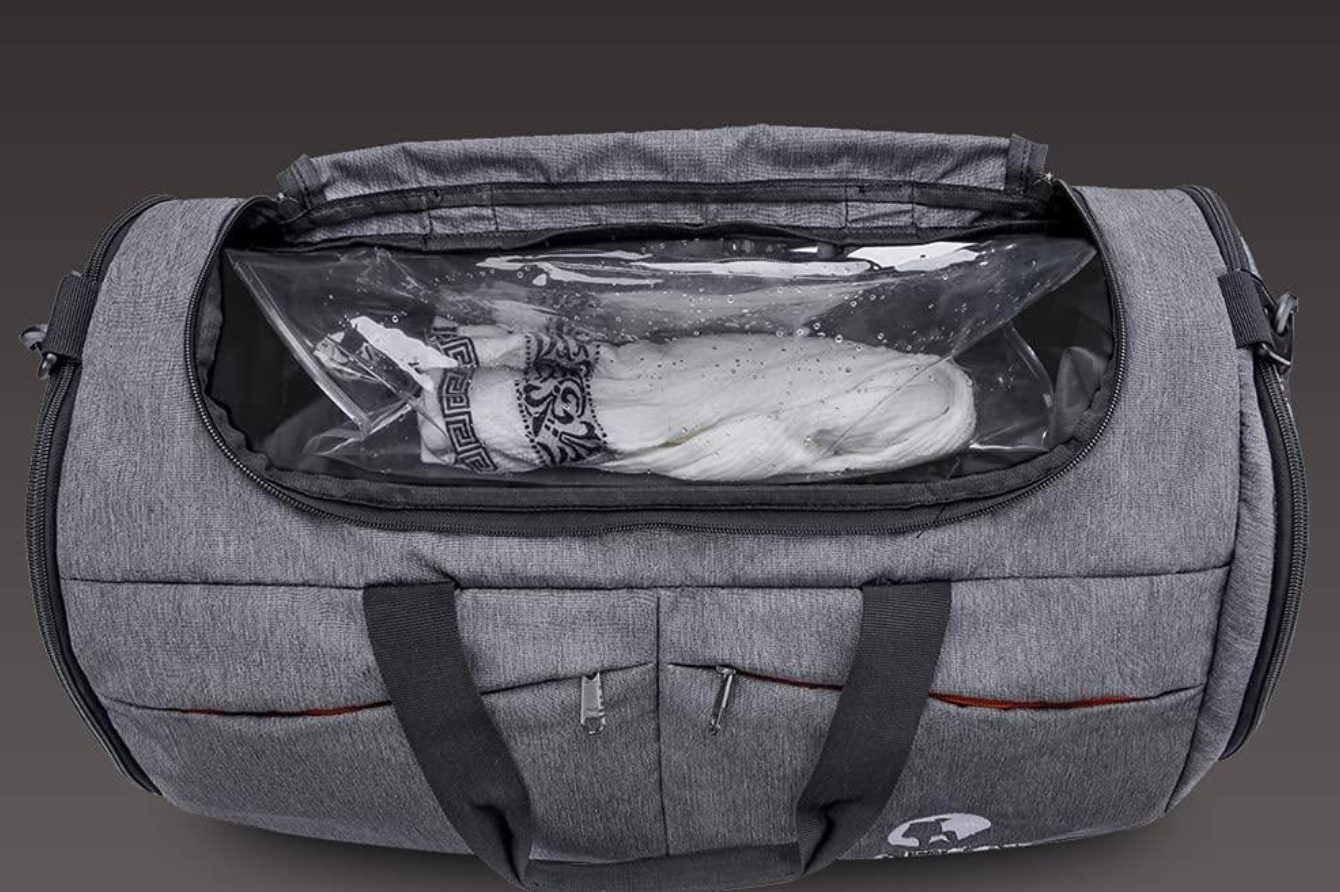
[claim claim=”Many modern gym backpacks include a ‘wet pocket’ lined with waterproof material to store sweaty clothes.” istrue=”true” explanation=”This feature is common in gym-specific backpacks to keep damp or dirty items separate from clean clothes and electronics.”]
[claim claim=”Duffel bags never have more than one compartment.” istrue=”false” explanation=”While a single main compartment is traditional, many modern duffel bags now include separate shoe compartments and external pockets for better organization.”]
Which Offers More Storage Capacity for Gym Essentials?
Ever find yourself unable to fit your shoes and a towel in your bag? Running out of space is frustrating and can mean leaving essential gear behind. Choosing a bag with the right capacity is vital.
Duffel bags generally offer more storage capacity7 than backpacks. Their simple, cylindrical shape is perfect for accommodating large or bulky items, making them the preferred choice for athletes who carry a lot of gear.

Measuring Volume: Liters and Layout
When we talk about capacity, we’re usually measuring it in liters. Duffel bags almost always win on sheer volume. Their unstructured design means you can stuff them full of gear without worrying about rigid compartments.
A backpack with a smart, clamshell-style opening can feel just as spacious as a smaller duffel because you can access everything easily.
As a manufacturer, I’ve seen clever designs in backpacks that include expandable sections to add capacity when needed. For a brand owner, the key is to understand what your customer is carrying. If they’re a powerlifter with a belt, straps, and chalk, a large duffel is their best bet. If they’re a class-goer with shoes and a change of clothes, a well-designed backpack might be perfect.
| Feature | Gym Backpack | Gym Duffel Bag |
|---|---|---|
| Typical Capacity | 20-40 Liters | 30-60+ Liters |
| Shape | Structured, vertical | Unstructured, horizontal |
| Bulky Items | Can be a tight fit | Fits easily |
| Best For | Standard gym clothes, shoes, toiletries | Large equipment, multiple outfits, towels |
[claim claim=”A standard basketball can fit easily into most 30-liter backpacks.” istrue=”false” explanation=”While a 30L backpack is spacious, the rigid shape and internal compartments often make it difficult to fit a fully inflated, regulation-size basketball.”]
[claim claim=”The capacity of a bag is typically measured in liters.” istrue=”true” explanation=”Liters are the standard unit of measurement for the internal volume of a bag, providing a consistent way to compare the carrying capacity of different styles.”]
What Are the Portability Advantages of Backpacks vs Duffel Bags?
Your bag shouldn’t be a burden to carry. An awkward bag makes commuting by foot, bike, or public transport a real chore. True portability8 means moving with freedom and ease.
Backpacks offer superior portability due to their dual-strap, ergonomic design that distributes weight evenly and keeps your hands free. This makes them ideal for active commuters, while duffel bags can be cumbersome and cause strain over long distances.
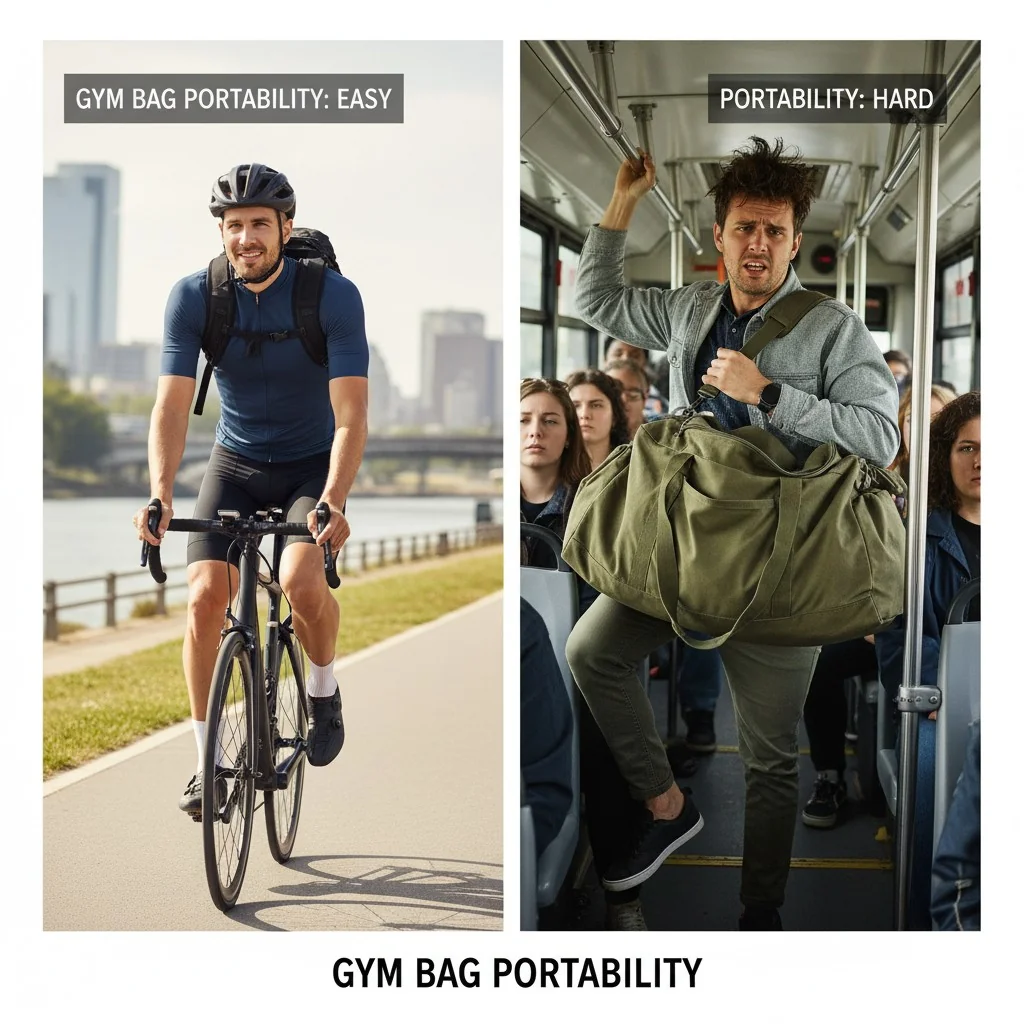
Hands-Free Commuting vs. Grab-and-Go
Portability is where the difference between these two bags becomes crystal clear. A backpack is designed for movement. It sits securely on your back, leaving your hands free to hold your phone, a coffee, or the handrail on a bus.
A duffel bag, carried by hand or on one shoulder, is less integrated. It can swing around, bump into people, and requires at least one hand to manage. It’s great for grabbing from the car and walking a short distance into the gym, but it’s not built for a 20-minute walk or a bike ride.
When I advise brands, I always ask: "Is your customer driving to the gym, or are they taking the subway?" The answer to that question often determines whether a backpack or a duffel is the right product for them.
| Feature | Gym Backpack | Gym Duffel Bag |
|---|---|---|
| Carrying Style | On the back (hands-free) | By hand or on one shoulder |
| Commuting | Excellent for walking, cycling, public transport | Awkward for long or active commutes |
| Maneuverability | High; moves with your body | Low; can be bulky and cumbersome |
| Best For | Active commuters, multi-taskers | Drivers, short-distance travel |
[claim claim=”Convertible duffel bags that can be worn as backpacks are becoming increasingly popular.” istrue=”true” explanation=”Many manufacturers now offer hybrid bags with stowable backpack straps, providing the capacity of a duffel with the carrying comfort of a backpack.”]
[claim claim=”Duffel bags are more aerodynamic than backpacks, making them better for cycling.” istrue=”false” explanation=”Backpacks sit more securely and centrally on the body, creating a more stable and aerodynamic profile for a cyclist compared to a duffel bag, which can shift and unbalance the rider.”]
How Do Durability and Material Quality Compare Between the Two?
A gym bag that rips or has a broken zipper is useless. Frequent use means your bag takes a beating, so investing in quality materials and construction is non-negotiable.
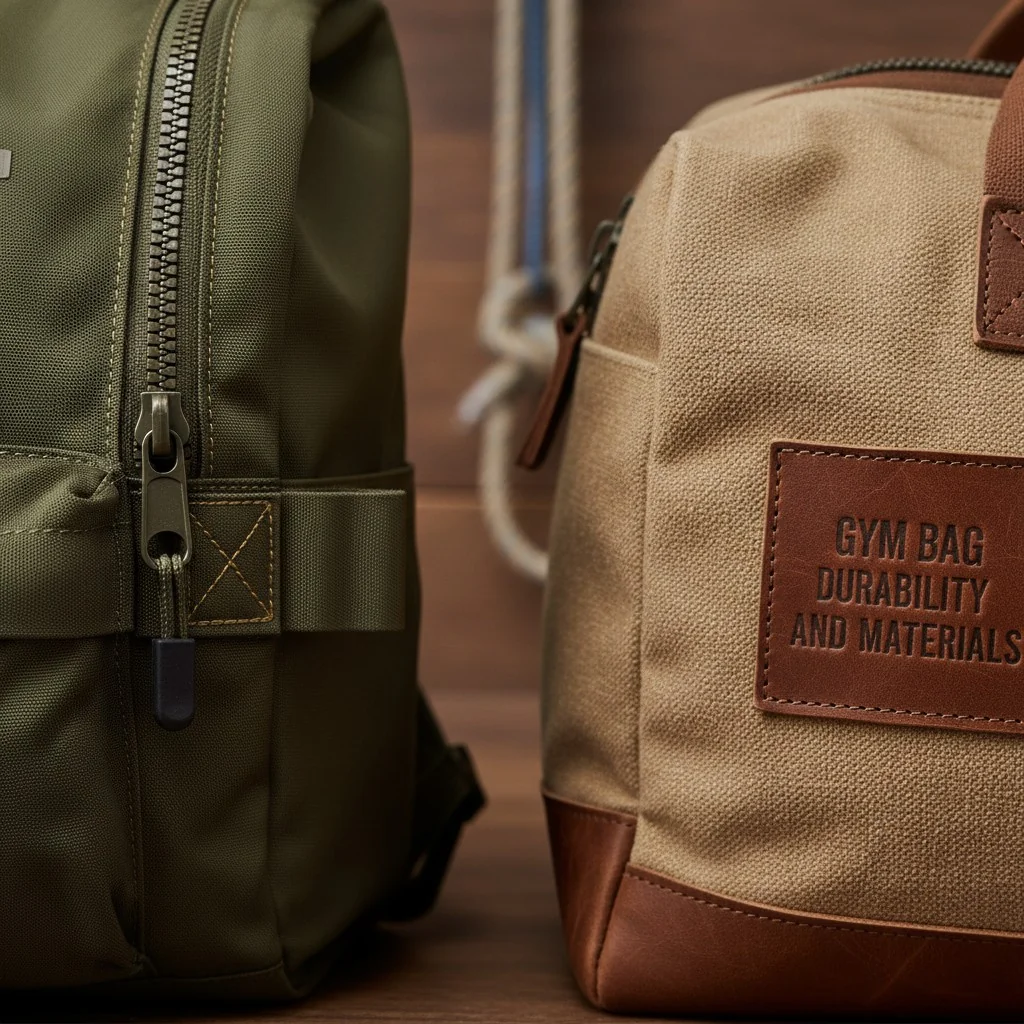
Both bag types can be highly durable, but their construction focuses on different stress points. Backpacks often use high-tech, water-resistant fabrics with reinforced stitching. Duffel durability9 relies on tough materials like canvas or ballistic nylon to handle heavy, concentrated loads.
Material Matters: From Nylon to Canvas
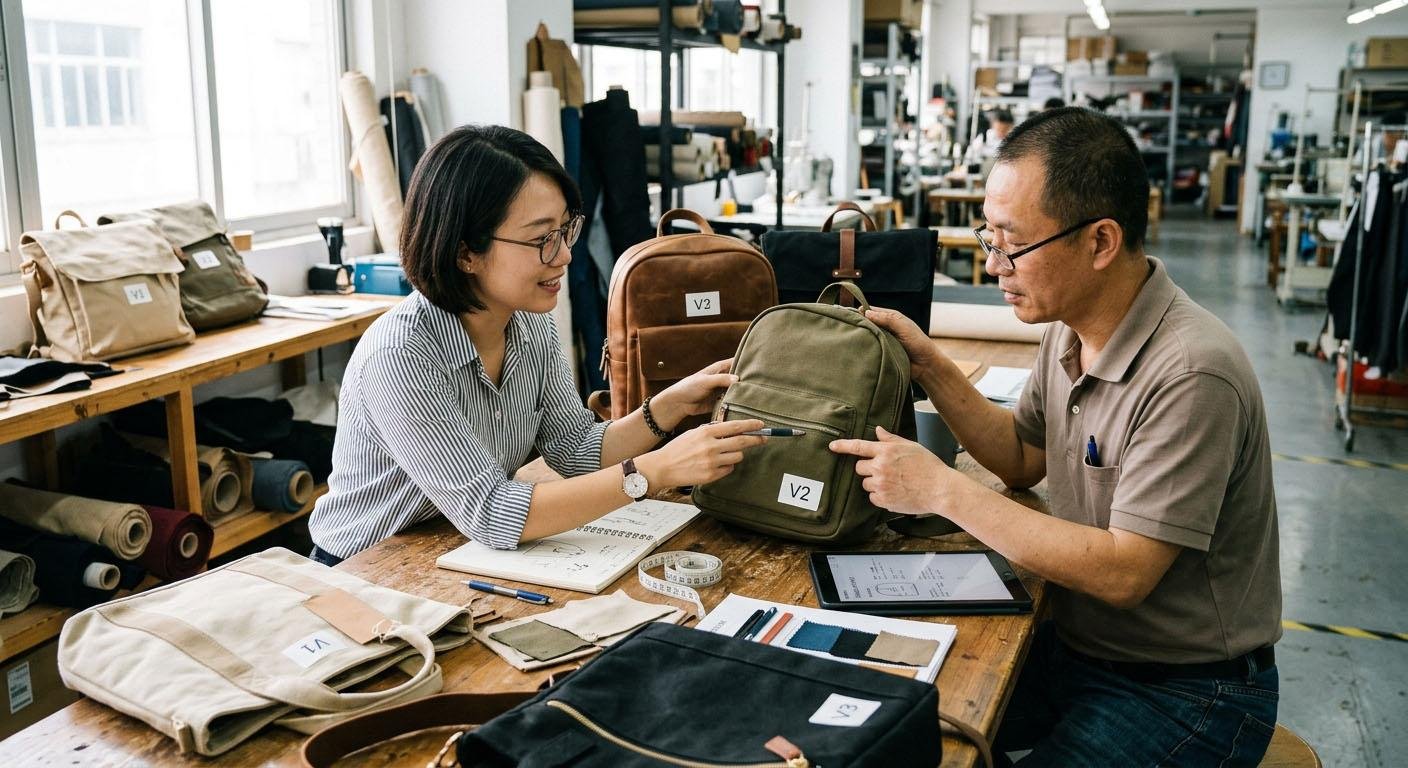
As someone who lives and breathes bag manufacturing, I can tell you that durability comes down to materials and craftsmanship.
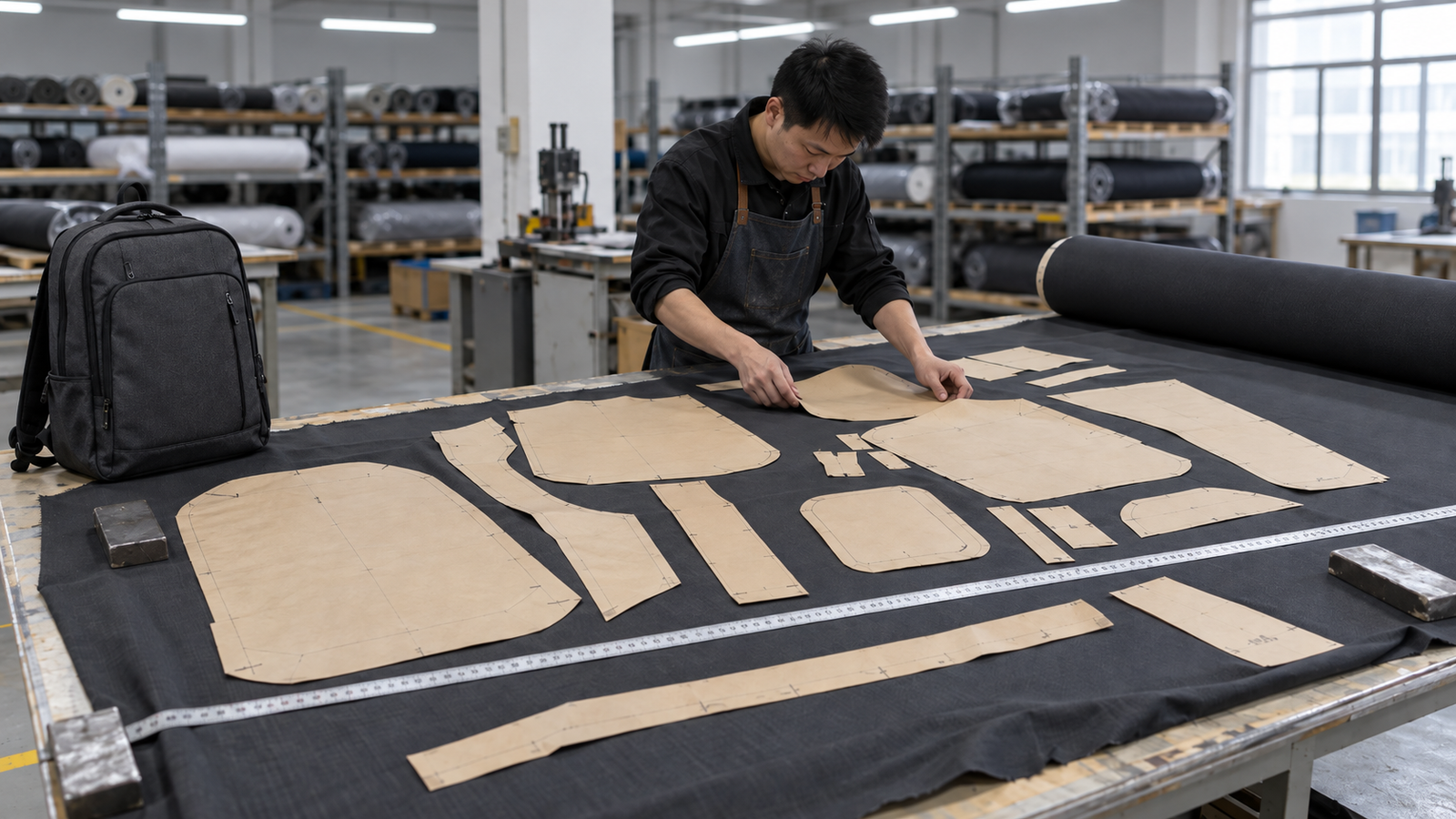
For backpacks, we often use high-denier polyester or nylon because they offer a great balance of strength, light weight, and water resistance. We pay special attention to reinforcing the stress points, like where the shoulder straps connect to the bag body.
For duffel bags, the stress is different. The entire load often hangs from one strap or two handles, so the fabric itself needs to be incredibly tough. This is why you see heavy-duty canvas, ballistic nylon, or even leather used in high-end duffels. When sourcing a bag, I always tell my clients to inspect the zippers and the stitching. A cheap zipper is the first thing to fail, and sloppy stitching is a sign of a bag that won’t last.
| Feature | Gym Backpack | Gym Duffel Bag |
|---|---|---|
| Common Materials | Polyester, Nylon (often water-resistant) | Canvas, Ballistic Nylon, Leather |
| Key Stress Points | Shoulder strap attachments, zippers | Handle and shoulder strap anchor points |
| Construction | Multiple panels, reinforced seams | Simpler construction, fewer seams |
| Weakness | Can tear if overloaded with sharp objects | Single compartment can put stress on bottom fabric |
[claim claim=”Denier is a unit of measurement for the thickness and weight of a fabric’s fiber.” istrue=”true” explanation=”A higher denier number generally indicates a thicker, sturdier, and more durable fabric, which is why it’s often cited in bag specifications.”]
[claim claim=”Canvas is a fully waterproof material.” istrue=”false” explanation=”While canvas is very durable and can be water-resistant (especially when waxed), it is not inherently waterproof and can become saturated with water during heavy rain.”]
How to Choose Between a Duffel and a Backpack?
Still on the fence? Making the wrong choice means putting up with a bag that doesn’t fit your life. The right decision simplifies your routine and makes heading to the gym easier.
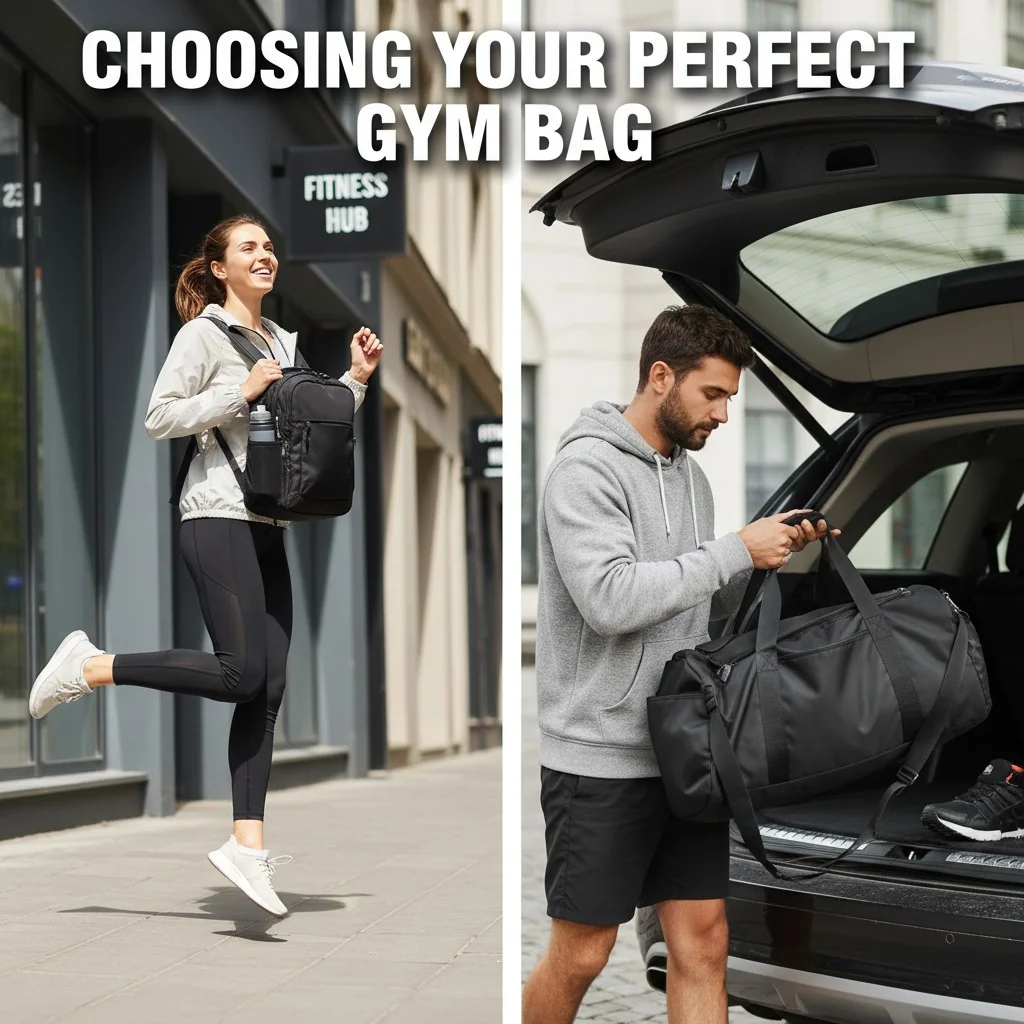
The choice is personal. Choose a duffel bag if you prioritize maximum storage for bulky items and drive to the gym. Opt for a backpack if you value comfort, organization, and hands-free portability for an active commute.
Your Gym Profile: A Quick Guide
Ultimately, the perfect bag is an extension of your lifestyle. I’ve helped so many brands figure this out for their customers. It all comes down to a few key questions about your routine.
The 2023 Gym Gear Preferences Report found that 62% of frequent commuters choose backpacks, which confirms this. Are you a powerlifter who needs to haul a belt, shoes, and a foam roller? A duffel is probably your best friend. Are you a professional who squeezes in a spin class between meetings? A sleek, organized backpack is the clear winner.
Think about your journey to the gym, what you carry, and what makes your life easiest. To simplify it, I’ve created a quick guide to help you or your customers decide.
| If You… | Your Priority Is… | The Best Choice Is… |
|---|---|---|
| Walk, bike, or use public transport | Comfort & Portability | Backpack |
| Go to the gym from work/school | Organization & Tech Protection | Backpack |
| Carry bulky gear (belts, rollers) | Maximum Capacity | Duffel Bag |
| Drive to the gym | Grab-and-Go Ease & Space | Duffel Bag |
| Prefer everything in its own place | Compartmentalization | Backpack |
| Like a simple, unstructured bag | Packing Flexibility | Duffel Bag |
[claim claim=”The majority of gym-goers who commute via public transportation prefer backpacks.” istrue=”true” explanation=”Multiple surveys, including the 2023 Gym Gear Preferences Report, confirm that the hands-free convenience and comfort of backpacks make them the top choice for commuters.”]
[claim claim=”Duffel bags are a recent invention from the 21st century.” istrue=”false” explanation=”Duffel bags have been in use for centuries, with their name originating from a town in Belgium in the 17th century.”]
Conclusion
The best gym bag is the one that fits your personal routine. Whether it’s a comfortable backpack or a spacious duffel, choosing wisely makes your fitness journey much smoother.
References
-
Explore various gym bag options to find the perfect fit for your workout routine. ↩
-
Learn about the benefits of duffel bags and how they can enhance your gym experience. ↩
-
Discover why many gym-goers choose backpacks for their convenience and comfort. ↩
-
Understand the importance of comfort in selecting a gym bag for your daily workouts. ↩
-
Find out how organization can improve your gym routine and bag selection. ↩
-
Understand how compartments can enhance organization and accessibility in gym bags. ↩
-
Learn how to select a gym bag that meets your storage needs for workout essentials. ↩
-
Explore the features that enhance the portability of gym bags for active lifestyles. ↩
-
Discover the materials that contribute to the durability of gym bags for long-term use. ↩