Struggling to create a product with lasting, multi-generational appeal? You might be overlooking the powerful lessons hidden in simple character branding, a strategy that could transform your business.
The enduring love for Hello Kitty backpacks stems from a masterclass in character-driven branding1. Sanrio has built a deep emotional connection that makes the character a nostalgic icon for parents and a trendy, must-have symbol for their children, driving consistent sales and brand loyalty.
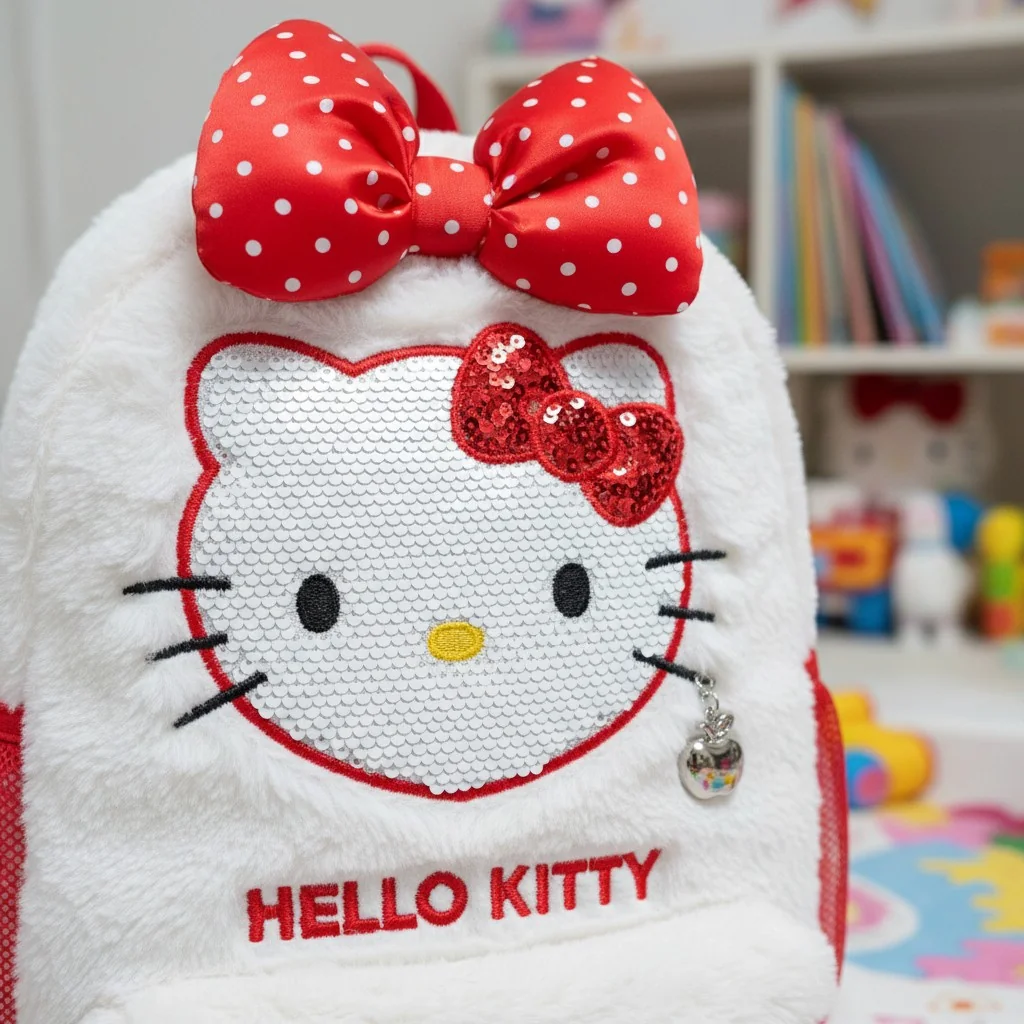
As a brand owner, you’re always looking for the secret sauce that makes a product not just sell, but become a cultural icon. I’ve spent years in the bag industry, and I’ve seen firsthand how powerful a strong character can be. The Hello Kitty phenomenon isn’t just about a cute cat; it’s a case study in marketing, design, and distribution that any e-commerce brand can learn from. Let’s break down the business strategy behind this global success story.
[claim claim=”Hello Kitty’s official name is Kitty White.” istrue=”true” explanation=”According to her official Sanrio biography, her full name is Kitty White, and she was born in the suburbs of London, England.”]
[claim claim=”Hello Kitty was originally marketed only to young children.” istrue=”false” explanation=”While popular with children, the first Hello Kitty product was a vinyl coin purse introduced in 1974, which was initially marketed to a teen and young adult audience in Japan.”]
Why Do Kids Love Hello Kitty Backpacks So Much?
Confused by the decades-long power of a simple character? You might be overlooking a core branding lesson that could give your own product line a powerful emotional hook.
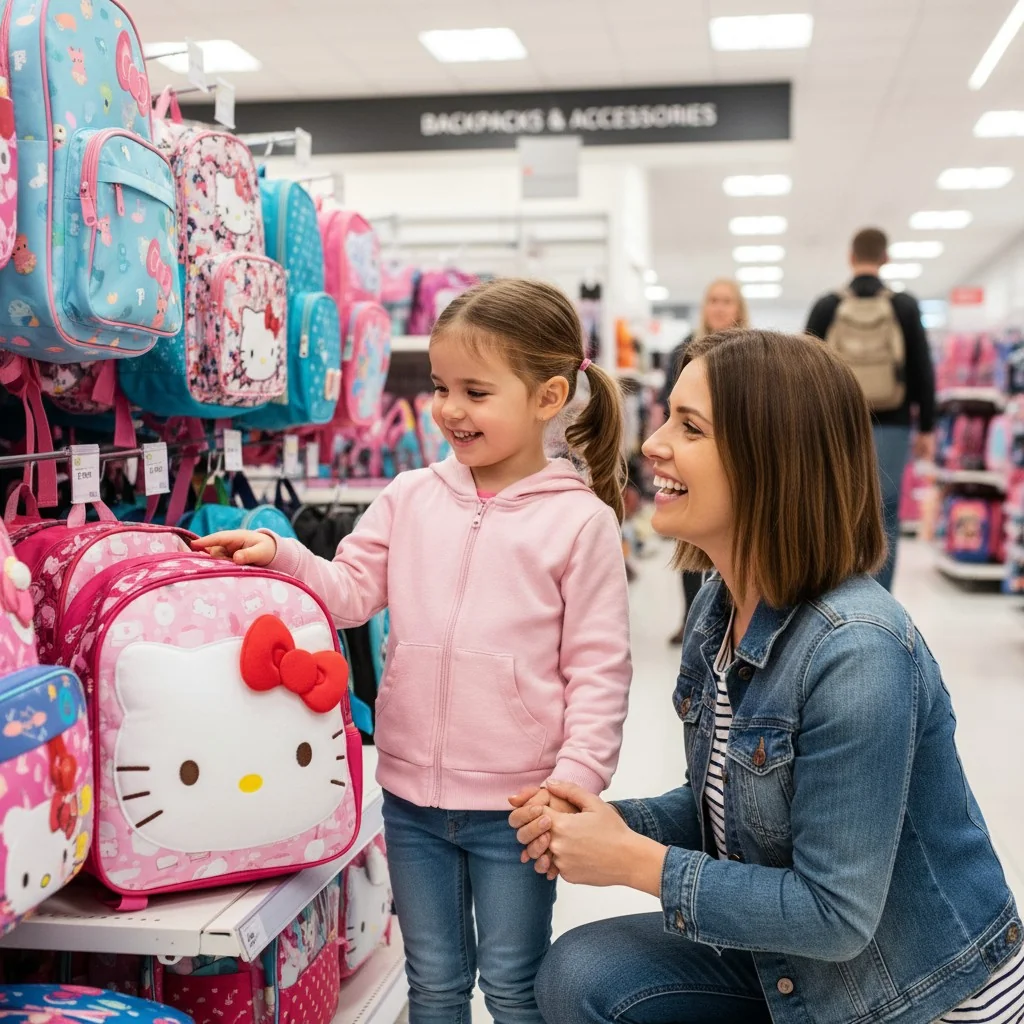
Kids love Hello Kitty because of the deep emotional connection2 Sanrio has built. This character-driven branding creates nostalgia for parents, who pass that affection on, and establishes Hello Kitty as a trendy, desirable icon for children, driving sales across countless product categories.
Deconstructing the Emotional Connection
From my experience working with brands, creating an emotional bond is the holy grail. It’s what turns a one-time buyer into a lifelong fan. Sanrio didn’t just create a character; they built a world and a feeling around Hello Kitty. This is the core of character-driven branding. It’s not just about putting a picture on a bag. It’s about what that picture represents: friendship, kindness, and a sense of belonging. This emotional attachment is what fuels repeat purchases.
A child who loves their Hello Kitty backpack is more likely to want the matching lunch box, stationery, and apparel. For your brand, this highlights the power of building a brand story or mascot that resonates on an emotional level.
| Consumer Experience | Industry Strategy |
|---|---|
| "My mom had one!" (Nostalgia) | multi-generational marketing3 |
| "It’s so cute and my friends have one." (Trend) | Peer-to-peer influence & social proof |
| "I want the whole set!" (Collection) | Cross-category product adoption |
[claim claim=”Sanrio, the company behind Hello Kitty, generates over $5 billion in annual retail sales from the character.” istrue=”false” explanation=”While Hello Kitty is a multi-billion dollar franchise, Sanrio’s total company revenue is typically in the hundreds of millions of dollars annually. The multi-billion dollar figure often refers to the total retail sales of all licensed products globally, not Sanrio’s direct revenue.”]
[claim claim=”Hello Kitty is one of the highest-grossing media franchises of all time.” istrue=”true” explanation=”As of the early 2020s, the Hello Kitty franchise has generated over $80 billion in lifetime retail sales, placing it second only to Pokémon.”]
What Design Features Make Hello Kitty Backpacks So Appealing to Children?
Are your product designs failing to create an emotional spark? The problem might be a focus on function over feeling, causing you to miss out on a highly engaged audience.
The appeal lies in "kawaii" (cute) aesthetics like pastel colors and character motifs, which are globally popular. The mix of practical features with emotional design elements like 3D ears or bows creates an experiential product where feeling good is as important as utility.

Balancing Functionality with "Kawaii" Culture
In the bag industry, we’ve seen a huge shift. A bag is no longer just a tool to carry things. It’s an accessory, a statement, and an experience. Hello Kitty backpacks are a perfect example of this. They masterfully blend practical needs with emotional wants. I’ve worked on many children’s bag projects, and the successful ones always understand this balance. Parents look for durable materials, multiple compartments, and comfortable, ergonomic straps. Kids, however, are drawn to the fun, playful elements. The 3D ears, the signature bow, a touch of sequins—these are the details that create desire. This design philosophy aligns perfectly with the rise of social media, where "Instagrammable" products have a clear market advantage. For your brand, consider how you can add these emotional, shareable design elements without sacrificing the quality and function your customers expect.
| Design Element | Consumer Appeal (The "Want") | Parent Priority (The "Need") |
|---|---|---|
| Character Motif | Cute, recognizable, emotional connection | N/A |
| 3D Ears/Bows | Playful, tactile, experiential | N/A |
| Pastel/Bright Colors | Visually appealing, trendy | Easy to spot, personalizable |
| Multiple Compartments | N/A | Organization, practicality |
| Ergonomic Straps | N/A | Comfort, health, durability |
[claim claim=”The term ‘kawaii’ simply means ‘cute’ in Japanese.” istrue=”true” explanation=”The Japanese word ‘kawaii’ (かわいい) translates to ‘cute,’ ‘lovable,’ or ‘adorable,’ and it represents a major cultural and aesthetic movement in Japan and globally.”]
[claim claim=”Hello Kitty’s design has remained completely unchanged since 1974.” istrue=”false” explanation=”While the core design is consistent, Hello Kitty has undergone subtle changes over the decades, including variations in the thickness of her outline and collaborations that place her in different outfits and styles.”]
Are Hello Kitty Backpacks Only for Younger Kids?
Think character licensing is just for the children’s market? This assumption could be limiting your brand’s reach and leaving a massive, untapped adult and teen market on the table.
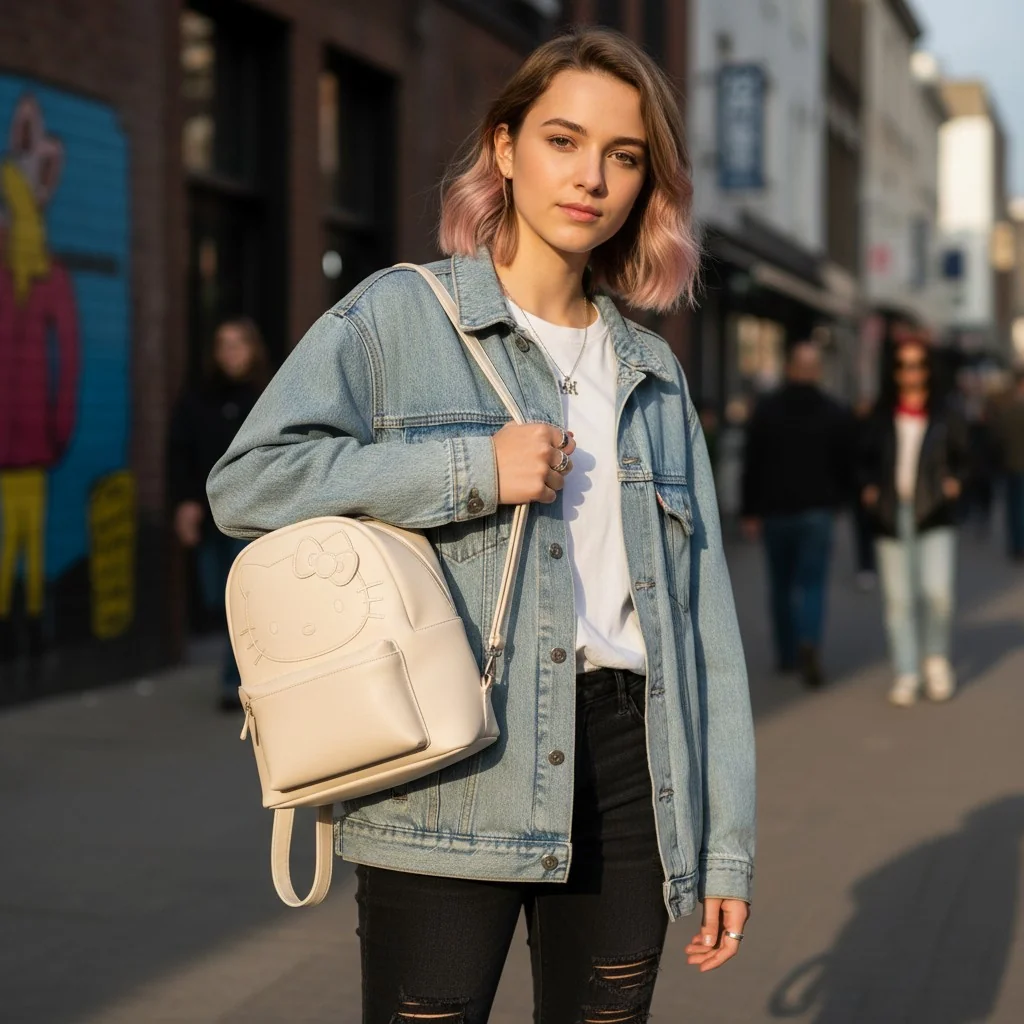
No, and this is a key market insight for any brand owner. Hello Kitty has evolved into a cross-generational lifestyle brand4. Teenagers and adults embrace her as a fashion statement, connecting her with subcultures like Harajuku, Y2K revival, and K-pop.
Expanding the Target Market Beyond Childhood
This is one of the most brilliant aspects of the Hello Kitty strategy, and something I always discuss with my clients. Don’t pigeonhole your product. Hello Kitty’s ability to appeal to a 7-year-old, a 17-year-old, and a 37-year-old is incredible. This broadens the customer base and dramatically increases the product’s lifecycle value. A backpack isn’t just a school supply; it becomes a collectible fashion accessory. For teens and adults, it’s a nod to nostalgia and a badge of identity within certain fashion tribes. This strategy turns a simple product into a lifestyle brand. When developing your own line, think about how design, color, and branding can be adapted to appeal to different age demographics. A slightly more minimalist design or a different color palette can open up a whole new market.
| Target Audience | Reason for Purchase | Key Marketing Angle |
|---|---|---|
| Young Children | Character love, fun | Playful, colorful, parent-approved |
| Teenagers | Fashion, subculture identity (Y2K, K-pop) | Trendy, nostalgic, collectible |
| Adults | Nostalgia, collectible, high-fashion collabs | Chic, minimalist, limited edition |
[claim claim=”The Y2K fashion revival has significantly boosted sales of nostalgic brands like Hello Kitty.” istrue=”true” explanation=”The resurgence of early 2000s trends in the 2020s has increased demand for brands and characters popular during that era, including Hello Kitty, making her accessories fashionable among teens and young adults.”]
[claim claim=”Hello Kitty has never been featured in high-fashion collaborations.” istrue=”false” explanation=”Hello Kitty has collaborated with numerous high-fashion and streetwear brands, including Balenciaga, Blumarine, and Anti Social Social Club, cementing her status as a versatile fashion icon.”]
Where Can You Buy Authentic Hello Kitty Backpacks Online?
Are you losing sales and brand reputation to counterfeit goods? The distribution strategy for authentic character products offers a vital lesson in building customer trust and controlling your brand’s image.
Authentic Hello Kitty backpacks are sold through official brand channels like Sanrio.com, major licensed retailers, and verified sellers on platforms like Amazon. This focus on authenticity is crucial as consumers are increasingly willing to pay more for verified, genuine products.

The Business Case for Authentic Distribution Channels
In today’s e-commerce landscape, trust is everything. The market is flooded with fakes, and customers are getting smarter. For a brand like Sanrio, protecting authenticity is paramount. This is why strengthening official distribution channels is so important. I’ve seen many brands I work with struggle against knockoffs. The solution is often to build a stronger direct-to-consumer (DTC) presence, like a dedicated Shopify store, and to work only with verified retail partners.
This does more than just fight counterfeits; it allows you to control the entire customer experience, from marketing to unboxing. It also opens up opportunities for strategic online-only drops and limited editions, which create hype and drive sales. For your business, investing in your DTC channel and clearly communicating where to buy authentic products is a key strategy for long-term growth and brand protection.
| Distribution Channel | Trust Level | Strategic Advantage for Brands |
|---|---|---|
| Official Brand Website (DTC) | Highest | Full control over branding, pricing, customer data |
| Licensed Major Retailers | High | Broad market reach, physical presence |
| Verified Marketplace Sellers | Medium-High | Access to huge customer base (e.g., Amazon) |
| Unverified 3rd-Party Sellers | Low | High risk of counterfeits, brand damage |
[claim claim=”Amazon’s ‘Brand Registry’ program helps brand owners protect their intellectual property and combat counterfeit products.” istrue=”true” explanation=”Amazon Brand Registry is a service that gives brand owners access to tools designed to help them manage their brand and protect it from counterfeiters on the platform.”]
[claim claim=”Buying counterfeit goods has no negative consequences.” istrue=”false” explanation=”Counterfeit goods often support unethical labor practices, can be made with unsafe materials, and their sales directly harm the legitimate brands and employees who design and create the authentic products.”]
How Can Parents Choose the Right Size of Hello Kitty Backpack?
Is your product line a "one-size-fits-all" offering? You could be missing opportunities for up-selling and failing to meet the specific needs of different customer segments.
From a business perspective, offering different sizes is smart product segmentation5. Mini, medium, and large backpacks allow a brand to target multiple age groups (preschool, elementary, teen) and encourage up-selling as a child grows and needs a larger bag.

Using Sizing as a Market Segmentation Strategy
When I consult with brands on product development, sizing is a strategic conversation. It’s not just about fit; it’s about market coverage. By offering a range of sizes, you are essentially creating different products for different customers.
A mini backpack is perfect for a preschooler but also appeals to a teen using it as a purse. A standard elementary school size meets a core need. A larger size can be for older students or even adults using it as a daypack. This segmentation is brilliant because it creates a clear upgrade path. A parent who buys a mini backpack for their toddler is a prime customer for a medium backpack a few years later.
This strategy increases customer lifetime value. For your brand, think about how different sizes or versions of your product could serve different needs or age groups, creating more reasons for customers to buy from you again.
| Backpack Size | Primary Target | Secondary Market | Strategic Goal |
|---|---|---|---|
| Mini | Preschoolers (ages 3-5) | Teens/Adults (as a fashion purse) | Market entry, fashion appeal |
| Medium | Elementary (ages 6-10) | Light-use daypack | Core market capture |
| Large | Middle/High School (ages 11+) | Travel, adult fans | Up-selling, customer retention |
[claim claim=”A child’s backpack should not weigh more than 10-20% of their body weight.” istrue=”true” explanation=”The American Academy of Pediatrics recommends that a child’s backpack weigh no more than 10 to 20 percent of their body weight to prevent back and shoulder pain.”]
[claim claim=”All backpack sizes from a single brand use the same strap design.” istrue=”false” explanation=”Reputable manufacturers scale their designs. A backpack for a preschooler will have proportionally smaller and differently padded straps than one designed for a teenager to ensure proper ergonomic fit and comfort.”]
Conclusion
Understanding the strategy behind Hello Kitty’s success—emotional branding6, smart design, and targeted marketing—provides a powerful blueprint for any brand looking to create iconic, long-lasting products.
References
-
Explore the concept of character-driven branding to understand how it creates emotional connections and drives sales. ↩
-
Learn about the strategies brands use to forge emotional bonds with their audience, enhancing loyalty and repeat purchases. ↩
-
Discover the strategies for effectively targeting multiple generations in marketing campaigns to maximize reach and engagement. ↩
-
Understand how brands like Hello Kitty appeal to multiple age groups, creating a broad customer base and increasing product lifecycle. ↩
-
Learn how product segmentation can enhance market coverage and customer satisfaction by catering to diverse consumer needs. ↩
-
Explore the principles of emotional branding and how it can transform consumer relationships and brand loyalty. ↩