Your customers’ food gets lukewarm by noon, hurting your brand’s reputation for quality. Understanding insulation1 is key to delivering a product that keeps meals fresh and customers happy.
Insulated lunch bags work by using multiple layers of material to slow down heat transfer. A core layer of foam insulation2 traps air, creating a barrier that prevents outside temperatures from affecting the food inside. Reflective inner linings further block radiant heat, maintaining the desired temperature for hours.
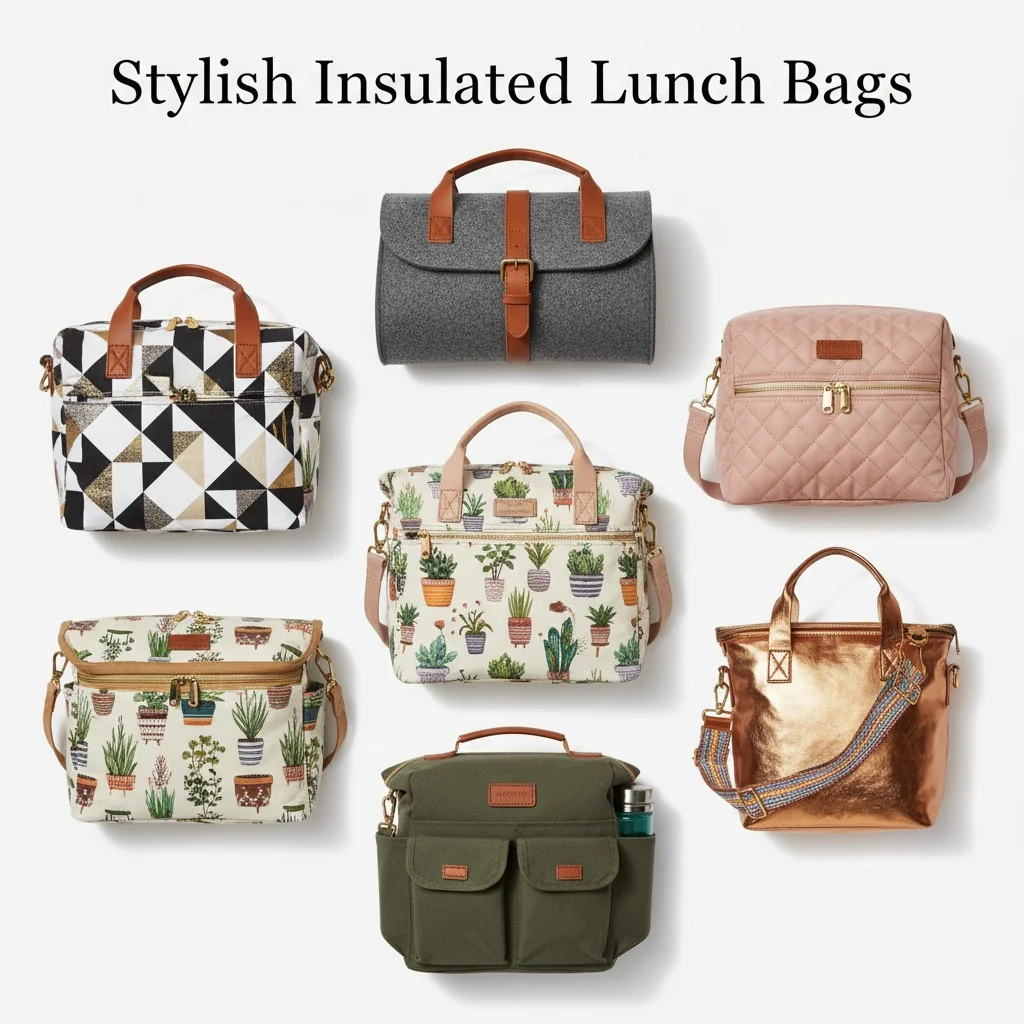
The science behind a great lunch bag is simple, but the execution is what separates a premium product from a cheap one. As a brand owner, knowing exactly what goes into these bags is the first step toward sourcing or designing a product that truly stands out. It’s all about the materials, the construction, and the small details that add up to superior performance. Let’s dive into the anatomy of a high-quality insulated bag.
[claim claim=”Insulated bags work by generating cold air.” istrue=”false” explanation=”Insulated bags do not generate cold; they slow the transfer of heat from the outside to the inside, preserving the initial temperature of the contents.”]
[claim claim=”The air trapped within the insulation foam is a primary reason insulated bags are effective.” istrue=”true” explanation=”Air is a poor conductor of heat. By trapping it in small pockets within a foam layer, insulated bags create an effective barrier against heat transfer.”]
What Are Insulated Lunch Bags Made Of?
Choosing the wrong materials can lead to a flimsy, underperforming bag. This disappoints customers and can damage your brand’s credibility. Let’s break down the essential layers for success.
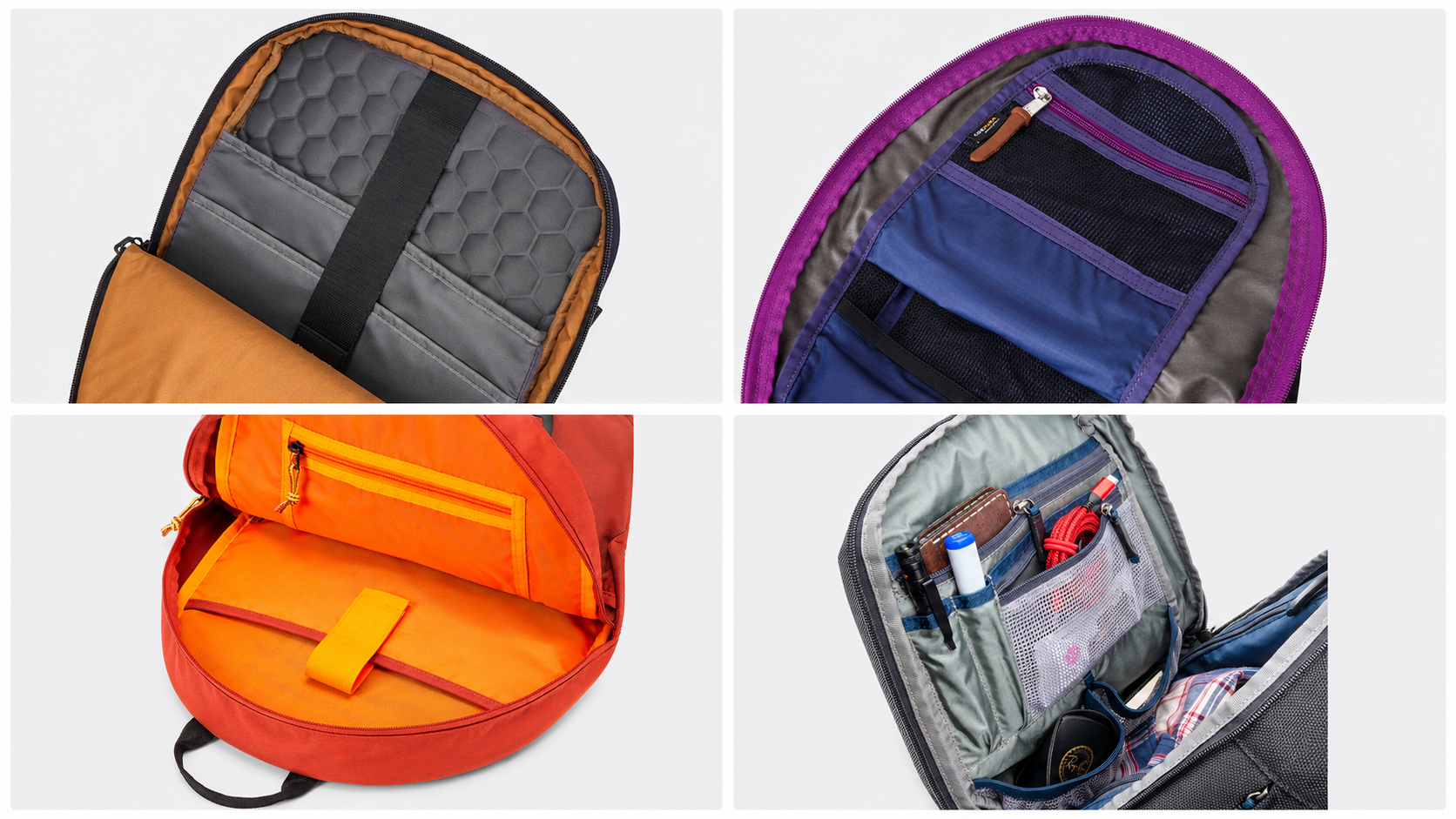
Insulated lunch bags are constructed with three key layers. An outer shell of durable fabric3 like polyester or canvas, a middle insulation layer of foam, and a waterproof, easy-to-clean inner lining like PEVA or Aluminum foil. This combination ensures durability, temperature control, and user convenience.

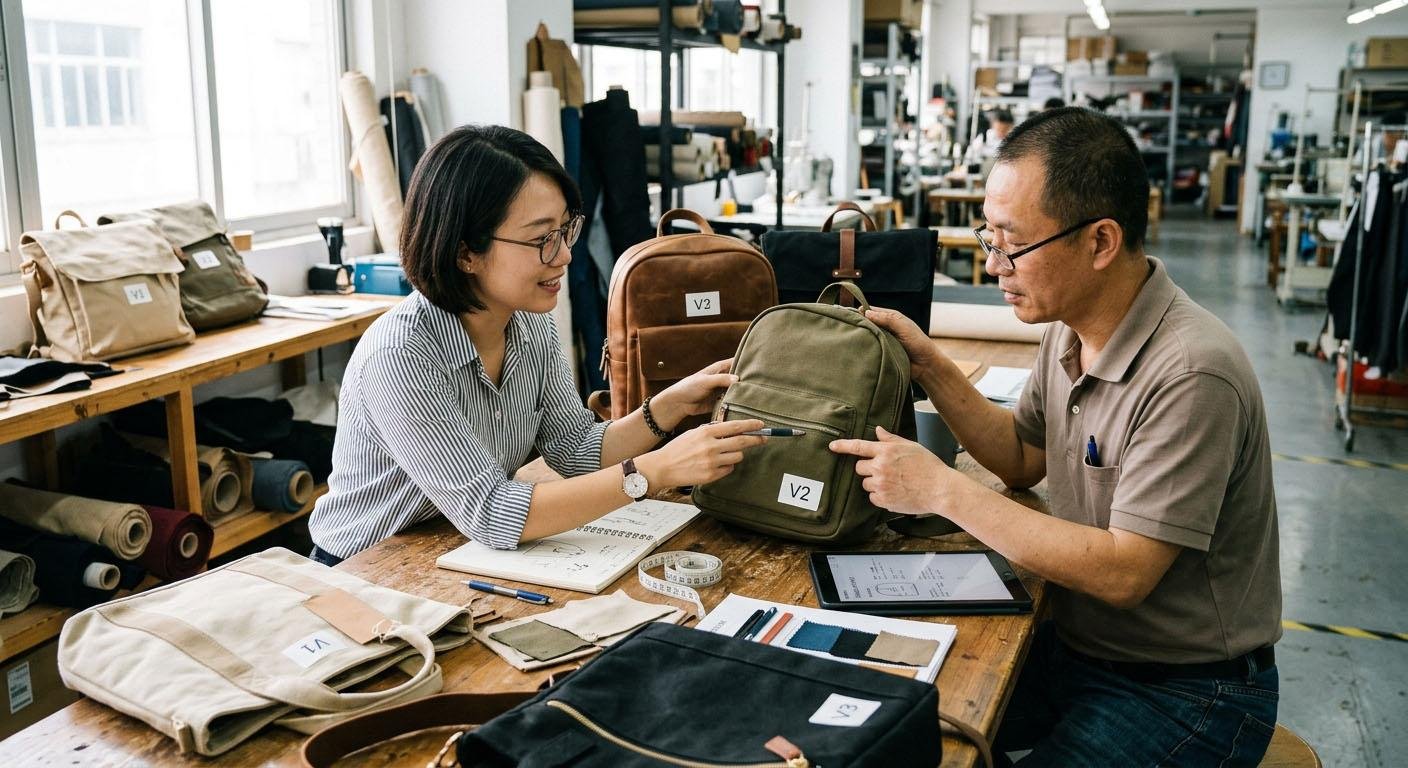
When I work with brand owners like you, Emily, the material selection is one of our most important conversations. It’s not just about function; it’s about brand identity.
I remember a client who was building an outdoor adventure brand. We chose a high-denier, ripstop nylon for the outer shell. It was tough, water-resistant, and had a rugged look that perfectly matched their brand image. For another client focused on office professionals, a sleek, heather gray polyester was a better fit.
The materials tell a story. Understanding them allows you to build a bag that not only performs well but also connects with your target customer on a visual and tactile level.
The Outer Shell: Durability and Style
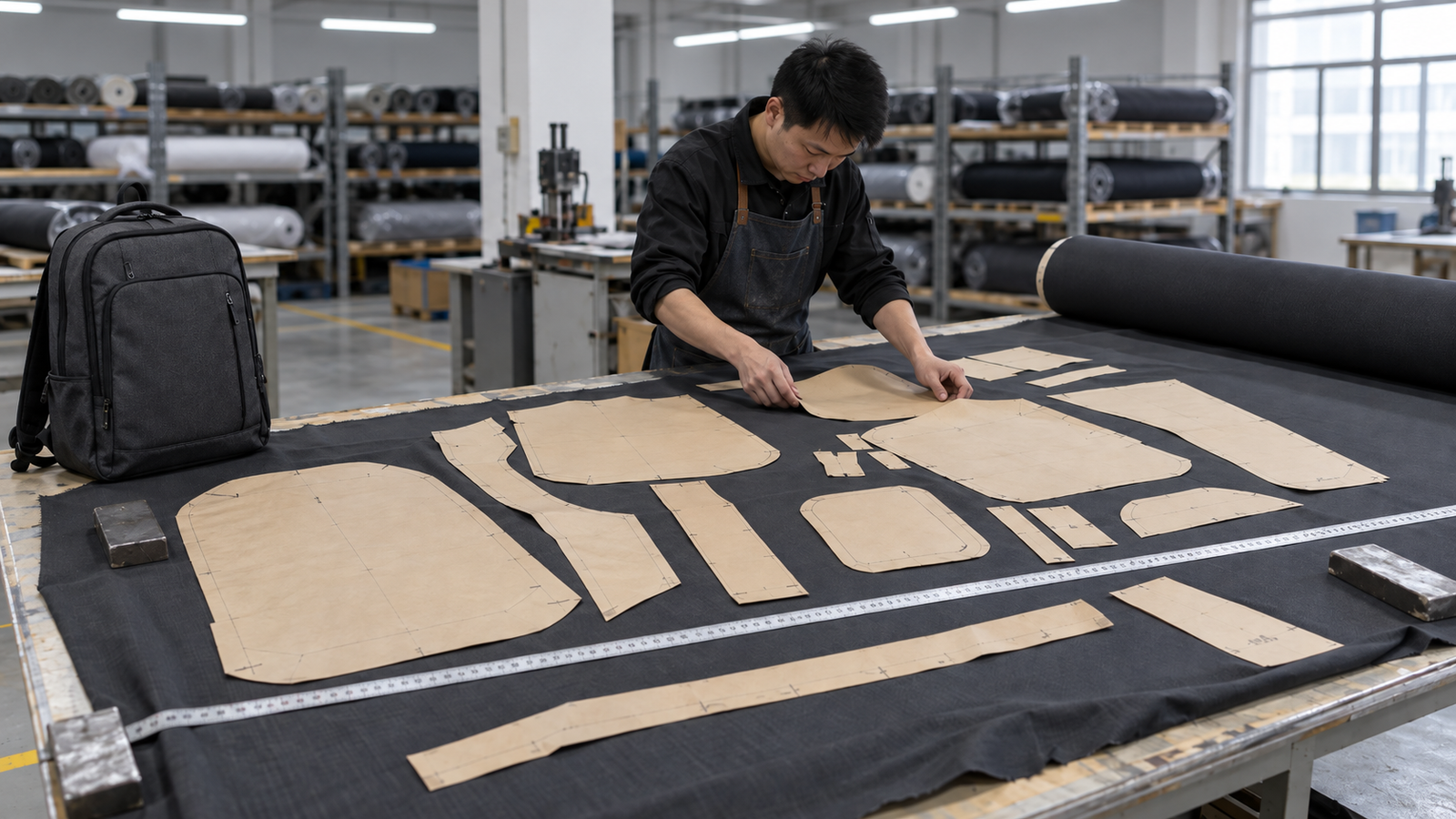
The exterior is the first thing your customer sees and touches. It needs to be tough enough for daily use while reflecting your brand’s aesthetic. The choice of fabric impacts everything from water resistance to the overall feel of the product.
The Inner Lining: Safety and Maintenance
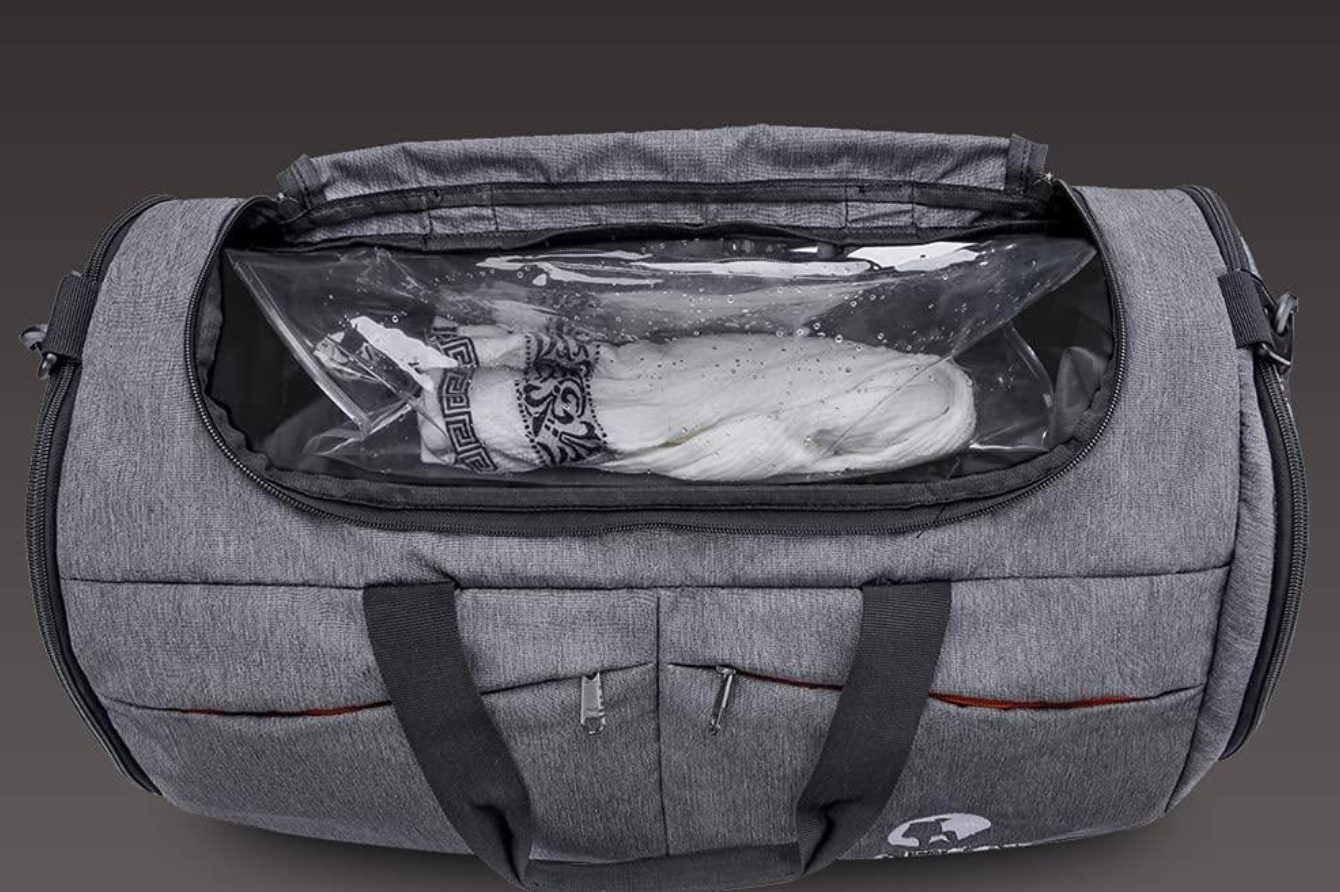
The inside layer is all about food safety and convenience. It must be waterproof to contain spills and easy to wipe clean. Materials like PEVA are popular because they are food-safe and chlorine-free, which is a great selling point for health-conscious consumers.
The Insulation Core: The Heart of Performance
This is where the magic happens. The thickness and quality of the foam core directly determine how long the bag can maintain temperature.
| Material Layer | Common Options | Key Benefits for Your Brand |
|---|---|---|
| Outer Fabric | Polyester, Nylon, Canvas | Durability, Water Resistance, Brand Aesthetic |
| Insulation | EPE Foam, EVA Foam | Thermal Resistance, Structure, Cost-Effectiveness |
| Inner Lining | PEVA, Aluminum Foil | Food-Safe, Waterproof, Easy to Clean |
[claim claim=”All insulated bags use the same type of foam for insulation.” istrue=”false” explanation=”Different types and thicknesses of foam, like EPE (Expanded Polyethylene) or EVA, offer varying levels of thermal resistance and rigidity.”]
[claim claim=”PEVA is a popular inner lining material because it is a safer, chlorine-free alternative to PVC.” istrue=”true” explanation=”PEVA (Polyethylene vinyl acetate) is widely used in quality lunch bags as it doesn’t contain the plasticizers and chlorine found in PVC, making it a better choice for food contact.”]
How Long Can an Insulated Lunch Bag Keep Food at Temperature?
Your customers complain that their lunch doesn’t stay cold. This leads to bad reviews and questions about your product’s quality. Let’s manage expectations by understanding what’s realistic.
Most standard insulated lunch bags can keep food cool for about 3 to 5 hours. High-performance models can extend this to 6 hours or more. The exact duration depends heavily on insulation quality, ambient temperature, and whether you use ice packs.

A lunch bag designed for a child to take to school has very different performance requirements than one for a construction worker who leaves their lunch in a truck on a hot day.
For the school bag, 3-4 hours of cooling is plenty. For the construction worker, we need to look at thicker insulation, a more reflective lining, and a design that seals tightly. By defining the user’s needs first, we can engineer a product that meets or exceeds their expectations, which is the foundation of a great brand reputation.
Key Influencing Factors
Several variables can dramatically alter a bag’s performance. It’s not just about the bag itself, but how it’s used. Understanding these factors helps you educate your customers and design a more effective product.
Setting Realistic Expectations
The "up to X hours" claim is a major selling point. As a brand owner, it’s vital to be both ambitious and honest. Test your prototypes in real-world conditions to provide accurate performance data to your customers.
| Factor | Impact on Insulation Time | Pro Tip for Your Customers |
|---|---|---|
| Ice Packs | Significantly Increases (adds 2-4+ hours) | Always use at least one frozen ice pack. |
| Ambient Temperature | High temps decrease time, cool temps increase it | Keep the bag out of direct sunlight. |
| Contents | A full bag stays colder longer than an empty one | Pack the bag as full as possible. |
| Pre-Chilling | Can add 1-2 hours of cooling time | Store the bag in the fridge overnight before use. |
[claim claim=”A half-empty lunch bag stays cold longer than a full one.” istrue=”false” explanation=”A full bag has more thermal mass, meaning it takes longer for its temperature to change. An emptier bag has more air, which does not hold cold as effectively as chilled food and drinks.”]
[claim claim=”Using two small ice packs is more effective than one large one.” istrue=”true” explanation=”Multiple ice packs allow for better distribution of cold, surrounding the food and cooling the space more evenly than a single, centralized block of cold.”]
How Can You Beef Up an Insulated Lunch Bag’s Performance?
Your current lunch bag is good, but not great. Competitors are launching products with superior features, and you risk falling behind. Let’s explore the upgrades that create a market leader.
To enhance performance, manufacturers use advanced insulation like thicker closed-cell foam, add leakproof and airtight zippers, and incorporate highly reflective linings. These upgrades work together to minimize heat transfer and dramatically improve temperature retention, durability, and user experience.

At Osgoodway, we love helping brands find that competitive edge. Often, it comes from small but meaningful upgrades.
For example, I worked with a brand that wanted to target the premium market. We switched their standard zipper to a fully waterproof, airtight one. This single change did two things: it completely eliminated customer complaints about leaks from melted ice packs, and it created a superior air seal that improved thermal efficiency by about 15% in our tests. It’s a detail that costs a bit more, but it transforms the product and justifies a higher price point.
Advanced Insulation Materials
Moving beyond standard foam is the first step. High-density, closed-cell foams offer better thermal resistance without adding excessive bulk. Some ultra-premium bags even incorporate vacuum-insulated panels, though this significantly increases cost.
Structural Enhancements
The bag’s construction is just as important as its materials. Heat-welded seams, unlike traditional stitching, create a truly leakproof interior. This is a huge selling point for customers who use ice packs.
Smart Design Features
Features that reduce air exchange are critical. An airtight zipper is the gold standard. Even a well-designed zipper flap or a magnetic closure can make a noticeable difference compared to a basic, exposed zipper.
| Standard Feature | Enhanced Feature | Benefit for Your Brand |
|---|---|---|
| Stitched Seams | Heat-Welded Seams | 100% Leakproof, Higher Perceived Quality |
| Standard Zipper | Waterproof/Airtight Zipper | Prevents Leaks, Better Insulation |
| Basic Foam | High-Density Closed-Cell Foam | Longer Cooling Time, More Durable |
| Simple Lining | Antimicrobial Lining | Prevents Odor/Mold, Health-Conscious Appeal |
[claim claim=”Adding a reflective lining has a minimal effect on performance.” istrue=”false” explanation=”A reflective lining, like aluminum foil, is very effective at blocking radiant heat, which is one of the three forms of heat transfer. It can significantly improve a bag’s ability to keep contents cold.”]
[claim claim=”Heat-welded seams are superior to stitched seams for creating a leakproof lunch bag.” istrue=”true” explanation=”Stitching creates thousands of tiny holes that water can seep through. Heat welding fuses the lining material together, creating a continuous, waterproof barrier.”]
What Is the Difference Between Thermal and Insulated Bags?
You see the terms "thermal" and "insulated" used everywhere. This confusion can lead you to source the wrong product, mismatching cost and performance for your brand’s needs.
A "thermal bag" typically refers to a simple, lightweight bag with a single layer of foil-like insulation, best for short-term use. An "insulated bag" is more robust, featuring a thick foam core between an outer and inner layer for much longer temperature control4.
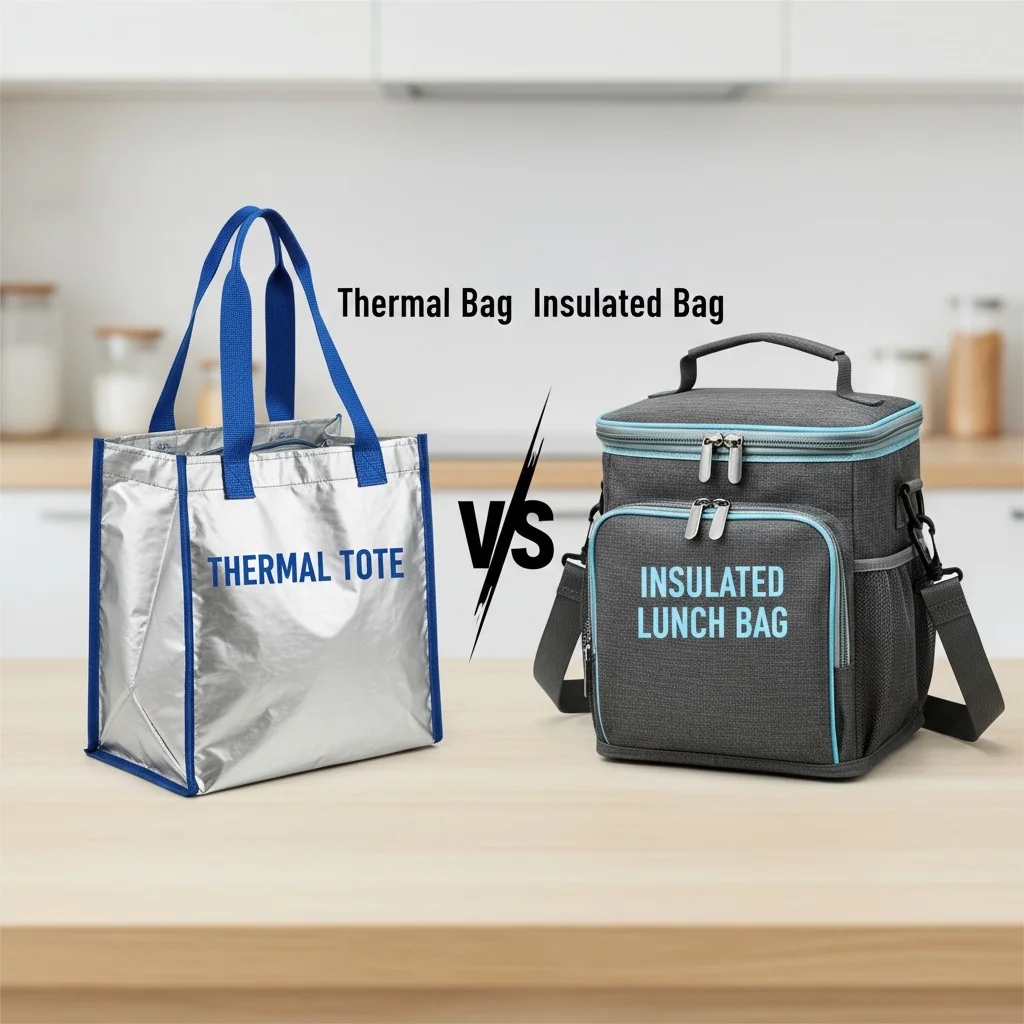
This distinction is so important for managing your budget and product strategy. I once had a client who wanted to create a promotional giveaway for a summer event. They initially requested a quote for "insulated bags." After we talked about their goal—keeping drinks cool for just a couple of hours—and their tight budget, I realized a simpler "thermal tote" was the perfect solution. It delivered the performance they needed at a fraction of the cost. Using the right terminology helps you, as the brand owner, source the right product for the right job.
Defining "Thermal" Bags
Think of these as the entry-level option. They are often foldable, very lightweight, and inexpensive. Their primary insulation is a thin, reflective layer. They are great for groceries or a quick picnic but won’t hold a temperature for a long workday.
Defining "Insulated" Bags
These are the workhorses. They have a dedicated middle layer of foam insulation, giving them more structure and far superior performance. This is the category where you find lunch bags designed for daily use, capable of keeping food safe for many hours.
Which One Is Right for Your Brand?
The choice depends entirely on your target market and price point. A thermal bag is a great, low-cost promotional item. An insulated bag is a durable, high-performance retail product that customers will pay more for.
| Feature | Thermal Bag | Insulated Bag |
|---|---|---|
| Insulation | Thin reflective layer | Thick foam core + reflective liner |
| Structure | Soft, often foldable | Structured, semi-rigid |
| Performance | 1-2 hours | 3-8+ hours |
| Best Use Case | Groceries, short trips, promotions | Daily lunch, picnics, travel |
| Cost | Low | Medium to High |
[claim claim=”The terms ‘thermal’ and ‘insulated’ are legally defined and regulated.” istrue=”false” explanation=”These are marketing terms, and their definitions can vary by manufacturer. However, the industry generally uses ‘insulated’ to describe a higher-performance, multi-layer product.”]
[claim claim=”Insulated bags are always better than thermal bags.” istrue=”false” explanation=”‘Better’ depends on the use case. For a low-cost, short-duration need like a promotional giveaway, a thermal bag is often the more appropriate and cost-effective choice.”]

Which Brands Make the Best Insulated Lunch Bags?
You need inspiration and a benchmark for your own product line. But it’s hard to know which brands are truly setting the standard for quality, innovation, and brand strategy5.
Leading brands like Yeti, Lifewit, and LunchBots excel by targeting specific customer needs6. Yeti focuses on extreme durability, Lifewit on large capacity and practicality, and LunchBots on eco-friendly materials. Their success comes from a clearly defined niche.
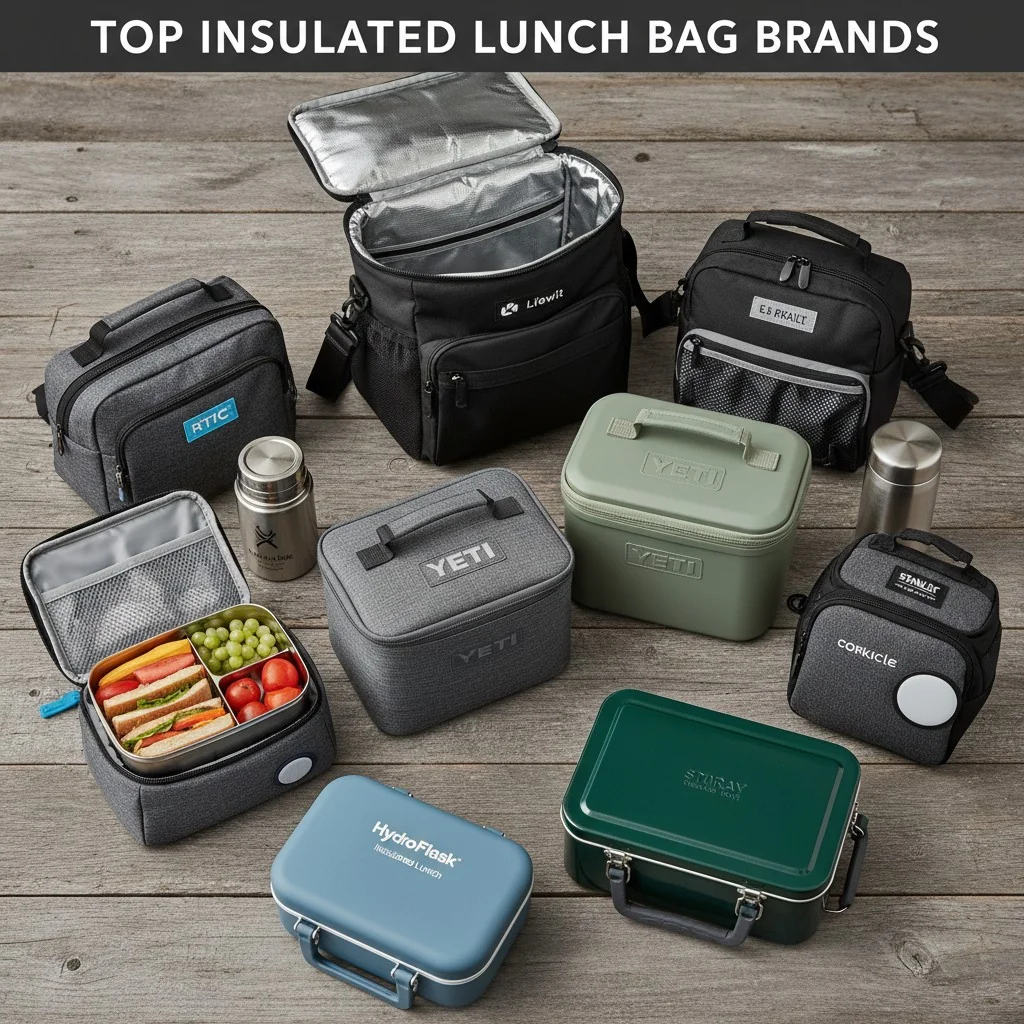
As a manufacturer, I study these brands constantly. I don’t see them just as competitors; I see them as case studies in great product strategy.
Yeti proved that customers will pay a premium for uncompromising performance and a strong brand story. LunchBots showed that sustainability can be a primary selling point. The lesson for you isn’t to copy them, but to learn from them. The most important question is: what is your niche? Once you define that, a manufacturing partner like Osgoodway can help you engineer the perfect bag with the right materials and features to win in that specific space.
Yeti:The High-Performance Player
Yeti built an empire on being the toughest and best-performing. Their lunch bags use thick, closed-cell foam and heavy-duty materials, appealing to those who demand the best and are willing to pay for it.
Lifewit: The Practical All-Rounder
Lifewit dominates on platforms like Amazon by offering great value. They focus on features that matter to a broad audience: large capacity, multiple compartments, and leakproof linings, all at an accessible price point.
Fit & Fresh: The Practical Choice for Everyday Meals
Fit & Fresh built its reputation on providing convenient and affordable solutions for meal-preppers and families. Their lunch bags often come with removable ice packs and matching portion-control containers, prioritizing practicality and organization, making them ideal for anyone seeking an easy, all-in-one lunch system that offers great value.
| Brand | Key Selling Point | Lesson for Your Brand |
|---|---|---|
| Yeti | Extreme Durability & Performance | A premium price is possible with premium quality and branding. |
| Lifewit | High Capacity & Practical Features | Solving everyday problems at a good price creates volume. |
| LunchBots | Eco-Friendly & Non-Toxic Materials | A strong mission (like sustainability) can build a loyal community. |
| Fit & Fresh | Style & Convenience | Don’t underestimate aesthetics; people want functional and fashionable. |
[claim claim=”Yeti lunch bags use the same insulation technology as their famous hard coolers.” istrue=”true” explanation=”Yeti uses high-density, closed-cell foam in both their soft lunch bags and their hard coolers, which is a key reason for their superior thermal performance.”]
[claim claim=”All major lunch bag brands manufacture their products in the USA.” istrue=”false” explanation=”Most major brands, including many of the ones listed, partner with specialized overseas manufacturers like us to leverage expertise in materials, technology, and cost-effective production.”]
Conclusion
Understanding insulated bag technology empowers you to create a superior product. Focus on the right materials, performance-enhancing features, and your unique brand niche to win over your customers.
References
-
Understanding insulation is crucial for creating effective lunch bags that keep food fresh. ↩
-
Foam insulation is key to maintaining temperature; learn how it enhances performance. ↩
-
Choosing the right fabric impacts durability and brand image; explore top options. ↩
-
Temperature control is vital for food safety; understand the mechanisms behind it. ↩
-
Learning from successful brands can inspire your own product development and marketing. ↩
-
Identifying customer needs is essential for product success; explore effective strategies. ↩