Choosing the right bag for your brand’s collection can feel overwhelming. Make the wrong choice, and you might miss what your customers truly need. Let’s break it down together.
A backpack is best if you carry heavy loads1, need maximum comfort, or travel long distances. A messenger bag is better for light loads, quick access to your items, and a more professional or urban style. The right choice depends entirely on your customer’s daily life.
As a bag enthusiast and manufacturer, I’ve seen countless brands debate this very question. The truth is, there’s no single "best" bag—only the best bag for a specific person and purpose. I’ve helped brands design both, and success always comes from deeply understanding the end user’s needs. A bag is more than just an accessory; it’s a daily partner. Let’s dive into the details so you can choose the perfect style for your brand’s next big hit.
[claim claim=”Wearing a heavy, single-strap messenger bag can lead to significant posture problems and back pain over time.” istrue=”true” explanation=”According to the American Chiropractic Association, carrying a heavy bag on one shoulder forces the body to compensate for the uneven weight, leading to muscle strain, neck pain, and spinal stress.”]
[claim claim=”Backpacks were only invented in the 1990s.” istrue=”false” explanation=”While modern backpacks became popular in the latter half of the 20th century, the concept of carrying a pack on one’s back is ancient. Ötzi the Iceman, who lived around 3300 BCE, was found with a primitive wood-frame backpack.”]
Backpack vs. Messenger Bag: What Are the Core Differences & Use Cases?
Struggling to define the key selling points for your next bag collection? It’s easy to get lost in the details, but the fundamental differences are what truly matter to customers.
The main difference is how they are carried and how they distribute weight. A backpack uses two straps over the shoulders for balanced support. A messenger bag uses a single strap worn on one shoulder or across the body, offering quick access2 but uneven weight distribution.

In my years of working with designers, this is the first point we always clarify. The carrying method directly impacts comfort, capacity3, and accessibility. These factors then determine who the bag is for. A brand targeting students will have very different design priorities than one targeting corporate executives. Understanding this distinction is the first step in creating a product that doesn’t just look good, but genuinely serves its purpose. Let’s break it down further.
How They’re Carried
A backpack is worn on the back and supported by two straps over the shoulders. This design keeps your hands free and the load stable. A messenger bag is worn on one side of the body, supported by a single strap. You can swing it to your front to access items easily.
Weight Distribution
This is a huge factor. Backpacks spread the weight evenly across both shoulders and your back. This makes them ideal for heavier loads. Messenger bags place all the weight on one shoulder, which can cause strain if the bag is too heavy.
Primary Use Cases
| Feature | Backpack | Messenger Bag |
|---|---|---|
| Ideal User | Students, hikers, travelers, tech commuters | urban professionals4, cyclists, light travelers |
| Best For | Heavy loads, long-distance comfort | Quick access, professional style5 |
| Common Items | Laptop, books, gym clothes, camera gear | Laptop/tablet, documents, essentials |
[claim claim=”Messenger bags were originally designed for postal workers and bike couriers.” istrue=”true” explanation=”The modern messenger bag design was popularized by companies like De Martini Globe Canvas in the 1950s for telephone linemen and later adopted by bike messengers for its durability and quick accessibility.”]
[claim claim=”All backpacks are waterproof.” istrue=”false” explanation=”Water resistance varies greatly by material. While many backpacks use water-resistant fabrics like nylon or polyester with a coating, only bags specifically designed with sealed seams and waterproof materials are truly waterproof.”]
When Should You Choose a Backpack?
Is a backpack the right product for your target customer? Designing for the wrong lifestyle can lead to a collection that doesn’t connect, leaving you with unsold inventory.
Choose a backpack when the end user values comfort and capacity above all else. It’s the perfect choice for anyone carrying heavy items, walking or biking long distances, or needing to pack for a full day. It’s the workhorse of the bag world.
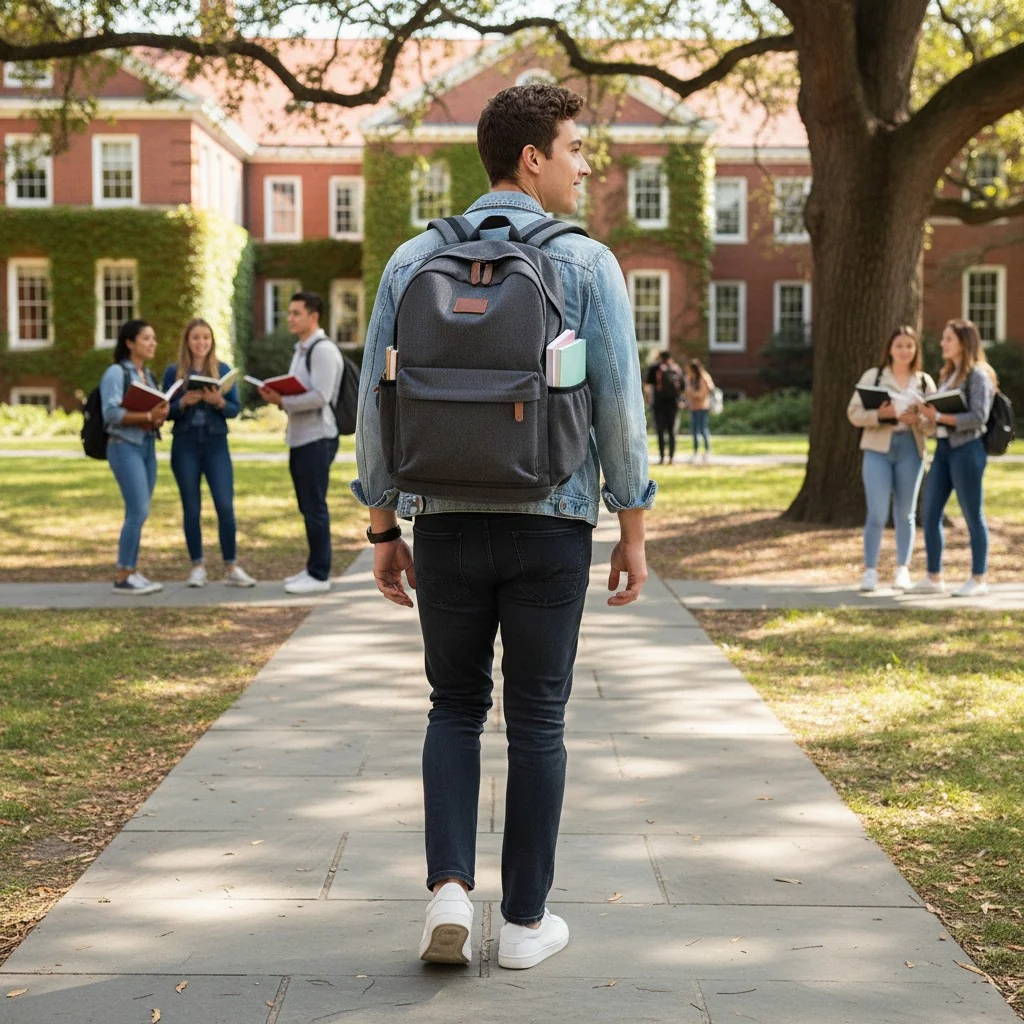
I once worked with a startup brand that wanted to create the ultimate bag for digital nomads. We focused entirely on a backpack design. Why? Because their customers carry their entire office with them—laptops, hard drives, cameras, and more. Comfort wasn’t a luxury; it was a necessity. The two-strap design was non-negotiable for distributing that weight during long travel days. This focus on the user’s core need—carrying a heavy load comfortably—made their product a huge success.
For the Heavy Packer
If your customer is a student with textbooks, a photographer with lenses, or a professional carrying a laptop plus a change of clothes for the gym, a backpack is the answer. The larger, multi-compartment structure is designed to handle bulk and weight without sacrificing the user’s comfort.
For the Active Commuter
For those who bike, walk, or even run to work, stability is key. A backpack stays securely on your back. It won’t swing around and throw off your balance like a single-strap bag can. This makes the journey safer and much more comfortable.
For Health and Comfort
This is a major selling point. Backpacks promote better posture by distributing weight symmetrically. A well-designed backpack with padded straps and a supportive back panel prevents the shoulder and neck strain that is so common with single-strap bags. As a manufacturer, we always recommend ergonomic features6 for brands focused on wellness and daily use.
[claim claim=”A backpack should not weigh more than 10-15% of a person’s body weight.” istrue=”true” explanation=”Physical therapists and chiropractors widely recommend this guideline to prevent back pain, poor posture, and potential injury, especially for children and students.”]
[claim claim=”The more padding a backpack has, the more comfortable it is.” istrue=”false” explanation=”While padding helps, the overall design, including strap shape, adjustability, and back panel ventilation, contributes more to comfort. Excessive, poorly placed padding can be bulky and hot.”]
When Should You Choose a Messenger Bag?
Are you wondering if a classic messenger bag will appeal to your modern audience? It’s a timeless style, but its practicality depends heavily on the user’s lifestyle and needs.
A messenger bag is the perfect choice for customers who need fast access to their gear and carry a relatively light load. It shines in urban environments and professional settings where style and convenience are top priorities.
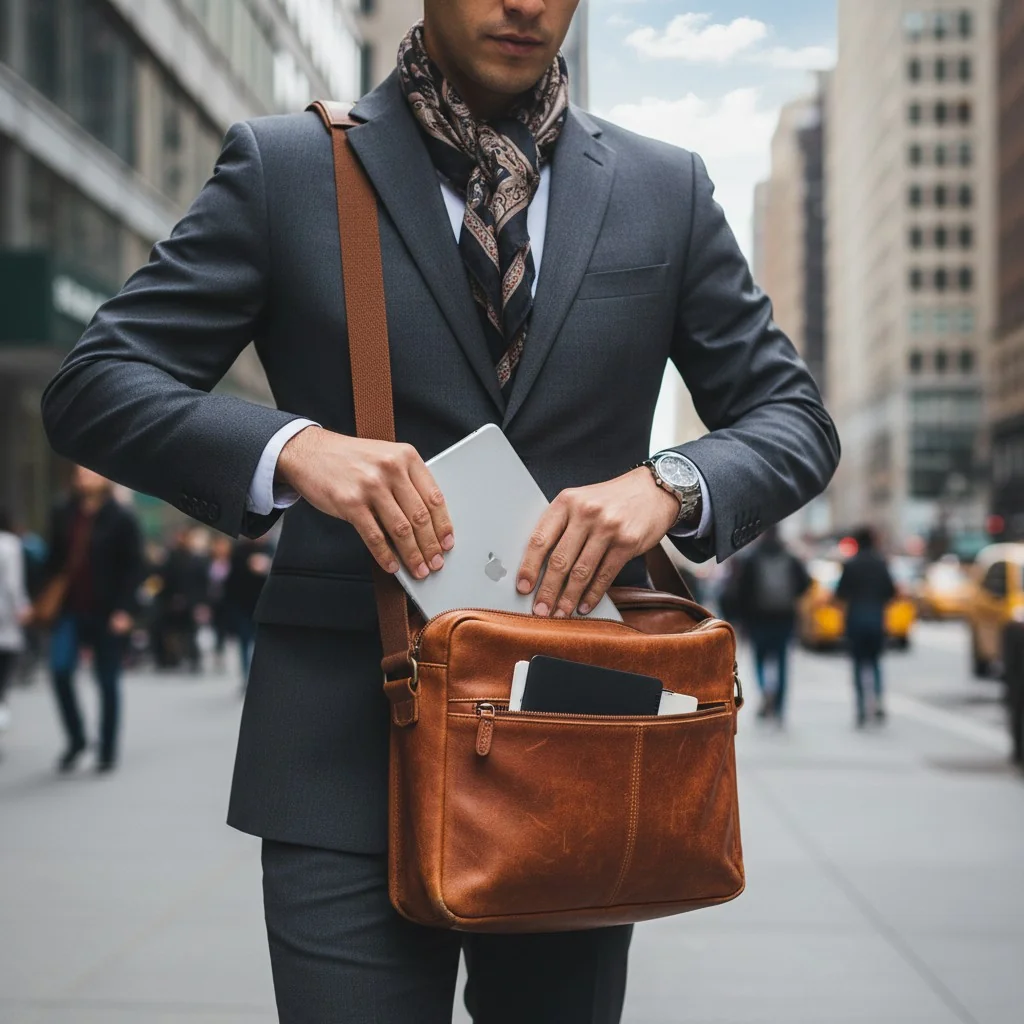
I remember a client, a brand owner like Emily, who was developing a line for real estate agents. We decided a messenger bag was the ideal product. Agents need to look polished and professional, and they also need to quickly pull out a tablet or documents during a showing without fumbling with their bag. A backpack would have been too casual and cumbersome. The messenger bag projected the right image and offered the quick-draw access they needed to be effective in their job.
The Need for Speed
The single best feature of a messenger bag is accessibility. The user can swing the bag from their back to their front in one smooth motion. This allows them to grab a phone, wallet, or notebook without ever taking the bag off. This is invaluable for anyone on the move, from a city cyclist to a busy salesperson.
Style and Professionalism
Let’s be honest, style matters. A well-crafted messenger bag made from materials like full-grain leather, waxed canvas, or sleek nylon often looks more sophisticated than a backpack. It pairs better with business casual or formal attire, making it a go-to choice for the office.
For the Light Carrier
This is the key limitation. A messenger bag is at its best when it’s not overstuffed. It’s designed for the essentials: a laptop or tablet, a charger, a notebook, and a few personal items. Overloading it will quickly lead to a sore shoulder and an uncomfortable commute.
[claim claim=”Messenger bags are always worn across the body.” istrue=”false” explanation=”While wearing it across the body (cross-body) is the most stable and common method, many people also wear messenger bags over a single shoulder, especially for short distances or with lighter loads.”]
[claim claim=”Leather messenger bags are heavier and require more maintenance than nylon ones.” istrue=”true” explanation=”Leather is a naturally heavier material than synthetic fabrics like nylon or polyester. It also requires regular cleaning and conditioning to prevent it from drying out and cracking, whereas nylon is low-maintenance.”]
How Do Storage & Organization Compare in the Inner Space?
The exterior style catches the eye, but the interior organization is what makes a customer love their bag. Poor internal design can be a deal-breaker for an otherwise perfect product.
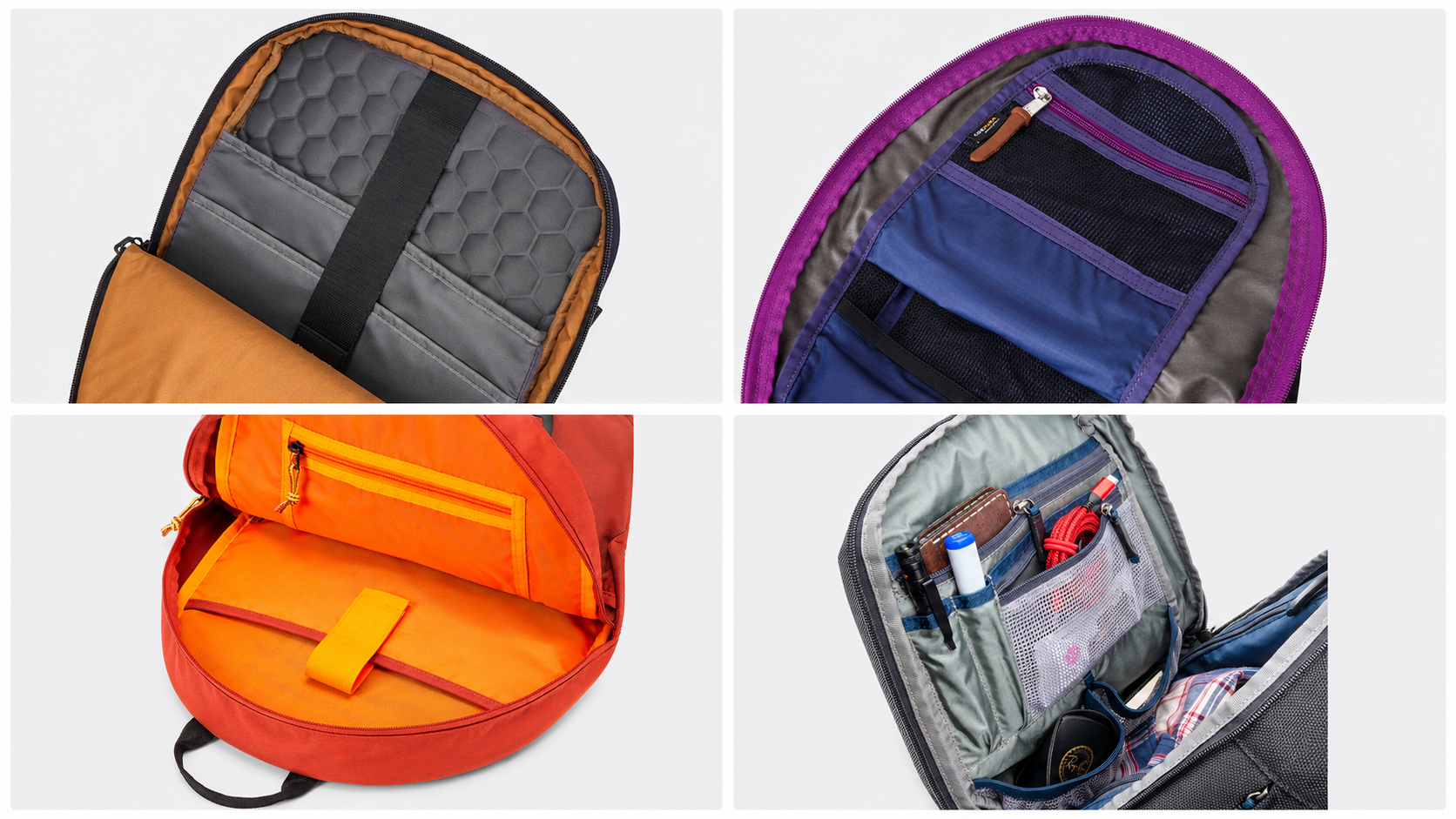
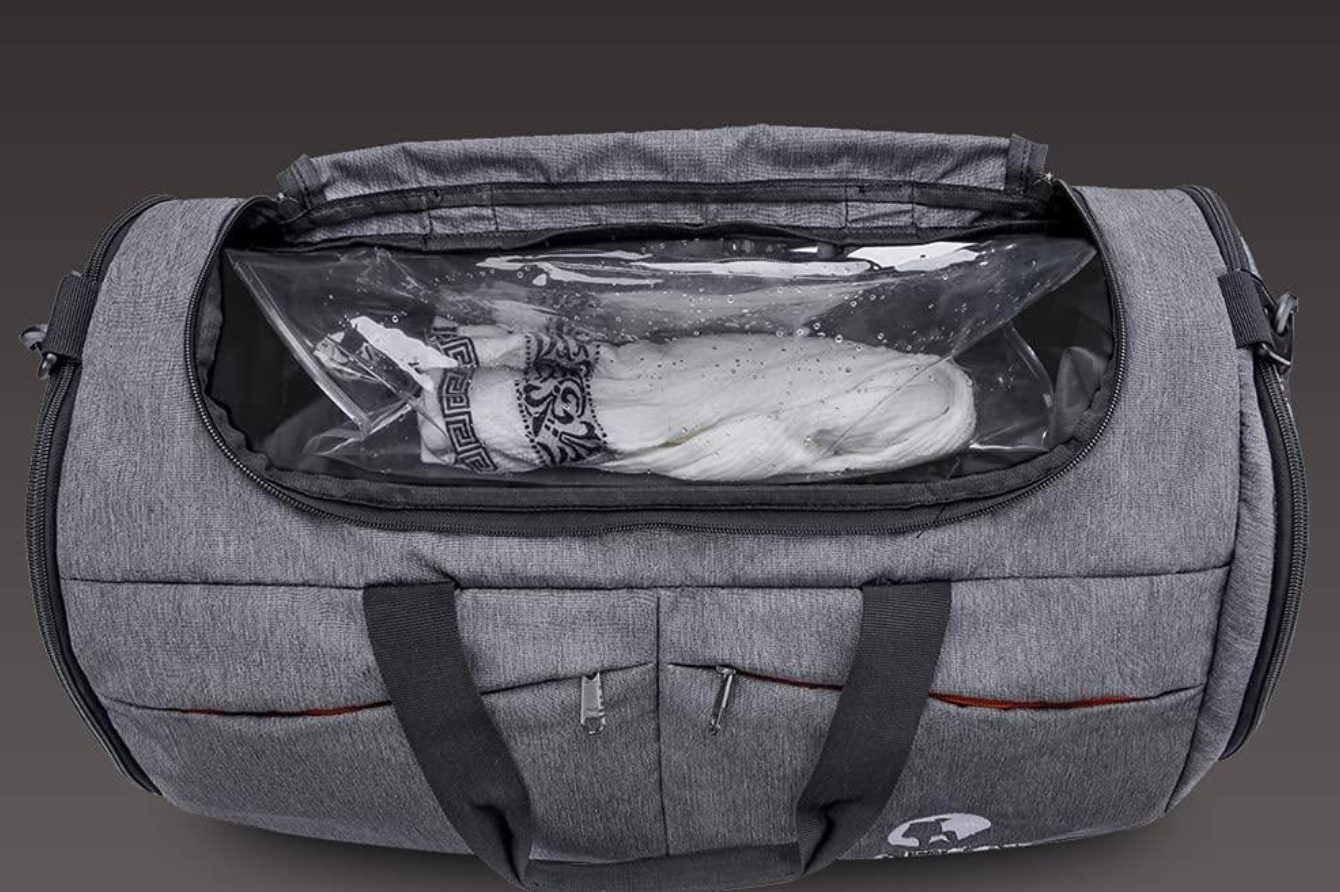
Backpacks typically offer more total volume and vertical organization with multiple, distinct compartments. Messenger bags provide a wider, more horizontal layout, which can make it easier to see all your contents at a glance in one main space.
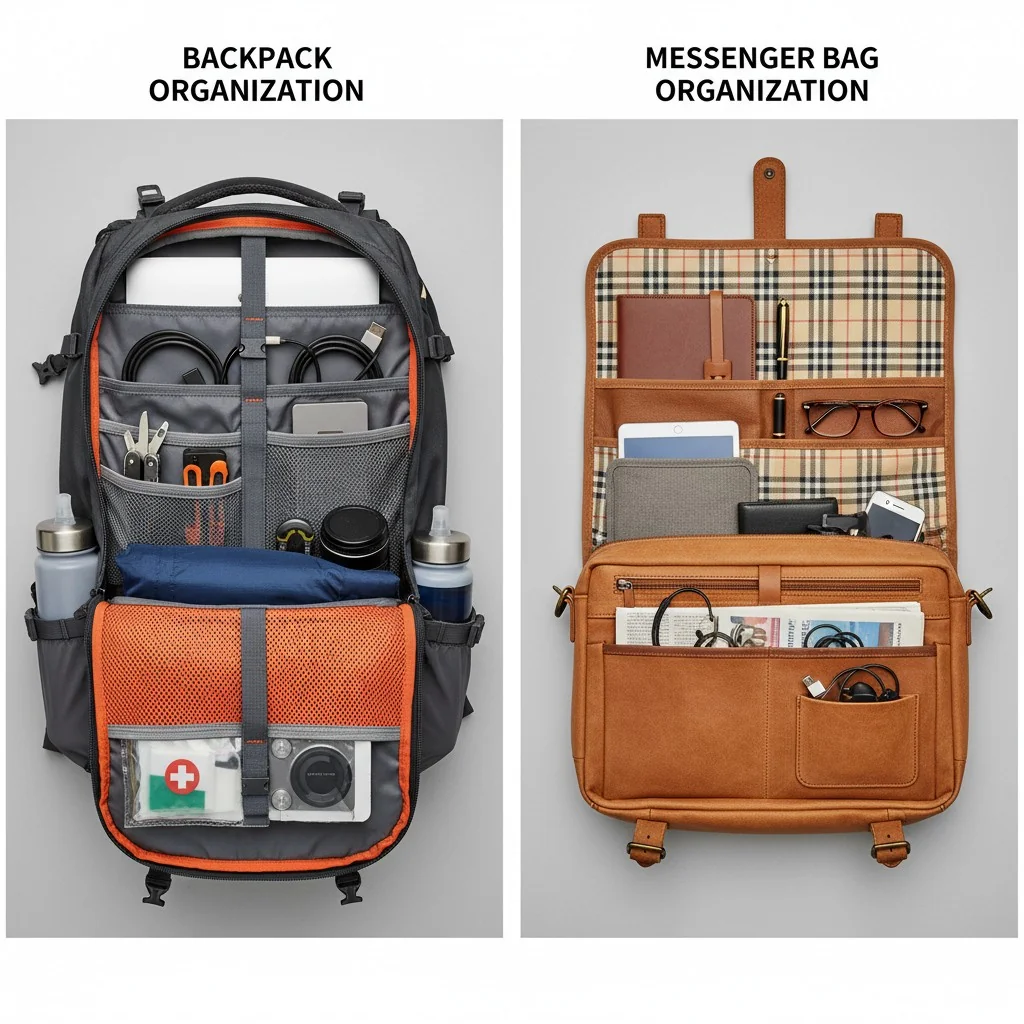
When we at Osgoodway work with brands to design custom bags, the interior layout is where we spend a lot of our time. It’s all about the user’s workflow. What do they need to carry, and how quickly do they need to access it? A bag designed for a photographer will have padded, adjustable dividers. A bag for a student will have pen holders and a secure laptop sleeve7. The inside of the bag is where you can really show your customer that you understand them.
Backpacks: The Vertical Organizers
Backpacks are built for compartmentalization. They usually feature:
- A large main section for bulky items.
- A dedicated, padded laptop sleeve at the back.
- A secondary compartment for notebooks or tablets.
- A front "admin" panel with small pockets for pens, keys, and phones.
- Side pockets, often for a water bottle or umbrella.
This vertical stacking allows for a high volume of gear to be carried in an organized way.
Messenger Bags: The Horizontal Layout
Messenger bags offer a different approach. Their organization is typically flatter and wider:
- One large main compartment, ideal for laptops and documents.
- Internal slip pockets against the sides for a phone or charger.
- Often, an organizer panel is located under the main flap for quick access without opening the whole bag.
This layout means you don’t have to dig down to the bottom to find things.
| Feature | Backpack | Messenger Bag |
|---|---|---|
| Layout | Vertical, stacked | Horizontal, wide |
| Capacity | Generally higher | Generally lower |
| Laptop Sleeve | Almost always included | Almost always included |
| Water Bottle Holder | Common (external) | Rare |
| Small Item Org. | Often in a separate front pocket | Often under the flap or inside |
[claim claim=”A dedicated laptop compartment offers significantly more protection than a simple sleeve.” istrue=”true” explanation=”Built-in compartments often have padding on all sides, including a false bottom that suspends the laptop off the floor of the bag, providing superior protection against drops and impacts compared to a simple sleeve.”]
[claim claim=”All bag organization is internal.” istrue=”false” explanation=”Many modern bags, especially tactical or travel backpacks, use external MOLLE (Modular Lightweight Load-carrying Equipment) webbing. This allows users to attach external pouches and accessories for customized organization.”]
What Are the Pros and Cons in Real-World Use Cases?
Theory is one thing, but how do these bags actually perform day-to-day? Your customers will make their final decision based on which bag solves their real-world problems best.
Backpacks are unmatched for comfort and capacity but can be slow to access and feel bulky in crowds. Messenger bags are stylish and offer instant access but become uncomfortable with heavy loads and have less overall space.

Thinking about your customer’s daily journey is critical. I always encourage brand owners to map it out. Where do they go? What do they do? For example, a person who takes a crowded subway to work might hate taking a backpack off every time they board. For them, a messenger bag they can slide to their front is a much better solution. Conversely, someone with a 30-minute walk to the office will be grateful for the comfort of a backpack.
The Daily Commute
On a crowded bus or train, a backpack can be a nuisance. You often have to take it off and hold it. A messenger bag is much more agile; you can easily swing it to your lap or hold it at your side. However, if the commute involves a long walk, the backpack’s comfort is a clear winner.
The Business Trip
For navigating an airport, a backpack is often more practical. Many now come with a luggage pass-through strap to slide over a suitcase handle, freeing up your hands. But once you arrive at your destination for a meeting, a sleek messenger bag presents a more professional image than a travel backpack.
Pros and Cons at a Glance
| Bag Type | Pros | Cons |
|---|---|---|
| Backpack | – High capacity – Excellent comfort – Even weight distribution8 – Hands-free stability |
– Slow to access contents – Can be bulky in crowds – Can look too casual |
| Messenger Bag | – Quick access to contents – Professional and stylish look – Easy to manage in crowds |
– Uneven weight distribution – Can cause shoulder strain – Lower capacity |
[claim claim=”Most airlines consider a backpack or messenger bag a ‘personal item’.” istrue=”true” explanation=”As long as the bag fits under the seat in front of you, most airlines worldwide allow you to bring one personal item in addition to your carry-on suitcase, and this typically includes a standard-sized backpack or messenger bag.”]
[claim claim=”You can’t carry a water bottle in a messenger bag.” istrue=”false” explanation=”While external water bottle pockets are rare on messenger bags, many users place a bottle inside the main compartment. Some modern designs are also starting to incorporate discreet internal bottle sleeves.”]
Conclusion
The right bag depends on your customer’s lifestyle. Backpacks offer comfort and capacity, while messengers provide style and quick access. Choose the design that best serves their daily needs.
References
-
Understanding how bags handle heavy loads can help you choose the right one for comfort and support. ↩
-
Quick access features in bags can significantly enhance user experience, especially for professionals on the go. ↩
-
Knowing the ideal capacity for bags can help you design products that meet user needs without being bulky. ↩
-
Exploring the preferences of urban professionals can guide you in designing bags that meet their specific needs. ↩
-
Professional style is essential for many users; learn how to achieve it in your bag designs. ↩
-
Ergonomic features are crucial for comfort and health; learn how to incorporate them into your bag designs. ↩
-
A dedicated laptop sleeve can protect devices; learn how to design effective compartments for safety. ↩
-
Understanding weight distribution is key to creating comfortable bags that prevent strain and injury. ↩