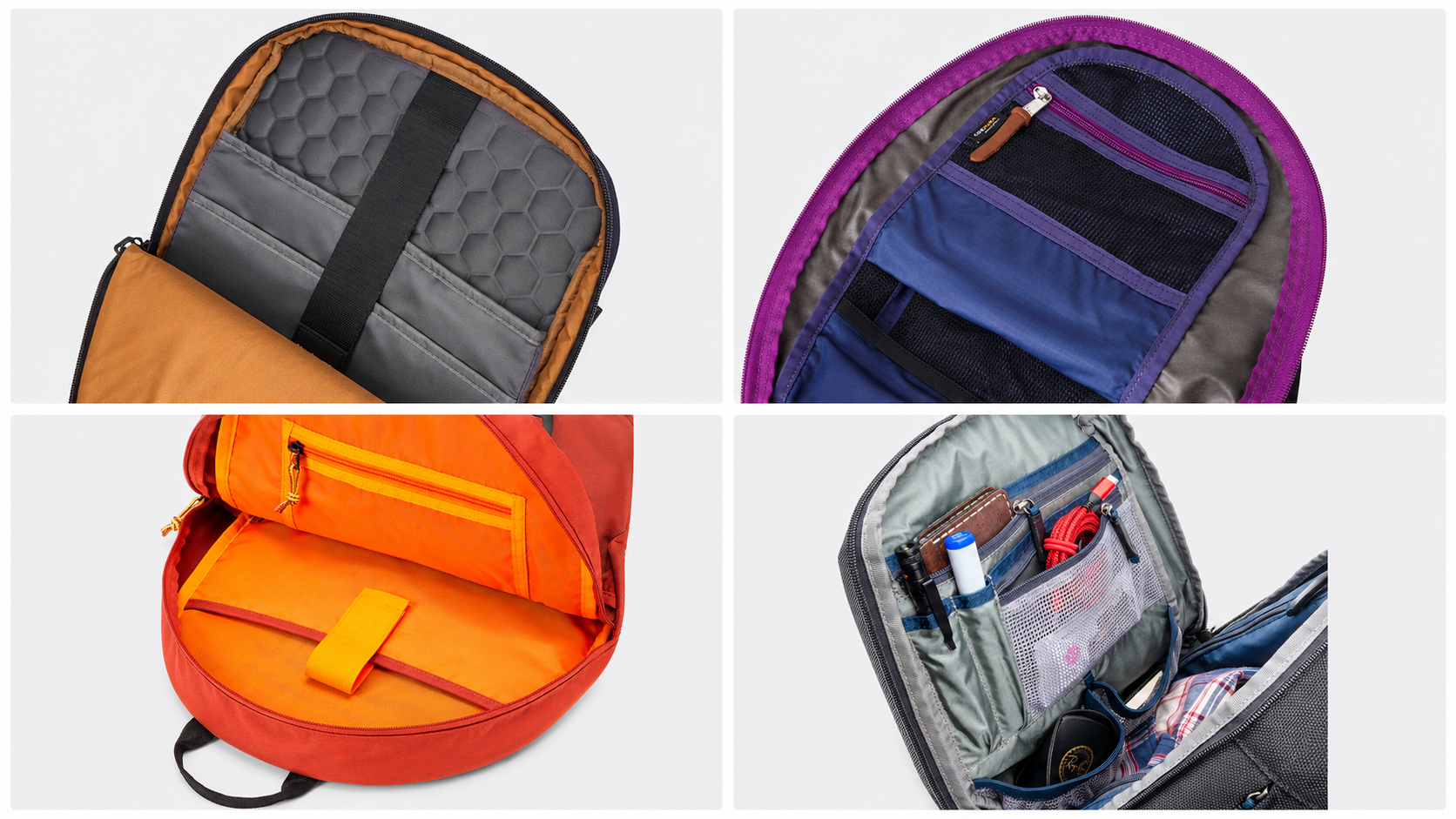
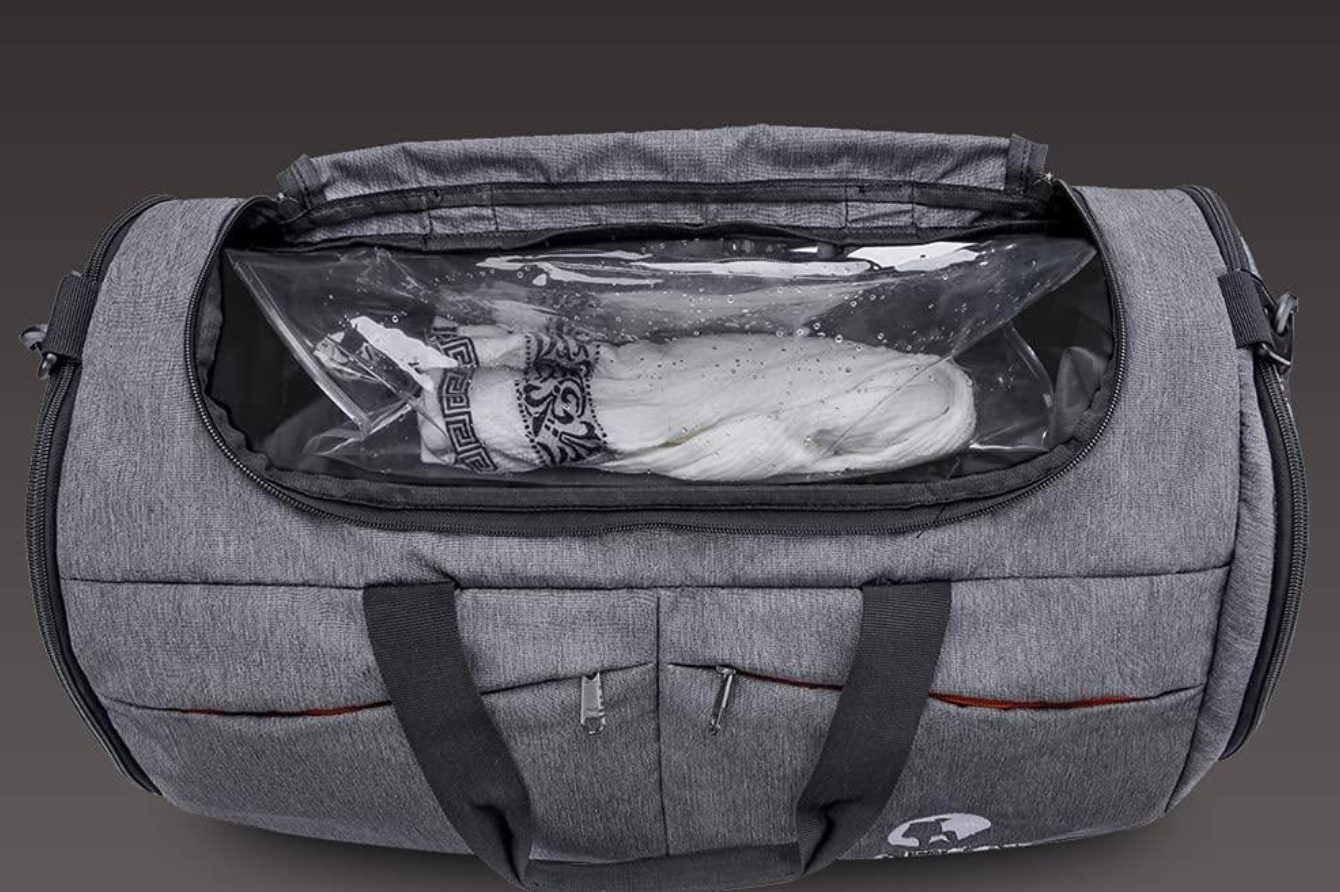
Stop sending me tech packs labeled "Backpack" when you actually want a "Rucksack." In the mass market, these terms are used interchangeably, but on my production floor, the distinction decides everything.
A "backpack" is the broad category of shoulder-carried bags with two straps. A "rucksack" specifically refers to a rugged, large-capacity version, typically featuring a top-loading flap, drawstring closure, and heavy-duty materials1 meant for tactical or outdoor use rather than light urban commuting.
If you are sourcing bags, you need to stop looking at the dictionary and start looking at the Bill of Materials (BOM). The difference isn’t just semantics; it’s about failure points, production costs, and what your end-user actually expects.
What Is the Main Structural Difference Between A Rucksack and A Backpack?
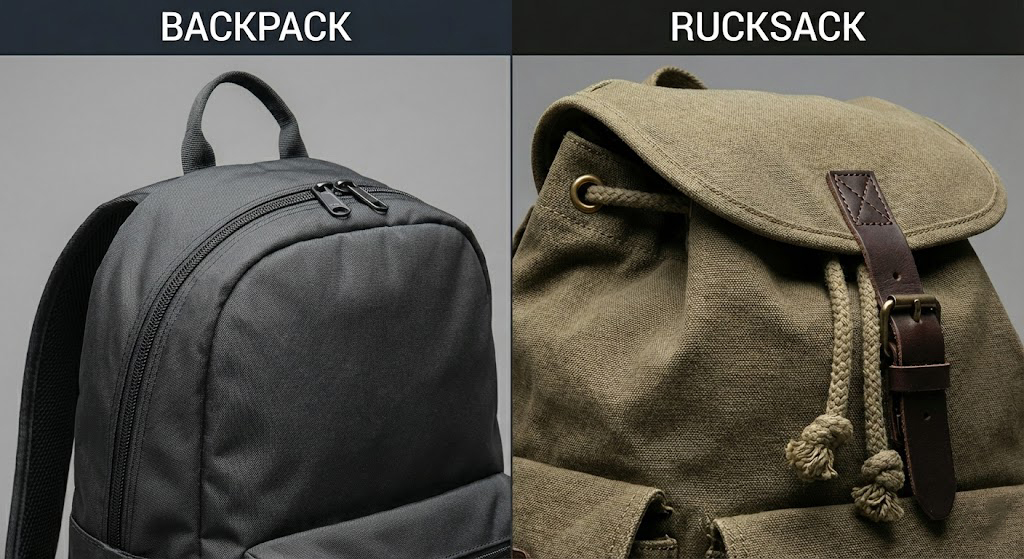
The primary difference lies in the closure system2 and load distribution. Backpacks usually rely on zippers for access, whereas rucksacks utilize a top-loading drawstring and flap system, allowing for over-packing and superior weather resistance in the field.
This matters because zippers are the #1 failure point in bag manufacturing. A rucksack’s "bucket" design removes the stress from the closure mechanism. In a backpack, if you overstuff it, the zipper bursts. In a rucksack, you just loosen the drawstring.
In our QA lab, standard #5 nylon coil zippers fail after roughly 1,500 open/close cycles under high tension. A webbing-and-buckle closure system (common on rucksacks) lasts over 10,000 cycles.
Key engineering differences between a rucksack and a backpack
| Feature | Standard Backpack | Traditional Rucksack |
|---|---|---|
| Primary Entry | Zipper Track (Coil or Vislon) | Top-Load (Drawstring + Flap) |
| Access Speed | Fast (One motion to open) | Slow (Unbuckle -> Lift -> Loosen) |
| Volume Type | Fixed (Defined by pattern shape) | Expandable (Vertical growth) |
| Water Resistance | Low (Zippers leak without PU coating) | High (Flap acts as a rain shed) |
| Main Failure Point | Zipper slider or teeth separation | Grommets tearing or buckle breakage |
| Best Use Case | Tech/School/Urban Commute | Hiking/Military/Heavy Haul |
Actionable Tip: If your target demographic is "Urban Commuter," specify a Backpack for quick access. If you are targeting "Adventure/Travel," specify a Rucksack to eliminate zipper failure returns.
Is A Rucksack More Expensive to Manufacture than A Zippered Backpack?

Don’t assume fewer zippers mean lower costs.
Rucksacks generally command a higher FOB cost (10-15%) because they require more complex assembly steps (attaching lids, threading drawstrings, setting grommets) and more hardware units per bag compared to a simple zipper-track backpack.
Cost driver breakdown
| Feature | Impact on FOB Price | Why? |
|---|---|---|
| Zipper (Backpack) | Low – Medium | Automated sewing is fast and cheap. |
| Buckles/Flaps (Rucksack) | High | Requires manual handling and assembly time. |
| Bartack Stitching | Medium | Essential for rucksack stress points; adds time. |
| Hardware (Metal vs Plastic) | Very High | Rucksacks often demand brass/alloy hardware for the "look." |
Does more hardware mean a higher defect rate?
Yes, but only if you’re cheap. A rucksack with 8 buckles has 8 potential failure points, but using Duraflex3 or Woojin hardware reduces the return rate to under 0.3% in mass production.
- Buckles: High-impact POM (Polyoxymethylene) instead of recycled PP.
- Eyelets: Brass with anti-corrosion plating to prevent rust on the drawstring holes.
- Webbing: High-tenacity filament yarn that doesn’t slip through the ladder locks.

How do materials impact the "Land Cost"?
| Component | Backpack Standard | Rucksack Standard | Cost Impact |
|---|---|---|---|
| Main Fabric | 600D Polyester (PU2) | 1000D Cordura or Canvas | +$4.50/yard |
| Closure | #5 or #8 Reverse Coil Zip | Eyelets + Paracord + Buckles | +$2.20/unit |
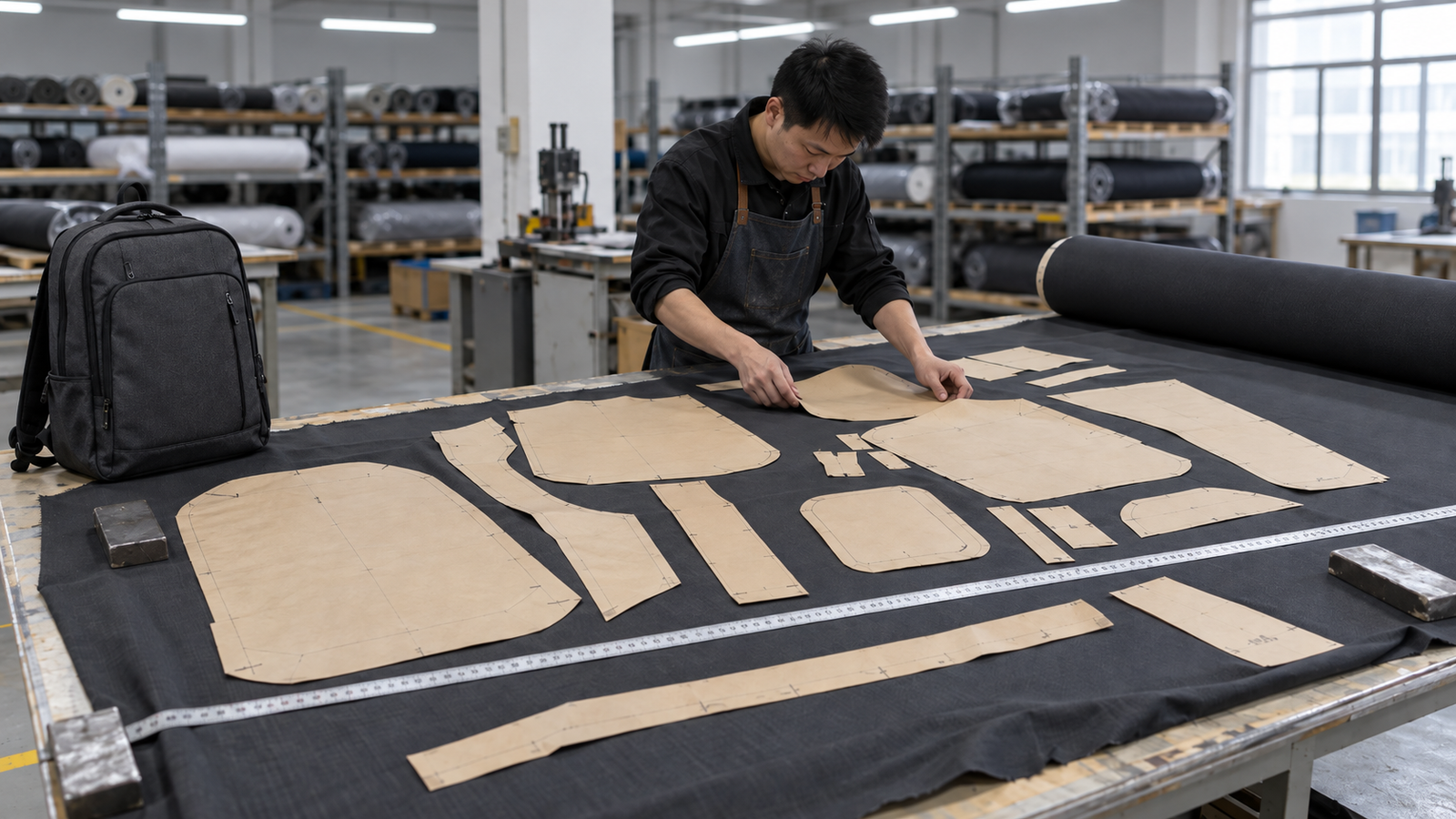
| Stitch Count | 7-8 stitches per inch | 10-12 stitches + Bar-tacks | +15% Labor |
Actionable Tip: If you want a rucksack aesthetic but have a tight budget, ask us to use magnetic snap buttons4 under the buckles. It speeds up assembly and lowers the unit price by roughly $0.40/pc.
Which Material Works Best: Canvas for Rucksacks or Nylon for Backpacks?
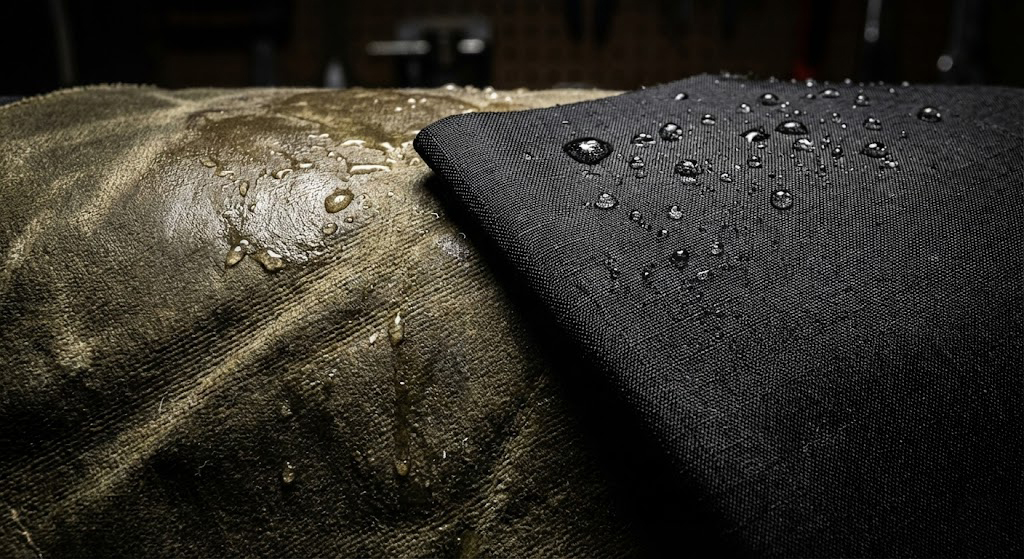
I see clients mix this up constantly. The pattern dictates the fabric. Wrong fabric choices lead to saggy, unsellable bags.
For rucksacks, we almost exclusively recommend heavy 16oz waxed canvas or 1000D Cordura; for backpacks, 600D Polyester or Ripstop Nylon is the standard.
Why does fabric choice matter for production?
A rucksack relies on fabric stiffness to hold its bucket shape, while complex backpacks need softer materials to handle multiple layers.
- Structure: Soft nylon looks like a deflated balloon in a rucksack cut; it needs the stiffness of canvas.
- Weight: Heavy canvas on a multi-pocket backpack makes the bag too heavy before you even pack it.
- Lining: Canvas rucksacks require a separate T/C lining5 to prevent lint, whereas nylon backpacks just use a PU coating.
What are the best fabric matches by style?
Don’t reinvent the wheel. These are the proven material pairings that maximize durability and minimize production defects on our line.
| Bag Style | Recommended Material | Factory Reason |
|---|---|---|
| Heritage Rucksack | 16oz Waxed Cotton Canvas | The fabric provides the structure; ages well for the "vintage" look. |
| Tactical Rucksack | 1000D Cordura Nylon | Extremely high abrasion resistance for field use; holds shape well. |
| Tech Backpack | 1680D Ballistic Nylon | Sleek, professional look that works with complex zipper patterns. |
| School Backpack | 600D Polyester (PU Coated) | Lightweight, cheap to print on, and easy to sew in high volume. |
Actionable Tip: If you insist on a Canvas Rucksack, ensure you budget for a T/C (Tetron Cotton) lining. Raw canvas sheds fibers inside the bag—your customer’s laptop will be covered in lint within a week without it.
Also read: What Is the Most Durable Backpack Material?
Does "Rucksack" Always Mean a Bigger Bag?
No. While the term historically implied large military infantry packs, modern manufacturing definitions6 refer to the design silhouette, not the liter capacity.
Volume is a function of dimensions, not the name. We frequently manufacture "Mini Rucksacks" for fashion brands that are only 12 Liters but feature the signature flap and buckle. Conversely, we make 60L travel packs that are technically "backpacks" because they use a full-perimeter zipper.
I recall a dispute with a French client who ordered "Rucksacks" expecting 50L hiking capacity but received 25L day-packs because their tech pack dimensions were small. They argued semantics; I pointed to the measurements. Dimensions never lie; names do.
Capacity vs. Style Matrix
- Daypack (Backpack): 15L – 25L (Standard Commute)
- Tech Rucksack: 20L – 30L (Urban styling, Flap closure)
- Expedition Rucksack: 45L – 80L+ (The traditional definition)
Never rely on the word "Rucksack" to communicate size to your factory. Explicitly state the required volume in Liters and provide L x W x H dimensions in the BOM.
Also read: How to Measure Backpack Volume: Easy Step-by-Step Guide

Which Term Should You Use for Your Target Market?
You might know the difference now, but your customers are confused. Using the wrong keyword in your product listing can tank your conversion rate.
Market linguistics differ sharply: In the US, "Backpack" is the universal keyword for school and travel, while "Rucksack" signals a niche heritage/camping aesthetic. In the UK and Germany, "Rucksack" is the standard generic term for everything.
Regional Keyword Strategy
- USA: Use "Backpack" for 90% of listings. Use "Rucksack" only if the bag has leather straps, canvas fabric, or a vintage military look.
- UK/Europe: "Rucksack" is safe for general use, but "Backpack" is gaining ground among younger, tech-focused demographics.
- Military/Tactical: Always use "Ruck" or "Rucksack." This audience respects the heritage.
| Market | Preferred Term | Customer Expectation |
|---|---|---|
| US Mass Market | Backpack | School, Laptop, Gym |
| US Heritage/Niche | Rucksack | Canvas, Leather, Hiking |
| Germany/UK | Rucksack | General Purpose |
Why Do European Buyers Insist On the "Rucksack" Label?
It’s not just a language thing; it’s a standard of expectation. In the DACH region7 (Germany, Austria, Switzerland), a "Rucksack" implies a specific level of outdoor readiness.
The term "Rucksack" carries a perceived value of durability and heritage. In B2B sales, labeling a high-end outdoor bag as a "Rucksack" allows for a 15-20% higher MSRP compared to the generic "Backpack" label.
I’ve seen brands struggle in the UK and German markets because they marketed a technical top-loader as a "Backpack." The customers felt it sounded too "school-ish." You are selling a tool, not a fashion accessory.
What features do "Rucksack" buyers demand?
- Daisy Chains: External webbing loops for clipping gear.
- Rain Cover Pocket: A hidden compartment at the base (standard in Euro-spec bags).
- Lid Pockets: At least one "brain" pocket on top for quick-access items.
How Can We Customize Your Next Production Run for Specific Markets?

Stop guessing what your customers want. Whether you need a high-volume "Backpack" for the US mass market or a premium "Rucksack" for the European outdoors, we customize every stitch, label, and material to match regional search intent and buyer expectations.
We don’t just swap labels; we change the DNA of the bag. For a US "Backpack" listing, we focus on tech-friendly features like padded 16-inch laptop sleeves, whereas a European "Rucksack" order gets heavy-duty weatherproofing and metal hardware to meet the "general purpose" durability expected in that region.
Our data shows that 90% of US-based listings succeed using "Backpack" terminology, while the "Rucksack" label is reserved for high-margin heritage or military-style niche products. By aligning your RFQ (Request for Quote) with these regional standards, we help you avoid the "mismatch" that kills conversion rates on platforms like Amazon or in retail showrooms.
Which "Term" fits your brand’s DNA?
- US Mass Market: Stick to "Backpack" for school, laptop, or gym-focused designs to capture the widest search volume.
- US Heritage/Niche: Use "Rucksack" if you are using canvas, leather, or aiming for a premium hiking aesthetic.
- UK & Germany: Default to "Rucksack" for general-purpose bags, as this is the safe bet for all-age demographics.
- Military/Tactical: Always label these as "Ruck" or "Rucksack" to respect the heritage this specific audience demands.
Ready to Build A Bag that Actually Sells?
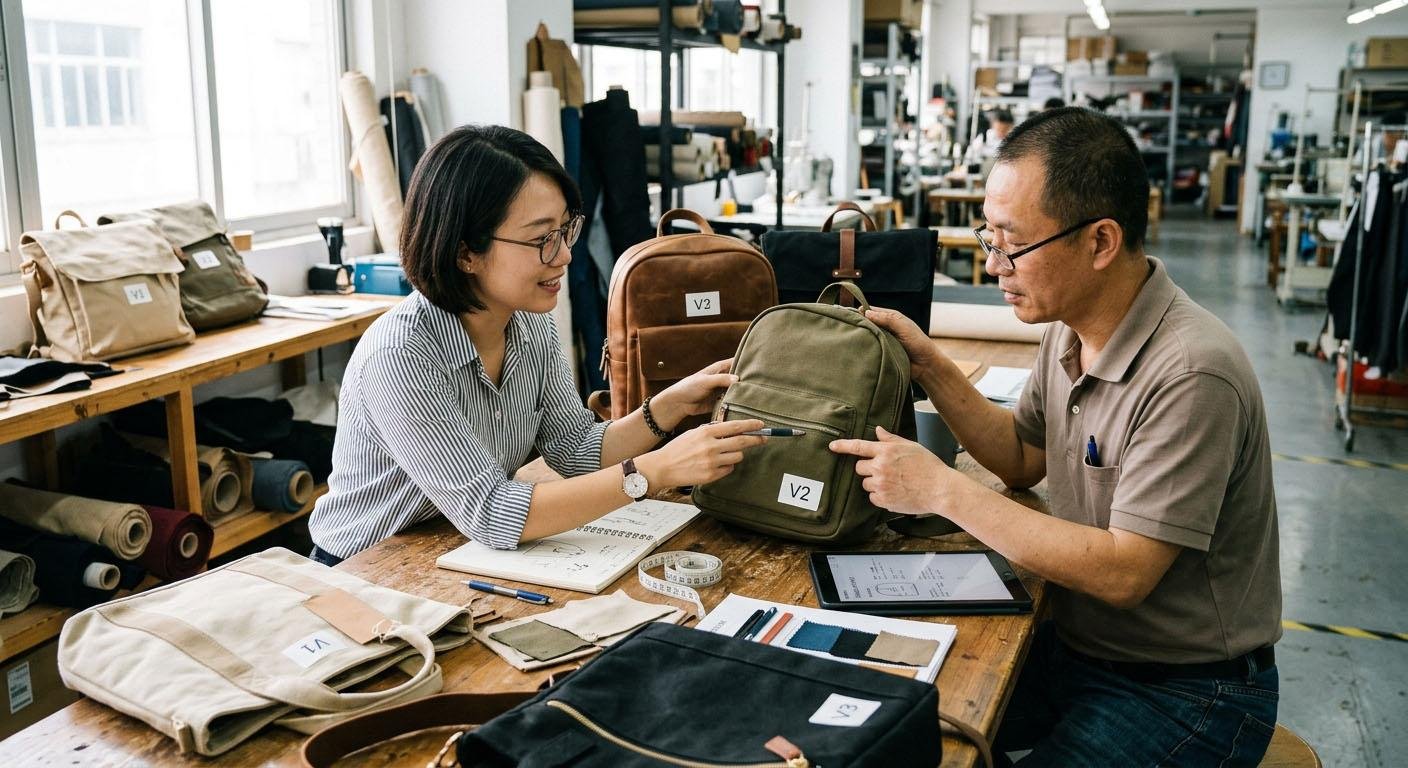
Stop settling for "off-the-shelf" catalog bags that 50 other brands are already selling. Whether you want to swap standard plastic buckles for custom-molded alloy, or upgrade generic canvas to waterproof 1680D Ballistic Nylon, our sample room can prototype it in 7 days.
SEND ME your rough sketch or Tech Pack today—let’s build a SKU that actually stands out on the shelf.
Deep FAQ: From the Factory Floor
1. Can I put a laptop sleeve in a rucksack?
Technically, yes. But practically, it’s a pain. In a rucksack, the laptop sleeve is usually against the back panel inside the main "bucket." To get your laptop out, you have to undo the buckles, lift the flap, open the drawstring, and dig past your gym clothes. If you need a laptop sleeve, add a side-access zipper to the rucksack. Trust me.
2. Why do my rucksack samples always tip over?
Because you didn’t pay for a padded bottom panel. Rucksacks are top-heavy. If you don’t add a layer of EVA foam at the base, they will slump. Backpacks usually have more structure due to the piping and zipper lines.
3. Is "Waterproof" easier on a backpack or rucksack?
Rucksack. A backpack has zippers—water loves zippers. Even "waterproof" zippers (PU coated) eventually peel. A rucksack has a giant flap that acts like a roof shingle. Water rolls right off. For true waterproofing, a roll-top rucksack wins every time.
4. Why are military bags always rucksacks?
Silence and repairability. Velcro and zippers are loud. A buckle is silent. Also, if a buckle breaks in the field, you can tie the strap. If a zipper breaks, the bag is useless.
5. Are rucksacks more waterproof than backpacks?
Sort of, but not for the reason you think. Zippers leak. It’s a fact. A rucksack’s flap acts like a shingle on a roof, shedding water over the opening. But unless you’re paying for RF-welded seams (which you probably aren’t), neither is truly waterproof. Don’t lie on the hangtag.
6. Is ‘Knapsack’ still a thing?
Only if you’re selling to people living in the 1800s. In the industry, we don’t use this word. It usually refers to a smaller, cruder canvas sack. Avoid it in your marketing unless you’re selling pure retro cosplay.
Footnotes
-
Heavy-duty materials enhance durability and performance, especially for outdoor use. ↩
-
Exploring closure systems helps in selecting the right design for durability and functionality. ↩
-
Learn the types of buclkes and the advantages of Duraflex. ↩
-
Explor how to add a magnetic snap to your pouch – Easy DIY tutorial. ↩
-
Why Tetron Cotton (T/C) blends are the preferred durable lining choice for canvas bags. ↩
-
Knowing manufacturing definitions aids in clear communication and accurate production specifications. ↩
-
Economic overview of the German-speaking market (Germany, Austria, Switzerland) and its consumer preferences ↩