Struggling to find the perfect bag for short trips? Your bulky suitcase is too much, and your backpack isn’t enough. You need a simple, efficient solution for weekend travel.
A 30–50 L duffel bag1 is ideal for weekend getaways. Choose one with high-denier coated nylon, padded convertible straps, a dedicated shoe compartment, and external pockets for organized packing—all while keeping the empty weight under 1 kg for maximum convenience.
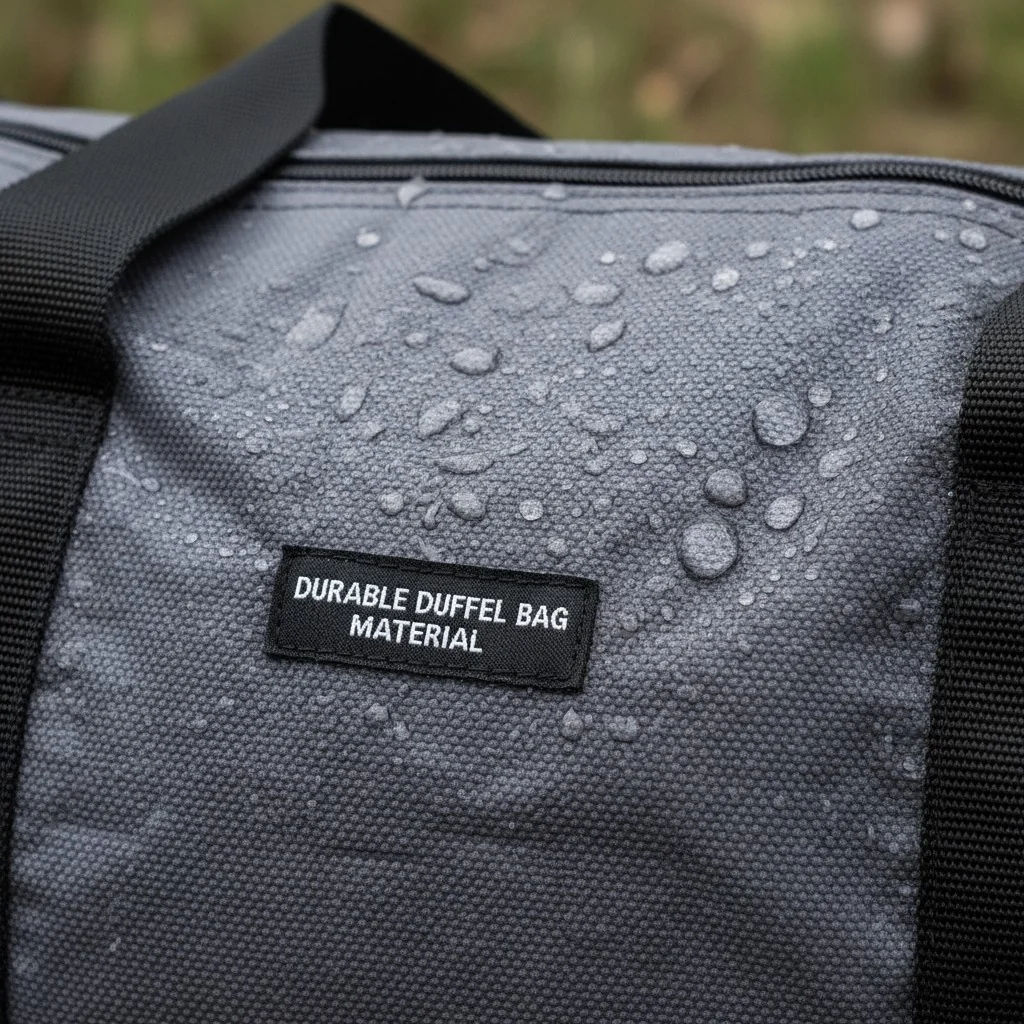
Choosing the right bag can make or break a trip. As someone who has designed and sourced bags for years, I’ve seen firsthand how the right features can transform a travel experience. For brand owners like you, understanding these details is key to offering products your customers will love. Let’s break down exactly what makes a duffel bag the ultimate weekend companion and how to select the perfect one for your collection.
[claim claim=”All duffel bags are made from the same type of canvas.” istrue=”false” explanation=”Duffel bags are made from a wide variety of materials, including nylon, polyester, leather, and different weights of canvas, each offering unique benefits in durability, weight, and weather resistance.”]
[claim claim=”The term ‘denier’ refers to the thickness and weight of a fabric’s fiber.” istrue=”true” explanation=”A higher denier number generally indicates a thicker, sturdier, and more durable fabric, which is why it’s a key specification for high-quality bags.”]
Why a Duffel Bag is Perfect for Weekend Getaways?
Tired of rigid suitcases that don’t fit anywhere? Duffel bags offer a flexible, no-fuss packing experience that rigid luggage just can’t match, making your short trips much smoother.
Duffel bags are spacious, flexible, and easy to carry, making them an ideal option for weekend getaways. Their simple, unstructured design allows for easy packing of clothes, shoes, and toiletries, offering superior convenience and comfort for short trips.
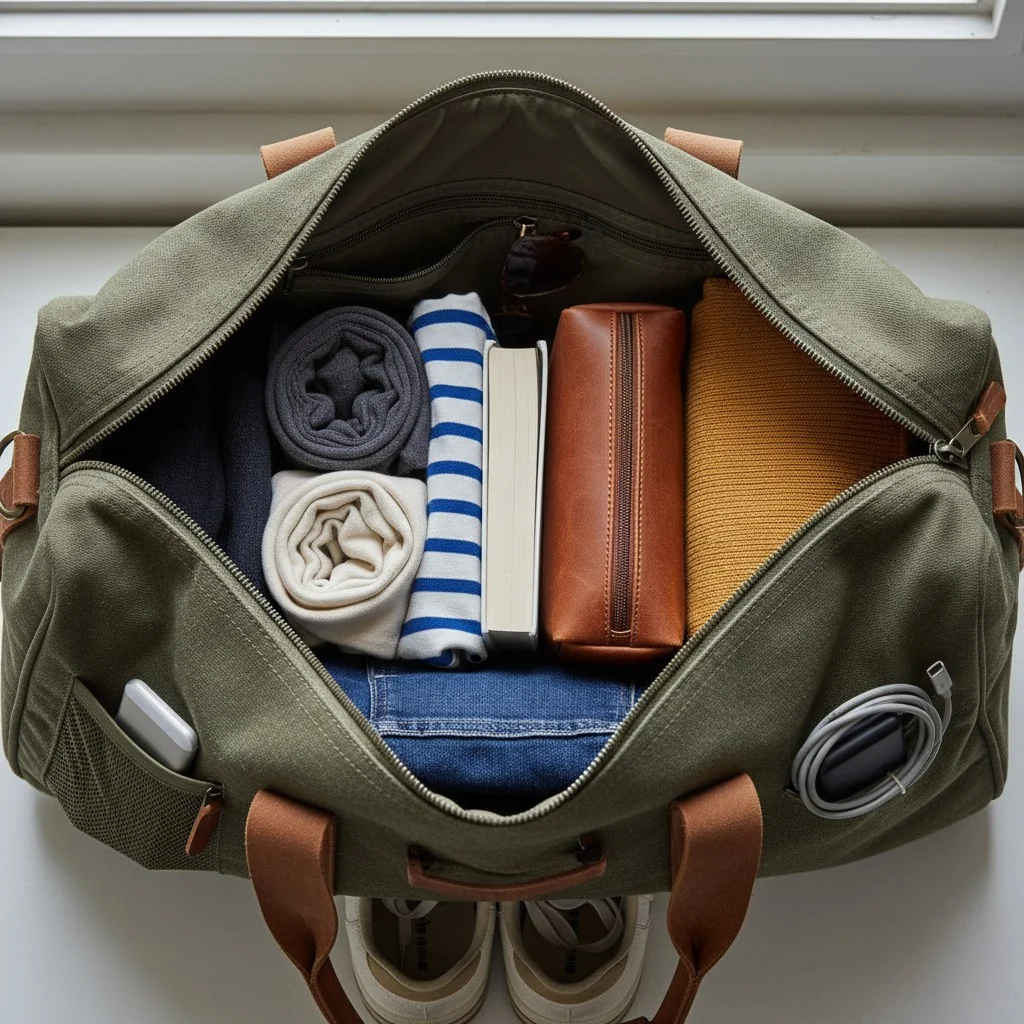
When I first started in the bag industry, I quickly learned that simplicity often equals efficiency. A duffel bag is the perfect example. Unlike structured suitcases with fixed compartments, a duffel’s large main opening gives you total freedom.
You can roll your clothes, use packing cubes2, or just stuff everything in—it adapts to your style. This flexibility is a huge selling point for customers who value convenience. For your brand, highlighting this adaptability can attract travelers who are tired of the constraints of traditional luggage. It’s about selling a feeling of freedom, not just a bag.
The Advantage of Simplicity
The core strength of a duffel bag is its large, single compartment. This design means fewer restrictions on what you can pack. Awkwardly shaped items, like a pair of hiking boots or a bulky sweater, fit in easily.
Unmatched Flexibility
Because they are soft-sided, duffel bags can be squeezed into tight overhead compartments on planes or packed into a full car trunk. This is a major advantage over hard-shell cases.
[claim claim=”Duffel bags were originally named after the town of Duffel in Belgium, where the thick cloth used to make them was produced.” istrue=”true” explanation=”The name dates back to the 17th century and refers to the specific, durable woolen cloth made in Duffel, Belgium.”]
[claim claim=”A duffel bag’s soft sides make it less durable than a hard-shell suitcase.” istrue=”false” explanation=”Durability depends on the material, not the structure. High-denier ballistic nylon or heavy-duty polyester can make a duffel bag incredibly tough and resistant to tears and abrasions.”]
What Size Duffel Bag Do I Need for a Weekend?
Choosing the wrong size bag is frustrating. Too big, and it’s a burden to carry. Too small, and you’re leaving essentials behind. Finding the right balance is key.
A 30–50 liter duffel bag is the perfect capacity for a 2-3 day weekend trip. This size accommodates a few outfits, an extra pair of shoes, and toiletries without becoming too bulky or heavy to carry comfortably.
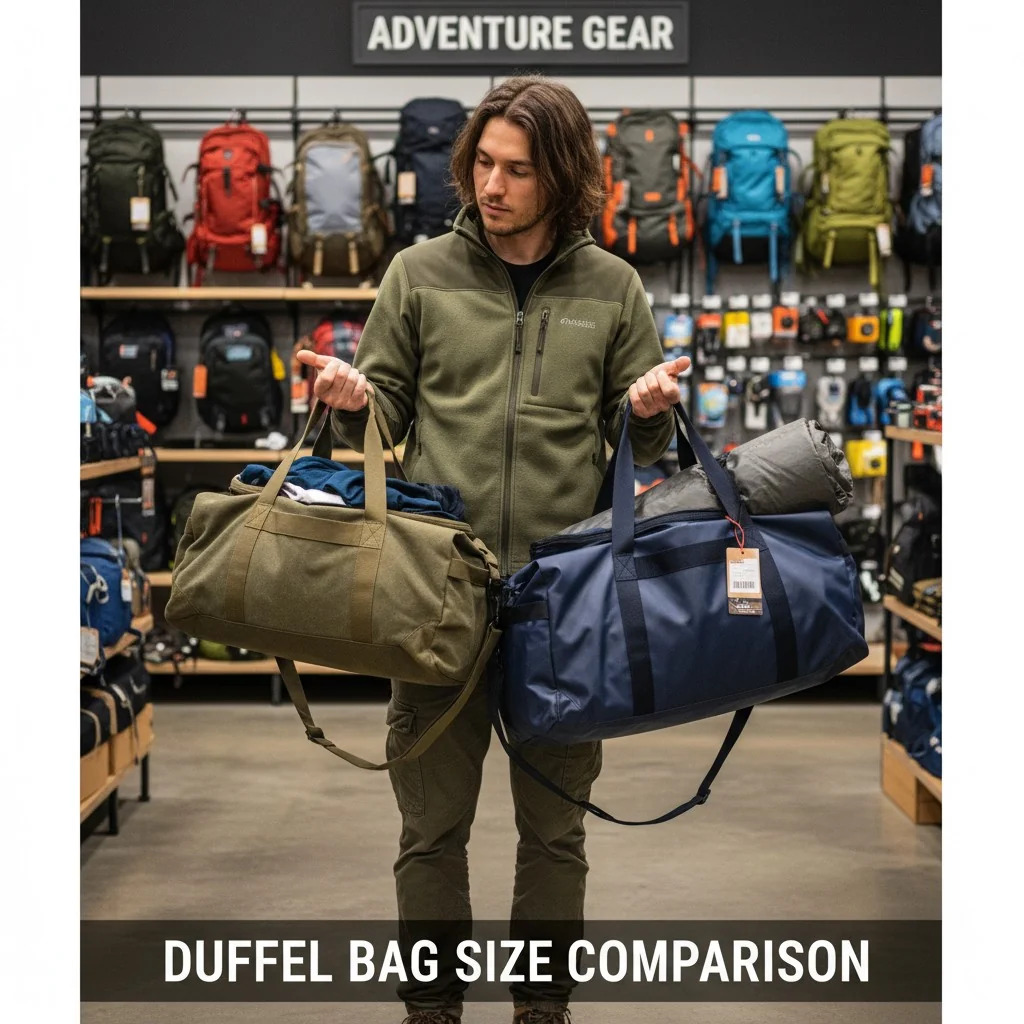
From my experience working with countless travel brands, the 40-liter size3 consistently emerges as the "sweet spot." It hits the perfect balance for the average traveler. It’s large enough to avoid stressful packing decisions but small enough to remain portable and carry-on compliant. When developing a product line, offering a 40L duffel is a safe bet to meet the needs of the widest audience. To help you visualize it, let’s break down what fits inside.
The 40L "Sweet Spot"
A 40-liter bag provides ample space for a typical weekend packing list. It allows for organized packing without the risk of over-packing that a larger bag might encourage.
Typical Weekend Packing List (40L Duffel)
| Item Category | Example Items | Notes |
|---|---|---|
| Clothing | 2-3 T-shirts, 1-2 pairs of pants, 1 sweater | Rolled to save space |
| Shoes | 1 extra pair (e.g., sneakers, sandals) | Placed in a shoe compartment |
| Toiletries | Toiletry bag with travel-sized items | Fits easily in a side pocket |
| Electronics | Laptop, charger, power bank | Often in a dedicated sleeve |
| Outerwear | 1 light jacket | Can be laid on top |
[claim claim=”A 70-liter duffel bag is the standard size for a weekend trip.” istrue=”false” explanation=”A 70-liter bag is generally considered too large for a typical weekend trip and is better suited for week-long travel or expeditions requiring more gear.”]
[claim claim=”Most airlines accept a 40-liter duffel bag as a carry-on.” istrue=”true” explanation=”A 40L duffel typically measures around 22 x 14 x 9 inches, which fits within the standard carry-on size restrictions for the majority of major airlines.”]
What Materials Are Best for a Weekender Duffel Bag?
Worried your bag won’t survive a sudden downpour or rough handling? The material is your first line of defense, protecting your belongings from weather and wear. It’s a critical choice.
For a weekender duffel, look for durable and weather-resistant materials4. High-denier nylon (like ballistic or ripstop) and coated polyester offer the best protection against rain and abrasion, while heavy-duty canvas provides a classic, rugged look.
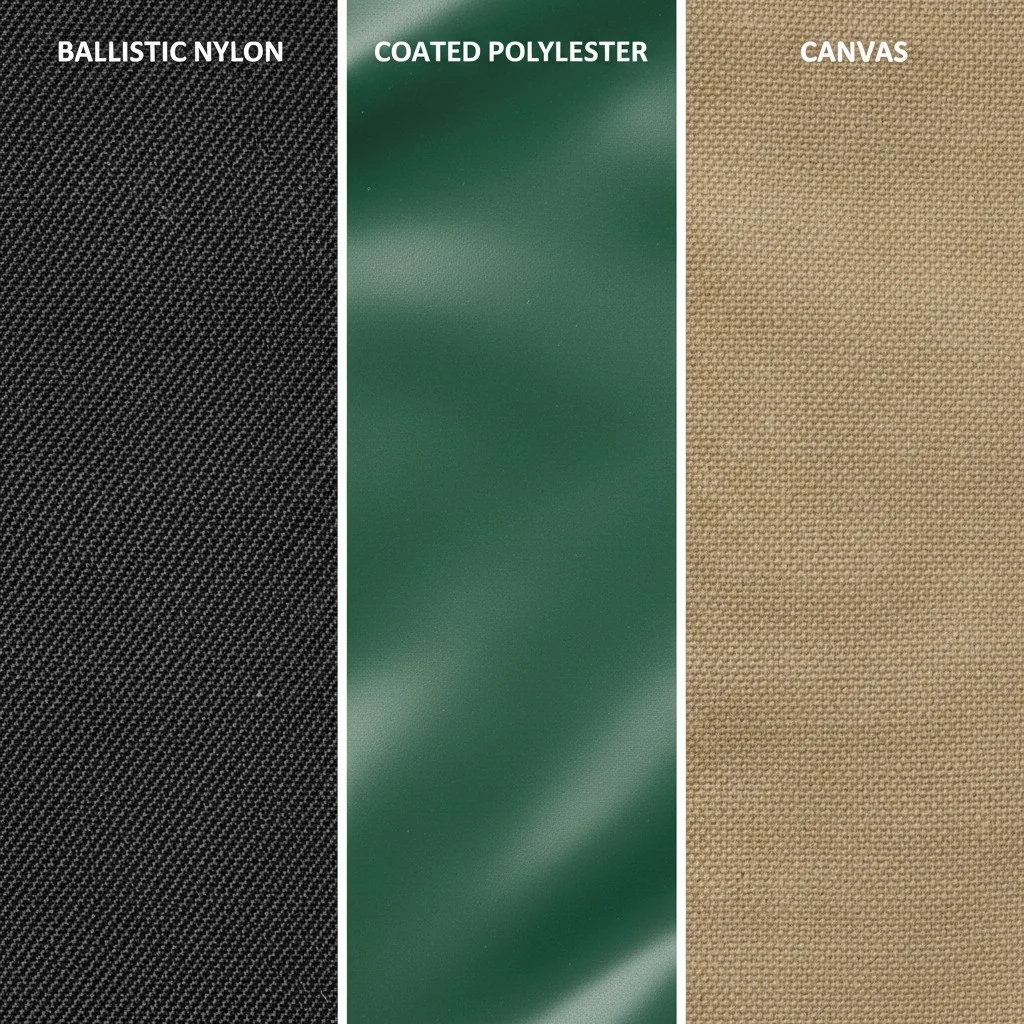
When sourcing for brands, I always emphasize that material choice directly impacts brand perception. A bag that fails after a few trips reflects poorly on the seller. That’s why I steer clients toward proven materials.
For example, Cordura® or ballistic nylon5 sends a message of premium quality and durability. Coated polyester is a fantastic mid-range option that balances cost and performance. For a lifestyle brand, a waxed canvas can communicate a heritage aesthetic. Understanding these nuances helps you create a product that not only performs well but also aligns with your brand’s story.
Material Breakdown
Different materials offer different strengths. Choosing the right one depends on the target customer’s priorities, whether it’s weather resistance, lightweight travel, or pure toughness.
Comparing Common Duffel Bag Fabrics
| Material | Pros | Cons | Best For |
|---|---|---|---|
| Ballistic Nylon | Extremely durable, tear-resistant | Heavier, can be expensive | Frequent travelers, rough use |
| Coated Polyester | Water-resistant, lightweight, affordable | Less abrasion-resistant than nylon | All-around weekend use |
| Waxed Canvas | Develops a unique patina, very durable | Heavy, requires occasional re-waxing | Style-conscious, heritage brands |
| Ripstop Nylon | Very lightweight, prevents tears from spreading | Can feel thin, less structured | Ultralight travelers, packable bags |
[claim claim=”All polyester fabrics are waterproof.” istrue=”false” explanation=”Standard polyester is water-resistant, but it is not waterproof unless it has a specific coating (like PU or PVC) or a waterproof membrane applied to it.”]
[claim claim=”Ballistic nylon was originally developed for military flak jackets during World War II.” istrue=”true” explanation=”Its name comes from its intended function: to protect airmen from flying debris and fragmentation, highlighting its exceptional toughness and resistance to tearing.”]
What Key Features Should I Look for in a Weekender Duffel?
An empty bag is just a sack. The right features—pockets, straps, and compartments—are what turn it into a functional travel tool that keeps you organized and comfortable on the go.
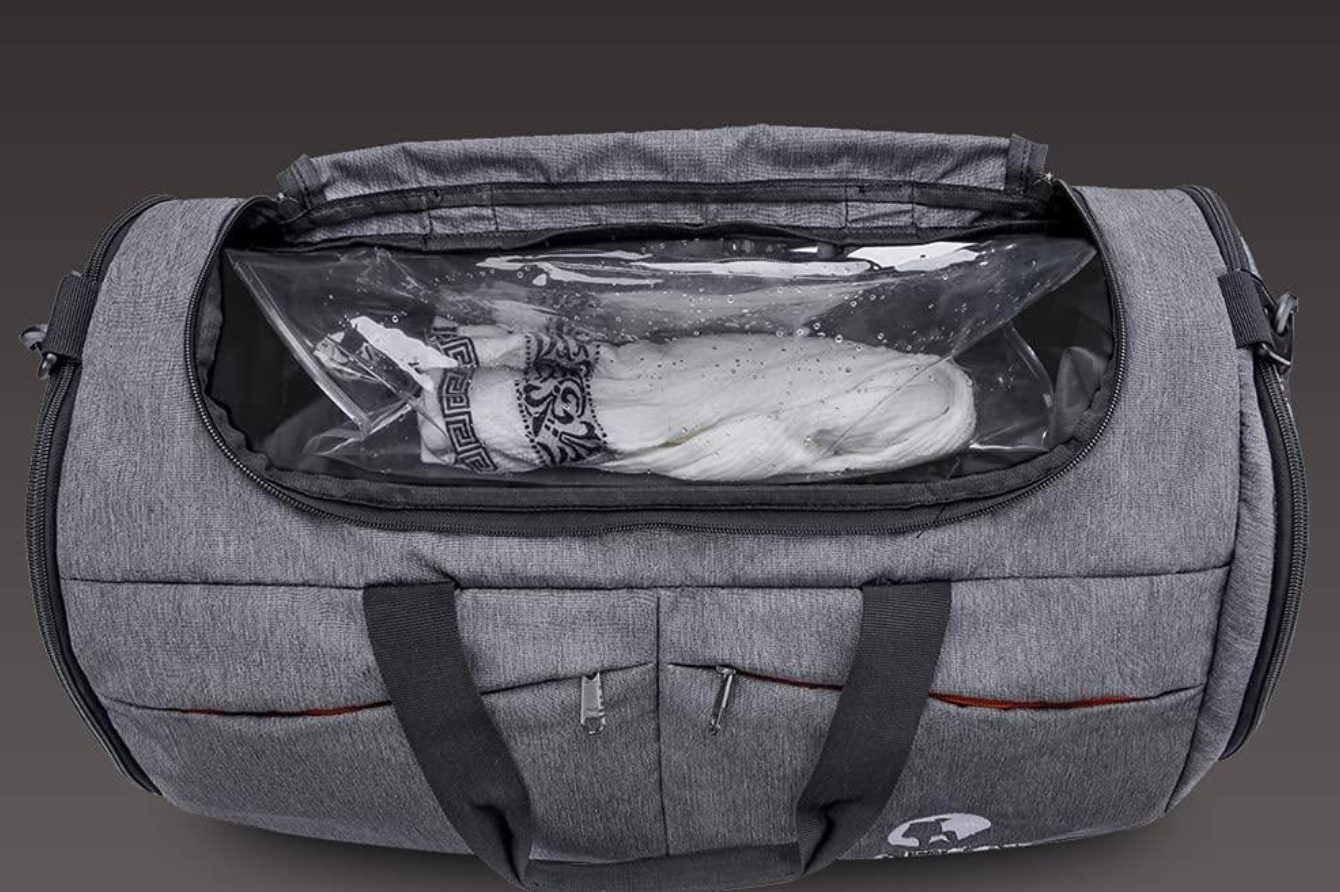
Look for padded, convertible straps6 that can be worn as a backpack, a separate shoe compartment to keep dirty items away from clean clothes, and multiple external pockets for quick access to essentials like your passport, phone, and keys.

I’ve seen many bag designs over the years, and the ones that succeed always solve a problem for the user. A dedicated shoe compartment7 is a perfect example. It’s a simple feature, but it solves the universal problem of packing dirty shoes next to clean clothes.
Likewise, convertible straps that allow for backpack-style carry are a game-changer in airports or train stations when you need your hands free. As a brand, focusing on these thoughtful, user-centric features is how you build loyalty. Your customers will remember the convenience long after they’ve forgotten the price tag.
Must-Have Organizational Features
Smart organization is what separates a great bag from a good one. These features add immense practical value.
- Shoe Compartment: A ventilated, separate compartment is essential for storing shoes or dirty laundry.
- external pockets8: At least one or two quick-access pockets are crucial for items you need on the fly, like your wallet, phone, or boarding pass.
- Internal Pockets: Mesh or zippered pockets inside help organize smaller items like socks, chargers, and toiletries.
Comfort and Carry Options
How you carry the bag is just as important as what’s inside.
- Padded Straps: A detachable shoulder strap should have ample padding to prevent it from digging into your shoulder.
- Convertible Backpack Straps: This is a premium feature that offers incredible versatility for hands-free carrying.
- Grab Handles: Multiple handles (on the top and sides) make it easy to grab the bag from an overhead bin or car trunk.
[claim claim=”A shoe compartment adds significant weight to a duffel bag.” istrue=”false” explanation=”A shoe compartment is typically made from a lightweight nylon liner and adds negligible weight to the bag, while its organizational benefit is substantial.”]
[claim claim=”Convertible backpack straps are a recent invention from the last decade.” istrue=”true” explanation=”While military duffels have had shoulder straps for a long time, the concept of stowable, padded straps that convert a duffel into a comfortable backpack for consumer travel is a relatively modern design innovation.”]
Should I Choose a Duffel Bag with Wheels or Without?
Dragging a heavy bag through a massive airport is exhausting. But are wheels always the best solution? The choice between wheels and no wheels depends entirely on your travel style.
Choose a duffel bag with wheels if you prioritize easy navigation through airports and on smooth surfaces. Opt for a duffel without wheels if you need a lighter bag that can handle varied terrain like cobblestones, stairs, or being carried for long distances.

This is a frequent debate I have with brand designers. Wheels add convenience, but they also add weight, cost, and complexity. The frame and wheels can eat into the main compartment’s packing space and are a potential point of failure.
For an e-commerce brand like yours, Madison, it’s smart to offer both. A traditional duffel appeals to the adventurous, minimalist traveler, while a wheeled version caters to the urban or business traveler who values comfort and ease. Segmenting your audience this way allows you to meet different needs effectively.
Wheeled vs. Traditional Duffel
Making the right choice comes down to weighing the pros and cons against your typical travel environment.
| Feature | Wheeled Duffel | Traditional Duffel (No Wheels) |
|---|---|---|
| Best Use | Airports, train stations, hotels | Mixed terrain, car travel, stairs |
| Pros | Easy to pull, reduces strain on back/shoulders | Lighter, more packing space, no broken parts |
| Cons | Heavier, less packing space, wheels can break | Must be carried, can be heavy when full |
| Weight | Typically 1-2 kg heavier | Maximizes portability |
[claim claim=”Wheeled duffels have less internal packing space than non-wheeled duffels of the same external dimensions.” istrue=”true” explanation=”The internal frame, handle, and wheel wells required for a rolling system take up valuable volume inside the bag, reducing the overall usable packing capacity.”]
[claim claim=”All wheeled duffels use the same type of two-wheel system.” istrue=”false” explanation=”While two-wheel systems are common, some modern duffels now feature four spinner wheels for 360-degree mobility, similar to high-end rolling suitcases.”]
Can I Use a Duffel Bag as a Carry-On for Air Travel?
Getting stopped at the gate because your bag is too big is a travel nightmare. Knowing the rules for duffel bags is essential for a stress-free airport experience.
Yes, you can use a duffel bag as a carry-on, provided it meets the airline’s size restrictions. A duffel bag between 35L and 45L is generally compliant, but always check the specific dimensions (usually around 22 x 14 x 9 inches) with your airline before flying.

I always advise the brands I work with to design their "carry-on" duffels with these dimensions in mind. It’s a critical selling point. The soft-sided nature of a duffel is a huge advantage here.
Unlike a rigid suitcase that is unforgiving, a duffel that is not over-packed can often be compressed to fit into a tight sizer or overhead bin. When marketing a bag, explicitly stating "TSA-approved carry-on size" or "Fits most major airlines" removes a major point of friction for the customer and can significantly boost sales. It’s about providing peace of mind.
Navigating Airline Rules
Airlines are strict about carry-on sizes, but duffels have a natural edge.
- Standard Dimensions: The most common carry-on size limit in the U.S. is 22 x 14 x 9 inches (56 x 36 x 23 cm). A 40L duffel usually fits this perfectly.
- The Flexibility Factor: Because duffels are soft, they have some give. If you don’t pack it to its absolute limit, you can often squeeze it to meet requirements.
- Weight Limits: Don’t forget about weight. Some international carriers have strict carry-on weight limits (often 7-10 kg). A lightweight duffel helps you pack more while staying under the limit.
[claim claim=”All airlines worldwide have the same carry-on size restrictions.” istrue=”false” explanation=”Carry-on size and weight limits vary significantly between airlines, especially with budget carriers and international flights. It is crucial to check with your specific airline before traveling.”]
[claim claim=”A duffel bag’s dimensions are measured when it is fully packed.” istrue=”true” explanation=”Airlines measure the bag’s total external dimensions, including any bulging pockets. The flexibility of a duffel is an advantage, but over-packing can push it beyond the allowed size.”]
Expert Picks: Top 5 Best Duffel Bag for Weekend Getaways?
Feeling overwhelmed by all the options? Sometimes it helps to see what the experts use and recommend. These bags consistently stand out for their design, durability, and user-friendly features.
Based on years of industry analysis and testing, my top pick is the Patagonia Black Hole 40L for its unbeatable mix of durability, weatherproofing, and carry-on compliance9, making it a top choice for any traveler.

As a bag professional, I’m constantly analyzing what makes a product successful. It’s not just about one feature; it’s about how the entire package serves a specific type of user. The bags on this list are all best-in-class, but for different reasons.
For your business, Madison, studying these examples can provide powerful inspiration. Notice how each one targets a specific need—ultimate toughness, ultralight packability, or superior organization. This is the key to creating a product line that resonates with diverse customer profiles.
1. Patagonia Black Hole Duffel 40L
- Best For: All-Around Performance. This bag is the gold standard. Its recycled TPU-laminated ripstop polyester is incredibly durable and weather-resistant. The padded, removable backpack straps are comfortable, and its size is perfect for carry-on. It’s the bag I recommend most often.
2. Bellroy Lite Duffel
- Best For: Ultralight & Packable. If weight and storage are the top priorities, this is the winner. It’s made from a surprisingly tough, diamond-ripstop fabric derived from recycled plastic bottles. It can be folded or rolled up into a tiny pouch, making it a great secondary bag for a longer trip.
3. CALPAK Luka Duffel
- Best For: Organization & Style. This bag is for the traveler who wants everything in its place. It features a separate shoe compartment, multiple external and internal pockets, and even a luggage trolley sleeve. Its puffy, modern aesthetic also makes it a fashion statement.
4. Travelpro Maxlite 5 Drop-Bottom Weekender
- Best For: Separating Gear. This bag has a unique drop-bottom compartment, which is perfect for separating shoes and dirty clothes from the main section. It’s a brilliant feature for active getaways where you might have muddy or wet gear.
5. The North Face Base Camp Duffel – XS
- Best For: Maximum Durability. This bag is legendary for its toughness. Made from ballistic nylon, it’s built to withstand the harshest conditions. The XS (31L) size is compact, ideal for light packers or as a rugged personal item for adventure travel.
[claim claim=”The Patagonia Black Hole duffel is made from 100% recycled materials.” istrue=”true” explanation=”Patagonia has transitioned the Black Hole line so that the body fabric, lining, and webbing are all made from 100% recycled materials, reflecting a strong commitment to sustainability.”]
[claim claim=”The North Face Base Camp Duffel was designed primarily for urban commuting.” istrue=”false” explanation=”It was originally designed for and tested by mountaineering expeditions, intended to be hauled up mountains and endure extreme weather, making it one of the most durable duffels available.”]
Conclusion
Choosing the right weekender duffel comes down to size (30-50L), material, and features like convertible straps and a shoe compartment. Focus on these key elements to find your perfect travel companion.
References
-
Understanding the ideal size for a duffel bag can help you pack efficiently for short trips. ↩
-
Using packing cubes can maximize space and keep your items organized, making packing and unpacking easier. ↩
-
Understanding why the 40-liter size is ideal can help you make informed packing decisions for short getaways. ↩
-
Learning about weather-resistant materials can help you choose a bag that protects your belongings in various conditions. ↩
-
Exploring the properties of ballistic nylon can help you understand its durability and suitability for travel. ↩
-
Convertible straps offer versatility and comfort, making it easier to carry your bag in different situations. ↩
-
A dedicated shoe compartment can keep your clothes clean and organized, making travel more convenient. ↩
-
External pockets provide quick access to essentials, enhancing the overall convenience of your travel experience. ↩
-
Knowing carry-on compliance can prevent travel hassles and ensure your bag fits airline regulations. ↩