Worried your new backpack design won’t meet carry-on rules1? A rejected bag can ruin a customer’s trip and your brand’s reputation. Let’s clarify the dimensions to ensure your bags fly.
The TSA does not have a single, official "approved" dimension for backpacks. Instead, they defer to the airlines. However, the most common carry-on size limit accepted by major US airlines is 22 x 14 x 9 inches (56 x 35 x 23 cm).

Getting the size right is just the first step. As a brand owner, you need to understand the full picture to design products your customers will love and trust. I’ve seen many brands stumble on these details, but with a little insight, you can avoid common pitfalls. Let’s dive into what you really need to know about TSA rules and how they impact your bag designs.
[claim claim=”The TSA mandates a specific carry-on backpack size of 22 x 14 x 9 inches for all flights.” istrue=”false” explanation=”The TSA does not set a mandatory size limit; they recommend following airline-specific guidelines. The 22x14x9 inch dimension is a common airline standard, not a TSA rule.”]
[claim claim=”Airlines can deny a carry-on bag even if it meets the general size guidelines.” istrue=”true” explanation=”Airlines have the final say. If a flight is full, they may require even compliant bags to be checked. Also, the sizers at the gate are the ultimate test of a bag’s size.”]
Understanding TSA Carry-On Rules: What You Need to Know?
Confused by the TSA’s role in carry-on luggage? Misunderstanding their rules can lead to costly design mistakes and unhappy customers at the security checkpoint. Let’s break down what the TSA actually cares about.
The TSA’s primary focus is security, not size. They screen bags for prohibited items. While they don’t enforce a strict size rule, they require bags to fit through the X-ray scanner and not pose a safety hazard in the cabin.
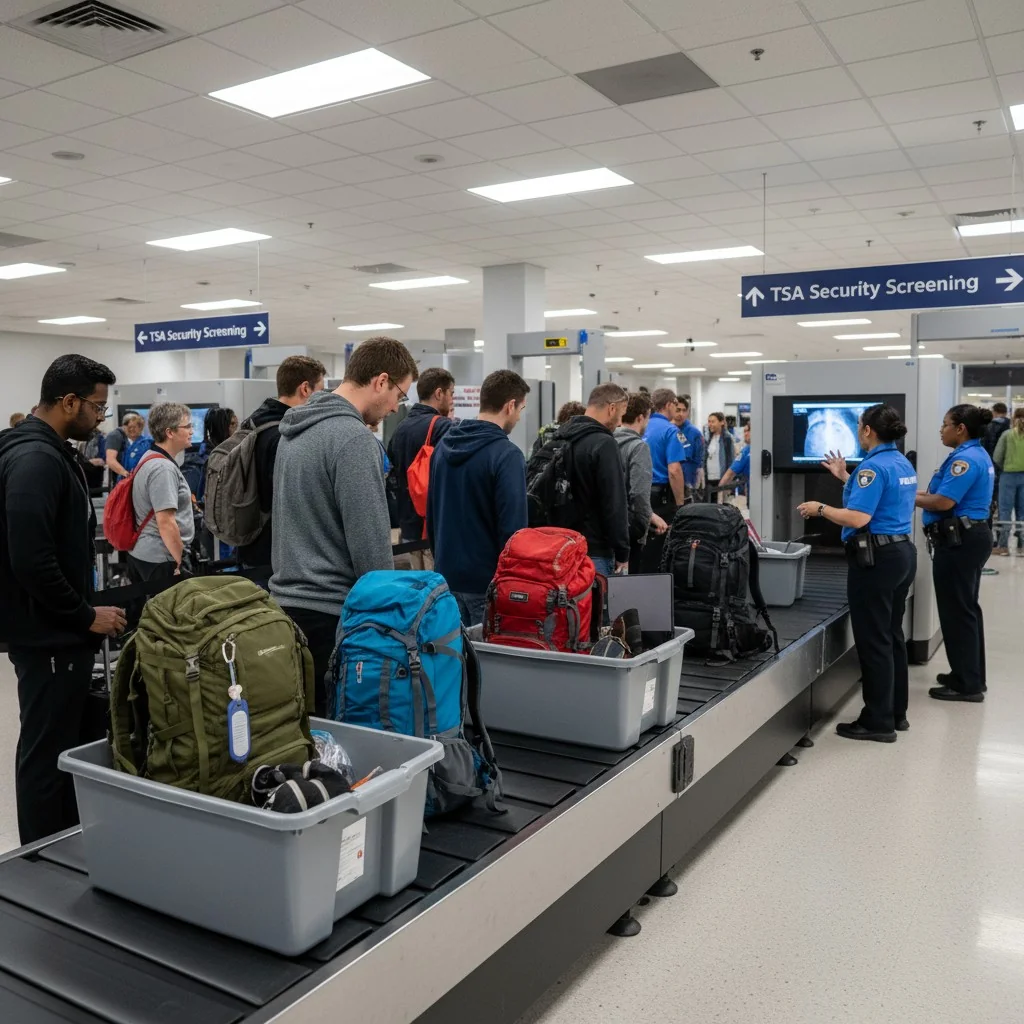
It’s a common point of confusion, but it’s vital to separate the roles of the TSA and the airlines. I always tell my clients to think of it this way: the TSA cares about what’s inside your bag, while the airline cares about the bag’s outside dimensions. For you as a brand owner, this distinction is crucial for both design and marketing.
The TSA’s Security Focus
The Transportation Security Administration is all about safety. Their job is to screen for dangerous goods and prohibited items. This is where their famous 3-1-1 liquids rule2 comes from. Your backpack must be able to fit through their X-ray screening tunnel, which provides a practical but unofficial size limit. A bag that is too bulky to be scanned will cause problems.
The Airline’s Size Focus
Airlines, on the other hand, manage the limited space inside the aircraft cabin. Their size restrictions for carry-on bags are designed to ensure that luggage can fit safely in the overhead bins or under the seat. This is why they have those metal sizers at the gate—it’s all about managing physical space for a full flight.
[claim claim=”The TSA’s 3-1-1 rule applies to all liquids, aerosols, and gels in carry-on bags.” istrue=”true” explanation=”Passengers are limited to 3.4-ounce (100 milliliters) containers that fit in a 1-quart size, clear, zip-top bag, with one bag per passenger.”]
[claim claim=”Laptops must always be removed from a backpack at TSA security checkpoints.” istrue=”false” explanation=”With TSA PreCheck or bags with a ‘checkpoint-friendly’ design that lays flat, you may not need to remove your laptop. However, standard procedure often requires it.”]
Are TSA Carry-On Dimensions the Same for All Airlines?
Assuming one size fits all for carry-on bags? This assumption can lead to your customers facing unexpected baggage fees and frustration at the gate. Let’s look at why airline dimensions vary.
No, they are not the same. While many major airlines use a similar standard (around 22 x 14 x 9 inches), budget airlines and international carriers often have smaller, stricter size limits. Always advise customers to check with their specific airline.

This is one of the biggest challenges for any travel bag brand. A "one-size-fits-all" carry-on is a myth. The differences in size restrictions come down to two main factors: the airline’s fleet and its business model.
Why Dimensions Differ
Smaller regional jets simply have smaller overhead bins than a giant Airbus A380. Airlines that use these smaller planes must have stricter size limits. More importantly, budget airlines like Spirit or Ryanair generate a large portion of their revenue from fees. By setting a small limit for a "free" personal item, they encourage passengers to pay extra for a larger carry-on or a checked bag.
Common Airline Size Examples
As a brand owner, knowing these differences can help you define your product strategy. Here is a quick comparison to illustrate the point.
| Airline | Carry-On Dimensions (inches) | Notes |
|---|---|---|
| American Airlines | 22 x 14 x 9 | Standard US domestic |
| Delta Air Lines | 22 x 14 x 9 | Standard US domestic |
| United Airlines | 22 x 14 x 9 | Standard US domestic |
| Spirit Airlines | 18 x 14 x 8 (Personal Item) | Carry-on costs extra |
| Ryanair (Europe) | 15.7 x 7.8 x 9.8 | Very strict "free" item size |
[claim claim=”All international airlines use the same carry-on size standard as US domestic airlines.” istrue=”false” explanation=”International carriers, especially in Europe and Asia, often have smaller and stricter dimension and weight limits compared to major US airlines.”]
[claim claim=”Budget airlines often have smaller size limits for free carry-on items.” istrue=”true” explanation=”This is a core part of their business model, encouraging passengers to pay for larger carry-on bags or checked luggage.”]
How to Measure Your Carry-On Backpack to Ensure It’s TSA-Approved?
Not sure how to measure a backpack correctly? An improper measurement can mean your product specs are wrong, leading to customer complaints and returns. Here’s the right way to measure every time.
Use a flexible measuring tape. Measure the height, width, and depth of the backpack when it’s reasonably packed. Crucially, you must include all external parts like wheels, handles, and non-removable straps in your final dimensions.
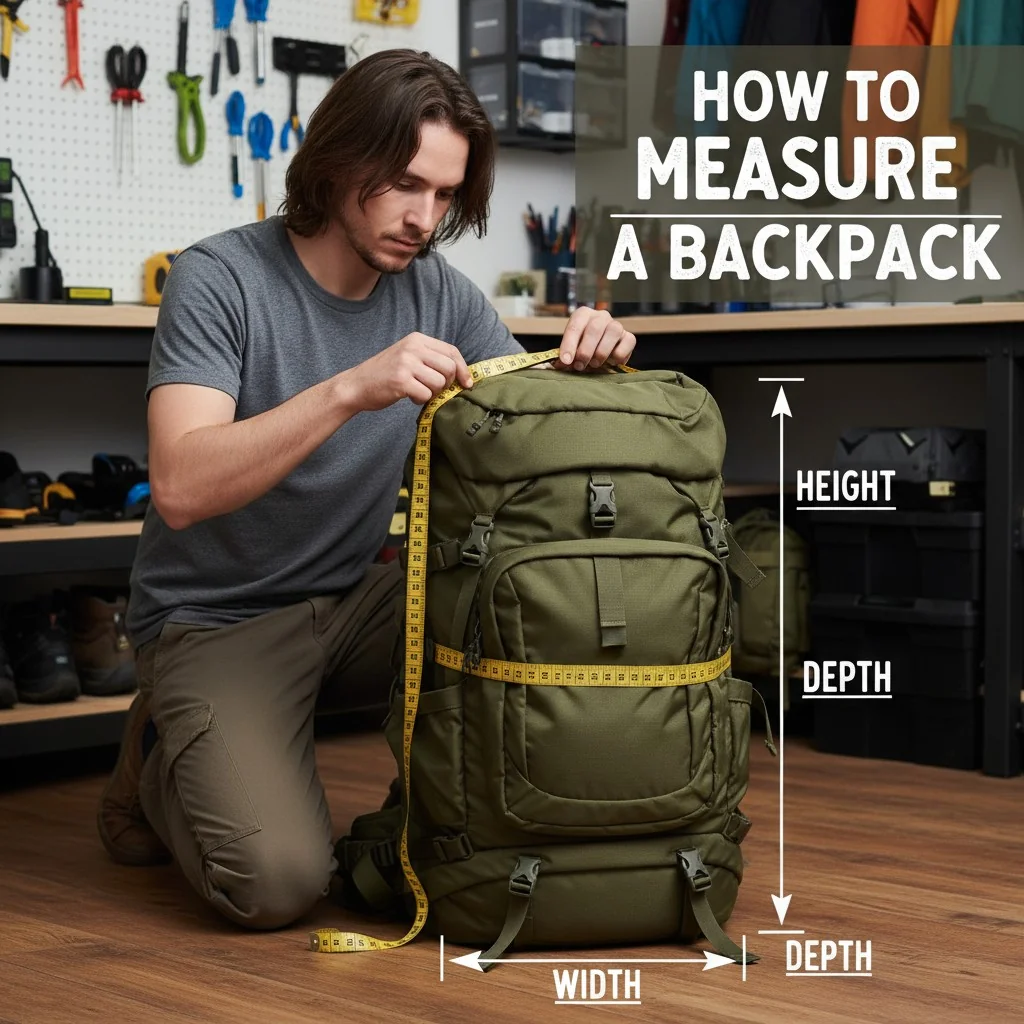
I learned this lesson the hard way early in my career. A client I worked with got a huge return order because they had measured their backpacks while they were empty and lying flat. When customers packed them for a trip, the bags expanded and no longer fit the airline sizers. It was a costly mistake that you can easily avoid.
Step 1: Pack the Bag
Never measure a backpack when it’s empty. You need to pack it to a realistic capacity, because that’s how it will be when your customer gets to the airport. An overstuffed soft-sided backpack can easily expand beyond the depth limit.
Step 2: Measure Height, Width, and Depth
With the bag packed, place it on the floor and use a flexible measuring tape.
- Height: Measure from the very bottom to the very top. Include wheels and any top handles.
- Width: Measure across the widest point. Include side pockets or side handles.
- Depth: Measure from the back panel to the very front. Include the front pockets.
Step 3: Include Everything
This is the most common mistake. Airlines measure the total space the bag occupies. That side handle that sticks out an inch? It counts. Those wheels? They count. Make sure your final product dimensions on your website are honest and include every single part of the bag.
[claim claim=”You should measure a backpack when it is completely empty to get its official dimensions.” istrue=”false” explanation=”You should measure a backpack when it is realistically packed, as packing causes it to expand. Airlines measure the bag as it is presented at the gate.”]
[claim claim=”External pockets, wheels, and handles are included in the overall carry-on measurements.” istrue=”true” explanation=”Airlines measure the total volume a bag will occupy, so all protruding parts must be included in the height, width, and depth measurements.”]
What Other Bags Are TSA Approved for Carry-On Besides Backpacks?
Think backpacks are the only carry-on option? Limiting your product line to one style means missing out on diverse customer needs and market segments. Let’s explore other popular carry-on bag types.
The TSA doesn’t approve specific "types" of bags, only their contents. As long as a bag meets airline size restrictions3, it can be a carry-on. Popular alternatives to backpacks include roller bags, duffel bags, and garment bags.

For a brand owner like you, Emily, thinking beyond the backpack can open up new opportunities. Different travelers have different needs, and your product line can reflect that. The key is to ensure any bag you design fits within those critical airline dimensions.
1. Roller Bags (Hard-sided vs. Soft-sided)
These are the classic carry-on. Hard-sided luggage offers amazing protection for fragile items but has zero flexibility if overpacked. Soft-sided rollers often have handy exterior pockets and can sometimes be squeezed into a sizer, but offer less impact protection.
2. Duffel Bags
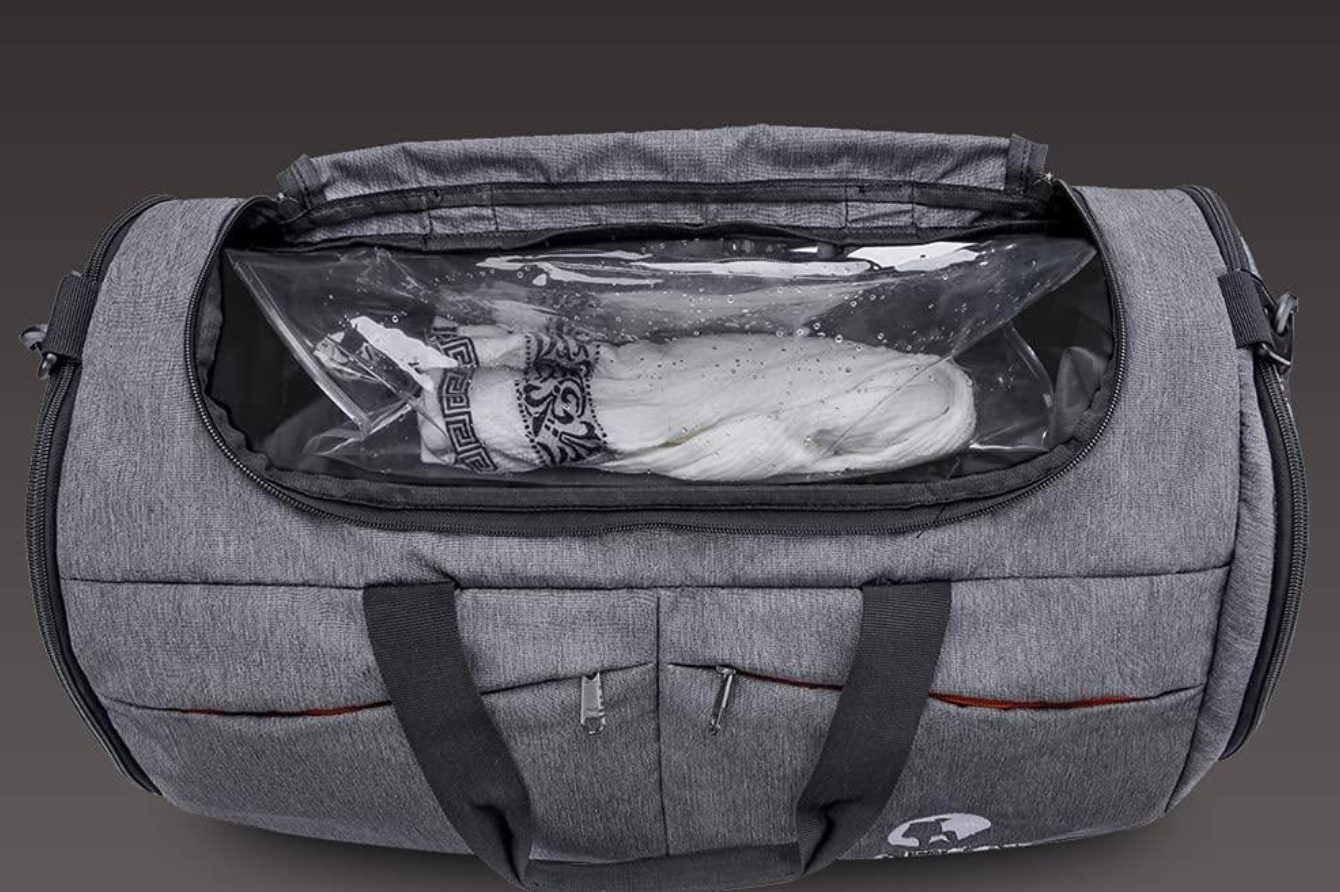
Duffels are perfect for casual trips or as a gym-to-plane bag. Their unstructured nature means they can be squeezed into tight spaces, but they offer less organization. They appeal to a younger, more adventurous customer.
3. Garment Bags
This is a more specialized but valuable category. Garment bags are essential for business travelers or anyone traveling for an event like a wedding. Many are cleverly designed to fold into carry-on dimensions while keeping a suit or dress wrinkle-free.
[claim claim=”Only backpacks and roller suitcases are allowed as carry-on luggage.” istrue=”false” explanation=”Any bag type, including duffel bags, tote bags, and garment bags, can be a carry-on as long as it meets the airline’s specific size and weight restrictions.”]
[claim claim=”Hard-sided luggage offers better protection for fragile items than soft-sided luggage.” istrue=”true” explanation=”The rigid shell of hard-sided luggage provides superior impact resistance, protecting electronics, toiletries, and other fragile contents more effectively.”]
Do Airlines Have Different Carry-On Size Restrictions?
Designing a carry-on with a single size in mind? This could make your product unusable for customers flying on budget or international airlines, leading to negative reviews. Let’s confirm why checking airline rules is non-negotiable.
Yes, absolutely. Carry-on size restrictions vary significantly between airlines. Major domestic carriers in the US might have similar generous sizes, but budget and international airlines often enforce much smaller and stricter limits.

I once worked with a brand that launched a beautiful 22-inch carry-on. It sold well in the US, but they were flooded with complaints from their European customers who couldn’t use it on carriers like Ryanair or EasyJet. It was a costly lesson in market research. This is why understanding the nuances of size restrictions is a strategic advantage.
Domestic vs. International Standards
The 22" x 14" x 9" size is largely a North American standard. In Europe and many parts of Asia, the standard is often smaller and measured in centimeters, such as 55 x 40 x 23 cm. This small difference can be enough to get a bag rejected at the gate.
The "Personal Item" Opportunity
Many airlines, especially budget ones, allow a free "personal item" that must fit under the seat. This presents a huge market opportunity. Designing a stylish, highly functional backpack that fits these smaller dimensions (e.g., 18" x 14" x 8") targets savvy travelers who want to avoid fees.
Your Design Strategy
Consider offering two sizes in your product line: a "Global Carry-On" that meets stricter international rules, and a "Max Capacity Carry-On" for US domestic travel. Be sure to clearly label them on your website to help customers choose the right bag and manage their expectations.
[claim claim=”The carry-on size limit of 22 x 14 x 9 inches is a universal standard for all airlines worldwide.” istrue=”false” explanation=”This size is common in North America but is often too large for many international and budget airlines, which have smaller and stricter requirements.”]
[claim claim=”A ‘personal item’ is different from a ‘carry-on bag’ and has smaller size restrictions.” istrue=”true” explanation=”A personal item (like a purse or small backpack) must fit under the seat in front of you, while a carry-on bag goes in the overhead bin. Personal items have much smaller dimension limits.”]
Does Your Backpack’s Weight Matter for TSA Carry-On?
Focused only on your backpack’s dimensions? An overweight bag can be forced to be checked, incurring fees and frustrating your customers, even if it’s the right size. Let’s discuss the often-overlooked weight restrictions.
The TSA does not have a weight limit for carry-on bags. However, many airlines do. These limits can range from 15 lbs (7 kg) to 35 lbs (16 kg) and are especially common with international and budget carriers.
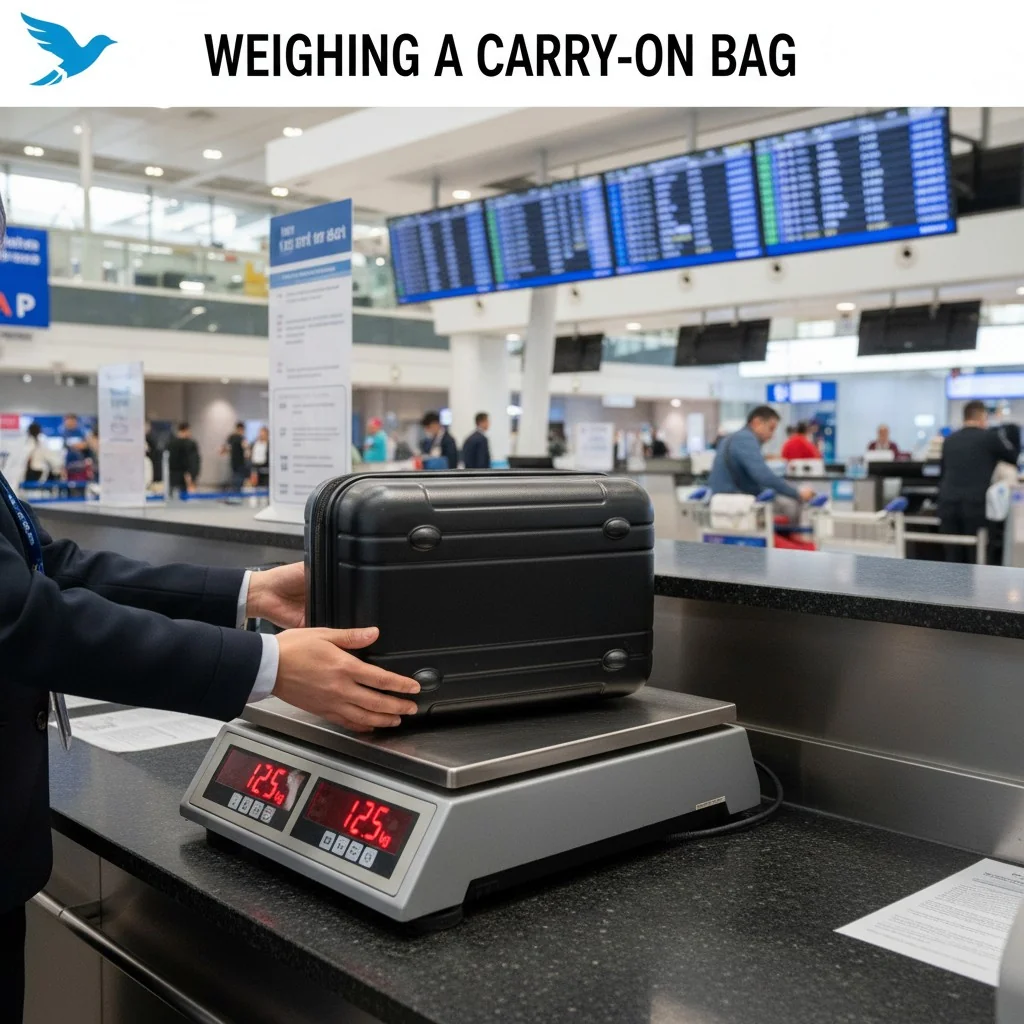
As a manufacturer, this is a detail we discuss with clients all the time. The empty weight of the bag itself is a critical design feature. A heavy bag is a flawed bag, because it eats into the customer’s precious weight allowance before they’ve even packed a single shirt.
Why Airlines Impose Weight Limits
Airlines have weight limits for a few reasons. The main one is safety—they need to be sure that passengers can safely lift their bags into the overhead bins without help. It’s also a factor in aircraft weight and balance. For some airlines, it’s another opportunity to collect fees for overweight bags.
Designing for Weight
This is where your material and design choices become so important.
- Material Choice: Lightweight yet durable fabrics are your best friends. Materials like ripstop nylon, X-Pac, or certain lightweight polycarbonates are excellent choices. Avoid heavy materials like thick canvas or leather for bags where weight is a key selling point.
- Feature Balance: Every extra zipper, buckle, and internal divider adds weight. A minimalist design isn’t just a style choice; it’s a functional one. You should absolutely market your bag’s low empty weight as a key feature for travelers.
[claim claim=”The TSA will weigh your carry-on bag at the security checkpoint.” istrue=”false” explanation=”The TSA is concerned with security screening, not bag weight. It is the airline staff at the check-in counter or gate who may weigh your carry-on.”]
[claim claim=”The empty weight of a backpack is an important feature for travelers concerned about airline weight limits.” istrue=”true” explanation=”A lighter bag allows the traveler to pack more of their own belongings before hitting the airline’s maximum weight allowance, which is a significant advantage.”]
How Do I Choose the Best TSA Approved Carry-On Bag for My Needs?
Overwhelmed by all the carry-on options? Choosing the wrong style for your brand can mean slow sales and a product that doesn’t connect with your target audience. Let’s identify the key factors for your customers.
The "best" bag depends on travel style. For business, a structured bag with a laptop sleeve is key. For adventure, durability and comfort are paramount. For budget travel, a compact bag that qualifies as a "personal item" is ideal.

When you design a bag, you’re not just making an object; you’re solving a problem for a specific person. I always advise brands to create a clear "user story" for each product. By designing for a specific type of traveler, you can create a product that truly resonates.
For the Business Traveler
- Needs: A professional look, excellent laptop protection, and organization for documents and tech.
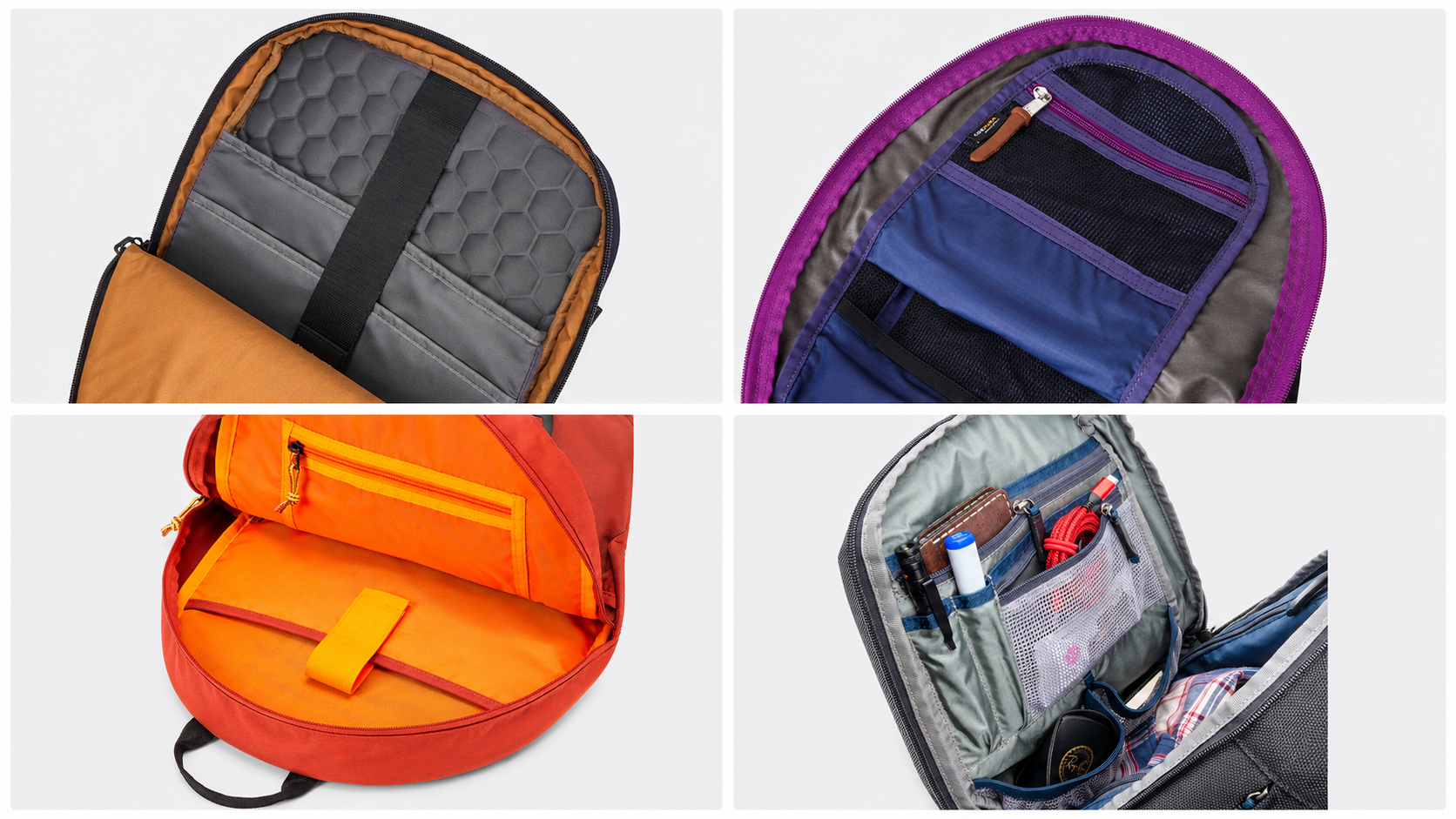
- Features to Highlight: A padded 15" laptop sleeve, an admin panel for pens and cards, and a trolley sleeve to slide over a roller bag handle.
For the Weekend Adventurer
- Needs: Durability to withstand rough use, comfort for long days, and flexible packing space.
- Features to Highlight: Water-resistant fabric, padded shoulder straps and back panel, a clamshell opening for easy packing, and exterior compression straps.
For the Budget Flyer
- Needs: A bag that meets the strict "personal item" dimensions to avoid all airline fees.
- Features to Highlight: A compact size (under 18" x 14" x 8"), lightweight construction, and a surprisingly spacious main compartment. You can even market it as the "Fee-Free Flyer."
[claim claim=”A trolley sleeve is a strap on a bag that lets you slide it over the handle of a rolling suitcase.” istrue=”true” explanation=”This is a highly sought-after feature for frequent travelers as it allows them to navigate the airport more easily with multiple bags.”]
[claim claim=”All carry-on backpacks are designed to be waterproof.” istrue=”false” explanation=”Many backpacks are ‘water-resistant,’ meaning they can handle light rain, but very few are fully ‘waterproof’ (submersible) without a special dry-bag liner or construction.”]
Are There Any Other TSA Guidelines I Should Know About for Carry-On Bags?
Think you know all the TSA rules now? A few lesser-known guidelines can still trip up your customers and reflect poorly on your brand’s expertise. Let’s cover some final key TSA points.
Yes. Beyond the 3-1-1 liquids rule, be aware of restrictions on sharp objects and certain electronics. Also, designing a bag with a "checkpoint-friendly" laptop compartment can significantly speed up the security process.

As a bag designer, you can incorporate features that make navigating these rules easier for your customers. This adds real value and shows you understand the modern travel experience. It’s these thoughtful details that build brand loyalty.
The 3-1-1 Liquids Rule and Bag Design
A fantastic feature is an external, easily accessible pocket designed specifically for a 1-quart liquids bag. This saves your customer from having to frantically dig through their packed bag in the middle of a busy security line.
Checkpoint-Friendly Laptop Compartments
The TSA allows laptops to stay inside bags that have a special laptop-only section that can unfold and lie flat on the X-ray belt. This is often called a "butterfly" or "trifold" design. It’s a premium feature that frequent business travelers absolutely love and will pay extra for.
Prohibited Items
While you aren’t responsible for what your customers pack, you should be mindful of your design choices. Avoid adding elements that could be mistaken for weapons, such as overly aggressive tactical features or sharp, non-functional metal decorations. Keep the design clean and purposeful to ensure a smooth security experience.
[claim claim=”A ‘checkpoint-friendly’ bag allows you to go through security without removing your laptop.” istrue=”true” explanation=”These bags have a special compartment that unfolds to lay flat on the X-ray scanner, providing a clear and unobstructed image of the laptop, which the TSA allows.”]
[claim claim=”You can pack any amount of food in your carry-on bag.” istrue=”false” explanation=”While solid foods are generally allowed, liquid or gel-like foods (like yogurt or jam) are subject to the 3-1-1 liquids rule. The final decision always rests with the TSA officer.”]
Conclusion
Navigating carry-on rules is about balancing airline dimensions, TSA security4, and traveler needs. Get these right, and you’ll create bags your customers will carry with confidence on every journey.
References
-
Understanding TSA carry-on rules is crucial for travelers to avoid issues at security checkpoints. ↩
-
Understanding the 3-1-1 rule helps travelers pack efficiently and avoid delays at security. ↩
-
Discover the differences in airline size restrictions to avoid customer complaints and returns. ↩
-
Learn about TSA security priorities to ensure your bag design meets safety standards. ↩