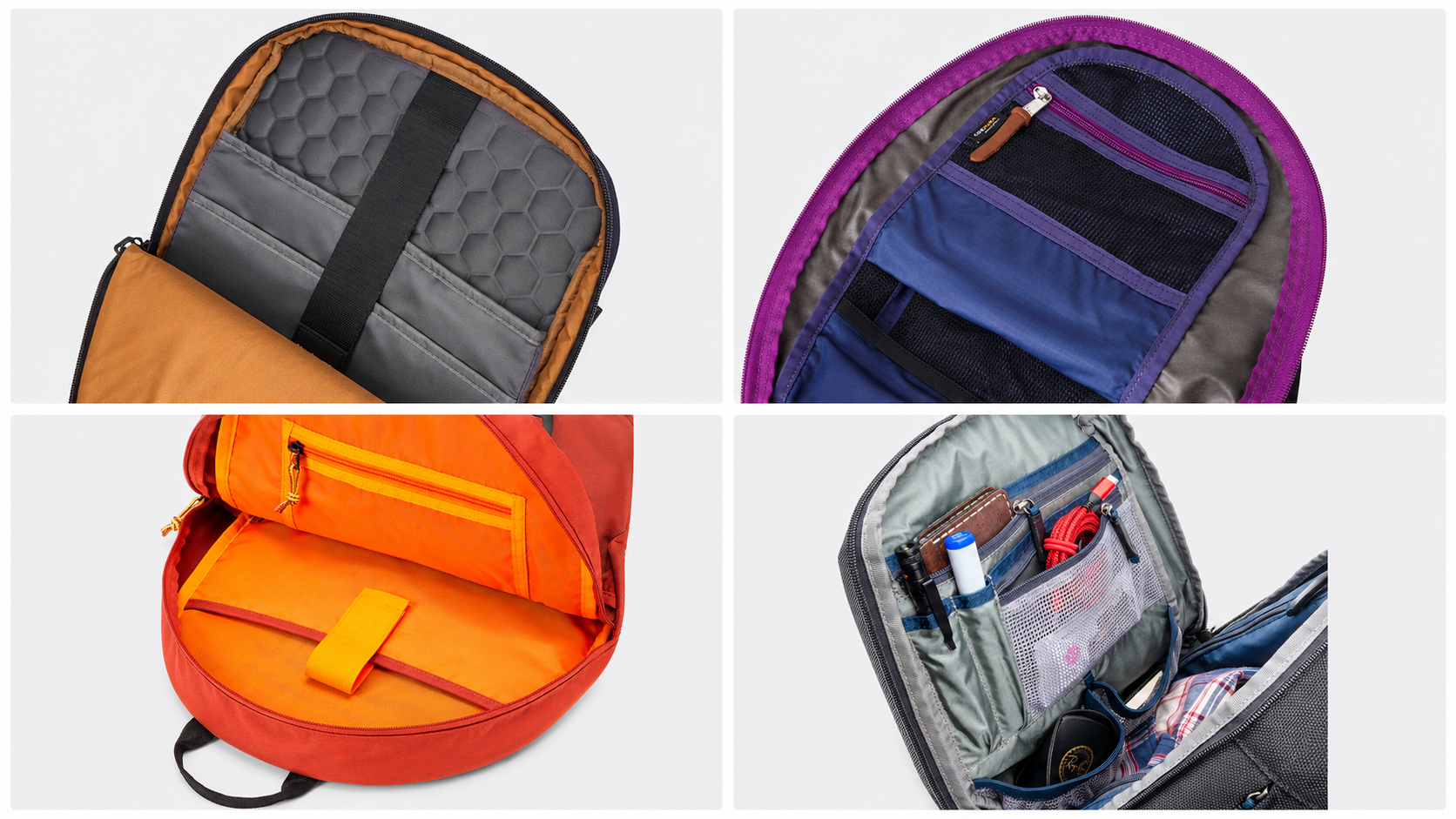
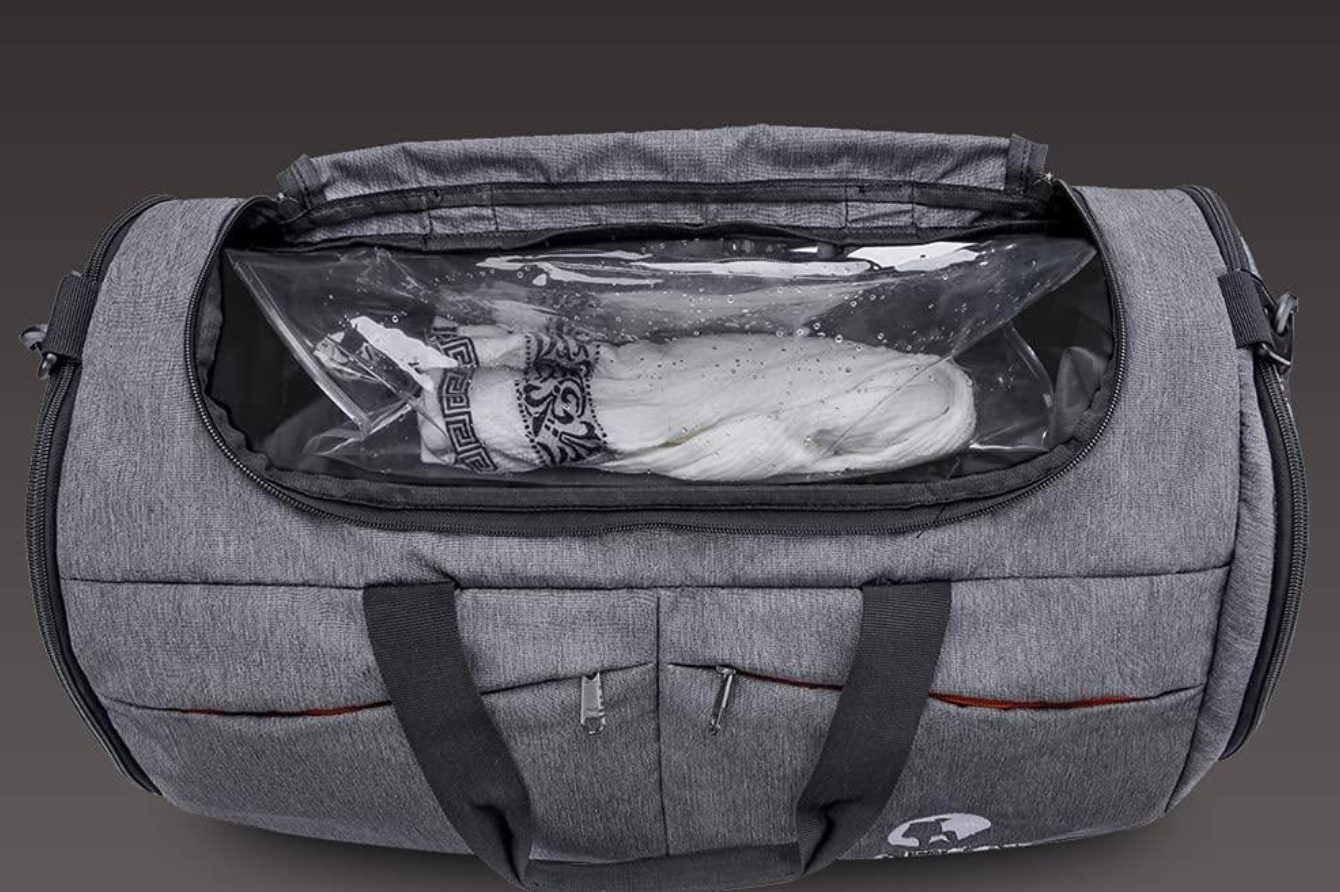
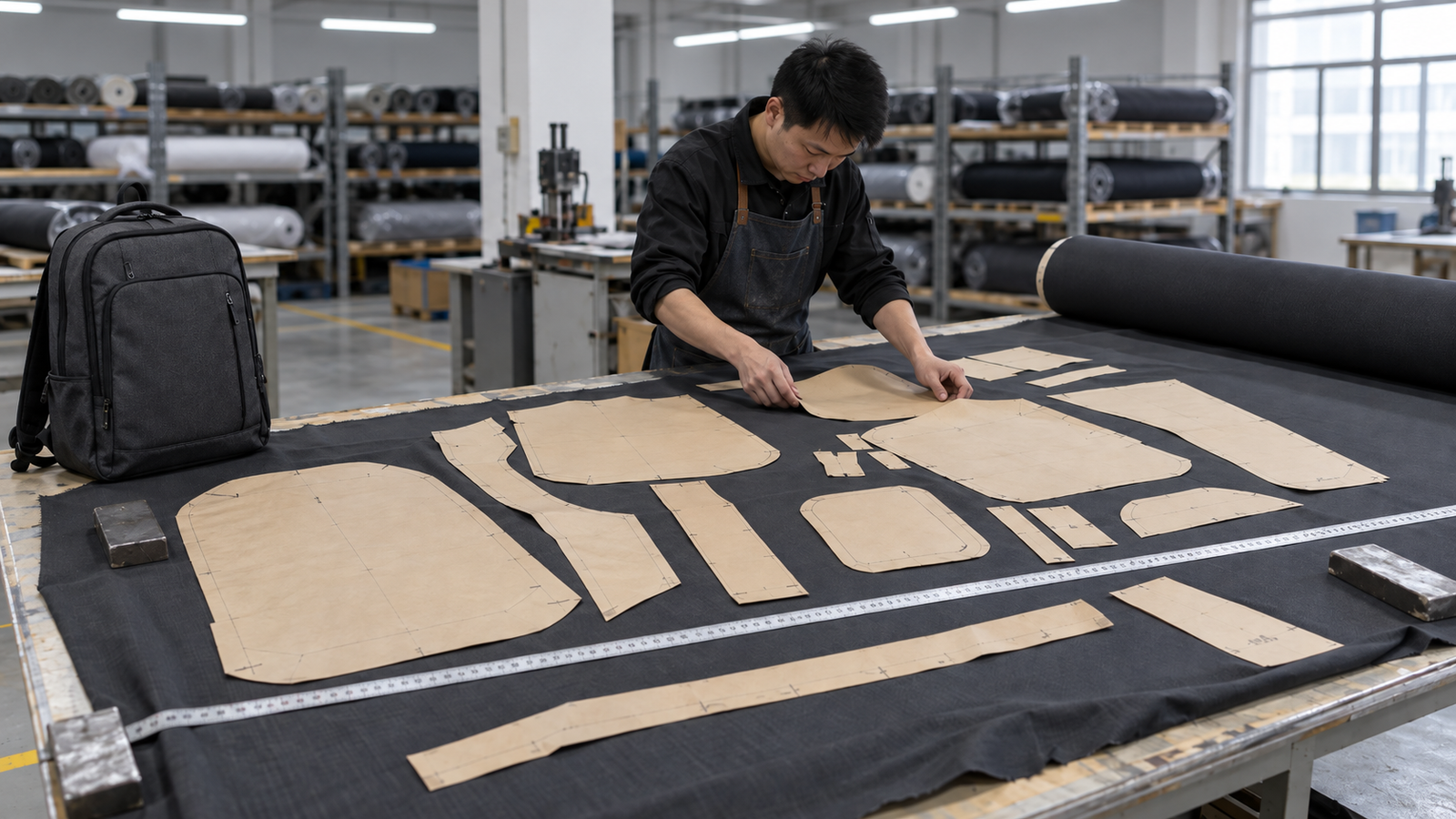
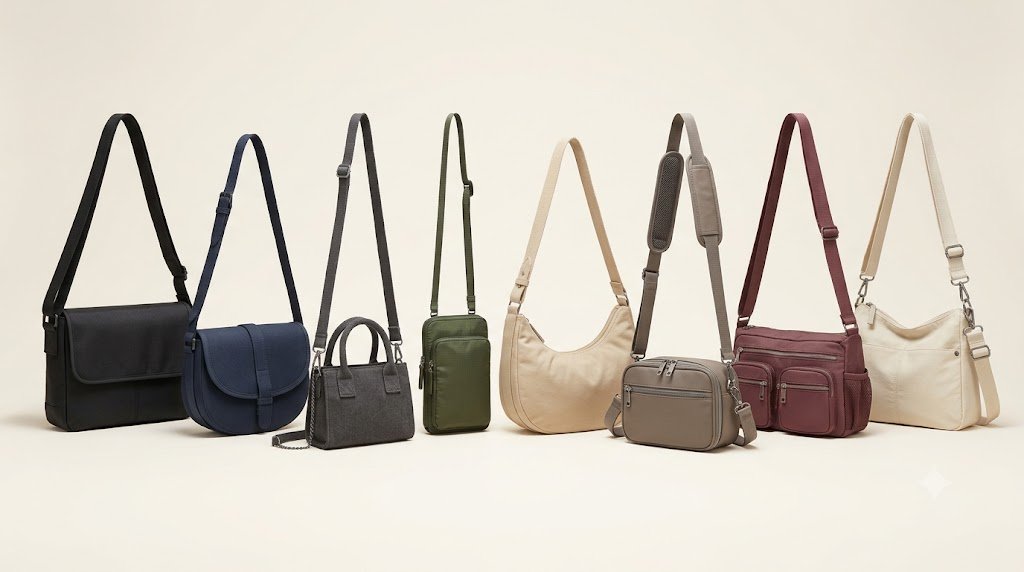
A crossbody bag is defined by a long strap that allows it to be worn diagonally across the torso. Common types include messenger bags, saddle bags, mini crossbody bags, hobo crossbodies, phone bags, camera bags, travel crossbodies, and convertible styles. Each type differs in shape, capacity, wearing position, and intended use.
A messenger bag may carry a laptop and work documents, while a mini crossbody holds only daily essentials. Saddle bags are recognized by their curved flap, camera bags use a boxier protective shape, and travel crossbodies usually add secure pockets for passports, phones, and wallets. They all belong to the crossbody category, but they serve very different users.
For brands developing a new collection, the style name is only the starting point. Bag size, strap width, opening design, pocket layout, material, hardware, and target retail price all influence whether the final product feels fashionable, functional, or suitable for travel.
The following sections compare these styles so buyers can identify which design best fits their market.
What Exactly Qualifies as a Crossbody Bag?
A crossbody bag is defined primarily by how it is worn: its strap must be long enough for the bag to sit diagonally across the torso, usually resting at the opposite hip, side, or front of the body. Its size, shape, and material can vary, but the diagonal hands-free carrying position is the feature that makes it a crossbody bag.
A crossbody can be structured or soft, compact or spacious, sporty or fashion-focused. This matches the Collins Dictionary definition of “crossbody”, which focuses on a bag designed to be worn on one side of the body with the strap passing over the opposite shoulder.
Messenger bags, saddle bags, camera bags, phone pouches, and mini handbags can all qualify when their strap placement and length are designed for diagonal wear.
Crossbody Bag vs. Shoulder Bag
The main difference is not the bag body—it is the strap and intended wearing position.
- A shoulder bag normally has a shorter strap and hangs from one shoulder.
- A crossbody bag has a longer strap and is worn diagonally across the torso.
- A convertible bag may include an adjustable or detachable strap that supports both carrying styles.
A handbag does not automatically become a well-designed crossbody simply because a longer strap is added. The attachment points, strap width, adjustability, bag weight, and balance must also support diagonal carrying.
Four Features That Define a True Crossbody Bag
A bag generally qualifies as a crossbody when it has:
-
A sufficiently long strap
The strap must pass from one shoulder to the opposite side of the body without forcing the bag too high under the arm. -
Secure strap attachment points
The strap is normally attached to opposite sides of the bag so the body remains balanced when worn diagonally. -
A stable wearing position
The bag should sit comfortably at the hip, side, lower torso, or front without constantly rotating or sliding. -
Hands-free access
The wearer should be able to walk, shop, commute, or travel without holding the bag in place.
The category is therefore defined more by strap construction and wearing position than by a specific silhouette.
What Brands Should Specify During Product Development
When developing a crossbody bag, avoid writing only “long adjustable strap” in the tech pack. Confirm:
- adjustable strap-length range
- strap width and material
- buckle or slider construction
- attachment-point position
- swivel-hook or fixed-strap design
- reinforced stitching at both strap ends
- intended wearing height
- expected carrying weight
There is no single ideal strap length for every customer. Height, body shape, clothing, and preferred bag position all affect fit, which is why adjustability is usually more useful than one fixed strap measurement.
Factory takeaway: A true crossbody bag should be designed as a complete carrying system. The strap length, attachment points, hardware, bag weight, and center of gravity must work together—not merely allow the bag to hang across the body.
What Are the Most Popular Types of Crossbody Bags?
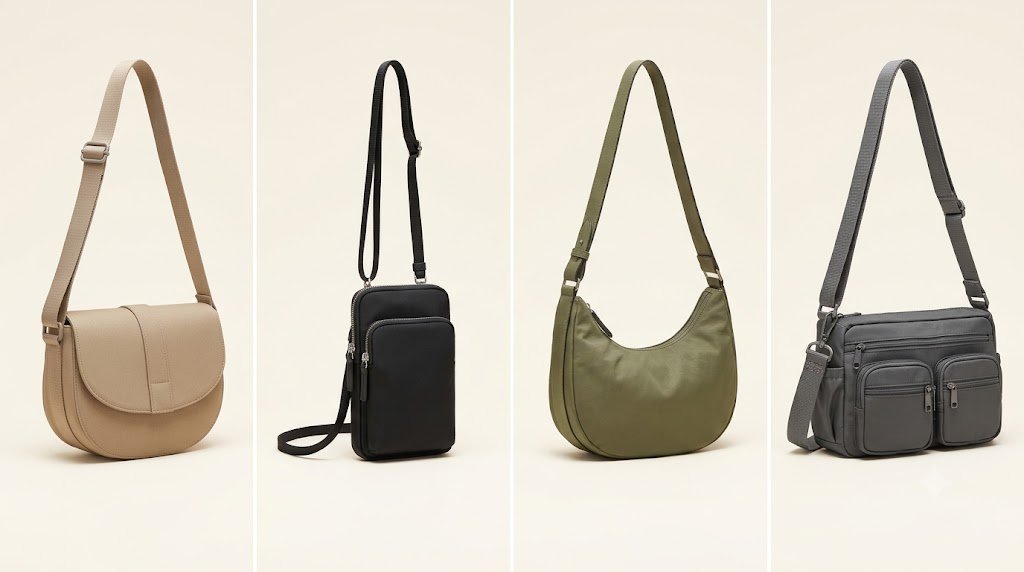
There is no single crossbody style that is best for every market. A design that performs well for a fashion retailer may not suit a travel brand, commuter collection, or promotional program. The most commercially useful styles are those with a clear customer and use case.
The most popular crossbody bag types include saddle bags for timeless everyday style, mini and phone bags for carrying essentials, crescent or hobo crossbodies for casual comfort, and travel crossbodies for secure organization. Their popularity comes from serving different combinations of fashion, capacity, comfort, and function.
The most popular crossbody bag types include saddle bags for timeless everyday style, mini and phone bags for carrying essentials, crescent or hobo crossbodies for casual comfort, and travel crossbodies for secure organization. Their popularity comes from serving different combinations of fashion, capacity, comfort, and function.
There is no single crossbody style that is best for every market. A design that performs well for a fashion retailer may not suit a travel brand, commuter collection, or promotional program. The most commercially useful styles are those with a clear customer and use case.
Saddle Bags: The Evergreen Choice
Saddle bags are recognized by their curved lower edge and flap-style opening. Their appeal comes from combining a distinctive silhouette with enough space for daily essentials.
They work well for:
- lifestyle and fashion collections
- casual daily use
- leather and PU leather product lines
- brands seeking a recognizable but not overly trend-driven shape
The shape can be adapted through flap construction, edge piping, buckles, magnetic closures, contrast stitching, and different strap designs. This gives brands room to create a recognizable product without changing the basic silhouette.
Mini and Phone Crossbody Bags: The Essentials-Only Option
Mini crossbody and phone bags are designed for customers who carry only a phone, cards, keys, and a few small personal items.
Their popularity is driven by:
- lightweight carrying
- compact size
- lower material consumption
- easy outfit coordination
- suitability for events, shopping, and short trips
For product development, the internal dimensions matter more than the general label “mini.” A phone bag should be tested with current phone sizes, protective cases, card slots, zipper openings, and strap attachment points.
Crescent and Hobo Crossbodies: The Comfort-Led Style
Crescent and hobo crossbody bags use a softer, curved body that sits closer to the wearer. Their relaxed shape works particularly well with lightweight nylon, soft leather, suede, and flexible synthetic materials.
These designs appeal to customers who want:
- a casual everyday look
- a softer bag body
- comfortable close-to-body carrying
- more capacity than a mini bag
- a shape that works across fashion and utility collections
The main production challenge is controlling the slouch. If the material is too stiff, the bag loses its relaxed character; if it is too soft, the opening, lining, and pockets may collapse during use.
Travel and Utility Crossbodies: The Function-Led Choice
Travel crossbodies focus on organization, quick access, and secure carrying rather than decorative styling.
Common features include:
- zippered main compartments
- passport and phone pockets
- adjustable straps
- lightweight, abrasion-resistant fabrics
- concealed or body-facing pockets
- key clips and internal dividers
- water-resistant coatings
These bags are suitable for travel brands, commuter collections, outdoor retailers, and customers who prioritize function. However, terms such as “anti-theft,” “RFID-blocking,” and “waterproof” should only be used when the construction and testing support those claims.
Popular styles succeed for different reasons. Saddle bags offer a recognizable everyday shape, mini and phone bags support essentials-only carrying, crescent bags focus on comfort, and travel crossbodies prioritize organization. The next section compares these types side by side by capacity, structure, use, and development requirements.
How Do the Main Types of Crossbody Bags Compare?
The main crossbody bag types differ in shape, capacity, structure, wearing position, and intended use. Messenger bags offer the most space, mini and phone bags carry only essentials, saddle bags balance fashion and daily capacity, crescent bags prioritize soft comfort, while travel and camera crossbodies focus on organization and protection.
The easiest way to compare crossbody bags is not by appearance alone. Start with what the customer needs to carry, then consider the bag’s structure, opening, strap position, and expected use.
Crossbody Bag Types at a Glance
| Crossbody Type | Typical Capacity | Structure | Best For | Main Product Development Focus |
|---|---|---|---|---|
| Messenger Bag | Medium to large | Structured or semi-structured | Work, school, commuting, laptops | Load balance, strap strength, laptop protection, and flap or zipper access |
| Saddle Bag | Small to medium | Usually structured | Fashion, lifestyle, everyday use | Curved shape, flap symmetry, closure position, and edge finishing |
| Mini Crossbody Bag | Small | Structured or soft | Events, shopping, and fashion collections | Usable interior space, opening size, and strap-to-bag proportion |
| Phone Crossbody Bag | Extra small | Slim and compact | Phones, cards, keys, and quick errands | Phone compatibility, protective-case allowance, and pocket layout |
| Crescent or Hobo Crossbody | Medium | Soft and flexible | Casual daily use and comfort-led collections | Material softness, curved zipper construction, lining support, and shape control |
| Camera Crossbody Bag | Small to medium | Boxy and padded | Cameras, electronics, and organized carry | Padding, removable dividers, corner protection, and quick access |
| Travel or Utility Crossbody | Small to medium | Usually semi-structured | Travel, commuting, festivals, and outdoor use | Pocket organization, finished weight, secure access, and water-resistance claims |
| Convertible Crossbody Bag | Varies | Depends on design | Multi-use and lifestyle collections | Strap conversion, attachment strength, hardware weight, and carrying balance |

Choose by What the Customer Needs to Carry
A simple carrying list can quickly narrow down the right style:
- Laptop, tablet, or work documents: Messenger bag
- Phone, cards, and keys: Phone or mini crossbody
- Daily essentials with a fashion-led shape: Saddle or crescent bag
- Camera or fragile equipment: Padded camera crossbody
- Passport, wallet, tickets, and travel items: Travel or utility crossbody
- Multiple wearing options: Convertible crossbody bag
External measurements do not always reflect usable capacity. Thick padding, curved panels, narrow openings, internal dividers, and lining construction can reduce the space available inside the bag. Capacity should therefore be checked with real objects during sampling.
Structured vs. Soft Crossbody Bags
The bag’s structure affects both its appearance and manufacturing method.
Structured crossbody bags, such as messenger, saddle, and camera bags, may require:
- firmer outer materials
- backing or reinforcement
- shaped bottom panels
- piping or edge paint
- stable lining
- stronger strap attachment points
Soft crossbody bags, such as crescent and hobo styles, usually need:
- flexible shell material
- lighter reinforcement
- smooth curved zipper installation
- controlled gathering or pleating
- lining that moves naturally with the outer body
Too much reinforcement can make a crescent bag look stiff. Too little reinforcement can cause a saddle or camera bag to collapse and lose its intended shape.
Shoulder Bag vs. Crossbody Bag
A shoulder bag normally has a shorter strap and hangs from one shoulder. A crossbody bag uses a longer strap and is designed to sit diagonally across the torso.
For a broader breakdown of shoulder-bag silhouettes and carrying methods, read our guide to the different types of shoulder bags.
Some bags can perform both functions when they have:
- a wide strap-adjustment range
- correctly positioned attachment points
- a suitable bag size and weight
- comfortable hardware in both carrying positions
Adding a detachable long strap does not automatically turn a shoulder bag into a well-balanced crossbody. The bag’s center of gravity, strap width, attachment position, and loaded weight must also support diagonal wear.
For brands comparing crossbody styles, the best choice is the design that matches the customer’s carrying needs, preferred wearing position, and target price—not simply the most fashionable silhouette.
Factory takeaway: Compare crossbody styles by what they carry, how they sit on the body, and how they must be constructed—not only by their visual shape.
Crossbody Bag vs. Sling Bag: What Is the Difference?
A crossbody bag usually hangs at the hip or side from a long diagonal strap, while a sling bag is designed to sit closer to the chest or back with a shorter, body-hugging strap. Crossbody bags generally emphasize easy access and everyday styling, whereas sling bags prioritize stability, compact movement, and quick repositioning.
The two terms sometimes overlap in online stores, but their construction is usually different. The clearest way to tell them apart is to look at how the bag is intended to sit on the body—not simply whether it has one strap. For a more detailed explanation of sling construction, wearing positions, and use cases, see our guide: What Is a Sling Bag?
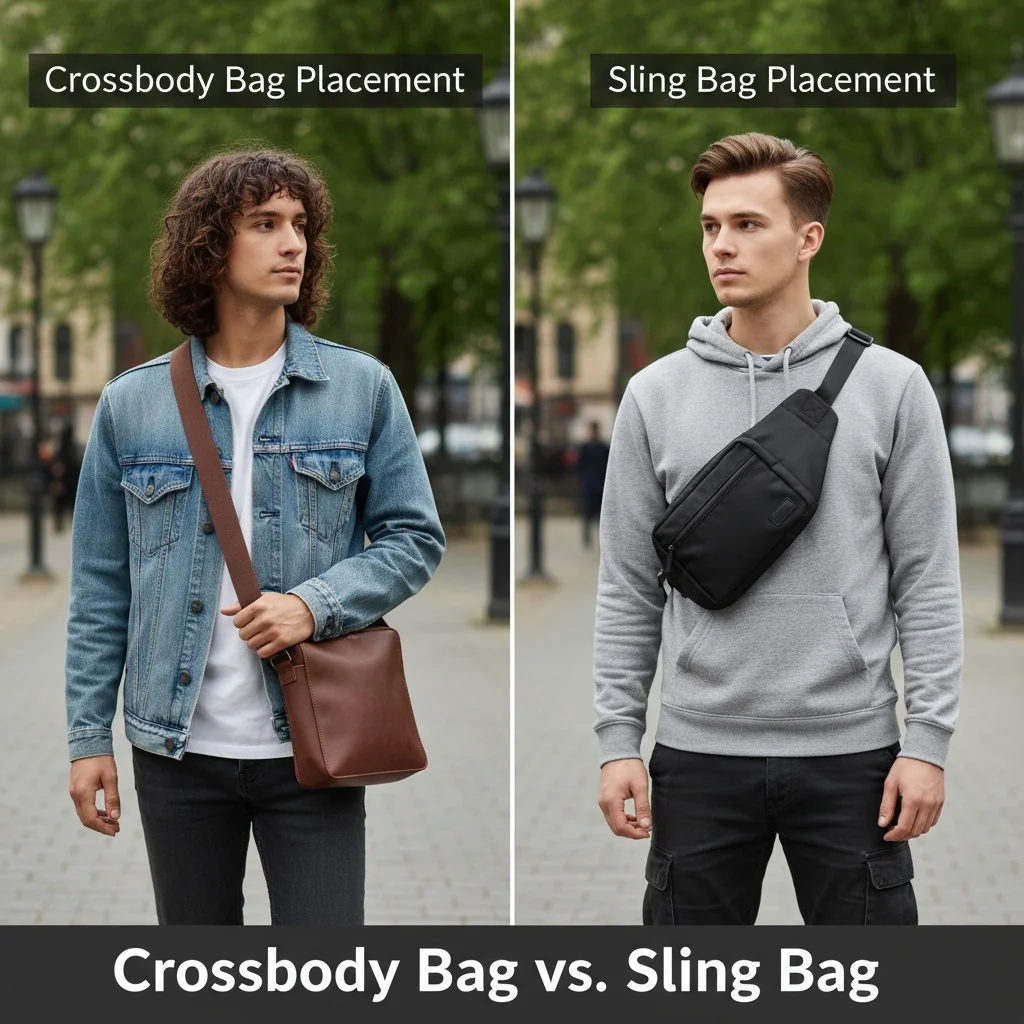
Crossbody Bag vs. Sling Bag Comparison
| Comparison Point | Crossbody Bag | Sling Bag |
|---|---|---|
| Typical wearing position | Hip, side, or lower front of the torso | Upper chest, back, or close under the shoulder |
| Strap design | Longer and often more adjustable | Shorter, wider, and designed to hold the bag close |
| Bag orientation | Usually horizontal, vertical, or handbag-like | Often angled, teardrop-shaped, or contoured |
| Movement | May swing more while walking | Usually remains closer and more stable |
| Access | Often opened while resting at the side or front | Commonly rotated from the back to the chest |
| Style direction | Fashion, lifestyle, travel, and daily carry | Sport, urban utility, cycling, outdoor, and active use |
| Main construction priority | Strap comfort, balance, opening access, and appearance | Body fit, strap anchoring, stability, and left/right access |
Why Crossbody Bags Offer Easier Everyday Access
A traditional crossbody bag normally hangs lower on the body. This makes it easier to reach the main compartment without removing or rotating the bag.
The lower wearing position also allows greater freedom in body shape and silhouette. A crossbody may resemble a small handbag, saddle bag, camera bag, pouch, or messenger bag, while a sling bag is more strongly defined by its close-fitting ergonomic structure.
Can a Sling Bag Also Be Called a Crossbody Bag?
In a broad retail sense, yes. A sling bag is worn across the body, so many sellers place it inside the wider crossbody category.
However, for product development, the two terms should not be treated as identical. Writing only “crossbody sling bag” in a tech pack can create confusion because the factory still needs to know:
- where the bag should rest
- whether it is worn on the chest or back
- the intended strap length
- strap width and padding
- left-shoulder, right-shoulder, or reversible use
- buckle position
- opening direction
- how tightly the bag should fit against the body
Factory takeaway: Choose a traditional crossbody structure when easy side access and versatile styling are the priorities. Choose a sling structure when close body fit, stability, and active movement matter more.
What Materials and Features Differentiate Each Crossbody Type?
Different crossbody bag types are mainly distinguished by the relationship between material, structure, closure, strap, and internal organization. Leather and PU suit cleaner, more structured silhouettes; nylon and polyester support lightweight or functional designs; canvas creates a casual look; while padding, coated fabrics, secure closures, and organized pockets add travel or protective functions.
The same crossbody pattern can look and perform very differently when the material changes. A firm material helps a saddle or camera bag keep its shape, while a softer material gives a crescent or hobo bag its natural drape.
Buyers who need a broader comparison of nylon, polyester, canvas, leather, Cordura®, and laminated fabrics can also read our bag fabric comparison guide.
Material Selection by Crossbody Style
| Material | Commonly Suited Crossbody Styles | What It Changes | What Buyers Should Check |
|---|---|---|---|
| Genuine leather | Saddle, mini, structured messenger, camera bags | Natural grain, defined shape, premium appearance | Thickness, grain variation, color transfer, edge finishing |
| PU leather | Fashion, mini, saddle, promotional crossbodies | Stable color, clean surface, easier cost control | Flex resistance, peeling risk, backing, surface durability |
| Nylon | Crescent, sling, travel, utility crossbodies | Lightweight feel, softness, flexible construction | Denier, weave, coating, abrasion resistance |
| Polyester | Messenger, travel, phone, promotional bags | Structure, color consistency, printing flexibility | Fabric weight, backing, coating, colorfastness |
| Canvas or twill | Casual messenger and lifestyle crossbodies | Natural texture and casual appearance | Shrinkage, weave density, reinforcement, stain resistance |
| Coated or laminated fabric | Travel, outdoor, technical crossbodies | Improved surface protection and moisture resistance | Coating type, seam construction, adhesion, finished-bag testing |
Material names alone do not define quality. Two bags made from polyester can perform very differently because of differences in fabric weight, coating, backing, stitching, and reinforcement.
For textile shells, abrasion resistance can be evaluated using standards such as ASTM D4966, the Martindale abrasion test, rather than relying only on the material name or denier listed in a quotation.
Features That Change How the Bag Performs
| Feature | Main Effect on the Product | Development Risk |
|---|---|---|
| Zipper opening | Better security and everyday access | Tight curves or poor installation may make the zipper difficult to use |
| Flap and magnetic closure | Cleaner fashion appearance | The magnet may open when the loaded bag becomes too heavy |
| Adjustable strap | Supports different heights and wearing positions | Adjustment range or hardware position may be uncomfortable |
| Detachable hardware | Adds convertible carrying options | Extra hooks and rings increase weight and stress on attachment points |
| Padding | Protects cameras, phones, or electronics | Excess padding reduces usable internal capacity |
| Internal pockets | Improves organization | Too many pockets make a small bag bulky and expensive |
| Body-facing pocket | Keeps valuable items closer to the wearer | Pocket access and zipper direction must suit the wearing position |
| Water-resistant coating | Helps with light rain and splashes | Coated fabric does not make standard seams and zippers waterproof |
Match the Features to the Product Purpose
Features should support the bag’s intended use. Fashion crossbodies may prioritize shape and hardware, while functional designs may require secure closures, padding, or organized pockets. Adding unnecessary features increases weight, cost, and production complexity.
Performance claims also require evidence. AATCC TM22 evaluates a fabric’s resistance to surface wetting, but it does not prove that the finished bag is waterproof because seams and zippers also affect water entry.
Claims such as “waterproof,” “anti-theft,” and “RFID-blocking” should only be used when supported by relevant testing. The FTC’s advertising guidance also requires objective product claims to be truthful, not misleading, and evidence-based.
Factory takeaway: Select the material according to the shape the bag must hold, then add only the features that support how the customer will actually carry and use it.
How Do I Choose the Right Crossbody Bag for My Brand?
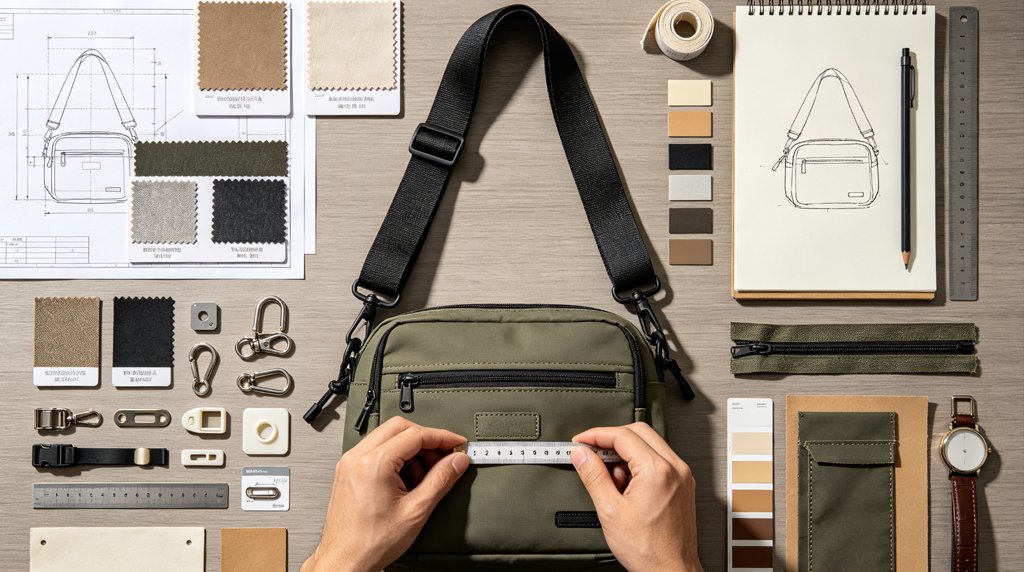
Choose a crossbody bag by matching the target customer, selling channel, retail price, carrying needs, and brand image. The right design is not simply the most popular style; it is the one your customer can understand, use, and afford while still meeting your margin and production requirements.
Before asking a factory for a quotation, define the commercial role of the product. A crossbody designed for a fashion boutique will need a different development strategy from one sold through an outdoor retailer, corporate gift program, or travel-accessory brand.
Start With These Five Decisions
1. Who Is the Customer?
Define the user as clearly as possible:
- age range and lifestyle
- fashion-led or function-led
- daily, travel, work, or event use
- expected carrying load
- preferred wearing position
- sensitivity to price, weight, and materials
“Women’s crossbody bag” is too broad to guide product development. “Compact travel crossbody for urban tourists carrying a phone, passport, cards, and charger” gives the factory a much clearer direction.
2. Where Will the Bag Be Sold?
The sales channel affects design, packaging, testing, and price expectations.
- Fashion retail: visual identity and finishing matter more.
- E-commerce: clear features, dimensions, and product photography are critical.
- Outdoor retail: durability, weight, and performance claims need stronger support.
- Promotional programs: cost control, logo visibility, and delivery time become priorities.
- Private label wholesale: consistency, compliance, and repeat-order availability matter.
A design that works for online direct-to-consumer sales may not suit a retailer that requires specific packaging, testing, labeling, or margin levels.
Build a Clear Product Brief
Before sampling, give the factory a short brief covering:
| Product Brief Item | What to Define |
|---|---|
| Target customer | Who will use the bag and in what situation |
| Selling channel | Retail, e-commerce, wholesale, promotion, or travel market |
| Target retail price | The price level the finished product must support |
| Expected capacity | What real items the customer needs to carry |
| Brand direction | Minimal, fashion, outdoor, travel, premium, or promotional |
| Required functions | Only the functions essential to the customer |
| Logo method | Print, embroidery, patch, metal logo, embossing, or woven label |
| Packaging | Polybag, hangtag, gift box, retail-ready packaging, or custom set |
| Compliance needs | Market-specific labeling, chemical, material, or product tests |
| Order plan | Sampling quantity, expected bulk quantity, and repeat-order potential |
Avoid These Common Development Mistakes
-
Choosing a style only because it is trending
A popular silhouette may not fit your customer, price point, or sales channel. -
Sending only reference photos
Photos show appearance but do not define dimensions, materials, construction, or quality level. -
Adding too many functions
Extra pockets, hardware, and accessories increase cost, weight, and production time. -
Setting the target price too late
Material and construction decisions should be made around the commercial target from the beginning. -
Approving appearance without testing use
A sample should be loaded, worn, opened, adjusted, and tested with the real items it is designed to carry.
Use the First Sample to Test the Product Concept
The first sample is not only for checking color and shape. Use it to confirm:
- whether the dimensions match the intended contents
- whether the opening is easy to access
- whether the strap adjustment range is suitable
- whether the loaded bag remains balanced
- whether the pockets are easy to use
- whether the hardware feels too heavy or uncomfortable
- whether the product still supports the target price
Changes are easier and less expensive during sampling than after materials have been ordered for bulk production.
Factory takeaway: Give the factory a commercial product brief, not only a style reference. The clearer the target user, price, channel, capacity, and quality requirement, the easier it is to develop a crossbody bag that can sell and be produced consistently.
Conclusion
The best crossbody bag is not defined by one shape, material, or feature. It is the design that fits the target customer’s carrying habits, preferred wearing position, price expectations, and daily use.
For brands, the practical process is simple: first define what the customer needs to carry, then choose the appropriate silhouette, structure, material, strap system, and level of organization. A compact fashion bag, travel crossbody, sling bag, and work messenger should not follow the same product specification.
Clear product positioning also makes sampling and quotation more accurate. When the target market, dimensions, materials, essential features, quality level, and price range are confirmed early, the factory can recommend a more realistic construction instead of developing an overcomplicated or poorly matched product.
Ready to Develop a Custom Crossbody Bag?
At Osgoodway, we help brands develop crossbody bags from initial product direction to sampling and bulk production. Share your reference design, target customer, order quantity, price range, and required features, and our team will help you evaluate the most practical material and construction options.
Discuss Your Crossbody Bag Project With Osgoodway