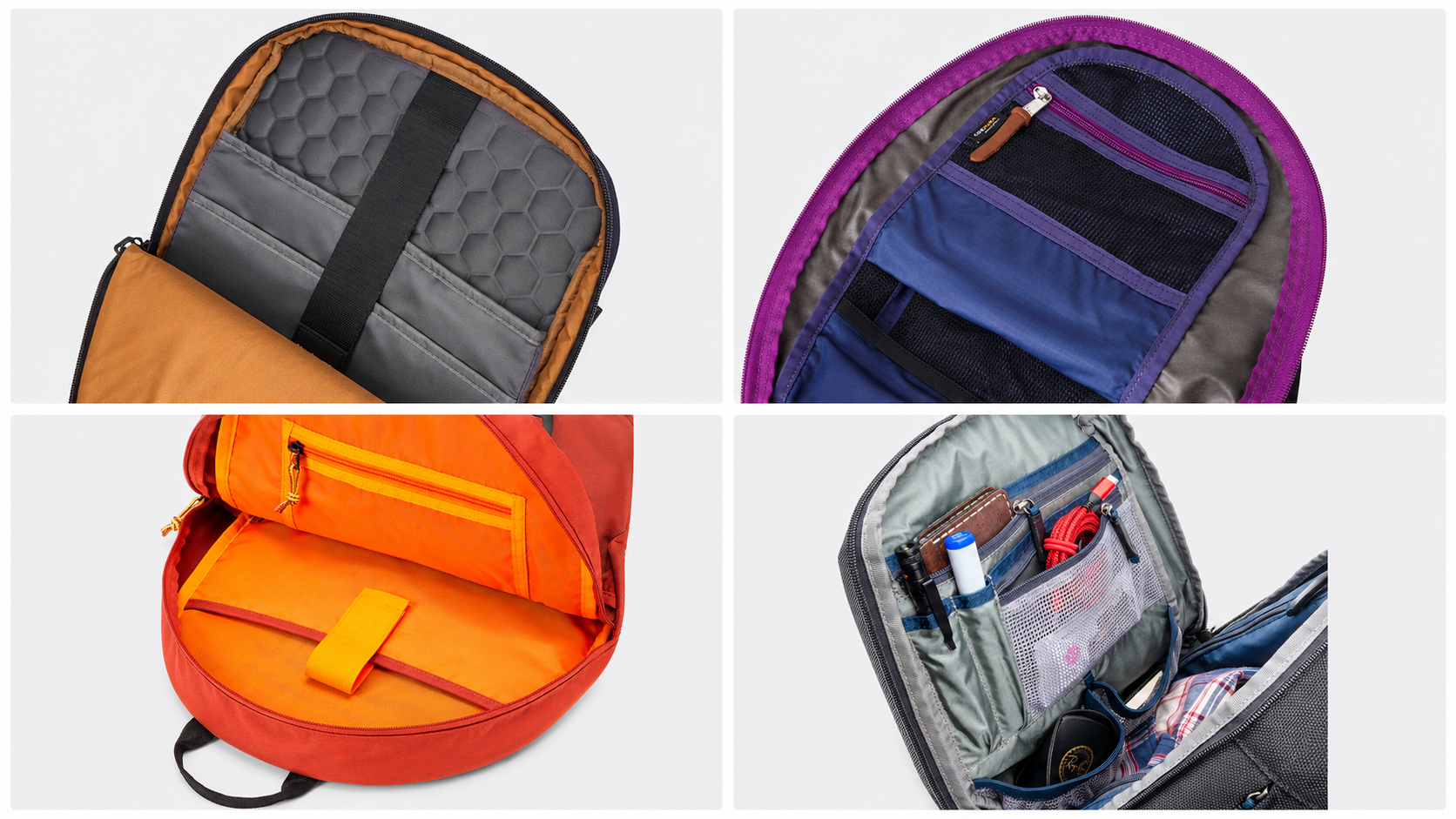
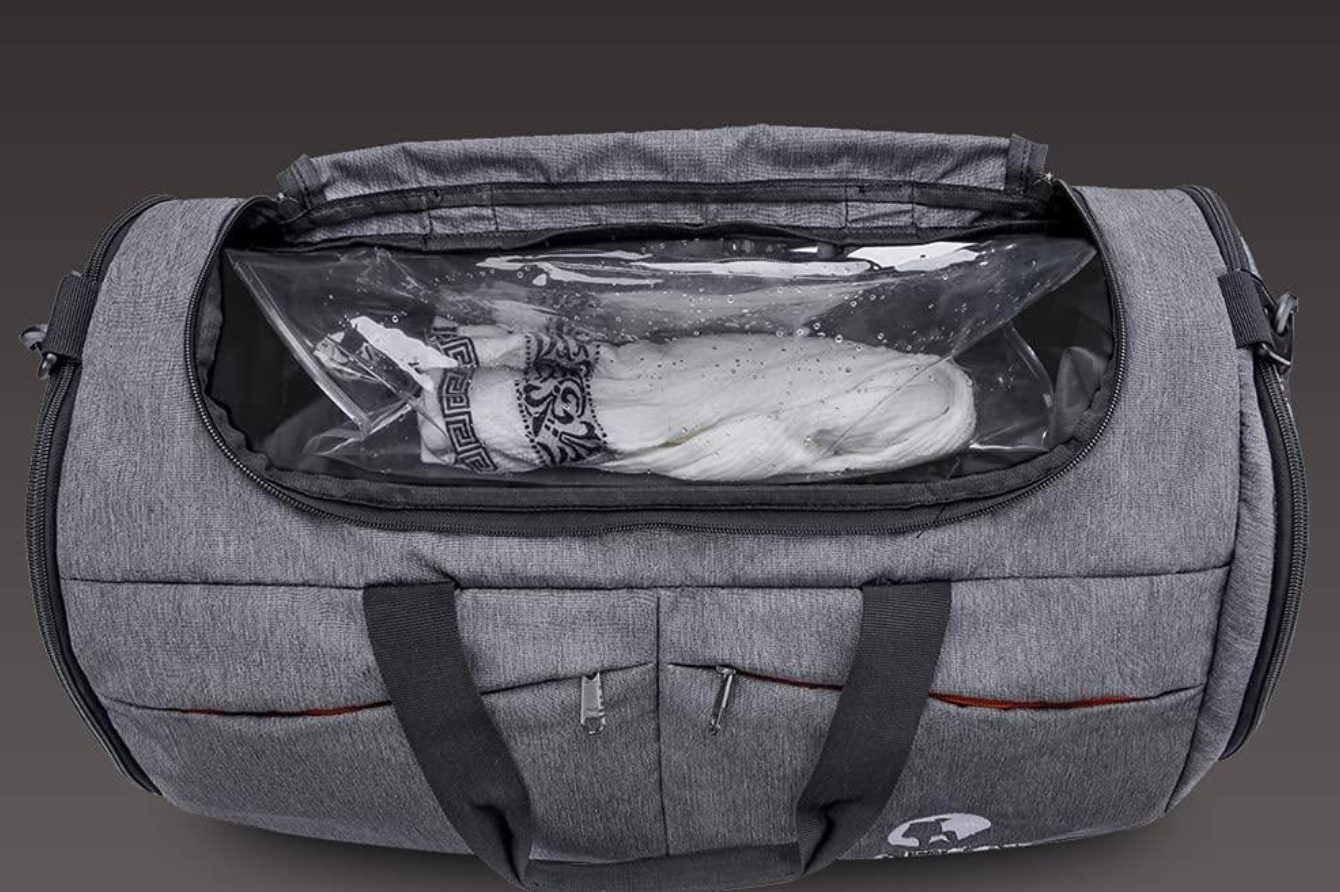
The backpack features worth paying more for are the ones that reduce real product risk: carrying discomfort, structural failure, premature wear, zipper or hardware problems, and inconsistent bulk production. In most projects, carrying structure, reinforcement, reliable components, and use-appropriate materials deserve budget before extra pockets or marketing features.
A longer feature list does not automatically make a better backpack. The real decision is where the next dollar should go: better shoulder straps, stronger stress points, a more reliable zipper, tougher bottom construction—or another feature that mainly helps the product page.
In development and bulk production, we repeatedly see the same pattern: visible features help sell the first impression, while less visible construction details decide how the backpack performs after real use. That is the filter we will use here.
Quick Answer:
| Feature | Worth Paying More? | Why |
|---|---|---|
| Carrying system | Usually yes | Comfort + load control |
| Stress-point reinforcement | Usually yes | Structural reliability |
| Main zipper | Usually yes | High-use component; problems are immediately noticeable |
| Bottom construction | Often yes | Abrasion and early wear |
| Better fabric | Depends | Must match use case |
| Extra organizers | Depends | Useful only with clear purpose |
| USB / hidden features | Conditional | Mainly sales differentiation |
Should You Spend More on Carrying Structure and Reinforcement First?
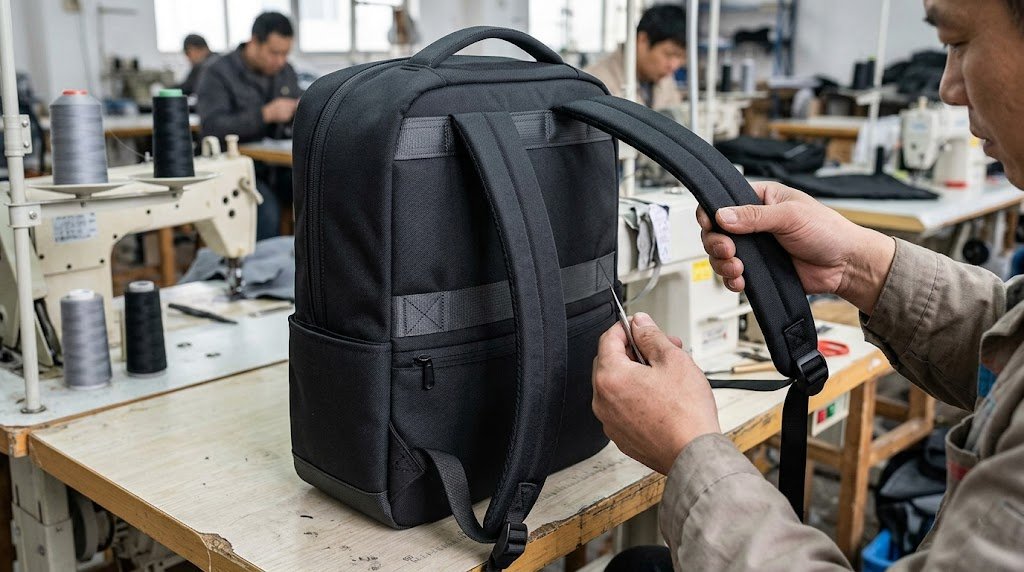
Yes—when the backpack carries meaningful weight. Extra budget usually delivers more value in shoulder straps, load-bearing attachment points, back support, and high-wear areas than in visible add-ons. These parts directly affect comfort, structural reliability, and how well the bag holds up in daily use.
Shoulder straps are a good example. Buyers often ask for thicker foam, but thickness alone is a weak specification.
We look at strap width, foam density, shape, attachment angle, webbing position, and stitching. A thick strap with soft foam can collapse under load. A badly shaped strap can still feel uncomfortable with expensive padding.
The same logic applies to back panels. More mesh, molded foam, or ventilation channels can help on heavier or longer-wear backpacks. On a light daypack, that construction may add cost without solving much.
Where Does Reinforcement Actually Matter?
Reinforcement should follow the load path.
The areas that usually deserve attention include:
- Shoulder strap attachments
- Top handles
- Compression-strap anchors
- Waist-belt connections
- Bottom corners
- Load-bearing webbing points
Depending on the design, these areas may need bartacks, backing fabric, box stitching, extra material layers, or a different seam construction.
“Double stitching everywhere” is not a durability strategy. If the extra stitches do not control the actual stress point, they mainly add labor.
| Upgrade | Usually Worth More When | Often Lower Priority When |
|---|---|---|
| Better shoulder straps | Carrying laptops, gear, or heavier loads | Very light promotional bags |
| Reinforced stress points | Frequent use or meaningful load | Simple, low-load daypacks |
| Stronger bottom construction | Travel, school, outdoor, or commuter use | Light indoor-use packs |
| More supportive back panel | Longer wear time or heavier loads | Short, light everyday use |
| Waist/load support | Hiking and heavier travel packs | Small commuter backpacks |
Factory Secret: the bottom panel is easy to under-specify because it barely appears in product photos. In real use, it may take more abrasion, dirt, and impact than most of the visible body.
For many travel, school, and outdoor projects, upgrading the bottom or its corner reinforcement is money well spent.
Are More Expensive Fabrics, Zippers, and Hardware Always Better?
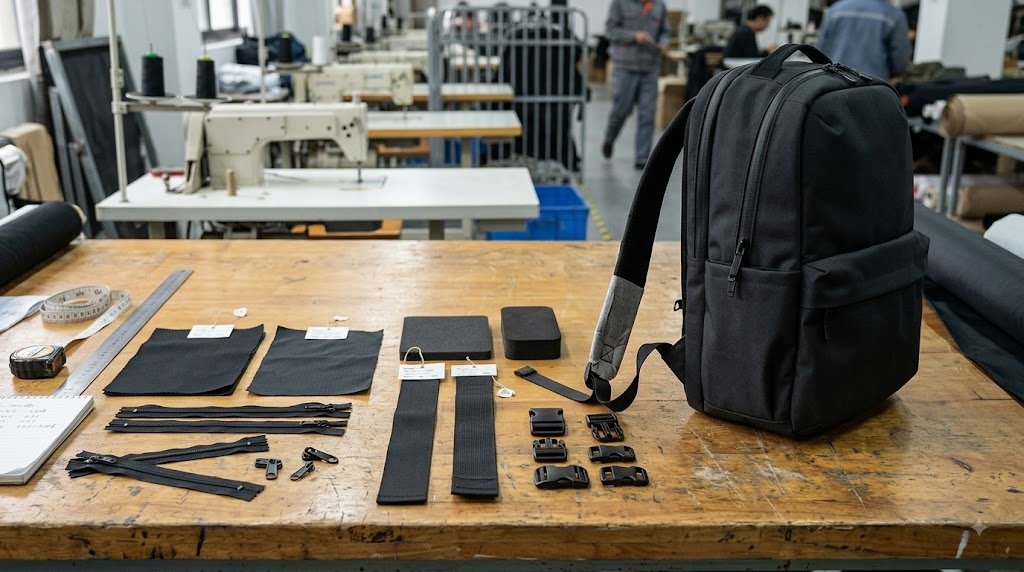
No. A higher fabric denier, premium zipper, or branded hardware is only worth more when it fixes a real weakness or supports the intended use. Component upgrades should match load, wear, weather exposure, product positioning, and construction—not simply make the specification sheet look more premium.
One mistake we see during specification comparison is concentrating too much budget in one component.
A premium shell fabric does not compensate for weak shoulder attachments. A high-end buckle does not help much if the matching webbing slips. A better zipper cannot correct a badly designed opening.
When Does Better Fabric Actually Pay Off?
Higher denier, heavier coating, or a premium textile can improve a backpack when the application needs it.
Before approving the upgrade, we normally look at:
- Expected load
- Abrasion exposure
- Product weight target
- Required hand feel
- Water-resistance requirement
- Sewing construction
- Target price tier
For abrasion-sensitive applications, buyers can also specify a recognized test method. ISO 12947-2, for example, covers Martindale abrasion testing based on specimen breakdown for applicable textile fabrics.
A more expensive fabric can make a backpack heavier or stiffer. Some coated materials also become harder to control around tight curves or multi-layer seams.
If you are still comparing nylon, polyester, canvas, CORDURA®, RPET, or coated fabrics, our guide to common backpack materials breaks down where each option makes sense.
Why Can an Expensive Zipper Still Perform Badly?
Because zipper performance depends on more than the zipper itself.
In sampling, rough opening can come from tight curves, excessive seam thickness, poor alignment, or too much tension around the opening.
For the main compartment, I pay attention to:
- Zipper size and type
- Slider quality
- Opening radius
- Seam thickness around the zipper
- Alignment between both zipper sides
- Tension when the backpack is loaded
A better zipper supplier cannot fully compensate for bad construction.
A good zipper still needs a good zipper path.

Which Component Upgrades Usually Make Sense?
| Component | Spend More When | Be Careful About Over-Specifying When |
|---|---|---|
| Main zipper | Frequent opening or meaningful tension | It is used on a low-use pocket |
| Fabric | Abrasion, weather, weight, or positioning requires it | A higher denier is the only reason |
| Buckles | They carry load or adjust frequently | They are mostly decorative |
| Webbing | It carries tension and must hold adjustment | It is used mainly as trim |
| Coating | The use environment requires protection | It exists mainly to strengthen a marketing claim |
The goal is not to max out every component.
It is to prevent one poorly chosen component from becoming the weak point of the backpack.
Which Backpack Features Are Useful—and Which Mostly Add Marketing Value?
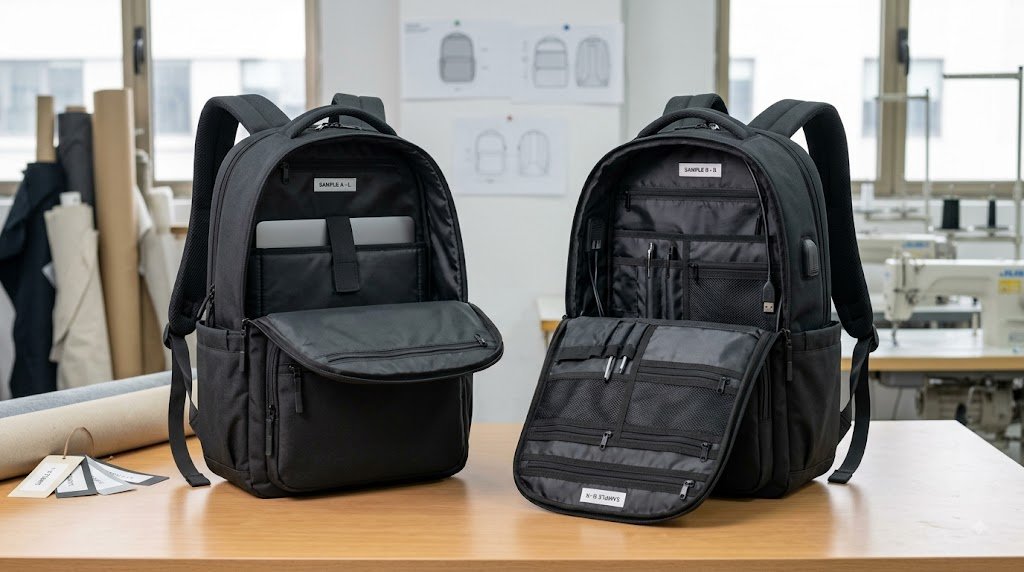
Useful marketing features can deserve budget when they solve a clear user need or strengthen product positioning. USB ports, hidden pockets, extra organizers, and water-resistant details become poor investments when they add cost or production complexity without improving how the target user actually carries, accesses, or protects their belongings.
These features are not automatically bad. Some can make a product much easier to market.
The key is whether the target customer will actually use them.
| Feature | Worth Paying For When | Lower Priority When |
|---|---|---|
| USB charging port | The commuter market values it and routing is clean | It is added mainly to increase feature count |
| Anti-theft pocket | Users regularly carry passports, wallets, or valuables | Access becomes awkward |
| Hidden compartment | It solves a clear security or storage need | It sacrifices useful internal space |
| Extra organizers | Small items genuinely need separation | Pockets have no defined purpose |
| Water-resistant details | Rain exposure is part of normal use | The claim exceeds the actual construction |
USB ports, for example, bring more than a visible component. They may require cable routing, assembly work, sourcing coordination, and extra QC checkpoints.
That can be justified for the right commuter product. It is harder to justify when the feature exists mainly for another product-page icon.
When Does More Organization Become Too Much?
Every pocket has a cost beyond the fabric itself.
Extra organization can mean:
- More pattern pieces
- Another zipper or binding operation
- Additional sewing steps
- More alignment points
- More opportunities for variation in bulk
This does not mean simple is always better.
A laptop sleeve, bottle pocket, document section, or quick-access compartment can improve daily use. The problem is adding small compartments without knowing what they are supposed to hold.
We have removed low-value pockets during sampling when they complicated production but added little usable storage.
What About “Waterproof” Features?
“Waterproof” is one of the easiest backpack claims to oversell.
A coated fabric, water-repellent finish, or water-resistant zipper can improve protection. But a normally sewn backpack still has seams, needle holes, openings, and other construction points where water may enter.
Even component terminology needs care: YKK describes its AquaGuard® zipper as water repellent rather than waterproof or watertight.
If you need the technical distinction, we explain it in more detail in our guide to water-resistant vs. waterproof backpacks.
The sourcing question should be specific:
What level of water exposure does the end user actually face?
A normal commuter pack and a technical outdoor bag should not automatically use the same solution.
Pay for the protection the use case requires—not the strongest word available for the product listing.
Which Upgrades Matter Most for Hiking, Commuter, and Travel Backpacks?
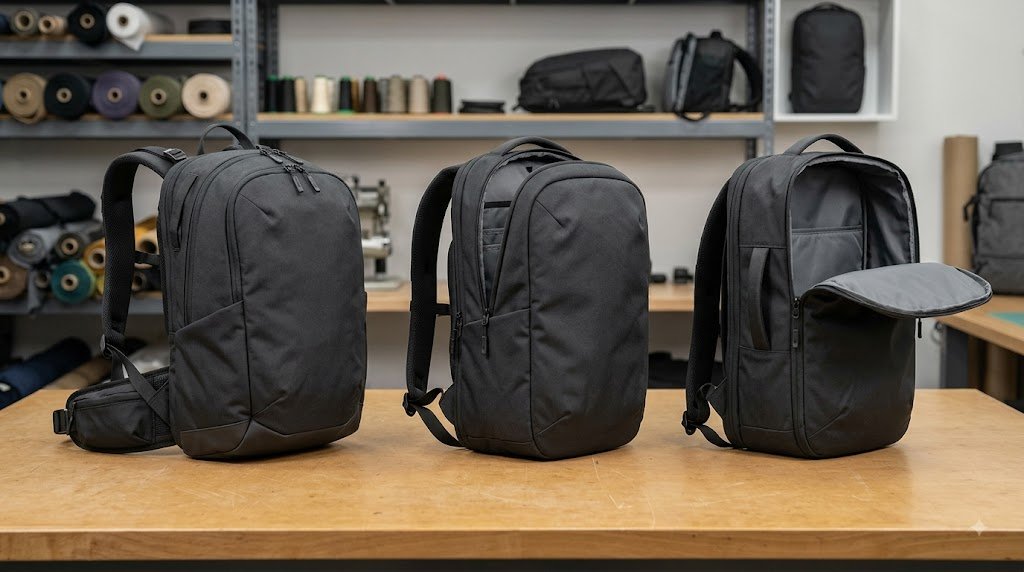
Hiking backpacks deserve more budget for load support and reinforcement; commuter backpacks benefit most from laptop protection, shoulder comfort, and reliable zippers; travel backpacks need usable capacity, easy access, and durable handles and bottoms. The right upgrade depends on how the backpack will actually be carried, loaded, and opened.
The same component can move from essential to unnecessary when the use case changes.
That is why the backpack category should be defined before the BOM is upgraded.
| Backpack Type | Spend More On First | Next Priority | Conditional Extras |
|---|---|---|---|
| Hiking / Outdoor | Carrying system, waist support | Reinforcement, abrasion-resistant bottom | Extra organizers, decorative outdoor details |
| Commuter / Laptop | Laptop protection, shoulder comfort | Main zipper, practical organization | USB ports, excessive hidden pockets |
| Travel / Weekend | Opening structure, usable capacity | Handles, bottom durability, zipper quality | Too many dividers or access points |
Hiking Backpacks: Control the Load
A hiking pack can look technical without carrying well.
Loops, straps, mesh, and outdoor styling are easy to add. A stable carrying system is harder.
Budget usually belongs in:
- Shoulder strap geometry and padding
- Back support
- Functional waist support
- Load-bearing attachment points
- Bottom and high-abrasion areas
Outdoor styling is visible. Load control is felt.
Commuter Backpacks: Protect Daily Carry
For commuter packs, laptop protection, shoulder comfort, and the main zipper normally deserve attention first.
Useful upgrades include:
- Well-positioned laptop padding
- Protection below the laptop compartment
- Comfortable shoulder straps
- Reliable main-compartment zipper
- Simple everyday organization
More padding is not automatically safer.
During sampling, unnecessary foam sometimes gets removed because it takes away internal space without improving protection where the laptop actually needs it.
Travel Backpacks: Make the Capacity Usable
Travel buyers often compare volume. I pay just as much attention to how easily that volume can be packed.
High-value upgrades can include:
- Wide, practical opening
- Clean main-compartment geometry
- Reliable zipper path
- Strong carry handles
- Durable bottom construction
- Trolley strap when the use case needs one
A backpack can have impressive theoretical capacity and still feel small if dividers and poorly placed pockets break up the main compartment.
For travel backpacks, usable space often matters more than clever storage complexity.
How Do You Know Whether a Feature Is Worth the Cost Before Bulk Production?

A feature is worth the extra cost when it solves a real user problem, fits the target BOM, and can be reproduced consistently in bulk production. If it looks good on the sample but creates sewing difficulty, unclear QC standards, or unnecessary inspection risk, the extra cost is usually hard to justify.
This is where a development sample can be misleading.
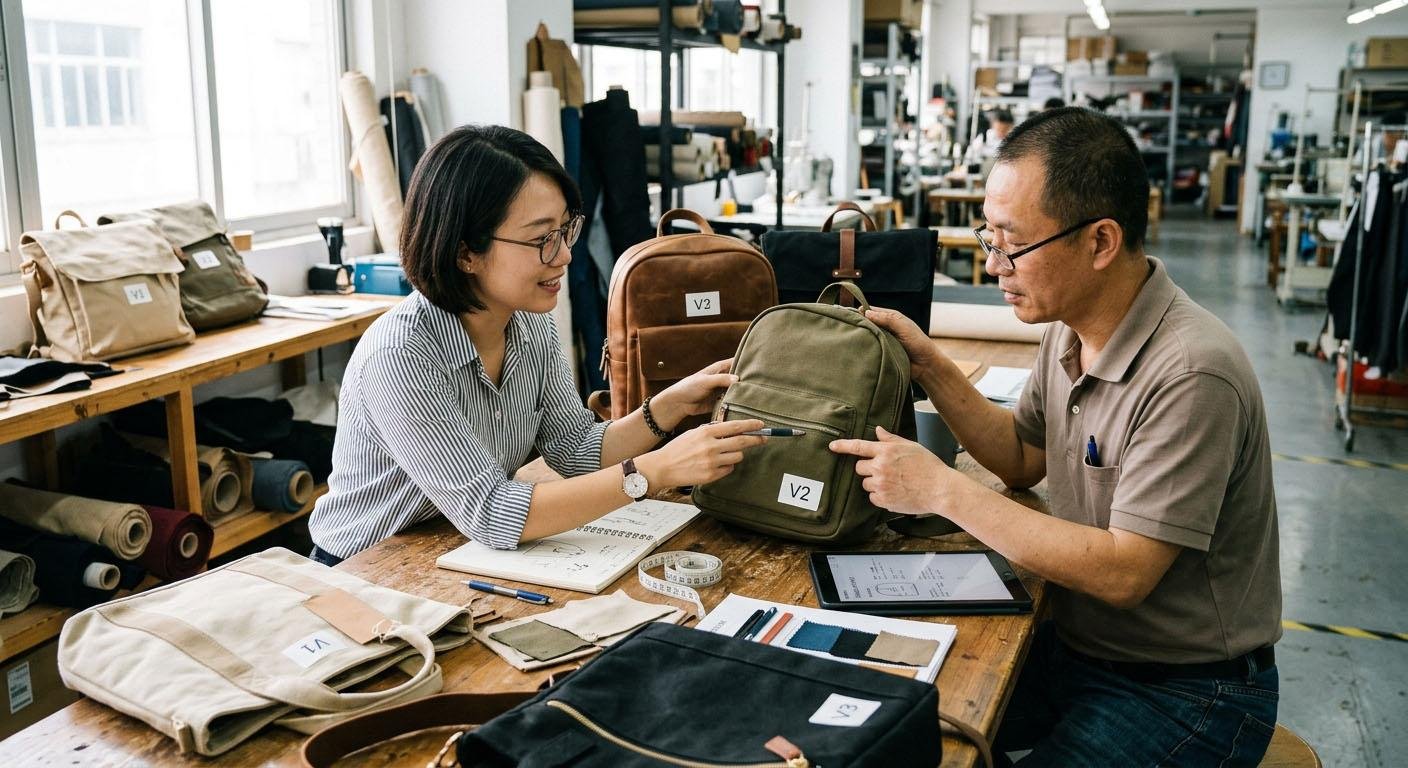
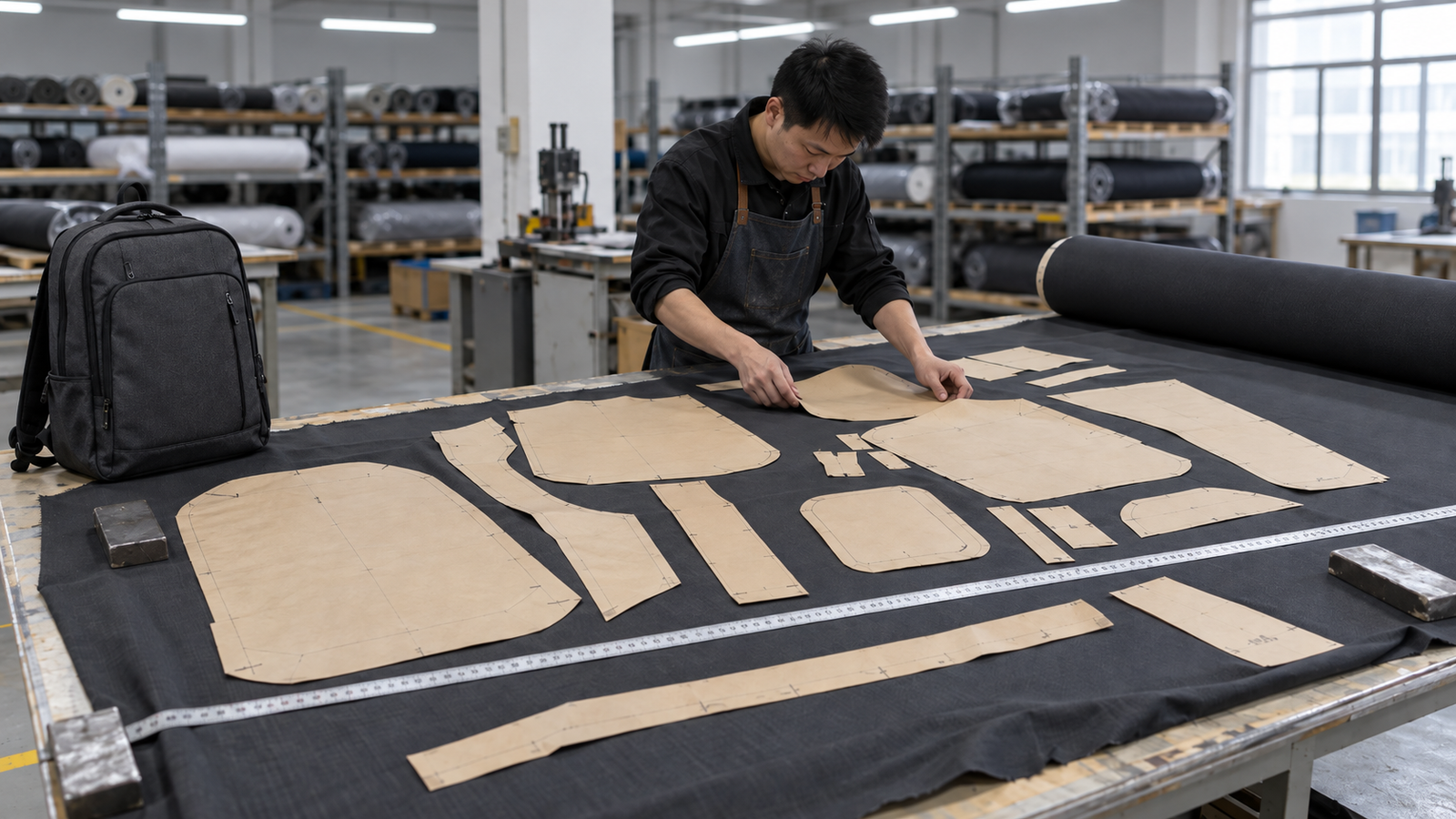
A sample maker can spend extra time aligning one difficult pocket or adjusting a tight zipper curve. A production line has to repeat that construction hundreds or thousands of times with much less room for individual adjustment.
We have seen features that looked clean on the approved sample become unnecessary sources of rework once production repeatability was considered.
That sample-to-production gap is also why we treat prototyping and production engineering as separate checkpoints in our OEM/ODM backpack development process.
What Should a Feature Prove Before You Keep It?
Before locking the specification, I want it to pass four questions:
-
Does the user benefit from it?
It should improve comfort, protection, durability, access, or another clear function. -
Is the BOM increase justified?
Extra material and labor should buy something the target customer can value. -
Can production repeat it consistently?
Tight alignment, excessive layer buildup, and difficult sewing operations deserve extra scrutiny. -
Can QC define a clear pass/fail standard?
If nobody can agree quickly on what “correct” looks like, that can become a problem during inline QC or third-party inspection.
For lot-by-lot acceptance sampling, buyers and inspection companies may also work with AQL-based sampling schemes such as ISO 2859-1:2026.
That last point is easy to underestimate.
A feature that needs a long explanation every time QC checks it may not be ready for bulk production.
Where Should the Next $1 of Backpack Cost Go?
When the target price is tight, this is a practical way to prioritize the remaining budget:
| Priority | Put the Budget Here | Main Risk It Controls |
|---|---|---|
| 1 | Carrying structure and stress points | Discomfort and structural failure |
| 2 | Main zipper and critical components | Frequent-use problems |
| 3 | Bottom and high-wear areas | Premature wear |
| 4 | Use-case-specific protection | Laptop, weather, or load-related risks |
| Later | Marketing features | Product differentiation |
Before approving another paid feature, ask one final question:
If we remove it, what real problem comes back?
If there is no clear answer, I would question why it is still consuming the BOM.
Final Words
Spend more where failure would hurt most: carrying comfort, structural strength, high-use components, and protection required by the use case. Features that mainly improve marketing or convenience should come after the backpack’s core performance is secure.
A good specification is not the one with the longest feature list. It is the one where every paid upgrade has a clear job.
If you are comparing backpack specifications and cannot tell whether the extra cost is buying real product value or simply more complexity, send us your tech pack, reference sample, BOM, or target price.
We can review the construction, components, and production risks before you lock the specification for bulk production.

FAQ
How Should Buyers Compare Two Backpack Quotations With Different Specifications?
Do not compare the unit price alone. First normalize the major cost drivers: fabric, zipper grade, foam, lining, hardware, reinforcement, printing, packaging, and construction details.
Two quotations can describe a similar-looking backpack while hiding very different material and production assumptions.
Can Adding More Backpack Features Increase Production Risk?
Yes. Every additional zipper, pocket, panel, hardware part, or special construction can add sewing operations, alignment points, sourcing dependencies, and QC checkpoints.
The issue is not complexity itself. The issue is whether the added user value justifies that complexity.
Should Every Backpack Upgrade Be Tested During Sampling?
Any upgrade that affects fit, carrying comfort, opening function, load-bearing construction, protection, or production method should be checked on the sample before bulk production.
A specification change that looks small on a BOM can behave very differently once it is sewn into the complete backpack.
What Should a Buyer Include in a Backpack RFQ to Get a More Accurate Quote?
At minimum, provide the backpack dimensions, target materials, main features, intended use, approximate order quantity, logo method, packaging requirements, and target market.
A reference sample, drawing, tech pack, or target price can also help the factory understand where specifications are fixed and where alternatives are acceptable.
When Should a Feature Be Removed After Sampling?
Consider removing or simplifying a feature when it adds noticeable cost or production difficulty but delivers little user value.
Common warning signs include difficult alignment, excessive material buildup, awkward access, unstable appearance in repeated samples, or a QC requirement that is hard to define consistently.