Confused by the many names for the fanny pack1? This can make it hard to market them or choose the right style. I’ll break down its history, names, and styles for you.
The term "fanny pack" comes from the United States, where it was traditionally worn on the lower back, or "fanny." In other regions, it’s called a "bum bag2" or "belt bag" due to different slang terms and the evolution of how it’s worn.
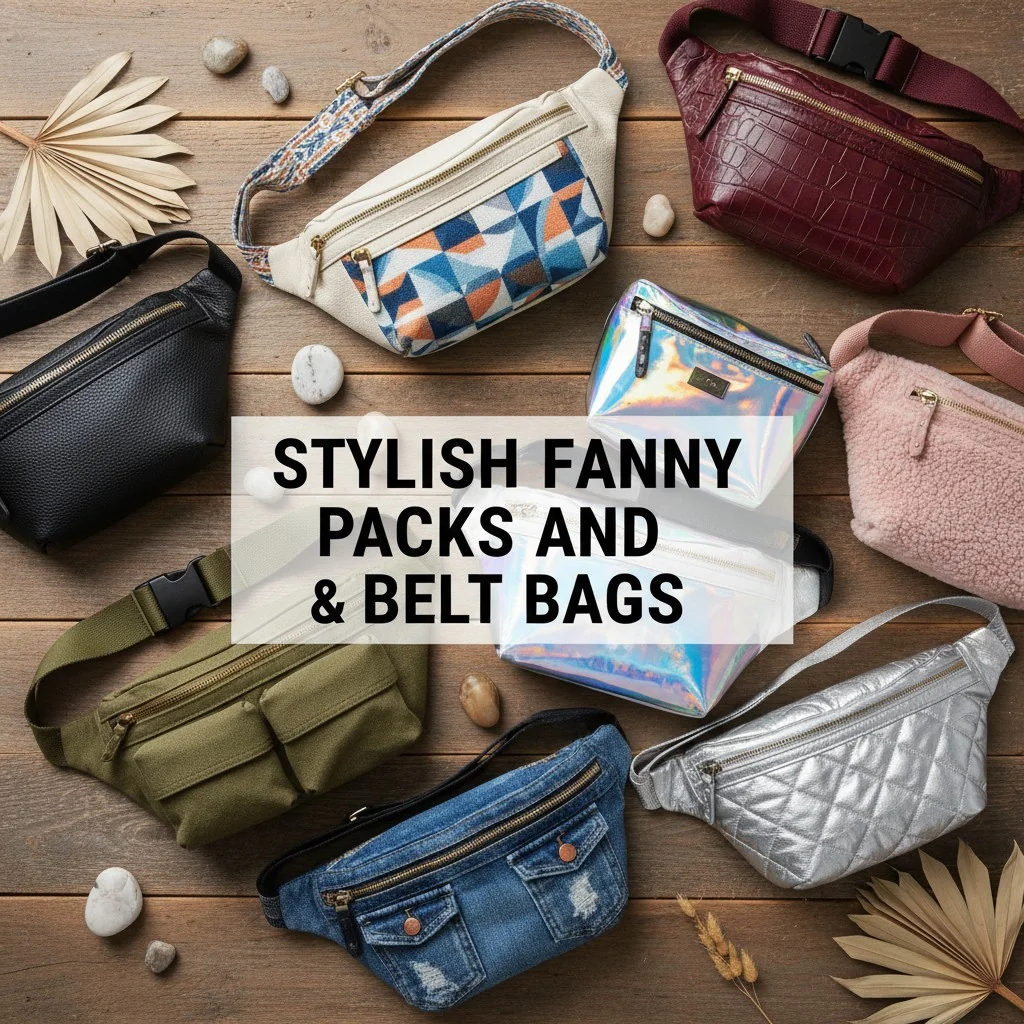
The fanny pack is more than just a retro accessory; it’s a major player in the world of bags. As a bag manufacturer, I’ve seen its popularity rise, fall, and come back stronger than ever. It’s a fascinating case study in fashion and function. For any brand owner like you, understanding this bag’s journey is key to unlocking its potential for your own collection. Let’s dive into everything you need to know about this iconic bag, from its practical roots to its modern-day revival.
[claim claim=”The fanny pack was named ‘Accessory of the Year’ by Lyst in 2018.” istrue=”true” explanation=”The fashion search platform Lyst reported a massive surge in searches for fanny packs, naming it the hottest accessory of the year.”]
[claim claim=”Fanny packs were originally invented for skiing in the 1950s.” istrue=”false” explanation=”While skiers did use waist pouches, the modern fanny pack design gained widespread popularity in the early 1980s, primarily for travel and general outdoor use, not specifically skiing.”]
What Is a Fanny Pack and How Does It Differ from Other Waist Bags?
Is a fanny pack just another name for a waist bag3? The terms often get mixed up. Using the wrong one can confuse your customers and misrepresent your product’s best features.
A fanny pack is a small, streamlined bag worn around the waist, valued for its hands-free design and quick access. It differs from other, sometimes bulkier, waist bags with its compact shape. It is often worn at the front or side, making it ideal for active people.
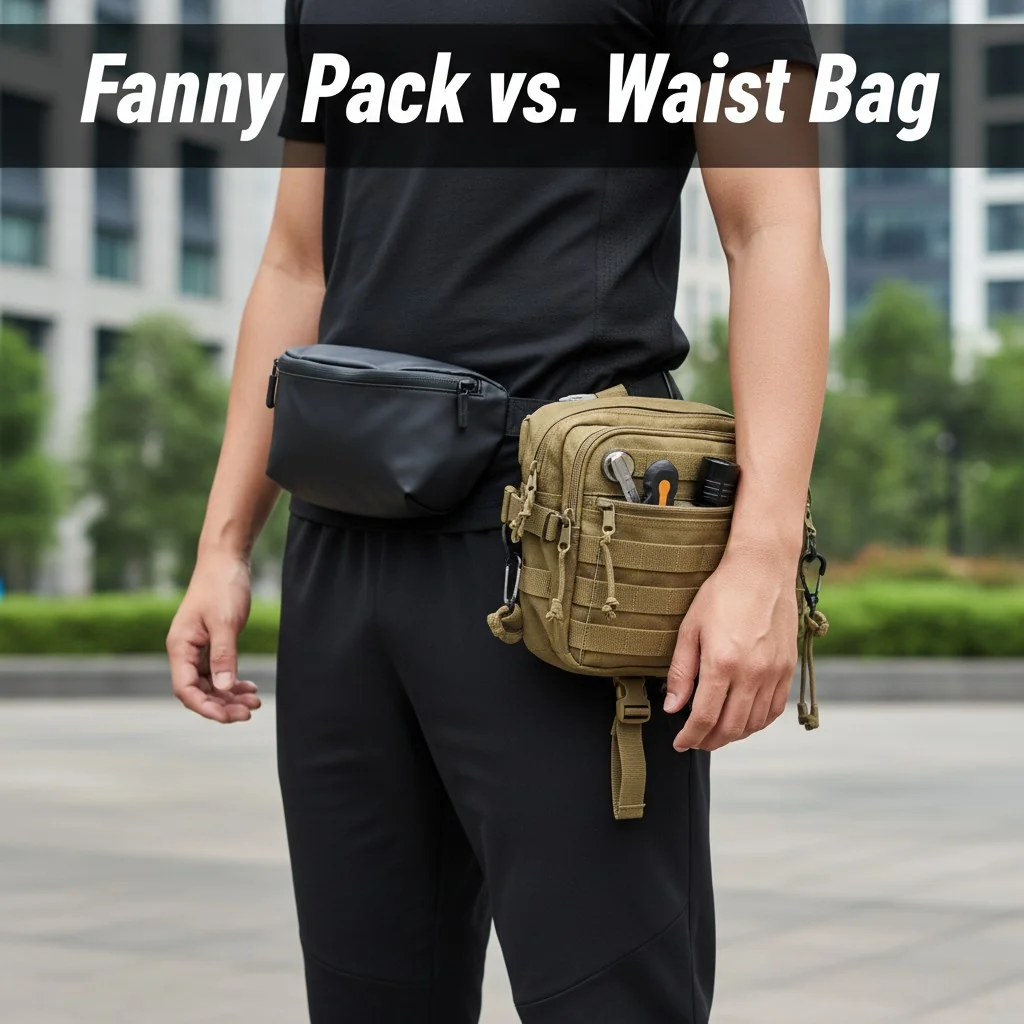
When I work with brands, we spend a lot of time defining the product. The term "fanny pack" usually implies a specific style. It’s about convenience and minimalism4. Other bags worn at the waist might serve different purposes.
For example, a construction worker’s tool belt is technically a waist bag, but it’s designed for utility, not style or quick access to personal items. The key difference is in the design intent. Fanny packs are made for carrying just the essentials: your phone, wallet, keys, and maybe a lip balm. This focus on minimalism is what makes them so appealing.
Key Design Distinctions
| Feature | Fanny Pack | Other Waist Bags (e.g., Utility Pouch) |
|---|---|---|
| Profile | Slim, compact, streamlined | Often boxy, bulky, larger |
| Purpose | Everyday essentials, travel, fashion | Specialized tools, extensive gear |
| Placement | Front, side, or back | Typically at the side or back |
| Aesthetic | Fashion-conscious, sporty, minimalist | Utilitarian, rugged, functional |
Thinking about this helps you target your customer. A brand focused on urban fashion would design a very different fanny pack than one for outdoor adventurers.
[claim claim=”The most common material for fanny packs is nylon.” istrue=”true” explanation=”Nylon is popular due to its durability, light weight, and water-resistant properties, making it ideal for the fanny pack’s practical and often active-use design.”]
[claim claim=”All fanny packs have only one compartment.” istrue=”false” explanation=”While minimalist designs may have one pocket, many fanny packs feature multiple compartments, including hidden back pockets for security and internal organizers.”]
The Origins of the Fanny Pack: When and Where Did It Start?
You might think fanny packs are just a 90s trend that came back. The real story is much richer. Not knowing its history means you could miss out on great marketing stories for your brand.
The modern fanny pack became popular in the early 1980s as a functional bag for travelers and outdoor lovers. While it hit its peak in the 1990s, its true origins go back centuries to simple belt pouches. Its recent comeback is fueled by both function and nostalgia.

I’ve seen trends cycle in the bag industry, but the fanny pack’s journey is special. Its story isn’t just about one decade.
An Unofficial Timeline
- Ancient Times to 19th Century: For centuries, people have used pouches attached to belts to carry coins and personal items. Think of the Scottish sporran or Native American medicine bags. These were the original hands-free solution.
- Early 1980s: The fanny pack as we know it today emerges. With more people traveling and getting into outdoor activities like hiking, there was a need for a small, secure bag. I remember seeing early versions made from simple nylon, focused purely on function.
- Late 1980s – 1990s: This was the golden age of the fanny pack. It became a mainstream accessory, often in bright, neon colors. It was the symbol of a tourist or a suburban dad. This is when it got its "uncool" reputation.
- 2010s – Present: High-fashion designers reinvented the fanny pack, calling it a "belt bag5" or "sling bag." Streetwear culture adopted it, and suddenly it was cool again. Now, it’s a staple for its practicality and style.
[claim claim=”An Australian woman named Melba Stone is often credited with inventing the fanny pack in 1962.” istrue=”true” explanation=”Though disputed and not widely patented, several sources credit Melba Stone with creating a kangaroo-inspired pouch, which is considered a direct forerunner to the modern fanny pack.”]
[claim claim=”The fanny pack’s popularity in the 90s was driven by high-fashion brands.” istrue=”false” explanation=”In the 1990s, the fanny pack was a mass-market, functional accessory associated with tourism and casual wear, not high fashion. The luxury market adopted it much later, in the 2010s.”]
Why Is It Called a Fanny Pack in the U.S. but a Bum Bag or Belt Bag Elsewhere?
Calling a "bum bag" a "fanny pack" in the UK can lead to some very awkward looks. This language trap can make your brand seem out of touch with international customers.
In the U.S., "fanny" is a common slang word for your backside, so "fanny pack" was a logical name. But in the UK, "fanny" is a vulgar term for female anatomy. They use "bum bag" instead, since "bum" is their word for your backside.
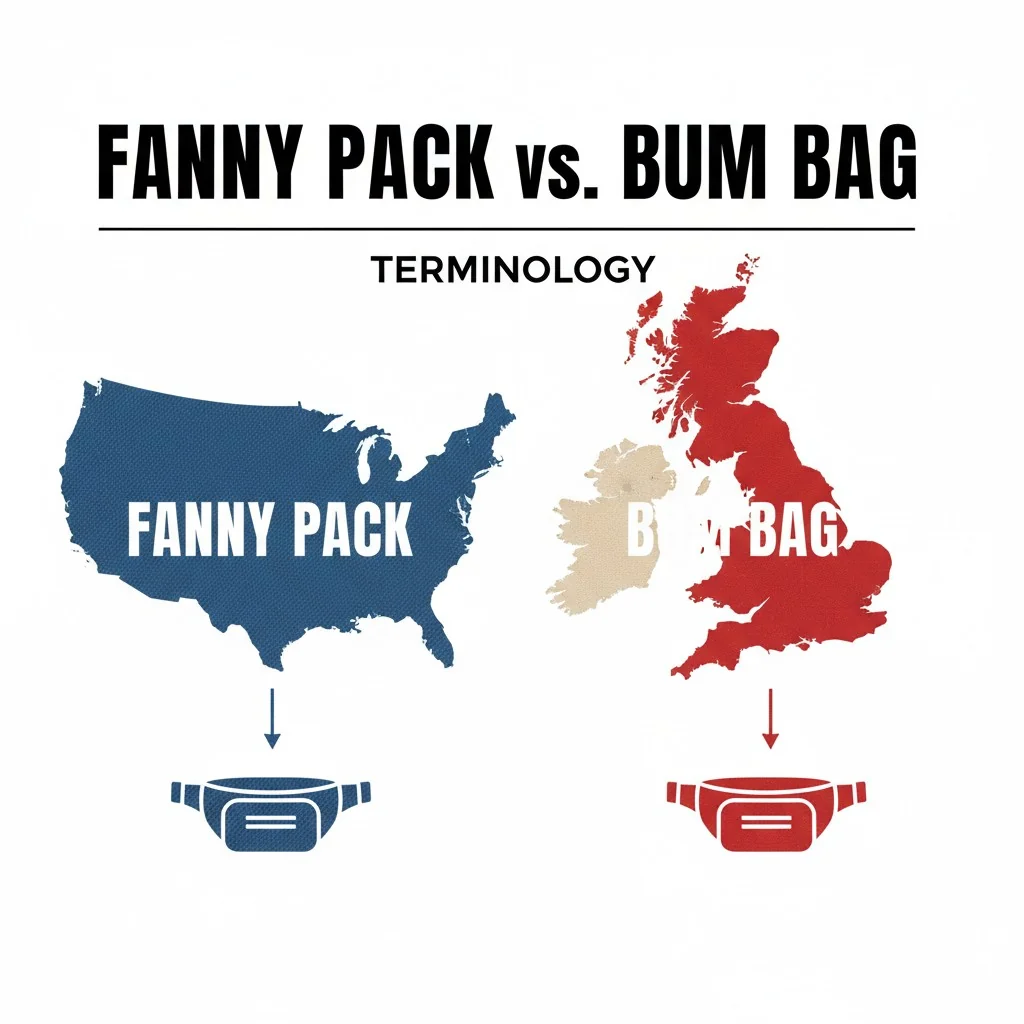
This is one of the first things I discuss with clients who want to sell globally. Language matters. A simple name change can make or break your entry into a new market. The term "belt bag" has become a safe and popular alternative. It sounds more sophisticated and avoids any cultural missteps. It also accurately describes the modern way of wearing it, which is often cinched high on the waist like a belt.
A Global Naming Guide
| Term | Primary Region | Cultural Context |
|---|---|---|
| Fanny Pack | United States | Slang for "backside." The original, now somewhat retro, term. |
| Bum Bag | United Kingdom, Australia, New Zealand | "Bum" is slang for "backside." "Fanny" is considered vulgar. |
| Belt Bag | Global / Fashion Industry | A neutral, more fashionable term. Used worldwide to sound more modern. |
For a brand owner like Emily, this is critical. On her US website, "fanny pack" works perfectly for SEO and customer understanding. But for her UK site, she absolutely needs to use "bum bag." For her high-fashion items, "belt bag" is the best choice everywhere.
[claim claim=”The term ‘fanny’ in British English is equivalent to the American term ‘buttocks’.” istrue=”false” explanation=”In British English, ‘fanny’ is a vulgar slang term for the vulva. The equivalent of the American ‘buttocks’ or ‘fanny’ is ‘bum’ or ‘arse’.”]
[claim claim=”The term ‘belt bag’ grew in popularity as luxury brands entered the market.” istrue=”true” explanation=”Luxury brands like Gucci and Louis Vuitton rebranded the accessory as a ‘belt bag’ in the 2010s to give it a more sophisticated and high-fashion appeal, distancing it from the ‘uncool’ tourist image of the ‘fanny pack’.”]
Which Cultures and Regions Use Alternative Names for the Fanny Pack?
Your global marketing6 might be missing local keywords for the fanny pack. Using one generic term everywhere can hurt your brand’s local feel and search rankings. Let’s look at more names.
Beyond "bum bag," you’ll find "sac banane" (banana bag) in France due to its curved shape. In Spain and parts of Latin America, it’s a "canguro" (kangaroo), inspired by a kangaroo’s pouch. These names show how the bag connects with local language and culture.
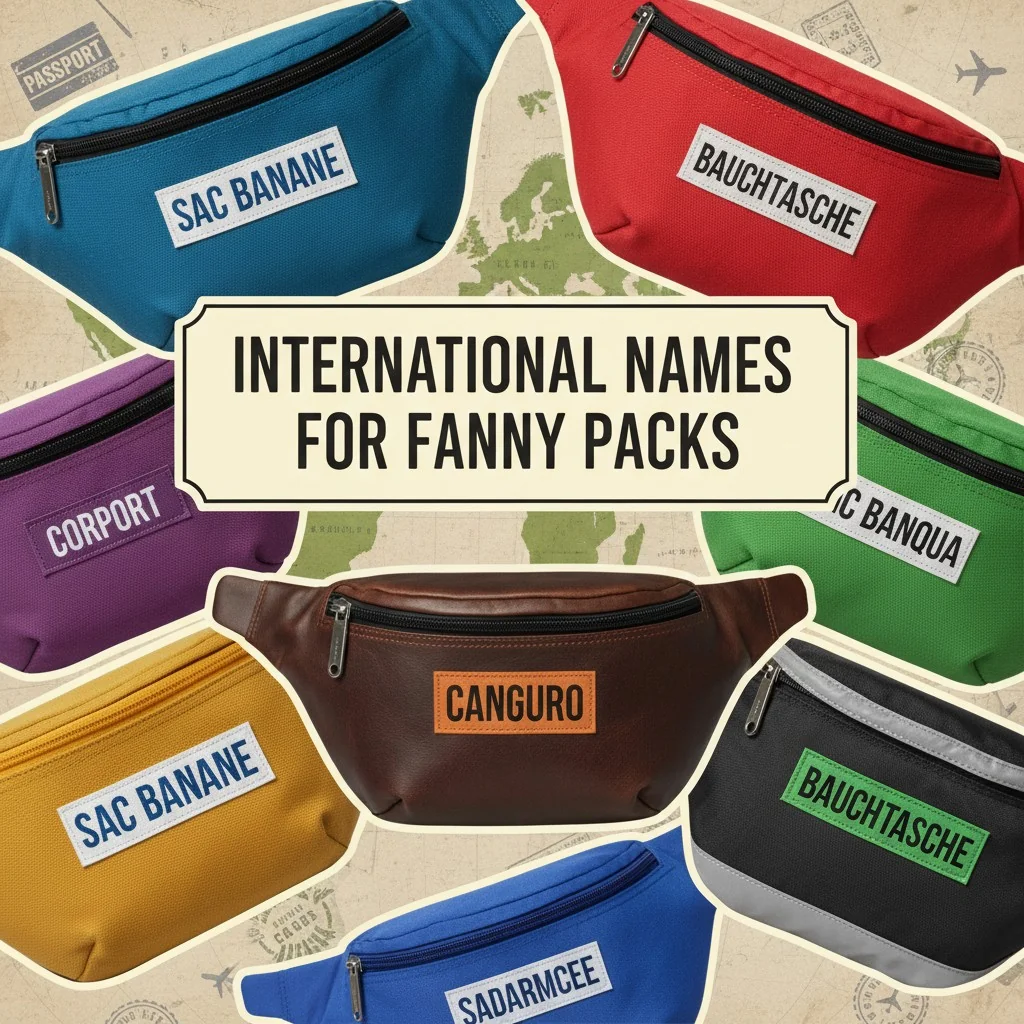
When I help clients expand into new countries, we do deep research on these local terms. It’s not just about translation; it’s about cultural connection. Using the right name shows customers that you understand their market. It’s a sign of respect that builds trust. Here are a few more examples I’ve come across.
More Global Names
- Sac Banane (France): This name, meaning "banana bag," is purely descriptive. The classic fanny pack shape looks like a banana. It’s a fun, visual name that stuck.
- Canguro (Spain & Latin America): This means "kangaroo." The name creates a great image of carrying your valuables safely in a front pouch, just like a kangaroo.
- Bauchtasche (Germany): This translates literally to "belly bag." It’s a very direct and functional name, reflecting where it’s often worn.
- Riñonera (Argentina): This interesting name means "kidney bag." It refers to the spot on the lower back, near the kidneys, where the bag would sit.
For an e-commerce brand, optimizing product listings for these keywords is a simple way to boost visibility and sales in those regions.
[claim claim=”In France, a fanny pack is called a ‘sac à dos’.” istrue=”false” explanation=”‘Sac à dos’ is French for ‘backpack.’ The correct French term for a fanny pack is ‘sac banane’.”]
[claim claim=”The Spanish name ‘canguro’ is used because the bag was first popularized in Australia.” istrue=”false” explanation=”The name ‘canguro’ (kangaroo) is used in Spanish-speaking regions because the front-worn pouch resembles a kangaroo’s pouch, not because of a connection to Australia.”]
What Are the Different Types of Fanny Packs?
Do you think all fanny packs look the same? There is a huge variety of styles out there. Sticking to one basic design limits your brand’s reach and who you can sell to.
Fanny packs go from standard waist packs to sleek, minimalist designs. You can also find technical models for sports, luxury versions from top brands, and versatile styles that can be worn as crossbody bags. This variety meets many different needs and tastes.
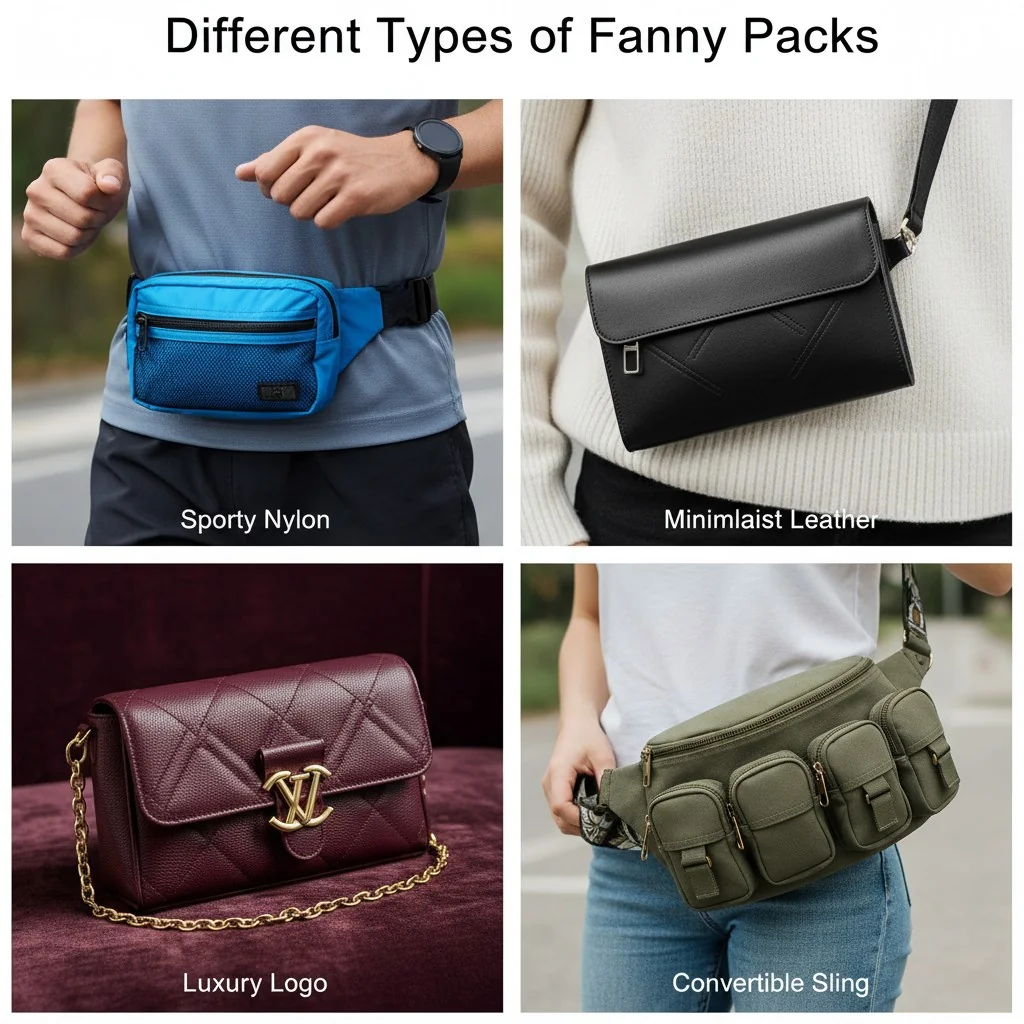
As a manufacturer, I get to see the full spectrum of designs. It’s exciting to see how a simple concept can be adapted in so many ways. For a brand owner, the key is to match the style to your customer.
Common Fanny Pack Styles
The Classic Waist Pack:
This is the style you probably picture from the 90s. It’s usually made of nylon or canvas, has a few pockets, and is built for function. It’s perfect for casual wear, travel, and festivals.
The Minimalist Belt Bag:
This is the fashion-forward version. It’s often made of leather, faux leather, or other premium materials. It has a clean, simple design, sometimes with just one pocket. It’s worn like a belt to cinch a dress or elevate a simple outfit.
The Sport & Technical Pack:
Designed for activity, these are lightweight and often water-resistant. They might have special features like a water bottle holder, reflective strips for safety, or a headphone port. Great for runners, hikers, and cyclists.
The Convertible Sling Bag:
This is one of the most popular modern styles. It has a longer, adjustable strap, so you can wear it around your waist or across your chest as a sling bag. This versatility is a huge selling point.
[claim claim=”Leather fanny packs are best for athletic activities.” istrue=”false” explanation=”Leather is heavy, not breathable, and can be damaged by sweat and water. Lightweight, moisture-wicking materials like nylon or neoprene are much better for athletic activities.”]
[claim claim=”Convertible fanny packs that can be worn as sling bags are a recent innovation from the last 5 years.” istrue=”true” explanation=”While crossbody bags have existed for a long time, the specific trend of designing fanny packs with longer straps to be intentionally worn across the chest as a ‘sling bag’ became a major fashion movement in the late 2010s.”]

Do Fanny Packs Offer Practical Benefits Over Backpacks and Handbags?
Are fanny packs just a trend, or are they actually more practical? Your customers might be tired of their heavy backpack or insecure handbag. Let’s look at the clear benefits.
Yes, fanny packs have big advantages. They give you hands-free convenience and quick access to your things, unlike a big backpack. They are also safer than handbags because you wear them close to your body, which helps prevent theft in crowded places.

I always recommend a fanny pack for travel. When I was in a crowded market in Marrakesh, having my passport and money zipped up and in front of me gave me total peace of mind. I didn’t have to worry about a bag on my back or a purse that could be easily snatched. The practicality is undeniable. Let’s break it down.
Fanny Pack vs. The Alternatives
| Benefit | Fanny Pack | Backpack | Handbag / Tote |
|---|---|---|---|
| Accessibility | Excellent (front access) | Poor (must be removed) | Good (but can be deep) |
| Security | Excellent (close to body) | Poor (on your back) | Fair (can be snatched) |
| Mobility | Excellent (hands-free, light) | Fair (can be bulky) | Poor (occupies a hand/shoulder) |
| Capacity | Limited (essentials only) | Excellent (carries a lot) | Good (varies) |
The fanny pack wins for situations where you need to be mobile, secure, and have quick access to your essentials. It’s not meant to replace a backpack for carrying a laptop and books. It’s a solution for a different need: freedom. It’s perfect for concerts, amusement parks, running errands, or walking the dog.
[claim claim=”Wearing a fanny pack can improve your posture compared to a heavy shoulder bag.” istrue=”true” explanation=”A heavy, single-strap shoulder bag can cause an imbalance in your posture, leading to neck and shoulder pain. A fanny pack distributes a lighter load evenly around your core, promoting better posture.”]
[claim claim=”Fanny packs are completely waterproof.” istrue=”false” explanation=”While many fanny packs are made from water-resistant materials like nylon, most are not fully waterproof. Their zippers and seams can let water in during heavy rain unless they are specifically designed and marketed as waterproof.”]

How to Choose the Right Fanny Pack for Your Needs: A Buying Guide?
With so many choices, picking the right fanny pack for your brand can feel like a lot. A wrong choice can lead to unsold products and missed chances with your customers.
To choose the right fanny pack, first, think about its main use. For outdoor fun, pick strong, weather-resistant materials. For travel, look for slim designs with anti-theft features. For fashion, focus on high-quality materials and style.
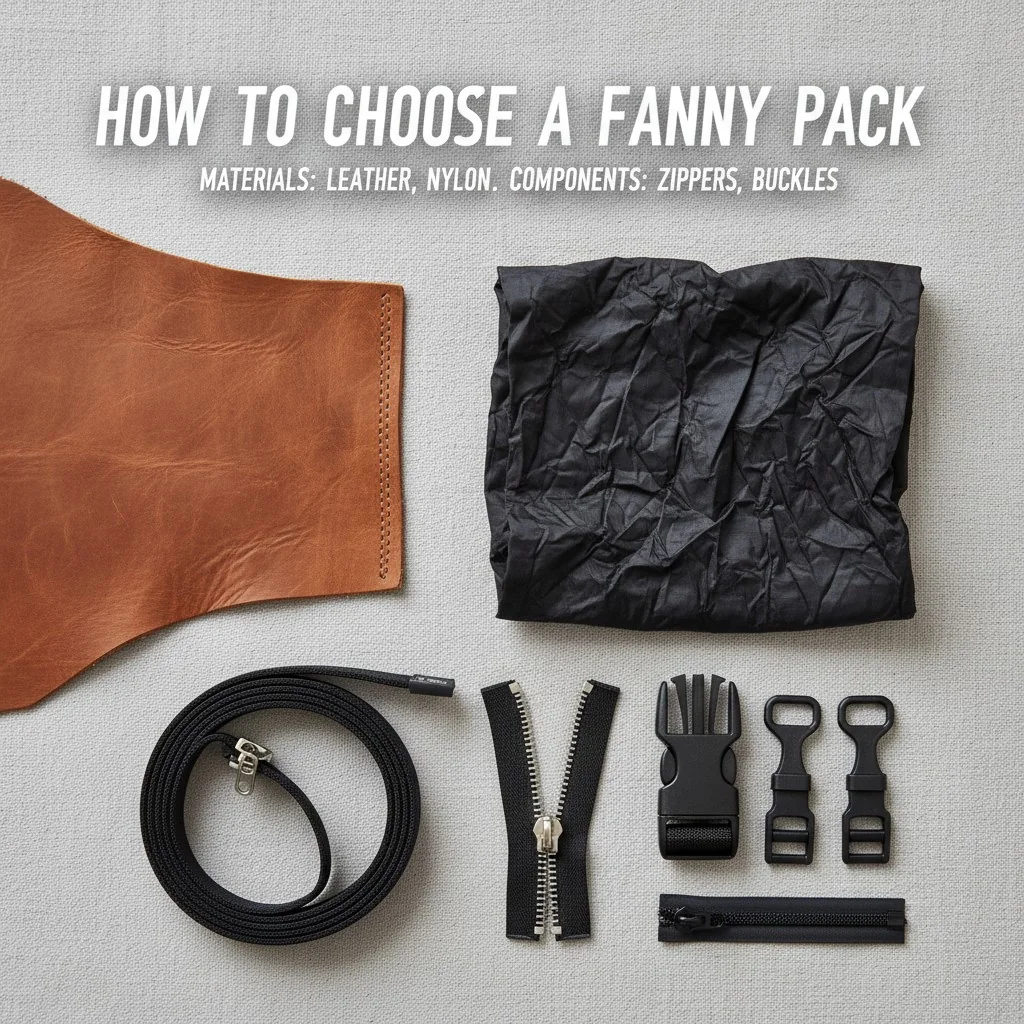
When a brand owner like Emily comes to me, we create a checklist. This process ensures the final product is exactly what her customers are looking for. You can use the same checklist to guide your design and manufacturing decisions.
Your Fanny Pack Design Checklist
- 1. Define the Core Purpose: Who is this for? A traveler, a fashionista, a runner, or a busy parent? The answer will guide every other choice. For example, a parent might need a wipeable material and multiple pockets.
- 2. Select the Right Material: The material sets the tone.
- Nylon/Polyester: Durable, lightweight, and affordable. Great for sporty or casual styles.
- Leather/Faux Leather: Gives a premium, stylish look. Perfect for a fashion-focused belt bag.
- Canvas: Casual, sturdy, and often associated with sustainable or bohemian brands.
- 3. Determine the Size: It should be big enough for the essentials but not bulky. Will it hold just a phone and cards, or does it need to fit a small water bottle?
- 4. Check the Strap and Hardware: The strap must be easily adjustable. The buckle should be secure but easy to use. The quality of the zippers and pulls makes a huge difference in how premium the bag feels.
- 5. Plan the Organization: How many pockets? A hidden pocket on the back is a great feature for security. Internal dividers can also be a nice touch.
Conclusion
The fanny pack is a versatile, practical, and stylish bag. Understanding its history, global names, and different styles is key for any brand looking to add this iconic accessory to their collection.
References
-
Explore the fascinating history of the fanny pack, from its origins to its modern-day revival, and understand its cultural significance. ↩
-
Learn about the cultural differences in naming the fanny pack and how it affects marketing strategies in different regions. ↩
-
Understand the distinctions between fanny packs and other waist bags to better market your products to customers. ↩
-
Explore how minimalism shapes the design of fanny packs, focusing on functionality and style for modern consumers. ↩
-
Discover the evolution of the belt bag and its rise in popularity among high-fashion brands, redefining the fanny pack’s image. ↩
-
Learn strategies for marketing fanny packs in different cultures, ensuring your brand resonates with diverse audiences. ↩