(For Retailers, Promotional Brands & Wholesale Buyers)
Selecting the perfect backpack size isn’t just about aesthetics—it’s about solving practical challenges for your end-users. From corporate gifting to school supplies, the wrong size can lead to discomfort, compliance issues, or wasted budgets. As an OEM/ODM manufacturer with 15+ years in bag production, we’ve distilled actionable insights to help you make data-backed decisions.
How to Match Backpack Sizes to Your Target Market
Choosing the right backpack size isn’t just about capacity—it’s about aligning function with the needs of your target audience. For B2B buyers, misjudging this fit can result in poor usability, excess returns, or missed promotional opportunities. So, how do you ensure your backpack offering hits the mark?
Use market data to guide your decisions:
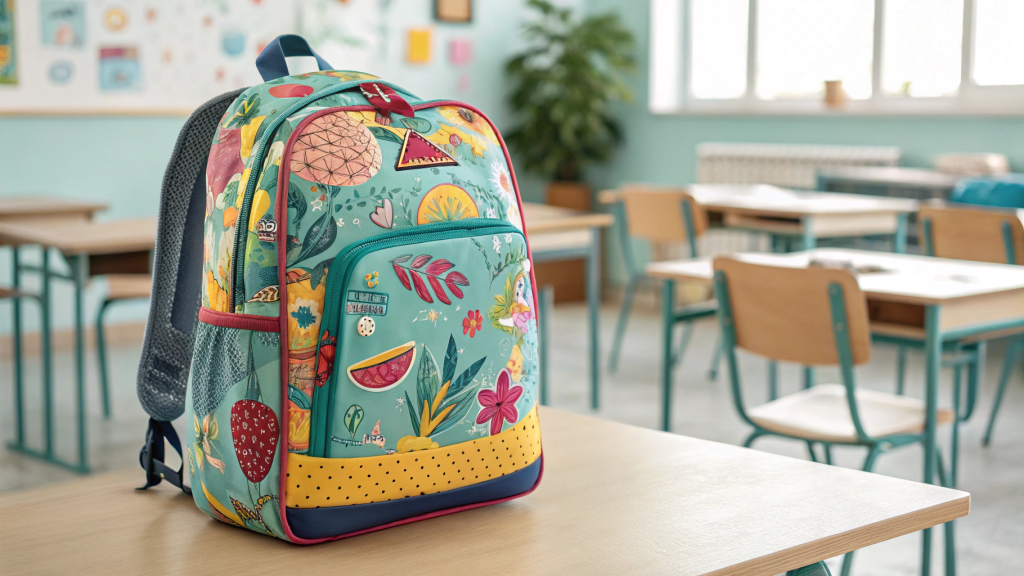
A. Kids (Ages 6–12): 15–20L Backpacks
- Why It Works:
- Fits lunchboxes (7” x 5”), 2–3 notebooks, and a water bottle.
- Average weight: 1.2 lbs (prevents strain on developing spines).
- Stat: 72% of parents prioritize lightweight designs for kids (Source: American Chiropractic Association).
Pro Tip:
“ Add reflective strips (safety feature) and cartoon-themed prints to boost school market appeal..”
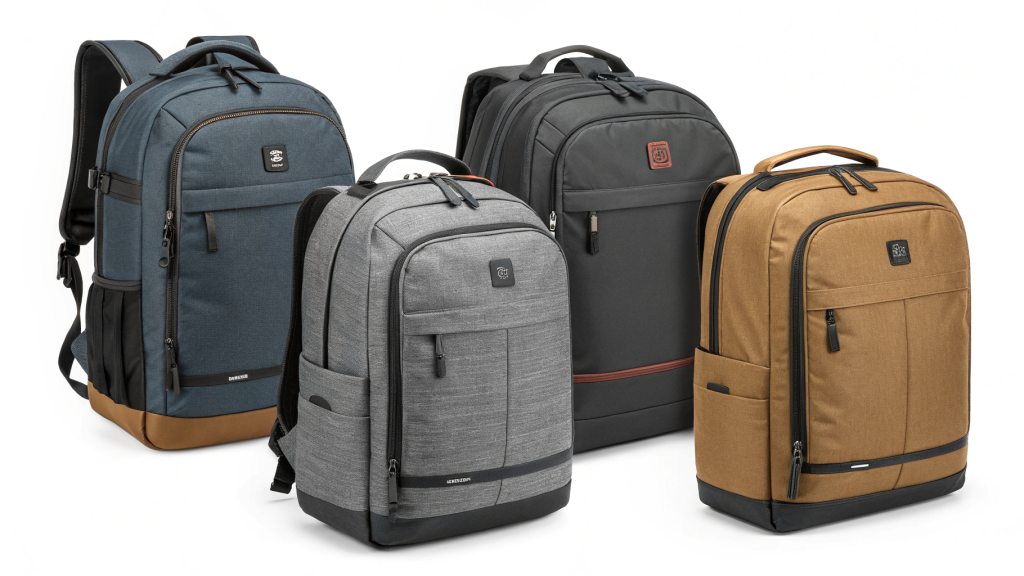
B. Students & Office Professionals: 20–30L Backpacks
The sweet spot for students and corporate gifting. These backpacks fit up to a 17” laptop and often include water-resistant materials—ideal for both function and branding.
- Why It Works:
- Fits 17” laptops, A4 folders, and gym gear (dimensions: 18” x 12” x 6”).
- Stat: 68% of bulk corporate buyers choose 25L backpacks for employee gifts (Source: PPAI 2023 Report).
- Design Hacks:
- Add a hidden anti-theft pocket (key for commuters).
- Use water-resistant fabric (e.g., 600D polyester) for rainy climates.
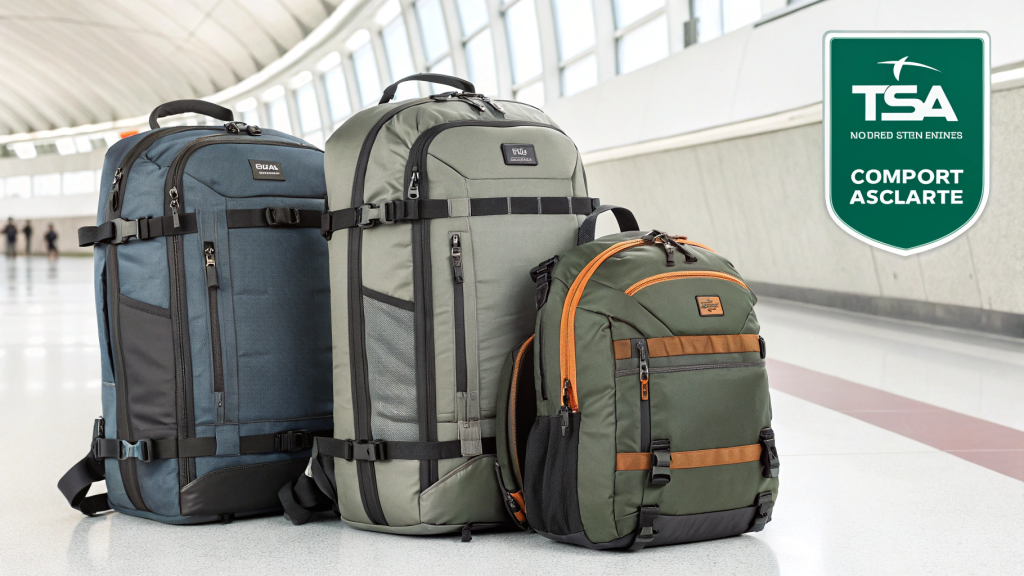
C. Travelers: 30–40L Backpacks (TSA-Compliant)
Favored by weekend travelers or digital nomads. This size typically meets TSA carry-on standards (22” x 14” x 9”), making it practical and portable.
- Why It Works:
- Meets airline carry-on limits (22” x 14” x 9”).
- Fits 3–4 days’ clothing, toiletries, and a 13” laptop.
- Stat: 89% of frequent flyers prefer backpacks with luggage straps (Source: Travel Goods Association).
Pro Tip:
“ Offer modular designs (e.g., detachable daypack) to upsell to travel brands.”
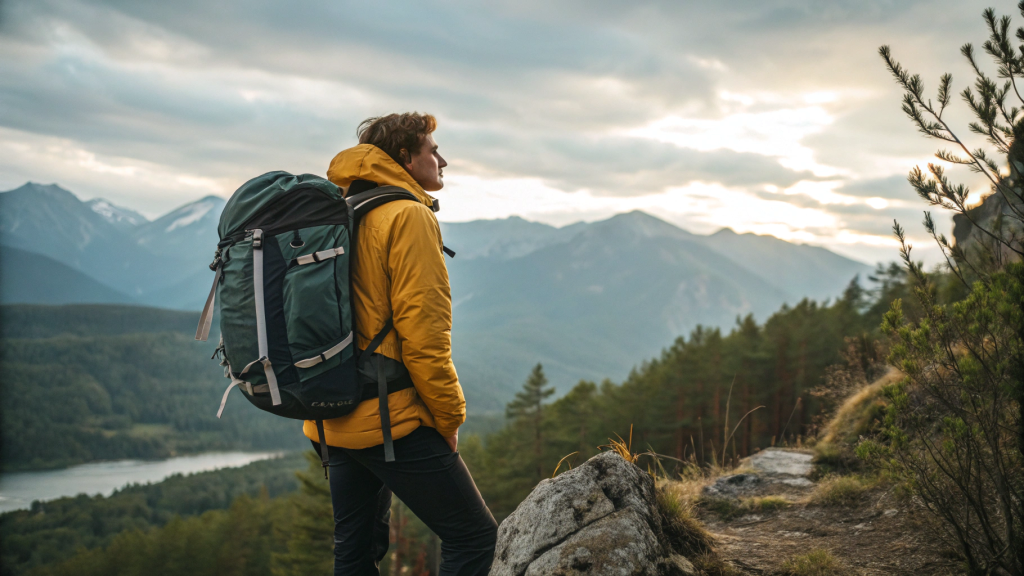
D. Outdoor/Hiking: 40L+ Backpacks
Designed for hiking, military, or heavy-duty industrial use, these backpacks need reinforced frames and MOLLE webbing to handle rugged environments.
- Why It Works:
- Carries tents, sleeping bags, and cooking gear (20–30 lbs capacity).
- Must-Have Features:
- MOLLE webbing for attaching gear.
- Reinforced frames (e.g., aluminum stays) for weight distribution.
- Stat: The hiking backpack market is growing at 5.8% CAGR, driven by 40–50L products (Source: Grand View Research, 2023).
Pro Tips for Bulk Buyers
- Standardize Sizes for Savings:
- Ordering 500+ units of a 25L backpack reduces fabric waste by 12% and cuts shipping costs by 15% (vs. mixed sizes).
- Regional Preferences:
- Asian markets favor 18–22L for urban commutes (slim profiles for crowded metros).
- European buyers prioritize 30–35L for weekend trips (train travel-friendly).
Common Mistakes to Avoid
| Mistake | Result | Fix |
|---|---|---|
| Using 40L bags for kids | Poor ergonomics, returns | Stick to 15–20L + padded straps |
| Ignoring airline policies | Rejected carry-ons | Label TSA-compliant sizes |
| Over-branding small bags | Cluttered design | Limit logos to 10% surface area |
Capacity vs. Portability: A Data-Backed Balance
When selecting the ideal backpack size for your customers or campaign, the goal is to strike a fine balance between storage space and day-to-day usability. A backpack may offer impressive capacity, but if it becomes bulky or uncomfortable, it risks being left behind in favor of a more ergonomic alternative.
Understanding this dynamic is critical for B2B buyers, especially those targeting diverse audiences—from students and professionals to travelers and outdoor enthusiasts.
Key Ergonomic Considerations
- Over 30L: Add padded straps and hip belts to distribute weight effectively (OSHA ergonomic standards).
- Material Matters: Use lightweight fabrics like 600D polyester to avoid unnecessary bulk.
| Capacity (L) | Ideal Use Case | Avg. Weight (lbs) | Key Feature |
|---|---|---|---|
| 15–20L | Kids, Commute | 0.8–1.2 | Slim profile, 1–2 compartments |
| 20–30L | School, Office | 1.5–2.0 | Laptop sleeve, water-resistant |
| 30–40L | Travel, Weekend Trips | 2.5–3.5 | Expandable compartments |
| 40L+ | Hiking, Military | 4.0+ | MOLLE webbing, reinforced frame |
Real-World Tip for B2B Buyers
If you’re ordering in bulk for a workforce or promotional event, consider this: bags between 20–30L offer the most versatility across age groups and professions. They’re large enough to be useful, yet compact enough to remain comfortable—even when fully loaded.
Material Costs & Backpack Sizing: Budget Optimization
When scaling up backpack designs, one thing becomes immediately clear: size has a direct impact on material costs. As the capacity increases, so does the need for fabric, hardware, reinforcements, and labor. For B2B buyers placing bulk orders, understanding how size affects the bottom line is critical for managing budgets effectively.
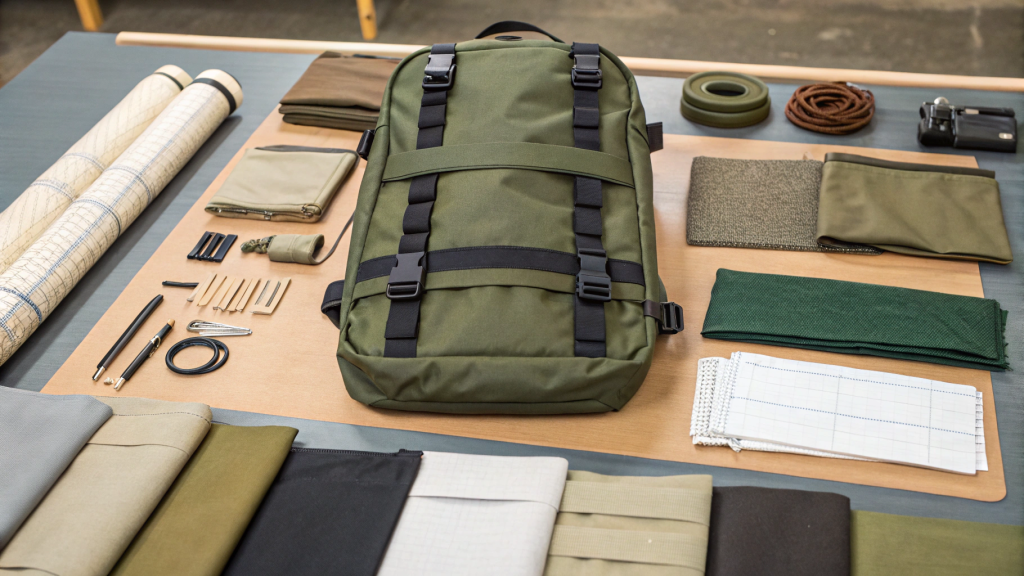
The Cost Curve: How Size Influences Spend
Every additional 10 liters in backpack capacity typically increases fabric consumption by 15–20%. For example, moving from a 20L to a 30L design might require not only more outer material, but also extra lining, foam padding, zippers, buckles, and stitching—each contributing to the final unit cost.
Larger bags also demand heavier-duty materials, like 900D polyester or ballistic nylon, especially for travel, hiking, or industrial use. These premium materials cost more but are necessary to support higher weight loads and ensure product longevity.
🔍 Example: A 20L office backpack using 600D polyester may cost $6/unit to produce. A 40L hiking bag with reinforced straps, MOLLE webbing, and 900D fabric could exceed $10–$12/unit.
Cut Costs Without Cutting Quality
Just because larger bags are more expensive doesn’t mean you have to sacrifice margins. Here are two proven strategies to balance function, cost-efficiency, and environmental responsibility:
✅ Switch to Recycled Polyester
Using recycled PET (rPET) polyester instead of virgin polyester can reduce material costs by up to 12%, according to the Textile Exchange (2022). It also enhances your brand’s sustainability credentials—an increasingly important factor in B2B and consumer purchasing decisions.
- rPET offers comparable durability and print quality.
- It’s often eligible for eco-labeling, adding market value.
✅ Embrace Modular Design
Modular backpacks are revolutionizing the way buyers think about versatility and cost:
- Detachable pouches (e.g., tech cases, lunch compartments, or hydration sleeves) can be added or removed depending on the user’s needs.
- Expandable compartments allow one backpack to serve multiple use cases—daily commute, overnight travel, and more—without requiring larger base sizes.
This approach keeps core production costs low while increasing the backpack’s perceived value and utility.
📦 Bonus: Modular designs simplify logistics and inventory management. Brands can offer one base model with add-on accessories, reducing the need to stock multiple SKUs.
By understanding how material costs scale with size—and applying smart design and material choices—brands can deliver durable, functional, and cost-effective backpacks without compromising on quality or sustainability.
Would you like help comparing material types or getting quotes based on backpack size and features? Contact us !
Compliance and Backpack Sizes: TSA, School, and Industry Regulations
Buyers Need Sizes That Meet Airline or School Policies
For businesses and individuals purchasing backpacks in bulk or for specific uses, one of the most significant concerns is adhering to size restrictions. Travel backpacks need to conform to TSA carry-on dimensions, while school backpacks must fit into locker spaces. These constraints can greatly influence the design and purchase decisions.
- TSA Regulations: Travel backpacks need to meet airline carry-on size limits to avoid hassle and additional fees.
- School Regulations: Backpacks for students must fit in standard school lockers, which can often be surprisingly small.
- Industry Regulations: Some industries or workplaces (e.g., military, outdoor equipment suppliers) require backpacks that meet certain standards for safety or functionality.
1. TSA Carry-On Dimensions (22” x 14” x 9”) for Travel Backpacks
For travel, particularly air travel, TSA-approved backpacks are a must. Most airlines accept carry-on luggage that falls within the standard dimensions of 22” x 14” x 9”. This sizing ensures that the backpack fits within the overhead compartment or beneath the seat in front of you.
Airline Compliance: TSA & International Carry-On Rules
Critical Dimensions:
| Region | Max Dimensions (H x W x D) | Ideal Backpack Size | Examples |
|---|---|---|---|
| U.S. (TSA) | 22” x 14” x 9” | 30–40L | |
| EU (IATA) | 21.6” x 15.7” x 7.8” | 35–40L | Japan (JAL), Australia (Qantas) |
| Asia-Pacific* | 21.7” x 15.7” x 9” | 30–38L |
Stat: 42% of frequent flyers cite “carry-on compliance” as their top backpack priority (Source: Travel Goods Association, 2023).
- Tip: Travelers should be mindful that even a few extra inches can result in needing to check the bag, which leads to additional fees and inconvenience.
- Product Focus: Look for backpacks with expandable compartments that can easily compress to meet these size requirements without sacrificing carrying capacity.
2. School Backpack Size Regulations (Under 18” Tall)
In the U.S., 80% of schools require backpacks under 18” in height to fit comfortably in lockers (National Education Association). This is particularly important for elementary and middle school students, whose lockers tend to be smaller than those at the high school or collegiate level.
- School-Friendly Design: Smaller, lightweight backpacks with adjustable straps and a minimalist design work best for students. Typically, a 15–25L size range is ideal.
- Customization Tip: Backpacks in this size range allow for school branding and personalized student designs without being too bulky for students or lockers.
Statistical Insight
80% of U.S. Schools: The National Education Association reports that 80% of U.S. schools require backpacks that are under 18” tall to fit in lockers. This makes it crucial for brands and suppliers targeting educational institutions to ensure that their backpacks fit these dimensions.(Source: NEA)
3. Industry Regulations: Ensuring Backpacks Meet Workplace Standards
Backpacks aren’t just used for travel or daily commuting—they also play a critical role in various industries, including military, outdoor gear, and industrial workplaces. In these sectors, the backpacks must meet strict standards for safety, durability, and functionality. Whether it’s a tactical bag designed for military use or a rugged pack meant for outdoor enthusiasts, adhering to industry regulations is essential for ensuring both compliance and performance.
Military Backpacks
Military backpacks are designed to withstand extreme conditions and carry heavy loads. These backpacks often require reinforced stitching, waterproof materials, and modular design features such as MOLLE (Modular Lightweight Load-carrying Equipment) webbing to attach additional pouches and gear.
- Safety Standards: Military backpacks must be able to carry weapons, ammunition, survival gear, and essential supplies.
- Key Features: High-tensile strength, waterproofing, quick-access compartments, adjustable straps, and load-bearing systems.
Example: MOLLE-Compatible Backpacks
These backpacks are widely used in the military and require durable materials such as ballistic nylon or Cordura to withstand harsh conditions.
Outdoor Equipment Backpacks
Outdoor enthusiasts, including hikers, campers, and trekkers, rely on backpacks that can handle unpredictable weather and rough terrain. These backpacks must meet safety standards for durability and capacity, especially when used in extreme conditions.
- Safety Standards: Backpacks used in outdoor adventures need to meet specific weight limits and be built to handle carrying heavy loads across rugged terrain.
- Key Features: Hydration compatibility, ergonomic fit, weather-resistant zippers, and UV-resistant fabric.
Example: Hydration Packs
Designed to carry both water and gear, these packs are a must for outdoor activities like hiking and biking. They often come with adjustable harness systems to evenly distribute weight.
Industrial and Workplace Backpacks
In industrial settings, backpacks often need to conform to workplace safety standards and may be used to carry tools, safety equipment, and personal protective equipment (PPE). Industrial backpacks typically require added protection and high durability to prevent damage to sensitive equipment or tools.
- Safety Standards: Depending on the industry (construction, factory work, etc.), backpacks may need to conform to OSHA standards for load-bearing capacity and protection.
- Key Features: Reinforced stitching, flame-retardant materials, and extra padding for heavy-duty gear.
Example: Toolback Packs
These backpacks are designed specifically for workers in industrial or construction fields, often featuring multiple compartments and reinforced bottoms to store tools securely.
Customization Limitations by Backpack Size: Maximizing Brand Impact
Backpacks are a powerful canvas for branding—especially in promotional campaigns, retail lines, or corporate gifting. However, not all backpacks offer the same customization flexibility. The size and material thickness of a backpack significantly affect the available print area, technique, and durability of branding.
Buyers often overlook how backpack size directly influences logo placement, design durability, and visibility. Smaller backpacks offer limited surface area, while larger ones open the door for bolder, more durable branding methods.
A. Small Backpacks (Under 20L): Compact & Strategic Branding
Smaller backpacks—often in the 15–20L range—are ideal for minimalists, kids, and daily commuters. However, their limited surface area restricts the size and type of customization possible
Ideal for: Kids, minimalist commuters, promotional giveaways or school campaigns.
Challenges: Limited surface area, lightweight fabrics.
| Technique | Max Logo Size | Cost/Unit | Durability | Best For |
|---|---|---|---|---|
| Screen Printing | 4” x 4” | 0.30–0.30–0.80 | 50–100 washes | Simple logos, 1–2 colors |
| Heat Transfer | 3” x 3” | 0.40–0.40–1.00 | 30–70 washes | Full-color designs |
| Woven Label | 2” x 1” | 0.20–0.20–0.50 | Lifetime | Subtle branding (interior) |
Pro Tips:
- Use contrasting colors (e.g., white ink on dark fabric) for visibility.
- Avoid detailed logos—simplify to 1–2 elements (e.g., mascot + text).
Stat: 63% of promotional buyers prefer screen printing for sub-20L bags due to cost efficiency (Source: PPAI 2023).
B. Medium Backpacks (20–30L): Balancing Detail & Durability
Ideal for: Corporate gifts, students, urban professionals.
Challenges: Need to balance aesthetics with frequent use.
| Technique | Max Logo Size | Cost/Unit | Durability | Best For |
|---|---|---|---|---|
| Embroidery | 6” x 4” | 0.80–0.80–1.50 | Lifetime | Premium corporate branding |
| Debossing | 5” x 3” | 1.00–1.00–2.00 | Lifetime | Leather/TPU panels |
| Sublimation | Full coverage | 2.50–2.50–4.00 | 100+ washes | All-over patterns (e.g., tech startups) |
Case Study:
A Fortune 500 company reduced rebranding costs by 40% using embroidered logos on 25L employee backpacks (vs. screen-printed replacements every 2 years).
C. Large Backpacks (30L+): Bold, Durable Branding
Larger backpacks in the 30L+ range are typically used for travel, hiking, or tactical purposes. These bags have thicker fabric, more surface area, and additional compartments, making them excellent candidates for more robust customization techniques.
Ideal for: Travel, outdoor, military/industrial.
Challenges: Exposure to harsh conditions (rain, friction, UV).
| Technique | Max Logo Size | Cost/Unit | Durability | Best For |
|---|---|---|---|---|
| PVC Patch | 8” x 6” | 1.50–1.50–3.00 | Lifetime | Rugged outdoor brands |
| Laser Engraving | 10” x 8” | 2.00–2.00–5.00 | Lifetime | Metal/plastic hardware |
| All-over Sublimation | Full coverage | 4.00–4.00–6.50 | 200+ washes | Vibrant travel collections |
Pro Tips:
- Place logos on non-abrasion zones (e.g., front panel vs. bottom).
- For hiking bags, use UV-resistant inks to prevent fading.
Stat: Embroidery on 40L+ backpacks has a 92% retention rate after 5 years (Source: Outdoor Industry Association).
People Also Ask
Q: What are standard backpack sizes for bulk orders?
A: The most common size range for bulk orders—especially for corporate and educational purposes—is 20–30 liters. This range offers enough space for laptops, books, and daily essentials while still being compact and versatile for branding.
Q: How do I measure backpack capacity accurately?
A: To calculate capacity in liters, use this simple formula:
Height × Width × Depth (in inches) ÷ 61 = Capacity in Liters
Example: 18” × 12” × 6” = 1,296 ÷ 61 ≈ 21L
This is a helpful tool for buyers comparing specs or verifying if a bag meets carry-on or school-size compliance.
Q: What’s the difference between school and laptop backpack sizes?
A:
- School Backpacks: Typically 15–25L, designed to hold books, folders, and basic supplies.
- Laptop Backpacks: Usually 20–30L, built with padded tech compartments and often include USB ports, cable organizers, or RFID pockets.
Q: Does backpack size affect durability?
A: Absolutely. Larger backpacks (especially over 30L) must be constructed with thicker fabrics like 900D polyester or ballistic nylon and require reinforced stitching to handle the added weight and frequent use.
Q: What size backpack is easiest to ship internationally?
A: Backpacks under 24 inches in height are ideal for international shipping as they fit into standard freight boxes (24” x 18” x 18”). This can reduce freight costs by up to 20%, according to DHL Freight Guidelines.
Conclusion
In the competitive world of B2B product sourcing, choosing the right backpack size isn’t just a matter of volume—it’s a strategic decision that affects usability, branding, compliance, and budget. Whether you’re supplying corporate giveaways, outfitting teams, or launching promotional campaigns, the key is aligning your backpack choices with your audience’s real-world needs.
From 20–30L corporate-friendly models to rugged 40L+ gear for fieldwork, understanding how backpack size impacts function, customization, and cost ensures your investment delivers value—both for your brand and your end users.
Let’s take the guesswork out of your bulk order. Whether you need help optimizing for TSA compliance, school locker dimensions, or industry-specific features, we’re here to help.
👉 Contact our team today for a free sizing consultation or bulk pricing quote.
Your next standout backpack project starts with the right size—let’s get it right, together.