Updated July 2026 | Reviewed from a backpack manufacturing perspective
Choosing between JanSport and Eastpak feels impossible. You need a reliable bag, but which one truly delivers on its promises? I’ll guide you to the right choice.
JanSport is generally better for students carrying heavier loads, especially models such as the 34L Big Student with multiple compartments and S-curve straps. Eastpak is generally better for commuters who prefer a lighter, minimalist design, such as the 24L Padded Pak’r. Warranty coverage varies by region and excludes normal wear.
For decades, JanSport and Eastpak have been seen as direct competitors. But the most surprising fact is that they share a hidden connection revealed by the answer to who owns JanSport? Spoiler: it’s the same parent company.

As a custom backpack manufacturer with 12 years of export experience, we reviewed current official product specifications and compared the construction implications of each brand’s capacity, compartment layout, laptop storage, shoulder-strap design, materials, and warranty terms.
Where official specifications differ by model or sales region, we identify those differences rather than treating either brand as having one universal construction standard.
Below, we compare which brand better fits different users—and what private-label backpack developers can learn from both.
JanSport vs. Eastpak Warranty: What Is Actually Covered?
JanSport promotes a limited lifetime warranty, while Eastpak offers limited warranty coverage of up to 30 years on qualifying products. However, the headline number does not tell you how long a backpack will physically last.
JanSport provides a limited lifetime warranty for eligible bags in the United States and Canada, while Eastpak offers a limited warranty of up to 30 years on qualifying products. Both policies cover defined manufacturing defects rather than ordinary wear, misuse, or accidental damage. Warranty length alone therefore does not prove that one brand makes a longer-lasting backpack.
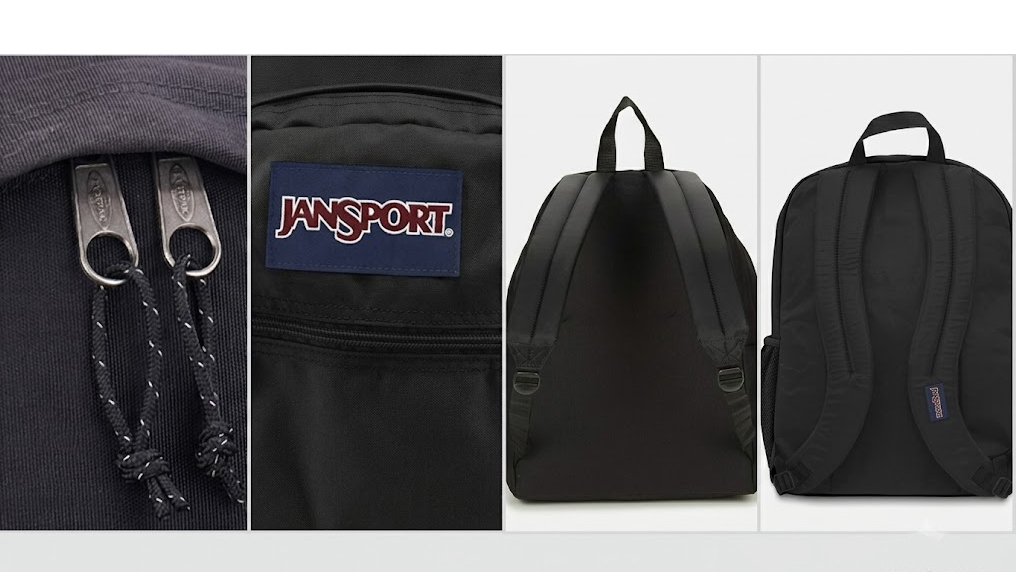
Warranty duration and real-world durability should be evaluated separately. A long warranty can provide valuable protection against eligible manufacturing defects, but it does not guarantee that every damaged zipper, worn fabric panel, or torn shoulder strap will qualify for a free repair.
Warranty Coverage vs. Real-World Durability
JanSport’s United States and Canada policy covers the original owner against eligible defects in materials and workmanship for the reasonable lifetime of the product. It does not mean the owner’s lifetime, and it excludes normal wear and tear, accidents, improper care, negligence, and the natural breakdown of materials over extended use.
Eastpak’s coverage can extend up to 30 years on qualifying products, but the scope becomes more limited after the applicable legal warranty period. Its extended warranty primarily covers manufacturing defects, such as open seams or incorrectly cut fabric, rather than damage caused by abrasion, water, misuse, accidents, or normal wear.
From a manufacturer’s perspective, the better durability comparison comes from inspecting equivalent models—the fabric specification, zipper construction, seam reinforcement, bartack placement, shoulder-strap attachment, and expected load—not from comparing warranty numbers alone.
For a factory-level explanation of zipper, stitching, lining, hardware, and coating failures, see our guide to what is the common quality issues in backpack production.
Material Deep Dive: Why the Exact Model and Market Matter
The current official product listings do not support the claim that JanSport and Eastpak universally use the same 600D polyester fabric.
JanSport’s United States listing for the SuperBreak identifies its main body fabric as 100% recycled 600-denier polyester. However, Eastpak’s regional listings for the black Padded Pak’r are not identical. The European Padded Pak’r listing identifies style code EK000620008 as 100% nylon, while the United States black Padded Pak’r listing describes the product as 100% polyester.
For that reason, material comparisons should identify the exact model, style code, sales region, and date checked rather than assigning one fabric specification to an entire brand.
| Product checked | Official market checked | Material stated on the official product page | What we can reasonably conclude |
|---|---|---|---|
| JanSport SuperBreak | United States | 100% recycled 600-denier polyester main body fabric | The current US SuperBreak uses a specified 600D polyester main fabric |
| Eastpak Padded Pak’r Black | Europe, style EK000620008 | 100% nylon | The current EU black model is not listed as 600D polyester |
| Eastpak Padded Pak’r Black | United States | 100% polyester | Eastpak’s material description differs between its US and European listings |
Material names alone do not determine finished-bag performance. For a broader comparison of polyester, nylon, Cordura®, RPET, canvas, and coated fabrics, see our guide to common backpack materials and their pros and cons.
Denier refers to the linear density of the yarn. It does not, by itself, tell us the finished fabric’s water resistance, abrasion resistance, stiffness, coating quality, or overall lifespan.
Without verified samples or controlled test results, it would be inaccurate to claim that one brand’s fabric is automatically stiffer or more wear-resistant simply because of the brand name or the listed fibre type.
Style vs. Utility: Which Brand Masters the College/Urban Commuter Vibe?
You need a bag that looks good but also holds all your stuff. It’s frustrating when a stylish bag has no pockets, or a practical bag looks clunky and outdated.
Eastpak is more strongly associated with minimalist urban styling, particularly through the recognizable Padded Pak’r silhouette. JanSport’s school-oriented models generally place more emphasis on capacity, organization, bottle storage, and laptop protection. The better choice depends on whether the buyer prioritizes a simpler shape or a more structured carrying system.

When developing a new backpack line, the first question should be: "Who is this for?" JanSport and Eastpak answer that question differently, and their product structures reflect those target users.
The JanSport Approach: Maximum Utility
JanSport’s design DNA is rooted in the American school and university market, with many models prioritizing capacity and organization. The current US Big Student has two main compartments, organizer pockets, a bottle pocket, and a dedicated zippered and padded compartment designed for a 15-inch laptop.
That construction is more protective and more separated from the main load than a basic internal sleeve. However, this feature belongs to the Big Student model and should not be treated as a standard feature of every JanSport backpack.
Its 34-liter capacity is practical for textbooks, electronics, and clothing, but the larger structure may feel excessive for users who carry only a few daily essentials.
The Eastpak Aesthetic: Minimalist Icon
Eastpak, on the other hand, was born from military gear but found its home in European subcultures and streetwear. The core Padded Pak’r layout is built around one roomy main compartment and a front pocket. Some current versions or regional listings add laptop-storage features, so buyers should verify the exact style code before purchase.
The focus is on a clean, sharp silhouette that complements an outfit rather than just carrying gear. It’s the bag you choose when style is just as important as what’s inside. It’s less about maximum capacity and more about a curated, urban look.
Which Model Fits Which Use Case?
| User Need | Better Starting Point | Why |
|---|---|---|
| Heavy school load with a 15-inch laptop | JanSport Big Student | 34L capacity, two main compartments, and a dedicated padded laptop compartment with zip closure |
| Minimalist everyday carry | Eastpak Padded Pak’r | 24L capacity with a simple main compartment and front-pocket layout |
| Laptop-focused commuting | Compare exact models | JanSport and Eastpak use different internal sleeves, padded sleeves, and dedicated laptop compartments across their ranges |
| Warranty protection | Compare regional policies | Coverage depends on the exact product, purchase region, defect type, and exclusions |
| Air travel | Compare exact dimensions | Airline personal-item and cabin-bag limits vary; neither brand is automatically compliant |
Compare Equivalent Models, Not Brand Names
| Use Case | JanSport Model | Eastpak Model | Key Difference |
|---|---|---|---|
| Everyday carry | SuperBreak Plus, 26L | Padded Pak’r, 24L | SuperBreak Plus adds a padded 15-inch laptop sleeve, bottle pocket, and front organizer; Padded Pak’r prioritizes a simpler layout |
| Larger school or work load | Big Student, 34L | Pinnacle, 38L | Both use multi-compartment layouts, but Big Student clearly specifies a dedicated 15-inch laptop compartment, while Pinnacle emphasizes two main compartments and organization |
These pairings are closer in capacity and intended use. Even then, buyers should verify the exact SKU because materials, laptop storage, and warranty labels can vary by market and product version.
Are JanSport and Eastpak Really the Same Bag with a Different Logo?
You heard they’re owned by the same company. Now you’re wondering if you’re just paying for a different logo on the exact same product. It feels like a potential rip-off.
No. JanSport and Eastpak are both part of VF Corporation, but they remain separate brands with different product ranges, model names, capacities, materials, and feature structures. Shared ownership does not mean that the backpacks are identical.

How Their Products Stay Different
From a manufacturing and product-development perspective, the differences should be evaluated through current model specifications:
- Product architecture: JanSport offers several school-oriented models with larger capacities, multiple compartments, bottle pockets, and clearly specified laptop storage.
- Material specifications: Official listings show that materials can differ by model and sales region. A credible comparison must identify the exact style code rather than assign one fabric to an entire brand.
- Market positioning: JanSport is strongly associated with school and campus utility, while Eastpak places greater emphasis on minimalist urban styling and recognizable silhouettes.
VF Corporation ownership explains the corporate connection, but it does not replace model-level product comparison.
Value vs. Price: Which Backpack Offers the Better Long-Term Investment?
You want the best bang for your buck. But a cheap bag that falls apart is no bargain, and an expensive one might be overkill. How do you find the true value?
The better long-term investment depends on model choice, daily load, construction, comfort, organization, and how well the backpack matches its intended use. Both brands provide limited protection against eligible manufacturing defects, but warranty coverage should not be treated as free protection against every form of damage or wear.
From a manufacturer’s perspective, value is not determined by the purchase price or warranty headline alone. It comes from the relationship between material quality, construction complexity, carrying comfort, usable capacity, repairability, and the number of years the bag remains suitable for its intended use.
Breaking Down the Cost
If a backpack develops an eligible manufacturing defect, the brand may repair or replace it according to the applicable regional policy. However, normal wear, accidental damage, misuse, abrasion, material ageing, and some shipping costs may not be covered.
For that reason, the long-term cost of ownership cannot automatically be described as "near zero." Buyers should consider the exact model, purchase region, warranty exclusions, claim process, and expected daily load before deciding which backpack offers better value.
What Creates Better Value?
Value comes from choosing features that match the intended use. More compartments are not automatically better, and a simpler backpack is not automatically overpriced.
| Buyer Priority | Better Starting Point | Why |
|---|---|---|
| Larger organized load | Selected JanSport school models | More compartments, organizers, and clearly specified laptop storage |
| Simpler everyday carry | Selected Eastpak urban models | Fewer compartments and a cleaner silhouette |
| Current purchase price | Compare equivalent models | Prices vary by model, colorway, collaboration, retailer, and sales region |
| Long-term value | No universal winner | Durability, comfort, repairability, warranty eligibility, and actual use all matter |
The better value is the backpack whose capacity, organization, comfort, and appearance match the buyer’s daily needs.
Comfort and Laptop Protection: Why the Exact Model Matters
A backpack’s comfort and laptop protection depend on its specific shoulder-strap shape, back-panel construction, capacity, laptop compartment, and intended carrying load. Brand-level claims are less useful than comparing equivalent models.
For heavier school loads, the JanSport Big Student provides a larger 34-liter structure, ergonomic S-curve straps, a padded back panel, and a dedicated zippered 15-inch laptop compartment. Eastpak offers several different laptop-carrying solutions, including the 14-inch internal sleeve in the Day Pak’r and the padded 14-inch sleeve in the Out of Office. Padded Pak’r specifications should be checked by exact SKU because Eastpak’s current regional and product listings are not fully consistent.

Shoulder-Strap Design and Carrying Comfort
Carrying comfort depends on more than strap shape. Foam density, strap width, attachment angle, spacing, back-panel construction, torso length, load distribution, and total carrying weight all affect the result.
The JanSport Big Student officially uses ergonomic S-curve shoulder straps and a fully padded back panel. The Eastpak Padded Pak’r uses adjustable padded shoulder straps and a padded back panel.
S-curve straps may follow the upper body more naturally for some users, particularly under heavier loads. However, without a controlled side-by-side wear test, it would be inaccurate to claim that one strap design is universally more comfortable for every user.
Laptop Sleeve vs. Dedicated Laptop Compartment
Laptop storage varies by model. A basic internal sleeve, a padded sleeve, and a dedicated zippered compartment do not provide the same level of separation or protection.
| Model checked | Official laptop feature | Construction-level interpretation |
|---|---|---|
| JanSport Big Student | Dedicated padded compartment with zip closure for a 15-inch laptop | The laptop is separated from the main storage through a dedicated zippered section |
| JanSport SuperBreak Plus | Interior padded sleeve for a 15-inch laptop | The sleeve is padded but remains inside the main compartment |
| Eastpak Day Pak’r | Internal sleeve for devices up to 14 inches | Suitable for everyday commuting, but not the same construction as a separate zippered compartment |
| Eastpak Out of Office | Padded sleeve for most 14-inch devices | A clearly specified laptop-oriented Eastpak model |
| Eastpak Day Office | Laptop space for devices up to 16 inches | Better suited to larger laptops and work-oriented use |
| Eastpak Padded Pak’r | Specification varies or is described inconsistently across current official listings | Check the exact style code and regional product page before purchase |
Buying tip: If laptop protection is important, check the exact product page for the supported laptop size, padding, compartment type, and zip closure. Do not rely on the brand name alone.
Shoulder-strap shape and laptop storage should be compared by exact model. JanSport uses S-curve straps on several current school-oriented models, while Eastpak offers different strap and laptop-compartment configurations across its range.
Which Brand Is More Sustainable: JanSport or Eastpak?
There is no clear overall winner. JanSport currently provides more specific information about recycled main-body fabrics, while Eastpak places greater emphasis on durability, reuse, repair, and waste reduction. The better choice depends on the exact model and the sustainability factor that matters most to the buyer.

| Area | JanSport | Eastpak |
|---|---|---|
| Recycled-material disclosure | States that 80% of its styles this season use recycled main-body fabric | States that it is gradually increasing the use of recycled fabrics |
| Product-life approach | Connects durable construction and warranty repair with reducing replacement | Emphasizes long-lasting products, reuse, repair, and waste reduction |
| Important limitation | "100% recycled" may refer only to the face fabric and exclude coatings and other components | Recycled content must be checked on the exact product page |
| Best conclusion | More specific recycled-fabric disclosure | Stronger emphasis on longevity and reuse |
Manufacturer’s note: A backpack described as using "100% recycled fabric" is not necessarily made entirely from recycled materials. The claim may apply only to the outer face fabric—not the coating, lining, zipper, foam, webbing, buckles, thread, or labels. Always verify the exact SKU and the scope of the material claim.
What Private-Label Backpack Brands Can Learn From JanSport and Eastpak?
JanSport and Eastpak show that successful backpacks do not need to serve every customer. Each brand creates value through a clear product strategy, and that is the most useful lesson for private-label backpack brands.

| Product Strategy | JanSport’s Approach | Eastpak’s Approach | Lesson for Private-Label Brands |
|---|---|---|---|
| Target user | Students and users carrying larger daily loads | Urban commuters and style-focused users | Define one primary customer before developing the product |
| Core value | Capacity, organization, comfort, and laptop storage | Simplicity, recognizable shape, and lifestyle positioning | Choose a clear value proposition instead of adding unnecessary features |
| Construction | Multiple compartments, reinforced load areas, and ergonomic carrying features | Simpler compartment layouts that place more emphasis on silhouette and materials | Construction complexity should match the intended use and target price |
| Brand identity | Functional school and campus positioning | Minimalist urban and streetwear positioning | Create recognizable design details without copying an established product |
| Product range | Different models for different capacities and carrying needs | Reuses recognizable silhouettes across colors, materials, and collaborations | Build a product family around a consistent design language |
From a manufacturer’s perspective, the strongest private-label products begin with a clear development brief:
- Who will use the backpack?
- What will they carry?
- What capacity and laptop size are required?
- Which features directly support the intended use?
- What is the target retail price and FOB budget?
- Which design elements will make the product recognizable as an original brand?
The goal should not be to combine every JanSport and Eastpak feature into one backpack. It should be to understand why each feature exists and develop an original product around a clearly defined customer.
See our complete guide to how backpacks are manufactured from concept to final inspection to understand how a product brief becomes a production-ready backpack.
Final Verdict: JanSport or Eastpak?
JanSport is generally the better fit for students and users who need higher capacity, more organization, and clearly defined laptop protection. Eastpak is generally the better fit for commuters and style-focused users who prefer a simpler silhouette and fewer compartments. Neither brand is universally better—the right choice depends on the exact model, daily load, and carrying requirements.
From a backpack manufacturer’s perspective, the biggest difference is not the logo. It is how each brand creates value for a specific user:
- JanSport builds value through capacity, organization, and load-carrying features.
- Eastpak builds value through simplicity, a recognizable silhouette, and urban positioning.
Developing an Original Backpack for Your Market?
Intellectual Property Notice: OSGW Bag is not affiliated with JanSport, Eastpak, or VF Corporation. We cannot manufacture JanSport- or Eastpak-branded products, exact replicas, or products using their trademarks and protected design elements without formal written authorization from the relevant rights holder.
What we can do is help you develop an original private-label backpack based on your own target market, functional requirements, brand positioning, and budget.
Instead of copying an existing product, our product-development team can help define:
- Target customer and intended use
- Backpack capacity and carrying load
- Laptop size and compartment structure
- Fabric, lining, coating, and zipper specifications
- Shoulder-strap and back-panel construction
- Reinforcement at key stress points
- Original colors, branding, labels, and packaging
- Target retail price, FOB budget, and order quantity
Send us your reference ideas and product requirements. We will use them to understand the market direction—not to reproduce protected branding or copy an existing design—and recommend an original construction plan for your brand.
Request an Original Backpack Development Review
FAQ – JanSport vs. Eastpak
Which is better overall: JanSport or Eastpak?
Neither brand is better for every user. JanSport is generally better for heavier school loads, organization, and clearly specified laptop storage. Eastpak is generally better for minimalist styling and simpler everyday carry. Compare equivalent models rather than choosing by brand name alone.
Are JanSport and Eastpak owned by the same company?
Yes. JanSport and Eastpak are both part of VF Corporation, but they remain separate brands with different product strategies and market identities. Shared ownership does not mean that their backpacks use identical designs, materials, or specifications.
Which brand is better for school or college?
JanSport is usually the stronger choice for students carrying textbooks, electronics, bottles, and clothing. For example, the Big Student has a 34-liter capacity, two main compartments, ergonomic S-curve straps, and a dedicated padded 15-inch laptop compartment.
Eastpak can still suit students who carry lighter loads and prefer a simpler layout.
Which brand is better for urban commuting?
Eastpak is generally better suited to commuters who prefer a clean silhouette and do not need extensive organization. JanSport may be more practical for commuters carrying a larger laptop, documents, lunch, clothing, or multiple accessories.
The better option depends on the specific model and daily load.
Which lasts longer: JanSport or Eastpak?
Warranty duration alone cannot determine which backpack physically lasts longer. JanSport offers a limited lifetime warranty for eligible products in the United States and Canada, while Eastpak offers limited warranty coverage of up to 30 years on qualifying products.
Actual lifespan depends on the model, materials, construction, load, care, and frequency of use.
Which brand offers better laptop protection?
Laptop protection should be compared by exact model. The JanSport Big Student has a dedicated, padded, zippered compartment for a 15-inch laptop, while Eastpak uses different internal sleeves and padded compartments across models such as the Day Pak’r, Out of Office, and Day Office.
Check the supported device size, padding, and compartment construction before purchasing.
Are JanSport and Eastpak backpacks waterproof?
A brand name does not guarantee waterproof construction. Check the exact product specification for terms such as water-resistant, weather-resistant, coated, or waterproof.
For regular exposure to heavy rain, also inspect the fabric coating, zipper construction, seam treatment, and whether a rain cover is required.
Which brand is better for travel?
JanSport models with multiple compartments can be more convenient for organized packing. Simpler Eastpak models may work well for travelers who carry fewer items and prefer a compact layout.
Always compare the backpack’s external dimensions with the airline’s current personal-item or cabin-bag limits.
Which brand is more sustainable?
There is no clear overall winner. JanSport currently provides more specific disclosure about recycled main-body fabrics, while Eastpak emphasizes durability, reuse, repair, and waste reduction.
A claim such as “100% recycled fabric” may apply only to the face fabric—not the coating, lining, zipper, foam, webbing, or buckles—so the exact SKU and claim scope should be checked.
References
The product specifications and warranty terms in this article were checked against the following official sources. Product details may change by model, colorway, production version, and sales region.
- VF Corporation – Brand Portfolio. Accessed July 29, 2026.
- JanSport – Limited Lifetime Warranty. Accessed July 29, 2026.
- Eastpak – Limited Warranty Policy. Accessed July 29, 2026.
- JanSport – Big Student Backpack. Accessed July 29, 2026.
- JanSport – SuperBreak Plus. Accessed July 29, 2026.
- JanSport – SuperBreak. Accessed July 29, 2026.
- Eastpak Europe – Padded Pak’r Black, Style EK000620008. Accessed July 29, 2026.
- Eastpak US – Padded Pak’r Black. Accessed July 29, 2026.
- Eastpak – Pinnacle Backpack. Accessed July 29, 2026.
- Eastpak – Out of Office. Accessed July 29, 2026.
- Eastpak – Day Office. Accessed July 29, 2026.
- JanSport – Sustainability. Accessed July 29, 2026.
- Eastpak – Sustainability. Accessed July 29, 2026.