Choosing the right fabric for a premium bag line can be stressful. Pick the wrong one, and your product might not live up to its price tag. CORDURA® offers proven durability1.
CORDURA® is the brand name for a range of durable, high-performance fabrics. It is most famous for its "Classic Fabric2," a type of air-textured nylon 6,63 that is exceptionally resistant to abrasion. It’s used in premium bags because its durability and rugged finish signify a high-quality, long-lasting product.

As a product manager, you’re constantly making decisions about materials. You need to know not just what a material is, but why it’s the right choice for your brand and your customer. I’ve worked with countless fabrics over the years, and CORDURA® has a story worth telling. It’s a material that communicates quality before a customer even touches the bag. Understanding its properties is key to creating products that last and build brand loyalty.
Let’s break down what makes this fabric so special.
What is CORDURA® Fabric (And Is It Just a Brand Name?)?
You see the CORDURA® tag on high-end gear all the time. But is it just clever marketing, or is there real substance behind the name? Let’s get a clear definition.
Yes, CORDURA® is a brand name, not a single type of fabric. It’s a registered trademark of INVISTA (a subsidiary of Koch Industries) for a whole family of high-performance fabrics.
This is the most common point of confusion. You can’t just buy "CORDURA®"; you buy a specific fabric from the CORDURA® brand, such as CORDURA® Classic, CORDURA® Ballistic, or CORDURA® re/cor™ (which is made from recycled materials).
However, the brand’s legendary reputation was built on one product: CORDURA® Classic Fabric. When people talk about that rugged, canvas-like feel on premium bags, this is almost always what they mean.
The "Secret" That Made It Famous
As a bag manufacturer, this is what we look for. The "secret" to CORDURA® Classic’s legendary toughness isn’t just its material—which is high-tenacity nylon 6,6—but how it’s made.
It’s created using a process called air-jet texturing. Here’s a simple way to think about it:
-
Regular Nylon: Think of the fibers as smooth, shiny, and densely packed, like strands of uncooked spaghetti.
-
CORDURA® Classic: Those same strong nylon fibers are blasted with a jet of high-pressure air. This "fluffs" them up, creating a bulkier, textured yarn with a matte (non-shiny) finish.
This "fuzzy" texture is what gives the final fabric its world-class abrasion resistance. Instead of a smooth surface that can be easily scuffed, CORDURA® presents a rugged, textured face that wears down incredibly slowly, much like a heavy-duty cotton canvas (but with the superior strength of nylon).
A Quick History: From WWII Tires to Your Backpack
The CORDURA® brand’s legacy is built on toughness. It was originally developed by DuPont in the 1920s as a type of rayon. Its big break came during World War II, when it was used by the military to reinforce rubber tires, proving its durability in the most demanding conditions.
In 1966, DuPont transferred the brand name to its new, far superior nylon 6,6 formulations. By the 1970s and 1980s, after a process for dyeing the fabric was perfected, CORDURA® was adopted by pioneering brands like JanSport and Eastpak, becoming the gold standard for durable backpacks and luggage. That military-grade toughness is the same heritage that’s built into the premium bags you see today.
Also read: Do I Need a License/Hangtag to Label My Bags as "Cordura"?
How is CORDURA® Made to Be So Tough? (A Look at Air-Textured Yarn)?
Regular nylon bags can show wear and tear quickly. This leads to frayed corners and worn-out bottoms, which can damage your brand’s reputation. CORDURA®’s unique manufacturing process solves this.
CORDURA®’s legendary toughness comes from a process called air-jet texturing4. Smooth, high-strength nylon filaments are blasted with hot air, which bulks them up and creates a fuzzy, matte texture. This "fuzzy" surface is what gives it world-class abrasion resistance.

From a manufacturer’s point of view, this process is genius. Here’s how it works.
What is CORDURA® made of?
-
Start with High-Tenacity Nylon 6,6:
We begin with high-tenacity nylon 6,6 filament yarns, a polymer known for its superior resistance to heat and abrasion. These initial yarns are smooth and slightly shiny, much like regular nylon. -
The Magic Step – Air-Jet Texturing:
The smooth nylon fibers are blasted with a jet of high-pressure air. This step tangles and loops the fibers, "fluffing" them up and creating a textured, matte finish that resembles natural cotton canvas. -
The Key – Fuzzy Texture:
The "fuzzy" texture is what makes CORDURA® fabric so durable. When a bag made of CORDURA® rubs against rough surfaces, like a brick wall, friction is spread across millions of bulked-up fibers. -
Slow Wear and Tear:
These textured fibers wear down much slower than the smooth, straight filaments of regular nylon, ensuring CORDURA® bags last far longer even under tough conditions.
What Are the Different Types of CORDURA® Fabric Used in Bags?
Not all CORDURA® is the same. Choosing the wrong type can make a bag too heavy for its purpose or not durable enough for its intended use. Let’s break down the common options.
The most common types in bags are 500D and 1000D CORDURA® Classic. 500D offers a great balance of durability and lighter weight, while 1000D is for maximum toughness. Other options like CORDURA® Ballistic are also used for specific needs.

When you see a number followed by a "D," like 500D, that "D" stands for Denier. It’s a unit of measurement for the thickness or weight of the yarn. A higher number means a thicker, heavier, and generally more durable yarn.
500D vs. 1000D CORDURA®: Which Denier Is Right for Your Bag?
For your product line, the choice between 500D and 1000D is a classic trade-off between weight and durability.
| Feature | 500D CORDURA® Classic | 1000D CORDURA® Classic |
|---|---|---|
| Weight | Lighter | Heavier |
| Flexibility | More flexible, softer | Stiffer, more structured |
| Durability | Excellent abrasion resistance | Extreme abrasion resistance |
| Best For | Everyday backpacks, laptop bags, apparel | Military packs, heavy-duty duffels, tool bags |
I often recommend 500D for daily-use bags where comfort and a lighter feel are important. It’s still incredibly tough. For bags that will face extreme abuse—think adventure travel or professional work gear—1000D is the gold standard. It provides peace of mind that the bag will hold up to almost anything.
Also read: Why Do High-End Bag Brands Choose 500D Cordura Over 1000D Recently? (An Insider’s Look)
Is CORDURA® Fabric Actually Waterproof? (The Coating vs. Fabric Myth)?
Your customers expect a premium bag to protect their belongings from rain. But relying on the CORDURA® fabric alone can lead to leaks and disappointment. Here is the truth about CORDURA® and water.
No, CORDURA® fabric is not inherently waterproof, but it is highly water-resistant and can be made waterproof with additional treatments like DWR finish5 on the outside and a waterproof PU coating on the inside.
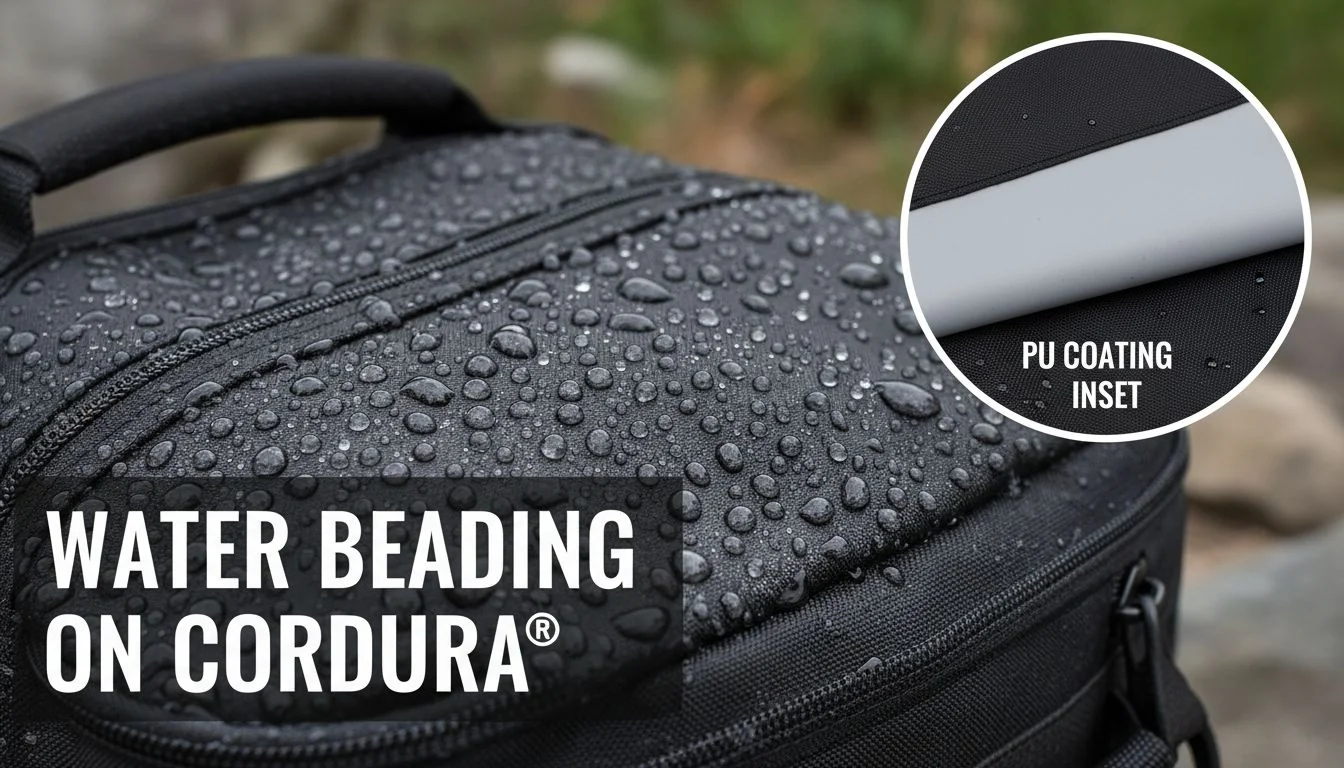
This is one of the biggest misconceptions I have to clear up for clients. The CORDURA® weave provides the structure and abrasion resistance, but the water protection is a two-part system applied to it.
-
DWR (Durable Water Repellent) Finish: This is a chemical treatment sprayed onto the face of the fabric. It’s what makes water bead up and roll off the surface. This layer provides water resistance, but it’s not fully waterproof and it can wear off over time with use and cleaning.
-
PU/TPU Coating (Polyurethane/Thermoplastic Polyurethane): This is the real waterproofing. It’s a thin, plastic-like film that is laminated to the back or inside of the CORDURA® fabric. This coating creates a solid barrier that stops water from passing through the weave.
So, when you’re designing a bag, remember this: the CORDURA® fabric is there to stop scuffs and tears, while the invisible inner coating is what keeps the contents dry.
[claim claim=”All CORDURA® bags are 100% waterproof straight from the factory.” istrue=”false” explanation=”Waterproofing depends on the quality of the PU/TPU coating and seam sealing, not just the CORDURA® fabric itself. The DWR finish also wears off, reducing water resistance over time.”]
[claim claim=”A PU (Polyurethane) coating is applied to the back of the fabric to provide a waterproof barrier.” istrue=”true” explanation=”This inner coating is the primary layer that prevents water from penetrating the fabric, making the bag waterproof, while the CORDURA® provides the external durability.”]
CORDURA® vs. Ballistic Nylon vs. Ripstop: What’s the Real-World Difference?
CORDURA®, Ballistic Nylon6, and Ripstop are the "big three" of durable fabrics. The choices can be confusing because they all claim to be tough. Let’s compare their real-world strengths and weaknesses.
These fabrics are not better or worse, just different. CORDURA® excels at abrasion resistance (scuffs). Ballistic Nylon is best for tear and puncture resistance. Ripstop Nylon7 offers the best strength-to-weight ratio, making it ideal for lightweight gear.

Choosing between these depends entirely on the primary goal for your product. I’ve used all three for different projects, and here’s my simple breakdown for clients.
| Fabric | #1 Strength | Look & Feel | Best For |
|---|---|---|---|
| CORDURA® Classic | Abrasion Resistance | Matte, canvas-like | Everyday bags, backpacks, gear that gets scuffed |
| Ballistic Nylon | Tear & Puncture Resistance | Smooth, shiny, stiff | Luggage, tool bags, laptop cases |
| Ripstop Nylon | Strength-to-Weight Ratio | Visible grid pattern, thin | Ultralight hiking packs, stuff sacks, kites |
Think of it this way:
- CORDURA® is the "Scuff Buster." It’s the hardest to wear a hole in from rubbing.
- Ballistic Nylon is the "Puncture-Proofer." It was originally designed for flak jackets to stop shrapnel. It’s harder to tear or stab a hole in.
- Ripstop Nylon is the "Lightweight." The grid of thicker threads stops small tears from spreading, allowing the rest of the fabric to be incredibly thin and light.
[claim claim=”Ballistic Nylon is a type of CORDURA® fabric.” istrue=”false” explanation=”While CORDURA® does make its own version of ballistic nylon, the term ‘Ballistic Nylon’ refers to a specific weave (2×2 basketweave) and material, originally developed by DuPont, that is distinct from ‘Classic CORDURA®’.”]
[claim claim=”Ripstop fabric is characterized by a grid of reinforcement threads woven into it.” istrue=”true” explanation=”This grid pattern is the defining feature of ripstop, designed to stop tears from propagating across the fabric, which gives it a high strength-to-weight ratio.”]

As Manufacturers, Why Do We Use CORDURA® (And When Is It Overkill)?
CORDURA® is more expensive than generic nylon or polyester. So, is the extra cost really worth it for your brand? From a manufacturer’s perspective, here is exactly why we choose it.
We use CORDURA® for its proven brand trust, which instantly signals quality to a customer. Its superior abrasion resistance leads to higher customer satisfaction and fewer returns for us. The premium, matte aesthetic also aligns perfectly with high-end designs.
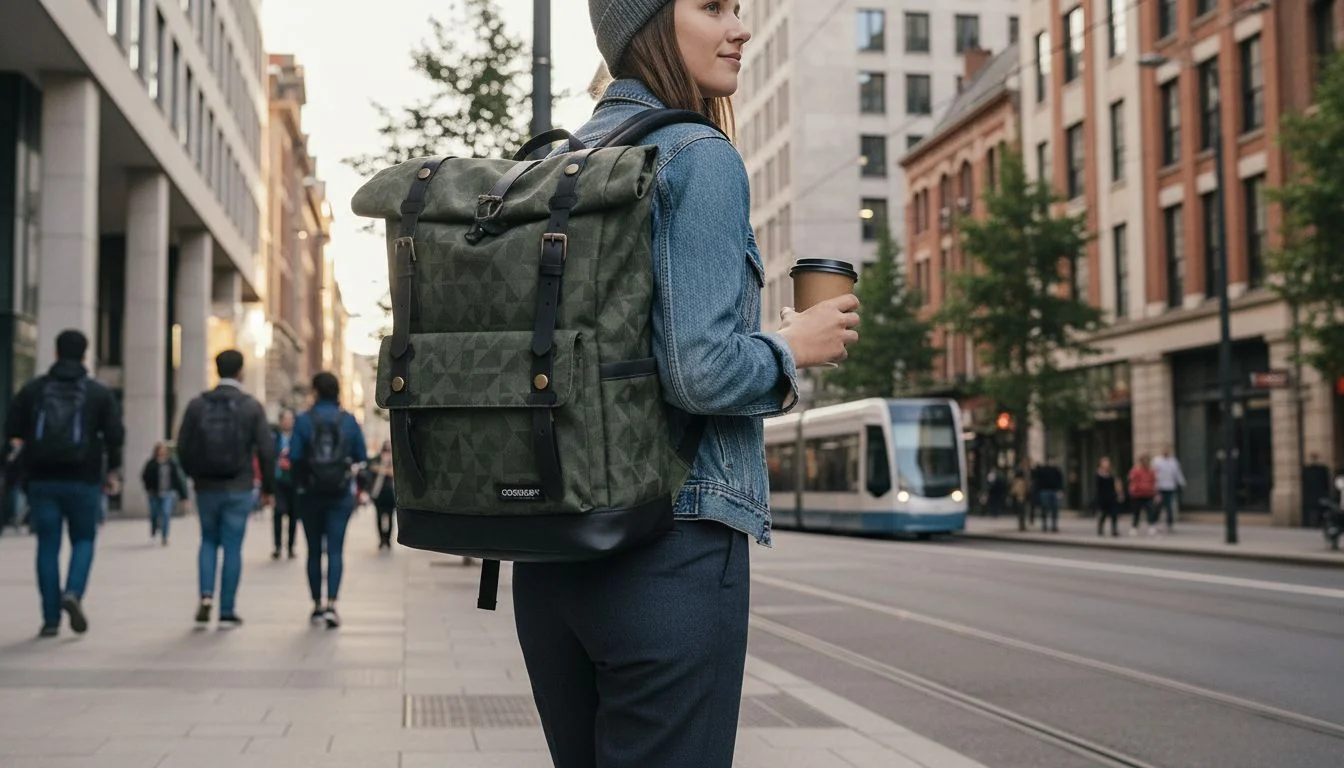
When a client like you, Olivia, is developing a premium product line, the material choice is a strategic business decision. Here’s our thinking:
- Proven Brand Trust: The CORDURA® hangtag is powerful. It has a 50+ year legacy with the military and top brands like Carhartt. This tells the customer, "This is a quality product," before they even read the features. It’s a shortcut to trust that no generic fabric can offer.
- Durability = Higher Customer Satisfaction: The most common reason premium bags fail isn’t a giant rip. It’s death by a thousand cuts: scuffed corners, frayed seams, and worn-through bottoms. CORDURA®’s world-class abrasion resistance directly fights this. The bag looks better for longer, which means a happier customer and fewer warranty claims for us.
- Premium Aesthetics: The matte, canvas-like finish of CORDURA® is often seen as more stylish and less "industrial" than the shiny look of ballistic nylon. It fits perfectly with the aesthetic of modern, high-end consumer goods.
When Is It "Overkill"?
As much as I love the fabric, it’s not for everything. CORDURA® is heavier and more expensive. For an ultralight hiking pack where every gram counts, a lighter 100D-210D ripstop nylon is a much better choice. For a simple promotional tote bag given away at a trade show, a basic 600D polyester is far more cost-effective. CORDURA® is for products where durability is a primary selling feature and a core part of the brand’s promise.
[claim claim=”Using CORDURA® fabric can lower a brand’s warranty return rate.” istrue=”true” explanation=”Because CORDURA® is highly resistant to abrasion and wear-and-tear, products made with it last longer and are less likely to fail, leading to higher customer satisfaction and fewer returns.”]
[claim claim=”CORDURA® is the lightest durable fabric available.” istrue=”false” explanation=”While durable, CORDURA® is generally heavier than other technical fabrics like ripstop nylons or materials like Dyneema® (Cuben Fiber), which offer high strength at a much lower weight.”]
What Are the Common Applications of CORDURA® Fabric in the Bag Industry?
You know CORDURA® is great for premium everyday bags. But where else does its legendary toughness shine? Let’s look at its wider use across the industry to see its full potential.
Beyond premium backpacks, CORDURA® is a top choice for military and tactical gear8, rugged hiking packs, durable luggage, and protective cases. Its ability to resist extreme wear and tear makes it ideal for any high-performance product.
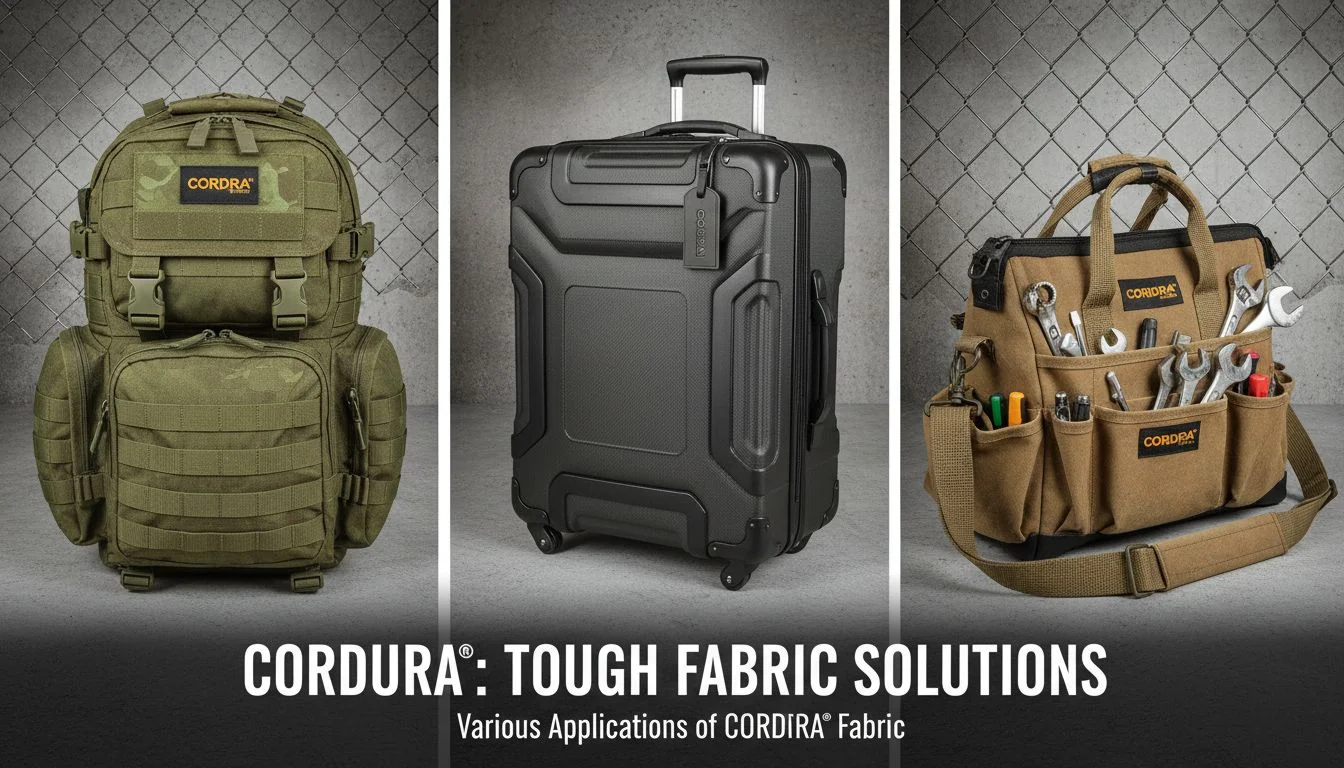
The fabric’s versatility is one of its greatest strengths. Seeing where else it’s used can give you great ideas for new product lines. Here are some of the most common applications I’ve worked on:
- Military & Tactical Gear: This is CORDURA®’s home turf. Its durability is essential, and its matte finish is non-reflective, which is a tactical advantage.
- Hiking & Outdoor Packs: While ultralight packs use other materials, many rugged hiking backpacks use CORDURA® on high-wear areas like the bottom panel and side pockets to resist abrasion from rocks and terrain.
- Luggage: Checked baggage takes a beating. CORDURA®’s resistance to scuffs and tears makes it a fantastic choice for soft-sided luggage that needs to survive airport baggage handlers.
- Protective Cases: For expensive electronics, tools, or musical instruments, a case made from CORDURA® provides a tough outer shell that protects the valuable contents inside from bumps and scrapes.
In every one of these cases, the brand is choosing CORDURA® to make a promise to the customer: this product is built to last.

Conclusion
CORDURA® is more than just a fabric; it’s a statement of quality. Its unmatched abrasion resistance and trusted legacy make it the go-to choice for creating truly durable, premium bags.
Commonly Asked Questions (FAQs)
1. What is the difference between CORDURA® and regular nylon?
CORDURA® is made from high-tenacity nylon 6,6, which is specially treated to enhance its durability. Unlike regular nylon, CORDURA® undergoes a unique air-jet texturing process that creates a rugged, matte finish, making it more resistant to abrasion and wear.
2. How do I care for bags made of CORDURA® fabric?
To care for CORDURA® fabric, spot clean with a mild detergent and warm water. Avoid machine washing to maintain the fabric’s integrity. For tough stains, gently scrub with a soft brush. Always air dry to prevent damage.
3. Can CORDURA® fabric be used for waterproof backpacks?
CORDURA® fabric is water-resistant but not fully waterproof. It can be treated with additional water-repellent coatings (like DWR) to enhance its resistance to moisture, but it may not fully protect against heavy rain.
4. Is CORDURA® fabric eco-friendly?
CORDURA® fabric is designed to be durable and long-lasting, which helps reduce the need for frequent replacements. However, its environmental impact depends on the specific manufacturing process. Some CORDURA® fabrics are made from recycled materials, but it’s best to check with the manufacturer for sustainability practices.
5. What makes CORDURA® fabric more durable than polyester?
CORDURA® is made from high-tenacity nylon, which is naturally stronger and more resistant to abrasion, tearing, and scuffing than standard polyester. The air-jet texturing process also enhances its durability, making it superior to polyester for high-stress applications.
References
-
Understanding durability helps in selecting materials that enhance product longevity and customer satisfaction. ↩
-
Exploring the properties of Classic Fabric reveals why it’s favored in high-performance products. ↩
-
Learning about this specific nylon type can inform choices for durable and high-quality fabric. ↩
-
Discovering the air-jet texturing process can enhance understanding of fabric performance. ↩
-
Understanding DWR finishes is crucial for ensuring water resistance in fabric products. ↩
-
Exploring the distinctions between these fabrics aids in choosing the right material for specific needs. ↩
-
Understanding Ripstop Nylon can provide insights into lightweight and durable fabric options. ↩
-
Exploring its applications in military gear highlights CORDURA®’s durability and reliability. ↩