I’ve spent 15 years on the factory floor, managing production lines and arguing with buyers over $0.10 margins. Everyone asks where the giants like Nike and Adidas make their gear. They aren’t looking for a Wikipedia list; they want to know if the quality holds up when production moves from one border to another.
Most Nike and Adidas backpacks are manufactured in Vietnam, China, and Indonesia. While China was once the undisputed king, Vietnam now handles over 40% of their global production due to lower labor costs and specialized expertise in technical polyester sewing.
If you’re a B2B buyer, understanding this shift isn’t just trivia—it’s the difference between hitting your margin or losing your shirt on import duties.
Where are Nike and Adidas Backpacks Produced Today?

Vietnam is the undisputed king, producing over 40% of their global backpack inventory. China follows closely, while Indonesia and Cambodia handle high-volume, basic-entry models.
In the industry, we call this "Cluster Manufacturing1." These brands don’t just pick a country; they pick an ecosystem where the fabric mills, zipper suppliers (like SBS or YKK), and sewing lines are within a two-hour drive. This proximity slashes lead times and minimizes the "transit damage" we often see with long-haul raw material shipping.
According to recent ESG transparency reports2, Nike utilizes over 100 contract factories in Vietnam alone. Our own data from Quanzhou shows that while simple 600D polyester bags have migrated to Southeast Asia, high-spec technical packs requiring 12-14 stitches per inch still often stay in China for better precision.
Which countries lead the production volume?
| Country | Primary Focus | Estimated Share | Key Advantage |
|---|---|---|---|
| Vietnam | Mass-market 600D Polyester | 40% | Low tariffs (EVFTA/CPTPP) |
| China | Technical/Premium Cordura | 30% | Mature raw material supply |
| Indonesia | Performance/Sport-specific | 15% | Competitive labor for high-volume |
| Cambodia | Entry-level/Promotional | 10% | Generalized System of Preferences (GSP) |
What components are still sourced primarily from China?
- Custom Zinc Alloy Hardware: 90% of branded zipper sliders.
- Recycled High-Tenacity Nylon: Specialized GRS-certified yarns.
- Electronic Integration: Smart backpacks with charging ports or LED panels.
Actionable Tip: If your backpack design involves "Mixed Media" (e.g., EVA foam panels meeting 1000D Cordura), don’t look past China. The precision loss elsewhere will kill your brand’s reputation.
Why Did These Giants Move 50% of Production to Vietnam?
The shift to Vietnam wasn’t just about chasing the lowest wage; it was a strategic move to dodge the "China + 1" risk and exploit the EVFTA (EU-Vietnam Free Trade Agreement3). Vietnam has evolved into a powerhouse for synthetic textile assembly.
This move relies on "Assembly Specialization." Vietnam factories have mastered the high-speed assembly of 600D and 900D polyester bags—the bread and butter of the Adidas "Performance" line. They use massive "Lean" lines where a single backpack is birthed every 45 seconds.
| Feature | China Manufacturing | Vietnam Manufacturing |
|---|---|---|
| Labor Cost | High ($800 – $1,200/mo) | Moderate ($300 – $500/mo) |
| Material Sourcing | Immediate (Local) | 2-3 Weeks (Imported from China) |
| Lead Time | 45-60 Days | 60-90 Days |
| Complexity Cap | Extremely High | Moderate to High |
Is the quality in Vietnam identical to Nike’s standards?
Yes, because the "Big Two" don’t just hire a factory; they "plant" their own QA teams inside the facility. A factory producing for Adidas in Vietnam uses the same Japanese Juki sewing machines and the same German Madeira thread as they would in Shenzhen.
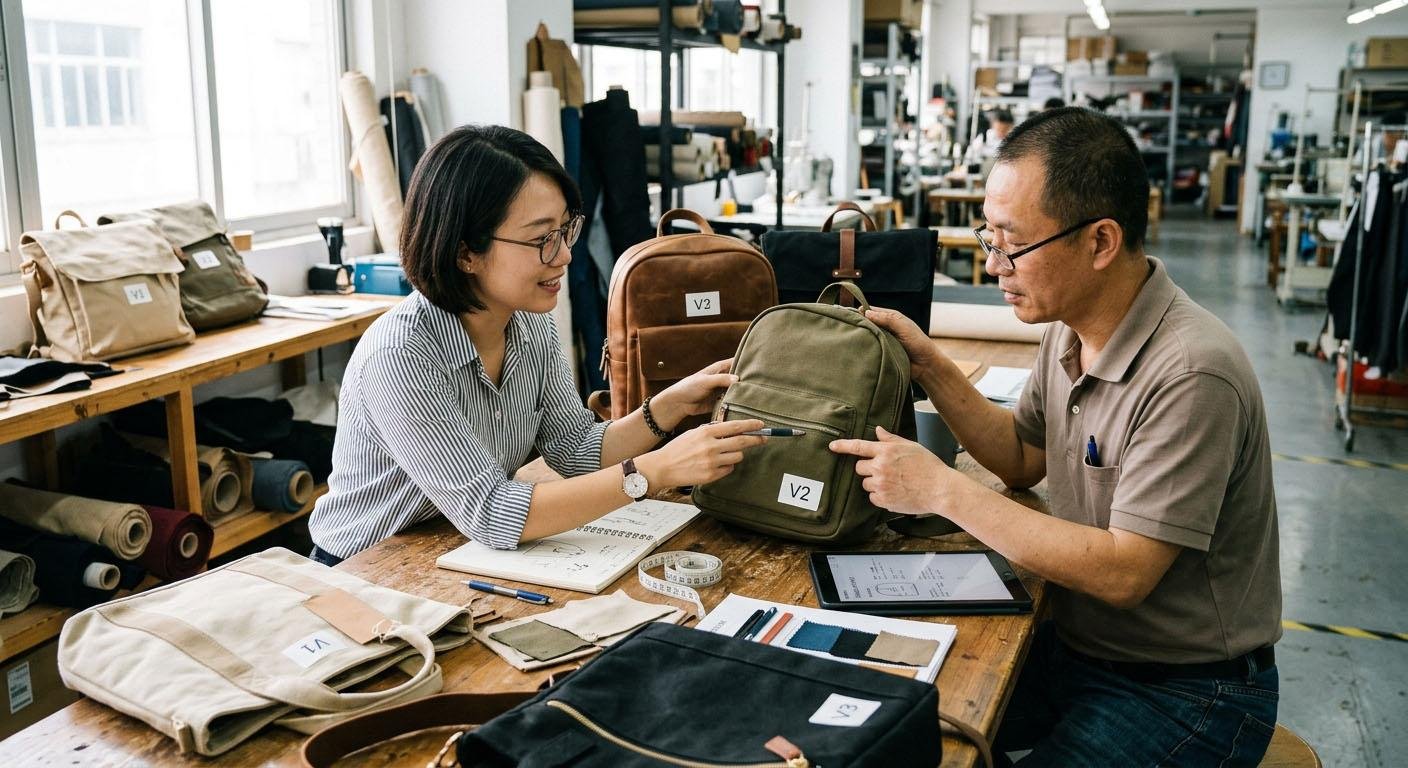
The Insider Secret: I once saw a buyer try to save $0.50 by moving a heavy-duty hiking pack from a vetted Vietnam plant to a "cheaper" local startup. The result? The load-bearing bar-tacks failed at 15kg because the new factory didn’t own a programmable pattern sewer. Don’t be that buyer.
Who Are the Actual "Ghost" Manufacturers?

Nike and Adidas don’t own sewing machines; they partner with massive manufacturing conglomerates like Shenzhou International, Yue Yuen Industrial, and Simone Accessories.
These Tier-1 suppliers are industrial giants. We often joke in the industry that if a Yue Yuen factory in Vietnam sneezes, the global supply of sneakers and tech-backpacks catches a cold. These plants use specialized Juki automated sewing machines that ensure a consistent 8-10 stitches per inch—the "gold standard" for heavy-duty sports gear.
Which factories handle the high-tech lines?
- Yue Yuen (Pou Chen): The powerhouse for performance-heavy bags.
- Shenzhou International: Masters of integrated fabric knitting and assembly.
- Local Specialized Hubs: Smaller boutique factories for high-end "Lab" collections.
Actionable Tip: When auditing a factory, look for ISO 90014 and BSCI certifications. If they can’t produce an authentic BSCI Audit Report, they aren’t playing in the same league as Nike’s suppliers.
How Does the Material Quality Differ by Region?
Most Nike and Adidas backpacks use 600D to 900D Polyester with a PU coating, but the "secret sauce" is the source of the yarn, which often comes from specialized mills in Taiwan.
I once saw a client try to save $0.80 by sourcing a "look-alike" 600D fabric from an unverified mill. Six months later, the backpacks failed the Martindale Abrasion Test5 at just 10,000 cycles, whereas the Nike-standard fabrics we use must withstand at least 25,000 to 40,000 cycles without pilling.
| Material Component | Nike/Adidas Standard | Generic "Cheap" Bag |
|---|---|---|
| Zippers | YKK or SBS (Heavy Duty) | Generic No-brand |
| Stitch Density | 8-10 SPI (Stitches Per Inch) | 5-6 SPI |
| Fabric Coating | 2x PU Waterproof Coating | Single Thin PVC Layer |
How Do You Identify A "Nike-Level" Tier-1 Factory?
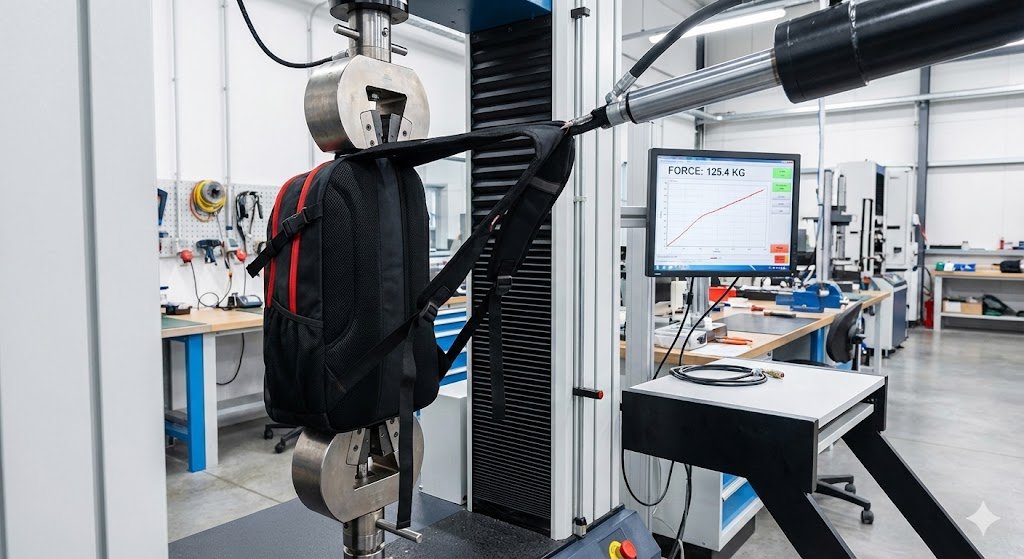
You don’t look at the showroom; you look at the "Physical Testing Lab." A factory capable of handling Nike or Adidas orders will have an on-site lab that looks like a torture chamber for bags.
Every fabric roll is tested for "Color Fastness to Crocking" and "Tensile Strength" before a single needle touches it. If a factory tells you "we use the same materials as Nike" but can’t produce a Third-Party Lab Report (SGS or ITS) for the current batch, they are lying to you.
Minimum technical requirements for Top-Tier bag production
- Needle Detection: Every bag must pass through a conveyor-belt metal detector to ensure no broken needle fragments are left inside.
- Salt Spray Testing: Hardware must survive 48-72 hours of salt mist without corrosion.
- Stitch Density: A minimum of 7-9 stitches per inch (SPI) for load-bearing seams.
How do Nike and Adidas Ensure 100,000 Backpacks Are Identical?
Consistency is the ghost haunting every factory manager. Mass production requires brutal, systematic discipline.
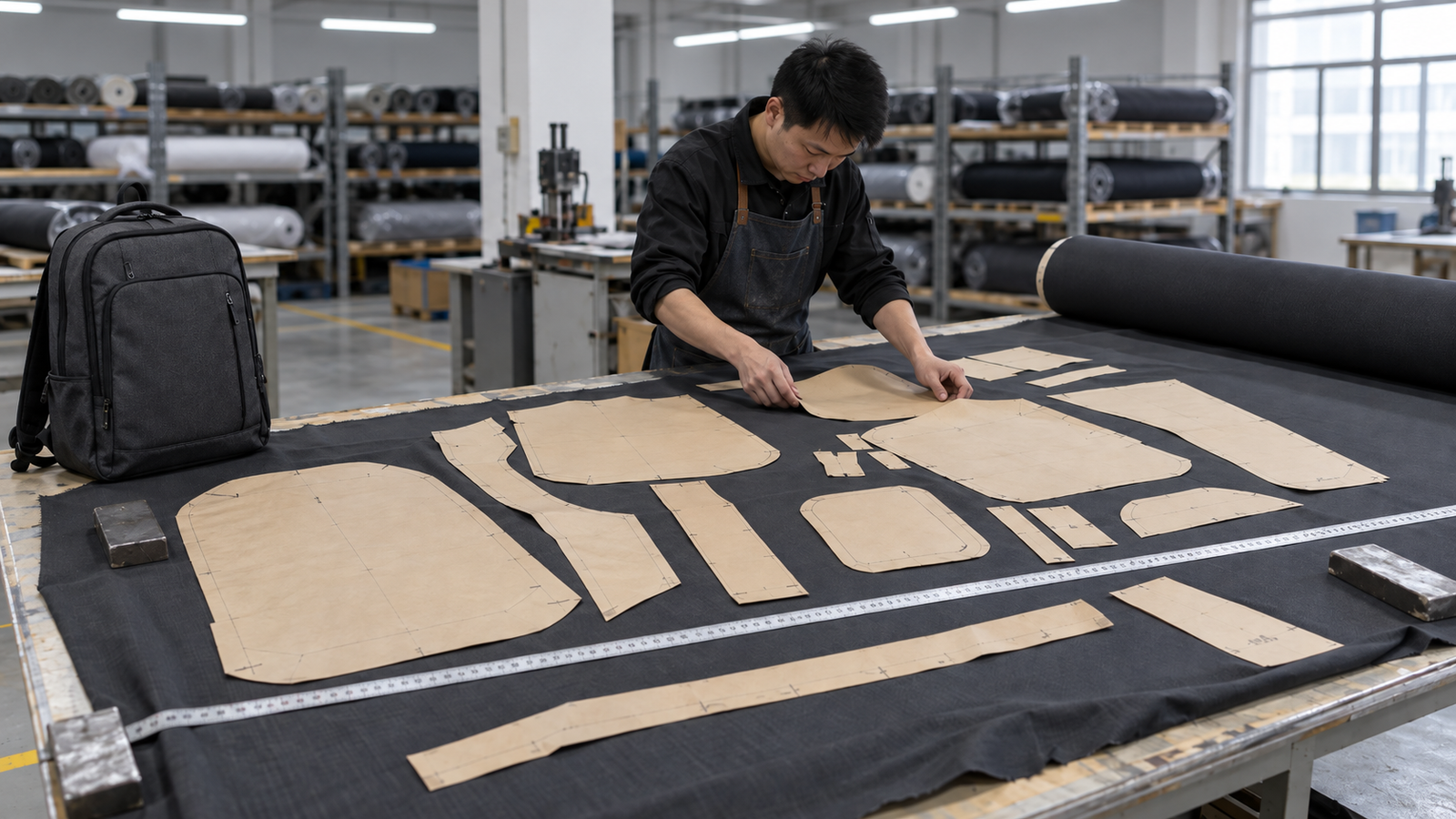
Brands use "Golden Samples6" and AQL 2.5 standards to ensure consistency. Every unit must match the master prototype’s stitch count, material density, and tensile strength perfectly.
What is the "Golden Sample" protocol?
This is the holy grail. Once signed, the factory cannot change a single thread supplier without a 90-day audit. It’s the DNA for the entire production run.
- Standardized Materials: Every roll of 600D polyester is lab-tested for colorfastness and PU coating thickness before cutting.
- Jig-Based Sewing: We use custom metal templates (jigs) so every logo placement and pocket alignment is accurate to the millimeter.
- Tension Testing: Shoulder straps are machine-pulled to 15kg to ensure the reinforced box-stitch never fails under real-world loads.
How does the multi-stage inspection work?
We don’t just check at the end. We kill defects at the source using a four-tier inspection system that covers everything from raw yarn to the final retail box.
| Phase | Inspection Focus | Key Quality Goal |
|---|---|---|
| IQC | Fabric & Zipper Batch | Stop defects before the first cut |
| In-Line | Critical Seam Strength | Ensure straps don’t rip under pressure |
| OQC | Final Aesthetics | Deliver shelf-ready, "Retail Grade" perfection |
| Lab Test | Salt Spray & Humidity | Prevent zipper rust and fabric peeling |

Does "Made in China" Still Matter for Premium Backpacks?
Yes, China is essential for premium backpacks because it owns the high-tech machinery and GRS-certified supply chains that Southeast Asian hubs currently lack for complex builds.
Don’t let the "moving to Vietnam" narrative fool you. When Nike drops a high-end, heat-welded, waterproof "Shield" backpack, they almost always come back to China. Why? Because of the machinery gap.
Technical bags require specialized equipment like high-frequency welding machines and computerized pattern tackers that many Tier-2 Southeast Asian factories simply haven’t invested in yet. We’ve had clients try to move a complex 100-component hiking pack to Vietnam to save money, only to return to us six months later because the "waterproof" seams were leaking like a sieve.
Why choose China for high-spec gear?
- Access to Recycled Materials: Most GRS-certified7 (Global Recycled Standard) yarns are processed in China.
- Precision Stitching: 3.5 to 4 stitches per cm is the standard here, ensuring the strap doesn’t rip under a 15kg load test.
- Prototyping Speed: We can turn a sample in 5-7 days; in Vietnam, getting the specific hardware might take 15 days.
Actionable Tip: Use China for your "Hero Products" (low volume, high tech) and Southeast Asia for your "Volume Drivers" (high volume, simple construction).
The Bottom Line
Vietnam wins on volume and tariffs. China wins on tech and speed. For B2B buyers, the "where" is a budget decision; the "how" is a quality decision. Don’t just chase a country—chase a factory with the right machinery and QC discipline.
Ready to manufacture bags that actually survive the real world? Contact our factory team today for a professional tech-pack audit and Nike-grade material sourcing.

Expert FAQ:
1. Are "Made in Vietnam" bags lower quality than "Made in China"?
Absolutely not. In fact, for technical sports bags, some of the world’s most advanced heat-bonding (seam-less) technology is now concentrated in Vietnam. The "Made in…" label is a tax indicator, not a quality grade.
2. Can I buy directly from Nike’s factories?
No. These are "Contract Manufacturers" (like Yue Yuen or Shenzhou). They have "Non-Compete" agreements. However, you can find "Tier-2" factories—those that use the same raw material suppliers and machinery—to get 95% of the quality for a fraction of the price.
3. Why is my "Sample" better than the "Bulk" production?
Because you didn’t specify the GSM (Grams per Square Meter) of the fabric in the contract. I’ve seen factories swap a 250g lining for a 180g lining to save pennies. Always keep a "Gold Sample" signed by both parties.
4. What is the biggest "hidden cost" in bag manufacturing?
Logistics and Tariffs. A bag made for $5 in China might cost $12 by the time it hits a US warehouse due to Section 301 tariffs. This is why Vietnam is winning the "Mid-Range" backpack war.
5. Does Adidas use real leather in their backpacks?
Rarely. 99% of "Performance" and "Originals" bags use PU Synthetic Leather or "Suede" microfiber. It’s more durable for sweat/rain and far easier to maintain in a high-volume manufacturing environment.
Footnotes
-
Explains the economic benefits of geographic industrial clusters where interconnected businesses enhance productivity and innovation. ↩
-
Official Nike ESG reports detailing supply chain transparency, environmental impact, and global manufacturing footprint. ↩
-
Comprehensive overview of the trade agreement facilitating tariff-free exports between Vietnam and the European Union market. ↩
-
Detailed information on the ISO audit system for monitoring and improving social performance in global supply chains. ↩
-
Technical breakdown of how the Martindale test measures fabric resistance to abrasion and pilling for quality assurance. ↩ ↩
-
Exploring Golden Samples can help you grasp the importance of quality control in mass production. ↩
-
Official standards for the Global Recycled Standard, verifying recycled content and responsible social and environmental practices. ↩ ↩