Last Updated: July 13, 2026
Choosing the right fabric is one of the most important decisions when developing a bag product. The fabric affects not only the bag’s durability and appearance but also its weight, cost, waterproof performance, and overall market positioning.
Different types of bags require different fabric properties. A lightweight tote bag, a heavy-duty travel bag, and a waterproof outdoor bag may all require completely different materials.
Common factors brands and manufacturers consider when selecting bag fabrics include:
- Durability and abrasion resistance
- Weight and portability
- Water resistance and weather protection
- Appearance and texture
- Cost and production availability
- Compatibility with printing, coating, and finishing processes
This guide compares 11 common fabrics used for making bags, including nylon, polyester, canvas, Cordura, leather, TPU laminated fabrics, and other popular materials. It explains their characteristics, applications, and suitability for different bag manufacturing projects.
Quick Comparison: The Factory Cheat Sheet

For B2B buyers, "Weight" isn’t enough. You need to know the Denier (D), the coating options, and the Price Index.
| Fabric | Common Spec (B2B) | Durability | Water Resistance | Cost Level | Best Applications |
|---|---|---|---|---|---|
| Nylon | 210D, 420D, 840D, 1680D | High | High with coating | Medium | Travel bags, outdoor bags, luggage |
| Polyester | 190T, 210D, 600D, 900D | Medium-High | Medium | Low | School bags, promotional bags, everyday bags |
| Canvas | 8oz, 12oz, 16oz, 20oz | High | Low to Medium (with treatment) | Medium | Tote bags, lifestyle bags, casual products |
| Cordura® | 500D, 1000D | Very High | High | High | Tactical bags, outdoor bags, heavy-duty products |
| Leather | Full Grain, Top Grain, Split | High | Medium | Very High | Premium handbags, luxury products |
| Ripstop Fabric | 210D Ripstop, 420D Ripstop | Medium-High | Medium to High | Medium | Lightweight outdoor bags, travel products |
| Oxford Fabric | 150D, 300D, 600D, 1200D | Medium-High | Medium | Low-Medium | Travel bags, utility bags, everyday products |
| TPU Laminated Fabric | 420D Nylon + TPU, 840D Nylon + TPU | Very High | Excellent | High | Waterproof bags, technical products |
| PVC Tarpaulin | 500D PVC (0.5mm), 1000D PVC (0.7mm) | Very High | Excellent | Medium | Outdoor bags, waterproof duffle bags |
| Microfiber | 1.0mm – 1.4mm Thickness | Medium-High | Medium | High | Premium fashion bags, accessories |
| Recycled Polyester | 600D GRS, 150D GRS (RPET) | Medium-High | Medium | Medium | Sustainable bags, eco-friendly brands |
Each fabric has its own advantages. The best fabric for a bag depends on the product purpose, target customer, required performance, and manufacturing requirements.
1. Nylon Fabric (The Performance Standard)
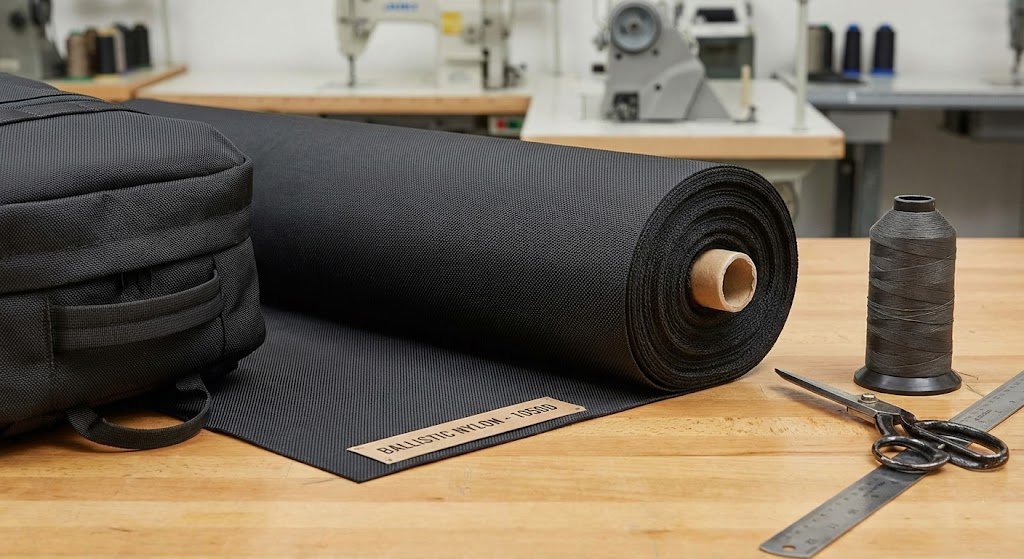
Nylon is one of the most widely selected fabrics for premium and performance-oriented bags. While nylon and polyester are often compared, manufacturers recognize important differences in fiber strength, hand feel, appearance, and production behavior.
Nylon typically has a smoother, silkier texture and higher tensile strength than standard polyester, making it suitable for brands that require durability without excessive weight.
Why Brands Choose Nylon
- Excellent strength-to-weight ratio
- Superior abrasion resistance
- Premium hand feel
- Lightweight construction
- Suitable for technical and outdoor products
Factory Insight
Don’t simply specify "nylon" when developing a bag. The fabric specification matters.
Common choices include:
| Specification | Typical Application |
|---|---|
| 210D Nylon | Lightweight lining and organizer bags |
| 420D Nylon | Everyday and travel products |
| 500D Nylon | Durable exterior panels |
| Ballistic Nylon | Heavy-duty premium applications |
For example, a 210D nylon with PU backing is commonly used for lightweight structures, while ballistic nylon is selected when abrasion resistance is a key selling point.
Production Considerations
Nylon provides excellent performance but requires attention during manufacturing.
- Screen printing may require special bonding agents to prevent ink peeling.
- Heat transfer should be tested because nylon has different heat resistance compared with polyester.
- Specialized nylon variants may require higher MOQ or longer sourcing time.
Common Applications
Nylon is widely used for:
- Travel bags
- Duffle bags
- Outdoor bags
- Technical bags
- Premium luggage
2. Polyester Fabric (The Cost-Performance Champion)

Polyester is one of the most widely used fabrics for making bags because it is affordable, color-stable, easy to customize, and readily available for bulk production.
Compared with nylon, polyester usually has a slightly firmer hand feel and lower abrasion resistance. However, it absorbs less moisture, performs well under UV exposure, and offers better cost control for large orders.
Common Specifications
| Specification | Common Uses |
|---|---|
| 210D Polyester | Linings, organizers, lightweight bags |
| 300D Polyester | Promotional bags and accessories |
| 600D Polyester | School bags, sports bags, travel bags |
| 900D–1680D Polyester | Luggage, utility bags, structured products |
Factory insight: Do not judge polyester by denier alone. Two fabrics labeled 600D may differ in yarn quality, density, coating, abrasion resistance, and colorfastness.
Polyester can be combined with PU or PVC backing to improve water resistance and structure. It also works well with screen printing, heat transfer, sublimation, embroidery, and rubber patches.
Best For
- School and sports bags
- Promotional products
- Duffle bags
- Travel organizers
- Shopping bags
- High-volume custom projects
When to Choose Another Fabric
Polyester may not be suitable for products requiring extremely high abrasion resistance, a premium technical hand feel, or demanding outdoor performance. In those cases, nylon, Cordura®, or laminated waterproof fabrics may be better choices.
Sourcing verdict: Polyester is generally easy to source, but custom colors, coatings, prints, and recycled certifications may increase MOQ and lead time.
For a more detailed comparison of weight, texture, printing performance, and production cost, read our 600D vs. 1680D polyester guide.
3. Canvas Fabric (The Lifestyle Classic)

Canvas is a strong woven fabric valued for its natural texture, structured appearance, and premium lifestyle appeal. Traditional canvas is made from cotton, although polyester-cotton blends are also common when brands need better dimensional stability and lower cost.
Compared with nylon or polyester, canvas is heavier and less water-resistant, but it provides a distinctive look that works well for casual, fashion, and reusable bag collections.
Common Canvas Options
| Canvas Type | Typical Use |
|---|---|
| Lightweight cotton canvas | Promotional totes and drawstring bags |
| Medium-weight canvas | Shopping bags and casual handbags |
| Heavy canvas | Structured totes, tool bags, premium travel products |
| Waxed canvas | Heritage-style and water-resistant bags |
| Polyester-cotton canvas | Commercial products requiring better consistency |
Factory insight: Canvas weight is often measured in ounces or GSM. A heavier canvas may feel more premium, but it also increases sewing difficulty, shipping weight, and material cost.
Canvas supports screen printing, embroidery, garment washing, dyeing, and wax finishing. However, cotton canvas may shrink or show slight color variation, so pre-production testing is important.
Best For
- Tote and shopping bags
- Lifestyle and fashion products
- Reusable promotional bags
- Tool and utility bags
- Heritage-style collections
When to Choose Another Fabric
Canvas may not be ideal for lightweight travel products, fully waterproof bags, or designs requiring very consistent color across large production runs. Polyester, nylon, or laminated fabrics may perform better in those cases.
Sourcing verdict: Standard canvas is widely available, while custom dyeing, washing, wax finishes, organic cotton, or certified recycled blends may require higher MOQs and longer lead times.
4. Cordura® Fabric (The Heavy-Duty Performance Choice)

Cordura® is a branded family of performance fabrics known for high abrasion resistance, tear strength, and long service life. It is commonly selected for bags designed for demanding outdoor, tactical, industrial, or professional use.
Compared with standard nylon or polyester, Cordura® usually offers better wear resistance but comes with higher material cost and more demanding sewing requirements.
500D or 1000D Cordura®?
| Option | Main Character | Better Choice For |
|---|---|---|
| 500D Cordura® | Lighter, more flexible, easier to sew | Motorcycle bags, outdoor travel bags, premium everyday products |
| 1000D Cordura® | Heavier, stiffer, more abrasion-resistant | Tool bags, tactical equipment, industrial and professional bags |
For a deeper sourcing comparison, see our guide to 500D vs. 1000D Cordura® for high-end bag projects.
In many commercial projects, 500D provides a better balance between durability and finished weight. Moving to 1000D may sound like an upgrade, but it can make the bag unnecessarily heavy and difficult to construct.
Factory warning: A Cordura® shell does not automatically create a heavy-duty bag. Weak thread, lightweight webbing, ordinary zippers, or poorly reinforced stress points can fail long before the fabric does.
Cordura® may also receive PU backing or a water-repellent finish, but these treatments do not make the finished bag fully waterproof. Water can still enter through seams, zipper openings, and construction details.
Where We Usually Recommend It
Cordura® makes the most sense for:
- Tool and equipment bags
- Motorcycle luggage
- Tactical and outdoor products
- Premium travel bags designed for frequent use
For promotional bags, fashion-led products, or price-sensitive collections, standard nylon or polyester normally provides a more sensible cost-performance balance.
Our recommendation: Specify the exact Cordura® construction, denier, coating, and supplier documentation. Do not approve a material based only on the word “Cordura” in a quotation.
5. Leather (The Premium Material)
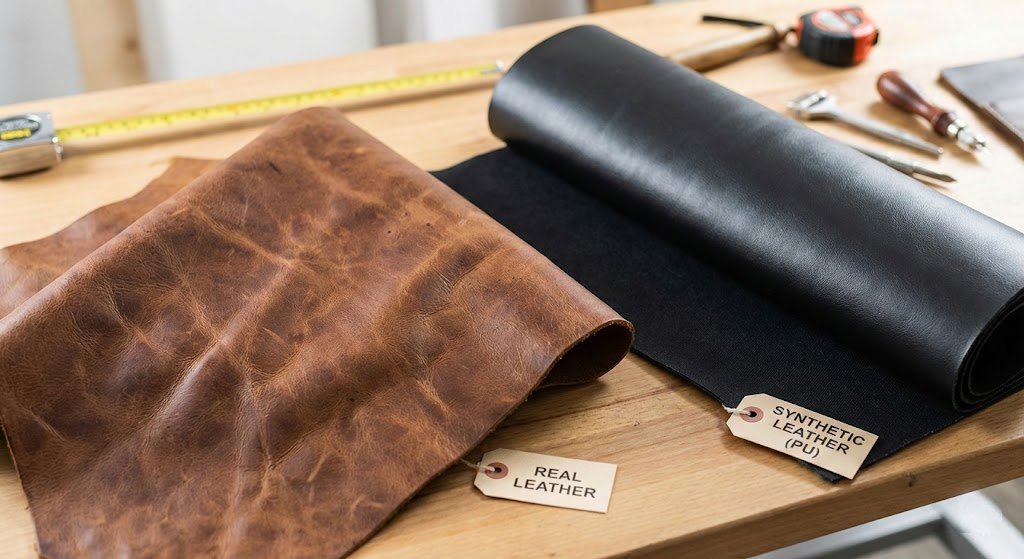
Leather remains one of the most recognizable materials in the bag industry because of its premium appearance, unique texture, and long-lasting appeal.
Unlike synthetic fabrics that focus mainly on performance and cost efficiency, leather is often selected when a brand wants to create a stronger emotional connection with customers through craftsmanship, luxury positioning, and timeless design.
The quality and performance of leather can vary significantly depending on the animal source, tanning process, surface treatment, and finishing method.
Why Brands Choose Leather
Leather is mainly selected for products where appearance and perceived value are key selling points.
Key advantages include:
- Premium look and feel
- Unique natural texture
- Excellent durability when properly maintained
- Develops character over time
- Supports luxury and fashion positioning
A well-made leather bag can maintain its appearance for many years, making the material especially attractive for premium product lines.
Factory Insight
When developing leather bags, the material specification matters more than simply choosing "leather."
Common leather options include:
| Leather Type | Characteristics | Typical Applications |
|---|---|---|
| Full-Grain Leather | Highest natural quality, strong texture, premium aging effect | Luxury handbags, premium travel bags |
| Top-Grain Leather | Smooth appearance, more consistent surface | Fashion bags, business bags |
| Genuine Leather | More affordable, various finishes available | Commercial leather products |
| PU Leather | Synthetic alternative with lower cost | Fashion accessories, entry-level products |
Brands should also consider:
- Leather thickness
- Surface finish
- Color consistency
- Edge treatment
- Hardware matching
A premium leather bag is not only defined by the leather itself. Stitching quality, lining, hardware, and craftsmanship strongly influence the final product value.
Production Considerations
Leather requires different manufacturing techniques compared with textile fabrics.
Important production factors include:
- Cutting efficiency due to natural hide variations
- Surface protection during production
- Edge painting or finishing requirements
- Special sewing techniques
- Hardware reinforcement
Unlike polyester or nylon, leather cannot always be treated as a standardized roll fabric. Natural variation is part of its appeal but also requires experienced craftsmanship.
Common Applications
Leather is commonly used for:
- Premium handbags
- Business bags
- Briefcases
- Fashion bags
- Luxury travel accessories
- High-end gift products
For brands targeting a premium market, leather remains one of the strongest material choices for creating product differentiation.
6. Ripstop Fabric: A Weave Structure, Not a Fiber

Ripstop is often treated as a separate material, but technically it describes a reinforced weave. Thicker yarns are woven into the fabric at regular intervals, creating the familiar square or diamond pattern that helps prevent small tears from spreading.
The base fiber may be nylon, polyester, or another synthetic material, so “ripstop” alone does not tell you the full specification.
For a closer look at grid construction, denier, coatings, and performance differences, read our complete guide to ripstop nylon fabric.
What Buyers Should Confirm
| Specification | Why It Matters |
|---|---|
| Base fiber | Nylon offers a softer, lighter feel; polyester usually provides better cost control |
| Denier | Affects weight, structure, and abrasion resistance |
| Grid size | Changes the appearance and tear-control performance |
| Coating | PU, silicone, or TPU treatments affect water resistance and hand feel |
| Fabric weight | Determines whether the material suits linings, packable products, or exterior panels |
Common sourcing mistake: Assuming every ripstop fabric is heavy-duty. Lightweight 70D ripstop and reinforced 420D ripstop may look similar in photos but perform very differently.
Ripstop works best when a product needs low weight and improved tear resistance. It is commonly used for:
- Packable travel bags
- Lightweight duffle bags
- Outdoor accessories
- Drawstring bags
- Linings and internal pockets
- Foldable products
It is less suitable for bags exposed to constant surface abrasion unless a heavier specification or stronger coating is used. The reinforced grid helps control tearing, but it does not automatically provide the abrasion resistance of Cordura® or ballistic fabrics.
Factory recommendation: Specify the complete construction, such as “210D nylon ripstop with PU backing,” rather than requesting only “ripstop fabric.” This avoids confusion over fiber type, weight, coating, and expected performance.
7. Oxford Fabric: A Practical Choice for High-Volume Bag Production

Oxford fabric is valued less for luxury appeal and more for reliability. It is a woven material—usually made from polyester or nylon—with a slightly textured surface and good dimensional stability.
In bag manufacturing, the term “Oxford” does not identify one exact material. A quotation should also specify the fiber, denier, density, and backing.
How Common Oxford Fabrics Differ
| Specification | Typical Character | Suitable Products |
|---|---|---|
| 210D Oxford | Lightweight and flexible | Linings, organizers, drawstring bags |
| 420D Oxford | Moderate strength with low weight | Sports bags, travel accessories |
| 600D Oxford | Balanced cost, structure, and durability | School bags, duffle bags, utility bags |
| 900D–1680D Oxford | Heavier and more structured | Luggage, tool bags, equipment cases |
Most commercial Oxford fabrics are polyester-based because polyester offers stable colors, broad availability, and competitive pricing. Nylon Oxford is normally selected when a softer hand feel or better strength-to-weight performance is required.
Why Factories Often Recommend It
Oxford fabric is relatively easy to cut, sew, print, and source. It can also be combined with:
- PU backing for flexible water resistance
- PVC backing for additional stiffness
- DWR treatment for light rain protection
- Foam and lining layers for structured bag construction
Quotation check: “600D Oxford” is still incomplete. Ask whether it is polyester or nylon, what backing is applied, and whether the quoted weight includes the coating.
Oxford is a sensible choice for school bags, sports bags, travel bags, promotional products, and general utility bags. It may be less suitable for premium technical products or severe abrasion environments, where Cordura®, ballistic nylon, or laminated fabrics offer stronger performance.
Factory view: Oxford works best when a project needs dependable performance, flexible customization, and controlled production cost rather than a highly specialized material story.
8. TPU Laminated Fabric: Waterproofing Depends on the Construction

TPU laminated fabric combines a woven base—commonly nylon or polyester—with a thermoplastic polyurethane film. The textile provides strength, while the TPU layer creates a flexible, waterproof surface.
Unlike ordinary PU-coated fabric, TPU laminates can often be joined by heat welding or high-frequency welding, making them suitable for bags that require stronger water protection.
TPU vs. Conventional Coated Fabrics
| Material | Flexibility | Waterproof Performance | Common Construction |
|---|---|---|---|
| PU-coated fabric | Good | Moderate | Sewn seams |
| PVC tarpaulin | Moderate | Excellent | Sewn or welded |
| TPU laminated fabric | Excellent | Excellent | Welded or seam-sealed |
TPU is generally lighter and more flexible than PVC, especially in cold conditions. It also gives technical bags a cleaner, more premium appearance. The trade-off is a higher material price and more demanding production control.
Factory reality: Waterproof fabric does not automatically create a waterproof bag. Needle holes, zipper openings, valve attachments, and poorly welded corners can still allow water to enter.
Where Problems Usually Occur
For TPU projects, manufacturers must control:
- Lamination adhesion
- Welding temperature and pressure
- Seam overlap width
- Corner and curved-panel construction
- Pinholes or surface damage
- Compatibility between fabric, zipper, and accessories
A sewn TPU bag may require seam-sealing tape, while a welded design must be developed around the capabilities of the welding equipment.
TPU laminated fabric is commonly selected for:
- Dry bags
- Waterproof duffle bags
- Motorcycle luggage
- Marine and outdoor bags
- Technical travel products
Specification advice: Do not request only “TPU fabric.” Confirm the base textile, denier, TPU film thickness, total fabric weight, color, surface finish, and required waterproof test. Custom colors and specialized laminations may also increase MOQ and lead time.
9. PVC Tarpaulin: The Heavy-Duty Waterproof Workhorse

PVC tarpaulin is made by coating or laminating a polyester base fabric with polyvinyl chloride. It creates a thick, structured material with excellent water resistance, easy-to-clean surfaces, and strong resistance to rough handling.
Compared with TPU laminated fabric, PVC tarpaulin is usually heavier and less flexible, but it offers a more economical solution for large waterproof bags and industrial products.
Where PVC Tarpaulin Performs Well
| Requirement | PVC Tarpaulin Performance |
|---|---|
| Water resistance | Excellent |
| Surface cleaning | Easy to wipe clean |
| Structure | Firm and shape-supporting |
| Abrasion resistance | Good for demanding use |
| Welding compatibility | Suitable for high-frequency or heat welding |
| Cost | Usually lower than premium TPU laminates |
PVC tarpaulin is often specified by total weight rather than denier alone. Common options may range from lightweight 500 GSM materials to heavier 900 GSM constructions.
Factory trade-off: Increasing the material weight can improve structure and durability, but it also makes the finished bag heavier, stiffer, and more expensive to ship.
Sewn or Welded Construction?
PVC-coated materials can be sewn, welded, or combined using both methods.
- Welded seams provide stronger water protection.
- Sewn seams are easier for complex shapes but create needle holes.
- Reinforcement patches may be needed around handles and shoulder straps.
- Surface coatings must be protected from scratching during cutting and assembly.
PVC tarpaulin is commonly used for waterproof duffle bags, delivery bags, tool bags, motorcycle luggage, marine products, and industrial equipment cases.
It may not be suitable for lightweight premium products because it can feel rigid and produce a noticeable plastic odor, particularly when new.
Factory recommendation: Confirm the base fabric, total GSM, coating thickness, flexibility, temperature resistance, welding method, and chemical compliance. A material described only as “PVC tarpaulin” is not detailed enough for an accurate quotation.
10. Microfiber: A Consistent Alternative to Natural Leather
Microfiber is commonly used when a brand wants a smooth, leather-like appearance without the cost or natural variation of genuine leather. In bag production, it usually consists of a fine synthetic fiber base combined with a polyurethane surface layer.
Its biggest advantage is consistency. Color, thickness, texture, and surface finish are easier to control across a production run than with natural hides.
Microfiber vs. Genuine Leather
| Factor | Microfiber | Genuine Leather |
|---|---|---|
| Surface consistency | Very consistent | Natural variation |
| Cost | Usually lower | Higher |
| Cutting efficiency | High | Lower due to hide defects |
| Water resistance | Generally good | Depends on finishing |
| Aging character | Limited | Develops a natural patina |
| Maintenance | Easy to clean | Requires more care |
Microfiber can support a wide range of finishes, including:
- Smooth or pebbled textures
- Matte or glossy surfaces
- Embossed patterns
- Metallic effects
- Custom colors
Production note: Not all synthetic leather is microfiber. Low-cost PU leather may use a different backing and offer lower tear strength, poorer hydrolysis resistance, or a shorter service life.
Microfiber is often used for fashion bags, business accessories, cosmetic bags, trim panels, handles, and premium-looking gift products.
For handles or high-stress areas, manufacturers should confirm thickness, backing strength, flex resistance, and edge-finishing performance before production.
Factory view: Microfiber is a practical choice when a project needs a refined appearance, consistent quality, and efficient cutting. It should not be marketed as genuine leather, and the exact base material and surface composition should be clearly specified.
11. Recycled Polyester: Sustainability Requires Traceable Sourcing

Recycled polyester is typically produced using recycled plastic feedstock, such as post-consumer PET bottles or recycled textile waste. It can be woven into many of the same constructions as conventional polyester, including 210D, 300D, 600D, and heavier fabrics.
From a manufacturing perspective, recycled polyester can often replace virgin polyester without requiring major changes to the bag design. However, its performance depends on the yarn quality, fabric density, coating, and finishing—not simply on the recycled claim.
What Buyers Should Verify
Before approving recycled polyester, request clear information about:
- Recycled content percentage
- Post-consumer or pre-consumer source
- Fabric weight and density
- Coating or backing composition
- Colorfastness and abrasion results
- Certification scope and transaction documents
Common certification systems include the Global Recycled Standard and Recycled Claim Standard, which are managed by Textile Exchange.. A supplier certificate alone may not prove that a specific production order is certified, so the documentation process should be confirmed before placing the order.
Sourcing warning: A fabric described as “eco-friendly polyester” is not necessarily certified or traceable. The recycled percentage and supporting documents should appear in the material specification.
Recycled polyester works particularly well for:
- Promotional bags
- Shopping bags
- Sports and travel products
- Corporate sustainability programs
- Large branded collections
Custom colors, special coatings, and certified production may require higher MOQs than standard stock polyester.
Factory recommendation: Choose recycled polyester when sustainability is part of the product strategy, but evaluate it using the same durability, color, coating, and testing standards applied to virgin polyester. Recycled content should not become an excuse for inconsistent quality.
What Factors Should You Consider When Choosing Bag Fabric?
Choosing the right bag fabric is a balance between performance, appearance, cost, and production requirements. Before selecting a material, brands and manufacturers should evaluate the following factors.
1. Match the Fabric to the Bag’s Intended Use
Different bag categories require different material properties.
| Bag Application | Main Fabric Requirements | Common Choices |
|---|---|---|
| Promotional bags | Low cost, easy printing, lightweight | Polyester, non-woven fabric |
| Tote bags | Natural appearance, printability, structure | Canvas, cotton |
| Travel bags | Durability, low weight, water resistance | Nylon, polyester, Cordura® |
| Waterproof bags | Waterproof surface, welded construction | TPU laminated fabric, PVC tarpaulin |
| Fashion bags | Texture, color, premium appearance | Leather, microfiber, canvas |
| Tool and utility bags | Abrasion resistance, strength, structure | Heavy polyester, Cordura®, PVC-coated fabric |
There is no single best fabric for every bag. The right choice depends on how the finished product will be used.
2. Compare the Main Performance Factors
| Factor | Why It Matters | What to Check |
|---|---|---|
| Durability | Affects service life and resistance to daily wear | Tear strength, abrasion resistance, seam strength |
| Weight | Influences comfort and shipping cost | Denier, GSM, finished bag weight |
| Water resistance | Protects contents from rain and moisture | Coating, lamination, seam construction |
| Appearance | Determines product positioning | Texture, gloss, color depth, shape retention |
| Cost | Affects wholesale and retail pricing | Fabric price, coating cost, order volume |
| Printability | Influences branding options | Screen printing, sublimation, embroidery, embossing |
A high-denier fabric is not automatically the strongest option. Fiber quality, weave structure, coating, backing, and bag construction also affect final performance.
3. Decide How Much Water Protection Is Needed
Water resistance can come from the fabric, coating, lamination, or bag construction.
- PU coating: Lightweight and suitable for everyday bags
- PVC coating: Heavier, more structured, and highly water-resistant
- TPU lamination: Flexible, durable, and suitable for waterproof technical bags
- DWR finish: Helps water bead off the surface but does not make a bag fully waterproof
For fully waterproof bags, the fabric usually needs to be combined with:
- Welded or sealed seams
- Waterproof zippers
- Roll-top closures
- Seam-sealing tape
4. Consider Branding and Decoration Methods
Not every material works well with every logo process.
| Branding Method | Suitable Fabrics |
|---|---|
| Screen printing | Canvas, cotton, polyester |
| Sublimation printing | Polyester |
| Heat transfer | Polyester, selected coated fabrics |
| Embroidery | Canvas, polyester, nylon |
| Embossing or debossing | Leather, microfiber |
| Rubber or metal logo | Most structured bag fabrics |
Before mass production, test logo adhesion, color accuracy, heat resistance, and fabric distortion.
5. Check MOQ, Availability, and Lead Time
Standard stock fabrics are usually easier to source in smaller quantities. Custom materials often require higher minimum orders.
MOQ may increase when a project requires:
- Custom colors
- Printed patterns
- Special coatings
- Recycled certification
- Antibacterial or flame-retardant treatment
- Custom lamination or texture
For small orders, stock colors and standard fabric specifications usually reduce cost and production time.
6. Review Manufacturing Requirements
Some fabrics require specialized equipment or construction methods.
- Heavy canvas and Cordura® may need stronger needles and reinforced seams.
- Leather and microfiber may require skiving, edge painting, or special bonding.
- TPU and PVC fabrics may support heat welding or high-frequency welding.
- Lightweight ripstop fabrics require careful cutting and sewing tension.
The fabric should be evaluated together with the lining, foam, webbing, zipper, and reinforcement materials.
7. Confirm Testing and Compliance
Depending on the product and destination market, common requirements may include:
- Tear and tensile strength
- Abrasion resistance
- Colorfastness
- Water resistance
- Seam strength
- Chemical compliance
Buyers may also request certifications such as:
- REACH
- CPSIA
- OEKO-TEX® STANDARD 100
- GRS
- RCS
- Bluesign®
Testing requirements should be confirmed before ordering fabric because they can affect cost, MOQ, and lead time.
Quick Selection Checklist
Before approving a bag fabric, confirm:
- What type of bag is being produced?
- Who is the target customer?
- What durability level is required?
- Does the bag need to be water-resistant or waterproof?
- What is the target product cost?
- Which branding method will be used?
- Is the material available at the required MOQ?
- Are testing or certification documents required?
The best bag fabric is the material that meets the product’s performance, design, cost, and manufacturing requirements without adding unnecessary weight or complexity.

Best Fabric for Different Types of Bags
The best fabric for a bag depends on how the product will be used, the expected load, the target price, and the level of water protection required.
The table below provides a practical starting point for common bag categories.
| Bag Type | Recommended Fabrics | Why They Work |
|---|---|---|
| Tote Bags | Canvas, cotton, recycled polyester | Good printability, simple construction, and a natural or promotional appearance |
| School Bags | 600D polyester, Oxford fabric, nylon | Balanced durability, cost, color options, and everyday wear resistance |
| Duffle Bags | Polyester, nylon, TPU laminated fabric, PVC tarpaulin | Suitable for travel, sports, heavy loads, and different levels of water protection |
| Travel Bags | Nylon, polyester, Cordura® | Good strength-to-weight ratio, abrasion resistance, and reliable bulk production |
| Waterproof Bags | TPU laminated fabric, PVC tarpaulin, coated nylon | Compatible with welded or sealed construction and strong moisture protection |
| Tool Bags | Heavy polyester, Cordura®, PVC-coated fabric | High abrasion resistance, structure, and support for reinforced construction |
| Fashion Bags | Microfiber, leather, canvas | Strong visual appeal, texture, and premium product positioning |
| Promotional Bags | Polyester, non-woven fabric, lightweight canvas | Low production cost, easy printing, and suitable for large quantities |
| Cosmetic Bags | Polyester, microfiber, TPU, coated fabrics | Easy to clean, compact, and compatible with printed or premium finishes |
| Cooler and Insulated Bags | Polyester or Oxford exterior with PEVA or foil lining | Durable exterior combined with an insulated and wipe-clean interior |
| Recycled Bag Collections | Recycled polyester, recycled nylon, certified canvas | Supports sustainability programs and traceable material claims |
Practical Selection Examples
For Cost-Sensitive Projects
Polyester is usually the most practical starting point for school bags, promotional bags, sports bags, and large-volume commercial orders.
It offers:
- Broad stock availability
- Flexible printing options
- Competitive pricing
- Multiple denier and coating choices
For Premium Performance Products
Nylon and Cordura® are better suited to products that require low weight, high abrasion resistance, or a more technical appearance.
Cordura® is normally reserved for products where durability is an important selling point, while standard nylon provides a more balanced option for premium travel and outdoor bags.
For Waterproof Products
The fabric is only one part of waterproof construction.
TPU laminated fabric and PVC tarpaulin can provide excellent water protection, but the finished bag may also require:
- Welded seams
- Waterproof zippers
- Roll-top closures
- Sealed attachment points
A sewn bag made from waterproof fabric may still leak through needle holes.
For Lifestyle and Fashion Collections
Canvas, microfiber, and leather are often selected for their appearance rather than minimum weight or maximum technical performance.
- Canvas creates a casual or heritage look.
- Microfiber provides a consistent leather-like finish.
- Genuine leather supports premium and luxury positioning.
Factory advice: Start with the bag’s intended use rather than selecting a fabric based only on appearance or denier. The correct material should match the expected load, construction method, retail price, and customer expectations.
For bags that combine several functions, manufacturers may use more than one fabric. A travel bag, for example, may use a durable polyester body, TPU-coated bottom panel, lightweight lining, and microfiber trim to balance cost, performance, and appearance.
Fabric Specifications Used in Bag Manufacturing

A fabric name alone is not enough for an accurate quotation. “600D polyester,” for example, can vary considerably in yarn quality, density, coating, total weight, and performance.
A complete bag fabric specification should identify both the base textile and any finishing treatments applied to it.
Key Specification Terms
| Specification | What It Describes | Why It Matters |
|---|---|---|
| Fiber | Polyester, nylon, cotton, recycled fiber, etc. | Affects strength, texture, moisture absorption, and cost |
| Denier (D) | Yarn thickness or linear density | Influences weight and structure, but does not directly guarantee strength |
| GSM | Fabric weight in grams per square meter | Helps compare the total weight of fabrics and coatings |
| Weave | Oxford, ripstop, plain weave, twill, ballistic weave | Affects appearance, tear behavior, flexibility, and abrasion resistance |
| Density | How closely the yarns are woven | Higher density can improve structure and surface durability |
| Backing | PU, PVC, TPU, acrylic, or no backing | Changes water resistance, stiffness, and manufacturing method |
| Surface Finish | DWR, waxed, brushed, embossed, matte, glossy | Influences appearance and surface performance |
| Color Standard | Pantone, lab dip, or stock color | Controls color accuracy and consistency |
Denier Does Not Equal Durability
Denier is useful for comparing yarn size, but it should not be used as the only quality indicator.
A well-constructed 420D nylon may outperform a lower-quality 600D polyester in some applications. Final performance also depends on:
- Yarn quality
- Weave density
- Coating adhesion
- Abrasion resistance
- Tear strength
- Finished bag construction
Quotation tip: Compare materials using physical samples and test results rather than relying only on the denier shown in the supplier’s description.
Coating and Lamination Options
The same base fabric can behave very differently depending on its backing.
| Backing or Finish | Main Purpose | Typical Effect |
|---|---|---|
| PU coating | General water resistance | Lightweight and flexible |
| PVC backing | Structure and moisture protection | Heavier and stiffer |
| TPU lamination | Waterproof technical construction | Flexible and suitable for welding |
| DWR finish | Surface water repellency | Helps water bead off the face fabric |
| Wax finish | Appearance and weather protection | Creates a heritage-style surface |
Waterproof fabric does not automatically produce a waterproof bag. Seams, zippers, closures, and attachment points must also be designed to prevent water entry.
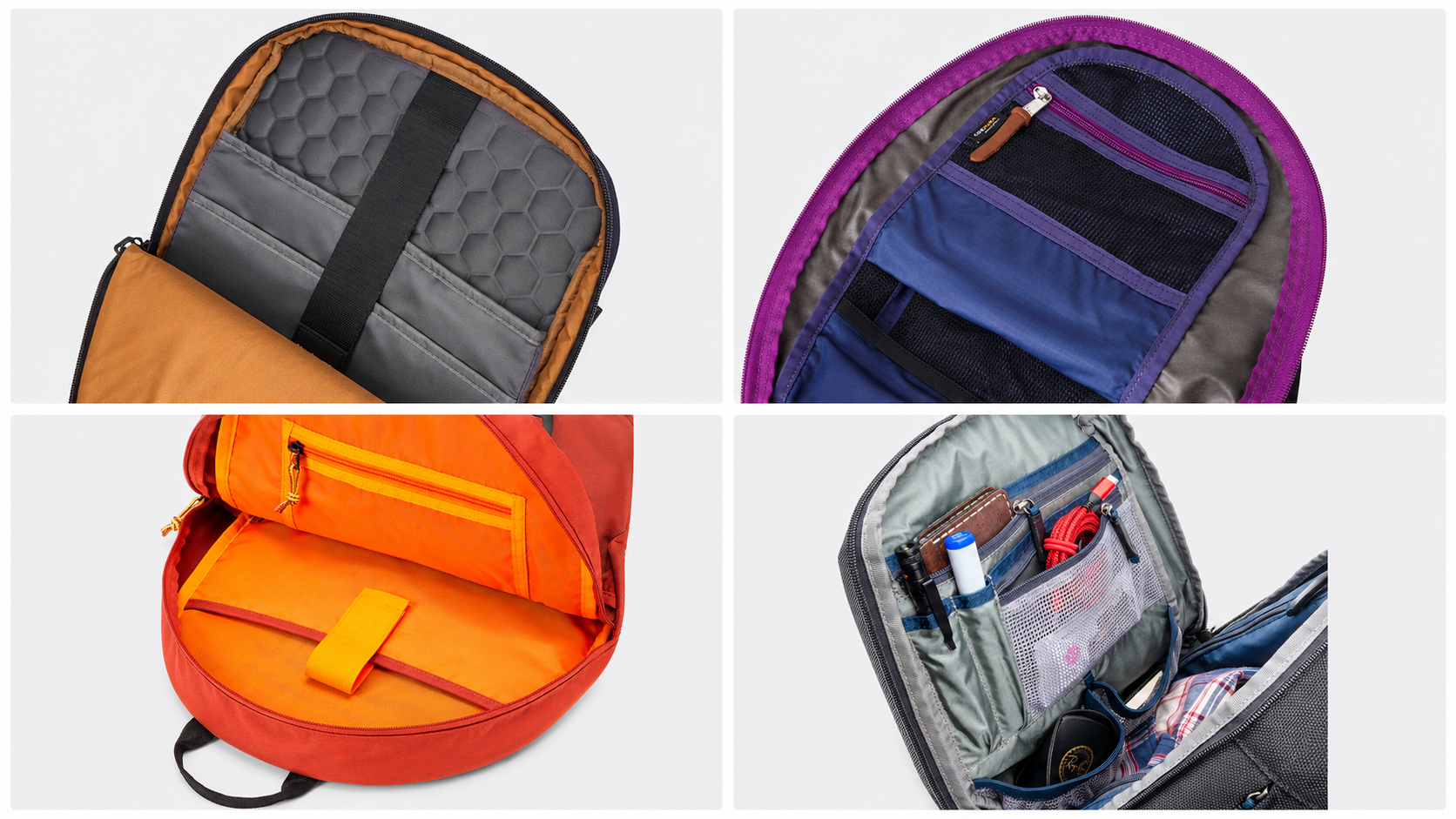
Lining Specifications
The lining affects appearance, organization, durability, and cleaning performance.
Common choices include:
- 190T polyester for lightweight linings
- 210D polyester for general-purpose interiors
- 210D nylon for a smoother, more premium finish
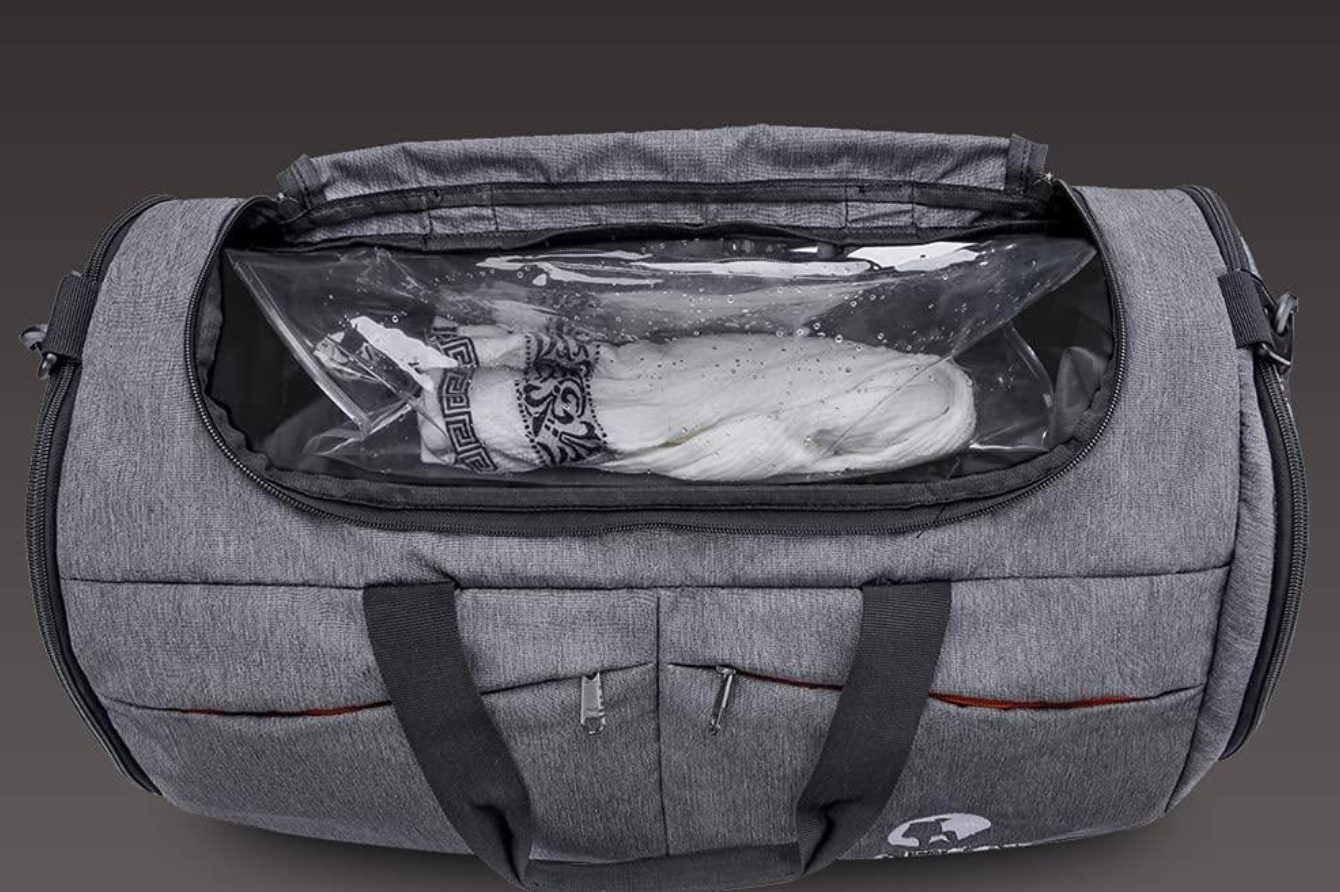
- TPU or PEVA lining for wet or easy-clean compartments
- Brushed fabric for electronics and delicate items
Dark-colored linings hide stains, while lighter or contrasting linings make it easier for users to locate small items.
For more detail on weight, coating, cost, and suitable applications, read our guide to 210D polyester bag lining.
What Should Appear on a Fabric Specification Sheet?
Before approving production, confirm:
- Fiber composition
- Denier or GSM
- Weave or fabric construction
- Coating or lamination type
- Total finished weight
- Color and surface finish
- Water-resistance requirement
- Abrasion and colorfastness requirements
- Recycled content or certification
- Approved reference sample
A clear specification might read:
600D polyester Oxford, PU-backed, 420 GSM total weight, black, matte finish, DWR-treated.
This is much more useful than simply writing “black polyester fabric.”
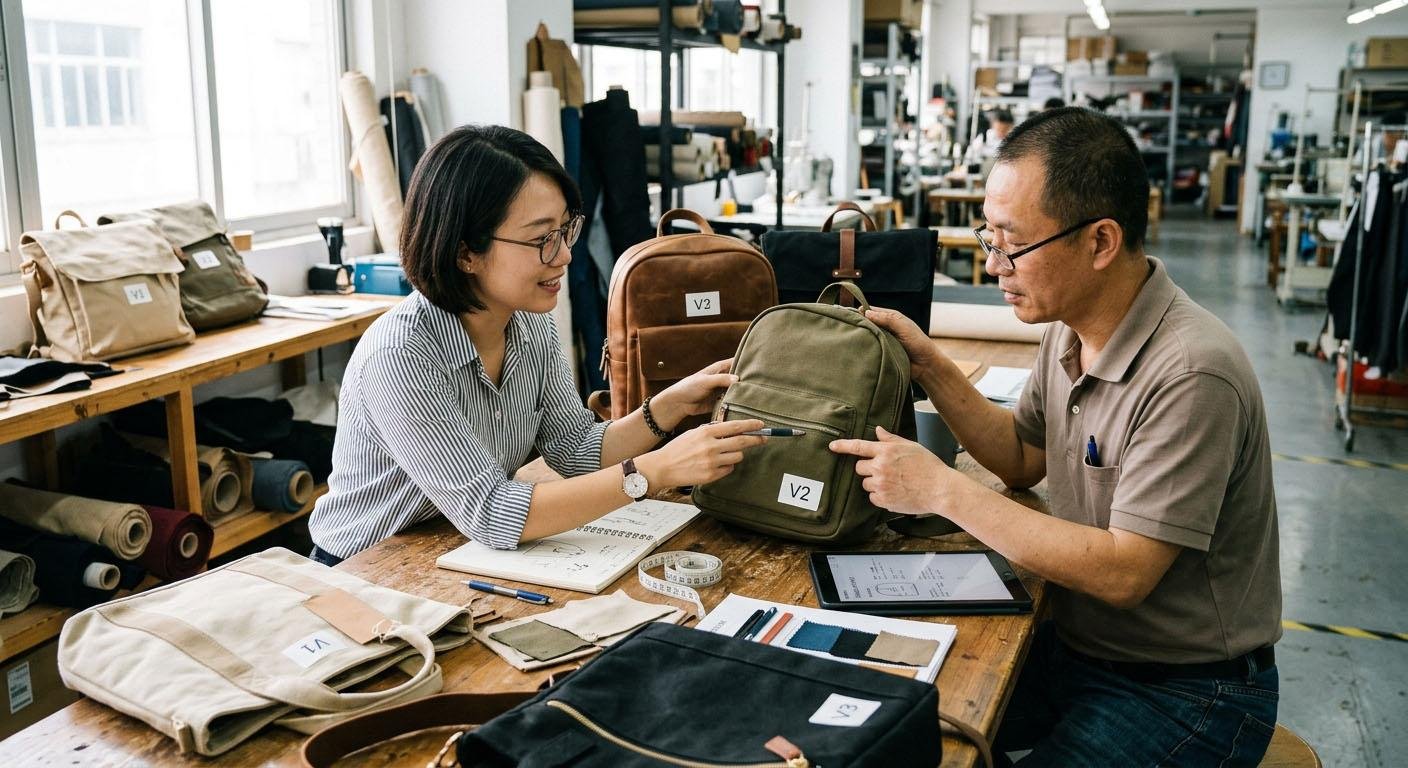
Factory recommendation: Approve a physical material sample before mass production and keep one signed reference swatch for color, texture, thickness, and finish comparison.
Final Words
There is no single best fabric for every bag. The right choice depends on the product’s intended use, target price, required durability, appearance, water protection, and production quantity.
Polyester works well for cost-sensitive projects, while nylon and Cordura® suit performance-focused products. Canvas and microfiber support lifestyle collections, and TPU or PVC materials are better for waterproof construction.
Need Help Choosing a Fabric for Your Custom Bag?
Osgoodway helps brands develop custom bags based on real production requirements—not material names alone.
Send us your:
- Bag type and dimensions
- Target market and selling price
- Required quantity
- Preferred appearance
- Durability or waterproof requirements
Our team can recommend suitable fabric specifications, coatings, construction methods, and cost-effective alternatives before sampling.
Contact us to discuss your custom bag project and receive a practical material recommendation.