Last Updated: July 22, 2026
Struggling to choose the right materials for your bag brand? The wrong choice can damage your reputation. Let’s decode Sprayground’s material strategy to guide your next collection.
Sprayground commonly uses materials such as 900D polyester, vegan leather, TPU, neoprene, and recycled fabrics to balance strength, visual impact, and design flexibility. Instead of relying on a single fabric, the brand combines different materials to create a recognizable product identity.

For backpack brands, Sprayground offers an important lesson: the right material strategy can become part of a brand’s competitive advantage. In this article, we analyze the materials behind Sprayground backpacks and explore what brands can learn when developing their own collections.
What Is the Main Material Used in Sprayground Backpacks?

The most common material used in Sprayground backpacks is 900D polyester, often combined with specialty materials such as vegan leather, TPU, and other decorative fabrics.
900D polyester is a popular choice for premium backpacks because it provides a strong balance between durability, abrasion resistance, printing performance, and production cost. For a brand like Sprayground, the fabric is not only a structural component — it is also the canvas that carries the brand’s distinctive artwork and visual identity.
Compared with lower-denier polyester fabrics, 900D polyester offers a denser weave and stronger resistance to daily wear. This makes it suitable for backpacks that need to handle frequent use while maintaining detailed graphics and a premium appearance.
900D Polyester vs Other Common Backpack Fabrics
| Fabric | Common Applications | Key Characteristics |
|---|---|---|
| 600D Polyester | School bags, promotional backpacks, everyday bags | Lightweight, cost-effective, balanced durability |
| 900D Polyester | Premium backpacks, fashion backpacks, travel bags | Higher abrasion resistance, stronger structure, excellent print surface |
| 1200D Polyester | Heavy-duty bags, outdoor equipment | Extremely durable, thicker, but heavier |
For backpack brands, choosing the right fabric is not simply about selecting the strongest material available. The ideal choice depends on the product positioning, target customer, design requirements, and expected price range. Brands deciding between two widely used options should compare 600D vs 900D polyester in terms of structure, abrasion resistance, print performance, weight, and cost.
Sprayground’s use of 900D polyester demonstrates an important product development principle: the best material is the one that supports the brand’s identity while delivering the performance customers expect.
Why Does Sprayground Use These Materials in Their Backpacks?
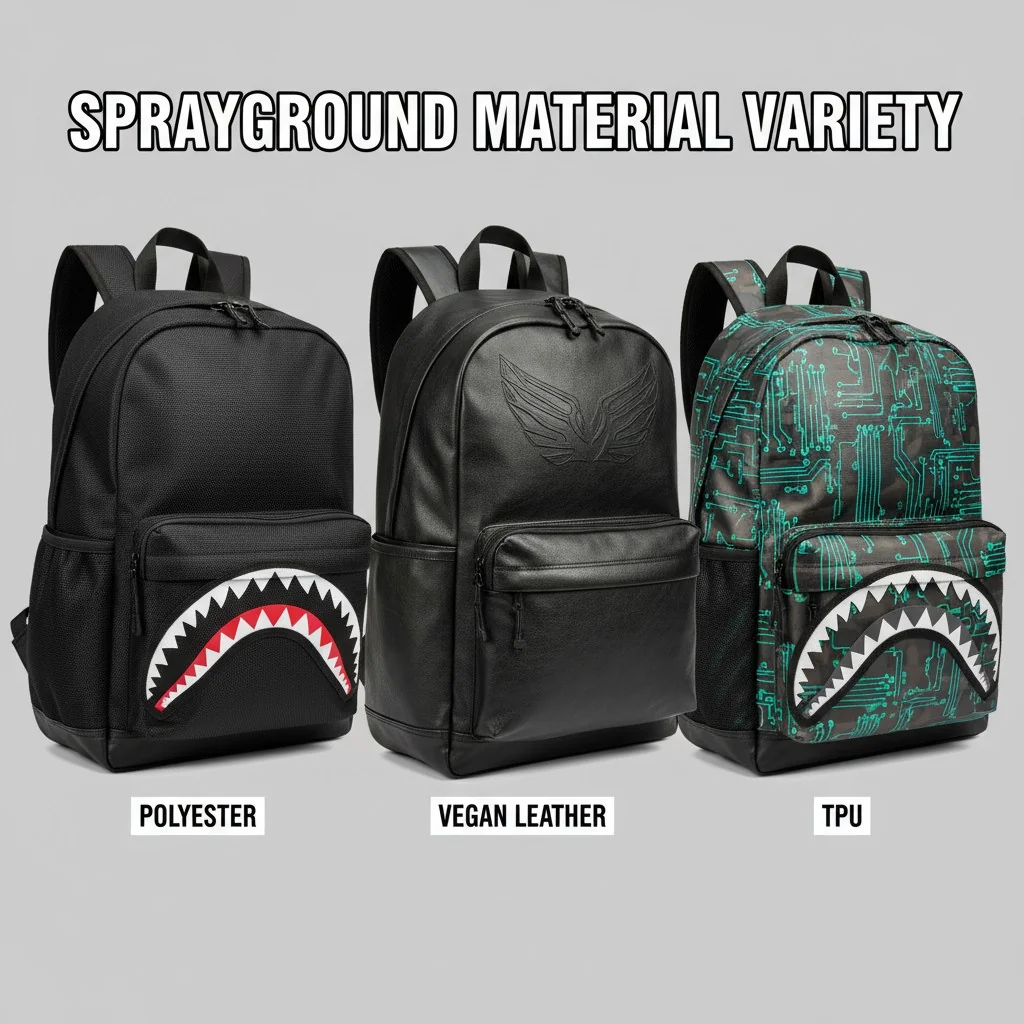
Your material choices define your brand’s promise to the customer. Are you durable, premium, or innovative? Let’s explore the "why" behind Sprayground’s material strategy to inspire your own.
Sprayground uses specific materials to achieve a perfect balance of durability, unique aesthetics, and brand identity. Polyester offers a strong canvas for graphics, vegan leather adds a premium feel, and materials like TPU create standout, innovative designs that capture attention.
For fashion and streetwear backpack brands, materials are not only technical components. They influence how customers perceive the product, how the design appears in real life, and how the brand differentiates itself in a competitive market.
A Material for Every Message
Each material is chosen with a specific purpose that reinforces the overall brand image.
- 900D Polyester: This is all about Durability and Art. It’s tough enough for everyday life and provides the perfect, smooth canvas for their iconic, detailed artwork. It’s the reliable workhorse of their collections.
- Vegan Leather: This material communicates a Premium and Conscious feel. It elevates a design, giving it a more luxurious look and feel while also appealing to customers who want a cruelty-free option.
- TPU & Neoprene: These are for Innovation and Texture. Materials like the shiny, reflective TPU on the "Bubble Bubble Shark" bag or the soft neoprene on the "Chain Reaction" are purely for creating a unique sensory experience and a "wow" factor.
Why Faux Leather and 900D Polyester?
Faux leather is a popular choice in fashion-forward backpacks because it mimics the texture and appearance of real leather without the environmental impact. It’s lightweight, easy to clean, and offers a premium look that suits various designs, from bold graphics to more subtle patterns. Faux leather’s water-resistant properties also make it a practical choice for everyday wear, protecting the contents of the bag from rain or spills.
On the other hand, 900D polyester is chosen for its robustness. This fabric has a high denier count, meaning the fibers are denser, which translates into greater strength and resistance to wear and tear. It’s often used in luggage and high-performance gear, making it a fitting complement to the sleek yet tough faux leather.
| Material | Main Function | Visual Effect | Suitable Applications |
|---|---|---|---|
| 900D Polyester | Provides structure, abrasion resistance, and daily durability | Supports detailed graphics and vibrant printing | Main body panels, front panels, side panels |
| Vegan Leather | Adds surface protection and a firmer hand feel | Creates a smoother, more premium appearance | Decorative panels, trims, logo areas, reinforcement |
| TPU | Provides flexibility, abrasion resistance, and water resistance | Creates transparent, glossy, reflective, or futuristic effects | Windows, overlays, molded details, decorative accents |
| Neoprene | Adds cushioning, flexibility, and softness | Creates a soft, dimensional, sporty texture | Padded panels, sleeves, pockets, structural details |
| Recycled Polyester | Offers performance similar to conventional polyester while reducing the use of virgin material | Supports sustainability-focused product positioning | Main fabrics, linings, straps, selected collections |
How Should Brands Combine These Materials?
A successful material combination should begin with the product’s main purpose.
For example:
- A graphic streetwear backpack may use 900D polyester as the main body, with TPU or vegan leather accents for stronger visual impact.
- A premium lifestyle backpack may combine high-density polyester with vegan leather panels and metal hardware.
- A softer, sport-inspired design may use polyester for structure and neoprene for padded or flexible sections.
- A sustainability-focused collection may use certified recycled polyester while maintaining distinctive finishes and graphics.
Using too many specialty materials can increase sampling difficulty, sewing complexity, production time, and cost. Each material should therefore serve a clear functional or visual purpose.
The key lesson from Sprayground’s material strategy is not to choose the most expensive materials, but to build a balanced specification that supports the product’s durability, appearance, target price, and brand identity.
Are Sustainable Materials Used in Sprayground Backpacks?
Yes, Sprayground uses recycled polyester in selected backpacks and collections, alongside conventional polyester, vegan leather, TPU, and other synthetic materials. However, this does not mean that every Sprayground backpack is made entirely from recycled or environmentally friendly materials.
From a brand-development perspective, sustainability depends on the specific material composition, sourcing method, durability, and production process—not simply the use of terms such as “recycled” or “vegan.”
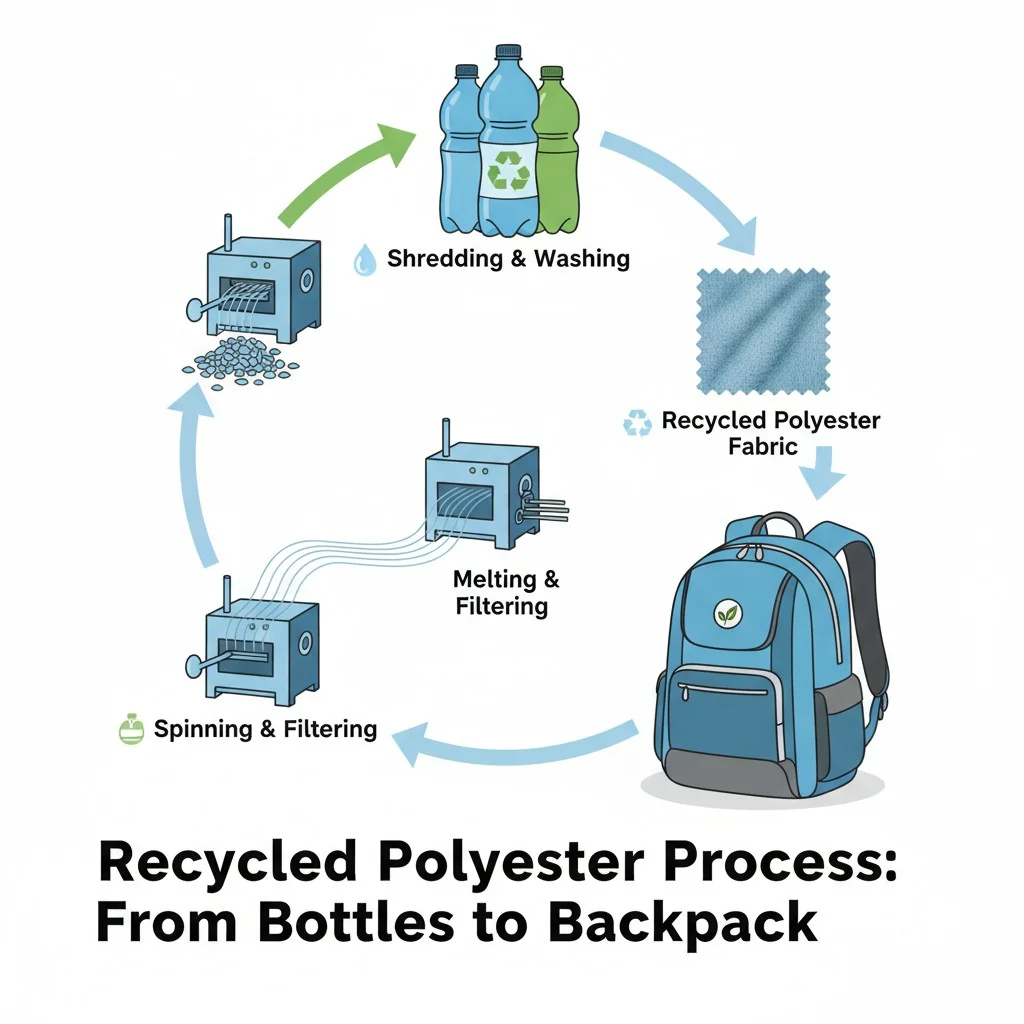
Recycled Polyester
Recycled polyester, often called rPET, is produced from existing plastic materials rather than relying entirely on virgin petroleum-based inputs.
For backpack brands, it can offer several advantages:
- Performance similar to conventional polyester
- Compatibility with printing and coating processes
- A clearer sustainability story for customers
- Reduced dependence on virgin polyester
However, brands should confirm the actual recycled content and request supporting documentation from suppliers before making environmental claims.
Is Vegan Leather More Sustainable?
Vegan leather avoids the use of animal hides and can provide a smooth, water-resistant surface suitable for fashion backpacks. However, most conventional vegan leather is made with PU or PVC, so it should not automatically be described as environmentally friendly.
Its sustainability depends on factors such as:
- The base fabric and coating composition
- Product durability
- Manufacturing chemicals
- Expected product lifespan
- End-of-life recyclability
For brands, accurate product descriptions are essential. Claims such as “animal-free” or “made with recycled polyester” are usually more specific and defensible than broad claims such as “100% eco-friendly.”
What Should Brands Consider When Sourcing Sustainable Materials?
When developing a sustainability-focused backpack collection, brands should evaluate:
- The percentage of recycled content
- Supplier documentation and material traceability
- Performance compared with virgin materials
- Printing, coating, and sewing compatibility
- Whether the product will remain durable in long-term use
- Whether marketing claims accurately reflect the material specifications
The key lesson is that sustainability should be built into the material specification and supply chain—not added later as a marketing label.
Are Sprayground Backpacks Waterproof or Water-Resistant?
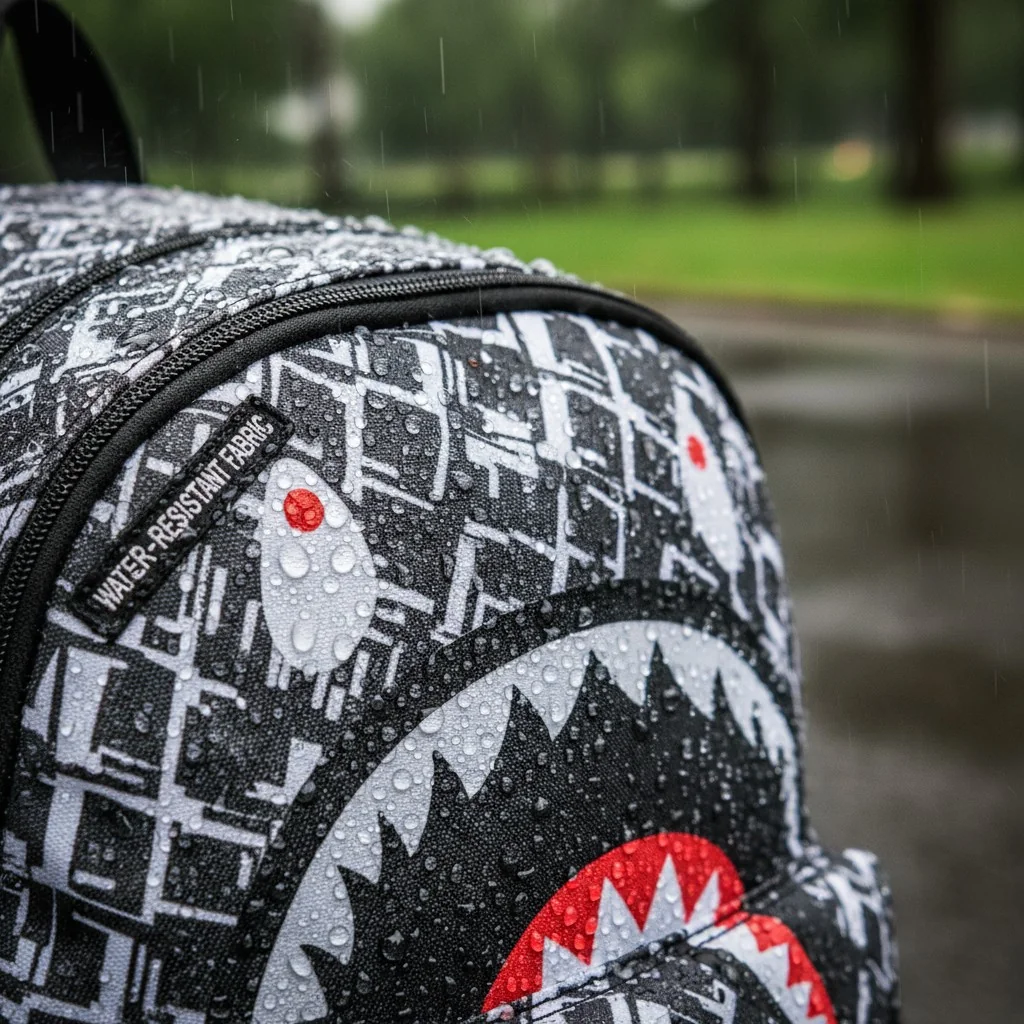
Most Sprayground backpacks are best described as water-resistant rather than fully waterproof.
Materials such as coated polyester, PU vegan leather, and TPU accents can help repel light rain and accidental splashes. However, a backpack cannot be considered fully waterproof unless its seams, zippers, openings, and construction methods are also designed to prevent water penetration.
What Makes a Backpack Water-Resistant?
Water resistance usually comes from a combination of fabric construction and surface treatment.
Common methods include:
- PU or PVC coating applied to the back of polyester fabric
- Water-repellent surface treatments
- PU leather panels that resist light moisture
- TPU details or overlays
- Closely woven, high-density fabrics
For everyday backpacks, these features are generally sufficient for short exposure to light rain.
TPU laminates and PU coatings can both improve water resistance, but they differ in flexibility, surface finish, durability, production method, and cost. Brands can review our comparison of TPU vs PU coating for bags before selecting a construction method.
Why Are Most Sprayground Backpacks Not Fully Waterproof?
Even when the main fabric resists water, moisture can still enter through:
- Standard zipper tracks
- Stitching holes
- Unsealed seams
- Pocket openings
- Panels made from different materials
A genuinely waterproof backpack normally requires welded or seam-taped construction, waterproof zippers, and materials specifically designed for prolonged exposure to water.
| Feature | Water-Resistant Backpack | Waterproof Backpack |
|---|---|---|
| Typical Materials | Coated polyester, PU leather, treated nylon | TPU laminate, PVC tarpaulin, waterproof coated nylon |
| Seam Construction | Standard stitched seams | Welded or fully taped seams |
| Zippers | Standard or covered zippers | Waterproof or highly water-resistant zippers |
| Protection Level | Light rain and splashes | Heavy rain or temporary submersion |
| Typical Use | School, streetwear, commuting | Outdoor, marine, cycling, technical use |
What Should Backpack Brands Specify?
For brands developing everyday fashion or streetwear backpacks, water resistance is usually more practical than full waterproofing. It provides suitable protection without significantly increasing product weight, stiffness, manufacturing complexity, or cost.
Before production, brands should define:
- The expected weather conditions
- The required level of water protection
- Whether coated fabric is sufficient
- Whether waterproof zippers are necessary
- Whether critical seams need taping or additional protection
Product claims should accurately reflect the construction. If the seams and zippers are not fully sealed, the product should be described as water-resistant, not waterproof.
The key lesson is that water protection depends on the complete backpack construction—not simply the material name.

How Can Brands Develop a Multi-Material Streetwear Backpack?
Sprayground’s products show how a backpack can combine a durable base fabric with specialty materials to create a strong visual identity. Brands developing their own streetwear collections can apply the same product-development principle without copying Sprayground’s designs, graphics, trademarks, or proprietary elements.
The first step is to define the product’s target customer, retail price, visual style, and expected performance. These decisions determine which materials and construction methods are appropriate.
Choose a Reliable Main Body Fabric
For graphic and fashion backpacks, 900D polyester can provide a practical balance of structure, abrasion resistance, print compatibility, and production cost.
Depending on the product position, brands may also consider:
- 600D polyester for lighter and more price-sensitive products
- 900D polyester for structured fashion and streetwear backpacks
- Recycled polyester for collections requiring documented recycled content
- High-density nylon for a softer or more premium hand feel
The main fabric should support both the intended appearance and the expected daily use.
Add Specialty Materials With a Clear Purpose
Specialty materials can help differentiate a collection, but each one should serve a specific visual or functional role.
| Specialty Material | Suitable Use |
|---|---|
| Vegan Leather | Premium-looking panels, trims, logo areas, and reinforcement |
| TPU | Transparent windows, glossy overlays, molded details, and futuristic effects |
| Neoprene | Soft-touch pockets, padding, sleeves, and dimensional panels |
| Reflective Material | Night visibility, graphic accents, and streetwear details |
| Recycled Polyester | Main fabric, lining, webbing, or sustainability-focused collections |
Using too many specialty materials can increase sampling time, sewing difficulty, rejection rates, and production cost. A strong design normally uses one reliable base fabric and a limited number of carefully selected accents.
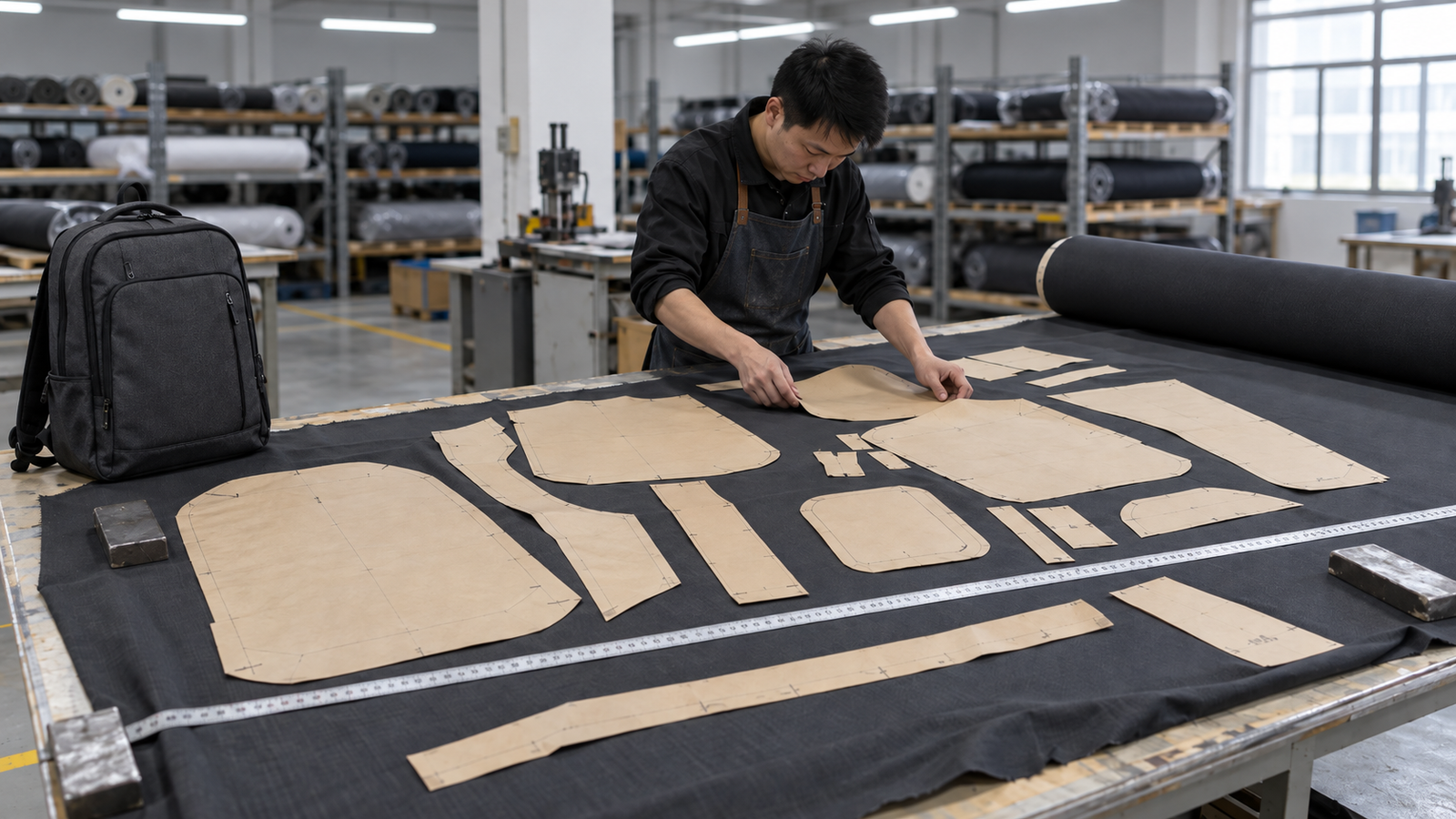
Select the Right Decoration Process
The artwork should be matched with a decoration method that suits the fabric, order quantity, and desired visual effect.
Common options include:
- Sublimation printing
- Screen printing
- Digital transfer printing
- High-density embroidery
- Rubber or silicone patches
- Heat-transfer graphics
- Reflective printing
- Molded TPU components
Before mass production, brands should test color accuracy, adhesion, abrasion resistance, and flexibility on the actual production material.
Confirm Construction and Quality Standards
A visually distinctive backpack still needs reliable construction. Important specifications may include:
- Bar-tack reinforcement at strap and handle attachment points
- Reinforced bottom panels
- Consistent stitch density
- Suitable zipper size and quality
- Accurate panel alignment for printed artwork
- Material compatibility at mixed-fabric seams
- In-line and final quality inspection
For multi-material backpacks, the sample-development stage is especially important because different fabrics may stretch, shrink, crease, or react differently during sewing.
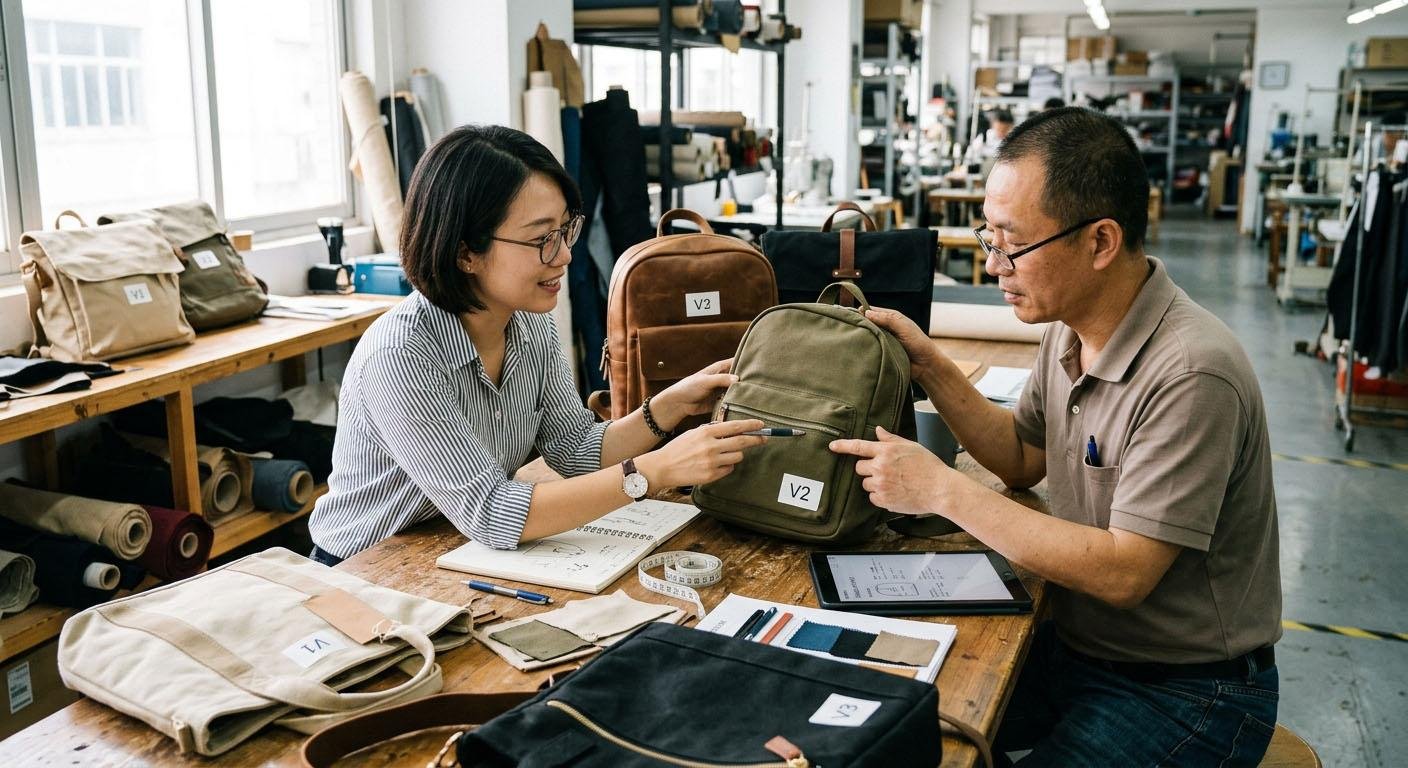
Develop and Test a Prototype Before Production
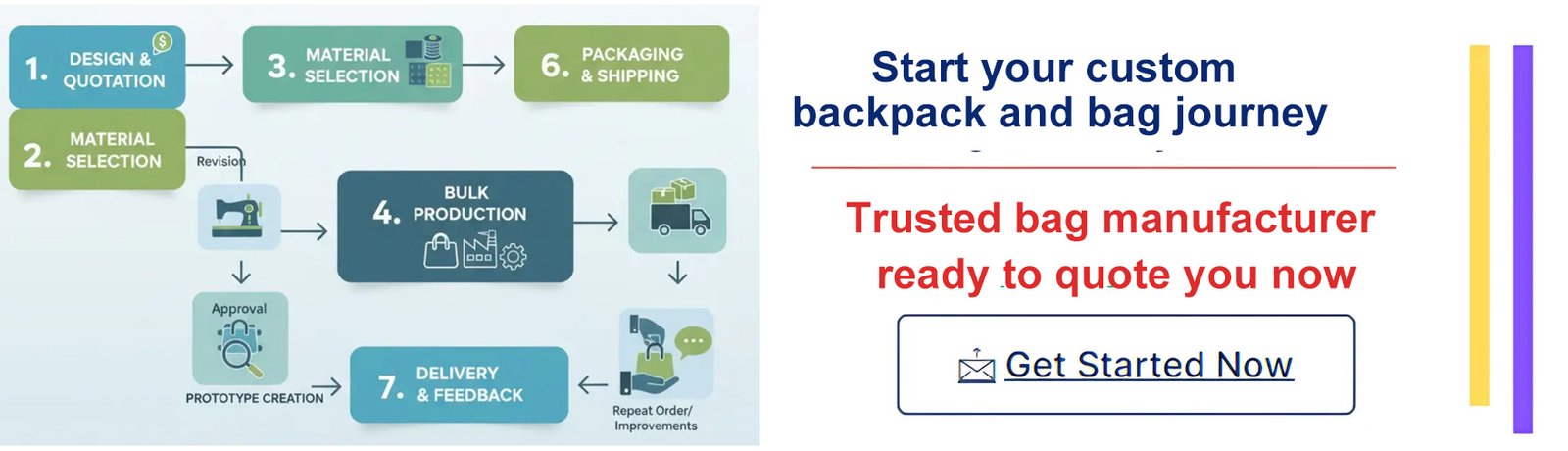
A practical custom-development process normally includes:
- Design and specification review
- Material and decoration selection
- Prototype development
- Fit, appearance, and durability evaluation
- Sample revision
- Pre-production approval
- Bulk production and quality inspection
The objective is not to reproduce another brand’s backpack. It is to use the right combination of materials, graphics, construction, and manufacturing methods to create a distinctive product for your own market.
At Osgoodway, we help brands evaluate fabrics, decoration processes, construction methods, and production feasibility before bulk manufacturing.
Contact Osgoodway to discuss your custom streetwear backpack project.
Final Words
Sprayground backpacks demonstrate how material selection can shape both product performance and brand identity. Their use of 900D polyester, vegan leather, TPU, neoprene, and recycled fabrics allows different collections to balance durability, visual impact, texture, and market positioning.
For backpack brands, the key lesson is not to copy Sprayground’s designs or material combinations. It is to understand how a reliable main fabric, carefully selected specialty materials, suitable decoration methods, and consistent construction standards work together to create a distinctive product.
When developing a custom streetwear backpack, material decisions should be based on the target customer, expected retail price, design requirements, production quantity, and performance standards. The right specification can help control manufacturing costs while improving durability and perceived value.
At Osgoodway, we help brands turn concepts, sketches, reference images, and tech packs into production-ready backpacks. Our team can support material sourcing, decoration selection, prototype development, quality control, and bulk manufacturing.
Contact Osgoodway to discuss your custom backpack project.
Frequently Asked Questions
What Are Sprayground Backpacks Made Of?
Sprayground backpacks commonly use 900D polyester, often combined with vegan leather, TPU, neoprene, recycled polyester, and other specialty materials.
The exact material combination varies by collection and design. Durable polyester usually provides the main structure, while specialty materials create different textures, finishes, and visual effects.
Is 900D Polyester a Good Material for Backpacks?
Yes. 900D polyester provides a practical balance of abrasion resistance, structure, print compatibility, and production cost.
It is especially suitable for graphic, fashion, and streetwear backpacks that need a durable base fabric capable of supporting detailed artwork and decorative finishes.
However, denier alone does not determine quality. Fabric weave, yarn quality, coating, printing method, and construction standards also affect the finished product.
Are Sprayground Backpacks Waterproof?
Most Sprayground backpacks are water-resistant rather than fully waterproof.
Their coated polyester, vegan leather, and TPU details may protect against light rain and splashes. However, standard stitched seams and zippers can still allow water to enter.
A fully waterproof backpack generally requires waterproof materials, sealed or welded seams, and waterproof zippers.
Are All Sprayground Backpacks Made From Recycled Materials?
No. Recycled polyester may be used in selected products or collections, but not every Sprayground backpack is made entirely from recycled materials.
Brands making sustainability claims should confirm:
- The percentage of recycled content
- The exact material composition
- Supplier documentation
- Certification or traceability requirements
- Whether the finished product claim is accurate
How Should a Multi-Material Backpack Be Cleaned?
Spot cleaning is generally safer than machine washing.
Use cool water, mild soap, and a soft cloth. Avoid soaking, bleach, strong detergents, tumble drying, ironing, and direct high heat.
Printed polyester, PU leather, TPU details, foam padding, and adhesives may react differently during cleaning, so care instructions should reflect the actual materials used in the finished product.
Can a Brand Develop a Custom Backpack With a Similar Material Strategy?
Yes. A brand can combine a durable base fabric with specialty materials to create its own streetwear or fashion backpack without copying Sprayground’s graphics, trademarks, or product designs.
A custom material specification may include:
- 600D, 900D, or recycled polyester for the main body
- Vegan leather for trims and decorative panels
- TPU for glossy, transparent, or molded details
- Neoprene for padded or flexible components
- Printing, embroidery, patches, or reflective decoration
- Reinforced stitching and upgraded hardware